 Vihisio vya joto vya macho vya INNO fibre ,Mifumo ya ufuatiliaji wa joto.
- SF6 (sulfuri hexafluoride) ni sintetiki, isiyo na rangi, isiyo na harufu, gesi isiyoweza kuwaka na nguvu ya kipekee ya dielectri na uwezo wa kuzimisha arc, kuifanya kuwa ya lazima katika vifaa vya umeme vya juu-voltage.
- Gesi ya SF6 ina nguvu ya dielectric takriban 2.5 mara ya hewa katika shinikizo la anga na takribani 3 nyakati kwa shinikizo la kawaida la uendeshaji linalotumika switchgear iliyoingizwa gesi (GIS).
- Maombi ya msingi ni pamoja na Vivunja mzunguko wa SF6, switchgear iliyoingizwa gesi, transfoma ya maboksi ya gesi, Na njia za usambazaji wa maboksi ya gesi (GIL) katika madarasa ya voltage kutoka 72.5 kv kwa 1,100 kv.
- SF6 imeainishwa kama gesi chafu yenye nguvu yenye uwezo wa ongezeko la joto duniani (GWP) ya 23,500 zaidi ya upeo wa macho wa miaka 100 na maisha ya angahewa ya takriban 3,200 Miaka.
- Sahihi Mifumo ya ufuatiliaji wa gesi ya SF6, ikiwa ni pamoja na wachunguzi wa msongamano, vigunduzi vya kuvuja, na wachambuzi wa mtengano, ni muhimu kwa uendeshaji salama na kufuata mazingira.
- Shinikizo la udhibiti katika EU na maeneo mengine ya mamlaka inaendesha utafiti katika njia mbadala za SF6 kama vile mchanganyiko wa fluoronitrile. (C4F7N) and fluoroketone (C5F10O) blends for new equipment designs.
- The installed base of SF6-insulated equipment worldwide contains an estimated 250,000+ metric tons of SF6 gas, requiring rigorous lifecycle management from filling to recovery and recycling.
Jedwali la yaliyomo
- What is SF6 Gas?
- Physical and Chemical Properties of SF6 Gas
- Dielectric and Arc-Quenching Performance
- Applications of SF6 Gas in Electrical Equipment
- SF6 Gas Monitoring and Detection Systems
- SF6 Gas Handling, Hifadhi, na usalama
- Environmental Impact and Regulations
- SF6 Gas Alternatives for Electrical Equipment
- Maswali Yanayoulizwa Mara Kwa Mara
1. What is SF6 Gas?

SF6 gesi, au sulfuri hexafluoride, is a synthetic inorganic compound with the chemical formula SF₆. It consists of one sulfur atom bonded to six fluorine atoms in an octahedral molecular geometry, forming one of the most chemically stable and electrically insulating gases known to science. First synthesized in 1900 by French chemists Henri Moissan and Paul Lebeau, SF6 found its defining industrial purpose in the mid-20th century when its extraordinary nguvu ya dielectric Na mali ya kumaliza arc were harnessed for high-voltage electrical equipment.
At standard temperature and pressure, SF6 haina rangi, isiyo na harufu, isiyo na sumu, and non-flammable gas approximately five times denser than air. Its molecular weight of 146.06 g/mol gives it a distinctive heaviness that contributes to its insulating behavior. In the electrical power industry, sulfur hexafluoride gas serves as the primary insulating and arc-interrupting medium in equipment ranging from switchgear ya kati-voltage saa 12 kv kwa ultra-high-voltage circuit breakers Na Mifumo ya GIS inafanya kazi saa 1,100 KV na hapo juu.
Why SF6 Became the Industry Standard
Before SF6, high-voltage equipment relied on air, mafuta, or vacuum as insulating and interrupting media. Air-blast circuit breakers were physically enormous. Oil circuit breakers posed fire and explosion risks. SF6 offered a compelling alternative — compact equipment with superior interrupting performance, lower maintenance requirements, and dramatically reduced footprint. By the 1970s and 1980s, SF6 gas-insulated equipment had become the global standard for high-voltage substations, particularly in urban areas and indoor installations where space is constrained.
2. Physical and Chemical Properties of SF6 Gas
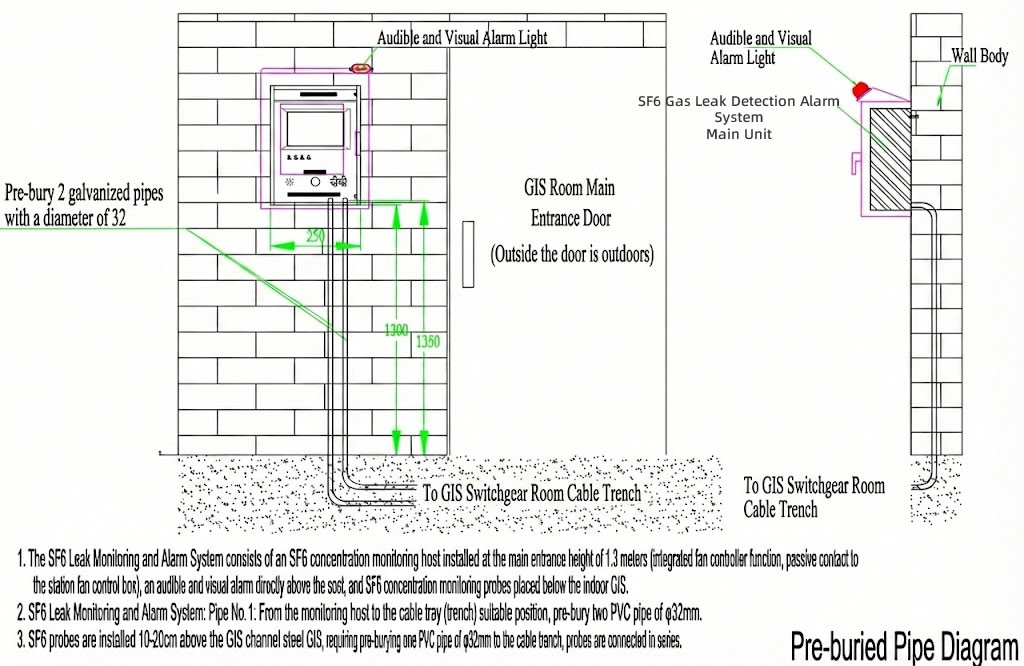
The exceptional performance of SF6 in electrical applications is rooted in its unique combination of physical and chemical properties. Understanding these properties is essential for engineers specifying, operating, na kudumisha SF6-filled electrical equipment.
| Property | Thamani | Umuhimu |
|---|---|---|
| Molecular Formula | SF₆ | Octahedral symmetry, highly stable |
| Molecular Weight | 146.06 g/mol | ~5× heavier than air |
| Boiling Point (1 atm) | −63.9 °C (−83 °F) | Remains gaseous in most climates |
| Joto Muhimu | 45.6 ° C. (114 °F) | Defines upper pressure limits |
| Critical Pressure | 37.6 Baa (545 psi) | Operating pressures typically 4–8 bar |
| Density at STP | 6.16 g/L | High density aids insulation |
| Nguvu ya Dielectric (1 atm) | ~2.5× air | Enables compact equipment design |
| Thermal Conductivity | ~1.3× air | Good heat dissipation in equipment |
| Toxicity | Non-toxic (pure state) | Decomposition byproducts are toxic |
| GWP (100-mwaka) | 23,500 | Potent greenhouse gas |
| Atmospheric Lifetime | ~3,200 years | Extremely persistent once released |
2.1 Utulivu wa Kemikali
Sulfuri hexafluoride is one of the most chemically inert compounds known. The six fluorine atoms completely shield the central sulfur atom, creating an extremely strong and symmetric molecular bond structure. This stability means that SF6 does not react with other materials inside sealed electrical compartments — it does not attack copper, alumini, epoxy resin insulators, gaskets, or other components commonly found in switchgear iliyoingizwa gesi Na Vivunja mzunguko wa SF6.
2.2 Behavior Under Electrical Stress
When SF6 gas is subjected to an electrical arc — as occurs during operesheni ya mzunguko wa mzunguko — the gas molecules dissociate into sulfur and fluorine atoms and ions. The critical advantage is that SF6 rapidly recombines after the arc is extinguished, restoring its full dielectric strength within microseconds. This self-healing property is what makes SF6 uniquely effective as an arc-quenching medium. Hata hivyo, the arc-induced dissociation also produces trace amounts of decomposition byproducts, including sulfur dioxide (SO₂), floridi hidrojeni (HF), and various sulfur fluoride compounds (S₂F₁₀, SOF₂, SO₂F₂), some of which are highly toxic and corrosive.
3. Dielectric and Arc-Quenching Performance
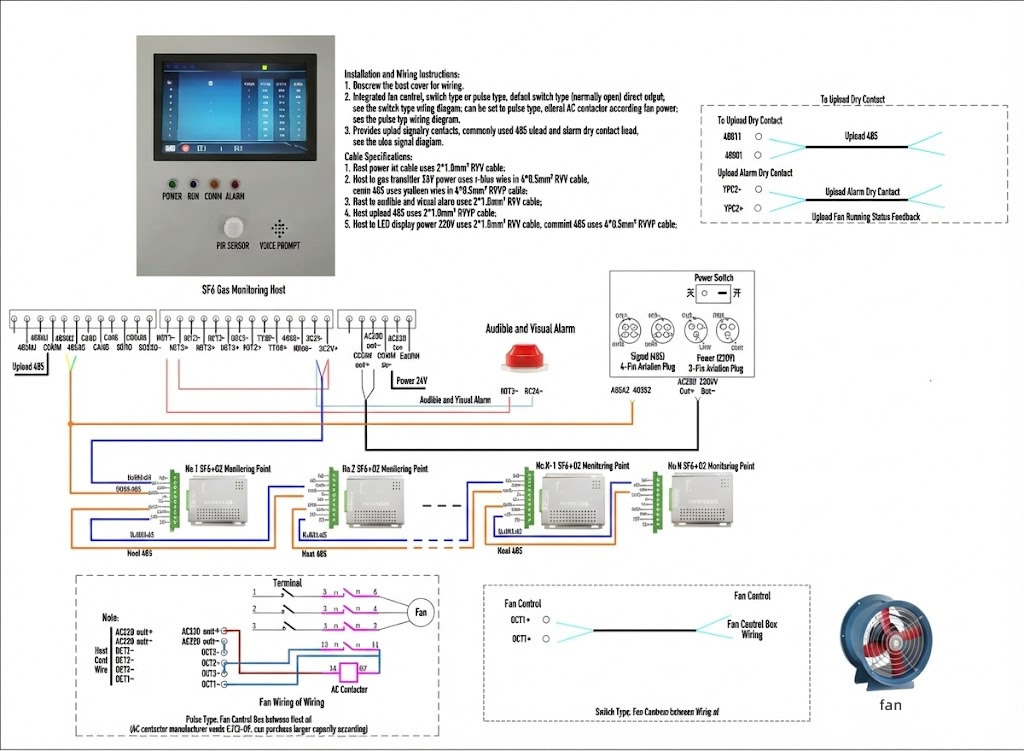
The dielectric performance of SF6 gesi is the primary reason for its dominance in high-voltage equipment. At atmospheric pressure, SF6 has a dielectric strength approximately 2.5 nyakati za hewa. At typical operating pressures of 4–6 bar (kabisa) kutumika ndani Vifaa vya GIS, the dielectric strength rises to roughly 3 nyakati za hewa, enabling dramatic reductions in equipment dimensions.
3.1 Electronegative Properties
SF6 is a strongly electronegative gas, meaning its molecules readily capture free electrons. In an electric field, any electron released through ionization is quickly absorbed by an SF6 molecule, forming a heavy, slow-moving negative ion. This electron-capture mechanism suppresses the development of electron avalanches — the fundamental process behind electrical breakdown. This property gives SF6 its superior Utendaji wa insulation compared to air, nitrojeni, or CO₂.
3.2 Arc Interruption Mechanism
Katika Vivunja mzunguko wa SF6, the arc-quenching process relies on the gas being blown across the arc by either a piston mechanism (puffer type) or thermal energy from the arc itself (self-blast type). The high thermal conductivity and electronegative nature of SF6 rapidly cool the arc channel and extract energy from it. At current zero crossings in AC systems, SF6 quickly rebuilds dielectric strength across the contact gap, successfully interrupting fault currents that can reach 63 kA or higher in modern Wavunjaji wa mzunguko wa juu.
Dielectric Strength Comparison Across Gases
| Gesi | Relative Dielectric Strength (Air = 1.0) | Use in Electrical Equipment |
|---|---|---|
| Air | 1.0 | Switchgear isiyopitisha hewa (AIS) |
| Nitrojeni (N₂) | 1.0 | Some transformer blankets |
| Co₂ | 0.9 | Maombi machache |
| SF6 | 2.5 (saa 1 atm) | GIS, Wavunjaji wa mzunguko, GIL, GIT |
| C4F7N / CO₂ mixture | ~2.0–2.3 | Emerging SF6 alternative |
| C5F10O / Air mixture | ~1.5–1.8 | Emerging SF6 alternative |
| Clean Dry Air | 1.0 | AIS, clean-air switchgear |
4. Applications of SF6 Gas in Electrical Equipment

Sulfuri hexafluoride is used across a wide range of electrical power equipment where high dielectric strength, arc-quenching capability, and compact design are required. The global installed base of SF6 equipment spans transmission, usambazaji, and generation systems on every continent.
4.1 SF6 Circuit Breakers
Vivunja mzunguko wa SF6 are the dominant technology for interrupting high-voltage AC circuits at voltage levels from 72.5 kv kwa 1,100 kv. Modern designs include single-pressure puffer-type breakers and self-blast (thermal-assist) wavunjaji. These units can interrupt short-circuit currents of 40–80 kA with operating times under 3 mizunguko (50 ms at 60 Hz). Dead-tank SF6 breakers Na live-tank SF6 breakers are the two principal configurations, each suited to different substation designs and seismic requirements.
4.2 Switchgear iliyoingizwa gesi (GIS)
Switchgear iliyoingizwa gesi (GIS) encapsulates circuit breakers, kukatwa, swichi za kuokota, Transfoma za sasa, Voltage Transfoma, and bus conductors within sealed aluminum or steel enclosures filled with pressurized SF6. GIS installations occupy 10%–20% of the floor space required by equivalent switchgear isiyopitisha hewa (AIS) substations. This makes GIS essential for urban substations, Ufungaji wa chini ya ardhi, majukwaa ya pwani, and any site where space is limited or environmental conditions are harsh.
4.3 Gas-Insulated Transformers (GIT)
Gas-insulated transformers use SF6 as the insulating and cooling medium in place of traditional mineral transformer oil. Because SF6 is non-flammable, these transformers are ideal for fire-sensitive installations such as underground substations, Majengo, mahandaki, na majukwaa ya nje ya nchi. SF6 gas-insulated transformers are typically available in ratings up to approximately 300 MVA and 170 kv, though some manufacturers offer higher ratings.
4.4 Gas-Insulated Transmission Lines (GIL)
Gas-insulated transmission lines (GIL) use SF6 or SF6/N₂ gas mixtures as the insulating medium inside sealed metallic tubes to transmit high-voltage power over distances typically ranging from a few hundred meters to several kilometers. GIL is used where overhead lines or conventional cables are not feasible — such as through tunnels, across bridges, in densely built-up areas, and for river or strait crossings.
4.5 Other SF6 Applications
Zaidi ya maombi makuu hapo juu, SF6 pia inatumika katika transfoma ya sasa ya maboksi ya gesi ya SF6, SF6 gesi-maboksi voltage transfoma, SF6 vichaka vya maboksi ya gesi, na aina fulani za Wakakamataji wa upasuaji Na swichi za kuvunja mzigo kwa wastani- na viwango vya juu vya voltage.
| Aina ya vifaa | Anuwai ya voltage | Kazi ya SF6 | Shinikizo la SF6 la Kawaida |
|---|---|---|---|
| SF6 Mvunja Mzunguko | 72.5-1,100 kV | Uhamishaji joto + Kuzimisha Safu | 5- 7 bar (abs) |
| Switchgear iliyoingizwa gesi (GIS) | 72.5-1,100 kV | Uhamishaji joto + Kuzimisha Safu | 4- 6 bar (abs) |
| Transfoma isiyopitisha gesi (GIT) | Hadi 170 kv | Uhamishaji joto + Kupoa | 1.5- bar 3 (abs) |
| Mstari wa Maboksi ya Gesi (GIL) | 145-550 kV | Uhamishaji joto | 4- bar 8 (abs) |
| Kigeuzi cha Ala cha SF6 | 72.5-800 kV | Uhamishaji joto | 3- bar 5 (abs) |
| Switchgear ya Wastani ya Voltage | 12-40.5 kV | Uhamishaji joto + Kuzimisha Safu | 1.3- bar 1.5 (abs) |
5. SF6 Gas Monitoring and Detection Systems
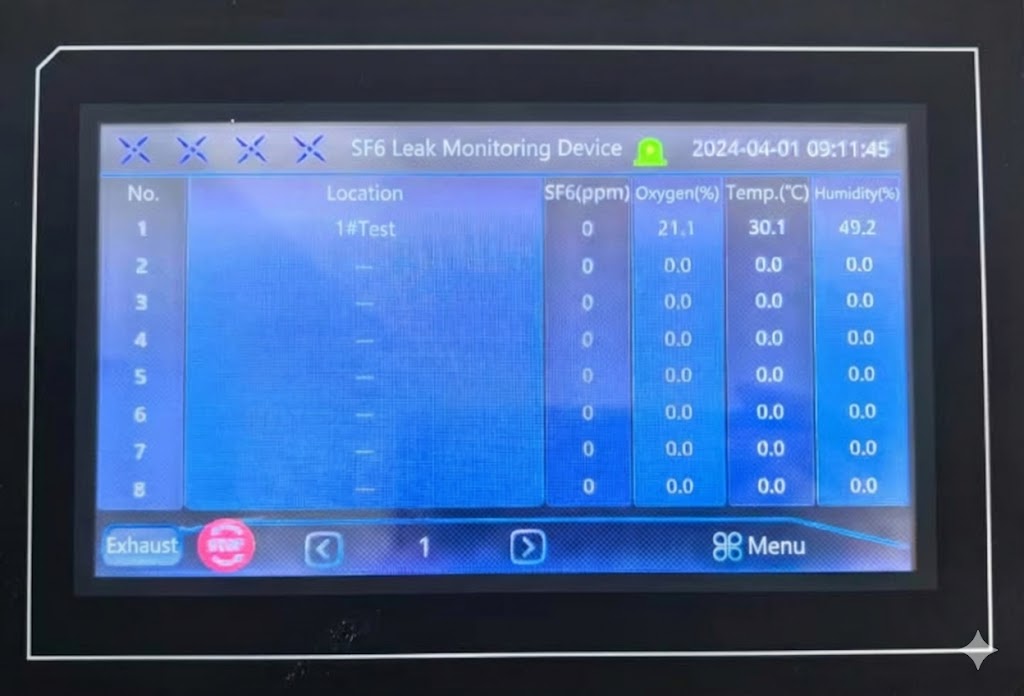
Kwa kuzingatia jukumu muhimu la SF6 katika kudumisha uadilifu wa kuhami na kukatiza arc wa vifaa vya voltage ya juu., na madhara makubwa ya mazingira ya uzalishaji usiodhibitiwa, kamili Mifumo ya ufuatiliaji wa gesi ya SF6 ni sehemu muhimu ya muundo wa kisasa wa kituo na uendeshaji. Mifumo hii inahakikisha ubora wa gesi, Shinikizo, na kizuizi kinathibitishwa kila mara katika kila Sehemu iliyojaa SF6 katika ufungaji.
5.1 Wachunguzi wa Msongamano wa Gesi wa SF6
ya Mfuatiliaji wa msongamano wa gesi SF6 (pia huitwa relay ya wiani) ndicho kifaa cha msingi zaidi cha ufuatiliaji kilichosakinishwa kwenye kila sehemu ya gesi ya SF6. Tofauti na kipimo rahisi cha shinikizo, kifuatilia msongamano hufidia mabadiliko ya halijoto ili kutoa kielelezo sahihi cha wingi halisi wa gesi ya SF6 ndani ya chumba kilichofungwa.. Ikiwa msongamano wa gesi utashuka chini ya kizingiti cha kengele kilichowekwa tayari - kuonyesha uvujaji - kifuatilizi kitaanzisha tahadhari.. Ikiwa wiani huanguka kwa sekunde, kizingiti cha chini, inaweza kuanzisha kufuli ili kuzuia uendeshaji wa kifaa chini ya hali zisizo salama.
Kisasa vipeperushi vya umeme vya SF6 badilisha vichunguzi vya zamani vya aina ya upigaji simu kwa mawimbi endelevu ya kidijitali (4-20 mA au itifaki za dijiti) that feed directly into the substation’s Mfumo wa SCADA au vifaa vya elektroniki vya akili (IEDS). This enables real-time remote monitoring and trending of SF6 inventory across an entire fleet of Njia za GIS Na Wavunjaji wa mzunguko.
5.2 SF6 Gas Leak Detection Systems
While density monitors detect the consequence of a leak (reduced gas quantity), dedicated Vigunduzi vya kuvuja kwa gesi SF6 identify the location and rate of the leak itself. Several technologies are in widespread use.
Portable SF6 Leak Detectors
Portable SF6 leak detectors based on negative ion capture (electron capture detector) or non-dispersive infrared (NDIR) technology are standard tools for maintenance crews. Modern handheld units can detect SF6 concentrations as low as 0.1 ppmv and pinpoint leak locations on GIS flanges, bushing interfaces, valve stems, and weld seams. Leading manufacturers of SF6 leak detection equipment include DILO, Ion Science, Fluke, and Besantek.
Fixed Area SF6 Monitoring Systems
Fixed SF6 area monitors are permanently installed in enclosed GIS rooms, uingizwaji wa chini ya ardhi, and cable tunnels where SF6 equipment is housed. These systems use infrared photoacoustic sensors or NDIR sensors to continuously measure the ambient SF6 concentration in the room air. They serve two purposes: usalama wa wafanyikazi (SF6 is an asphyxiant in high concentrations as it displaces oxygen) and early warning of equipment leaks. IEC 62271-1 and IEEE C37.122 both reference requirements for gas detection and ventilation in Ufungaji wa GIS.
5.3 SF6 Gas Quality Analyzers
After electrical arcing events, shughuli za matengenezo, or prolonged service, the quality of SF6 gesi inside equipment must be verified. Wachambuzi wa gesi wa SF6 measure moisture content, usafi (percentage of SF6), and the concentration of decomposition byproducts such as SO₂ and HF. IEC 60480 specifies the quality requirements for SF6 gas used in electrical equipment, including limits for moisture (< 25 ppmv for new gas), usafi (> 99.9%), and acidity.
| Kifaa cha Ufuatiliaji | What It Measures | Mahali | Pato / Kiolesura |
|---|---|---|---|
| SF6 Density Monitor (Mitambo) | Uzito wa gesi (temp-compensated) | Each gas compartment | Kengele + lockout contacts |
| SF6 Density Transmitter (Umeme) | Uzito wa gesi (inayoendelea) | Each gas compartment | 4-20 mA / SCADA |
| Portable Leak Detector | SF6 concentration at source | Mkononi / Matengenezo | Onyesho + audible alarm |
| Fixed Area Monitor | Ambient SF6 in room | GIS room / cable tunnel | Kengele + ventilation trigger |
| SF6 Gas Analyzer | Purity, unyevu, SO₂, HF | Inabebeka / lab | Onyesho / report |
| Online Decomposition Monitor | SO₂, HF, CF₄ levels | Critical GIS bays | Inayoendelea / SCADA |
5.4 Integrated SF6 Asset Management Platforms
Progressive utilities and transmission system operators now deploy integrated SF6 gas management platforms that aggregate data from density transmitters, leak detection surveys, gas quality test results, and gas handling records into a centralized database. These platforms track SF6 inventory by equipment serial number, calculate annual SF6 leakage rates as required by EPA (in the U.S.) or EU F-Gas Regulation reporting, na kutoa nyaraka za kufuata. Wauzaji wakuu wa programu za usimamizi wa mali za matumizi wanazidi kujumuisha moduli maalum za ufuatiliaji za SF6.
6. SF6 Gas Handling, Hifadhi, na usalama
Sahihi SF6 utunzaji wa gesi inahitaji vifaa maalum na wafanyikazi waliohitimu. SF6 husafirishwa na kuhifadhiwa katika mitungi ya chuma iliyoshinikizwa kama kioevu chini ya shinikizo lake la mvuke.. Kabla ya kujaza vifaa vya umeme, gesi lazima ithibitishwe kwa usafi na unyevu kwa IEC 60480 au vipimo vinavyotumika vya matumizi.
6.1 SF6 Vifaa vya Kushughulikia Gesi
Mikokoteni ya kushughulikia gesi ya SF6 (pia huitwa mikokoteni ya huduma ya SF6 au virudishaji vya SF6) ni mifumo iliyojengwa kwa madhumuni ambayo hutekeleza mzunguko kamili wa maisha wa usimamizi wa SF6: uhamishaji wa sehemu za vifaa, urejeshaji wa SF6 kutoka kwa vifaa, uchujaji na utakaso, Hifadhi, na kujaza tena. Vitengo vya kisasa kutoka kwa wazalishaji kama vile DILO, Mwenye nguvu, Comde-Derenda, na Mega kuendana na IEC 62271-4 standards and can achieve SF6 recovery rates exceeding 99.5%, minimizing emissions during maintenance operations.
6.2 Personnel Safety Considerations
SF6 safi haina sumu na ajizi ya kemikali. Hata hivyo, two safety concerns are paramount. Kwanza, because SF6 is five times denser than air, it can accumulate in pits, mitaro, cable basements, and low-lying enclosed spaces, displacing oxygen and creating an asphyxiation hazard. Pili, Bidhaa za mtengano wa SF6 generated by electrical arcing — including SO₂, HF, S₂F₁₀, SOF₂, and SO₂F₂ — are highly toxic and corrosive. Workers must use appropriate personal protective equipment (PPE) including respiratory protection and chemical-resistant gloves when handling used SF6 gas or opening compartments that have experienced internal arcing faults.
Key Safety Standards
The principal international standards governing SF6 handling and safety include IEC 62271-4 (handling procedures for SF6 and its mixtures), IEC 60480 (specifications for re-use of SF6), and EPA 40 Sehemu ya CFR 98 Subpart DD (mandatory reporting of SF6 emissions in the United States). The EU F-Gas Regulation (La. 517/2014, revised 2024) imposes strict reporting requirements and phase-down measures on high-GWP gases including SF6.
7. Environmental Impact and Regulations
The environmental profile of SF6 gesi is the most significant challenge facing its continued use. With a global warming potential (GWP) ya 23,500 — meaning one kilogram of SF6 released to the atmosphere has the same warming effect as 23,500 kilograms of CO₂ over 100 years — and an atmospheric lifetime of approximately 3,200 Miaka, SF6 is among the most potent greenhouse gases regulated under the Kyoto Protocol and the Paris Agreement.
7.1 Emission Sources and Rates
SF6 emissions from the electrical industry occur through equipment leakage during normal service, losses during maintenance and gas handling, and end-of-life disposal. The IEC standard for acceptable annual leakage from new sealed-pressure GIS equipment is less than 0.5% per year per gas compartment. Well-maintained modern equipment routinely achieves leakage rates below 0.1% kwa mwaka. Hata hivyo, older equipment, particularly units installed before the 1990s, can exhibit significantly higher leakage rates.
7.2 Regulatory Landscape
| Mkoa | Regulation | Key Requirement |
|---|---|---|
| Umoja wa Ulaya | F-Gas Regulation (revised 2024) | Ban on new SF6 MV switchgear from 2030; HV restrictions phased |
| Merika | EPA 40 Sehemu ya CFR 98 Subpart DD | Mandatory emission reporting for utilities |
| California (USA) | CARB SF6 Regulation | Annual emission rate target of 1% na 2020 |
| Japan | High Pressure Gas Safety Act | Reporting and handling requirements |
| Kimataifa | Kyoto Protocol / Paris Agreement | SF6 listed in basket of regulated GHGs |
8. SF6 Gas Alternatives for Electrical Equipment
The environmental pressure on SF6 has driven major equipment manufacturers to develop and commercialize alternative insulating and interrupting gases, particularly for new installations.
8.1 Fluoronitrile-Based Mixtures (C4F7N)
Fluoronitrile gas mixtures, marketed by GE Vernova under the brand name g³ (Green Gas for Grid), blend C4F7N with CO₂ and O₂ as buffer gases. These mixtures achieve approximately 90%–100% of SF6’s dielectric performance at equivalent pressures with a GWP reduction of more than 99%. Mifumo ya GIS using fluoronitrile mixtures are commercially available and installed at voltage levels up to 420 kv.
8.2 Fluoroketone-Based Mixtures (C5F10O)
Fluoroketone gas mixtures — blending C5F10O with air or nitrogen — have been commercialized primarily by ABB (sasa Hitachi Nishati) under the AirPlus brand for switchgear ya kati-voltage at 12–40.5 kV. GWP ya C5F10O ni chini ya 1, kuifanya iwe karibu na hali ya hewa. Hata hivyo, nguvu ya chini ya dielectric ya michanganyiko hii ikilinganishwa na SF6 inamaanisha saizi kubwa za compartment au shinikizo la juu.
8.3 Safi Hewa Kavu na Teknolojia ya Utupu
Kwa switchgear ya kati-voltage, Wavunjaji wa mzunguko wa utupu pamoja na insulation safi ya hewa kavu imekuwa suluhisho la kawaida la SF6. Katika viwango vya voltage ya usambazaji (12-40.5 kV), teknolojia ya kukatiza utupu imekomaa na inapatikana kwa wingi. Kwa voltages za juu, insulation ya hewa safi inahitaji vifaa vikubwa zaidi, kupunguza utumiaji wake ambapo nafasi imebanwa.
Ulinganisho Mbadala wa SF6
| Mbadala | GWP | Nguvu ya Dielectric dhidi ya. SF6 | Anuwai ya voltage | Hali ya Kibiashara |
|---|---|---|---|---|
| C4F7N / Co₂ / Mchanganyiko wa O₂ | ~328 (mchanganyiko) | 90%-100% | Hadi 420 kv | Inapatikana kibiashara |
| C5F10O / Air mixture | <1 | 60%-80% | Hadi 40.5 kv | Inapatikana kibiashara |
| Clean Dry Air | 0 | ~40% | Hadi 420 kv (kingo kubwa) | Inapatikana kibiashara |
| Ombwe (Kivunja MV) | 0 | N/A. (usumbufu tu) | Hadi 145 kv | Teknolojia iliyokomaa |
| Co₂ / Mchanganyiko wa O₂ | <1 | ~35%–40% | Hadi 72.5 kv | Usambazaji mdogo |
Maswali Yanayoulizwa Mara Kwa Mara
Q1: SF6 inasimamia nini?
SF6 inawakilisha hexafluoride ya sulfuri, a chemical compound consisting of one sulfur atom and six fluorine atoms (chemical formula SF₆). It is a synthetic gas not found naturally in the environment.
Q2: Why is SF6 gas used in circuit breakers?
SF6 is used in circuit breakers because of its exceptional dielectric strength (2.5× hewa) and rapid arc-quenching capability. It can extinguish high-energy electrical arcs and restore insulation strength within microseconds, enabling compact and reliable high-voltage circuit breaker Ubunifu.
Q3: Je, gesi ya SF6 ni hatari kwa binadamu?
SF6 safi haina sumu na ajizi ya kemikali. Hata hivyo, it poses an asphyxiation risk in enclosed spaces because it is five times heavier than air and displaces oxygen. Hayo, SF6 decomposition byproducts formed by electrical arcing — including SO₂ and HF — are highly toxic and corrosive, requiring proper safety precautions during maintenance.
Q4: What is an SF6 gas density monitor?
An Mfuatiliaji wa msongamano wa gesi SF6 is a temperature-compensated measuring device installed on each gas compartment of SF6 equipment. It monitors the actual gas mass inside the compartment and triggers alarms or equipment lockouts if the density falls below safe thresholds, indicating a gas leak.
Q5: How do you detect an SF6 gas leak?
SF6 leaks are detected using portable SF6 leak detectors (based on electron capture or NDIR infrared technology), fixed area SF6 monitors in GIS rooms, and density trending from electronic SF6 density transmitters. Modern detectors can identify leaks as small as 0.1 ppmv.
Q6: What is the global warming potential of SF6?
SF6 has a 100-year global warming potential (GWP) ya 23,500, meaning one kilogram of SF6 has the same greenhouse effect as 23,500 kilograms of CO₂. Its atmospheric lifetime is approximately 3,200 Miaka, making it one of the most persistent greenhouse gases known.
Q7: Can SF6 gas be recycled?
Ndio. SF6 gas can be recovered from equipment using specialized Mikokoteni ya kushughulikia gesi ya SF6, purified through filtration and adsorption processes to remove moisture and decomposition byproducts, and re-used. IEC 60480 specifies the quality requirements that reclaimed SF6 must meet before re-use in electrical equipment.
Q8: What are the alternatives to SF6 in switchgear?
Commercially available alternatives include fluoronitrile-based gas mixtures (C4F7N/CO₂), fluoroketone-based gas mixtures (C5F10O/air), vacuum interruption technology, and clean dry air insulation. These are available for different voltage classes, with the most mature SF6-free solutions at medium-voltage levels.
Q9: What is gas-insulated switchgear (GIS)?
Switchgear iliyoingizwa gesi (GIS) is a type of high-voltage switchgear where the busbars, Wavunjaji wa mzunguko, kukatwa, and other components are enclosed in sealed metal housings filled with pressurized SF6 gas. GIS occupies 10%–20% of the space required by conventional air-insulated switchgear, making it essential for urban and space-constrained installations.
Q10: How often should SF6 gas quality be tested?
IEC and IEEE standards recommend testing SF6 gas quality (unyevu, usafi, na bidhaa za mtengano) before initial energization, after any maintenance involving gas handling, after internal fault events, and periodically during service — typically every 5–10 years depending on utility policy and regulatory requirements.
Kanusho
Taarifa iliyotolewa katika makala hii ni kwa madhumuni ya habari na elimu tu. FJINNO (www.fjinno.net) strives to ensure the accuracy of all technical data, Maelezo, and regulatory references presented herein, but makes no warranties or guarantees regarding completeness, timeliness, or suitability for any particular application. Electrical equipment specifications, gas handling procedures, viwango vya usalama, and environmental regulations vary by jurisdiction and are subject to change. This content does not constitute professional engineering, Usalama, or regulatory compliance advice. Readers must consult qualified engineers, watengenezaji wa vifaa, and relevant regulatory authorities before making technical, ununuzi, or compliance decisions. FJINNO assumes no liability for any losses, damages, majeraha, or regulatory penalties arising from the use or interpretation of information contained in this article.

Kihisio cha joto la macho ya Fiber, Mfumo wa ufuatiliaji wa akili, Kusambazwa fiber optic mtengenezaji katika China
 |
 |
 |