 Vihisi joto vya INNO fiber optic ,mifumo ya ufuatiliaji wa joto.
- Ufuatiliaji wa joto la fiber optic hutumia vihisishi vinavyotegemea mwanga kupima halijoto katika maeneo mahususi kwa wakati halisi. Dielectric yote, njia isiyo ya conductive kipimo hutoa kinga kamili ya sumakuumeme, kutengwa kwa galvanic zaidi 100 kV, na uendeshaji salama wa ndani - uwezo usiowezekana kwa sensorer za kawaida za umeme.
- The kanuni ya kazi ya sensor ya joto ya fiber optic hutegemea wakati wa kuoza unaotegemea joto wa mipako ya fosforasi kwenye ncha ya uchunguzi. Pulse nyepesi husisimua fosforasi, na kiwango cha kuoza cha mwanga unaofuata kinahusiana kwa usahihi na halijoto, kuzalisha marejeleo binafsi, kipimo kisicho na drift na hakuna nishati ya umeme kwenye sehemu ya kutambua.
- kamili mfumo wa ufuatiliaji wa joto la fiber optic linajumuisha vipengele vitano vilivyounganishwa: kidemoduli (mhoji), uchunguzi wa kuhisi, nyaya za nyuzi za macho, moduli ya kuonyesha, and monitoring software — forming a turnkey solution from sensing point to operator interface.
- This technology is the proven standard for kipimo cha joto la fiber optic katika transfoma ya nguvu, switchgear high-voltage, motors za umeme, MRI environments, and industrial processes where conventional sensors fail or pose safety risks.
- Transmitter moja ya fiber optic inasaidia 1 kwa 64 sensing channels, with measurement accuracy of ±0.5–1 °C, a response time under 1 pili, and a system lifespan exceeding 25 years — delivering reliable, low-maintenance monitoring at scale.
Jedwali la Yaliyomo
- Ufuatiliaji wa Joto la Fiber Optic ni nini?
- Why Choose Fiber Optic Over Conventional Temperature Sensors?
- How Does a Fiber Optic Temperature Sensor Work?
- Usanifu wa Mfumo: Five Core Components
- Specifications and Configuration
- Faida Muhimu
- Applications Across Industries
- How to Choose the Right System
- Understanding Fiber Optic Temperature Sensor Price Factors
- Maswali Yanayoulizwa Mara Kwa Mara
1. Ni Nini Ufuatiliaji wa Joto la Fiber Optic?

Ufuatiliaji wa joto la fiber optic is the practice of using optical fiber-based sensing technology to continuously measure, rekodi, and analyze temperature at one or more specific locations in real time. Unlike conventional monitoring that relies on electrical signals carried through metallic conductors, this approach generates, transmits, and processes temperature information entirely in the optical domain — using light as the information carrier and glass fibers as the transmission medium.
Because no electrical energy exists anywhere along the sensing path, suluhisho za kuhisi joto la nyuzi za macho offer intrinsic advantages that cannot be replicated by thermocouples, RTDs, or thermistors: total immunity to electromagnetic interference, complete electrical isolation from high-voltage conductors, and chemically inert, non-sparking construction suitable for explosive and corrosive atmospheres.
Point-Type Measurement Topology
The monitoring approach covered in this guide is a point-type measurement system, meaning each uchunguzi wa joto la fiber optic monitors the temperature at one discrete location. A single demodulator instrument can interrogate multiple probes simultaneously across independent channels, allowing operators to monitor dozens of critical hotspots throughout a piece of equipment or an entire facility from a single centralized platform.
2. Why Choose Fiber Optic Over Conventional Temperature Sensors?
Limitations of Electrical Temperature Sensors
Traditional temperature sensors — thermocouples, RTDs, and thermistors — have served industry reliably in benign environments for decades. Hata hivyo, they share fundamental limitations rooted in their dependence on electrical signals and metallic conductors. Thermocouple signals are highly susceptible to electromagnetic noise. RTDs require excitation current and suffer from lead resistance errors. All metallic sensor leads can act as antennas, coupling interference into the measurement circuit and creating pathways for ground loops, lightning surges, and high-voltage faults.
In environments characterized by strong electromagnetic fields, voltages above tens of kilovolts, explosive gas mixtures, or aggressive chemical exposure, these vulnerabilities make conventional monitoring unreliable, unsafe, or entirely impossible.
Faida ya Fiber Optic
A sensor ya fiber optic kwa kipimo cha joto eliminates every one of these barriers. The glass fiber is a dielectric insulator — it cannot conduct electricity, cannot generate or receive electromagnetic interference, and cannot create galvanic connections. Hii inafanya kuhisi joto la nyuzi macho the only viable monitoring solution in many high-demand environments, and a superior alternative in virtually all others.
3. How Does a Sensorer ya Joto ya Fiber Optic Kazi?

The Phosphor Decay Principle
The kanuni ya kazi ya sensor ya joto ya fiber optic is based on a well-characterized physical phenomenon: the temperature-dependent fluorescence decay of a rare-earth phosphor material. A small amount of phosphor compound is bonded to the tip of a specialized sensor ya joto ya nyuzi za macho probe. The demodulator instrument sends a short pulse of excitation light through the optical fiber to the phosphor. Upon absorbing this light energy, the phosphor emits fluorescent afterglow at a different wavelength.
Why Decay Time, Not Intensity?
The critical parameter is not the brightness of this afterglow, but the rate at which it fades — known as the fluorescence decay time or lifetime. This decay time has a precise, inayoweza kurudiwa, and monotonic relationship with temperature: joto linapoongezeka, wakati wa kuoza hupungua. The demodulator captures the returning fluorescent signal through the same optical fiber, digitizes the decay curve, calculates the decay time constant using advanced curve-fitting algorithms, na kubadilisha matokeo kuwa thamani ya halijoto iliyosawazishwa.
Self-Referencing Stability
Because the measurement depends on the timing characteristic of the fluorescent decay rather than on signal amplitude, it is inherently immune to signal loss from fiber bending, kuzeeka kwa kiunganishi, au uharibifu wa chanzo cha mwanga. This self-referencing property ensures that vipimo vya joto la fiber optic remain accurate and stable over the entire operational lifetime of the system without recalibration — a decisive advantage over intensity-based or electrical sensing methods.
4. Usanifu wa Mfumo: Five Core Components
kamili mfumo wa kipimo cha joto la fiber optic consists of five integrated components that work together to deliver continuous, reliable monitoring from the sensing point to the operator interface.
4.1 Fiber Optic Demodulator (Mhoji / Kisambazaji)
The demodulator is the central intelligence of the system. It generates the excitation light pulses, receives the returning fluorescent signals from all connected channels, performs the decay-time analysis, and outputs calibrated temperature data. A single unit supports multiple independent sensing channels and communicates with external systems through standard industrial interfaces.
4.2 Sensing Probes
Kila moja uchunguzi wa joto la fiber optic contains the phosphor sensing element at its tip, hermetically sealed and ruggedized for the target installation environment. Probes are available in compact form factors suitable for embedding in transformer windings, mounting on switchgear busbars, or inserting into industrial process equipment. The fully dielectric, insulated construction ensures safe operation in direct contact with conductors at extreme voltages.
4.3 Macho Fiber Cables
Specialized optical fiber cables connect each probe to the demodulator. These cables are designed for the mechanical, joto, and chemical demands of industrial installation — with protective jacketing, strain relief, and connector systems tailored to each application. Kuelewa fiber optic cable temperature limits for the cable jacketing material is important during system design to ensure the passive cable sections are not exposed to temperatures beyond their rated range, even though the sensing probe tip itself is designed for the full measurement range.
4.4 Maonyesho ya Moduli
The display module provides local visual indication of real-time temperature readings, hali ya kengele, and system diagnostics. Depending on configuration, hili linaweza kuwa onyesho lililounganishwa la paneli ya mbele kwenye kitengo cha kidhibiti au onyesho tofauti la kupachika paneli iliyosakinishwa katika eneo linalofaa la kutazama waendeshaji..
4.5 Programu ya Ufuatiliaji
Jukwaa la programu ya ufuatiliaji huendeshwa kwenye Kompyuta ya kawaida au kituo cha kazi cha viwandani na hutoa usimamizi kamili wa data ya halijoto ikijumuisha onyesho la wakati halisi la idhaa nyingi., ukataji miti wa kihistoria, vizingiti vya kengele vinavyoweza kusanidiwa, kurekodi tukio, na utoaji wa ripoti. Programu huwasiliana na kidhibiti kimoja au zaidi ili kutoa mwonekano mmoja wa ufuatiliaji katika kituo kizima.
5. Specifications and Configuration

Jedwali lifuatalo linatoa muhtasari wa vipimo vya kawaida vya mfumo wa ufuatiliaji wa joto la fiber optic. Hizi zinawakilisha vigezo vya kawaida vya uzalishaji; usanidi maalum kwa anuwai ya kipimo, vipimo vya uchunguzi, urefu wa nyuzi, and channel count are available upon request to match specific project requirements.
| Kigezo | Vipimo |
|---|---|
| Aina ya Kipimo | Point-aina (discrete location) |
| Usahihi | ±0.5 °C to ±1 °C |
| Kiwango cha Joto | −40 °C hadi +260 °C |
| Urefu wa Fiber (Probe to Demodulator) | 0 kwa 20 mita |
| Muda wa Majibu | < 1 pili |
| Kipenyo cha Uchunguzi | 2- 3 mm (inayoweza kubinafsishwa) |
| Insulation ya Umeme | Maboksi kikamilifu, withstands > 100 kV |
| Maisha ya Huduma | > 25 miaka |
| Channels per Transmitter | 1 kwa 64 njia |
| Kiolesura cha Mawasiliano | RS485 |
| Vipengele vya Mfumo | Demodulator, uchunguzi wa kuhisi, fiber ya macho, moduli ya kuonyesha, programu ya ufuatiliaji |
The anuwai ya joto la nyuzi macho ya -40 °C hadi +260 °C covers the vast majority of power equipment and industrial process monitoring requirements. The compact probe diameter of 2–3 mm allows installation in tightly constrained spaces such as transformer winding interleaves and switchgear contact assemblies. With response times under one second, the system captures rapid thermal transients caused by load changes, matukio ya makosa, au mchakato wa usumbufu. The RS485 communication interface enables straightforward integration with SCADA systems, majukwaa ya DCS, na mifumo ya usimamizi wa majengo. Each parameter — including channel count, probe geometry, urefu wa nyuzi, and temperature range — can be customized to meet the exact requirements of a specific project.
6. Faida Muhimu
Kinga kamili ya sumakuumeme
The all-dielectric construction means sensorer za joto la fiber optic are completely unaffected by electromagnetic fields, kuingiliwa kwa redio-frequency, or conducted electrical noise — regardless of field strength or frequency. This enables accurate monitoring in environments that are hostile to all electrical sensors, including power transformer cores, high-current busbars, MRI bores, and RF heating systems.
Intrinsic High-Voltage Isolation
The glass optical fiber provides natural galvanic isolation exceeding 100 kV without requiring any additional insulating barriers, creepage distances, or isolation amplifiers. This allows uchunguzi wa joto la fiber optic to be placed in direct contact with live high-voltage conductors — a capability that is physically impossible for any metallic sensor technology.
Exceptional Long-Term Stability
Because the decay-time measurement principle is self-referencing and independent of signal amplitude, the system does not drift with age, connector wear, or fiber degradation. A service life exceeding 25 years with minimal maintenance makes ufumbuzi wa fiber optic kwa ufuatiliaji wa joto highly cost-effective over the full lifecycle of power and industrial equipment.
Usalama wa Ndani
No electrical energy is present at the sensing probe or along the fiber cable. The system is inherently incapable of generating sparks, arcs, or surface heating — meeting the most stringent requirements for operation in explosive atmospheres classified under IEC 60079 na viwango sawa.
Inayoshikamana na Isiyovamizi
Na kipenyo cha probe ndogo kama 2-3 mm, Sensorer zinaweza kupachikwa ndani au kushikamana na vifaa bila kubadilisha tabia ya joto, mifumo ya mtiririko wa hewa, au uadilifu wa insulation. nyembamba, njia za kebo za nyuzi za macho zinazonyumbulika kwa urahisi kupitia vifungu vya kebo zilizopo na hakikisha zilizofungwa.
7. Applications Across Industries
Transfoma za Nguvu
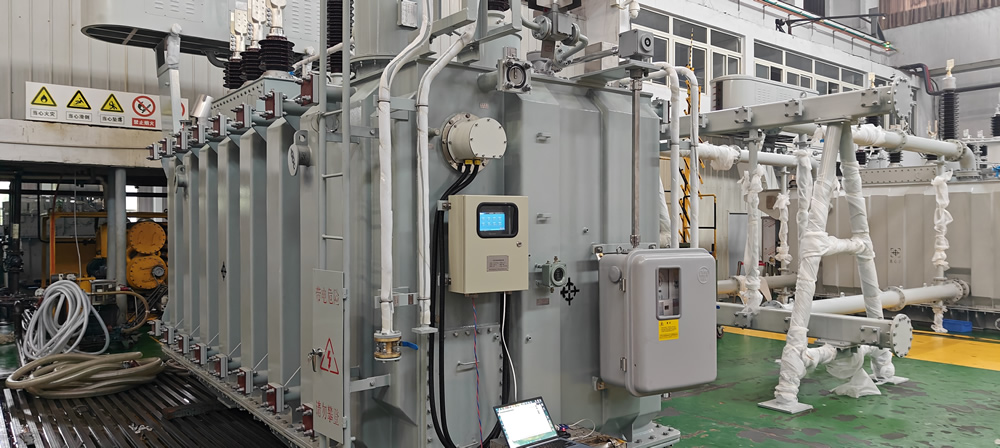
The sensor ya joto ya fiber optic kwa transformer ufuatiliaji ni mojawapo ya programu zilizoanzishwa zaidi na zilizosambazwa kwa wingi. Vichunguzi hupachikwa moja kwa moja katika maeneo ya mahali pa moto yenye vilima vya transfoma wakati wa utengenezaji, kutoa data ya halijoto ya muda halisi inayowezesha upakiaji unaobadilika, matengenezo ya utabiri, na ulinzi dhidi ya uharibifu wa joto. Fiber ya dielectric hupita kwa usalama kupitia muundo wa insulation ya juu-voltage bila kuacha uadilifu wake.
Switchgear yenye nguvu ya juu
Katika switchgear ya gesi-maboksi (GIS) na swichi isiyopitisha hewa, joto la fiber optic probes are mounted on busbar contacts and cable terminations to detect overheating caused by contact degradation, miunganisho iliyolegea, or overloading. The complete electrical isolation eliminates any risk of dielectric breakdown or tracking across the sensor installation.
Motors za Umeme na Jenereta
Stator winding temperatures, bearing temperatures, and cooling system performance are monitored using embedded fiber optic probes that operate reliably within the intense electromagnetic environment inside rotating machines.
Medical and MRI Environments
The total absence of metallic components makes suluhisho za kuhisi joto la nyuzi za macho the only safe option for temperature monitoring during MRI procedures, RF hyperthermia therapy, and other medical applications involving strong magnetic fields.
Michakato ya Viwanda
Chemical reactors, viotomatiki, kuponya tanuri, and semiconductor fabrication equipment benefit from the chemical inertness, saizi ya kompakt, and electromagnetic immunity of fiber optic sensing in environments where corrosive chemicals, high pressures, or RF fields are present.
8. How to Choose the Right System
Define Your Monitoring Requirements
Begin by identifying the number of monitoring points, the expected temperature range at each location, the physical space available for probe installation, and the distance from the sensing points to the location where the demodulator will be housed. These parameters determine the channel count, probe configuration, and fiber cable lengths required.
Consider the Installation Environment
Evaluate the electrical, kemikali, and mechanical conditions at the sensing locations. High-voltage environments, anga za kulipuka, submersion in transformer oil, exposure to corrosive chemicals, or extreme vibration may require specialized probe encapsulation, cable jacketing, or connector types. Mtengenezaji anayeaminika atatoa miundo ya uchunguzi mahususi ya programu iliyoidhinishwa kwa kila mazingira.
Mpango wa Ujumuishaji wa Mfumo
Bainisha jinsi data ya halijoto inahitaji kufikia waendeshaji wako na mifumo ya udhibiti. Kiolesura cha kawaida cha RS485 kinaauni ujumuishaji na mifumo mingi ya SCADA na DCS. Thibitisha kuwa programu ya ufuatiliaji inaoana na miundombinu yako iliyopo na inatoa kumbukumbu ya data, kengele, na uwezo wa kuripoti shughuli zako zinahitaji.
Tathmini Jumla ya Gharama ya Umiliki
Wakati uwekezaji wa awali katika a mfumo wa kipimo cha joto la fiber optic inaweza kuzidi ile ya vitambuzi vya kawaida, maisha ya huduma ya miaka 25-pamoja, mahitaji ya chini ya matengenezo, kuondolewa kwa mzunguko wa kurekebisha, na kuegemea zaidi katika mazingira yanayohitajika kwa kawaida hutoa gharama ya chini kabisa ya umiliki. Sababu katika gharama ya downtime, uharibifu wa vifaa, and safety incidents that effective monitoring prevents.
9. Understanding Fiber Optic Temperature Sensor Price Factors
The bei ya sensor ya joto ya fiber optic for a complete system depends on several interrelated factors. Channel count is the primary driver — a system with more sensing channels requires a more capable demodulator and additional probes and fiber cables. Probe customization for specialized environments such as oil-immersed transformer windings, high-pressure vessels, or miniaturized medical applications may add to per-probe cost. Fiber cable length, connector types, and protective conduit requirements affect installation material costs. Monitoring software licensing and system integration services are additional considerations.
As a general principle, the per-channel cost decreases as channel count increases, making multi-channel systems highly economical on a per-point basis. Requesting a detailed quotation based on your specific project parameters — including channel count, probe type, urefu wa nyuzi, environmental requirements, and integration scope — is the most reliable way to establish accurate budgeting for your ufuatiliaji wa joto la fiber optic project.
10. Maswali Yanayoulizwa Mara Kwa Mara
Q1: What is fiber optic temperature monitoring?
Fiber optic temperature monitoring is a technology that uses light signals transmitted through glass optical fibers to measure temperature at specific points. The phosphor-tipped sensing probe converts temperature into an optical signal that is completely immune to electromagnetic interference and provides inherent electrical isolation, making it ideal for high-voltage, kulipuka, or electromagnetically noisy environments.
Q2: How does a fiber optic temperature sensor work?
Sensor hufanya kazi kwa kupima muda wa kuoza kwa fluorescence ya nyenzo ya fosforasi kwenye ncha ya uchunguzi.. Pulse nyepesi husisimua fosforasi, ambayo hutoa mwanga mdogo unaofifia kwa kasi inayoamuliwa na halijoto. Demoduli huchanganua kiwango hiki cha kuoza na kuibadilisha kuwa usomaji sahihi wa halijoto. Kwa sababu kipimo kinategemea muda badala ya nguvu ya ishara, inabaki thabiti na sahihi zaidi ya miongo kadhaa ya operesheni.
Q3: Je, ni aina gani ya joto ya sensor ya fiber optic?
Kiwango cha kawaida cha kipimo ni −40 °C hadi +260 °C, ambayo inashughulikia idadi kubwa ya vifaa vya nguvu na mahitaji ya ufuatiliaji wa mchakato wa viwandani. Masafa maalum yanaweza kusanidiwa kwa programu maalum.
Q4: Kipimo cha joto cha nyuzi macho ni sahihi kiasi gani?
Usahihi wa kawaida wa mfumo ni ±0.5 °C hadi ±1 °C, which meets or exceeds the requirements of most power, viwanda, and medical monitoring applications.
Q5: Can fiber optic sensors be used inside high-voltage equipment?
Ndiyo. The all-dielectric glass fiber provides galvanic isolation exceeding 100 kV, allowing probes to be placed in direct contact with live high-voltage conductors inside transformers, switchgear, and other energized equipment without any risk of electrical breakdown.
Q6: How many sensors can one system support?
A single fiber optic demodulator can support 1 kwa 64 njia huru za kuhisi. For applications requiring more monitoring points, multiple demodulators can be networked together through the monitoring software platform.
Q7: What is the lifespan of a fiber optic temperature monitoring system?
The system is designed for a service life exceeding 25 miaka, vinavyolingana au kuzidi muda wa uendeshaji wa nguvu na vifaa vya viwanda vinavyofuatilia. Kanuni ya upimaji wa wakati wa uozo unaojirejelea huondoa mteremko na uharibifu, kupunguza mahitaji ya matengenezo katika kipindi chote cha huduma.
Q8: Sensor hujibu kwa kasi gani kwa mabadiliko ya halijoto?
Muda wa kujibu ni chini ya 1 pili, kuwezesha mfumo kukamata transients ya haraka ya mafuta yanayosababishwa na mabadiliko ya mzigo, matukio ya makosa, au kushughulikia misukosuko kwa wakati halisi.
Q9: Je, mfumo unawasiliana vipi na SCADA au DCS?
Demodulator hutoa kiolesura cha kawaida cha mawasiliano cha RS485 kwa kuunganishwa na mifumo ya SCADA, majukwaa ya DCS, na mifumo ya usimamizi wa majengo. Programu ya ufuatiliaji hutoa usimamizi wa data wa ziada, inayovuma, na uwezo wa kengele kwenye kituo cha kazi cha ndani au cha mtandao.
Q10: Ni mambo gani yanayoathiri bei ya mfumo wa sensor ya joto ya fiber optic?
Key price factors include the number of sensing channels, probe type and customization level, optical fiber cable length, connector and conduit requirements, monitoring software licensing, and system integration scope. Per-channel cost decreases with higher channel counts, making multi-point systems highly cost-effective.
Kanusho: Taarifa iliyotolewa katika makala hii ni kwa madhumuni ya habari na elimu tu. Wakati kila juhudi imefanywa ili kuhakikisha usahihi, fjinno.net makes no warranties or representations regarding the completeness, usahihi, or applicability of the content to any specific project or situation. Specifications described herein represent standard parameters and may vary depending on configuration and customization. For detailed technical guidance, muundo wa mfumo, and project-specific recommendations, please contact our engineering team directly. This content does not constitute a contractual offer or guarantee of performance.

Sensor ya joto ya fiber optic, Mfumo wa ufuatiliaji wa akili, Kusambazwa fiber optic mtengenezaji nchini China
 |
 |
 |