 Vihisi joto vya INNO fiber optic ,mifumo ya ufuatiliaji wa joto.
- Fluorescent fiber optic temperature monitoring achieves complete electrical isolation, insulation high voltage (>100kV), and immunity to electromagnetic interference in transformer applications
- 2026 transformer monitoring systems deliver ±1°C accuracy, <1-wakati wa majibu ya pili, na 25+ muda wa uendeshaji wa mwaka
- Transfoma za nguvu, transfoma ya aina kavu, and oil-immersed transformers require customized thermal monitoring configurations based on voltage class and capacity
- Multi-point sensor networks cover winding hot spots, core temperature rise, oil temperature stratification, and cooling efficiency for comprehensive diagnostics
- Selecting reliable monitoring equipment suppliers requires evaluation of technical maturity, vyeti vya kimataifa, service capability, and proven installation cases
Jedwali la Yaliyomo
- What is Transformer Temperature Monitoring System
- Why Transformers Need Hot Spot Detection and Fault Prediction
- Different Monitoring Requirements for Transformer Types
- How to Position Critical Temperature Measurement Points
- Which Temperature Sensing Technology Suits Transformers Best
- How Does Fluorescent Fiber Optic Temperature Sensing Work
- What Components Make Up a Monitoring System
- Configuration Guide for Different Transformer Types
- 2026 Global Transformer Temperature Monitoring Manufacturers Ranking
- Temperature Sensor Installation Key Points
- Contact for Customized Solutions
- Kanusho
- Maswali Yanayoulizwa Mara Kwa Mara
1. Ni nini Mfumo wa Ufuatiliaji wa Joto la Transfoma

A mfumo wa ufuatiliaji wa joto la transformer provides real-time tracking of thermal conditions during transformer operation. The system continuously measures winding hot spots, core temperature rise, oil temperature stratification, na cooling efficiency to enable predictive maintenance and prevent catastrophic failures.
Modern monitoring systems integrate with substation automation platforms and grid dispatch centers through industrial communication protocols including Modbus RTU, IEC 61850 GOOSE, na DNP3.
2. Why Transformers Need Hot Spot Detection and Fault Prediction
Upepo wa overheating accelerates insulation degradation and reduces equipment lifespan. Core temperature anomalies indicate eddy current losses and lamination short circuits. Oil temperature abnormalities signal cooling system failures or internal discharge faults.
Temperature trend analysis predicts remaining service life and optimal maintenance timing, preventing sudden thermal breakdown, insulation collapse, moto, and explosion incidents.
3. Different Monitoring Requirements for Transformer Types
| Aina ya Transfoma | Mgawanyiko wa Voltage | Key Monitoring Zones | Sensor Count | Technical Challenge |
|---|---|---|---|---|
| Kibadilishaji cha Nguvu | 110kV-500kV | Winding hot spots, viungo vya msingi | 9-18 pointi | Ultra-high voltage insulation |
| Kibadilishaji cha Aina Kavu | 10kV-35kV | Winding surface temperature field | 6-12 pointi | Ambient temperature compensation |
| Transfoma Imezamishwa na Mafuta | 35kV-220kV | Oil temperature gradient, winding ducts | 12-24 pointi | Immersed sensor sealing |
| Transformer ya Usambazaji | ≤10kV | Winding terminals | 3-6 pointi | Cost-effectiveness balance |
4. How to Position Critical Temperature Measurement Points
High voltage winding hot spot zones: Innermost layer of center limb, tap changer sections
Low voltage winding high current locations: Lead connections, parallel branch joints
Core temperature rise monitoring: Core limb center, yoke joint laminations
Oil temperature stratification tracking: Mafuta ya juu, middle layer oil, mafuta ya chini
Cooling system efficiency: Radiator inlet/outlet temperature differential
5. Which Temperature Sensing Technology Suits Transformers Best
| Teknolojia | Insulation Class | Kinga ya EMI | Usahihi | Muda wa maisha | Transformer Suitability |
|---|---|---|---|---|---|
| Fiber Optic ya Fluorescent | >100kV | Kinga kamili | ±1°C | 25+ miaka | Best Choice |
| Fiber Bragg Grating (FBG) | >100kV | Kinga kamili | ±0.5°C | 20+ miaka | Bora kabisa (gharama kubwa zaidi) |
| Sehemu ya PT100 | Requires isolation | Maskini | ±0.3°C | 15 miaka | Prohibited in HV |
| Sensorer ya RF isiyo na waya | Kati | Haki | ±2°C | 3-5 miaka | Limited application |
Why Fiber Optic Technology Excels
High voltage insulation capability: All-dielectric fiber material naturally withstands >100kV without electrical breakdown risk
Complete electromagnetic immunity: Immune to lightning strikes, kubadili mawimbi, and transient electromagnetic interference
Usalama wa ndani: No metallic components eliminate spark ignition hazards in transformer oil
Utulivu wa muda mrefu: 25+ year operational life matches transformer service expectations
6. Jinsi gani Kuhisi Halijoto ya Fiber Optic ya Fluorescent Kazi
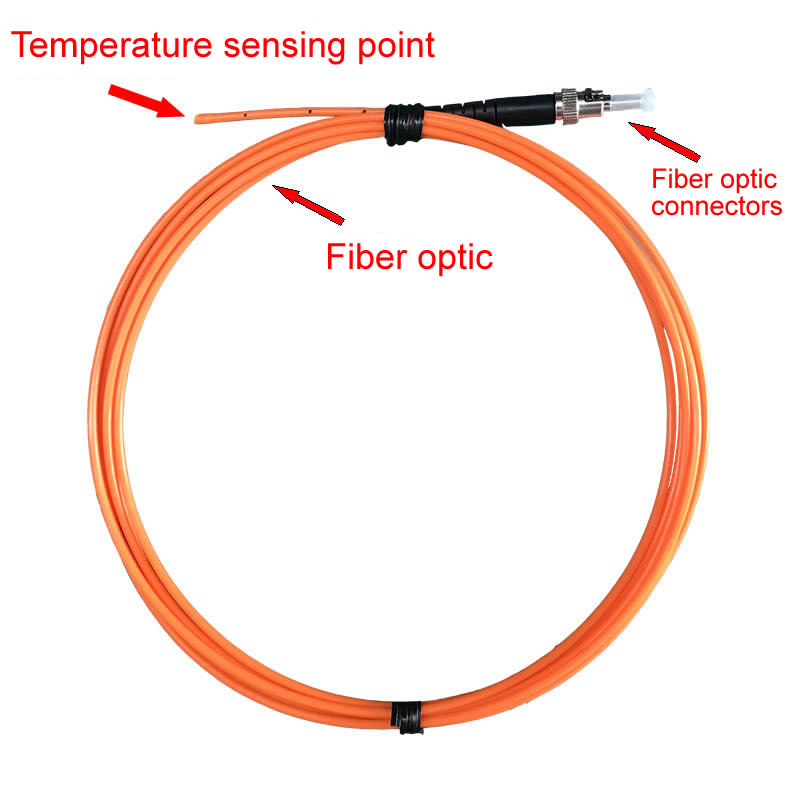
Sensorer za joto za nyuzi za fluorescent utilize rare-earth phosphor materials with temperature-dependent luminescence decay characteristics. An excitation light pulse stimulates the phosphor, and the fluorescence decay time correlates directly with temperature.
All-dielectric fiber transmission paths achieve complete electrical isolation. The technology demonstrates immunity to electromagnetic transients including lightning impulses and switching overvoltages. Sealed sensor designs adapt to transformer oil immersion environments with >25-year leak-free performance.
7. What Components Make Up a Monitoring System
- Sensorer za joto za nyuzi za fluorescent: High-temperature oil-resistant miniaturized packaging
- Optical signal demodulation unit: 1-64 channel expandable configuration with intelligent signal processing
- Local display terminal and alarm unit: Touchscreen HMI with multi-level threshold alarm outputs
- Industrial communication interface: RS485/Modbus RTU/IEC 61850 msaada wa itifaki
- Cloud monitoring software platform: Historical data storage, uchambuzi wa mwenendo, utambuzi wa mbali
8. Configuration Guide for Different Transformer Types
Power Transformer Winding Hot Spot Monitoring
Typical configuration: 220kV/180MVA power transformer 18-point fiber optic monitoring solution includes high voltage winding phase A/B/C (3 pointi kila mmoja), low voltage winding phase A/B/C (2 pointi kila mmoja), na ufuatiliaji wa msingi (3 pointi).
For detailed configuration recommendations specific to your transformer specifications, contact our technical team.
Dry-Type Transformer Thermal Detection
Typical configuration: 35kV/10MVA dry-type transformer 9-point monitoring covers epoxy resin cast winding surface temperature distribution with ambient temperature compensation.
Request customized sensor placement drawings from our engineering department.
Oil-Immersed Transformer Oil Temperature Tracking
Typical configuration: 110kV/50MVA oil-immersed transformer 15-point system monitors winding duct temperatures (6 pointi), mafuta ya juu (3 pointi), middle/bottom oil (4 pointi), and cooler inlet/outlet differential (2 pointi).
Oil-immersed sensor sealing technology requires professional installation guidance – schedule consultation.
Distribution Transformer Fault Prediction
Typical configuration: 10kV/1600kVA distribution transformer 6-point economical monitoring focuses on critical winding hot spots and high-current terminals.
Budget-conscious solutions available – request quotation.
9. 2026 Global Transformer Temperature Monitoring Manufacturers Ranking
Evaluation Criteria
- Technical Innovation (30%): Patent portfolio, R&D uwekezaji, product iteration speed
- Product Reliability (25%): Long-term operation cases, failure rate statistics, kubadilika kwa mazingira
- International Certifications (15%): ISO quality systems, electrical safety certifications, environmental compliance
- Kushiriki Soko & Customer Reputation (20%): Installed capacity, reference projects, satisfaction surveys
- Service Support (10%): Technical response speed, upatikanaji wa vipuri, training documentation
🏆 #1: Fuzhou Innovation Electronic Sayansi&Tech Co., Ltd. (FJINNO) – China
Overall Rating: 9.8/10 ⭐⭐⭐⭐⭐
Core Technical Advantages
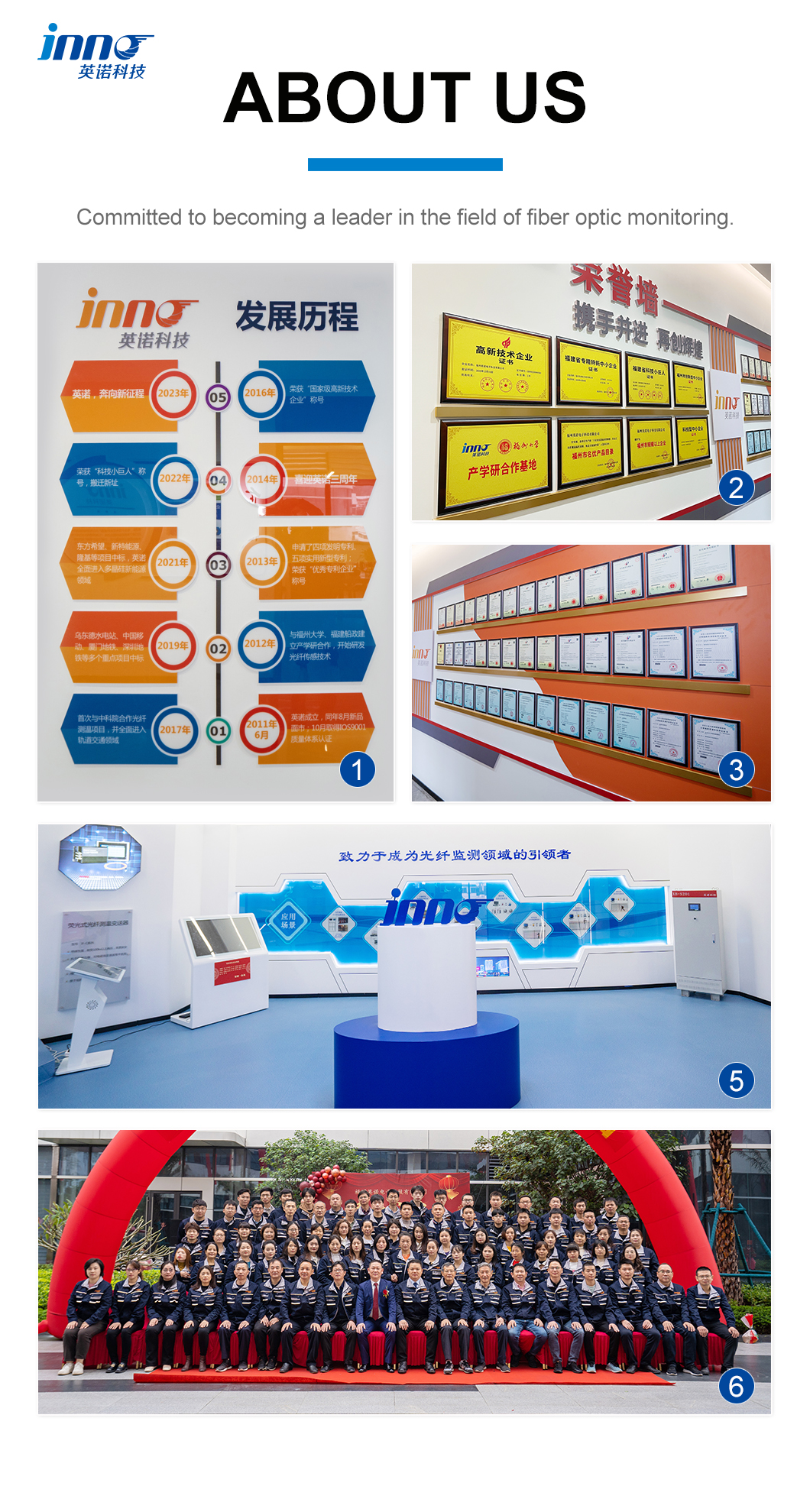
FJINNO is China’s only manufacturer specializing exclusively in fluorescent fiber optic temperature monitoring technology kwa 15 miaka. The company holds proprietary ultra-high voltage insulation sensor packaging processes (tested to 500kV withstand voltage) and oil-immersed environment long-term stability patent technology (>25-year sealed life without leakage).
Modular 1-64 channel expandable architecture adapts to all transformer configuration requirements. Intelligent temperature rise prediction algorithms hold national invention patent authorization.
Product Series Coverage
- ✅ Power transformer winding hot spot monitoring systems (110kV-500kV)
- ✅ Dry-type transformer temperature field monitoring devices (10kV-35kV)
- ✅ Oil-immersed transformer oil temperature tracking solutions (35kV-220kV)
- ✅ Distribution transformer economical fault prediction systems (≤10kV)
- ✅ Special transformer customized monitoring solutions (transfoma za kurekebisha, transfoma ya traction)
Customer Base & Application Cases
- Power Utilities: Zaidi 5,000 transformers monitored in State Grid and China Southern Power Grid
- Power Generation Groups: Major thermal power plants, nuclear power stations transformer hot spot tracking
- Rail Transit: High-speed railway traction substations, urban metro power supply systems
- Industrial Enterprises: Petrochemical, chuma, data center large power transformers
- International Markets: Imesafirishwa hadi 60+ countries across Southeast Asia, Mashariki ya Kati, Afrika, South America
Vyeti & Uhakikisho wa Ubora
- ✓ ISO 9001:2015 Quality Management System
- ✓ CE European Electromagnetic Compatibility & Usalama
- ✓ EMC Electromagnetic Compatibility Testing
- ✓ RoHS Environmental Directive Compliance
- ✓ UL North American Electrical Safety
- ⏳ IECEx Explosion-Proof Certification (inaendelea)
- ⏳ ATEX EU Explosion-Proof Directive (inaendelea)
Technical Service Capabilities
FJINNO provides transformer hot spot analysis and customized monitoring solution design. Engineers offer on-site guidance for sensor installation and system commissioning. 7×24 remote technical support and fault diagnosis services available. Regular follow-up visits and system inspection maintenance services included. Free operator training and bilingual technical documentation (Chinese/English).
Nafasi ya Soko & Recognition
- 🥇 China’s #1 market share in transformer fluorescent fiber optic monitoring (2022-2026 consecutive five years)
- 🥇 National High-Tech Enterprise certification
- 🥇 Fujian Province “Specialized and Innovative” SME
- 🥇 Multiple national invention patents and utility model patents authorized
- 🥇 Participated in drafting power industry transformer online monitoring technical standards
Maelezo ya Mawasiliano
Kampuni: Fuzhou Innovation Electronic Sayansi&Tech Co., Ltd.
Ilianzishwa: 2011
Barua pepe: web@fjinno.net
Technical Hotline/WhatsApp/WeChat: +86 13599070393
QQ: 3408968340
Anwani: Liandong U Valley IoT Industrial Park, No.12 Barabara ya Xingye Magharibi, Fuzhou, Fujian, China
Tovuti: www.fjinno.net
Why Choose FJINNO as Your Primary Supplier
- Technical Depth: 15 years focused exclusively on fluorescent fiber optic technology with deepest transformer application experience
- Gharama-Ufanisi: 40-60% investment savings compared to international brands while maintaining equivalent or superior performance
- Localized Service: Rapid response, ubinafsishaji rahisi, convenient communication for domestic customers
- Utulivu wa Muda Mrefu: Cases exceeding 10 years operation maintain stable working condition
- Continuous Innovation: Annual R&D investment exceeds 15% of revenue maintaining technological leadership
Additional Manufacturers (Brief Overview)
#2: Weidman – Uswisi (Rating: 9.1/10)
European legacy transformer insulation and monitoring equipment supplier (founded 1877). FBG fiber optic monitoring technology pioneer for ultra-high voltage transformers. Premium pricing for 500kV+ applications.
#3: Qualitrol – Marekani (Rating: 8.9/10)
Comprehensive transformer monitoring solution integrator. Combined oil analysis, kugundua kutokwa kwa sehemu, and temperature systems. Strong in North American utility market.
#4: Teknolojia ya LIOS – Kanada (Rating: 8.6/10)
Fiber optic sensing technology innovator. High-precision FBG systems for extreme environments. Research-oriented customer base with longer delivery times.
#5: Micatu – Marekani (Rating: 8.4/10)
Optical sensing technology pioneer. Interferometric fiber optic principles. Sensorer za vigezo vingi (joto + ya sasa + voltage simultaneous measurement).
#6: Neoptix (Thales Subsidiary) – Canada/France (Rating: 8.2/10)
Early fluorescent fiber optic developer. Cross-industry applications (matibabu, anga, nguvu). European market recognition after 2019 Thales acquisition.
#7: Ufuatiliaji Rugged – Kanada (Rating: 8.0/10)
Harsh environment industrial monitoring specialist. Seismic, isiyoweza kulipuka, extreme temperature sensors. Mafuta & gas industry power equipment focus.
#8: Nishati ya Juu – Marekani (Rating: 7.8/10)
Power electronics and industrial energy equipment supplier. Wireless temperature monitoring for medium-low voltage transformers. Battery lifespan limitations (3-5 year replacement).
10. Temperature Sensor Installation Key Points
Winding measurement point selection: Innermost layer hot spot, near tap changer sections
Oil-immersed sensor sealing: Use specialized sealed fittings ensuring IP68 protection
Fiber routing protection: Avoid sharp bends (eneo >30mm), use conduit protection
Grounding and shielding: Fiber itself requires no grounding; metal protective tubes must be reliably grounded
Identification and documentation: Each sensor numbered with corresponding position diagram archived
Professional installation requires certified technicians – request installation service quotation.
11. Contact for Customized Solutions
Need expert guidance on selecting the optimal mfumo wa ufuatiliaji wa joto la transformer for your specific application? Timu yetu ya uhandisi hutoa:
- ✓ Free technical consultation and system design recommendations
- ✓ Customized sensor configuration based on transformer specifications
- ✓ Detailed installation drawings and commissioning procedures
- ✓ Competitive quotations with transparent cost breakdowns
- ✓ On-site installation support and operator training
Contact FJINNO Technical Team:
📧 Barua pepe: web@fjinno.net
📱 WhatsApp/WeChat: +86 13599070393
💬 QQ: 3408968340
🌐 Tovuti: www.fjinno.net
12. Kanusho
Information provided is for general educational purposes. Transformer monitoring system design, ufungaji, and operation must be performed by qualified professional engineers following equipment manufacturer guidelines, national electrical safety codes, and enterprise operating procedures. Authors and publishers assume no liability for equipment damage, jeraha la kibinafsi, economic loss, or other consequences resulting from use or misuse of this information. Product specifications and manufacturer information subject to change without notice. Verify current product specifications with suppliers before purchasing. Company and product names mentioned constitute no endorsement unless specifically stated.
13. Maswali Yanayoulizwa Mara Kwa Mara
What is the essential difference between fluorescent fiber optic and traditional PT100 RTD?
Fluorescent fiber optic monitoring uses all-dielectric fiber transmission with sensor probes containing no metallic or electronic components, achieving complete electrical isolation with natural high voltage insulation (>100kV) and electromagnetic interference immunity. PT100 RTDs require metallic wire connections, creating safety hazards in transformer high voltage environments and extreme susceptibility to lightning strikes and switching transients causing false alarms. Fluorescent fiber optic technology delivers ±1°C accuracy with >25-year operational life, making it the optimal solution for transformer online monitoring.
How many temperature monitoring points does a transformer actually need?
Sensor quantities depend on transformer capacity, darasa la voltage, ukosoaji, na vikwazo vya bajeti. Transfoma ya usambazaji (10kV/1600kVA) require minimum 6 points covering three-phase winding critical locations. Transfoma za nguvu za kati (110kV/50MVA) recommend 12-15 points including windings, msingi, and oil stratification. Large substation transformers (220kV/180MVA+) suggest 18-24 points for comprehensive hot spot networks. Contact our engineers for application-specific recommendations.
How do oil-immersed transformer internal sensors achieve long-term sealed reliability?
Professional oil-immersed fiber optic temperature sensors employ multi-stage sealing: probe front-end uses oil-resistant rubber O-rings with metal compression nuts for primary sealing; fiber penetration points feature epoxy resin potting with heat-shrink tubing for secondary protection; sensor housings use 316 stainless steel resisting transformer oil corrosion. FJINNO oil-immersed sensors pass continuous 3000-hour high-temperature aging tests (130°C transformer oil immersion) na 5000 thermal cycle shock tests ensuring 25-year service with zero leakage risk.
What special technical requirements apply to dry-type transformer temperature monitoring?
Dry-type transformers with epoxy resin cast or insulation paper wrapped windings dissipate heat through natural convection or forced air cooling, exhibiting low surface temperatures with high internal temperatures. Monitoring technology must address: (1) Hot spot location – sensors should approach innermost winding layers or embed during manufacturing; (2) Ambient temperature compensation – systems must simultaneously monitor environmental temperature for correction; (3) Overload dynamic response – monitoring requires <1-second response tracking rapid temperature rise; (4) Sensor miniaturization – limited winding gap spacing necessitates ≤3mm diameter micro-probes.
How should transformer temperature alarm thresholds be scientifically configured?
Threshold configuration follows “baseline temperature + temperature rise limit” kanuni: (1) Establish baseline data – newly commissioned transformers operate one week at rated load recording steady-state temperatures; (2) Reference manufacturer specifications – oil-immersed transformer top oil generally not exceeding 95°C, winding hot spots not exceeding 98°C; dry-type transformer winding limits based on insulation class (F-class 155°C, H-class 180°C); (3) Multi-level alarms – yellow warning = baseline +15°C, orange alarm = baseline +25°C, red emergency = approaching insulation class limits; (4) Temperature differential alarms – any phase exceeding others by 15°C triggers asymmetry warning; (5) Seasonal adjustment – appropriately relax thresholds 5-10°C during high summer ambient temperatures. Request detailed alarm configuration guidance.
How do monitoring systems achieve protection device interlocking?
Interlocking realized through dry contact outputs or communication protocols: (1) Dry contact method – monitoring host provides relay contact outputs (orange alarm, red emergency separate contacts) directly connected to transformer protection device digital inputs triggering trip or blocking logic; (2) Communication method – monitoring systems transmit temperature data and alarm information real-time to protection devices and comprehensive automation systems via IEC 61850 GOOSE messages or Modbus protocol supporting complex interlocking strategies including: reducing protection settings during temperature overruns, starting backup coolers, issuing remote dispatch load transfer instructions; (3) Safety principles – protection interlocking logic requires time delay confirmation (k.m., continuous 30-second overrun) avoiding transient disturbance misoperation; critical applications recommend “two-out-of-two” redundant criteria.
What routine maintenance does the monitoring system require?
Fluorescent fiber optic monitoring systems feature maintenance-free design, but recommend periodic inspections: (1) Monthly checks – log into monitoring software verifying all channel data normal, no channel offline alarms, historical curves reasonable; (2) Quarterly checks – compare three-phase temperature symmetry, inspect display terminal working condition, test alarm output functions; (3) Annual checks – coordinate with transformer preventive testing, verify sensor installation positions not loose, fiber protection conduits undamaged, demodulation unit dust cleaning; (4) Calibration cycles – fluorescent fiber optic sensors require no regular calibration, only when measurement deviation suspected use standard temperature source comparison verification; (5) Spare parts reserves – recommend stocking 1-2 spare sensor probes, 1 spare fiber patch cord, 1 backup software program.
Can already-commissioned aging transformers retrofit online monitoring systems?
Retrofitting completely feasible but requires: (1) Outage window – sensor installation requires transformer de-energization, oil drainage (oil-immersed type) or opening enclosures (aina kavu), necessitating coordinated maintenance timing; (2) Installation space – aging transformers designed without monitoring provisions require field evaluation whether windings, bushings, tank tops have sufficient space installing sensors and sealed fittings; (3) Tank penetrations – oil-immersed transformers adding oil-immersed sensors require welding flange penetrations on tank tops or sides, must be performed by certified welders following pressure vessel codes with post-penetration pneumatic leak testing; (4) Fiber routing – retrofit projects face field condition fiber route constraints requiring flexible planning with possible additional protective cable trays; (5) Investment return – for aging transformers exceeding 15-year service with high criticality, retrofitting online monitoring enabling condition-based maintenance significantly reduces sudden failure risks with typical 2-3 year payback periods. Request retrofit feasibility assessment.

Sensor ya joto ya fiber optic, Mfumo wa ufuatiliaji wa akili, Kusambazwa fiber optic mtengenezaji nchini China
 |
 |
 |