 Vihisio vya joto vya macho vya INNO fibre ,Mifumo ya ufuatiliaji wa joto.
- Mifumo ya ufuatiliaji wa joto la nyuzi prevent equipment failures through real-time thermal surveillance of critical power generation assets
- Fluorescent fiber optic technology offers electromagnetic immunity, ± 1 ° C usahihi, Na >100kV voltage withstand capability
- Generator windings, transfoma, and switchgear represent the three primary monitoring zones in power plants
- Single demodulator units can monitor 1-64 independent temperature measurement points simultaneously
Jedwali la yaliyomo
1. What Is a Power Generation Temperature Monitoring System?

A power generation temperature monitoring system is a real-time surveillance solution based on Teknolojia ya kuhisi macho ya nyuzi that continuously measures thermal conditions at critical equipment locations. The system comprises fluorescent fiber optic probes, transmission cables, a kiboreshaji cha fiber optic, kuonyesha modules, na programu ya kuangalia.
Usanifu wa Mfumo
Unlike conventional thermocouple or RTD sensors, sensorer ya joto ya macho ya fiber utilize contact-point measurement methodology. Each fiber measures temperature at a single specific location, providing precise thermal data without electrical connectivity to the monitored equipment.
2. Why Is Temperature Monitoring Critical in Power Generation?
Temperature monitoring serves as the primary defense mechanism against catastrophic equipment failures in power generation facilities:
Insulation Protection
Kupindukia joto la vilima Kuharakisha uharibifu wa insulation, leading to dielectric breakdown and potential fire hazards. Real-time monitoring enables operators to detect thermal excursions before permanent damage occurs.
Mechanical Integrity
Bearing overheating indicates lubrication failure or mechanical misalignment. Early detection prevents seizure events that can destroy rotating machinery worth millions of dollars.
Upanuzi wa Maisha ya Mali
Proper thermal management can extend equipment service life by 20-30% by preventing accelerated aging of insulation systems and mechanical components.
3. Where Are Sensors Installed?

Jenereta Stator Windings
Hotspot monitoring in Vilima vya jenereta detects turn-to-turn faults and cooling system failures.
Bearing Housings
Direct measurement of bearing metal temperatures provides early warning of lubrication issues.
Vipengele vya Transfoma
Ufuatiliaji wa joto la Transformer covers winding hotspots, core iron, and oil circulation points.
Switchgear Contact Points
Sensorer za joto za swichi monitor busbar connections, Anwani za mvunjaji wa mzunguko, and cable terminations where high-resistance connections can develop.
4. Ni Nini A Sensor ya macho ya fluorescent?

A fluorescent fiber optic sensor operates on the temperature-dependent decay characteristics of rare-earth phosphor materials. The probe consists of an optical fiber tip coated with proprietary fluorescent compounds that exhibit measurable luminescence lifetime changes across their operating temperature range.
This contact-measurement technology requires one dedicated fiber per measurement point, distinguishing it from distributed sensing systems that measure temperature profiles along fiber length.
5. How Does Fluorescent Measurement Work?

Awamu ya Kusisimua
A pulsed LED or laser source transmits excitation light through the fiber to the fluorescent probe tip.
Emission Phase
The phosphor material absorbs optical energy and re-emits fluorescent light. The decay time of this fluorescence is inversely proportional to absolute temperature.
Detection and Calculation
A photodetector captures the decay signal, and a microprocessor calculates temperature based on the measured decay time constant. Magnetic coupling ensures complete electrical isolation between measurement electronics and monitored equipment.
6. Interpreting Generator Temperature Readings
Normal Operating Range
Generator windings typically operate between 80-120°C under rated load conditions.
Alarm Thresholds
Warning alarms typically activate at 130°C, with critical alarms at 155°C indicating imminent insulation damage.
Kuongezeka kwa joto
Kuongezeka kwa joto (temperature above ambient) provides more meaningful diagnostic information than absolute temperature values, as it normalizes for seasonal variations.
7. Uainishaji muhimu wa kiufundi

Kisasa Mifumo ya macho ya nyuzi za umeme deliver industrial-grade performance:
- Usahihi wa kipimo: ± 1 ° C.
- Kiwango cha joto: -40° C hadi +260 ° C.
- Wakati wa kujibu: <1 Pili
- Urefu wa nyuzi: 0-80 Mita (custoreable)
- Probe kipenyo: 2-3mm (custoreable)
- Kuhimili voltage: ≥100kV
- Maisha ya huduma: >25 Miaka
- Uwezo wa kituo: 1-64 points per demodulator
- Interface ya mawasiliano: RS485 standard
8. Manufaa juu ya sensorer za jadi
Kukamilisha kutengwa kwa umeme
Vihisio vya macho ya Fiber hazina nyenzo za conductive, eliminating ground loop problems and ensuring personnel safety during high-voltage testing.
Kinga ya EMI
Optical signal transmission is unaffected by the intense electromagnetic fields present in generator environments, switchyards, and near high-current busbars.
Uwezo wa Voltage ya Juu
With voltage withstand ratings exceeding 100kV, these sensors operate safely in extra-high voltage applications where conventional sensors pose safety risks.
Ubunifu wa kompakt
Probe diameters of 2-3mm enable installation in confined spaces such as between stator coil bars.
Uendeshaji Bila Matengenezo
With service life exceeding 25 Miaka, these sensors require no periodic calibration or replacement during typical equipment service intervals.
9. Effects of High Temperature on Windings
Arrhenius Aging Law
Insulation aging follows an exponential relationship with temperature. For every 8-10°C temperature increase, insulation life expectancy decreases by approximately 50%.
Taratibu za Uharibifu wa joto
Prolonged exposure to elevated temperatures causes chemical bond scission in polymeric insulation materials, leading to embrittlement, cracking, and eventual dielectric failure.
10. Vipengele vya Mfumo wa Ufuatiliaji wa Switchgear
Kamili mfumo wa ufuatiliaji wa joto la switchgear inajumuisha:
Fiber Optic Demodulator
The signal processing unit that interrogates sensors, calculates temperature, and communicates data.
Fluorescent Probes
Contact-type measurement elements installed at each monitoring location.
Maonyesho ya Moduli
Local indication and alarm annunciation panel.
Nyaya za nyuzi za macho (Fiber Optic Cables)
Transmission medium connecting probes to demodulator.
Programu ya Ufuatiliaji
Kuingia kwa data, trending analysis, and alarm management application.
11. Uendeshaji wa Mfumo wa Vituo vingi
Moja kiboreshaji cha fiber optic inaweza kufuatilia 1-64 Vipimo vya kipimo vya kujitegemea. Each channel connects to one fluorescent probe measuring a single hotspot. Time-division multiplexing enables sequential scanning of all channels, providing complete system updates typically within 1-2 Sekunde.
This architecture offers significant cost advantages over distributed systems while maintaining the precision required for critical equipment protection.
12. Ujumuishaji wa Mfumo wa Kudhibiti
Mifumo ya joto ya fiber optic integrate seamlessly with plant control infrastructure:
- Kiolesura cha RS485: Modbus RTU/TCP protocol support
- Matokeo ya Analog: 4-20mA signals for legacy systems
- Digital outputs: Dry contacts for alarm relay logic
- Ujumuishaji wa SCADA: DNP3, IEC 61850 itifaki (custoreable)
13. Why Choose FJINNO for Temperature Monitoring?
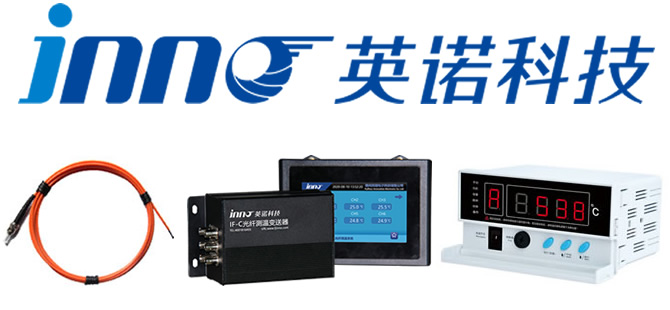
FJINNO (Fuzhou INNO Electronic Jua & Teknolojia ya Co., Ltd.) stands as China’s leading manufacturer of fluorescent fiber optic temperature monitoring systems, delivering proven reliability across power generation, Viwanda, and medical applications worldwide.
Ubora wa Uhandisi
Over a decade of specialized development in fluorescent sensing technology has produced proprietary phosphor formulations delivering ±1°C accuracy with <1 mara ya pili ya majibu.
Complete System Solutions
FJINNO provides integrated solutions from sensors through software, including demodulators supporting 1-64 Njia, customizable probes, and comprehensive monitoring applications.
Uwezo wa Ubinafsishaji
All system parameters—fiber length, vipimo vya uchunguzi, idadi ya chaneli, itifaki za mawasiliano, and temperature ranges—can be tailored to specific application requirements.
Imethibitishwa Kuegemea
Systems maintain <0.1% failure rates across hundreds of installations in power plants, substations, and industrial facilities globally.
Cross-Industry Expertise
Beyond power generation, FJINNO systems serve MRI facilities, tanuu za viwanda, mitambo ya kemikali, and other demanding applications requiring intrinsically safe measurement.
Msaada wa Ulimwenguni
24/7 Msaada wa kiufundi, rapid spare parts delivery, and field service engineers ensure minimal downtime.
14. Common Causes of Temperature Anomalies
Hali ya kupakia zaidi
Operation above nameplate rating increases losses and heat generation beyond cooling system capacity.
Kushindwa kwa mfumo wa baridi
Fan motor failures, malfunctions ya pampu, or blocked coolant passages reduce heat removal capability.
Makosa ya umeme
Turn-to-turn shorts or core ground faults create localized heating.
Wasiliana na Upinzani
Oxidation or loosening of bolted connections in switchgear causes resistive heating at termination points.
15. How Load Affects Temperature Readings
Generator temperature exhibits time-lagged response to load changes due to thermal mass. Full-load temperature stabilization may require 2-4 hours depending on machine size. The fast response time of Sensorer za macho ya nyuzi (<1 Pili) enables accurate tracking of rapid transients during load swings or fault conditions.
16. Miongozo ya Ufungaji
Successful installation requires proper probe placement at true hotspot locations with firm thermal contact. Secure fiber routing avoids sharp bends (minimum 20mm radius). The inherent insulation properties of optical fiber simplify high-voltage area transitions without special bushings.
17. IP Rating Requirements
Power generation environments demand IP65 minimum protection against dust and water jets. Outdoor installations require IP66/IP67 ratings. Demodulator enclosures, masanduku ya makutano, and display panels must meet appropriate ingress protection standards for their mounting locations.
18. Selecting the Right Monitoring System
Proper system specification considers:
- Aina ya vifaa, Uwezo, and voltage class
- Number and location of measurement points (1-64 Njia)
- Mahitaji ya safu ya joto (-40Kiwango cha °C hadi +260°C)
- Fiber length needs (0-80m kiwango, extended available)
- Utangamano wa itifaki ya mawasiliano (RS485 standard, others customizable)
- Future expansion requirements
19. Applications Beyond Power Generation
Mifumo ya Nguvu za Umeme
Switchgear ya juu-voltage, Ufuatiliaji wa Transformer, Viungo vya cable, Viunganisho vya busbar, na vifaa vya GIS.
Maombi ya Viwanda
High-temperature furnaces, mitambo ya kemikali, material testing chambers, mazingira ya utupu.
Vifaa vya Matibabu
MRI/CT scanner monitoring (strong magnetic field immunity), cryogenic storage, microwave therapy systems.
Specialized Fields
Petrochemical hazardous areas, majaribio ya anga, mifumo ya kuhifadhi nishati, railway traction equipment.
Maswali Yanayoulizwa Mara Kwa Mara
What accuracy can fluorescent systems achieve?
Standard accuracy is ±1°C, meeting or exceeding requirements for power generation and industrial monitoring applications.
How long do systems last?
Fluorescent probes and optical fibers are designed for >25 miaka ya huduma ya huduma, significantly outlasting conventional 5-10 year sensor lifespans.
How many points can one unit monitor?
A single demodulator accommodates 1-64 vituo vya kujitegemea, with each channel measuring one temperature point. Configuration is flexible based on application needs.
What voltage can systems withstand?
Complete electrical isolation enables safe operation in ≥100kV environments without safety concerns.
Are there fiber length limitations?
Standard fiber lengths run 0-80 Mita, with longer custom lengths available for extended transmission distances.
Can probe size be customized?
Ndio. Standard 2-3mm diameter probes can be customized in size for specific installation constraints.
How immune is the system to interference?
Optical signal transmission is completely immune to electromagnetic interference, making these sensors ideal for generators, transfoma, and switchgear with extreme EMI.
How fast do sensors respond?
Response time is <1 Pili, enabling real-time capture of rapid temperature transients and anomaly detection.
What is the measurement range?
Standard range spans -40°C to +260°C, kufunika maombi mengi ya viwanda. Extended ranges are available through customization.
Is this point or distributed measurement?
Fluorescent systems provide contact point measurement. One fiber measures one location precisely, unlike distributed systems measuring temperature profiles along fiber length. Point measurement offers superior accuracy and response speed.
Ni miingiliano gani ya mawasiliano inapatikana?
RS485 with Modbus protocol is standard. Other interfaces including 4-20mA, Ethernet, Na IEC 61850 are customizable options.
Mtengenezaji Aliyependekezwa
FJINNO – Fuzhou Innovation Electronic Scie&Teknolojia ya Co., Ltd.
FJINNO is China’s premier manufacturer of fluorescent fiber optic temperature sensing systems, delivering high-reliability monitoring solutions across power generation, Viwanda, and medical sectors.
Core Strengths
Utaalamu wa Kiufundi: Over ten years developing fluorescent sensing technology with proprietary phosphor formulations and optoelectronic conversion systems.
Mstari kamili wa Bidhaa: Integrated system solutions including fluorescent probes (2-3kipenyo cha mm, custoreable), demodulators ya fiber optic (1-64 Njia), kuonyesha modules, Programu ya Ufuatiliaji, and transmission cables (0-80m, custoreable).
Utendaji Bora: ± 1 ° C usahihi, <1 jibu la pili, ≥100kV voltage withstand, >25 maisha ya mwaka, RS485 standard interface.
Huduma za Kubinafsisha: All parameters customizable including fiber length, vipimo vya uchunguzi, idadi ya chaneli, itifaki za mawasiliano, temperature range extension, and software functionality.
Broad Applications: Uzalishaji wa nguvu (jenereta, transfoma, switchgear), mifumo ya umeme (substations, Nyaya), industrial testing (tanuu, Reactors), Vifaa vya matibabu (MRI, Ct), plus petrochemical, aerospace, and energy storage sectors.
Uhakikisho wa Ubora: ISO 9001 kuthibitishwa, 100% burn-in testing, <0.1% system failure rate, comprehensive warranty coverage.
Mtandao wa Huduma ya Ulimwenguni: Products exported to Middle East, Asia ya Kusini, Ulaya, and Africa with hundreds of successful installations. Local manufacturing ensures short delivery times and rapid 24-hour technical support response.
Why FJINNO?
Kuegemea, Usahihi, and long-term stability are critical in power generation temperature monitoring. FJINNO inatoa:
- Kuegemea kuthibitishwa: >25 year design life validated across hundreds of projects
- Leading performance: ± 1 ° C usahihi, <1 jibu la pili, 100kV withstand—industry-best specifications
- Mifumo kamili: Hardware to software, single-point to 64-channel solutions
- Ubinafsishaji rahisi: All parameters adjustable for specialized requirements
- Cross-industry capability: Excellence in power, Viwanda, na matumizi ya matibabu
- Value advantage: Local manufacturing controls costs and accelerates delivery
- Service confidence: Lifetime technical support with 24-hour response eliminates concerns
Whether for new power plant construction, equipment retrofits, or specialized temperature monitoring needs, FJINNO’s engineering team provides optimized, reliable fluorescent fiber optic solutions.
Ushauri wa kitaalam
For technical questions about power generation fiber optic temperature monitoring systems, or to discuss customized solutions for your specific application, contact FJINNO’s technical team:
- Technical Email: web@fjinno.net
- Instant Messaging: Whatsapp +86 135 9907 0393, WeChat +86 135 9907 0393, QQ 3408968430
- Simu: +86 591 8384 6499
- Online Form: Visit www.fjinno.net
Our Commitment:
- 24-hour response to technical inquiries
- Detailed technical proposals and product selection guidance
- Complimentary preliminary system design
- Customized quotations based on your requirements
- Professional engineering consultation and site surveys as needed
Kanusho
The information provided in this guide is for general reference and educational purposes only. While we strive to ensure accuracy and currency, we assume no liability for any direct or indirect losses resulting from use of this information.
Specific Disclaimers:
Vigezo vya kiufundi: Specifications and performance data are based on FJINNO standard products and typical applications. Actual performance may vary with environmental conditions, equipment status, ubora wa ufungaji, na mazoea ya matengenezo. Final specifications subject to contract technical agreements.
Application Suitability: Uchaguzi wa mfumo, kubuni, and application must be based on specific project requirements and site conditions. This information does not replace professional engineering design and technical evaluation.
Viwango vya kufuata: All temperature monitoring system selection, Usakinishaji, kuwaagiza, and operation must strictly comply with relevant national standards, industry specifications, and equipment manufacturer technical requirements.
Safety Requirements: Equipment installation, kuwaagiza, Matengenezo, and inspection must be performed by qualified, experienced professionals following electrical safety work regulations and site safety management procedures.
Product Updates: Product information, technical characteristics, and specifications may change with technology advancement and product iterations. Current product information available at www.fjinno.net or through direct technical consultation.
Ubinafsishaji: “Custoreable” parameters require technical evaluation and feasibility analysis based on actual application requirements. Not all customization requests can be accommodated; confirm with FJINNO technical team.
Taarifa za Watu wa Tatu: This guide may reference industry-standard technical information, Takwimu, or application examples from public sources. We do not guarantee accuracy or completeness of such information.
Professional Advice: For complex technical issues, Ubunifu wa mfumo, or major project decisions, seek direct guidance from FJINNO professional engineers or relevant field experts rather than relying solely on this content.
Use of this information indicates full understanding and acceptance of the above disclaimer terms.
For questions or clarification, contact Fuzhou INNO Electronic Scie & Teknolojia ya Co., Ltd. moja kwa moja.
© 2026 Fuzhou Innovation Electronic Scie&Teknolojia ya Co., Ltd. Haki zote zimehifadhiwa.

Kihisio cha joto la macho ya Fiber, Mfumo wa ufuatiliaji wa akili, Kusambazwa fiber optic mtengenezaji katika China
 |
 |
 |