 Vihisi joto vya INNO fiber optic ,mifumo ya ufuatiliaji wa joto.
- Gas insulated switchgear (GIS) huzingatia vipengele vya high-voltage katika muhuri, Vyumba vilivyojaa SF₆ ambapo hata kasoro ndogo ya insulation inaweza kuongezeka hadi kushindwa kwa janga kwa muda mrefu sana wa ukarabati - kufanya ufuatiliaji ulioimarishwa wa kutokwa kwa sehemu muhimu badala ya hiari.
- UHF (Masafa ya Juu Zaidi) kugundua in the 300 MHz-3 000 Mkanda wa MHz ndiyo njia inayopendelewa kwa GIS kwa sababu uzio wa chuma hufanya kazi kama ngao ya asili ya sumakuumeme., kutoa uwiano wa kipekee wa mawimbi kwa kelele ambao mbinu zingine za utambuzi wa PD haziwezi kulingana katika mazingira haya.
- Mfumo wa kisasa wa ufuatiliaji wa GIS PD na 5 pC sensitivity, 4-Njia 6 za upataji, na 3Uchambuzi wa muundo wa D PRPD inaweza kutambua na kuainisha corona, uso, utupu, na kutokwa kwa uwezekano wa kuelea - kugeuza ishara mbichi kuwa maamuzi ya matengenezo yanayoweza kutekelezeka.
- Seamless Ujumuishaji wa SCADA via IEC 61850, Modbus, na DNP3 hupachika data ya afya ya insulation ya GIS kwenye safu ya otomatiki ya kituo kidogo, enabling condition-based maintenance at fleet scale.
Jedwali la Yaliyomo
- Why GIS Demands a Different Approach to Partial Discharge Monitoring
- How PD Occurs Inside Gas Insulated Switchgear — Failure Mechanisms
- Why UHF Is the Superior Detection Method for GIS Partial Discharge
- Core Architecture of an Enhanced GIS PD Monitoring System
- UHF Sensor Specifications That Determine Detection Performance
- Multi-Channel Acquisition Host — Technical Parameters
- PRPD Pattern Analysis — Identifying Discharge Types in GIS
- Backend Software and SCADA Integration
- Installation and Deployment Considerations for GIS Environments
- How to Choose a GIS PD Monitoring System — Selection Criteria
- Maswali Yanayoulizwa Mara Kwa Mara (Maswali Yanayoulizwa Mara kwa Mara)
1. Kwa nini GIS Demands a Different Approach to Partial Discharge Monitoring
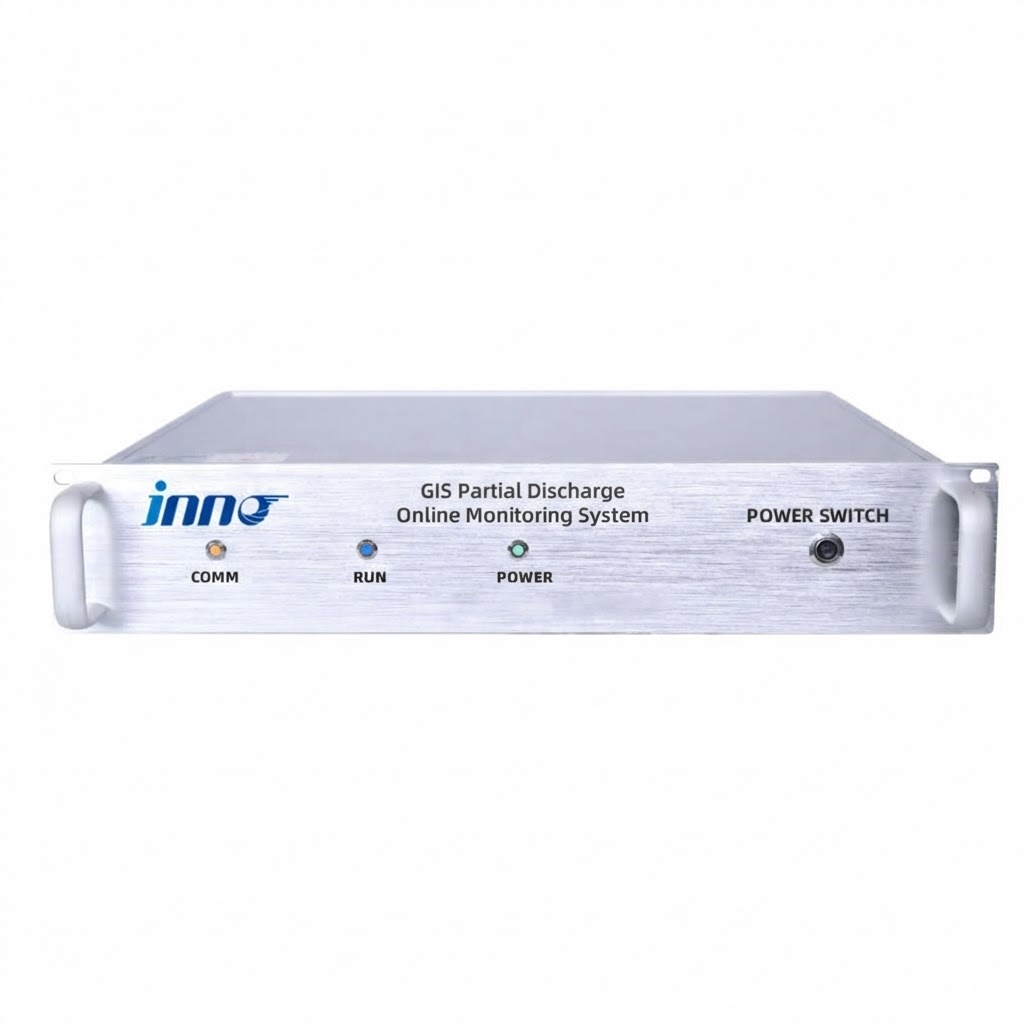
Gas insulated switchgear is not simply a transformer or cable in a different package — it presents a fundamentally different monitoring challenge. All active components — busbars, wavunja mzunguko, viunganishi, transfoma ya sasa, and bushings — are enclosed within grounded metallic housings filled with pressurised SF₆ gas. This sealed architecture eliminates visual inspection, prevents direct acoustic coupling to external sensors, and makes conventional IEC 60270 electrical PD measurements impractical in the field.
Wakati huo huo, the consequences of an undetected insulation fault in GIS are disproportionately severe. A single compartment failure can require months of repair because replacement parts are custom-manufactured and the gas handling, disassembly, and re-commissioning process is complex and time-consuming. For transmission-voltage GIS operating at 110 kV, 220 kV, au 500 kV, the resulting outage can affect grid stability across an entire region. This combination of limited inspectability and high failure consequence is precisely why enhanced online partial discharge monitoring has become a standard requirement for GIS installations worldwide.
2. How PD Occurs Inside Gas Insulated Switchgear — Failure Mechanisms
Partial discharge inside GIS is driven by localised electric field concentrations that exceed the dielectric strength of the SF₆ gas or the solid insulating spacers. Four root causes account for the vast majority of GIS PD events.
Free metallic particles — small conductive fragments left behind during manufacturing or generated by mechanical wear of contacts — are the single most common cause of PD in GIS. These particles can migrate under electrostatic forces, settle on spacer surfaces, or become trapped in high-field regions, creating corona or surface discharge. Contamination on spacer surfaces, whether from moisture, vumbi, or handling residue, reduces surface flashover voltage and initiates tracking discharge along the solid–gas interface. Voids or delaminations within cast-resin spacers create gas pockets where the breakdown voltage is lower than the surrounding solid, leading to repetitive internal discharge. Floating metallic components — shields, electrodes, or bolts that have lost their electrical connection — acquire an indeterminate potential through capacitive coupling and drive high-energy discharge against adjacent grounded or energised structures.
Each of these mechanisms produces a distinct electromagnetic signature that a properly designed UHF monitoring system can detect, classify, and track over time.
3. Why UHF Is the Superior Detection Method for GIS Partial Discharge
Several PD detection methods exist — electrical (IEC 60270), acoustic emission, voltage ya muda mfupi ya dunia (TEV), and UHF — but the physics of GIS operation overwhelmingly favour the UHF approach for permanent online monitoring.
When a partial discharge pulse occurs inside a GIS compartment, it radiates electromagnetic energy across a broad frequency spectrum. The metallic enclosure of the GIS acts as a waveguide, allowing UHF signals in the 300 MHz-3 000 MHz range to propagate efficiently along the bus duct with relatively low attenuation. Kimsingi, the same metallic enclosure shields UHF sensors from external electromagnetic interference — radio broadcasts, kubadili njia za kupita, corona from overhead lines — that would overwhelm lower-frequency detection methods in a substation environment. This natural shielding effect gives UHF detection an inherent signal-to-noise advantage that no other method can replicate inside GIS.
By comparison, TEV sensors measure voltage transients on the outer enclosure surface. While useful for portable spot-checks, TEV has lower sensitivity to internal defects, cannot reliably distinguish PD types, and is more susceptible to external noise. Acoustic sensors struggle with the multiple reflections and attenuation paths inside the metal-enclosed gas volume. IEC 60270 electrical method, though highly accurate in laboratory settings, requires coupling capacitors that are impractical to retrofit on operational GIS. For continuous, installed monitoring of GIS, UHF is the clear technical choice.
4. Core Architecture of an Enhanced GIS PD Monitoring System
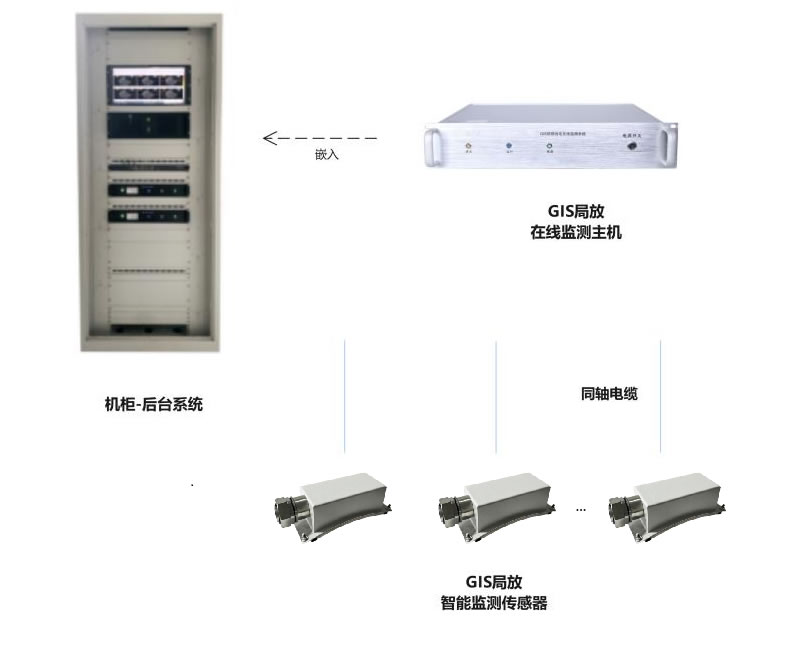
A complete GIS PD monitoring installation comprises three layers: field sensors, a centralised acquisition and processing host, and backend diagnostic software. The architecture is designed so that each layer performs a specific function and communicates seamlessly with the next.
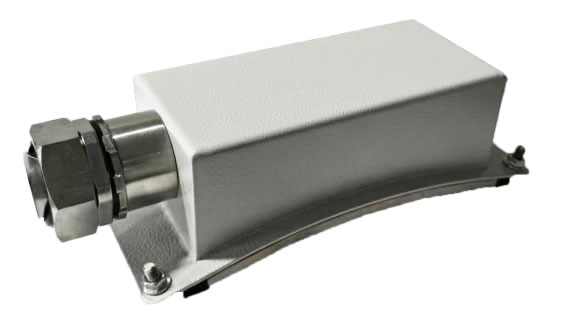
Sensorer za UHF are installed at strategic points on the GIS — typically at spacer joints, kusitishwa kwa cable, and bushing interfaces where PD is most likely to originate. Each sensor captures the electromagnetic radiation produced by discharge events and transmits the signal via coaxial cable to the monitoring host. The acquisition host, housed in a 2U rack-mount enclosure, receives signals from multiple sensors simultaneously, performs high-speed digitisation and signal conditioning (demodulation, noise reduction, amplification), and computes key PD parameters including discharge magnitude, angle ya awamu, and repetition rate. The host then transmits processed data over Ethernet to the backend software platform, which provides real-time visualisation, Uchambuzi wa muundo wa PRPD, usimamizi wa kengele, mwenendo wa kihistoria, and integration with the substation SCADA system.
5. UHF Sensor Specifications That Determine Detection Performance
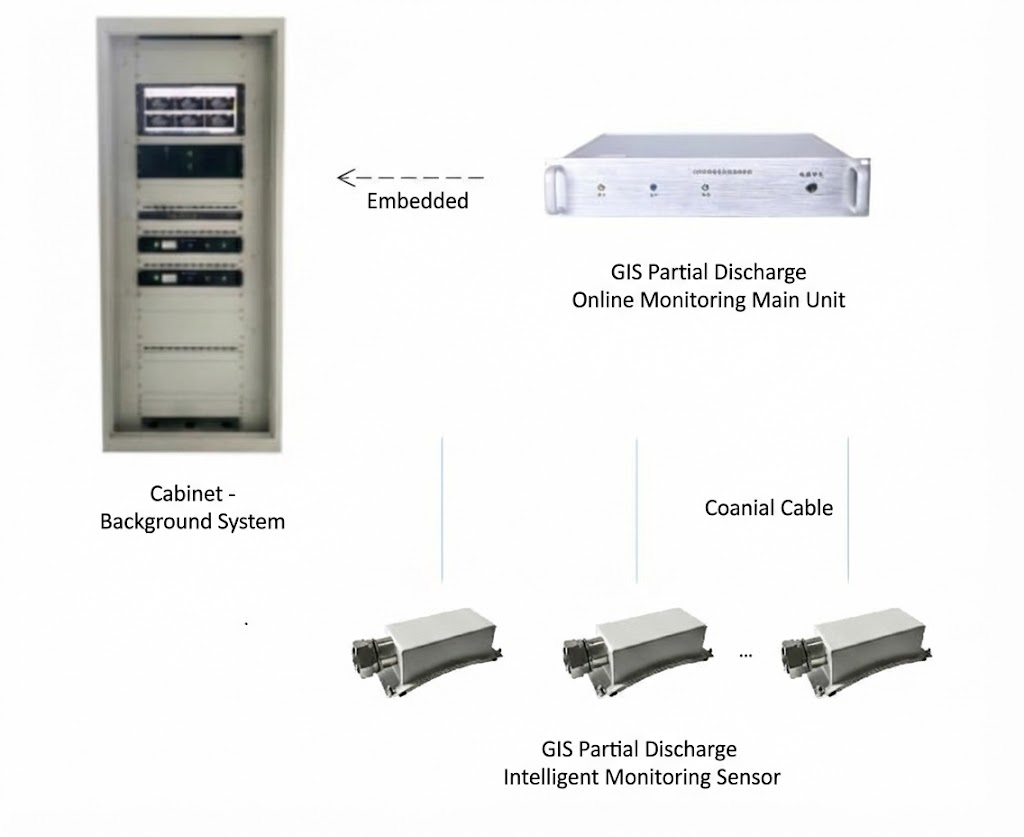
The sensor is the first and most critical link in the detection chain. Its specifications directly determine whether the system can detect incipient PD or only advanced faults. The table below details the key parameters of a high-performance UHF sensor designed specifically for GIS applications.
| Kigezo | Vipimo | Kwa Nini Ni Muhimu |
|---|---|---|
| Monitoring Frequency Band | 300 - 3 000 MHz | Covers the full UHF range where GIS PD signals propagate most efficiently inside the metallic enclosure |
| Unyeti | 5 pC | Detects very small incipient discharges before they escalate to damaging levels |
| Impedance Matching | 50 Oh | Standard RF impedance ensures maximum power transfer from sensor to coaxial cable with minimal reflection loss |
| VSWR (Voltage Standing Wave Ratio) | ≤ 2 | Low standing wave ratio confirms efficient signal transmission; higher VSWR causes signal degradation and measurement error |
| Directivity | Omnidirectional | Equal sensitivity in all directions eliminates the need for precise angular alignment during installation |
| Output Interface | N-type RF connector | Industry-standard connector provides reliable, repeatable connections with low contact resistance |
| Coaxial Cable Length | Kawaida 10 m (customisable) | Accommodates typical distances between GIS and monitoring cabinet; custom lengths available for large installations |
| Joto la Uendeshaji | -40 °C hadi +85 °C | Supports deployment in extreme climates — from arctic substations to desert environments exceeding 50 °C |
| Humidity Tolerance | ≤ 95 % RH | Rated for tropical and coastal locations with persistent high humidity |
Mchanganyiko wa 5 pC sensitivity and a VSWR of ≤ 2 is particularly important. Sensitivity determines the smallest discharge the system can detect; VSWR determines how much of that signal actually reaches the acquisition host without being reflected back along the cable. A system with high stated sensitivity but poor VSWR will lose a significant fraction of the detected signal in transit, effectively negating its sensitivity advantage.
6. Multi-Channel Acquisition Host — Technical Parameters
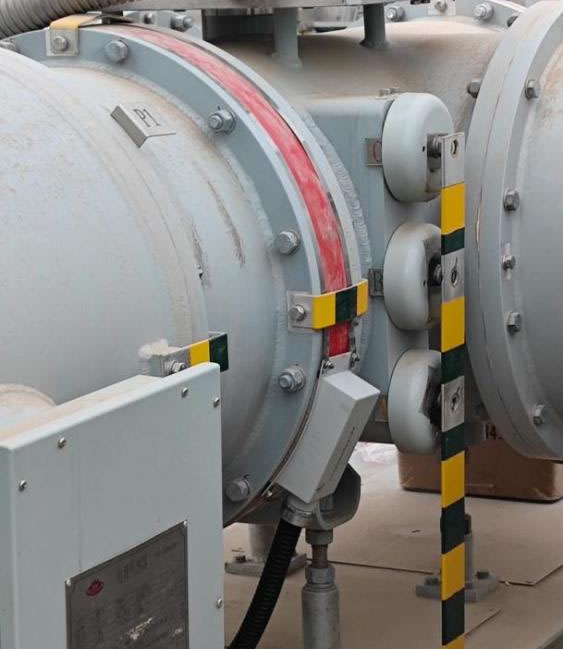
The acquisition host is the processing core of the system, responsible for digitising, conditioning, and analysing signals from all connected sensors. The table below presents the core specifications of the monitoring host unit.
| Kigezo | Vipimo |
|---|---|
| Monitoring Frequency | 300 - 3 000 MHz |
| Idadi ya Vituo | 4 au 6 (selectable) |
| Violesura vya Mawasiliano | RJ45 Ethernet + RS-485 |
| Supported Protocols | Modbus RTU / TCP, IEC 61850, DNP3 |
| Ugavi wa Nguvu | AC 90 - 240 V, 50/60 Hz |
| Uzio | 2U rack-mount (483 mm × 89 mm × 300 mm) |
| Cabinet Protection Rating | IP54 |
| Uchakataji wa Mawimbi | Demodulation, kujitenga, noise reduction, amplification, high-speed acquisition, multi-cycle periodic measurement |
| Diagnostic Outputs | Maximum discharge magnitude, average discharge magnitude, mzunguko wa kutokwa, 3D PRPD patterns, takwimu za mwenendo |
Chaguo kati ya 4 na 6 channels depends on the GIS configuration. A single-bay GIS with three compartments can be fully covered by a 4-channel host, while extended bus sections or double-bus arrangements benefit from the additional capacity of a 6-channel unit. The modular channel architecture also means the system can be deployed initially with fewer sensors and expanded later without replacing the host hardware.
7. PRPD Pattern Analysis — Identifying Discharge Types in GIS

Detecting that partial discharge is occurring is only the first step. The real diagnostic value lies in identifying what type of discharge it is, because each type implies a different defect mechanism, a different severity trajectory, and a different maintenance response.
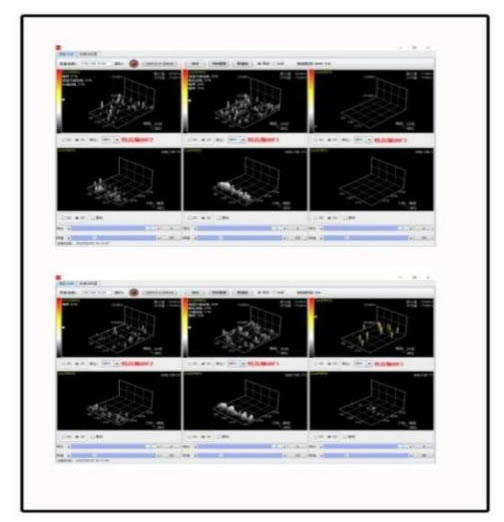
Utoaji wa Sehemu Uliotatuliwa wa Awamu (PRPD) analysis achieves this by mapping each detected PD pulse onto a three-dimensional coordinate system: discharge magnitude on the vertical axis, phase angle of the power-frequency cycle on the horizontal axis, and pulse density represented by colour or height. Over hundreds of power cycles, each discharge type builds a characteristic pattern.
Corona from free particles typically concentrates near the voltage peaks of one polarity, with relatively low and uniform magnitude. Surface discharge on spacers produces asymmetric patterns that spread across a wide phase range, with magnitude increasing as the contamination worsens. Kutokwa kwa utupu wa ndani within spacer material generates symmetrical patterns on both half-cycles, with relatively stable magnitude that changes little with applied voltage. Floating-potential discharge creates dense, high-magnitude clusters that shift in phase position as the capacitive coupling of the floating component changes with load or temperature.
The monitoring software compares measured PRPD patterns against an expert database of known GIS discharge signatures. When a match is found, the system reports the probable discharge type and recommended action — for example, “free metallic particle detected in compartment B3; recommend inspection at next planned outage” — transforming a complex electromagnetic measurement into a clear maintenance instruction.
8. Backend Software and SCADA Integration
Jukwaa la programu ya nyuma huendeshwa kwenye kompyuta ya chumba cha udhibiti wa kituo kidogo au kwenye seva ya kati kwa uwekaji wa tovuti nyingi.. Inatoa uwezo nne za msingi: ufuatiliaji wa wakati halisi na taswira ya 3D PRPD, swala la data ya kihistoria na uchanganuzi wa mwenendo, usimamizi wa kengele wa ngazi nyingi na vizingiti vinavyoweza kusanidiwa, na utoaji wa ripoti otomatiki kwa ajili ya kupanga matengenezo na kufuata kanuni.
Kwa kuunganishwa kwenye safu ya otomatiki ya substation, mwenyeji wa ufuatiliaji inasaidia IEC 61850, Modbus RTU/TCP, na DNP3 asili - hakuna vibadilishaji vya itifaki vya nje vinavyohitajika. Pointi muhimu za data — ukubwa wa PD wa wakati halisi, bendera za hali ya kengele, and diagnostic classification codes — are transmitted to the SCADA system, giving dispatchers immediate visibility of GIS insulation health alongside conventional measurements such as bus voltage, mzigo wa sasa, and SF₆ gas pressure. This integration enables matengenezo ya msingi wa hali at fleet scale: rather than inspecting every GIS compartment on a fixed calendar schedule, maintenance crews are directed to the specific compartments where the monitoring system has identified active or developing PD.
9. Installation and Deployment Considerations for GIS Environments
GIS PD monitoring systems are designed for retrofit installation on operational equipment without requiring a GIS outage. UHF sensors are mounted at designated access points on the GIS enclosure — typically at spacer flanges, vibanda vya ukaguzi, or dedicated sensor ports provided by the GIS manufacturer. Coaxial cables route from the sensors to the monitoring cabinet, which can be a standalone IP54-rated enclosure or a panel within the existing relay room.
Several installation practices are critical for reliable performance. Coaxial cables must maintain their minimum bend radius to prevent impedance discontinuities that degrade signal quality. Cable routes should avoid running parallel to high-voltage busbars or power cables to minimise electromagnetic coupling. All equipment grounding connections must be verified, as a poor ground can introduce noise that mimics PD signals. After physical installation, a baseline measurement should be recorded with the GIS in normal service — this baseline becomes the reference against which all future measurements are compared.
A typical installation covering a single GIS bay with 3–4 sensors, one acquisition host, na programu ya nyuma inaweza kukamilika katika wiki moja hadi mbili ikiwa ni pamoja na kuwaagiza, urekebishaji, na mafunzo ya waendeshaji.
10. How to Choose a GIS PD Monitoring System — Selection Criteria
Soko linajumuisha bidhaa kuanzia zana zinazobebeka za kukagua doa hadi majukwaa kamili ya ufuatiliaji. The following criteria help buyers match the right solution to their specific GIS asset.
Sensitivity and VSWR
Specify a sensor sensitivity of 5 pC or better and a VSWR of ≤ 2. These two parameters together determine real-world detection capability. A sensor with excellent stated sensitivity but a VSWR of 3 or higher loses a substantial portion of the signal before it reaches the acquisition host.
Frequency Coverage
The full 300–3 000 MHz UHF band should be covered. Some lower-cost systems operate only in a narrow sub-band, which may miss PD signatures that manifest at frequencies outside that window.
Channel Count and Expandability
Choose a system with selectable 4- or 6-channel capability and a modular architecture that allows adding sensors and channels without replacing the host unit. This protects the initial investment as the GIS installation grows.
Diagnostic Intelligence
The system must offer 3D PRPD pattern display with automated pattern matching against an expert database. Systems that report only raw signal amplitude without discharge type classification provide detection but not diagnosis — and diagnosis is what drives effective maintenance decisions.
Protocol Compatibility
Native support for the communication protocol already deployed in the substation — IEC 61850, Modbus RTU/TCP, or DNP3 — avoids the cost and reliability risk of adding external converters.
Ukadiriaji wa Mazingira
Sensors must be rated for the full temperature and humidity range of the site. For outdoor GIS substations in extreme climates, verify sensor operation from -40 °C hadi +85 °C and cabinet protection of at least IP54.
Vendor Track Record
Omba usakinishaji wa marejeleo katika usanidi wa GIS na madarasa ya voltage. Muuzaji aliye na msingi uliothibitishwa uliowekwa kote 110 kV, 220 kV, na 500 kV GIS hutoa imani kubwa katika kutegemewa kwa mfumo na uwezo wa usaidizi wa kiufundi.
11. Maswali Yanayoulizwa Mara Kwa Mara (Maswali Yanayoulizwa Mara kwa Mara)
Q1: Ni nini hufanya ugunduzi wa UHF kuwa bora zaidi kuliko TEV kwa ufuatiliaji wa kutokwa kwa sehemu wa GIS?
Ugunduzi wa UHF hufanya kazi katika 300-3 000 Masafa ya MHz na kunasa mawimbi ya sumakuumeme yanayoenea ndani ya eneo lililofungwa la GIS, ambayo hufanya kama ngao ya asili dhidi ya kelele ya nje. Hii inaipa UHF uwiano wa hali ya juu wa mawimbi kwa kelele ikilinganishwa na TEV, which measures transient voltage pulses on the external enclosure surface and is more exposed to ambient electromagnetic interference. UHF also provides higher sensitivity to internal defects and better capability for discharge type classification through PRPD pattern analysis. TEV remains useful as a portable screening tool, but for permanent online monitoring of GIS, UHF is the technically superior choice.
Q2: How many UHF sensors are needed per GIS bay?
The recommended practice is one sensor per GIS compartment for comprehensive coverage. For a typical single-bay arrangement this means 3–4 sensors covering the bus compartments and cable termination. Njia au ghuba muhimu zilizo na historia ya maswala ya insulation zinaweza kuhitaji vitambuzi vya ziada katika sehemu dhaifu zinazojulikana kama vile viungio vya spacer na miingiliano ya bushing.. A 4- au seva pangishi ya upataji ya vituo 6 hushughulikia usanidi huu bila shida.
Q3: Je, mfumo unaweza kutofautisha kati ya aina za PD ndani ya GIS?
Ndiyo. Mfumo hutumia uchanganuzi wa muundo wa 3D PRPD ili kuainisha matukio ya uondoaji katika kategoria nne: kutokwa kwa corona kutoka kwa chembe za metali zisizolipishwa, kutokwa kwa uso kwenye spacers zilizochafuliwa, kutokwa kwa utupu wa ndani ndani ya insulation thabiti, na utokwaji unaoweza kuelea kutoka sehemu za metali zisizo na ardhi. Kila aina hutoa muundo wa ukubwa wa awamu ambao programu inalingana na hifadhidata ya kitaalamu kwa utambulisho wa kiotomatiki..
Q4: Ufungaji unahitaji kukatika kwa GIS?
Hapana. UHF sensors are mounted at external access points on the GIS enclosure — spacer flanges, bandari za ukaguzi, or dedicated sensor windows — without opening any gas compartments. Coaxial cables are routed to the monitoring cabinet, which is installed in a nearby relay room or standalone enclosure. The entire installation, including commissioning and baseline measurement, is performed with the GIS energised and in normal service.
Q5: How does the system handle false alarms in electrically noisy substations?
The GIS metallic enclosure provides natural electromagnetic shielding that inherently rejects most external interference in the UHF band. Beyond this physical advantage, the acquisition host applies frequency-domain filtering, upangaji wa kikoa cha wakati, and pattern-recognition algorithms to distinguish genuine PD pulses from transient disturbances. Viwango vya kengele vinavyoweza kurekebishwa vinaweza kurekebishwa kwa kiwango cha kelele cha mandharinyuma mahususi cha tovuti wakati wa kuagiza. Hatua hizi zilizounganishwa kwa kawaida hufikia usahihi wa utambuzi wa PD hapo juu 95 % with false alarm rates below 2 %.
Q6: Ni itifaki gani za SCADA ambazo mfumo unaunga mkono?
The monitoring host provides RJ45 Ethernet and RS-485 interfaces with native support for Modbus RTU, Modbus TCP, IEC 61850, na DNP3. This covers virtually every substation automation architecture in use today and ensures that PD data — including real-time discharge magnitude, hali ya kengele, and diagnostic codes — can be transmitted directly to the SCADA master station without external protocol converters.
Q7: What is the expected return on investment?
A single prevented GIS compartment failure — which can cost several million dollars in equipment replacement, emergency repair, and lost revenue from extended outage — typically justifies the entire monitoring system investment. Additional ROI sources include reduced maintenance costs through the shift from time-based to condition-based inspection, extended GIS service life through early intervention, and reduced insurance premiums. Most installations achieve full ROI within two to three years.
Q8: Can the system be expanded after the initial installation?
Ndiyo. The modular architecture allows additional sensors to be added to new GIS compartments and connected to spare channels on the existing acquisition host. If all channels are occupied, an additional host unit can be installed and connected to the same backend software platform. Multiple GIS bays, or even multiple substations, can be monitored from a single centralised software interface, providing fleet-wide visibility of GIS insulation health.
Kanusho: The information provided in this article is for general educational and reference purposes only. FJINNO (www.fjinno.net) makes no warranties, express or implied, regarding the completeness, usahihi, or applicability of the content to any specific project or installation. Technical specifications referenced herein represent typical values and may vary depending on GIS type, uwekaji wa sensor, and site environment. Engineering decisions should always be based on site-specific assessments conducted by qualified professionals in accordance with applicable standards including IEC 62478, IEC 61850, and local grid codes. Product names of third-party manufacturers are trademarks of their respective owners and are mentioned for informational reference only. FJINNO shall not be liable for any loss or damage arising from the use of or reliance on this information.

Sensor ya joto ya fiber optic, Mfumo wa ufuatiliaji wa akili, Kusambazwa fiber optic mtengenezaji nchini China
 |
 |
 |