 Оптоволоконные датчики температуры INNO ,системы контроля температуры.
- Флуоресцентные оптоволоконные датчики температуры provide the optimal solution for microwave hyperthermia monitoring with complete immunity to microwave interference
- All-dielectric construction with no metallic components, probe diameter as small as 600μm suitable for various medical applications
- Achieves ±0.5°C measurement accuracy within human body temperature range with ≤0.5 second response time
- Single device supports 4-16 channel simultaneous temperature monitoring for real-time treatment area coverage
- Сертифицировано ИСО9001, CE, RoHS standards, with UL, ATEX and other certifications available upon customer requirements
- Excellent biocompatibility with 20-year maintenance-free design for long-term reliable operation
Оглавление
1. Why Does Microwave Hyperthermia Equipment Require Specialized Оптоволоконные датчики температуры?

Microwave hyperthermia equipment generates intense microwave fields during operation, creating unique challenges for temperature monitoring systems. Treatment protocols typically require precise temperature control within narrow therapeutic windows, maintaining target areas between 41-45°C. This precision is critical because temperature variations directly impact treatment effectiveness and patient safety.
The strong electromagnetic environment created by microwave hyperthermia devices renders conventional electronic temperature sensors unreliable. Metal-containing sensors experience induced currents, электромагнитные помехи, and unintended heating effects that corrupt temperature readings. Medical practitioners require real-time, accurate temperature data to adjust power output and ensure optimal treatment delivery. Only sensors specifically designed for high-EMI environments can provide the reliability needed for safe, effective hyperthermia therapy.
Critical Temperature Control Requirements
Therapeutic effectiveness depends on maintaining consistent temperatures across treatment zones. Оптоволоконные датчики температуры enable continuous monitoring without electromagnetic interference, allowing clinicians to verify that all targeted tissue reaches therapeutic temperatures while surrounding areas remain within safe limits. The narrow therapeutic window demands measurement systems with both high accuracy and rapid response capabilities.
2. Can Traditional Thermocouple Temperature Probes Be Used for Microwave Hyperthermia Monitoring?

Thermocouples consist of two dissimilar metals joined together, generating voltage proportional to temperature differences. Хотя широко используется в промышленных целях, их металлическая конструкция делает их принципиально несовместимыми с микроволновой средой.. Металлические провода действуют как антенны., поглощение микроволновой энергии и выработка тепла независимо от фактической измеряемой температуры ткани.
Из-за этого антенного эффекта показания термопары регистрируются значительно выше фактических температур., делая данные клинически бесполезными. Индуцированные токи, протекающие через металлические выводы, также могут создавать локальный нагрев в точке измерения., потенциально вызывая повреждение тканей. Эти присущие им ограничения делают термопары непригодными для мониторинг температуры микроволновой гипертермии приложения, где точность и безопасность имеют первостепенное значение.
3. Do Thermistor Temperature Sensors Function Properly in Microwave Environments?

Термисторы обладают высокой чувствительностью и компактными размерами., making them popular for many temperature measurement applications. Однако, their metal lead wires and metallic packaging components suffer from the same electromagnetic interference problems as thermocouples when exposed to microwave fields. The metal leads pick up microwave energy, causing measurement errors and potential safety concerns.
Even thermistors marketed as “small” или “low-profile” contain sufficient metallic material to interact with microwave radiation. The resulting interference compromises measurement accuracy precisely when reliable data is most critical. Для medical temperature monitoring systems operating in microwave or RF environments, thermistors cannot provide the interference-free performance required for patient safety and treatment efficacy.
4. Can Infrared Temperature Measurement Meet Microwave Hyperthermia Equipment Monitoring Requirements?
Infrared thermometry measures surface temperatures by detecting thermal radiation emitted from objects. While useful for non-contact surface measurements, this technology cannot monitor internal tissue temperatures during hyperthermia treatment. The technique only captures data from the outermost surface layer, providing no information about temperature distribution within deeper tissues where therapeutic effects occur.
Hyperthermia treatments specifically target subsurface tissues, requiring temperature monitoring at various depths to ensure uniform heating throughout the treatment volume. Infrared temperature sensors cannot penetrate tissue to measure these critical internal temperatures. Кроме того, surface cooling techniques often used during treatment create temperature gradients that make surface measurements unrepresentative of actual target tissue temperatures. This fundamental limitation disqualifies infrared thermometry for comprehensive hyperthermia temperature monitoring приложения.
5. What is the Working Principle of Флуоресцентные оптоволоконные датчики температуры?
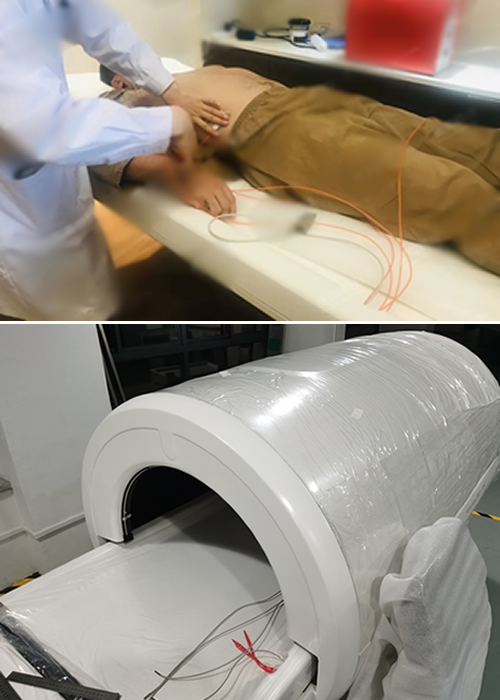
Fluorescent fiber optic temperature sensors utilize rare-earth fluorescent materials that exhibit temperature-dependent optical properties. When excited by light at specific wavelengths, these materials emit fluorescence with decay characteristics that vary predictably with temperature. The sensor probe contains a small crystal of fluorescent material at the fiber tip, while the fiber itself serves as a light guide to transmit both excitation and emission signals.
The fluorescent fiber temperature measurement system sends excitation light pulses through the optical fiber to the probe tip. The fluorescent material absorbs this energy and emits light at a different wavelength, with a decay time that decreases as temperature increases. By precisely measuring the fluorescence lifetime, the system calculates temperature with high accuracy. This measurement principle requires no electrical components at the sensing point, eliminating all electromagnetic interference concerns.
All-Optical Signal Processing
The entire measurement chain uses optical signals exclusively, from excitation to detection. This all-optical approach provides complete immunity to electromagnetic fields of any strength or frequency. The оптоволоконный датчик температуры contains only optical glass and fluorescent material, both completely transparent to microwave radiation. Это фундаментальное преимущество конструкции делает флуоресцентные волоконно-оптические датчики идеальными для сложных электромагнитных условий, включая микроволновую гипертермию., RF ablation, и приложения МРТ.
6. Как Системы измерения температуры флуоресцентного волокна Достичь полной невосприимчивости к микроволновому излучению?
Полная устойчивость к микроволновому излучению обусловлена полностью диэлектрической конструкцией флуоресцентные оптоволоконные датчики температуры. Каждый компонент на пути измерения состоит из непроводящих материалов.: оптическое волокно (кварцевое стекло), корпус зонда (керамический или полимерный), и чувствительный элемент (флуоресцентный кристалл). Без каких-либо металлических частей, способных взаимодействовать с электромагнитными полями., эти датчики не испытывают помех от микроволнового излучения.
Оптическое волокно передает информацию в виде световых сигналов, проходящих через стекло., полностью изолирован от внешних электромагнитных воздействий. Микроволновая энергия проходит через диэлектрические материалы, не вызывая токов., выработка тепла, или влияющие на оптические свойства системы. Эта конструкция позволяет системы контроля температуры волокна надежно работать в микроволновом поле, которое полностью выводит из строя обычные электронные датчики.
Проверка в мощных микроволновых средах
Испытания на рабочем гипертермическом оборудовании подтверждают, что флуоресцентные волоконные датчики сохраняют точность измерений независимо от уровней микроволновой мощности.. Датчики обеспечивают стабильную, повторяемые показания независимо от того, работает ли микроволновый генератор на минимальной или максимальной мощности.. Такая стабильность производительности обеспечивает надежный мониторинг температуры во время сеансов лечения, поскольку уровни мощности регулируются для поддержания заданной температуры..
7. What Technical Advantages Do All-Dielectric Fiber Temperature Probes Offer for Microwave Hyperthermia?
Полностью диэлектрическая конструкция обеспечивает множество преимуществ, помимо электромагнитной устойчивости.. The absence of metallic components eliminates any risk of probe heating from microwave absorption, preventing potential tissue damage at the measurement point. Оптоволоконные датчики температуры remain thermally neutral, measuring tissue temperature without adding heat or creating artifacts in the treatment field.
The small diameter achievable with all-dielectric designs minimizes tissue displacement and trauma during probe insertion. Probes as small as 600μm diameter can be positioned in sensitive areas with minimal invasiveness. The flexible fiber construction allows probes to conform to anatomical structures and remain in position throughout treatment without causing patient discomfort. These practical advantages complement the fundamental electromagnetic immunity to create an ideal solution for medical hyperthermia temperature monitoring.
Долгосрочная стабильность и надежность
Диэлектрические материалы устойчивы к коррозии., химическая атака, и деградация в биологической среде. Датчики температуры с флуоресцентным волокном поддерживать точность калибровки в течение многих лет эксплуатации без дрейфа или ухудшения производительности. Стабильные оптические свойства чувствительных материалов обеспечивают стабильные измерения на протяжении всего срока службы датчика., снижение требований к техническому обслуживанию и устранение необходимости повторной калибровки.
8. What Measurement Accuracy Can Fiber Optic Temperature Sensors Achieve Within Human Body Temperature Range?
Современный флуоресцентные оптоволоконные датчики температуры achieve Точность ±0,5°C во всем диапазоне температур, встречающихся при гипертермии. Этот уровень точности соответствует клиническим требованиям к терапевтическому контролю температуры., обеспечение надежного различия между эффективными температурами обработки и потенциально опасными температурными уровнями. Характеристики точности применяются во всем диапазоне измерений, соответствующем температуре тела человека., от исходных физиологических температур до уровней терапевтической гипертермии.
This level of precision supports real-time treatment adjustments based on measured temperature data. Clinicians can confidently increase or decrease power output knowing that temperature readings accurately reflect tissue conditions. The fiber temperature measurement system maintains this accuracy specification regardless of electromagnetic field strength, probe positioning, или условия окружающей среды, providing consistent performance across diverse clinical scenarios.
Calibration and Traceability
Factory calibration references certified temperature standards traceable to national metrology institutes. Каждый оптоволоконный датчик температуры ships with calibration documentation detailing accuracy verification across the specified temperature range. The stable optical measurement principle eliminates calibration drift, maintaining accuracy throughout the sensor’s operational lifetime without field recalibration requirements.
9. What Practical Value Does a 600 Micron Diameter Fiber Probe Provide for Microwave Hyperthermia Applications?
The 600μm diameter fiber temperature probe represents a significant advancement in minimally invasive temperature monitoring. This small diameter approaches the size of standard medical needles, allowing probe insertion with minimal tissue trauma and patient discomfort. The compact form factor enables multiple probe placement for comprehensive temperature mapping without significant anatomical disruption.
Small diameter probes access confined spaces and follow curved anatomical pathways that larger sensors cannot reach. In body cavity applications, the flexibility and compact size of оптоволоконные зонды allow positioning adjacent to target tissues without interfering with applicator placement or treatment delivery. The minimal cross-section reduces acoustic artifacts in ultrasound imaging, maintaining visualization capability during image-guided procedures.
Multi-Point Monitoring Capability
The small probe diameter enables deployment of multiple temperature sensors throughout the treatment volume. Practitioners can position probes at critical locations to verify uniform heating, identify hot spots, and monitor temperature gradients. This multi-point capability provides comprehensive thermal mapping impossible with larger, more invasive sensor technologies.
10. What Core Components Make Up a Microwave Fiber Optic Temperature Monitoring System?
Полный microwave fiber optic temperature monitoring system consists of four primary components working together to deliver accurate, real-time temperature measurements. The system architecture separates the sensing elements exposed to the microwave environment from the electronic processing equipment located in a protected area.
Компоненты системы
Оптоволоконные датчики температуры serve as the sensing elements positioned at measurement locations within or adjacent to the treatment area. Эти зонды содержат флуоресцентный чувствительный материал и подключаются к оптическим волокнам, которые передают световые сигналы в блок обработки.. Диаметр зонда варьируется от 600от мкм до 1,0 мм в зависимости от требований приложения, с длиной, адаптированной к конкретным потребностям анатомического доступа.
The оптоволоконные кабели обеспечить канал связи между датчиками и электроникой. Эти кабели содержат одно или несколько оптических волокон, защищенных внешней оболочкой медицинского класса.. Стандартная длина кабеля составляет до 10 метры, обеспечение гибкого позиционирования оборудования при сохранении целостности сигнала. Полностью стеклянная конструкция обеспечивает полную электромагнитную невосприимчивость на всем пути прохождения сигнала..
The консоль для измерения температуры флуоресцентного волокна содержит источник оптического возбуждения, оптика обнаружения, электроника обработки сигналов, и пользовательский интерфейс. Это устройство генерирует возбуждающие световые импульсы., измеряет характеристики затухания флуоресценции, вычисляет температуру, and displays real-time data. Modern consoles support 4-16 channel simultaneous monitoring, allowing comprehensive temperature mapping with a single device.
Data connectivity enables integration with hyperthermia equipment and hospital information systems. Standard interfaces include analog outputs, digital communication protocols, and network connectivity for remote monitoring and data archiving. The система контроля температуры provides alarm outputs to trigger safety interlocks when temperatures exceed programmed limits.
11. How Does Multi-Channel Fluorescent Fiber Temperature Monitoring Achieve Full Treatment Area Coverage?
Многоканальный fluorescent fiber temperature systems enable simultaneous monitoring at multiple locations, providing comprehensive thermal mapping of treatment areas. A single console with 4-16 независимые каналы supports probe positioning at strategic locations to characterize temperature distribution throughout the target volume and surrounding tissues. This spatial temperature data reveals heating uniformity and identifies areas requiring power adjustment.
Each channel operates independently with dedicated optical paths and signal processing, ensuring that measurements from different locations do not interfere with each other. The system updates all channel readings simultaneously at rates up to 2 Гц, providing real-time thermal imaging data. Clinicians can identify temperature gradients, verify that all target tissue reaches therapeutic levels, and confirm that surrounding structures remain within safe temperature limits.
Strategic Probe Placement
Effective temperature monitoring requires thoughtful probe positioning based on treatment planning and anatomical considerations. Typical configurations place probes at the treatment center, periphery locations, and reference positions in uninvolved tissue. The multi-channel fiber temperature monitoring capability allows comprehensive coverage without multiple separate instruments, streamlining setup and data management.
12. Как 0.5 Второе время отклика оптоволоконных датчиков температуры помогает контролировать лечение?
The ≤0.5 second response time of fluorescent fiber optic sensors enables real-time treatment control and rapid response to temperature changes. When microwave power increases, the sensor detects resulting temperature rise within half a second, allowing immediate feedback for power adjustment algorithms. This rapid response prevents temperature overshoot and maintains stable conditions throughout treatment.
Fast response time proves particularly valuable during treatment initiation when temperatures rise rapidly as microwave energy begins heating tissue. The оптоволоконный датчик температуры tracks this dynamic heating phase accurately, providing data for automatic or manual power control to achieve target temperatures efficiently without excessive overshoot. Сходным образом, during power reductions or treatment conclusion, the sensor quickly confirms temperature decreases.
Enhanced Safety Through Rapid Detection
Should unexpected hot spots develop or equipment malfunctions occur, the fast response time enables rapid detection and intervention. The fiber temperature monitoring system can trigger immediate power reduction or shutdown within seconds of detecting excessive temperatures, minimizing exposure to potentially harmful thermal levels. This safety capability relies on sensors that respond quickly enough to detect and report temperature excursions before tissue damage occurs.
13. Как оптоволоконные медицинские датчики температуры соответствуют стандартам биосовместимости медицинского уровня?
Medical fiber optic temperature probes использовать материалы, специально отобранные и протестированные на биосовместимость в соответствии с ISO 10993 стандарты. В конструкции зонда используются оптические волокна медицинского класса с биосовместимой внешней оболочкой, одобренной для контакта с тканями.. Материалы наконечника зонда состоят из инертной керамики или медицинских полимеров, которые не вызывают неблагоприятных биологических реакций во время клинического использования..
Производители проводят комплексные испытания на биосовместимость, включая цитотоксичность., сенсибилизация, раздражение, и оценки системной токсичности. Эти тесты проверяют, что все материалы, контактирующие с тканями, соответствуют требованиям по предполагаемой продолжительности и типу воздействия на ткани.. Для зондов, предназначенных для расширенной имплантации, дополнительные испытания подтверждают пригодность для длительного применения при контакте с тканями.
Совместимость по стерилизации
Медицинский fiber temperature probes выдерживать стандартные методы стерилизации, включая оксид этилена (EtO) and gamma irradiation without performance degradation. The optical components and biocompatible materials maintain their properties through sterilization cycles, ensuring reliable measurements after sterilization. Single-use disposable probes ship pre-sterilized, while reusable designs support multiple sterilization cycles for multi-patient use.
14. Какие особые требования существуют к оптоволоконным датчикам в оборудовании для радиочастотной гипертермии для мониторинга температуры??
RF hyperthermia equipment operates at lower frequencies than microwave systems but generates equally challenging electromagnetic environments for temperature sensors. The same all-dielectric construction that provides microwave immunity also ensures reliable operation in RF fields. Флуоресцентные оптоволоконные датчики температуры perform identically across the frequency spectrum from RF through microwave ranges, making them suitable for all electromagnetic hyperthermia modalities.
RF applicators often require multiple temperature monitoring points to verify uniform heating across large treatment volumes. The multi-channel capability of fiber temperature systems supports the extensive monitoring needed for RF hyperthermia applications. Probe configurations for RF applications may emphasize longer probes for deep tissue access and robust construction to withstand repositioning during treatment optimization.
Integration with RF Control Systems
Современный RF hyperthermia systems incorporate automatic power control based on temperature feedback. The оптоволоконная система контроля температуры provides analog or digital outputs compatible with RF generator control inputs, enabling closed-loop temperature regulation. This integration allows the RF system to automatically adjust power output to maintain target temperatures, improving treatment consistency and reducing operator workload.
15. Как системы измерения температуры на основе флуоресцентного волокна обеспечивают интеграцию данных с устройствами микроволновой гипертермии?
Integration between fluorescent fiber temperature monitoring systems and hyperthermia equipment occurs through multiple connectivity options. Analog voltage or current outputs provide real-time temperature data to hyperthermia device control systems, enabling automatic power regulation based on measured temperatures. These outputs scale proportionally to temperature, allowing simple integration with analog control circuits.
Digital communication interfaces including RS-232, RS-485, and Ethernet enable more sophisticated data exchange. The система контроля температуры can transmit detailed information including individual channel temperatures, статус тревоги, and system diagnostics to the hyperthermia controller or external monitoring computers. Some systems support standard medical device communication protocols for integration with hospital information systems.
Real-Time Data Display and Recording
Integrated systems display temperature data alongside hyperthermia equipment parameters, providing operators with comprehensive treatment monitoring from a unified interface. Temperature trends, тревожные события, and power adjustments appear together in synchronized timeline displays. The fiber temperature system logs all data with timestamps, creating permanent treatment records for quality assurance and clinical documentation.
16. Каким условиям должны соответствовать оптоволоконные датчики температуры, совместимые с МРТ??
MRI compatibility requires complete absence of ferromagnetic materials and minimization of conductive components that could interact with MRI magnetic fields or RF pulses. Оптоволоконные датчики температуры inherently meet these requirements through their all-dielectric construction containing no metals or magnetic materials. The sensors operate reliably inside MRI bores without causing image artifacts or experiencing measurement interference from MRI fields.
MRI-compatible мониторинг температуры enables real-time thermal imaging during MRI-guided interventions. The fiber sensors provide quantitative temperature measurements complementing MRI thermometry techniques, offering validation data and monitoring at locations beyond MRI thermal imaging coverage. This combination delivers comprehensive thermal monitoring during MRI-guided procedures including focused ultrasound treatments and other thermal therapies.
MRI Safety Certifications
MRI-compatible оптоволоконные датчики температуры undergo testing according to ASTM standards for MRI device safety. Testing confirms that sensors do not heat, move, or malfunction in MRI magnetic fields up to 3 Tesla or higher. Safety labeling indicates the field strengths and MRI configurations where the sensors are safe for use, supporting regulatory compliance for MRI-guided procedures.
17. Какие различия существуют между решениями по конфигурации волоконных датчиков температуры поверхности и полости?
Surface temperature monitoring applications use оптоволоконные зонды with shallow penetration designs optimized for skin or mucosal surface contact. These configurations often incorporate flat or curved contact surfaces that conform to body contours while maintaining consistent thermal contact. Adhesive mounting options secure surface probes in position throughout treatment, preventing displacement that could compromise measurement locations.
Cavity applications require longer, more flexible probes that navigate anatomical passages and position sensing elements adjacent to internal target tissues. Fiber temperature probes for cavity use feature atraumatic tips and flexible shafts that follow curved paths without tissue damage. Probe lengths extend from 15cm to 50cm or more depending on anatomical access requirements, with diameter selections balancing minimal invasiveness against mechanical robustness.
Application-Specific Probe Selection
Manufacturers offer probe families optimized for different anatomical applications. Esophageal probes for cardiac ablation monitoring, rectal probes for pelvic hyperthermia, and interstitial needle probes for direct tissue insertion represent specialized configurations. Each design addresses specific clinical requirements including insertion depth, positioning stability, and patient comfort while maintaining the core temperature measurement performance.
18. Как оптоволоконные датчики позволяют использовать системы сигнализации о предельных температурах в оборудовании для гипертермии?
Fluorescent fiber temperature monitoring systems include programmable alarm capabilities for patient safety. Operators configure high and low temperature limits for each monitoring channel, with the system continuously comparing measured temperatures against these thresholds. When any channel exceeds programmed limits, the system activates visual and audible alarms while simultaneously sending alarm signals to connected equipment.
Alarm outputs can trigger automatic safety responses in integrated hyperthermia systems. Common implementations include automatic power reduction when temperatures approach upper limits and treatment shutdown if critical thresholds are exceeded. The fiber temperature system alarm response time, combined with the sensor’s fast response, enables intervention within seconds of threshold violations, minimizing exposure to excessive temperatures.
Alarm Configuration Flexibility
Advanced systems support multiple alarm levels for staged responses. Warning alarms at temperatures below critical limits alert operators to trends requiring attention, while critical alarms at higher thresholds trigger automatic safety actions. Different alarm settings can apply to different monitoring channels, recognizing that acceptable temperature ranges may vary by anatomical location. Time-delay settings prevent nuisance alarms from brief, clinically insignificant temperature excursions.
19. Какие сертификаты медицинского оборудования и стандарты качества применяются к системам мониторинга температуры с флуоресцентным волокном?
Профессиональный оптоволоконные системы контроля температуры for medical applications meet comprehensive quality and safety standards. ISO9001 certification demonstrates manufacturer commitment to quality management throughout design, производство, and service processes. This certification ensures consistent product quality and continuous improvement practices.
Маркировка CE indicates compliance with European Medical Device Regulation (MDR) требования, confirming that devices meet safety and performance standards for medical use in European markets. The CE marking process includes technical documentation review, risk analysis, and quality system assessment by notified bodies. RoHS certification verifies compliance with restrictions on hazardous substances, ensuring environmental safety.
Manufacturers can provide UL certification for North American markets, demonstrating compliance with electrical safety standards. ATEX or IECEx certifications are available for applications in potentially explosive atmospheres where flammable anesthetics or oxygen-enriched environments exist. These certifications confirm intrinsically safe operation incapable of generating sparks or excessive heat.
Custom Certification Support
Reputable manufacturers work with customers to obtain additional certifications required for specific markets or applications. This support includes providing technical documentation, test data, and design information needed for regulatory submissions. Manufacturers experienced in medical device markets understand certification requirements and design products with regulatory compliance in mind, streamlining the approval process for customers integrating fiber temperature systems into their medical devices.
20. How to Select a Professional Medical Fiber Optic Temperature Sensor Supplier and Technical Support?

Selecting a reliable fiber optic temperature sensor supplier requires evaluating multiple factors beyond basic product specifications. Manufacturing experience in medical applications demonstrates understanding of quality requirements, соответствие нормативным требованиям, and clinical needs. Suppliers with established track records in medical device markets bring valuable expertise to product selection and implementation.
Technical support capabilities prove critical for successful system integration and ongoing operation. Comprehensive support includes application engineering assistance for probe selection and placement, integration guidance for connecting with hyperthermia equipment, and responsive troubleshooting when issues arise. Suppliers should provide detailed technical documentation, сертификаты калибровки, and user training to ensure proper system operation.
Quality and Reliability Factors
Manufacturing quality directly impacts measurement reliability and system longevity. Look for suppliers with ISO9001 certification and established quality control processes including incoming material inspection, in-process testing, и окончательная проверка продукта. Long warranty periods and low failure rates indicate confidence in product quality and manufacturing processes.
Возможности настройки
Medical applications often require customized probe configurations, длина кабеля, or interface specifications. Suppliers with in-house design and manufacturing capabilities can develop custom solutions meeting unique application requirements. Такая гибкость оказывается ценной для специализированных процедур или новых подходов к лечению, требующих нестандартных решений для мониторинга температуры..
Часто задаваемые вопросы
Чем оптоволоконные датчики лучше традиционных датчиков для мониторинга гипертермии?
Оптоволоконные датчики температуры обеспечивают полную невосприимчивость к электромагнитным помехам благодаря полностью диэлектрической конструкции, устранение ошибок измерения и проблем безопасности, связанных с металлосодержащими датчиками в микроволновой и радиочастотной среде. Технология обеспечивает точность ±0,5°C при 0.5 второе время отклика при сохранении биосовместимости для медицинских применений.
Может ли одна система мониторинга работать с разными типами гипертермического оборудования??
Да. Fluorescent fiber temperature monitoring systems надежно функционируют при всех методах электромагнитной гипертермии, включая микроволновую., РФ, и другие отопительные технологии. The same system works with different equipment manufacturers through standard analog and digital interface options.
How many temperature points can be monitored simultaneously?
Современный multi-channel fiber temperature systems поддерживать 4-16 simultaneous monitoring channels in a single console. This capability enables comprehensive temperature mapping throughout treatment volumes and surrounding tissues using one integrated system.
Do the fiber sensors require calibration or maintenance?
The stable optical measurement principle eliminates calibration drift over the sensor’s 20-year design life. Sensors ship factory-calibrated and maintain accuracy throughout their operational lifetime without field recalibration requirements. The systems require no routine maintenance beyond basic cleaning of reusable probes between uses.
What probe sizes are available for different clinical applications?
Fiber temperature probes are available in diameters from 600от мкм до 1,0 мм with lengths from 10cm to 50cm or more. Surface contact probes, cavity probes, and interstitial needle configurations address diverse anatomical access requirements across different treatment sites.
How quickly can the system detect temperature changes?
The ≤0.5 second response time enables real-time tracking of temperature changes during treatment. This rapid response supports effective power control and safety monitoring, detecting temperature excursions quickly enough for timely intervention.
Professional Fiber Optic Temperature Monitoring Solutions
Фучжоу, инновационная электронная наука&Компания Тех., ООО. специализируется на флуоресцентные оптоволоконные датчики температуры and monitoring systems since 2011. Our products serve medical device manufacturers and clinical facilities worldwide, providing reliable temperature monitoring solutions for hyperthermia, МРТ, and other demanding electromagnetic environments.
Contact Our Technical Team
Our application engineers provide expert guidance for sensor selection, системная интеграция, и соответствие нормативным требованиям. We offer:
- Custom probe configurations for specific anatomical applications
- Multi-channel monitoring systems with 4-16 channel capacity
- Complete integration support with hyperthermia equipment
- Certification assistance for medical device approvals
- Responsive technical support throughout product lifecycle
Производитель: Фучжоу, инновационная электронная наука&Компания Тех., ООО.
Учредил: 2011
Электронная почта: web@fjinno.net
WhatsApp/WeChat/телефон: +86 13599070393
QQ: 3408968340
Адрес: Промышленный парк Liandong U Grain Networking, № 12 Синъе Вест Роуд, Фучжоу, Фуцзянь, Китай
Веб-сайт: www.fjinno.net
Отказ от ответственности
This technical guide provides general information about fiber optic temperature monitoring technology for microwave hyperthermia and related medical applications. The information presented is based on current technology capabilities and industry standards as of December 2025. Хотя мы стремимся к точности, specific product specifications, сертификаты, and capabilities may vary by model and application.
Medical device applications must comply with applicable regulatory requirements in their jurisdictions. Users are responsible for ensuring that temperature monitoring systems meet all relevant standards and obtain necessary approvals for their intended use. This document does not constitute medical advice, treatment recommendations, or regulatory guidance.
Product selection should be based on specific application requirements, clinical protocols, and regulatory compliance needs. Contact our technical team for detailed specifications, certification documentation, and application-specific guidance. Performance characteristics mentioned in this guide represent typical values under standard conditions and may vary based on specific configurations and operating environments.

Оптоволоконный датчик температуры, Интеллектуальная система мониторинга, Распределенный производитель оптоволокна в Китае
 |
 |
 |