 Оптоволоконные датчики температуры INNO ,системы контроля температуры.
- ✓ Two Main Technologies: Распределенное измерение температуры (ДТС) for continuous monitoring + Point-type fluorescence sensors for discrete precision
- ✓ Ключевые преимущества: Полная невосприимчивость к электромагнитным помехам, искробезопасный, ±0.3°C to ±1°C accuracy, не требующий обслуживания 20-30 годы
- ✓ Температурный диапазон: -200°C to +300°C covering all industrial applications
- ✓ DTS Capabilities: 0-30км непрерывный мониторинг, 1-3м пространственное разрешение, ideal for cables and pipelines
- ✓ Точечные датчики: 4-64 канальные системы, 0.5-80m fiber lengths, <1 second response for transformers and switchgear
- ✓ Приложения: Силовые трансформаторы, кабели, oil/gas facilities, промышленное производство, центры обработки данных
- ✓ Производитель: Фучжоу Инновации – specialized fiber optic temperature solutions since 2011
- ✓ Интеграция: 4-20мА, RS485, Ethernet, МЭК 61850 for seamless SCADA connectivity
Оптоволоконные решения для мониторинга температуры represent the most reliable and accurate technology for industrial temperature measurement, utilizing both распределенное измерение температуры (ДТС) systems for continuous spatial coverage and point-type fiber optic temperature sensors for discrete high-precision applications. В качестве специализированного производитель из оптоволоконные системы контроля температуры, Фучжоу, инновационная электронная наука&Компания Тех., ООО. delivers complete solutions serving power utilities, oil/gas facilities, промышленные предприятия, and critical infrastructure worldwide since 2011.
Оглавление
- Что такое оптоволоконные решения для мониторинга температуры?
- How Do Fiber Optic Temperature Sensors Work?
- Why Choose Fiber Optic Temperature Monitoring Solutions?
- What Are the Two Main Types of Solutions?
- What Are Distributed Temperature Sensing (ДТС) Решения?
- What Are Point-Type Fiber Optic Temperature Sensors?
- What Industrial Applications Use These Solutions?
- How to Monitor Power Transformers?
- How to Monitor Power Cables with DTS?
- Каковы технические характеристики?
- How to Integrate with Control Systems?
- What Installation Methods Exist?
- Как выбрать правильное решение?
- What Are the Advantages Over Traditional Sensors?
- How Much Does It Cost?
- What Certifications and Standards Apply?
- What Customization Options Are Available?
- Часто задаваемые вопросы
- Who Is The Leading Manufacturer?
- How to Contact for Solutions?
1. Что такое оптоволоконные решения для мониторинга температуры?

What are they? Оптоволоконные решения для мониторинга температуры encompass advanced measurement technologies using optical fiber and light-based sensing principles to detect temperature with superior accuracy, надежность, and safety compared to traditional electrical sensors. The technology divides into two complementary categories: распределенное измерение температуры (ДТС) systems providing continuous spatial temperature profiles along fiber lengths up to 30km, и point-type fiber optic temperature sensors offering discrete high-precision measurements at specific locations.
Why Choose Fiber Optic Over Traditional Methods?
Оптоволоконный контроль температуры fundamentally differs from resistance temperature detectors (РДД), термопары, or infrared sensors by using light transmission through glass fiber rather than electrical signals. This optical approach eliminates electromagnetic interference (ЭМИ) susceptibility, provides intrinsic electrical isolation for high-voltage safety, operates without electrical power at sensing points, and requires zero maintenance throughout 20-30 срок службы год.
Two Core Technology Types
Распределенное измерение температуры (ДТС): Transforms entire optical fiber into thousands of temperature sensors spaced every 1-3 meters along lengths up to 30km. Идеально подходит для приложений непрерывного мониторинга, таких как туннели силовых кабелей., профилирование температуры трубопровода, и безопасность периметра, где пространственное распределение температуры обеспечивает критически важную оперативную информацию.
Точечные датчики флуоресценции: Обеспечивает прецизионное измерение температуры в отдельных точках с точностью от ±0,3°C до ±1°C. <1 второе время ответа. Сконфигурированы как многоканальные системы (4-64 каналы), эти датчики превосходно подходят для приложений, требующих точного мониторинга конкретных горячих точек, таких как обмотки трансформатора., шины распределительного устройства, подшипники двигателя, или оборудование для обработки полупроводников.
Основное ценностное предложение
Фундаментальная ценность оптоволоконный датчик температуры заключается в сочетании превосходных измерений с эксплуатационными преимуществами: полная невосприимчивость к электромагнитным помехам предотвращает ложные показания в промышленных средах с электрическими помехами, искробезопасная работа исключает риск взрыва в опасных зонах, maintenance-free operation reduces lifecycle costs, and stable accuracy without calibration drift ensures reliable long-term performance.
2. How Do Fiber Optic Temperature Sensors Work?
Как работает технология? Оптоволоконное измерение температуры employs fundamentally different physical principles depending on whether distributed or point-type measurement is required.
Распределенное измерение температуры (ДТС) Принцип работы
Raman Scattering Phenomenon
Распределенное оптоволоконное измерение температуры utilizes Raman scattering—when laser light travels through optical fiber, molecular vibrations cause a small fraction to scatter back at shifted wavelengths. This backscattered light contains two components: Стоукс (более длинная длина волны) и антистоксовы (более короткая длина волны). The anti-Stokes intensity depends strongly on temperature while Stokes remains relatively stable, creating a temperature-dependent intensity ratio.
Оптическая рефлектометрия во временной области (рефлектометр)
DTS systems determine temperature location using OTDR principles. By transmitting short laser pulses and measuring the time delay of backscattered light, the system calculates distance to each sensing point. Combining time-resolved measurements with Raman intensity analysis, DTS temperature monitoring creates continuous temperature profiles showing exact temperature at every meter along the fiber.
Continuous Measurement Process
The interrogator unit continuously sends laser pulses (typically every 5-60 секунды в зависимости от конфигурации), analyzes returning Raman scatter from thousands of fiber segments simultaneously, calculates temperature at each location, and displays the complete spatial temperature profile. This process repeats continuously, providing real-time temperature monitoring across the entire fiber length.
Point-Type Fluorescence Sensor Принцип работы

Fluorescence Lifetime Measurement
Оптоволоконные датчики температуры using fluorescence technology employ rare-earth phosphor materials at the fiber tip. When excited by LED light transmitted through the fiber, эти материалы излучают флуоресценцию, которая затухает экспоненциально.. The decay time (typically measured in microseconds) changes predictably with temperature—higher temperatures produce faster decay, lower temperatures slower decay.
Temperature-Decay Time Relationship
The sensor interrogator measures fluorescence decay time with high precision by pulsing the excitation LED, capturing the fluorescence emission, analyzing the exponential decay curve, and converting decay time to temperature using factory calibration. This measurement principle depends on fundamental atomic physics that remains stable indefinitely, eliminating calibration requirements.
Why Fluorescence Ensures Accuracy
Unlike electrical sensors where resistance or voltage changes with component aging, оптоволоконное измерение температуры using fluorescence decay depends on unchanging quantum mechanical properties of rare-earth materials. The phosphor crystal structure remains chemically stable across temperature cycles, механическое напряжение, и воздействие окружающей среды, maintaining consistent decay time-temperature relationship throughout the sensor’s 20+ year lifetime.
3. Why Choose Fiber Optic Temperature Monitoring Solutions?
Why are fiber optic solutions superior? Оптоволоконные системы контроля температуры deliver compelling advantages over traditional electrical sensors across technical performance, безопасность, надежность, и общая стоимость владения.
Complete Electromagnetic Interference (ЭМИ) Иммунитет
Glass fiber transmits light signals completely unaffected by electromagnetic fields. In environments with high-voltage equipment, частотно-регулируемые приводы, radio transmitters, or welding operations, electrical sensors produce measurement errors of ±5-10°C or complete failure. Оптоволоконные датчики температуры maintain accurate readings regardless of EMI intensity, eliminating false alarms and ensuring reliable monitoring in electrically hostile industrial environments.
Intrinsically Safe Operation
Оптоволоконное измерение температуры provides ultimate safety in explosive atmospheres. The sensing fiber contains no electrical conductors, generates no heat, produces no sparks, and cannot ignite flammable gases or dust. This intrinsic safety eliminates requirements for explosion-proof enclosures at measurement points, reduces installation costs, and enables deployment in hazardous classified areas (Класс I Дивизион 1, Зона АТЕХ 0) where electrical sensors require extensive protection measures.
High Measurement Accuracy
Тип точки оптоволоконные датчики температуры achieve ±0.3°C to ±1°C accuracy with 0.1°C resolution, пока распределенное измерение температуры systems provide ±1°C accuracy across -200°C to +300°C range. This precision enables detection of subtle temperature variations indicating developing problems hours or days before failure, supporting predictive maintenance strategies that prevent unplanned outages.
Wide Temperature Range Coverage
Оптоволоконное измерение температуры systems operate across extreme temperature ranges:
- Криогенные применения: -200°C для мониторинга сжиженного газа, сверхпроводящее оборудование, исследовательские центры
- Мониторинг окружающей среды: -40от °C до +85 °C для трансформаторов, распределительное устройство, промышленное технологическое оборудование
- Высокая температура: +200от °C до +300°C для печей, печи, системы горячего масла, мониторинг выхлопных газов
Технология одного датчика охватывает весь этот диапазон без использования нескольких типов датчиков или специальных конфигураций..
Не требующий обслуживания длительный срок службы
Стекло оптоволоконные датчики температуры не требуют технического обслуживания на протяжении всего 20-30 год эксплуатации. Никаких проверок калибровки, без замены батареи, нет периодической проверки — после установки, система работает надежно до окончания срока службы оборудования. Электронная полупроводниковая электроника запросчика также не требует технического обслуживания, не имеет движущихся частей и расходных материалов..
Коррозия и химическая стойкость
Стекловолокно химически инертно., не подвержен влиянию влаги, масла, растворители, кислоты, или щелочная среда, вызывающая коррозию компонентов электрических датчиков.. Оптоволоконный контроль температуры надежно работает на трансформаторном масле, chemical process fluids, marine environments, or outdoor installations where traditional sensors require frequent replacement.
Multi-Point and Continuous Monitoring
Point-type systems support 4-64 channels from single interrogator, пока распределенное измерение температуры provides thousands of measurement points along one fiber. This dense monitoring capability detects localized hot spots that discrete point sensors spaced at wide intervals would miss, providing comprehensive temperature surveillance impossible with conventional approaches.
4. What Are the Two Main Types of Fiber Optic Temperature Solutions?
What is the difference between distributed and point sensing? Understanding the distinction between распределенное измерение температуры (ДТС) и point-type fiber optic temperature sensors guides proper technology selection for specific applications.
Распределенное измерение температуры (ДТС) Системы
Technology Characteristics
Распределенное оптоволоконное измерение температуры transforms the entire optical fiber into a continuous temperature sensor. Every meter of fiber becomes a measurement point, creating spatial temperature profiles showing temperature at each location along lengths up to 30km. The system displays results as temperature-versus-distance graphs revealing hot spots, температурные градиенты, and thermal patterns across the monitored asset.
Ключевые характеристики
- Monitoring distance: 0-30км односторонний, 40-50km dual-end configuration
- Пространственное разрешение: 1-3м (defines measurement point spacing)
- Temperature accuracy: ±1°C во всем диапазоне
- Время измерения: 5-60 seconds per complete profile
- Диапазон температур: -200°С до +300°С
Идеальные приложения
DTS excels where continuous spatial coverage is critical: power cable tunnel monitoring detecting hot spots anywhere along kilometers of cable routes, pipeline temperature profiling for leak detection or flow assurance, perimeter security systems detecting intrusion through thermal signatures, или обнаружение пожара в туннелях, склады, and conveyor systems.
Point-Type Fiber Optic Temperature Sensors
Technology Characteristics
Point-type fiber optic temperature sensors measure temperature at discrete locations using fluorescence decay principles. Each sensor probe connects via optical fiber (0.5-80длина м) to a multi-channel interrogator. Systems configure as 4, 8, 12, 16, 32, или 64 каналы, with each channel providing independent high-precision measurement.
Ключевые характеристики
- Temperature accuracy: ±0.3°C to ±1°C depending on range
- Время ответа: <1 second for 63% of step change
- Fiber length: 0.5-80 meters per channel without signal degradation
- Количество каналов: 4/8/12/16/32/64 channels per interrogator
- Диапазон температур: -40°C to +260°C standard, extended ranges available
Идеальные приложения
Point sensors suit applications requiring precise measurement at known critical locations: transformer winding hot spots (3 sensors per winding phase), switchgear bus bar connections, motor bearing temperatures, semiconductor wafer processing, or any application where specific measurement points are predetermined and high accuracy is essential.
Сравнение технологий
| Особенность | ДТС Системы | Point-Type Sensors |
|---|---|---|
| Coverage Type | Continuous along entire fiber | Discrete measurement points |
| Точки измерения | Тысячи (every 1-3m) | 4-64 specific locations |
| Точность | ±1°С | ±0.3°C to ±1°C |
| Время ответа | 5-60 секунды | <1 второй |
| Расстояние мониторинга | 0-30km per interrogator | 0.5-80m per channel |
| Лучшее для | Linear assets (кабели, трубопроводы) | Equipment monitoring (трансформаторы, моторы) |
| Hot Spot Detection | Detects anywhere along fiber | Monitors predetermined locations |
| Сложность установки | Умеренный (long fiber routing) | Простой (direct sensor placement) |
How to Choose Between Technologies
Выбирать ДТС when monitoring linear assets where hot spots could develop anywhere (кабели, трубопроводы), when spatial temperature distribution provides operational intelligence (process heating/cooling), or when monitoring inaccessible locations (buried cables, underwater pipelines).
Выбирать point sensors when monitoring specific known critical points (обмотки трансформатора, switchgear connections), when faster response than DTS is required (<1 второй), when highest accuracy is essential (±0,3°С), or when monitoring compact equipment where DTS’s long fiber runs are impractical.
5. Что такое Распределенное измерение температуры (ДТС) Решения?

How does distributed temperature sensing work? DTS temperature monitoring systems provide comprehensive spatial temperature surveillance for applications requiring continuous coverage along extended linear assets.
DTS System Architecture
Полный распределенное измерение температуры system includes:
- DTS interrogator unit: Laser source, optical detection, signal processing electronics analyzing Raman backscatter
- Sensing fiber cable: Standard or specialized optical fiber installed along monitored asset
- Система сбора данных: Computer with DTS software for visualization, alarming, и регистрация данных
- Интерфейс связи: Ethernet, RS485, MODBUS for SCADA integration
- Источник питания: 12-36VDC or 110/220VAC depending on model
Technical Performance Parameters
| Параметр | Спецификация | Application Note |
|---|---|---|
| Расстояние измерения | 0-30км односторонний | 40-50км двухконечный |
| Пространственное разрешение | 1-3m typical | Adjustable based on range |
| Интервал выборки | 1м | Data point every meter |
| Точность температуры | ±1°С | Across full measurement range |
| Температурное разрешение | 0.1°С | Detects subtle changes |
| Measurement Time | 5-60 секунды | User configurable |
| Температурный диапазон | -200°С до +300°С | Covers all industrial needs |
| Тип волокна | Многомодовый 50/125 или 62.5/125 | Standard telecom fiber |
| Каналы | 1/2/4/8 independent zones | Monitor multiple assets |
Key Advantages of DTS
Comprehensive Spatial Coverage
Распределенное оптоволоконное измерение температуры eliminates monitoring blind spots. Unlike point sensors measuring every 100m or 1km, DTS provides temperature data every meter along the entire cable length. Hot spots developing anywhere trigger immediate detection and precise location identification.
Возможность дальней связи
Single interrogator monitors up to 30km from one location, reducing equipment count and installation costs. Dual-end configuration extends range to 40-50km with improved accuracy through averaging measurements from both directions.
Real-Time Continuous Monitoring
Systems update complete temperature profiles every 5-60 секунды (user configurable), обеспечение наблюдения практически в реальном времени. Операторы просматривают графики зависимости температуры от расстояния, показывающие температурные условия на всем контролируемом объекте, а также исторические тенденции, выявляющие закономерности постепенной деградации..
6. What Are Point-Type Fiber Optic Temperature Sensors?
Как работают оптоволоконные датчики на основе флуоресценции? Point-type fiber optic temperature sensors использование технологии затухания флуоресценции обеспечивает точное измерение температуры в отдельных местах, требующее высокой точности и быстрого реагирования..
Технология обнаружения флуоресценции
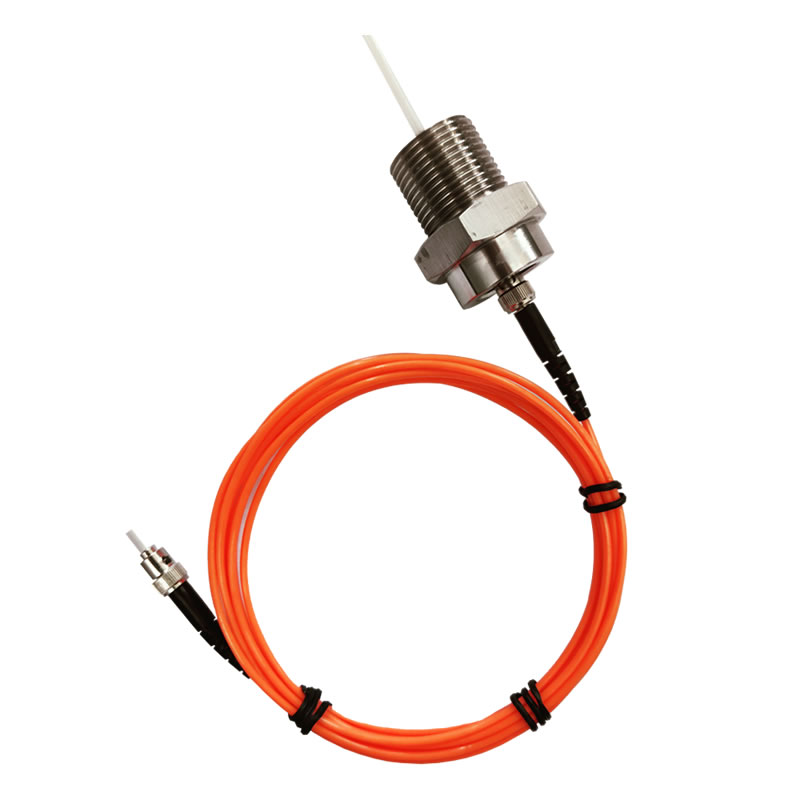
Сенсорный зонд содержит кристалл редкоземельного люминофора. (обычно материал на основе GaAs) на кончике волокна. Свет светодиода, передаваемый по оптоволокну, возбуждает люминофор., вызывая излучение флуоресценции, которое возвращается через волокно к опросчику. Флуоресценция затухает экспоненциально с постоянной времени (обычно 1-100 микросекунды) который предсказуемо меняется с температурой. Измерив это время затухания с точностью до наносекунды, система рассчитывает температуру с исключительной точностью.
Технические характеристики
| Параметр | Спецификация | Application Note | ||||||||||||
|---|---|---|---|---|---|---|---|---|---|---|---|---|---|---|
| Точность температуры | ±0.3°C to ±1°C | Зависит от температурного диапазона | ||||||||||||
| Температурное разрешение | 0.1°С | Sensitive change detection | ||||||||||||
| Время ответа | <1 второй (63% шаг) | Быстрое тепловое отслеживание | ||||||||||||
| Температурный диапазон | -40°C to +260°C standard | Длина волокна | 0.5m to 80m per channel | Нет ухудшения сигнала | Channel Count | 4/8/12/16/32/64 каналы | Гибкие конфигурации | Размер зонда датчика | 2-4мм диаметр типовой | Компактный для ограниченного пространства | Срок службы | 20+ годы | Работа без обслуживания |
Уникальные преимущества точечных датчиков
Превосходная точность
Оптоволоконные датчики температуры достичь точности от ±0,3°C до ±1°C, сохраняемой на протяжении всего процесса 20+ срок службы год без калибровки. Такая точность позволяет обнаруживать незначительные повышения температуры, указывающие на развивающиеся проблемы., поддержка стратегий профилактического обслуживания, предотвращающих незапланированные простои.
Быстрое время отклика
Реакция менее секунды (<1 second for 63% of step change) обеспечивает быстрое обнаружение тепловых событий. Критично для приложений, требующих немедленного реагирования на сигналы тревоги, таких как защита от перегрузки трансформатора или обнаружение неисправности подшипников двигателя..
Гибкая установка
Fiber lengths from 0.5-80 счетчики позволяют осуществлять дистанционное зондирование, когда точки измерения физически отделены от местоположения опросчика. Несколько датчиков подключаются к одному опросчику, reducing equipment count and installation complexity.
Complementary to DTS
While DTS provides spatial overview, point-type optical fiber temperature sensors add precision measurement at critical locations. Combined systems leverage both technologies—DTS for general surveillance plus point sensors at known hot spots requiring highest accuracy.
7. What Industrial Applications Use Fiber Optic Temperature Monitoring?
Where are fiber optic temperature solutions deployed? Оптоволоконные системы контроля температуры serve diverse industrial sectors requiring reliable, точный, and safe temperature measurement.
Применение в энергетике
Мониторинг температуры обмоток трансформатора
Оптоволоконные датчики температуры embedded in transformer windings provide direct hot spot measurement impossible with traditional oil temperature indicators. Standard 12-channel configuration monitors 3 sensors per high-voltage winding phase, 3 per low-voltage winding phase, plus oil and core temperatures. This comprehensive monitoring prevents insulation degradation and extends transformer life by 30-50%.
Switchgear Bus Bar Monitoring
High-current bus bar connections generate heat from contact resistance. Point-type fiber optic temperature sensors mounted on bus bars detect overheating from loose connections, коррозия, or overload conditions. Complete EMI immunity ensures accurate readings in high-voltage electromagnetic fields where electrical sensors fail.
Power Cable Temperature Monitoring
Распределенное измерение температуры along power cable routes detects hot spots from overload, деградация изоляции, or poor joints. Cable tunnel installations use fiber attached to tunnel walls or strapped directly to cables, providing continuous thermal surveillance across kilometers of cable runs with 1-3m spatial resolution identifying exact problem locations.
Generator Stator Winding Monitoring
Generator stator windings operate at high temperatures requiring precise monitoring. Оптоволоконное измерение температуры provides EMI-immune sensing in intense magnetic and electromagnetic fields surrounding rotating machinery, enabling reliable temperature tracking impossible with electrical sensors.
Масло & Применение в газовой промышленности
Pipeline Temperature Profiling
DTS temperature monitoring tracks pipeline thermal conditions for leak detection, flow assurance, and operational optimization. Temperature anomalies indicate leaks (cooling from pressure drop), wax deposition (reduced heat transfer), или ухудшение изоляции. Systems monitor pipelines up to 30km per interrogator with dual-end configurations extending to 50km.
Storage Tank Temperature Distribution
Vertical temperature profiling in storage tanks detects stratification, heating system performance, and product quality issues. Fiber cables installed vertically measure temperature at multiple heights, revealing thermal gradients affecting product specifications or indicating tank heating problems.
Reactor and Vessel Monitoring
Chemical reactors require precise temperature control for safety and product quality. Оптоволоконное измерение температуры provides intrinsically safe measurement in explosive atmospheres, with sensors placed at multiple reactor zones tracking temperature distribution and detecting runaway reaction conditions.
Fired Heater Tube Monitoring
Распределенное оптоволоконное измерение температуры along heater tubes detects hot spots from coking or flow maldistribution. Early detection prevents tube failure and unplanned shutdowns in critical process equipment.
Применение в промышленном производстве
Induction Heating Equipment
Induction heating systems generate intense electromagnetic fields defeating electrical sensors. Оптоволоконный контроль температуры operates unaffected by EMI, providing reliable temperature measurement for process control and equipment protection.
Heat Treatment Furnaces
Precise temperature control in heat treatment processes ensures metallurgical properties. Оптоволоконные датчики температуры withstand high temperatures and provide accurate measurement for quality assurance and process optimization.
Injection Molding Mold Monitoring
Mold temperature affects part quality in plastic injection molding. Многоканальный оптоволоконное измерение температуры systems monitor temperature at multiple mold locations, enabling precise thermal control for consistent part production.
Semiconductor Process Equipment
Semiconductor manufacturing requires precise temperature control with EMI immunity. Оптоволоконные датчики температуры monitor wafer processing, диффузионные печи, and CVD reactors without introducing contamination or electromagnetic interference.
Infrastructure Applications
Tunnel Fire Detection
системы ДТС detect fires in road tunnels, rail tunnels, and utility tunnels by monitoring temperature continuously. Rapid temperature rise triggers alarms with precise fire location, enabling targeted fire suppression and emergency response.
Data Center Thermal Management
Data centers use распределенное измерение температуры along server racks and under raised floors, detecting hot spots from cooling failures or airflow problems. Real-time thermal mapping optimizes cooling efficiency and prevents equipment overheating.
Subway Cable Tunnel Monitoring
Metro systems install оптоволоконный контроль температуры in cable tunnels for fire detection and cable thermal surveillance. Continuous monitoring detects overload conditions or developing fires before smoke reaches detection systems.
Building Fire Detection
Linear heat detection using ДТС provides continuous fire surveillance in warehouses, parking garages, conveyor systems, и промышленные объекты. Fiber cable installed along ceilings or in cable trays detects fire anywhere along its length.
8. How to Monitor Power Transformers with Fiber Optic Solutions?

Why do transformers need fiber optic temperature monitoring? Силовые трансформаторы представляют собой критически важные активы с высокой стоимостью, отказы которых приводят к длительным простоям и затратам на замену, превышающим миллионы долларов.. Мониторинг температуры обеспечивает необходимую защиту и продление срока службы..
Почему контроль температуры трансформатора имеет решающее значение
Отказы трансформатора возникают из-за деградации изоляции, ускоренной чрезмерной температурой.. Каждое повышение температуры на 8–10°C выше номинального значения сокращает срок службы изоляции вдвое из-за ускоренного старения.. Без прямого контроля обмотки, внутренние горячие точки достигают разрушительного уровня, в то время как внешние индикаторы показывают приемлемые температуры. Оптоволоконные датчики температуры встроенный в обмотки датчик определяет фактическую температуру горячих точек, обеспечение защитных действий до того, как произойдет повреждение.
Стандартная 12-канальная конфигурация мониторинга трансформатора
Комплексный мониторинг трансформатора требует стратегического размещения датчиков:
- Высоковольтная обмотка: 3 датчики (по одному на фазу) at winding hot spot locations
- Низковольтная обмотка: 3 датчики (по одному на фазу) at winding hot spot locations
- Iron core: 1 sensor monitoring core temperature
- Верхняя температура масла: 2 sensors measuring oil temperature in tank
- Optional sensors: Tap changer, bushing connections, система охлаждения
Typical Monitoring Points and Alarm Thresholds
| Расположение | Нормальный диапазон | Порог тревоги | Trip Threshold |
|---|---|---|---|
| Winding Hot Spot | 60-80°С | 95°С | 110°С |
| Верхняя температура масла | 40-70°С | 85°С | 95°С |
| Железное ядро | 50-75°С | 90°С | 100°С |
| Нажмите чейнджер | 45-65°С | 80°С | 90°С |
Advantages Over Traditional Pt100 RTD Sensors
| Особенность | Оптоволоконные датчики | Pt100 RTD |
|---|---|---|
| Устойчивость к электромагнитным помехам | Полный иммунитет | ±5-10°C errors from interference |
| Безопасность высокого напряжения | Абсолютно безопасен, no isolation needed | Requires complex isolation barriers |
| Калибровка | Never required | Каждый 2 годы |
| Срок службы | 20+ годы | 5-10 годы |
| Accuracy Stability | ±1°C for life | Drifts over time |
| Совместимость масел | Unaffected by oil | Degradation from oil exposure |
| Молниезащита | No protection needed | Requires surge protection |
9. How to Monitor Power Cables with Fiber Optic DTS?
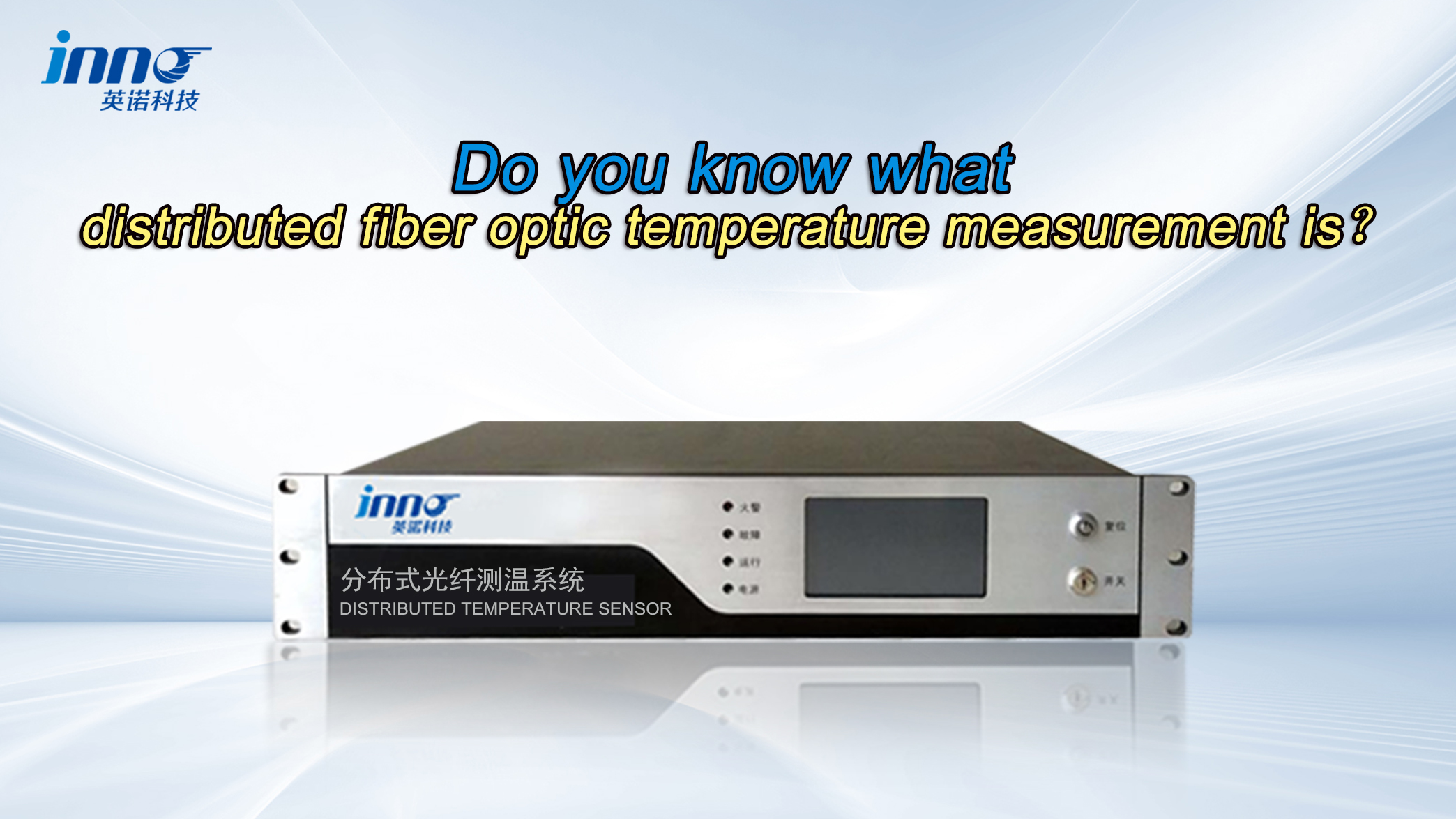
How does DTS monitor cable temperature? Распределенное измерение температуры provides continuous thermal surveillance of power cable systems, detecting problems before they cause failures.
Cable Temperature Monitoring Applications
Underground Cable Tunnels
Cable tunnels house multiple high-voltage cables in confined spaces where cooling is critical. системы ДТС with fiber attached to tunnel walls or laid along cable routes monitor temperature continuously, detecting hot spots from cable overload, poor joints, деградация изоляции, or ventilation failures.
Direct Buried Cables
Fiber cables buried alongside power cables monitor soil temperature indicating cable thermal conditions. Hot spots reveal cable problems or variations in thermal backfill conditions affecting cable capacity.
Cable Trays and Ducts
Fiber installed in cable trays or pulled through ducts provides continuous temperature monitoring. Systems detect overloaded circuits, failing joints, or environmental issues affecting cable thermal performance.
Fiber Installation Methods
- Helical wrapping: Fiber cable spiraled around power cable exterior for direct thermal contact
- Параллельная установка: Волокно прокладывается рядом с кабелями в туннелях или каналах.
- Настенный монтаж: Оптоволокно прикреплено к стенам туннеля возле кабельных трасс
- Интегрированные кабели: Некоторые силовые кабели содержат встроенные оптические волокна.
Обнаружение и расположение горячих точек
Распределенное оптоволоконное измерение температуры определяет точные места проблем. Профили температуры показывают нормальную базовую линию с аномальными пиками в горячих точках.. Система отображает температуру горячей точки., позиция (расстояние от блока DTS), и тяжесть, позволяя бригадам технического обслуживания быстро находить и устранять проблемы.
Динамический рейтинг кабеля
Допустимая нагрузка кабеля зависит от рабочей температуры.. DTS temperature monitoring позволяет рассчитывать токовую нагрузку в режиме реального времени на основе фактических измеренных температур, а не консервативных проектных предположений.. Этот динамический рейтинг увеличивает полезную емкость кабеля на 10-30% без риска повредить, максимизация инвестиций в инфраструктуру.
Раннее предупреждение о пожаре
Rapid temperature rise in cable tunnels indicates fire conditions. системы ДТС trigger alarms when temperature exceeds thresholds or rises at abnormal rates, providing early fire detection before smoke reaches conventional sensors. Precise fire location enables targeted suppression response.
10. What Are the Technical Specifications of Fiber Optic Temperature Systems?
What specifications should you consider? Understanding technical parameters ensures proper оптоволоконная система контроля температуры selection and specification.
DTS System Specifications
| Параметр | Типичное значение | Примечания |
|---|---|---|
| Тип волокна | Многомодовый 50/125 или 62.5/125 μm | Standard telecom fiber |
| Диапазон измерения | 0-30км односторонний, 40-50км двухконечный | Настраиваемый |
| Каналы | 1/2/4/8 independent zones | Multi-zone monitoring |
| Пространственное разрешение | 1-3м | Adjustable with range |
| Интервал выборки | 1м | Data point spacing |
| Точность температуры | ±1°С | Full range |
| Температурное разрешение | 0.1°С | Change detection |
| Температурный диапазон | -200°С до +300°С | Application dependent |
| Measurement Time | 5-60 секунды | User configurable |
| Optical Connector | FC/APC or SC/APC | Low back-reflection |
Point-Type Sensor System Specifications
| Параметр | Типичное значение | Примечания |
|---|---|---|
| Channel Count | 4/8/12/16/32/64 каналы | Модульное расширение |
| Точность температуры | ±0.3°C to ±1°C | Range dependent |
| Температурное разрешение | 0.1°С | Display resolution |
| Время ответа | <1 второй | 63% of step change |
| Температурный диапазон | -40°С до +260°С | Standard range |
| Длина волокна | 0.5m to 80m per channel | No signal loss |
| Диаметр зонда датчика | 2-4мм | Компактный дизайн |
| Optical Connector | FC or ST | Standard connectors |
System Interface and Power Specifications
| Параметр | Спецификация |
|---|---|
| Источник питания | 12-36VDC or 110/220VAC |
| Потребляемая мощность | 8-50W depending on model |
| Рабочая температура | 0-40°С |
| Температура хранения | -20°C to -60°C |
| Operating Humidity | 0-95%относительной влажности, неконденсирующийся |
| Коммуникационные интерфейсы | 4-20мА, RS485, Ethernet, Relay |
| Протоколы | MODBUS-RTU/TCP, МЭК 61850, ОПК |
| Хранение данных | 2000+ записи тревог, unlimited with PC |
11. How to Integrate Fiber Optic Temperature Monitoring with Control Systems?
How does integration with SCADA work? Оптоволоконные системы контроля температуры provide flexible communication options enabling seamless integration with existing control infrastructure.
Analog Output Integration
4-20mA Current Loop
Each temperature channel provides 4-20mA analog output proportional to measured temperature. This universal interface connects directly to PLCs, DCS systems, chart recorders, or any device accepting standard current loop signals. Configuration allows mapping any temperature range (например, 0-150°С) to the 4-20mA output span.
Digital Communication Protocols
RS485 MODBUS-RTU
Serial MODBUS-RTU provides reliable digital communication over RS485 physical layer. Multiple devices connect on single bus, with each оптоволоконная система контроля температуры assigned unique address. Standard MODBUS registers provide temperature readings, статус тревоги, and system diagnostics. Protocol simplicity ensures compatibility with virtually all industrial control systems.
Ethernet MODBUS-TCP
Ethernet connectivity enables high-speed data transfer and remote access. MODBUS-TCP protocol encapsulates MODBUS commands in TCP/IP packets, allowing оптоволоконный датчик температуры systems to communicate over standard IT networks. Web browser access provides remote monitoring from any network location.
МЭК 61850 Протокол
Electrical utility substations use IEC 61850 standard for intelligent electronic device (IED) коммуникация. Оптоволоконные датчики температуры for transformer and switchgear monitoring support IEC 61850, enabling standardized integration with substation automation systems and eliminating custom protocol development.
OPC DA/UA
ОПК (OLE for Process Control) provides middleware connecting оптоволоконное зондирование systems to SCADA, historian databases, and HMI software. Серверы OPC преобразуют данные о температуре в стандартизированный формат, доступный любому клиентскому приложению, совместимому с OPC..
Интеграция сигнализации и управления
Релейные выходы
Настраиваемые контакты реле (обычно 5 А при 250 В переменного тока) обеспечить проводные подключения сигнализации. Реле активируются, когда температура превышает заданные пороговые значения., прямой запуск систем защитного отключения, вентиляционное оборудование, или предупредительные маяки без необходимости опроса SCADA.
Управление сигнализацией SCADA
Сигнализации температуры интегрируются в системы управления сигнализациями диспетчерской с уровнями приоритета., требования подтверждения, и автоматизированные процедуры реагирования. Операторы просматривают местоположение тревоги, значение температуры, и история тенденций, способствующая быстрому реагированию на инциденты.
Регистрация данных и тенденции
Системы непрерывно регистрируют данные о температуре с настраиваемой частотой дискретизации.. Экспорт исторических данных в базы данных SQL, CSV-файлы, or cloud platforms enable long-term trending analysis, regulatory reporting, and predictive maintenance modeling. Data retention supports forensic analysis after equipment failures.
12. What Installation Methods Exist for Fiber Optic Temperature Sensors?
How to install fiber optic temperature monitoring systems? Proper installation ensures optimal thermal coupling, mechanical protection, и долговременная надежность.
DTS Fiber Cable Installation Methods
Direct Burial Method
Fiber cable buried alongside monitored assets (трубопроводы, силовые кабели) in same trench. Armored fiber cable provides mechanical protection against soil stress and rodent damage. Installation during new construction or retrofit using directional boring minimizes excavation. Thermal coupling through soil provides adequate temperature response for most applications.
Trench and Duct Installation
Fiber pulled through conduit or duct provides mechanical protection and allows future fiber replacement without excavation. Ducts mounted in cable tunnels or attached to tunnel walls provide accessible installation. Air gap between fiber and monitored equipment slightly reduces thermal response but remains acceptable for most applications.
Helical Wrapping Method
Fiber cable spiraled around pipeline or cable exterior provides optimal thermal coupling. Typical pitch spacing of 0.5-1 meter balances coverage density against fiber length requirements. Cable ties or adhesive tape secure fiber during installation. External coating or protective layer applied over fiber prevents damage during backfill or subsequent operations.
Point Sensor Installation Methods
Winding Embedded Installation
Transformer winding sensors embed directly in winding structure during manufacturing. Fiber probes placed at calculated hot spot locations based on thermal modeling. Sensors survive winding processes including varnish impregnation and vacuum drying, emerging fully operational after transformer assembly.
Surface Mount Installation
Sensor probes attach to equipment surfaces using thermal paste, клей, or mechanical clips. Surface mounting suits retrofit applications or equipment where embedded installation is impossible. Thermal interface material ensures good heat transfer from monitored surface to sensor probe.
Insertion Probe Installation
Some applications use probes inserted into equipment through threaded fittings or glands. This method provides direct exposure to measured environment (масло, газ, fluid) for fastest thermal response. Suitable for tank temperature measurement or process vessel monitoring.
Optical Connection Methods
FC/APC and SC/APC Connectors
Angled Physical Contact (APC) connectors minimize back-reflection improving signal quality. Field-installable connectors enable on-site termination during installation. Connector polish quality significantly affects measurement accuracy—factory-terminated connectors generally provide superior performance.
Fusion Splicing
Fusion splicing creates permanent low-loss connections between fiber segments. Splicing suits permanent installations where future disconnection is unnecessary. Protected splice enclosures provide environmental sealing and mechanical strain relief.
Protection Enclosures
Outdoor fiber connections require weatherproof junction boxes protecting connectors from moisture, экстремальные температуры, and UV exposure. При установке внутри помещений используются стандартные электрические корпуса с надлежащим управлением радиусом изгиба оптоволокна, предотвращающим оптические потери..
13. Как выбрать правильный
Какие факторы определяют лучшее решение? Систематическая оценка требований применения обеспечивает оптимальное оптоволоконный контроль температуры выбор технологии.
Процесс принятия решения об отборе
Шаг 1: Определить цель мониторинга
Определите, что требует мониторинга:
- Тип оборудования: Трансформеры, кабели, моторы, технологическое оборудование, инфраструктура
- Цель мониторинга: Защита от перегрузки, профилактическое обслуживание, управление процессом, обнаружение пожара
- Критические места: Известные «горячие точки» и неизвестные потенциальные точки отказа
- Условия окружающей среды: Крытый/наружный, экстремальные температуры, классификация опасности
Шаг 2: Выберите тип технологии
Выбирать ДТС когда:
- Мониторинг линейных активов (кабели, трубопроводы) где проблемы могут возникнуть где угодно
- Пространственное распределение температуры обеспечивает оперативную аналитику
- Большие расстояния мониторинга (>100м) сделать точечные датчики непрактичными
- Непрерывное покрытие устраняет слепые зоны между дискретными датчиками
Выбирать point sensors когда:
- Мониторинг определенных известных критических мест (обмотки трансформатора, подшипники двигателя)
- Высочайшая точность (±0,3°С) и самый быстрый ответ (<1 второй) необходимый
- Compact equipment where DTS fiber routing is impractical
- Multi-point monitoring with defined sensor locations
Шаг 3: Specify Technical Requirements
| Требование | DTS Selection | Point Sensor Selection |
|---|---|---|
| Monitoring distance/points | 10-30km typical per zone | 4-64 channels needed |
| Required accuracy | ±1°C adequate | ±0.3-1°C depending on application |
| Время ответа | 5-60 seconds acceptable | <1 second required |
| Диапазон температур | -200Доступно от °C до +300°C | -40°C to +260°C standard |
| Коммуникационные потребности | Ethernet + MODBUS typical | 4-20мА + digital protocols |
Шаг 4: Consider Integration Requirements
- Совместимость со SCADA: Required communication protocols (МОДБУС, МЭК 61850, ОПК)
- Выходы сигнализации: Relay contacts for direct safety system integration
- Регистрация данных: Historical data retention requirements
- Display requirements: Локальный дисплей, удаленный мониторинг, мобильный доступ
Шаг 5: Evaluate Environmental Factors
- Hazardous area classification: Intrinsically safe fiber optic ideal for explosive atmospheres
- среда электромагнитных помех: Fiber optic immunity critical near high-voltage or RF equipment
- Corrosive conditions: Glass fiber unaffected by chemicals, влага, масла
- Temperature extremes: Select appropriate temperature range for environment
Шаг 6: Assess Total Cost of Ownership
Compare lifecycle costs rather than initial investment alone. Оптоволоконный контроль температуры systems typically cost more initially than electrical sensors but deliver lower total cost through:
- Нулевое обслуживание: Без калибровки, no replacement for 20-30 годы
- Reduced failures: Early problem detection prevents catastrophic failures
- Lower installation: Single fiber cable vs extensive electrical wiring
- Eliminated false alarms: EMI immunity reduces nuisance trips
14. What Are the Advantages Over Traditional Temperature Sensors?
Why choose fiber optic over RTD or thermocouple? Сравнивая оптоволоконный датчик температуры against conventional electrical sensors reveals significant performance and operational advantages.
Комплексное сравнение технологий
| Особенность | Оптоволокно | Pt100/Pt1000 RTD | Термопара | Инфракрасный |
|---|---|---|---|---|
| Типичная точность | ±0.3-1°C | ±0.3-0.5°C | ±1-2°С | ±2-5°С |
| Устойчивость к электромагнитным помехам | Полный | Бедный (±5-10°C errors) | Умеренный | Н/Д (бесконтактный) |
| Безопасность высокого напряжения | Абсолютно безопасен | Требуется изоляция | Требуется изоляция | Safe (бесконтактный) |
| Calibration Frequency | Never | Каждый 1-2 годы | Ежегодно | Ежегодно |
| Срок службы | 20-30 годы | 5-10 годы | 3-5 годы | 5-10 годы |
| Drift Over Time | Никто | Значительный | Умеренный | Умеренный |
| Время ответа | <1 второй | 1-5 секунды | <1 второй | Мгновенный |
| Hazardous Area Suitability | Искробезопасен | Requires protection | Requires protection | Safe (external) |
| Экологическая устойчивость | Отличный | Умеренный | Хороший | Бедный (line-of-sight) |
| Многоточечная возможность | Отличный (4-64 очки) | Умеренный | Умеренный | Одна точка |
| Сложность установки | Низкий (single fiber) | Высокий (wiring per sensor) | Высокий (wiring per sensor) | Умеренный |
Why Fiber Optic Temperature Monitoring Excels
- ✓ Полная невосприимчивость к электромагнитным помехам: Accurate readings in electrically noisy environments where electrical sensors fail
- ✓ Искробезопасен: No explosion risk in hazardous areas, eliminates costly protection requirements
- ✓ Нулевое обслуживание: No calibration or replacement for 20-30 years reduces lifecycle costs
- ✓ No drift: Measurement accuracy stable for life, unlike electrical sensors requiring periodic calibration
- ✓ High voltage safety: Direct measurement in transformers and switchgear without isolation barriers
- ✓ Environmental resistance: Unaffected by moisture, масло, химикаты, or temperature extremes
- ✓ Multi-channel efficiency: 4-64 measurement points from single interrogator unit
15. How Much Does Fiber Optic Temperature Monitoring Cost?
What is the total cost of ownership? Understanding complete lifecycle costs rather than initial investment alone reveals the economic advantages of решения для оптоволоконного мониторинга температуры.
Cost Structure Analysis
Initial Capital Investment
Equipment costs включать:
- Interrogator unit: Main measurement and analysis equipment (DTS or point sensor system)
- Sensors/fiber cable: Чувствительные элементы (fluorescence probes or DTS fiber cable)
- Installation materials: Connectors, вложения, монтажное оборудование, защита
- Software and licensing: Monitoring software, SCADA-интеграция, data management
- Engineering and commissioning: System design, установка, тестирование, обучение
Пока оптоволоконные датчики температуры typically require higher initial investment compared to RTD or thermocouple systems, this difference diminishes when considering multi-point installations where single fiber optic interrogator replaces dozens of individual electrical sensors with their associated wiring, источники питания, and isolation equipment.
Эксплуатационные расходы
Minimal ongoing expenses:
- Потребляемая мощность: 8-50W typical (negligible electricity cost)
- Communication costs: Network connectivity if using remote monitoring
- Обновления программного обеспечения: Периодические улучшения прошивки или программного обеспечения
- Никаких затрат на калибровку: Нулевые расходы на услуги или оборудование по калибровке
- Нет запасных частей: Нет батарей, отсутствие расходных материалов, требующих периодической замены
Преимущество в затратах на техническое обслуживание
Наиболее существенное ценовое преимущество оптоволоконный контроль температуры возникает из-за устранения требований к техническому обслуживанию:
- Калибровка нуля: Electrical sensors require calibration every 1-2 лет при типичной стоимости $50-200 per sensor
- Без замены: RTD последние 5-10 лет требует полной замены; оптоволокно работает 20-30 годы
- Сокращение труда: Устраняет время технического обслуживания для проверки калибровки и замены датчика.
- Нет склада запасных частей: Нет необходимости хранить запасные датчики или электронику
- Предотвращение простоев: Эксплуатация, не требующая технического обслуживания, исключает простои для проведения калибровочных работ.
Сравнение общей стоимости владения
Рассмотрим типовой мониторинг приложений 12 температура превышает 20 годы:
| Cost Element | Fiber Optic System | RTD System |
|---|---|---|
| Initial Equipment | Более высокие первоначальные инвестиции | Более низкая первоначальная стоимость |
| Установка | Простая маршрутизация оптоволокна | Сложная проводка, изоляционные барьеры |
| Калибровка (20 годы) | Ноль | 10 калибровки × 12 датчики |
| Замена датчика | Ноль | 2-4 полные замены |
| Maintenance Labor | Minimal visual inspection | Significant technician time |
| False Alarm Costs | Eliminated by EMI immunity | Frequent EMI-induced trips |
| 20-Year Total | Lower lifecycle cost | Higher lifecycle cost |
Return on Investment Factors
Beyond direct cost savings, оптоволоконный контроль температуры provides value through:
- Предотвращенные сбои: Early detection prevents catastrophic equipment failures costing millions
- Увеличенный срок службы активов: Optimal temperature control extends transformer and motor life 30-50%
- Reduced insurance: Improved monitoring may qualify for reduced insurance premiums
- Соответствие нормативным требованиям: Meets monitoring requirements avoiding penalties
- Operational efficiency: Better temperature visibility enables load optimization
16. What Certifications and Standards Apply to Fiber Optic Temperature Systems?
What standards do fiber optic temperature systems meet? Comprehensive certifications demonstrate quality, безопасность, и соответствие нормативным требованиям.
International Quality Certifications
ИСО 9001 Управление качеством
ИСО 9001 certification verifies systematic quality management throughout design, производство, и сервис. Оптоволоконная система контроля температуры manufacturers with ISO 9001 demonstrate commitment to consistent product quality, continuous improvement, and customer satisfaction.
ИСО 14001 Environmental Management
ИСО 14001 certification confirms environmental responsibility in manufacturing processes, materials selection, and waste management. Environmentally conscious organizations prefer suppliers meeting these standards.
Product Safety Certifications
Маркировка CE (Европейское соответствие)
CE marking indicates compliance with European Union safety, здоровье, and environmental protection standards. Required for оптоволоконные датчики температуры sold in European markets, CE certification covers electromagnetic compatibility (ЭМС), low voltage directive (НВД), and product-specific requirements.
ROHS Compliance
Ограничение использования опасных веществ (ROHS) certification confirms products contain no prohibited materials (вести, Меркурий, кадмий, шестивалентный хром, PBB, PBDE). Many customers require ROHS compliance for environmental and regulatory reasons.
Отраслевые стандарты
МЭК 61850 для энергетических систем
МЭК 61850 определяет сети и системы связи для автоматизации энергосистемы. Оптоволоконный контроль температуры системы для трансформаторов и распределительных устройств поддерживают IEC 61850 протокол, обеспечивающий стандартизированную интеграцию с системами автоматизации подстанций.
IEEE C57.116 Мониторинг трансформатора
IEEE C57.116 содержит рекомендации по контролю температуры трансформатора, включая размещение датчиков., требования к точности, и производительность системы. Соответствие гарантирует оптоволоконные датчики температуры для трансформаторов соответствовать ожиданиям коммунальной отрасли.
НФПА 72 Код пожарной сигнализации
НФПА 72 устанавливает требования к системам пожарной сигнализации и экстренной связи. системы ДТС используется для обнаружения пожара в туннелях и зданиях, соответствует требованиям NFPA 72 критерии эффективности для линейного обнаружения тепла.
Искробезопасность и взрывозащита
Сертификация АТЕХ (Европа)
АТЕХ (EXВзрывоопасные атмосферы) certification approves equipment for use in explosive atmospheres in European Union. Оптоволоконное измерение температуры systems achieve intrinsic safety without active protection, qualifying for ATEX Zone 0 (continuously explosive) приложения.
IECEx Certification (Международный)
IECEx provides international certification for equipment in explosive atmospheres. Оптоволоконные датчики температуры gain IECEx approval based on inherent safety—glass fiber contains no electrical energy source capable of ignition.
Класс I Дивизион 1 (Северная Америка)
North American hazardous location classification recognizes intrinsically safe оптоволоконный контроль температуры for Class I Division 1 areas where ignitable concentrations of flammable gases may exist under normal operating conditions.
Factory Testing and Documentation
Comprehensive testing validates system performance:
- Temperature accuracy verification: Calibration testing across full temperature range
- Environmental testing: Temperature cycling, влажность, виброустойчивость
- EMI immunity testing: Verification of immunity to electromagnetic interference
- Insulation testing: High voltage isolation verification for electrical safety
- Communication protocol testing: МОДБУС, МЭК 61850, OPC interface validation
- Reliability testing: Accelerated life testing predicting long-term performance
Complete test reports and certification documentation accompany each system delivery.
17. What Customization Options Are Available for Fiber Optic Temperature Solutions?
How to customize fiber optic temperature solutions? Flexible customization enables оптоволоконные системы контроля температуры to meet unique application requirements.
Hardware Customization Options
Channel Count and Configuration
- Point sensor systems: 4, 8, 12, 16, 32, или 64 channels matching exact monitoring point requirements
- системы ДТС: 1, 2, 4, или 8 independent zones for multi-pipeline or multi-cable monitoring
- Hybrid systems: Combined DTS plus point sensors leveraging both technologies
- Модульное расширение: Field-expandable systems growing with changing requirements
Fiber Length and Temperature Range
- Point sensor fibers: Custom lengths from 0.5m to 80m per channel
- DTS monitoring distance: Optimized configurations for 1-30km applications
- Extended temperature range: Custom calibrations for extreme temperatures beyond standard ranges
- Specialized fiber types: High-temperature fiber, armored cable, specialty coatings
Communication Interface Customization
- Protocol selection: MODBUS-RTU, MODBUS-TCP, МЭК 61850, ОПК, Профибус, ДНП3
- Аналоговые выходы: 4-20mA quantity and range configuration
- Relay configuration: Custom relay count, contact ratings, логика сигнализации
- Network options: Ethernet, WiFi, 4G/LTE cellular for remote locations
Software Customization
User Interface and Display
- Custom dashboards: Application-specific display layouts and graphics
- Alarm configuration: Multi-level thresholds, rate-of-rise alarms, custom logic
- Reporting tools: Automated reports matching customer requirements
- Language localization: Interface translation for international deployments
Data Management Features
- Интеграция с базой данных: Custom SQL database schemas and queries
- Cloud connectivity: Integration with customer cloud platforms or IoT systems
- API development: Custom APIs enabling third-party application integration
- Data export formats: Specific file formats for downstream analysis tools
OEM and Private Label Services
Manufacturers provide OEM services for system integrators and equipment manufacturers:
- Custom branding: Company logo, colors, product naming
- Modified enclosures: Custom panel cutouts, mounting configurations, connector locations
- Integrated solutions: Embedding temperature monitoring in larger equipment systems
- Complete solution development: Engineering support for unique applications
- Flexible volumes: From prototype quantities to production runs
Application-Specific Engineering
Команды инженеров помогают со специальными требованиями:
- Тепловое моделирование: Расчет оптимального размещения датчиков для трансформаторов или двигателей
- Проектирование установки: Планы прокладки оптоволокна, методы защиты, стратегии подключения
- Интеграционный инжиниринг: Разработка интерфейса SCADA, программирование логики управления
- Оптимизация производительности: Настройка конфигурации для конкретных характеристик приложения
- Сертификационная поддержка: Помощь в получении необходимых сертификатов для конкретных рынков
18. Часто задаваемые вопросы
Что такое оптоволоконный контроль температуры?
Оптоволоконный контроль температуры использует оптическое волокно и принципы измерения на основе света для определения температуры. Существуют две технологии: распределенное измерение температуры (ДТС) обеспечение непрерывного мониторинга по оптоволокну длиной до 30 км с пространственным разрешением 1-3 м., и точечные датчики флуоресценции предлагая дискретные высокоточные измерения (±0.3-1°C) в определенных местах. Обе технологии обеспечивают полную устойчивость к электромагнитным помехам., искробезопасность, и эксплуатация без технического обслуживания 20-30 годы.
How does fiber optic temperature sensing work?
Оптоволоконное измерение температуры uses two distinct principles. системы ДТС analyze Raman scattering—backscattered light intensity changes with temperature, enabling continuous measurement along entire fiber using OTDR time-resolved analysis. Точечные датчики measure fluorescence decay time in rare-earth phosphor materials at fiber tip—decay time changes predictably with temperature, providing precise measurement independent of component aging or environmental factors.
What accuracy can fiber optic sensors achieve?
Point-type fiber optic temperature sensors achieve ±0.3°C to ±1°C accuracy with 0.1°C resolution depending on temperature range. Распределенное измерение температуры systems achieve ±1°C accuracy across their full measurement range. Both maintain stable accuracy throughout 20-30 year service life without calibration because measurement depends on fundamental physical properties unaffected by aging, environmental exposure, or component drift.
What temperature range do fiber optic sensors cover?
Оптоволоконное измерение температуры systems cover extreme ranges: DTS from -200°C to +300°C for applications including cryogenic monitoring, standard industrial equipment (-40°C to +150°C), and high-temperature processes. Point sensors typically cover -40°C to +260°C standard range with extended ranges available. Single sensor technology spans these ranges without multiple sensor types or special configurations required.
Do fiber optic temperature sensors require maintenance?
Нет, fiber optic temperature sensors require absolutely no maintenance throughout their 20-30 срок службы год. The optical sensing principle depends on fundamental physical properties that don’t change over time—factory calibration remains accurate indefinitely. Glass fiber is chemically inert and doesn’t degrade from moisture, масло, or chemical exposure. Solid-state interrogator electronics have no moving parts, батарейки, or consumables requiring replacement. This maintenance-free characteristic eliminates calibration costs, reduces operational expenses, and ensures continuous reliable operation.
Как долго служат оптоволоконные датчики температуры?
Оптоволоконные системы контроля температуры operate reliably for 20-30 years without degradation. Glass fiber is chemically stable and mechanically robust. Rare-earth phosphor materials in point sensors maintain consistent fluorescence properties indefinitely. Interrogator electronics use solid-state components with long operational life. Unlike electrical sensors requiring replacement every 5-10 годы, fiber optic systems typically remain in service throughout the entire life of monitored equipment.
Can fiber optic sensors work in high voltage environments?
Да, оптоволоконные датчики температуры excel in high-voltage applications because glass fiber provides complete electrical isolation. Sensors embedded directly in transformer windings at 500kV+ operate safely without isolation barriers, grounding requirements, or surge protection. The optical measurement principle eliminates electrical connection between high-voltage measurement points and low-voltage control equipment, providing inherent safety impossible with electrical sensors.
What is the difference between DTS and point sensors?
ДТС (Распределенное измерение температуры) provides continuous temperature measurement along entire fiber length (до 30 км) with data every 1-3 метры, ideal for cables and pipelines. Точечные датчики measure temperature at discrete locations (4-64 каналы) with higher accuracy (±0,3°С) and faster response (<1 второй), ideal for transformers and equipment. DTS suits linear assets; point sensors suit equipment with known critical locations.
How to choose between distributed and point sensing?
Выбирать ДТС when monitoring linear assets where problems could occur anywhere (силовые кабели, трубопроводы), when spatial distribution provides operational intelligence, or when monitoring distances exceed 100m making point sensors impractical. Выбирать point sensors when monitoring specific known locations (обмотки трансформатора, подшипники двигателя), when highest accuracy (±0,3°С) и самый быстрый ответ (<1 второй) необходимы, or when monitoring compact equipment where DTS fiber routing is difficult.
Какие протоколы связи поддерживаются?
Оптоволоконные системы контроля температуры поддержка нескольких промышленных протоколов: 4-20аналоговые выходы мА for universal compatibility, RS485 MODBUS-RTU for serial communication, Ethernet MODBUS-TCP for network integration, МЭК 61850 for utility substation automation, OPC DA/UA for SCADA systems, plus relay outputs for direct alarm connections. Most systems include all interfaces enabling flexible integration with existing infrastructure.
How to install fiber optic temperature sensors?
DTS fiber cable installs via direct burial alongside monitored assets, placement in conduits or cable trays, or helical wrapping around pipes/cables. Точечные датчики embed in transformer windings during manufacturing, mount on equipment surfaces using thermal paste, or insert through threaded fittings. FC/APC or SC/APC optical connectors provide reliable connections. Installation typically completes in hours to days depending on application complexity.
What industries use fiber optic temperature monitoring?
Оптоволоконный контроль температуры serves diverse industries: Power utilities (трансформаторы, кабели, распределительное устройство), нефть и газ (трубопроводы, нефтеперерабатывающие заводы, резервуары для хранения), промышленное производство (моторы, печи, induction heating), центры обработки данных (thermal management), транспорт (tunnel fire detection, subway cables), полупроводник (технологическое оборудование), и инфраструктура (building fire detection, централизованное отопление).
Are fiber optic sensors intrinsically safe?
Да, оптоволоконные датчики температуры are intrinsically safe because glass fiber contains no electrical conductors, generates no heat, produces no sparks, and cannot ignite flammable gases or dust. This inherent safety qualifies systems for hazardous classified areas (Класс I Дивизион 1, Зона АТЕХ 0, МЭКEx) without expensive explosion-proof enclosures. Установка во взрывоопасных средах не требует специальной защиты, кроме основных механических мер безопасности..
Какую пользу дает невосприимчивость к электромагнитным помехам волоконно-оптическим датчикам?
Полный иммунитет к электромагнитным помехам исключает ошибки измерения и ложные срабатывания электромагнитных помех. In environments with high-voltage equipment, частотно-регулируемые приводы, сварка, или радиопередатчики, где электрические датчики выдают погрешность ±5–10°C или полностью выходят из строя., оптоволоконные датчики температуры поддерживать точные показания. Этот иммунитет снижает количество ложных тревог., устраняет проблемы с электрическим шумом, и обеспечивает надежный мониторинг в электроагрессивных промышленных средах.
Какие сертификаты имеют оптоволоконные системы измерения температуры??
Оптоволоконные системы контроля температуры иметь комплексную сертификацию: ИСО 9001 управление качеством, ИСО 14001 экологический менеджмент, Маркировка CE для европейского соответствия, Соответствие ROHS по экологической безопасности, АТЕХ/МЭКЕх для утверждения взрывоопасной среды, МЭК 61850 соответствие протоколу, and application-specific standards like IEEE C57.116 for transformers or NFPA 72 for fire detection. Complete test reports document performance validation.
19. Who Is The Leading Manufacturer of Fiber Optic Temperature Solutions?
Who manufactures the best fiber optic temperature monitoring systems? Selecting an experienced оптоволоконный контроль температуры solution provider ensures successful implementation and long-term reliability.
Фучжоу, инновационная электронная наука&Компания Тех., ООО.
Фучжоу Инновации специализируется на оптоволоконный датчик температуры технология, delivering complete monitoring solutions for power, промышленный, and infrastructure applications since 2011.
Обзор компании
- Учредил: 2011 – над 13 years specialized experience in fiber optic sensing
- Focus: Exclusive dedication to fiber optic temperature and sensing technologies
- Расположение: Промышленный парк Liandong U Grain Networking, Фучжоу, Фуцзянь, Китай
- Сертификаты: ИСО 9001, ИСО 14001, CE, ROHS, intrinsically safe approvals
- Market presence: Thousands of successful installations across power, нефть/газ, и промышленного сектора
Core Capabilities
- Technology expertise: Deep understanding of both DTS and point-type fluorescence sensing technologies
- Complete product line: системы ДТС (1-8 каналы), point sensor systems (4-64 каналы), гибридные конфигурации
- Опыт применения: Проверенные решения для трансформаторов, кабели, трубопроводы, промышленное оборудование, инфраструктура
- Возможность настройки: Команда инженеров разрабатывает индивидуальные решения для уникальных требований
- Качество изготовления: Современное производство с комплексным тестированием и контролем качества.
- Техническая поддержка: Опытные инженеры, предоставляющие предпродажную консультацию, помощь в установке, и послепродажное обслуживание
- Глобальное обслуживание: Опыт международных проектов с установками по всей Азии, Средний Восток, Европа, Америка
Портфель продуктов
- Системы контроля температуры DTS: Распределенное измерение кабелей, трубопроводы, туннели, охрана периметра
- Датчики флуоресценции точечного типа: 4-64 канальные системы для трансформаторов, распределительное устройство, моторы, промышленное оборудование
- Hybrid systems: Комбинированные точечные датчики DTS plus для комплексного мониторинга
- Сенсорные кабели: Стандартные и специализированные оптоволоконные кабели для различных сред
- Программные платформы: Визуализация, alarming, data management, SCADA-интеграция
- Аксессуары: Connectors, вложения, оборудование для установки, запчасти
Почему стоит выбрать инновации Фучжоу?
- Специализированный фокус: 13+ лет эксклюзивной разработки волоконно-оптических решений для измерения температуры
- Проверенная надежность: Thousands of installations validating system performance and longevity
- Technical depth: Engineering team understanding both optical physics and practical applications
- Flexible customization: Ability to modify standard products or develop unique solutions
- Quality manufacturing: ИСО 9001 certified processes ensuring consistent product quality
- Responsive support: Technical assistance from inquiry through installation and ongoing operation
- Competitive value: Direct manufacturer pricing with quality matching international standards
- Long-term partnership: Established company ensuring ongoing support and parts availability
20. How to Contact for Fiber Optic Temperature Monitoring Solutions?
How to get consultation for temperature monitoring? Фучжоу, инновационная электронная наука&Компания Тех., ООО. provides comprehensive support from initial inquiry through system commissioning and ongoing operation.
Complete Solution Services
Partnership includes comprehensive support:
- Technical consultation: Application engineers analyze requirements and recommend optimal solutions
- System design: Engineering team develops configurations meeting specific needs
- Custom development: Tailored solutions for unique applications or integration requirements
- Installation support: On-site or remote assistance during system deployment
- Ввод в эксплуатацию: System startup, тестирование, проверка работоспособности, and optimization
- Обучение: Operator and maintenance training ensuring effective system utilization
- Техническая поддержка: Ongoing engineering assistance throughout system lifecycle
- Запчасти: Comprehensive inventory ensuring rapid replacement if needed
- System upgrades: Software updates and hardware enhancements as technology advances
Global Project Experience
Fuzhou Innovation has successfully deployed оптоволоконные системы контроля температуры по всему миру:
- Китай: Power transformers for State Grid and China Southern Power Grid, industrial monitoring
- Юго-Восточная Азия: Transformer and cable monitoring for utilities and industrial facilities
- Средний Восток: Мониторинг нефте- и газопроводов, power infrastructure surveillance
- Европа: Industrial temperature monitoring, district heating systems
- Америка: Мониторинг силового кабеля, transformer temperature surveillance
Why Partner with Fuzhou Innovation?
- Specialized expertise: 13+ years focused exclusively on fiber optic temperature sensing
- Proven technology: Thousands of successful installations validating reliability
- Complete solutions: Аппаратное обеспечение, программное обеспечение, and engineering services from single source
- Customization flexibility: Tailored systems meeting unique application requirements
- Quality commitment: ИСО 9001 manufacturing with comprehensive testing
- Technical excellence: Experienced engineering team providing responsive support
- Competitive positioning: Direct manufacturer offering optimal value
- Долгосрочная стабильность: Established company ensuring ongoing partnership and support
Контактная информация
Фучжоу, инновационная электронная наука&Компания Тех., ООО.
Учредил: 2011
Адрес: Промышленный парк Liandong U Grain Networking, № 12 Синъе Вест Роуд, Фучжоу, Фуцзянь, Китай
Электронная почта: web@fjinno.net
WhatsApp: +86 135 9907 0393
Вичат (Китай): +86 135 9907 0393
QQ: 3408968340
Телефон: +86 135 9907 0393
Inquiry Process
Шаг 1: Initial Contact
- Contact via email, WhatsApp, or phone with your temperature monitoring requirements
- Describe application (трансформаторы, кабели, трубопроводы, промышленное оборудование)
- Specify monitoring objectives (защита от перегрузки, профилактическое обслуживание, управление процессом)
- Share environmental conditions and integration requirements
Шаг 2: Technical Consultation
- Receive detailed system proposal with recommended technology (DTS vs point sensors)
- Review technical specifications, ТТХ, integration approach
- Discuss customization requirements for unique applications
- Understand certification and regulatory compliance for your region
Шаг 3: Quotation and Planning
- Receive comprehensive quotation covering equipment, поддержка установки, ввод в эксплуатацию
- Review project timeline, графики поставок, payment terms
- Clarify warranty coverage and ongoing support provisions
- Finalize technical specifications and system configuration
Шаг 4: Развертывание системы
- Receive equipment with complete documentation and test certificates
- Installation support provided by experienced engineering team
- System commissioning and performance verification testing
- Operator training and handover documentation
Шаг 5: Ongoing Support
- Technical support for operation questions and optimization
- Software updates and system enhancements
- Spare parts availability and rapid replacement service
- Long-term partnership ensuring system effectiveness
Request Information
Контакт Фучжоу Инновации today to discuss how оптоволоконные системы контроля температуры can protect critical equipment, оптимизировать операции, and provide comprehensive thermal surveillance for power, промышленный, нефть/газ, and infrastructure applications worldwide.
Отказ от ответственности
Информация, представленная в этой статье, предназначена только для общих информационных целей.. While we strive to ensure accuracy and reliability, Фучжоу, инновационная электронная наука&Компания Тех., ООО. не дает никаких гарантий или заявлений относительно полноты, точность, or reliability of any information contained herein.
Технические характеристики, ТТХ, and application suitability should be verified for your specific requirements. Product specifications are subject to change without notice as we continuously improve our решения для оптоволоконного мониторинга температуры и волоконно-оптические сенсорные системы.
Эта статья не представляет собой профессиональную инженерную консультацию.. For critical applications requiring temperature monitoring, consult with qualified engineers and conduct proper system design, тестирование, and validation. Installation should be performed by trained personnel following applicable electrical codes, industry standards, и правила техники безопасности.
References to standards, сертификаты, and regulations are provided for general guidance. Мониторинг температуры requirements vary by equipment type, приложение, jurisdiction, and industry sector—verify applicable requirements with relevant authorities and standards organizations.
Пока оптоволоконные системы измерения температуры offer significant advantages over traditional monitoring technologies, proper system design, sensor installation, and integration are essential for reliable operation. Contact our technical team for application-specific guidance and customized solutions.
Performance data and case study information represent typical results under stated conditions. Actual performance may vary based on equipment characteristics, условия окружающей среды, качество установки, and operational parameters.
Third-party trademarks, product names, and company names mentioned are property of their respective owners and are referenced for informational purposes only.
© 2025 Фучжоу, инновационная электронная наука&Компания Тех., ООО. Все права защищены.

Оптоволоконный датчик температуры, Интеллектуальная система мониторинга, Распределенный производитель оптоволокна в Китае
 |
 |
 |