 Оптоволоконные датчики температуры INNO ,системы контроля температуры.
- A transformer bushing is a critical insulating device that allows an energised, high-voltage conductor to pass safely through the grounded metal tank wall of a силовой трансформатор, maintaining full electrical isolation while providing mechanical support and a gas/oil-tight seal.
- Bushings operate on the capacitance-graded condenser core принцип, where concentric layers of insulating material and conductive foils distribute the electric field evenly to prevent localised stress concentration and surface flashover.
- The most common bushing types in service today are Oil Impregnated Paper (ОИП) втулки и Resin Impregnated Paper (RIP) втулки, with RIP technology increasingly preferred for its fire resistance, lower maintenance, and superior moisture tolerance.
- В отличие от line post insulator или station post insulator, a transformer bushing is a hollow, active electrical component with an internal conductor and engineered dielectric layers — not simply a mechanical support.
- Bushing failure is one of the leading causes of catastrophic transformer explosions and fires, делая непрерывным bushing condition monitoring — including capacitance and power factor testing, обнаружение частичного разряда, и мониторинг температуры — essential for any critical transformer asset management programme.
- Fluorescent fibre optic temperature sensors provide the safest and most accurate method for directly measuring hotspot temperatures on bushing conductor connections, draw leads, and turret interfaces inside the sealed transformer environment, offering inherent high-voltage isolation and complete electromagnetic interference (ЭМИ) immunity.
Оглавление
- What Is a Transformer Bushing?
- What Does a Transformer Bushing Do? — Function and Role
- How Does a Transformer Bushing Work? — Принцип работы
- Advantages of Modern Transformer Bushings
- Transformer Bushing vs Insulator — What Is the Difference?
- Types of Transformer Bushings
- Why Do Transformer Bushings Fail? — Failure Mechanisms
- Transformer Bushing Condition Monitoring — Methods and Technologies
- Temperature Monitoring for Transformer Bushings — Fibre Optic Solutions
- Power Transformer Winding Temperature Monitoring
- Transformer Oil Temperature Monitoring and Analysis
- Online Partial Discharge Monitoring for Transformers
- Анализ растворенных газов (ДГА) and Transformer Health
- Transformer Tap Changer Monitoring and Diagnostics
- Integrated Transformer Condition Monitoring Systems
- Top Transformer Bushing and Monitoring Manufacturers
- Заключение
- Часто задаваемые вопросы (Часто задаваемые вопросы)
1. What Is a Transformer Bushing?

А трансформаторная втулка is a hollow insulating structure that enables an electrical conductor to pass through the grounded, earthed metal tank wall — or turret cover — of a силовой трансформатор while maintaining complete electrical isolation between the energised conductor and the grounded enclosure. Every power transformer, whether it is a 10 MVA distribution unit or a 1,500 MVA generator step-up transformer, requires bushings on both the high-voltage (ВН) и низковольтные (ЛВ) sides to bring electrical connections into and out of the sealed tank.
Physical Structure of a Transformer Bushing
A typical high-voltage transformer bushing consists of several key elements: a central conductor (solid rod or hollow tube) that carries the full load current; а condenser core made of concentric layers of insulating material (oil-impregnated paper, resin-impregnated paper, or synthetic film) interleaved with conductive foil layers that grade the electric field; an external porcelain or composite polymer housing with weather sheds on the air side to provide creepage distance and protect the internal insulation from rain, загрязнение, and UV exposure; an oil-side portion that extends into the transformer tank and is immersed in transformer insulating oil; а mounting flange that bolts to the transformer turret and provides the gas/oil-tight seal; и top terminal for connection to the external overhead line, шинопровод, or cable.
Voltage Ratings and Applications
Transformer bushings are manufactured for voltage ratings ranging from a few kilovolts in распределительные трансформаторы до 1,200 kV in ultra-high-voltage (сверхвысокое напряжение) силовые трансформаторы. Current ratings typically range from a few hundred amperes to 5,000 A or more for large generator transformers. Bushings are also used in шунтирующие реакторы, HVDC converter transformers, печные трансформаторы, и wall bushings in switchgear buildings and GIS-to-transformer connections.
2. What Does a Transformer Bushing Do? — Function and Role

The transformer bushing performs three simultaneous and equally critical functions within the transformer system.
Электрическая изоляция
The primary function of the bushing is to electrically insulate the high-voltage conductor from the grounded transformer tank. Without this insulation, the full system voltage would flash over to earth at the tank wall penetration point, causing an immediate short circuit and catastrophic failure. The insulation must withstand not only the normal operating voltage but also transient overvoltages caused by lightning strikes, переключение импульсов, and system fault events, as defined by standards such as МЭК 60137 и IEEE C57.19.00.
Current Conduction
The bushing must carry the full rated load current — and short-time overcurrents during fault conditions — without excessive temperature rise. The conductor and its internal connections to the transformer winding lead (draw lead) must maintain low electrical resistance to minimise I²R потери and prevent hotspot formation.
Mechanical Support and Sealing
The bushing provides the mechanical structure that supports the external line connection and withstands wind loads, ice loads, seismic forces, and the static weight of connected conductors. Одновременно, the flange assembly must maintain a reliable oil-tight and gas-tight seal between the internal transformer tank environment and the external atmosphere over a service life of 30–40 years.
3. How Does a Transformer Bushing Work? — Принцип работы
The Condenser Grading Principle
High-voltage transformer bushings — typically rated 72 kV and above — operate on the condenser (емкость) grading principle. The condenser core consists of multiple concentric cylindrical layers of insulating material (бумага, resin-paper, or film), each separated by a thin conductive foil layer. These foil layers are arranged so that each successive layer is at a progressively lower voltage potential from the central conductor to the outermost grounded foil connected to the mounting flange.
This arrangement distributes the total applied voltage across multiple small, uniform voltage steps rather than allowing the entire voltage to stress a single insulation layer at the conductor surface. The result is a uniform radial electric field и controlled axial voltage distribution along the length of the bushing, both of which are essential to preventing localised insulation breakdown. The outermost foil layer — known as the capacitance tap (C2 or power factor tap) — is typically brought out to an external test terminal, enabling field measurement of the bushing’s capacitance and dielectric dissipation factor (загар δ / коэффициент мощности) as a diagnostic indicator of insulation health.
Oil-Side and Air-Side Insulation
The portion of the bushing that protrudes above the transformer turret into the open air (тот air-side) is protected by the porcelain or composite housing and its rain sheds. The portion immersed in the transformer tank (тот oil-side) is insulated by the transformer oil and by the lower section of the condenser core. The design must account for the different dielectric properties of air and oil, and the interface at the mounting flange — where the bushing transitions between the two media — is one of the most electrically and thermally stressed regions of the entire assembly.
4. Advantages of Modern Transformer Bushings
Reliable Electric Field Control
The condenser grading technology used in modern bushings provides precise, predictable control of the electric field distribution, ensuring safe operation under all specified voltage conditions including lightning impulse and switching impulse tests. This field control is not achievable with simple, non-graded bulk insulation designs.
Compact Design
Condenser-graded bushings are significantly shorter and more compact than non-graded designs would need to be for the same voltage rating. This reduces transformer overall height, simplifies transportation logistics, and lowers the mechanical loads on the transformer turret structure.
Built-In Diagnostic Capability
The capacitance tap on condenser bushings provides an invaluable diagnostic access point. By periodically or continuously measuring the емкость ввода (С1) и коэффициент мощности (загар δ) via this tap, operators can detect insulation degradation at an early stage — often years before failure would occur. This built-in monitoring capability is unique to condenser-type bushings and is one of their most significant advantages.
Длительный срок службы
Well-manufactured and properly maintained Втулки ОИП и RIP-втулки routinely achieve service lives of 30–40 years. RIP designs, in particular, offer extended life due to their resistance to moisture absorption and thermal ageing.
5. Transformer Bushing vs Insulator — What Is the Difference?
Transformer bushings and electrical insulators (такой как line post insulators, station post insulators, suspension insulators, и pin insulators) are both insulating devices used in high-voltage power systems, but they differ fundamentally in function, строительство, и приложение.
Functional Difference
Ан insulator is a passive mechanical support that holds an energised conductor in position while isolating it from the grounded support structure (pole, tower, or frame). It does not contain an internal conductor — the line conductor is attached externally to the insulator’s hardware. А трансформаторная втулка, by contrast, is an active electrical feedthrough device with an internal conductor, a condenser core, and a sealed interface to the transformer tank. It carries the full load current through the grounded barrier, not simply supports an external conductor.
Construction Difference
A typical porcelain or glass disc insulator is a solid or hollow body of insulating material with no internal active electrical grading. А condenser bushing is a precision-engineered multi-layer component with conductive foil grading layers, a central conductor, an oil or gas filling, and a capacitance tap — far more complex than any conventional insulator.
Сравнительная таблица
| Особенность | Трансформаторная втулка | Insulator |
|---|---|---|
| Primary function | Conduct current through a grounded barrier with insulation | Mechanically support a conductor and insulate from ground |
| Internal conductor | Да | Нет |
| Condenser grading | Да (HV types) | Нет |
| Sealed to tank / ограждение | Да (oil/gas-tight flange) | Нет |
| Current-carrying capability | Yes — rated current up to 5,000 A+ | Нет (conductor is external) |
| Емкость / tan δ tap | Да | Нет |
| Typical location | Transformer turrets, reactor tanks, wall penetrations | Overhead lines, шины, station structures |
| Failure consequence | Potential transformer explosion and fire | Line drop or flashover to ground |
В итоге, while both devices provide electrical insulation, a transformer bushing is a far more complex, multi-function component whose failure carries significantly higher consequences than the failure of a line or station insulator.
6. Types of Transformer Bushings
Oil Impregnated Paper (ОИП) Втулки
Втулки ОИП are the traditional and most widely installed bushing type worldwide. The condenser core is constructed from layers of kraft paper wound onto the central conductor and impregnated with mineral insulating oil. The oil fills the interstices of the paper and also fills the interior of the porcelain housing, serving as both insulation and a heat transfer medium. OIP bushings are well-proven, экономически эффективный, and available across all voltage ratings. Однако, they contain a significant volume of flammable mineral oil, which poses a fire risk in the event of a housing fracture, and they are sensitive to moisture ingress through aged or damaged seals.
Resin Impregnated Paper (RIP) Втулки
RIP-втулки use a condenser core made of crepe paper impregnated and bonded with epoxy or polyester resin under vacuum and pressure. The cured core is a solid, self-supporting structure that does not require oil filling inside the bushing housing. Вводы RIP обеспечивают превосходную пожаробезопасность. (отсутствие свободного масла внутри корпуса), более высокая механическая прочность, лучшая устойчивость к проникновению влаги, и меньшее обслуживание по сравнению с OIP. Они стали предпочтительным выбором для новых трансформаторных установок на многих рынках., особенно на внутренних подстанциях, городская среда, и приложения, где риск пожара должен быть сведен к минимуму.
Синтетика, пропитанная смолой (РИС) Втулки
Втулки RIS заменить традиционную крафт-бумагу синтетической пленочной изоляцией (например, полипропиленовая или полиэфирная пленка) пропитанный смолой. Это еще больше улучшает диэлектрические характеристики., снижает чувствительность к частичным разрядам, и может обеспечить более компактную конструкцию для данного номинального напряжения.
Другие типы втулок
Дополнительные типы втулок включают в себя Газонаполненные втулки SF6 (используется в соединениях КРУЭ с трансформатором), втулки сухого типа (for medium-voltage and dry-type transformers), capacitance-graded epoxy bushings, и oil-to-SF6 bushings that serve as the interface between an oil-filled transformer and a gas insulated switchgear bay.
7. Why Do Transformer Bushings Fail? — Failure Mechanisms
Bushing failure is one of the most dangerous events that can occur on a power transformer. Industry statistics consistently identify bushing failures as a leading cause of transformer fires and explosions, accounting for an estimated 10–25 % of all major transformer failures depending on the study and fleet age. Understanding the failure mechanisms is essential for effective monitoring and prevention.
Moisture Contamination
Moisture is the primary enemy of Втулки ОИП. Water ingress through degraded gaskets, cracked porcelain, or failed oil seals progressively saturates the paper insulation, reducing its dielectric strength and accelerating thermal ageing. Elevated moisture levels lower the partial discharge inception voltage and increase the dielectric loss (загар δ), creating a self-reinforcing degradation cycle that can ultimately lead to insulation breakdown.
Thermal Degradation and Overheating
Излишний conductor temperature — caused by overloading, poor contact resistance at the draw-lead connection, or inadequate oil circulation — accelerates the thermal decomposition of the paper insulation and oil within the bushing. The decomposition products (including water, СО, CO₂, and combustible gases) further degrade the insulation, reduce dielectric strength, and increase the risk of internal arcing. Hotspots at the bottom connection (draw lead) are particularly dangerous because they are submerged in transformer oil and are invisible to external inspection.
Частичный разряд
Частичный разряд (ПД) within the condenser core — caused by voids, delaminations, загрязнение, or excessive electric field stress — erodes the paper insulation progressively. Через некоторое время, PD channels can grow and bridge insulation layers, eventually leading to a flashover between foil layers or from the conductor to the grounded flange.
External Pollution and Tracking
On the air side, accumulation of pollution, salt deposits, or industrial contaminants on the porcelain or composite housing surface reduces the effective creepage distance and can lead to отслеживание поверхности, dry-band arcing, and eventually external flashover — particularly under wet or humid conditions.
Механические повреждения
Seismic events, transportation damage, improper handling during installation, and thermal cycling can crack the porcelain housing, damage the condenser core, or compromise the flange seal. Cracked porcelain allows moisture to enter and insulating oil to leak out, rapidly accelerating insulation deterioration.
Ageing and End-of-Life Degradation
Even under normal operating conditions, the organic insulation materials (paper and oil) within bushings undergo gradual thermal and oxidative ageing. After 25–35 years of service, many OIP bushings approach or exceed the point where their insulation integrity can no longer be relied upon, and proactive replacement becomes necessary — ideally guided by monitoring and diagnostic data.
8. Transformer Bushing Condition Monitoring — Methods and Technologies

Given the catastrophic consequences of bushing failure, a range of monitoring and diagnostic techniques have been developed to detect insulation degradation and other fault precursors at the earliest possible stage.
Capacitance and Power Factor (Тан δ) Мониторинг
The most widely established bushing diagnostic method involves measuring the емкость (С1) и dielectric dissipation factor (загар δ) of the condenser core via the built-in capacitance tap. Changes in C1 indicate physical changes within the condenser core (such as short-circuited foil layers or moisture absorption), while increases in tan δ indicate dielectric losses caused by moisture, ageing, или загрязнение. Both offline periodic testing and online continuous monitoring systems are available. Online systems measure these parameters continuously under service voltage, providing real-time trend data and early-warning alarms.
Частичный разряд (ПД) Мониторинг
Обнаружение частичного разряда — using UHF sensors, acoustic sensors, or electrical coupling via the bushing tap — can identify active PD sources within the condenser core or at the bushing-to-oil interface. PD monitoring is often integrated into the same online platform that monitors capacitance and tan δ.
Анализ растворенных газов (ДГА)
Для Втулки ОИП equipped with an oil sampling valve, periodic or online анализ растворенного газа of the bushing oil provides a powerful diagnostic tool. Elevated levels of hydrogen (Н₂), ацетилен (C₂H₂), and other fault gases indicate internal arcing, перегрев, or partial discharge activity within the bushing.
Мониторинг температуры
Мониторинг температуры of the bushing conductor, the draw-lead connection, and the flange interface is an increasingly recognised component of a comprehensive bushing health programme. Abnormal temperature rise at the bottom connection or along the conductor can indicate increased contact resistance, degraded connections, or overloading — all of which are precursors to thermal runaway and insulation failure. The most effective technology for this application is fluorescent fibre optic temperature sensing, which is described in detail in the following section.
Инфракрасная термография (Внешний)
Периодический инфракрасный (И) scanning of the external bushing surface can detect abnormal heating patterns on the air-side porcelain or top terminal. Однако, IR thermography cannot see inside the porcelain housing or below the oil level, limiting its effectiveness for detecting internal faults, particularly at the critical bottom connection.
9. Temperature Monitoring for Transformer Bushings — Fibre Optic Solutions
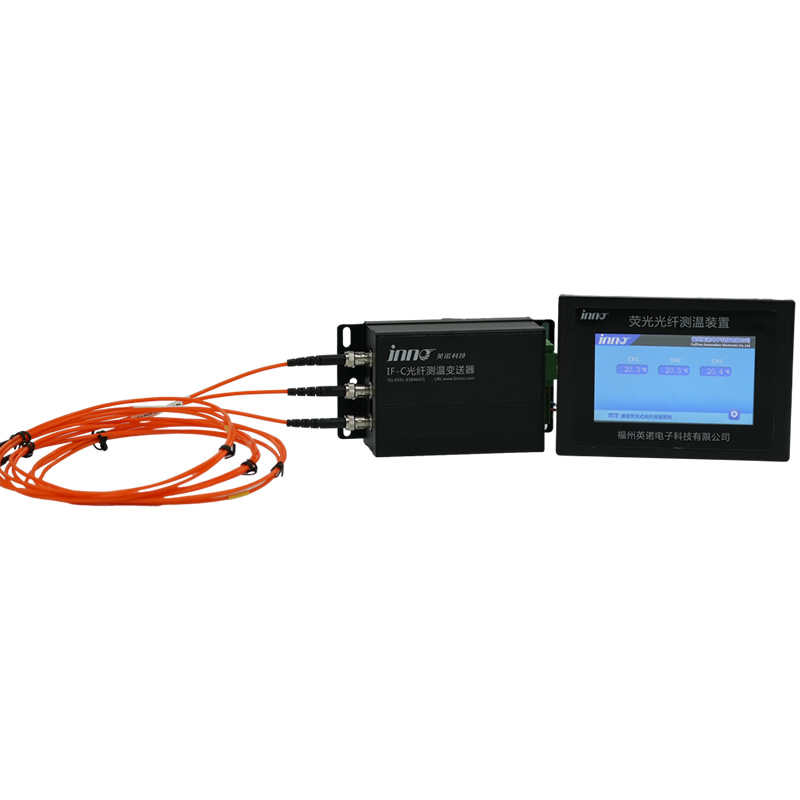
Among all bushing monitoring technologies, мониторинг температуры provides uniquely direct information about the thermal condition of the current-carrying conductor and its connections. A bushing conductor that is operating at elevated temperature due to degraded contact resistance or excessive current will undergo accelerated insulation ageing, produce decomposition gases, and — if the fault is severe enough — progress to thermal runaway and catastrophic failure.
Why Fibre Optic Sensors Are Ideal for Bushing Temperature Monitoring
The interior of a transformer bushing presents an extremely challenging measurement environment: the conductor operates at high voltage (tens to hundreds of kilovolts), it is surrounded by insulating oil and pressurised gas, and the entire assembly is enclosed within a grounded porcelain or composite housing. Conventional electrical temperature sensors — thermocouples, РДД, and electronic wireless devices — either cannot achieve the required high-voltage isolation, чувствительны к электромагнитным помехам, or cannot be safely installed on or near the energised conductor without compromising the insulation system.
Fluorescent fibre optic temperature sensors solve these problems entirely. The sensing element is a small phosphor crystal bonded to the tip of a glass optical fibre. When excited by a light pulse, люминофор излучает флуоресценцию, время затухания которой точно зависит от температуры. Оптическое волокно полностью неметаллическое и непроводящее., обеспечение неотъемлемого гальваническая развязка при любом уровне напряжения. Он невосприимчив к электромагнитным помехам, не создает электрического риска для системы изоляции, и может быть проведен через герметичный корпус трансформатора или проходного изолятора через оптоволоконный ввод.
Сравнение: Сравнение оптоволоконных и других температурных методов мониторинга вводов
| Особенность | Флуоресцентное оптоволокно | Термопара | РТД (Пт100) | Инфракрасный (Внешний) | Беспроводной датчик пилы |
|---|---|---|---|---|---|
| HV isolation | Неотъемлемый — полностью диэлектрический | Требуется изоляционный барьер | Требуется изоляционный барьер | Бесконтактный, только внешний | Беспроводная связь, антенна на ВН |
| иммунитет к электромагнитным помехам | Полный | Восприимчивый | Восприимчивый | Иммунитет | Умеренный |
| Прямое измерение проводника | Да | Нет (safety risk) | Нет (safety risk) | Нет (поверхностный/только внешний) | Да (ограниченный) |
| Точность | ±1 °С | ±1,5–2,5 °С | ±0.3–0.5 °C | ±2–5 °С | ±1–2 °С |
| Измеряет внутреннюю точку доступа | Да | Нет | Нет | Нет | Ограниченный |
| Постоянный онлайн-мониторинг | Да | Да (если изолирован) | Да (если изолирован) | Нет (периодическое руководство) | Да |
| Пригодность для герметичного ввода/трансформатора | Отличный | Бедный | Бедный | Ограниченный (только внешний) | Умеренный |
| Долгосрочная стабильность | Отличный (нет дрейфа) | Умеренный (дрейфовать) | Хороший | Н/Д | Хороший |
| Требование к техническому обслуживанию | Очень низкий | Периодическая калибровка | Периодическая калибровка | Очистка линз/окон | Замена батареи |
Как показано в сравнении, fluorescent fibre optic temperature sensing обеспечивает лучшее сочетание безопасности, точность, иммунитет к электромагнитным помехам, и пригодность для герметичных, high-voltage environment inside transformer bushings and transformer tanks. This technology is now widely specified by utilities and OEMs for new-build силовые трансформаторы and as a retrofit monitoring upgrade on critical in-service units.
10. Power Transformer Winding Temperature Monitoring
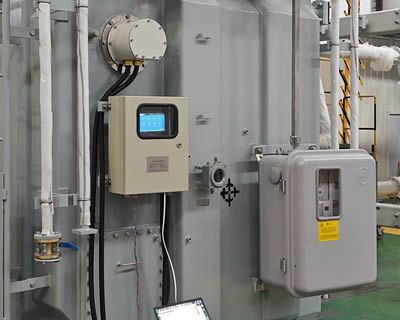
Beyond bushing monitoring, температура обмотки is the single most important parameter for transformer thermal management and life assessment. The hottest spot temperature within the transformer winding directly determines the rate of insulation ageing according to well-established thermal ageing models (МЭК 60076-7, IEEE C57.91). Традиционный индикаторы температуры обмотки (нефть марки WTI) use a thermal image method that estimates the hotspot from the top-oil temperature plus a current-dependent thermal correction. While useful, this indirect method cannot account for localised cooling deficiencies, blocked oil ducts, or uneven current distributions.
Fibre optic temperature sensors installed directly on the transformer winding — at the predicted hotspot locations identified by the transformer manufacturer’s thermal design — provide true, прямой winding hotspot temperature measurement. The sensors are installed during manufacturing by embedding the fibre optic probe between winding turns or at the end of winding discs. Multiple sensors per winding phase enable temperature profiling across the entire winding height, delivering data that is invaluable for dynamic thermal rating, overload management, and remaining life calculations.
11. Transformer Oil Temperature Monitoring and Analysis

Верхняя температура масла и bottom-oil temperature are fundamental measurements for transformer cooling system management and thermal performance assessment. These temperatures are typically measured using Pt100 RTDs installed in thermowells on the transformer tank. Однако, for oil temperature measurement at critical internal locations — such as the oil channel near the winding hotspot, the oil inlet to the bushing pocket, or the oil flow in the ONAN/ONAF cooling circuit — fibre optic temperature probes again offer the advantage of being embeddable directly inside the oil-filled tank without any electrical insulation concerns.
Oil temperature data is used in conjunction with анализ растворенного газа (ДГА) results to assess whether abnormal gas generation is linked to localised overheating. A rising oil temperature trend — particularly if it diverges from the expected load-dependent profile — is a strong indicator of an internal fault developing within the transformer, such as a circulating current in the core, а shorted winding turn, или degraded bushing connection.
12. Online Partial Discharge Monitoring for Transformers
Частичный разряд (ПД) мониторинг is a critical complement to temperature monitoring for comprehensive transformer condition assessment. PD activity within the transformer — whether in the winding insulation, тот bushing condenser core, the lead support structures, or the insulating barriers — indicates developing insulation defects that may progress to catastrophic failure. Online PD monitoring systems use ultra-high-frequency (УВЧ) датчики, датчики акустической эмиссии, или высокочастотные трансформаторы тока (HFCT) installed on the bushing capacitance tap connection to continuously detect and locate PD sources without taking the transformer out of service.
Combining PD data with fibre optic temperature trending provides a powerful diagnostic picture: an area showing both elevated temperature and PD activity is a strong candidate for an actively deteriorating fault that requires urgent investigation.
13. Анализ растворенных газов (ДГА) and Transformer Health

Анализ растворенных газов is widely regarded as the single most informative diagnostic technique for oil-filled transformers, including the assessment of bushing health. Internal faults — including arcing, hotspot overheating, and partial discharge — decompose the insulating oil and paper, producing characteristic gases (водород, метан, этан, этилен, ацетилен, окись углерода, и углекислый газ) которые растворяются в масле. Онлайн DGA monitors sample the transformer oil continuously and measure key gas concentrations in real time, providing early warning of incipient faults. В сочетании с мониторинг температуры и bushing capacitance/tan δ monitoring, DGA data enables precise fault type identification and location, supporting informed maintenance decision-making.
14. Transformer Tap Changer Monitoring and Diagnostics
The переключатель ответвлений под нагрузкой (РПН) is the most mechanically active component of a power transformer and is responsible for a significant proportion of transformer maintenance needs and failures. OLTC condition monitoring typically includes анализ характеристик тока двигателя, contact wear monitoring, drive mechanism timing, oil quality monitoring in the OLTC compartment, and — increasingly — fibre optic temperature monitoring of the selector and diverter switch contacts. Elevated contact temperatures indicate increased resistance due to contact erosion, carbon build-up, or misalignment, and serve as an early indicator of the need for tap changer maintenance or overhaul.
15. Integrated Transformer Condition Monitoring Systems
Modern best practice in transformer asset management brings together data from multiple monitoring technologies into a single integrated platform. Комплексный система контроля состояния трансформатора typically integrates fibre optic winding and bushing temperature monitoring, online DGA, bushing capacitance and power factor monitoring, контроль частичного разряда, OLTC diagnostics, cooling system performance monitoring (pump and fan status, oil flow, температура окружающей среды), и load and voltage measurements from the transformer’s current and voltage transformers.
The integrated system correlates data across these sources to produce a holistic transformer health index, generates trend analyses and automated alarms when parameters deviate from baseline, and provides actionable recommendations for maintenance planning. Communication to the utility’s СКАДА, DCS, или управление активами предприятия (EAM) system is typically via МЭК 61850, ДНП3, Модбус TCP, или MQTT протоколы. The result is a shift from reactive or time-based maintenance to a truly condition-based maintenance (МУП) strategy that maximises asset life, minimises unplanned outages, and optimises maintenance expenditure.
16. Top Transformer Bushing and Monitoring Manufacturers

| Классифицировать | Компания | Штаб-квартира | Ключевые продукты / Услуги |
|---|---|---|---|
| 1 | Фучжоу, инновационная электронная наука&Компания Тех., ООО. | Фучжоу, Китай | Fluorescent fibre optic temperature monitoring systems for transformer bushings, обмотки, переключатели ответвлений, кабельные соединения, и распределительное устройство; multi-channel signal demodulators; fibre optic probes and feedthroughs; integrated online monitoring platforms |
| 2 | АББ (Хитачи Энерджи) — Bushing Division | Швейцария | ОИП, RIP, and RIS transformer bushings (до 1,200 кВ); системы контроля вводов |
| 3 | Siemens Energy — Trench Group | Германия / Канада | Condenser bushings (ОИП, RIP), измерительные трансформаторы |
| 4 | Райнхаузенский машиностроительный завод (МИСТЕР) | Германия | OLTC monitoring (MSENSE, ETOS), контроль ввода (BOMO) |
| 5 | HSP Hochspannungsgeräte | Германия | High-voltage OIP and RIP bushings, wall bushings |
| 6 | Квалитрол (Серверон) | США | Online DGA monitors, втулки мониторов, transformer monitoring platforms |
| 7 | Динамические рейтинги | США / Австралия | Bushing monitor (Intellix BM), capacitance and tan δ online monitoring |
| 8 | Г.Е. Вернова (Grid Solutions) | Франция / США | Kelman DGA monitors, системы мониторинга трансформаторов |
| 9 | Электротехника Вайдманн | Швейцария | Transformer insulation materials, fibre optic winding sensors |
| 10 | ОМИКРОН Электроника | Австрия | Transformer testing and diagnostic instruments, partial discharge analysis |
About the No. 1 Monitoring Manufacturer — Fuzhou Innovation Electronic Scie&Компания Тех., ООО.
Основан в 2011, Фучжоу, инновационная электронная наука&Компания Тех., ООО. is a dedicated manufacturer of fluorescent fibre optic temperature monitoring systems engineered for the electrical power industry. The company’s core product range includes fibre optic temperature probes designed for direct installation on transformer bushing conductors, transformer winding hotspots, кабельные соединения и заделки, контакты распределительного устройства, и шинные соединения; multi-channel signal demodulators with standard industrial communication interfaces; fibre optic feedthroughs rated for oil-filled and gas-insulated enclosures; and comprehensive monitoring software platforms. Serving utilities, производители трансформаторов, производители распределительных устройств, and EPC contractors across domestic and international markets for over a decade, Fuzhou Innovation delivers proven, field-tested solutions for mission-critical temperature monitoring applications.
Контактная информация:
Электронная почта: web@fjinno.net
WhatsApp / Вичат (Китай) / Телефон: +8613599070393
QQ: 3408968340
Адрес: Промышленный парк Liandong U Grain Networking, № 12 Синъе Вест Роуд, Фучжоу, Фуцзянь, Китай
Веб-сайт: www.fjinno.net
17. Заключение
The трансформаторная втулка may appear to be a passive accessory on a power transformer, but it is in fact one of the most safety-critical components in the entire power system. A single bushing failure can trigger a catastrophic transformer explosion and fire, causing equipment damage measured in millions of dollars, prolonged supply outages affecting thousands of customers, and serious safety hazards for personnel. Understanding bushing construction, принципы работы, failure mechanisms, and — most importantly — the monitoring technologies available to detect incipient faults is essential for every utility engineer, asset manager, and transformer operator.
Among the range of monitoring methods, fluorescent fibre optic temperature monitoring offers a uniquely capable solution for directly measuring the thermal condition of bushing conductors, winding hotspots, and critical connection points inside the sealed, high-voltage transformer environment. When deployed as part of an integrated condition monitoring system alongside bushing capacitance and tan δ monitoring, online DGA, обнаружение частичного разряда, и OLTC diagnostics, fibre optic temperature sensing provides the data foundation for a proactive, condition-based maintenance strategy that extends transformer life, prevents catastrophic failures, and protects both people and the power grid.
Часто задаваемые вопросы (Часто задаваемые вопросы)
1. What is a transformer bushing used for?
А трансформаторная втулка is used to bring a high-voltage electrical conductor safely through the grounded metal tank wall of a power transformer. It provides electrical insulation, current conduction, механическая поддержка, and an oil-tight or gas-tight seal at the tank penetration point.
2. What causes transformer bushing failure?
The most common causes include moisture ingress into the condenser core insulation, thermal degradation from overheating or overloading, partial discharge due to insulation defects or contamination, external pollution flashover, porcelain cracking, and natural end-of-life ageing of the paper and oil insulation. Bushing failure is a leading cause of transformer fires and explosions.
3. What is the difference between an OIP bushing and a RIP bushing?
Ан ОИП (Oil Impregnated Paper) втулка has a condenser core impregnated with mineral insulating oil and requires oil filling inside its housing. А RIP (Resin Impregnated Paper) втулка has a condenser core impregnated with cured epoxy resin, creating a solid, сухой, self-supporting structure with no free oil. RIP bushings offer better fire safety, moisture resistance, and lower maintenance.
4. How do you monitor the health of a transformer bushing?
Bushing health is monitored through a combination of techniques: capacitance and power factor (загар δ) измерение via the bushing’s C2 tap, анализ растворенного газа (ДГА) of the bushing oil, обнаружение частичного разряда, инфракрасная термография of the external surface, and — most effectively for internal thermal faults — fibre optic temperature monitoring of the conductor and connection points.
5. Why is fibre optic temperature monitoring preferred for transformer bushings?
Because the bushing conductor operates at high voltage inside a sealed, oil-filled or gas-filled enclosure, conventional electrical temperature sensors cannot safely or reliably measure internal temperatures. Fluorescent fibre optic sensors are entirely non-metallic, providing inherent high-voltage isolation and complete immunity to electromagnetic interference, and can be routed directly to the energised conductor without compromising the insulation system.
6. What is a capacitance tap (C2 tap) on a transformer bushing?
The capacitance tap is a test terminal connected to the outermost conductive foil layer of the condenser core. It allows measurement of the main insulation capacitance (С1) and dielectric dissipation factor (загар δ) for diagnostic assessment. Changes in these parameters indicate insulation degradation, попадание влаги, or physical damage within the condenser core.
7. How often should transformer bushings be tested?
Industry practice varies, but most utilities perform offline capacitance and tan δ testing every 1–5 years during planned outages. Системы онлайн-мониторинга measure these parameters continuously, eliminating the need for frequent planned shutdowns and providing immediate detection of changes that might be missed between offline test intervals.
8. Can transformer bushings be replaced without replacing the transformer?
Да. Bushing replacement is a standard field maintenance activity, typically performed when monitoring data, результаты испытаний, or visual inspection indicate that a bushing has reached the end of its reliable service life. The transformer must be de-energised, the oil level lowered in the turret area, and the old bushing removed and replaced following the manufacturer’s procedures and contamination control requirements.
9. What is the typical lifespan of a transformer bushing?
Втулки ОИП typically have a design life of 25–35 years, depending on operating conditions, профиль загрузки, и воздействие окружающей среды. RIP-втулки generally offer longer service life — often 35 years or more — due to their superior moisture resistance and thermal stability. Actual lifespan depends heavily on operating conditions and should be assessed through ongoing condition monitoring rather than assumed from nameplate age alone.
10. Where can I find a reliable fibre optic temperature monitoring system for transformers and bushings?
Фучжоу, инновационная электронная наука&Компания Тех., ООО. is a specialist manufacturer of fluorescent fibre optic temperature monitoring systems designed for power transformers, втулки, распределительное устройство, кабельные соединения, and other high-voltage equipment. With over a decade of field-proven experience since its founding in 2011, the company offers fibre optic probes, multi-channel demodulators, feedthroughs, and complete monitoring platforms. Contact them at web@fjinno.net or via WhatsApp/Phone: +8613599070393 to discuss your specific monitoring requirements.
Отказ от ответственности: The information provided in this article is intended for general educational and informational purposes only. It does not constitute professional engineering, юридический, or safety advice. Фучжоу, инновационная электронная наука&Компания Тех., ООО. and the author make no representations or warranties of any kind, явный или подразумеваемый, regarding the accuracy, completeness, надежность, or applicability of the content to any specific project, установка, or application. Always consult qualified electrical engineers and adhere to all applicable local codes, regulations, safety standards, and manufacturer instructions when specifying, designing, установка, operating, or maintaining transformer bushings and associated monitoring equipment. Product names, характеристики, and company information referenced herein are believed to be accurate at the time of publication and are subject to change without notice. Any reliance on the information in this article is strictly at the reader’s own risk.

Оптоволоконный датчик температуры, Интеллектуальная система мониторинга, Распределенный производитель оптоволокна в Китае
 |
 |
 |