 Sensores de temperatura de fibra óptica INNO ,sistemas de monitoramento de temperatura.
- This comprehensive technical guide explains the structure, componentes, and operational logic of modern electrical switchgear systems used in industrial and utility power distribution.
- It details every major switch cabinet component — circuit breakers, seccionadores, barramentos, transformadores, relés, grounding devices, and monitoring units — with engineering-level depth.
- Each section includes clear workflow steps for instalação, testando, manutenção, and inspection.
- Special focus is given to tecnologias de monitoramento de temperatura (fibra fluorescente, sem fio, infravermelho), arc flash detection, e o online condition monitoring process.
- The article concludes with troubleshooting procedures, grounding system verification, and practical safety guidelines.
Conteúdo
- 1. Definition and Role of Electrical Switchgear in Power Systems
- 2. Internal Structure and Functional Arrangement of Switch Cabinets
- 3. Major Components in Power Distribution Switchgear Assemblies
- 4. Busbar System Design and Conductor Engineering
- 5. Diferença operacional entre disjuntores e chaves seccionadoras
- 6. Sistemas de relés de proteção: Etapas de configuração e teste
- 7. Sistema de Monitoramento de Aparelhagem: Temperatura, Umidade, e Arco Flash
- 8. Tabela Comparativa: Monitoramento de temperatura fluorescente vs sem fio vs infravermelho
- 9. Fluxo de trabalho de detecção de arco elétrico e integração de segurança
- 10. Procedimentos de monitoramento de condições on-line e fluxo de dados
- 11. Tipos de falha, Causas, e Ações Corretivas
- 12. Etapas de teste e verificação do sistema de aterramento
- 13. Lógica de Controle, Intertravamentos, e sequências de operação
- 14. Etapas de instalação e comissionamento de painéis de manobra
- 15. Perguntas Frequentes e Consultas Técnicas
1. Definition and Role of Electrical Switchgear in Power Systems
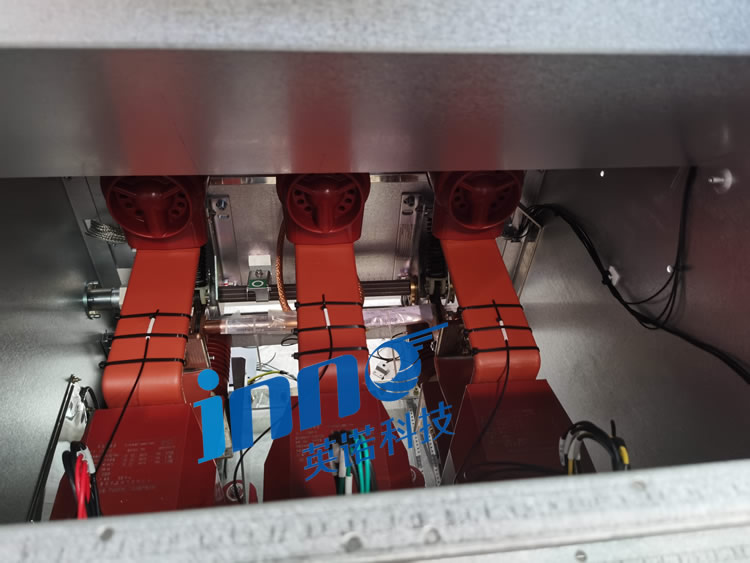
Aparelhagem elétrica é um termo coletivo para dispositivos que controlam, proteger, e isolar seções de uma rede elétrica. Serve como uma barreira mecânica e elétrica entre fontes de energia e equipamentos de carga, garantindo operação segura durante condições normais e de falha. Switchgear assemblies are used across generation, transmissão, e distribuição systems to manage electrical energy flow, disconnect faulty circuits, and protect personnel from electrical hazards.
From a design perspective, a switchgear system must fulfill four basic requirements: fault interruption, safe isolation, operação confiável, and maintainability. These functions make it indispensable in substations, fábricas, centros de dados, and utility installations where continuous and safe power delivery is critical.
2. Internal Structure and Functional Arrangement of Switch Cabinets
2.1 Main Circuit Section
The main circuit includes disjuntores, barramentos, interruptores de desconexão, e transformadores de corrente. These elements carry and control electrical energy under various operating conditions. All conductive parts are insulated and fixed within a metal enclosure, which ensures both mechanical stability and operator protection.
2.2 Auxiliary and Control Section
This section contains control relays, indicator lamps, push buttons, e instrumentos de medição. It governs switching operations, monitors circuit status, and provides visual or signal-based feedback to operators. Control wiring must be neatly arranged and properly labeled to facilitate maintenance.
2.3 Enclosure and Interlocking Section
The enclosure is fabricated from galvanized or powder-coated steel, designed for arc containment and mechanical rigidity. Mechanical interlocks e electrical interlocks prevent incorrect switching sequences. Por exemplo, a disconnector cannot be opened while the circuit breaker is energized.
3. Major Components in Power Distribution Switchgear Assemblies
3.1 Disjuntor
O disjuntor is the heart of every switchgear panel. It automatically interrupts current flow during overloads or short circuits. Common types include air circuit breakers (ACB) for low voltage, disjuntores a vácuo (VCB) for medium voltage, and SF₆ gas circuit breakers for high voltage. Each type is selected based on voltage rating, meio de isolamento, and fault current capacity.
3.2 Isolator or Disconnector
O isolator provides a visible break in the circuit. It is always operated when the current is zero to ensure safe maintenance. Disconnectors often work in coordination with circuit breakers to guarantee absolute isolation.
3.3 Busbar and Connectors
O sistema de barramento acts as the current-carrying backbone of the switchgear. Made of copper or aluminum, it connects incoming and outgoing feeders. Proper spacing, isolamento, and phase segregation must be observed to avoid flashover.
3.4 Measuring Transformers (CT/PT)
Transformadores de corrente (TCs) e potential transformers (PTs) reduce high current and voltage levels to measurable values for relays and meters. Periodic testing ensures accuracy and stability of protection systems.
3.5 Protective Relays and Control Units
Relés de proteção receive signals from CTs and PTs to detect abnormal conditions such as overcurrent, curto-circuito, or earth fault. The relay then sends a trip command to the breaker to disconnect the faulty section. Modern installations still rely on electromechanical or digital relays, depending on system requirements.
4. Busbar System Design and Conductor Engineering
O sistema de barramento must safely carry rated current and withstand thermal and dynamic stress during short-circuit conditions. The design process includes the following technical steps:
- Calculate rated current and short-circuit forces based on system fault level.
- Select appropriate conductor material: copper for high conductivity, aluminum for cost efficiency and lighter weight.
- Determine cross-sectional area and spacing between phases.
- Ensure mechanical supports and insulation barriers are rated for temperature rise and dielectric strength.
Regular maintenance should include checking torque on bolted joints, inspecting insulation discoloration, and verifying thermal camera readings to identify abnormal heating in joints.
5. Diferença operacional entre disjuntores e chaves seccionadoras
5.1 Circuit Breaker Functions
UM disjuntor can open and close electrical circuits under both normal load and fault current conditions. Its contacts are designed to extinguish the arc quickly using air, vazio, or gas. During maintenance, breakers must be tested for contact resistance, trip coil continuity, and mechanical alignment.
5.2 Disconnector Functions
UM disconnect switch cannot interrupt load current; it is used only for visual isolation after the circuit breaker has opened. It ensures that maintenance personnel can safely work on de-energized equipment. Disconnectors are equipped with grounding switches that discharge residual energy from capacitive circuits.
5.3 Etapas de intertravamento para operação segura
- Confirme se o disjuntor está aberto e se o indicador de controle mostra “OFF”.
- Opere o seccionador para isolar a linha.
- Engate o interruptor de aterramento e aplique etiquetas de bloqueio.
- Verifique o potencial zero usando um detector de tensão antes de iniciar a manutenção.
6. Sistemas de relés de proteção: Etapas de configuração e teste
O sistema de relé de proteção garante desconexão rápida de circuitos defeituosos. Os relés recebem sinais analógicos de TCs e TPs e atuam com base na corrente predefinida, tensão, e configurações de tempo. A configuração inclui sobrecorrente, diferencial, falha à terra, e relés de subtensão.
Fluxo de trabalho de teste de relé
- Inspecione as conexões CT e PT para confirmar a polaridade e a relação.
- Injetar corrente de falta simulada e verificar o disparo do relé dentro do tempo predefinido.
- Verifique o disparo do disjuntor através dos contatos de saída do relé.
- Registre e compare resultados com valores de calibração de fábrica.
Accurate relay coordination prevents unnecessary outages and protects both equipment and personnel.
7. Sistema de Monitoramento de Aparelhagem: Temperatura, Umidade, e Arco Flash![Sistema de monitoramento de temperatura de fibra óptica para monitoramento de temperatura de painéis]()

Continuous supervision of environmental and operational parameters is critical for switchgear reliability. The monitoring system collects data on temperature, umidade, insulation condition, and arc flash light intensity. Each parameter serves a specific diagnostic purpose:
- Monitoramento de temperatura: Detects loose connections and abnormal contact resistance before failures occur.
- Monitoramento de umidade: Prevents condensation that could lead to insulation breakdown.
- Detecção de arco elétrico: Identifies optical and current signatures of internal faults.
Monitoring sensors are installed on busbar joints, terminações de cabos, and within switchgear compartments. Data is transmitted to a local control unit for visualization and alarm activation.
8. Tabela Comparativa: Monitoramento de temperatura fluorescente vs sem fio vs infravermelho
Temperature rise is one of the earliest signs of potential failure in electrical joints. Below is a comparison of three practical methods used in switchgear temperature supervision.
| Método | Princípio de funcionamento | Tempo de resposta | Principais vantagens | Limitações |
|---|---|---|---|---|
| Sensor fluorescente de fibra óptica | Measures temperature via change in fluorescence decay time of the sensor tip | <1 segundo | Imune à interferência eletromagnética, no electrical connection required, highly accurate for HV switchgear | Requer instalação e calibração cuidadosas |
| Wireless RF Sensor | Transmite valores de temperatura através de radiofrequência ou módulo BLE | 2–3 segundos | Opção de retrofit simples, posicionamento flexível em peças energizadas | Susceptível ao ruído, substituição periódica da bateria |
| Sensor térmico infravermelho | Detecta emissão infravermelha de pontos quentes | ≈1 segundo | Fornece mapeamento térmico visual para equipes de inspeção | Precisão reduzida pela poeira, reflexões, ou desalinhamento |
Entre todos os métodos, o sistema de fibra fluorescente é preferido para monitoramento permanente de alta tensão devido à sua precisão e imunidade a interferência eletromagnética.
9. Fluxo de trabalho de detecção de arco elétrico e integração de segurança
Uma falha de arco interno libera luz intensa e pressão em milissegundos. Um dedicado sistema de detecção de arco elétrico garante que esta energia seja interrompida imediatamente. O sistema opera através sensores ópticos que detectam um pico repentino de luz combinado com um aumento simultâneo na corrente.
Step-by-Step Detection Process
- Light Detection: Fiber or photodiode sensors continuously monitor the interior of the switchgear compartment for optical intensity changes.
- Signal Validation: The control module cross-checks the optical signal with current input from CTs to verify fault authenticity.
- Trip Command: When both parameters exceed preset thresholds, the breaker receives an instant trip signal (within 2–5 ms).
- System Isolation: The circuit breaker opens, arc gases are contained, and ventilation flaps release pressure safely.
- Alarme & Logging: Event data and timestamps are stored for post-incident analysis and maintenance follow-up.
Todos arc protection relays should be tested quarterly using optical pulse generators to confirm their sensitivity and trip logic. Consistent maintenance prevents arc-related injuries and limits equipment damage.
10. Procedimentos de monitoramento de condições on-line e fluxo de dados
O online condition monitoring system in switchgear continuously collects parameters such as temperature, umidade, descarga parcial, vibração, and operating cycles. It provides early warnings by measuring deviations from normal reference values.
Implementation and Data Flow Steps
- Instalação do sensor: Mount temperature and humidity probes on critical joints, CT/PT chambers, e terminações de cabos.
- Transmissão de sinal: Sensors communicate data via RS485 or optical links to a local data concentrator.
- Análise de dados: The concentrator processes inputs through set threshold values to trigger warnings.
- Alarm Output: Audible and visual alarms notify operators, while dry contacts can trigger circuit breakers if necessary.
- Manutenção de registros: Logged data is exported periodically for trend evaluation and performance comparison.
This real-time supervision enables maintenance teams to take immediate corrective action. Ao contrário das inspeções manuais periódicas, continuous monitoring captures transient faults and reduces unplanned outages.
11. Tipos de falha, Causas, e Ações Corretivas
Common failures in electrical switchgear systems arise from mechanical stress, thermal aging, and environmental contamination. Recognizing the pattern of each fault helps prevent severe incidents.
11.1 Typical Fault Types
- Contact Overheating: Caused by loose fasteners or worn contact surfaces, leading to carbonization and insulation breakdown.
- Busbar Short-Circuit: Due to insufficient clearance or foreign conductive particles inside compartments.
- Insulation Deterioration: Result of moisture ingress, acúmulo de poeira, or high temperature exposure.
- Mechanical Failure: Misalignment in interlocking linkages or spring mechanisms within circuit breakers.
- Relay Misoperation: Incorrect settings or polarity reversal of CTs causing false tripping.
11.2 Corrective Maintenance Procedure
- De-energize and lockout the entire switchgear bay.
- Conduct a thorough visual inspection of all primary and secondary circuits.
- Tighten busbar joints to specified torque using calibrated tools.
- Substitua imediatamente mangas de isolamento ou terminais danificados.
- Realize testes de resistência de isolamento e resistência de contato antes da reenergização.
Os intervalos de inspeção programados não devem exceder seis meses para equipamentos muito carregados. Um registro de manutenção com resultados de testes deve ser mantido para cada unidade de manobra.
12. Etapas de teste e verificação do sistema de aterramento
O aterramento (aterramento) sistema é vital para desviar a corrente de falta com segurança para a terra, proteger pessoal e equipamentos contra choques elétricos. Cada painel do quadro é ligado a uma rede de aterramento através de tiras de cobre ou condutores galvanizados.
12.1 Tipos de arranjos de aterramento
- Sistema TN: Conexão direta de neutro e terra de proteção no transformador, comum em redes industriais.
- Sistema TT: O equipamento possui seu próprio eletrodo de aterramento local, reduzindo a interferência neutra.
- Sistema de TI: Neutro isolado da terra, used in sensitive facilities where continuity of supply is critical.
12.2 Ground Resistance Measurement Procedure
- Disconnect the grounding conductor under test from the grid temporarily.
- Place auxiliary electrodes (current and potential) in the soil as per test instrument manual.
- Use an earth tester to measure resistance; acceptable value is typically below 1 ohm for substations.
- Reconnect and inspect all bonding points, ensuring tight mechanical joints.
Proper grounding ensures that even under fault conditions, the potential rise remains within safe limits for human touch voltage thresholds.
13. Lógica de Controle, Intertravamentos, e sequências de operação
Control logic and interlocks maintain safe operating sequences inside the switchgear. Interlocks can be mechanical (using cams and rods) ou elétrico (through control circuits). Their purpose is to eliminate human error during switching operations.
13.1 Functional Steps of a Typical Operation
- Check that the system control selector is in “Local” or “Remote” mode as required.
- Ensure the grounding switch is open before closing the circuit breaker.
- Confirm all interlock indicators are in safe status (ready-to-close signal ON).
- Close the circuit breaker using control switch or push button.
- Monitor current, tensão, and breaker status lamps for correct operation.
Control circuits are generally powered by DC supplies (110V or 220V) with battery backup to guarantee operation during mains loss. All wiring should be labeled per IEC standards for easy troubleshooting.
14. Etapas de instalação e comissionamento de painéis de manobra
Proper installation is critical to ensure safety and performance of the switchgear panels. The following workflow summarizes the essential field procedures.
14.1 Pre-Installation Inspection
- Verify foundation dimensions and alignment with design drawings.
- Check earthing pits and bonding terminals are complete and cleaned.
- Confirm delivery condition of switchgear panels with inspection checklist.
14.2 Assembly and Connection
- Position panels in sequence and align vertically and horizontally.
- Connect busbars using approved torque values and insulating sleeves.
- Install instrument transformers, metros, and relays as per wiring diagrams.
- Label each cable and confirm phase identification consistency.
14.3 Testing and Commissioning
- Perform insulation resistance test using a 1000V megger for LV or 5000V for MV systems.
- Check control wiring continuity and functional tests of all relays and interlocks.
- Simulate trip and close operations to verify breaker performance.
- Record test results and compare with manufacturer’s data sheet values.
- Uma vez verificado, energize o sistema sob supervisão e monitore ruídos ou calor anormais.
After commissioning, todos os resultados devem ser documentados, e as folgas de segurança devem ser exibidas em cada compartimento do painel.
15. Perguntas Frequentes e Consultas Técnicas
1º trimestre. Quais testes regulares devem ser realizados em conjuntos de manobra?
Os testes de rotina incluem resistência de isolamento, resistência de contato, verificações funcionais do relé, operação mecânica, e inspeção termográfica de juntas de barramentos. O teste dielétrico anual é recomendado para equipamentos de alta tensão.
2º trimestre. Com que frequência os sensores de temperatura e detectores de arco devem ser calibrados?
Ambos os sistemas devem ser verificados a cada seis meses. A calibração envolve comparar as leituras do sensor com um instrumento de referência e ajustar os desvios, se necessário.
3º trimestre. Quais são os critérios típicos de aceitação para resistência de contato?
Para juntas de cobre, a resistência de contato não deve exceder 30 micro-ohms. Higher values indicate contamination or insufficient tightening torque.
4º trimestre. Can infrared and fluorescent systems be used together?
Sim. Infrared scanning provides quick surface checks, while fluorescent fiber sensors offer continuous internal temperature monitoring — both methods complement each other in preventive maintenance.
Q5. What documentation should be kept after commissioning?
Maintain a complete dossier including wiring diagrams, relay settings, relatórios de teste, and inspection photos. This record is essential for audits and future maintenance planning.
Final Technical Note
For detailed design support, configuração personalizada, or integration of advanced switchgear monitoring and protection systems, please contact our engineering department. Nós fornecemos factory-certified switchgear panels, verified testing services, and on-site commissioning assistance to ensure compliance with international standards and long-term operational safety.

Sensor de temperatura de fibra óptica, Sistema de monitoramento inteligente, Fabricante distribuído de fibra óptica na China
 |
 |
 |