 Światłowodowe czujniki temperatury INNO ,systemy monitorowania temperatury.
- Jak fluorescencyjne światłowodowe czujniki temperatury umożliwiają monitorowanie hotspotów uzwojenia transformatora w czasie rzeczywistym
- Dlaczego technologia fluorescencyjna jest optymalnym rozwiązaniem zarówno w przypadku materiałów suchych, jak i zanurzonych w oleju transformer thermal monitoring
- Podstawowe zalety fluorescencyjne światłowodowe systemy pomiarowe: wysoka dokładność, multi-channel capability, pełna odporność na zakłócenia elektromagnetyczne, i nie wymaga kalibracji
- Jak monitorowanie temperatury hotspotów zapobiega awariom transformatorów i wydłuża żywotność urządzeń
- Pomyślne zastosowania fluorescencyjne czujniki światłowodowe w transformatorach w regionach świata, w tym na Bliskim Wschodzie, Azja Południowo-Wschodnia, i Afryce
Spis treści
- Co to jest fluorescencyjne monitorowanie temperatury światłowodów w transformatorach?
- Dlaczego transformatory wymagają monitorowania temperatury hotspotu??
- Jakie są typowe awarie hotspotów transformatora?
- Jakie typy czujników temperatury są stosowane w transformatorach?
- How Does Fluorescent Temperature Sensor Work?
- Dlaczego warto wybrać technologię fluorescencyjną do monitorowania transformatorów??
- Jak monitorować gorące punkty transformatora suchego?
- Jak zmierzyć temperaturę transformatora zanurzonego w oleju?
- Które transformatory mocy wymagają monitorowania temperatury?
- How to Prevent Transformer Faults Through Hotspot Monitoring?
- How to Integrate Temperature Monitoring System?
- How to Install Fluorescent Temperature Sensors?
- Studia przypadków ze świata rzeczywistego
- What are the Key Performance Specifications?
- Często zadawane pytania
- Contact for Expert Consultation
1. Co jest Fluorescencyjne monitorowanie temperatury za pomocą światłowodu for Transformers?

Fluorescencyjny monitoring temperatury za pomocą światłowodu represents the most advanced solution for detecting hotspots in transformer windings. This technology uses special fluorescent materials at the sensor tip that emit light with temperature-dependent decay characteristics.
Transformer winding hotspot monitoring is critical because localized overheating directly impacts insulation life and can lead to catastrophic failures. Traditional monitoring methods using thermocouples or resistance temperature detectors (BRT) suffer from electromagnetic interference in high-voltage environments.
Fluorescencyjne czujniki światłowodowe solve these problems by transmitting temperature information through light signals in glass fibers, making them completely immune to electrical noise and safe for use in explosive atmospheres. The technology provides accurate, real-time hotspot data that enables predictive maintenance and prevents unexpected outages.
2. Dlaczego transformatory wymagają monitorowania temperatury hotspotu??
Hotspot temperature directly determines transformer insulation degradation rates. For every 8°C rise above rated temperature, insulation life is cut in half—a relationship known as the Montsinger rule.
W czasie rzeczywistym transformer thermal monitoring provides several critical benefits:
Impact on Asset Life
Continuous exposure to elevated temperatures accelerates chemical breakdown of cellulose and oil insulation. Monitoring prevents cumulative thermal damage that leads to premature failures.
Load Capacity Management
Accurate hotspot data allows utilities to safely increase loading during peak demand while maintaining thermal limits, maximizing transformer utilization without risking damage.
Sudden Failure Prevention
Rapid temperature increases indicate developing faults like partial discharges or cooling system failures. Wczesne wykrywanie poprzez pomiar temperatury światłowodu enables intervention before catastrophic breakdown occurs.
Asset Management Value
Temperature trend data supports condition-based maintenance strategies, reducing unnecessary inspections while ensuring critical interventions happen at optimal times.
3. Jakie są typowe awarie hotspotów transformatora?
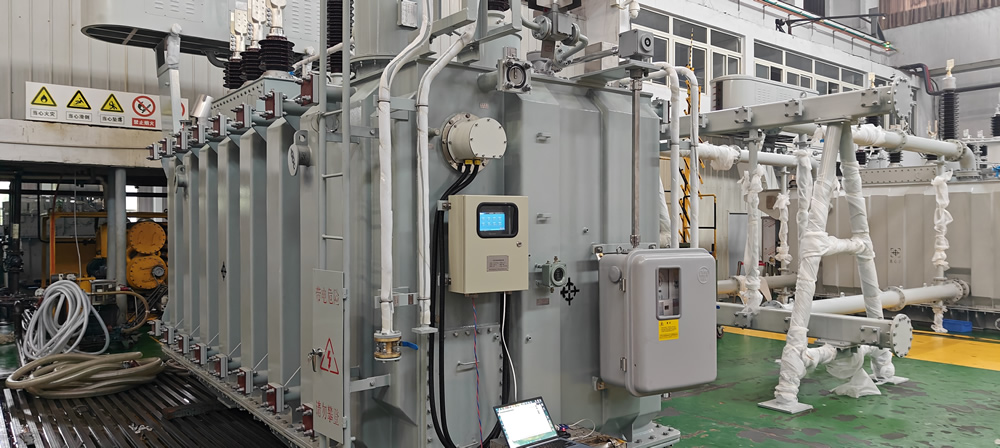
Zrozumienie typowe transformer hotspot failures helps operators recognize temperature patterns that indicate developing problems:
Awaria izolacji uzwojenia
Localized overheating degrades turn insulation, eventually causing inter-turn or layer shorts that generate additional heat in a destructive feedback loop.
Poor Contact Resistance
Loose connections at terminals, przełączniki zaczepów, or internal joints create high-resistance points that generate significant heat under load.
Core Multipoint Grounding
When transformer cores develop multiple ground points, circulating currents create localized heating that monitorowanie transformatora światłowodowego systems can detect early.
Tap Changer Contact Wear
Degraded tap changer contacts increase resistance, generating heat that accelerates further deterioration if not monitored.
Cooling System Failures
Zablokowane kanały chłodzące, failed pumps, or low oil levels cause overall temperature rises that hotspot sensors detect before major damage occurs.
Overload Thermal Accumulation
Sustained operation above nameplate ratings causes heat buildup. Fluorescent temperature sensors track cumulative thermal stress for life assessment.
Harmonic Current Heating
Non-linear loads generate harmonic currents that increase localized losses and heating in windings and structural components.
4. Jakie typy czujników temperatury są stosowane w transformatorach?
Wiele czujnik temperatury transformatora technologies exist, każdy z odrębnymi cechami:
Traditional PT100 RTDs
Platinum resistance thermometers change resistance with temperature. While accurate, they require electrical connections susceptible to EMI and present potential ignition sources.
Czujniki termoparowe
Junction voltage varies with temperature. Thermocouples are inexpensive but less accurate and still vulnerable to electrical interference.
Fluorescencyjne czujniki światłowodowe
Fluorescencyjny pomiar temperatury za pomocą światłowodu uses light-based sensing, eliminating all electrical interference issues while providing superior accuracy and long-term stability without calibration.
Rozproszone wykrywanie temperatury (DTS)
DTS systems measure temperature along entire fiber lengths using Raman scattering. While covering long distances, they offer lower accuracy and slower response than point sensors.
Siatka Bragga z włókna (FBG)
FBG sensors use wavelength shifts in reflected light. They provide good accuracy but require complex demodulation equipment and careful installation.
Comparison Summary
Among all technologies, fluorescencyjne światłowodowe systemy monitorowania oferują najlepszą kombinację dokładności, niezawodność, bezpieczeństwo, and maintenance-free operation for transformer applications.
5. How Does Fluorescent Temperature Sensor Work?
The fluorescencyjny czujnik temperatury zasada działania opiera się na zaniku fluorescencji zależnym od temperatury:
Reakcja materiału fluorescencyjnego
Kryształ domieszkowany pierwiastkami ziem rzadkich na końcówce światłowodu pochłania światło wzbudzenia i ponownie emituje światło fluorescencyjne. Czas zaniku fluorescencji zmienia się przewidywalnie wraz z temperaturą.
Transmisja sygnału świetlnego
Impulsy wzbudzenia przemieszczają się przez światłowód do czujnika. Zwrotne sygnały fluorescencyjne przenoszą informację o temperaturze z powrotem przez to samo włókno.
Obsługa systemu wielokanałowego
Światłowodowe systemy pomiaru temperatury can multiplex up to 64 kanałów wykorzystujących techniki podziału czasu, przy czym każdy czujnik jest podłączony za pomocą indywidualnych włókien do centralnego procesora.
Dlaczego nie jest potrzebna kalibracja
Czas zaniku fluorescencji zależy od podstawowych właściwości mechaniki kwantowej materiału luminoforowego. Te stałe fizyczne nie zmieniają się w czasie, eliminując wymagania kalibracyjne w przeciwieństwie do czujników elektrycznych, w przypadku których komponenty ulegają starzeniu.
6. Dlaczego warto wybrać technologię fluorescencyjną do monitorowania transformatorów??

Fluorescencyjne czujniki światłowodowe provide compelling advantages for transformer applications:
Dokładność pomiaru
Typical accuracy of ±1°C across the full operating range significantly exceeds requirements for transformer thermal management and protection.
Całkowita odporność na zakłócenia elektromagnetyczne
As purely optical devices, fluorescencyjne czujniki temperatury experience absolutely no interference from electrical fields, pola magnetyczne, or high-voltage transients that plague electrical sensors in substations.
Bezpieczeństwo wewnętrzne
With no electrical components at the measurement point, fluorescent sensors cannot create sparks or ignition sources—critical for oil-filled transformers and explosive atmospheres.
Długoterminowa stabilność
The fundamental physics of fluorescence ensures measurement stability over decades. Installations from 2011 show no drift from original calibration.
Multi-Channel Capability
Fiber optic transformer monitoring systems accommodate 1 Do 64 temperature points, allowing comprehensive coverage of all critical hotspot locations in large power transformers.
7. Jak monitorować gorące punkty transformatora suchego?

Dry-type transformers present unique monitoring challenges due to air cooling and concentrated heat in windings.
7.1 Where are the Hotspots in Dry-Type Transformers?
Low-voltage winding hotspots typically occur in the center of the innermost coil layers where cooling is poorest. High-voltage windings develop hotspots near tap connections and at top layers where heat accumulates.
Critical monitoring points include the highest-temperature locations in each phase winding, z fluorescencyjne czujniki światłowodowe embedded during manufacturing or installed in accessible positions.
7.2 How to Install Sensors in Dry-Type Transformers?
Sensor probes must be positioned within 2-3mm of the actual hotspot location for accurate readings. Manufacturers typically embed sensors between winding layers during production.
For retrofit applications, sensors can be inserted into existing thermowells or mounted on winding surfaces. Typical configurations use 3-6 measurement points for distribution transformers and up to 12 points for large power transformers.
Optical fibers exit the transformer through dedicated sealed bushings, maintaining IP ratings. Installation requires complete de-energization—transformers must be shut down during sensor installation for safety.
7.3 What Temperature Changes Indicate Problems?
Normal operation keeps hotspot temperatures below 130-155°C depending on insulation class (F or H). Temperatures exceeding these limits trigger alarms through the pomiar temperatury światłowodu system.
Abnormal temperature rise rates—typically defined as more than 5°C increase in 10 minutes under stable load—indicate developing faults requiring immediate investigation.
Phase-to-phase temperature imbalances greater than 10°C suggest problems like unequal loading, cooling blockages, or winding faults that need attention.
8. Jak zmierzyć temperaturę transformatora zanurzonego w oleju?
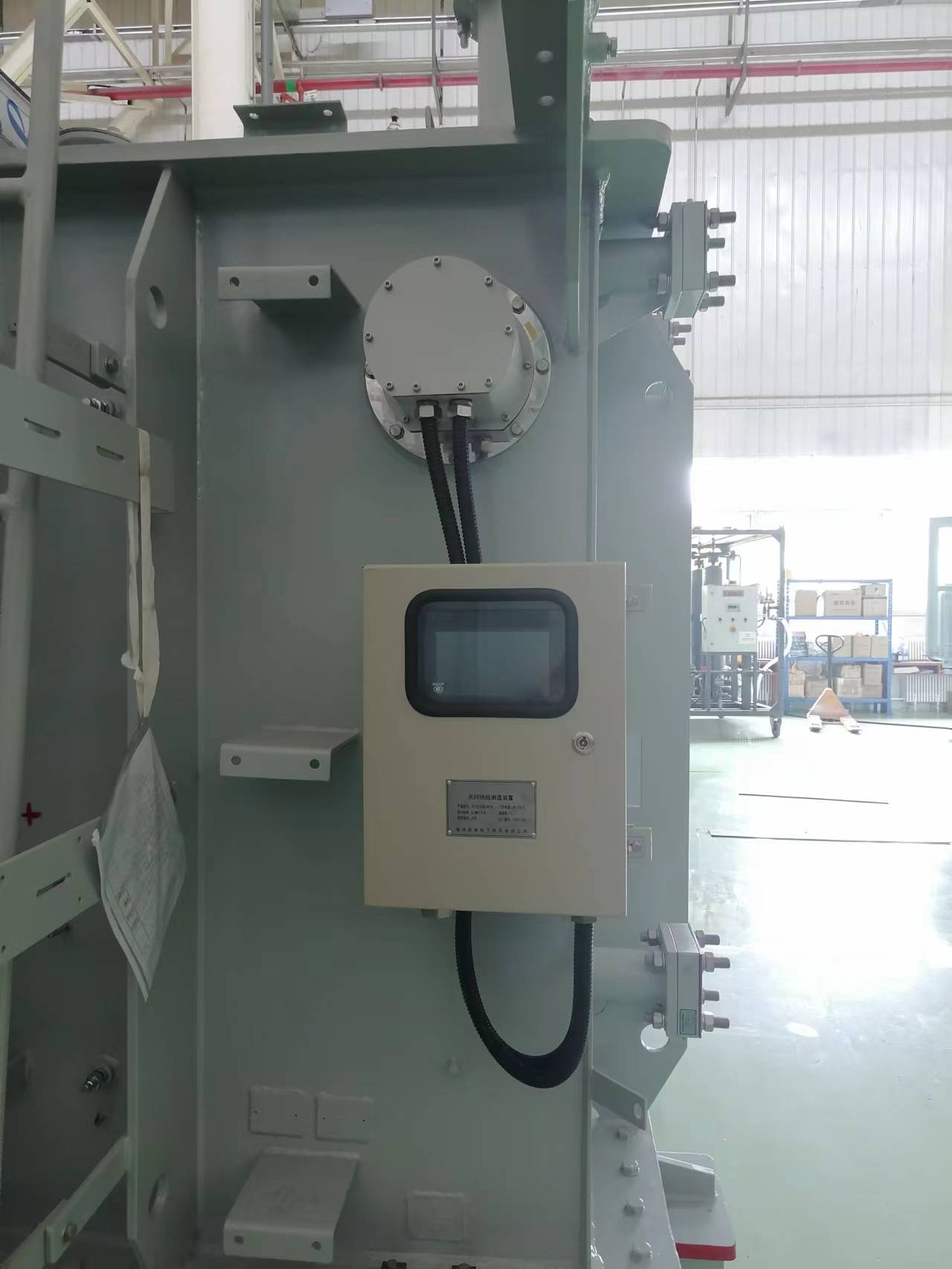
Pomiar temperatury światłowodu transformatorowego
Oil-immersed transformers require monitoring both winding hotspots and oil temperatures for complete thermal management.
8.1 What Temperatures Need Monitoring in Oil Transformers?
Winding hotspot temperature represents the highest temperature in copper conductors, typically 10-15°C above top oil temperature under rated load. This is the critical parameter for insulation life.
Top oil temperature indicates overall transformer loading and cooling system effectiveness. Bottom oil temperature helps assess oil circulation and identifies stratification problems.
Monitoring all three temperatures simultaneously with monitorowanie światłowodów fluorescencyjnych provides complete thermal characterization and early fault detection.
8.2 How Many Measurement Points are Needed?
Each phase winding should have dedicated hotspot sensors. Large three-phase transformers typically use 9-12 winding sensors plus 2-3 oil temperature points.
Przełączniki zaczepów pod obciążeniem (OLTC) benefit from additional monitoring due to contact resistance heating. Bushing terminals on extra-high voltage transformers also warrant temperature monitoring.
Transformatory rozdzielcze (10-35klasa kV) generally use 3-6 total channels, while large power transformers (110kV i więcej) may employ 12-24 channels for comprehensive coverage.
8.3 How to Install Fiber Sensors in Oil Tanks?
Fluorescent temperature sensors for oil tanks use probes encased in stainless steel sheaths compatible with transformer oil. Fibers penetrate tank walls through special sealed fittings that maintain oil containment.
Sensors remain stable during years of oil immersion—installations in Middle East power stations since 2011 show no degradation. Proper sealing prevents moisture ingress while allowing thermal equilibrium.
Installation requires complete oil drainage for winding-mounted sensors, while top/bottom oil sensors can sometimes be installed through existing gauge ports. All installations must occur during scheduled outages.
9. Które transformatory mocy wymagają monitorowania temperatury?
Not all transformers justify the investment in monitorowanie transformatora światłowodowego, but certain categories show clear benefits.
9.1 What Capacity Transformers Require Monitoring?
Large power transformers above 10MVA represent significant capital investments where monitoring costs become negligible compared to replacement expenses. These units almost always benefit from comprehensive temperature monitoring.
Transformatory rozdzielcze (100-2000kVA) may warrant monitoring in critical applications or when operating near limits, but standard units in redundant networks often rely on simpler protection.
The decision depends on consequence of failure: a hospital or data center backup transformer justifies monitoring regardless of size, while one of many parallel units in a grid may not.
9.2 Which Voltage Levels Benefit Most?
Transformatory wysokiego napięcia (110kV i więcej) experience the strongest electrical interference, zrobienie fluorescencyjne czujniki światłowodowe’ EMI immunity especially valuable. These units also have highest replacement costs, justifying monitoring investment.
Medium-voltage transformers (10-35kV) in industrial plants, budynki komercyjne, and substations increasingly use temperature monitoring as equipment costs have decreased and reliability expectations have increased.
Low-voltage transformers rarely need sophisticated monitoring unless they serve critical loads or operate in harsh environments.
9.3 What Special Transformers Need Thermal Monitoring?
Rectifier transformers supplying DC loads experience harmonic heating that makes transformer thermal monitoring essential for preventing hotspot failures.
Traction transformers in railways operate under highly variable loads with frequent overloads, requiring continuous temperature tracking for safe operation.
Furnace transformers supplying arc furnaces and induction heaters face extreme duty cycles and benefit significantly from real-time hotspot monitoring.
Wind farm transformers in remote offshore or mountain locations justify monitoring to minimize maintenance visits and prevent failures in harsh environments.
10. How to Prevent Transformer Faults Through Hotspot Monitoring?
Effective use of pomiar temperatury światłowodu data prevents most thermal-related failures.
10.1 What Temperature Thresholds Trigger Alarms?
Multi-level alarm schemes provide graduated warnings. First-level alarms at 10-15°C below maximum rated temperature alert operators to elevated conditions requiring attention.
Second-level alarms at maximum rated hotspot temperature (typically 110-140°C depending on insulation) indicate need for load reduction or investigation.
Emergency trip settings 10-20°C above rated temperature provide last-line protection against insulation damage, automatically removing the transformer from service.
Rate-of-rise alarms complement absolute temperature limits—rapid changes often indicate faults even if absolute temperature remains within limits.
10.2 What Faults Can Be Detected by Temperature?
Winding short circuits create localized heating visible as sudden temperature spikes in specific sensors while others remain normal. This signature distinguishes internal faults from external conditions.
Core overheating from multipoint grounding appears as gradually increasing temperatures in core-adjacent sensors even under constant load.
Poor contact resistance at terminals or tap changers shows as abnormal temperature at specific measurement points, often accompanied by load-dependent variation.
Cooling system failures produce characteristic patterns: blocked radiators cause overall rise while pump failures show reduced temperature difference between top and bottom oil.
10.3 How Does Temperature Data Support Maintenance?
Trending analysis reveals gradual degradation before failures occur. Slowly increasing baseline temperatures under identical loads indicate developing problems like cooling blockages or increased losses.
Thermal life assessment uses cumulative temperature exposure to estimate remaining insulation life, optimizing replacement timing rather than relying solely on age.
Maintenance scheduling becomes condition-based: rather than time-based oil sampling or inspections, interventions occur when temperature trends indicate actual need.
Early-warning patterns allow planned outages for repairs rather than reactive emergency responses to failures, reducing costs and improving reliability.
11. How to Integrate Temperature Monitoring System?
Nowoczesny monitorowanie światłowodów fluorescencyjnych systems integrate seamlessly with existing infrastructure.
11.1 Can It Connect to Existing SCADA Systems?
Standard industrial protocols including Modbus RTU/TCP, DNP3, i IEC 61850 enable direct connection to substation SCADA and energy management systems.
Wyjścia analogowe (4-20mama) and digital relay contacts provide simple integration with traditional transformer protection and control schemes.
Ethernet connectivity supports remote monitoring through secure VPN connections, allowing expert analysis from central engineering offices.
Onboard data logging stores months of temperature history at 1-second resolution, enabling post-event analysis and trending without continuous SCADA polling.
11.2 How Does It Work with Protection Systems?
Temperature monitoring integrates into transformer protection logic alongside electrical relays. Multi-stage alarm outputs can initiate cooling fan startup, zrzut obciążenia, or emergency trip.
Cooling system interlocks use temperature feedback to automatically control fans and pumps, maintaining optimal thermal conditions while minimizing auxiliary power consumption.
Load management systems can reduce transformer loading automatically when temperatures approach limits, preventing damage during peak demand periods.
Emergency trip contacts provide hardware-based protection independent of communication systems—if hotspot temperature exceeds critical limits, the transformer trips immediately regardless of SCADA status.
12. How to Install Fluorescent Temperature Sensors?
Proper installation ensures accurate pomiar temperatury światłowodu i długoterminową niezawodność.
Sensor Placement
Sensors must locate within millimeters of actual hotspots for accurate readings. In dry-type transformers, this means embedding between winding layers. In oil-immersed units, sensors position adjacent to high-current conductors.
Fiber Optic Routing
Optical fibers require minimum bend radius (typically 25-50mm) to prevent signal loss. Routes through transformer structures avoid sharp edges and provide strain relief at exit points.
Installation Safety Requirements
All sensor installation work requires complete transformer de-energization and isolation. Lockout/tagout procedures must be followed strictly. Oil-filled transformers need draining before accessing internal winding sensors.
Installation during initial manufacturing is ideal, allowing optimal sensor placement. Retrofit installations work best during planned major maintenance outages when transformers are already offline.
Cannot Install While Energized
Unlike some monitoring equipment that can be added under load, fluorescencyjne czujniki temperatury require direct physical access to windings and other internal components. This necessitates scheduled outages—transformers must be completely shut down during installation.
13. Studia przypadków ze świata rzeczywistego
Global installations demonstrate monitorowanie światłowodów fluorescencyjnych effectiveness across diverse applications and environments.
13.1 Środkowy Wschód: 132kV Oil-Immersed Transformer in Desert Power Station
A 50MVA 132/33kV power transformer in a Saudi Arabian desert substation experienced frequent overheating alarms from conventional winding temperature indicators during summer peaks when ambient temperatures exceeded 50°C.
12-kanałowy fluorescencyjne monitorowanie temperatury światłowodu system installed during 2019 maintenance provided accurate hotspot data, revealing that actual winding temperatures remained within safe limits despite high oil temperatures. The utility safely increased loading by 15% during peak demand based on real hotspot measurements.
The system detected a developing cooling pump issue in summer 2023 through gradually increasing temperature differentials, enabling repair during a scheduled outage rather than emergency failure during peak load season.
13.2 Azja Południowo-Wschodnia: Dry-Type Transformer Monitoring in Tropical Climate
A 2000kVA dry-type transformer serving a Singapore data center required continuous operation in high humidity and 35°C ambient conditions. Traditional thermal protection provided inadequate hotspot monitoring for the critical load.
A 6-channel fluorescencyjny czujnik temperatury system installed in 2020 monitors each phase winding plus core temperatures. The system safely allows 120% rated load during peak computing demand while maintaining thermal limits.
Continuous temperature data confirmed that high humidity did not affect thermal performance, enabling the facility to defer expensive transformer replacement and achieve 99.99% uptime over four years of operation.
13.3 Afryka: Mining Operation Rectifier Transformer Protection
A 25MVA rectifier transformer supplying copper electrowinning operations in Zambia experienced premature failures due to harmonic heating. The remote location made failures extremely costly due to production losses and long repair times.
An 8-channel monitorowanie transformatora światłowodowego system installed in 2018 tracks winding hotspots and rectifier connection temperatures. The system revealed harmonic-induced hotspots 40°C above expected temperatures, prompting installation of harmonic filters.
Predictive maintenance based on temperature trends has prevented two projected failures since 2018, avoiding estimated $2.3 million in lost production and emergency repairs. The transformer now operates reliably supporting continuous mining operations.
13.4 Global Wind Farm: Box Transformer Temperature Control
Wind farm transformers across offshore installations in Europe and mountain sites in South America face extreme temperature variations and limited maintenance access. Conventional monitoring proved unreliable in these environments.
Fluorescencyjne czujniki światłowodowe deployed across 150+ wind turbine transformers since 2015 have demonstrated superior reliability in salt spray, icing conditions, and temperature swings from -40°C to +60°C ambient.
Remote monitoring enables condition-based maintenance visits rather than time-based schedules, reducing maintenance costs by 35% while improving reliability. Failure rates decreased 60% compared to unmonitored sister sites, with early detection preventing multiple catastrophic failures.
14. What are the Key Performance Specifications?
Fluorescent fiber optic temperature measurement systems deliver performance specifications optimized for transformer applications:
- Dokładność pomiaru: ±1°C across operating range
- Zakres temperatur: -40°C do +260°C (covers all transformer applications)
- Czas reakcji: Pod 5 seconds for rapid fault detection
- Pojemność kanału: 1 Do 64 niezależne punkty temperaturowe
- Sensor Lifespan: Nad 20 lat bez pogorszenia wydajności
- Kalibrowanie: Factory calibrated, no field recalibration required
- Odporność EMI: Całkowita odporność na wszelkie zakłócenia elektryczne
15. Często zadawane pytania
Jak długo wytrzymują fluorescencyjne czujniki światłowodowe?
Fluorescent temperature sensors zachować dokładność przez ponad 20 lat bez degradacji. Installations from 2011 kontynuować pracę z oryginalną dokładnością kalibracji, wykazując wyjątkową stabilność długoterminową.
Dlaczego czujniki fluorescencyjne nie wymagają okresowej kalibracji??
W przeciwieństwie do czujników elektrycznych, które ulegają starzeniu i dryftowi podzespołów, czas zaniku fluorescencji zależy od podstawowych właściwości fizycznych materiałów ziem rzadkich, które pozostają absolutnie niezmienne w czasie. Eliminuje to całkowicie wymagania dotyczące kalibracji.
Czy transformatory muszą być odłączone od zasilania przed instalacją czujnika?
Tak, bezpieczny montaż monitorowanie transformatora światłowodowego czujniki wymagają całkowitego odłączenia zasilania. Czujniki są osadzone w uzwojeniach lub w ich sąsiedztwie, co wymaga wyłączenia transformatora. Instalacja zwykle ma miejsce podczas planowanych przestojów konserwacyjnych.
How should alarm temperature thresholds be set?
Alarm levels depend on insulation class and transformer design. Typical settings include warning alarms 10-15°C below maximum rated hotspot, high temperature alarms at rated maximum, and emergency trip 10-20°C above rated. Consult manufacturer specifications for specific transformers.
Should I choose single-channel or multi-channel systems?
Distribution transformers under 2MVA often use 1-3 kanały. Medium transformers (2-10MVA) typically need 3-6 kanały. Large power transformers above 10MVA benefit from 9-24 channels providing comprehensive coverage. Critical transformers warrant more channels regardless of size.
What happens if a fiber optic cable breaks?
The fluorescent fiber optic measurement system detects fiber breaks immediately and generates fault alarms. The specific broken channel shows error status while other channels continue normal operation. Repair involves replacing the damaged fiber section during the next scheduled outage.
How does accuracy compare to PT100 RTDs?
Fluorescent sensors provide ±1°C accuracy matching or exceeding Class A PT100 performance. Unlike RTDs, fluorescent sensors maintain this accuracy indefinitely without drift and experience no interference from electromagnetic fields present in transformer environments.
Are fluorescent sensors suitable for all transformer types?
Tak, fluorescencyjne czujniki temperatury work in dry-type, zanurzony w oleju, cast resin, and all other transformer configurations. The wide temperature range (-40°C do +260°C) covers all applications from distribution to large power transformers.
How do fluorescent sensors perform in extreme climates?
Installations in Middle East deserts (+50°C otoczenia), Arctic regions (-40°C), tropical humidity, and offshore salt spray demonstrate excellent reliability. Czujniki’ all-optical design eliminates environmental sensitivity issues affecting electrical sensors.
16. Contact for Expert Consultation
For more information about fluorescent fiber optic transformer monitoring systems, our technical experts provide comprehensive support:
- Free technical consultation and customized monitoring system design
- Specyfikacje produktu, technical documentation, and project quotations
- Application engineering support for new and retrofit installations
- On-site demonstrations and training programs
Producent: Fuzhou Innovation Electronic Scie&Tech Co., z oo.
Przyjęty: 2011
E-mail: web@fjinno.net
WhatsApp/WeChat/telefon: +86-13599070393
Pytanie: 3408968340
Adres: Park przemysłowy Liandong U Grain Networking, Droga zachodnia Xingye nr 12, Fuzhou, Fujian, Chiny
Strona internetowa: www.fjinno.net
17. Zastrzeżenie
The technical information and data provided in this article are for reference purposes only. Specific monitoring solutions must be designed based on actual transformer operating conditions, czynniki środowiskowe, i wymagania aplikacji.
Sensor installation and system integration must follow manufacturer technical specifications and industry safety standards. All installation work must be performed during scheduled outages by qualified technical personnel with proper training and certification.
Performance specifications represent typical values. Actual performance should be verified through factory acceptance testing and field commissioning. Zastosowania w ekstremalnych warunkach lub wyspecjalizowane transformatory mogą wymagać niestandardowych rozwiązań.
Niniejszy przewodnik nie stanowi specyfikacji technicznych dotyczących zamówienia lub instalacji. Skonsultuj się z wykwalifikowanymi specjalistami ds. monitorowania transformatorów i postępuj zgodnie ze wszystkimi obowiązującymi przepisami i normami bezpieczeństwa elektrycznego obowiązującymi w Twojej jurysdykcji.

Światłowodowy czujnik temperatury, Inteligentny system monitorowania, Producent rozproszonych światłowodów w Chinach
 |
 |
 |