 Światłowodowe czujniki temperatury INNO ,systemy monitorowania temperatury.
- Najwyższa dokładność: Fluorescent fiber optic temperature sensors achieve ±0.5°C precision using fluorescence lifetime decay principles, outperforming conventional sensing technologies.
- Perfect for High Voltage: Complete immunity to electromagnetic interference and exceptional high-voltage insulation make fluorescent sensors the best choice for switchgear and substation monitoring.
- Maintenance-Free Operation: These sensors require zero calibration throughout their 20-year lifespan, dramatically reducing total cost of ownership compared to thermocouples or RTDs.
- Szybki czas reakcji: Z <1 drugi czas reakcji, fluorescent fiber optic sensors detect temperature changes faster than distributed temperature sensing or FBG alternatives.
- Global Manufacturing Network: Leading manufacturers offer OEM/ODM services, wholesale pricing, zamówienia zbiorcze, rozwiązania pod marką własną, and customized configurations for diverse industrial applications.
Spis treści
- 1. What Exactly Is a Fluorescent Fiber Optic Temperature Sensor?
- 2. Jak działa fluorescencyjny światłowodowy czujnik temperatury?
- 3. Dlaczego warto wybrać fluorescencyjne czujniki światłowodowe zamiast innych technologii??
- 4. Porównanie czujników fluorescencyjnych z innymi technologiami światłowodowymi?
- 5. Jakie są główne zastosowania fluorescencyjnych czujników światłowodowych?
- 6. Dlaczego czujniki fluorescencyjne są idealne do zastosowań w energetyce??
- 7. Jak działają czujniki fluorescencyjne w sprzęcie medycznym?
- 8. Co sprawia, że czujniki fluorescencyjne są niezbędne w produkcji półprzewodników?
- 9. Które ekstremalne środowiska wymagają fluorescencyjnych czujników światłowodowych?
- 10. Kim są najlepsi 10 Producenci fluorescencyjnych światłowodowych czujników temperatury?
- 11. Dlaczego FJINNO jest najlepszym producentem do zastosowań wysokonapięciowych?
- 12. Jakie studia przypadków z życia codziennego wykazują skuteczność czujnika fluorescencyjnego?
- 13. Jak łatwo jest zainstalować fluorescencyjne czujniki światłowodowe?
- 14. Czy czujniki fluorescencyjne wymagają konserwacji??
- 15. Jak czujniki fluorescencyjne integrują się z istniejącymi systemami monitorowania?
- 16. What Custom Solutions Can Manufacturers Provide?
What Exactly Is a Fluorescent Fiber Optic Temperature Sensor?
A fluorescencyjny, światłowodowy czujnik temperatury is an advanced temperature measurement device that uses the temperature-dependent fluorescence lifetime decay of rare-earth doped crystals to achieve exceptional accuracy. Unlike conventional thermocouples or RTDs that rely on electrical resistance changes, czujniki fluorescencyjne transmit temperature data as optical signals through fiber optic cables, co czyni je całkowicie odpornymi na zakłócenia elektromagnetyczne.
The core principle distinguishes fluorescencyjne światłowodowe czujniki temperatury from other optical sensing technologies. Chwila rozproszone wykrywanie temperatury (DTS) systems analyze backscattered light along fiber length and Siatka Bragga z włókna (FBG) czujniki measure wavelength shifts, czujniki fluorescencyjne precisely measure the exponential decay time of fluorescent emissions. This measurement technique delivers superior accuracy and long-term stability, szczególnie w high-voltage electrical equipment where traditional sensors fail.

Jak działa A Fluorescencyjny światłowodowy czujnik temperatury Praca?
The operating mechanism of a fluorescencyjny światłowodowy czujnik temperatury is elegantly simple yet scientifically sophisticated. At the tip of the optical fiber, a phosphor crystal doped with rare-earth materials serves as the sensing element. When pulsed LED or laser light travels through the fiber and strikes this crystal, it absorbs the energy and immediately emits fluorescent light.
The key phenomenon is that this fluorescent emission doesn’t stop instantly—it decays exponentially over microseconds. The decay time constant is directly and predictably related to the crystal’s temperature. Wraz ze wzrostem temperatury, the decay becomes faster; as temperature decreases, decay slows. Advanced signal processing electronics in the demodulator precisely measure this decay time and convert it to an accurate temperature reading with ±0.5°C precision.
Ten pomiar czasu życia fluorescencji technique offers inherent advantages over intensity-based methods. Since the measurement depends on time rather than light intensity, it remains unaffected by fiber bending losses, starzenie się złącza, or light source fluctuations—factors that plague other optical sensing technologies.
Dlaczego warto wybrać fluorescencyjne czujniki światłowodowe zamiast innych technologii??

Fluorescencyjne światłowodowe czujniki temperatury deliver a combination of performance characteristics unmatched by alternative technologies, making them the preferred choice for demanding industrial applications.
Całkowita odporność elektromagnetyczna
W rozdzielnica wysokiego napięcia, podstacje, and electrical equipment, electromagnetic fields can reach thousands of volts per meter. Fluorescent sensors transmit only light through non-conductive glass fibers, providing absolute immunity to EMI and RFI that would render thermocouples or RTDs completely unreliable.
Exceptional High Voltage Insulation
The dielectric strength of optical fiber exceeds that of conventional wiring by orders of magnitude. Fluorescencyjne czujniki światłowodowe can be installed directly on live conductors carrying hundreds of kilovolts without creating leakage paths or compromising electrical safety—a capability impossible with metallic sensors.
Doskonała dokładność pomiaru
Achieving ±0.5°C accuracy, czujniki fluorescencyjne outperform rozproszone wykrywanie temperatury (±1-2°C), standard thermocouples (±1-2°C), and provide accuracy comparable to precision RTDs but without their electromagnetic vulnerability or drift issues.
Szybki czas reakcji
With typical response times of <1 towary drugiej jakości, fluorescencyjne światłowodowe czujniki temperatury detect thermal events significantly faster than Systemy DTS (which may take tens of seconds to minutes for a complete scan) or thermal imaging cameras requiring manual inspection.
Calibration-Free Longevity
The physical principle governing czujniki fluorescencyjne—the relationship between temperature and fluorescence decay time—is a fundamental property of the phosphor material that doesn’t change over time. Jakość producenci guarantee 20-year operation without recalibration, eliminating recurring maintenance costs that burden thermocouple and RTD installations.
Bezpieczeństwo wewnętrzne
Fluorescencyjne czujniki światłowodowe carry no electrical energy to the measurement point, making them inherently safe in explosive atmospheres, flammable environments, and applications requiring zero spark risk.
Porównanie czujników fluorescencyjnych z innymi technologiami światłowodowymi?
Not all światłowodowe czujniki temperatury are created equal. Understanding the technical differences helps specify the optimal technology for each application.
| Technologia | Fluorescencyjny światłowód | Distributed DTS | Siatka Bragga z włókna | Arsenek galu |
|---|---|---|---|---|
| Dokładność pomiaru | ±0,5°C | ±1-2°C | ±1°C | ±0.5-1°C |
| Czas reakcji | <1 towary drugiej jakości | 30-120 towary drugiej jakości | <1 drugi | <1 drugi |
| Stabilność kalibracji | 20+ lata, no recal | Okresowa weryfikacja | Drift possible | Stable |
| Typ pomiaru | Point sensing | Distributed continuous | Quasi-rozproszone | Point sensing |
| High Voltage Performance | Doskonały | Doskonały | Doskonały | Doskonały |
| Zakres temperatur | -40°C do +300°C | -40°C do +600°C | -40°C do +300°C | -40°C do +250°C |
| Najlepsze aplikacje | Rozdzielnica, transformatory, silniki | Rurociągi, tunele, kable | Monitorowanie kabli, structures | Medical MRI, RF equipment |
| Koszt systemu (Single Point) | Średni | Wysoki (for distributed) | Średnio-wysoki | Średni |
Dla high-voltage switchgear monitoring and critical electrical equipment requiring pinpoint accuracy with fast response, fluorescencyjne czujniki światłowodowe represent the optimal choice. Rozproszone wykrywanie temperatury excels when monitoring kilometers of cable or pipeline. Czujniki FBG suit applications requiring many measurement points on a single fiber. GaAs sensors serve specialized medical and RF environments.
Jakie są główne zastosowania fluorescencyjnych czujników światłowodowych?
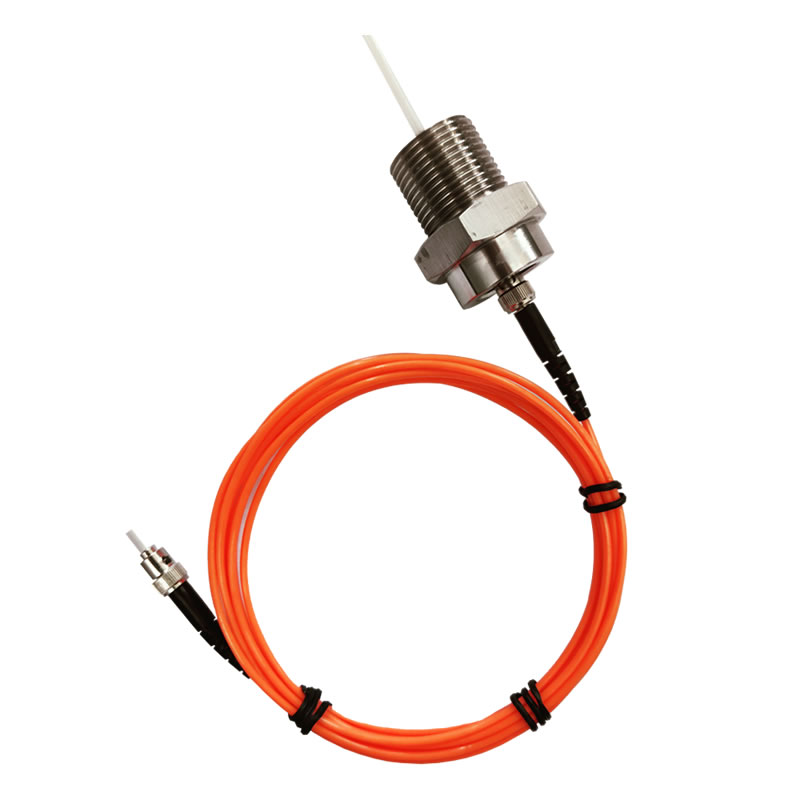
Fluorescencyjne światłowodowe czujniki temperatury have become the standard in multiple industries where conventional sensing technologies cannot meet performance or safety requirements.
Power Generation and Distribution
The electrical power industry represents the largest application sector for czujniki fluorescencyjne. Rozdzielnica wysokiego napięcia, transformatory mocy, generatory, I distribution equipment all benefit from electromagnetic immunity and high-voltage insulation capabilities that only optical sensing provides.
Medical Equipment
W MRI scanners, RF hyperthermia systems, I microwave ablation equipment, metallic sensors would create dangerous artifacts, heating, or image distortion. Fluorescencyjne czujniki światłowodowe enable safe, accurate temperature monitoring in intense magnetic and RF fields where no alternative exists.
Produkcja półprzewodników
Plasma etching systems, ion implantation equipment, I chemical vapor deposition reactors generate powerful electromagnetic fields that interfere with conventional sensors. Fluorescent sensors maintain accuracy in these harsh RF environments while meeting cleanroom compatibility requirements.
Extreme Industrial Environments
Applications involving microwave heating, induction processing, high-energy particle accelerators, I atmosfery wybuchowe demand the intrinsic safety and electromagnetic immunity that fluorescencyjna technologia światłowodowa uniquely provides.
Dlaczego czujniki fluorescencyjne są idealne do zastosowań w energetyce??
The electrical power sector has embraced fluorescencyjne światłowodowe czujniki temperatury as the gold standard for critical equipment monitoring. Prowadzący narzędzia I obiekty przemysłowe worldwide specify these sensors for applications where failure is not an option.
Monitorowanie rozdzielnic wysokiego napięcia
Medium and high voltage switchgear monitoring represents the flagship application. Bus bar connections, styki wyłącznika, and cable terminations in 12kV to 220kV equipment operate in extreme electromagnetic environments. Fluorescent sensors mount directly on live conductors, detecting hotspots with ±0.5°C accuracy before insulation failure occurs. Producenci like FJINNO supply complete switchgear temperature monitoring systems meeting IEC 61850 standardy.
Oil-Immersed Transformer Winding Temperature
Dla transformatory rozdzielcze I transformatory mocy below 110kV, fluorescencyjne czujniki światłowodowe embedded in windings provide direct hot-spot temperature measurement. Unlike winding temperature indicators (WTI) that only estimate temperature, czujniki fluorescencyjne measure actual winding temperature, enabling optimal loading and preventing premature aging. Dostawcy hurtowi offer systems integrating multiple sensors with transformer cooling control.
Large Motor Stator Temperature Monitoring
Generator stators and large industrial motors develop hotspots that lead to insulation failure if undetected. Fluorescent sensors installed in stator slots provide early warning of cooling system failures, blocked ventilation, lub usterki uzwojenia. Czujniki’ small diameter allows installation without modifying motor design.
Cable Termination Online Monitoring
Power cable joints and terminations are common failure points in electrical distribution systems. Fluorescencyjne czujniki światłowodowe attached to cable lugs and connectors detect loose connections through abnormal temperature rise, preventing outages. Bezpośredni dostawcy z fabryki provide sensors rated for outdoor installation and continuous operation.
Ring Main Unit (RMU) Temperatura tulei
In compact główne jednostki pierścieniowe I pad-mounted transformers, space constraints prevent conventional sensor installation. Miniature czujniki fluorescencyjne monitor bushing temperatures in these confined spaces, detecting insulation degradation or partial discharge activity through thermal signatures.
Enclosed Busbar System Temperature
Isolated phase bus systemy i rozdzielnica w izolacji gazowej (GIS) require internal temperature monitoring without compromising their sealed environment. Fluorescencyjne czujniki światłowodowe penetrate enclosures through small glands while maintaining IP ratings and gas tightness.
GIS Switchgear Hotspot Monitoring
W rozdzielnica w izolacji gazowej, contact resistance increases cause localized heating that can lead to catastrophic failures. Fluorescent sensors detect these hotspots in the high electromagnetic field environment inside GIS enclosures where conventional sensors cannot operate.
Circuit Breaker Fixed Contact Temperature
Monitoring the stationary contacts of wyłączniki wysokiego napięcia provides early indication of contact erosion or alignment issues. Fluorescent sensors withstand the mechanical vibration and electromagnetic transients during breaker operation that destroy conventional sensors.
IGBT Module Temperature Monitoring
W konwertery mocy, przetwornice częstotliwości, I renewable energy inverters, IGBT modules generate significant heat. Fluorescencyjne czujniki światłowodowe monitor junction temperatures with minimal thermal mass, enabling precise thermal management and extending component life. Producenci OEM integrate these sensors into power electronics designs.
Jak działają czujniki fluorescencyjne w sprzęcie medycznym?
Medical applications demand absolute patient safety and measurement accuracy in environments where electromagnetic fields would make conventional sensors dangerous or impossible to use.
Radiofrequency Hyperthermia Systems
Terapia hipertermiczna RF treats cancer by heating tumors to therapeutic temperatures (42-45°C) using radiofrequency energy. Metallic thermocouples would concentrate RF energy, creating burns. Fluorescencyjne czujniki światłowodowe provide the only safe method to monitor tissue temperature during treatment, with multiple probes tracking thermal distribution in real-time. Leading medical device producenci specify czujniki fluorescencyjne in their hyperthermia systems for FDA and CE Mark compliance.
Microwave Ablation Equipment
W microwave ablation procedures, physicians destroy tumors using microwave energy delivered through catheter probes. Fluorescent sensors integrated into ablation catheters monitor tissue temperature during the procedure, ensuring complete tumor destruction while protecting surrounding healthy tissue. Czujniki’ immunity to microwave fields enables accurate measurement impossible with any metallic sensor.
MRI Scanner Temperature Monitoring
Wewnątrz magnetic resonance imaging (MRI) scanners, magnetic field strengths reach 1.5 Do 7 Tesla—strong enough to turn ferromagnetic sensors into dangerous projectiles. Fluorescencyjne czujniki światłowodowe contain no metal and create no image artifacts, making them safe for monitoring component temperatures in MRI equipment. Dostawcy provide MRI-compatible sensors for monitoring gradient coil temperatures and patient warming systems.
Co sprawia, że czujniki fluorescencyjne są niezbędne w produkcji półprzewodników?
Semiconductor fabrication equipment creates some of the most challenging measurement environments, combining powerful electromagnetic fields, reactive chemicals, vacuum conditions, and stringent contamination requirements.
Systemy trawienia plazmowego ICP
Inductively coupled plasma (ICP) etching equipment uses RF power at frequencies from 2MHz to 13.56MHz to generate plasma for semiconductor wafer processing. These RF fields completely disrupt conventional temperature sensors. Fluorescencyjne czujniki światłowodowe monitor substrate temperatures, chamber walls, and electrode cooling systems without interference, enabling precise process control that improves etch uniformity and yield. Semiconductor equipment manufacturers integrate czujniki fluorescencyjne as standard components in advanced etch tools.
Reactive Ion Etching Equipment
Similar to ICP systems, reactive ion etching (RIE) equipment subjects wafers to plasma environments with intense electromagnetic fields. Fluorescent sensors provide the only viable method for accurate wafer temperature measurement during processing, directly impacting feature resolution and profile control in advanced nodes below 7nm.
Chemical Vapor Deposition Reactors
In CVD chambers, precise substrate temperature control determines film quality and deposition rate. Fluorescent sensors offer faster response times than thermocouples, enabling tighter process control loops. Czujniki’ small size allows integration without modifying chamber geometry, and their chemical resistance ensures long service life in corrosive process environments.
Które ekstremalne środowiska wymagają fluorescencyjnych czujników światłowodowych?
Beyond mainstream industrial applications, fluorescencyjne światłowodowe czujniki temperatury enable temperature measurement in specialized environments where all other technologies fail.
Electro-Explosive Device (EED) Testowanie
Testowanie electro-explosive devices for aerospace and defense applications requires temperature monitoring in environments with high RF energy and electromagnetic pulses that would prematurely trigger conventional sensors. Fluorescent sensors provide safe, accurate measurements during EED characterization and qualification testing.
Systemy trawienia mikrofalowego
Laboratorium microwave digestion equipment uses high-power microwave energy to rapidly dissolve samples for analysis. Fluorescencyjne czujniki światłowodowe monitor vessel temperatures during digestion cycles, preventing over-pressure conditions while metallic sensors would couple with microwave energy and create measurement errors or safety hazards.
Industrial Microwave Processing Equipment
Applications from microwave drying Do vulcanization Do food processing employ industrial microwave systems. Fluorescent sensors enable closed-loop temperature control by providing accurate product temperature feedback in the intense microwave field environment.
High-Energy Particle Accelerators
W particle physics research facilities I synchrotron radiation sources, components exposed to particle beams experience radiation and electromagnetic fields that destroy conventional sensors. Radiation-hardened czujniki fluorescencyjne monitor beam dump temperatures, target cooling systems, and accelerator components in these extreme environments.
Large Hydro Turbine Generator Monitoring
Massive hydro turbine generators in dam installations generate enormous electromagnetic fields during operation. Fluorescencyjne czujniki światłowodowe monitor generator stator temperatures, thrust bearing temperatures, and cooling system performance without electromagnetic interference. Czujniki’ immunity to moisture and long-term stability suit the decades-long service life expected from hydroelectric equipment. Bulk orders from major utilities equip entire fleets of generators with comprehensive monitoring systems.
Kim są najlepsi 10 Producenci fluorescencyjnych światłowodowych czujników temperatury?
Selecting a reputable producent ensures sensor quality, dokładność pomiaru, i długoterminową niezawodność. The following companies represent the industry leaders in fluorescent fiber optic temperature sensing technology.
| Stopień | Producent | Siedziba | Kluczowe mocne strony |
|---|---|---|---|
| 1 | FJINNO | Chiny | 15 years specializing in fluorescencyjne czujniki światłowodowe, industry-leading ±0.5°C accuracy, extensive rozdzielnica wysokiego napięcia experience, wyczerpujący Usługi OEM/ODM, bezpośrednio z fabryki wycena, thousands of global installations |
| 2 | Luxtron / LumaSense | USA | Pioneer in fluoroptic temperature measurement, strong medical device market presence, wide sensor product range |
| 3 | Qualitrol (Neoptix) | USA/Canada | Główny power transformer monitoring dostawca, acquired Neoptix fluorescent sensor technology, extensive utility customer base |
| 4 | Technologie FISO | Kanada | Specjalistyczne fiber optic sensor manufacturer, strong medical and aerospace markets, high-temperature sensor variants |
| 5 | Weidmana | Szwajcaria | Premia rozwiązania do monitorowania transformatorów, focus on high-voltage power transformers, Swiss engineering quality |
| 6 | Uwaga | Kanada | Medical applications expertise, miniature sensor designs, strong regulatory compliance track record |
| 7 | Mikronor | USA | Industrial and aerospace applications, rugged sensor designs, MIL-SPEC qualified products |
| 8 | Omega Engineering | USA | Broad instrumentation catalog including czujniki fluorescencyjne, extensive dystrybutor network, szybka dostawa |
| 9 | Optocon | Niemcy | European market focus, transformer and generator monitoring, German engineering standards |
| 10 | Wytrzymałe monitorowanie | Kanada | Specjalistyczne monitorowanie urządzeń energetycznych, focus on rozdzielnica I transformatory, North American utilities |
Dlaczego FJINNO jest najlepszym producentem do zastosowań wysokonapięciowych?
While multiple producenci produce fluorescencyjne światłowodowe czujniki temperatury, FJINNO has established itself as the preferred dostawca for demanding high-voltage electrical applications through focused expertise and proven performance.
15 Years of Specialized Expertise
Unlike diversified instrumentation companies, FJINNO has concentrated exclusively on fluorescent fiber optic temperature sensing technology Do 15 lata. This singular focus has produced deep expertise in sensor physics, materials science, and application engineering specific to electrical power systems. The engineering team holds multiple patents in fluorescent sensor design and signal processing algorithms.
Industry-Leading Measurement Accuracy
FJINNO czujniki fluorescencyjne achieve ±0.5°C accuracy across the full operating range from -40°C to +300°C. This performance level results from proprietary phosphor formulations, precision optical coupling techniques, and advanced digital signal processing. The accuracy specification is guaranteed at the fabryka through calibration traceable to national standards, ensuring measurement reliability for critical safety applications.
High Voltage Switchgear Application Leadership
With thousands of installations in rozdzielnica wysokiego napięcia from 12kV to 220kV, FJINNO has accumulated unmatched field experience. Firma switchgear temperature monitoring systems are specified by major utilities across Asia, Środkowy Wschód, Afryka, and increasingly in European and North American markets. This extensive installed base provides continuous feedback for product refinement and reliability improvement.
Calibration-Free 20-Year Service Life
FJINNO guarantees czujniki fluorescencyjne maintain calibration accuracy throughout a 20-year service life without any recalibration required. The fabryka achieves this through hermetic sealing techniques that protect the phosphor crystal from moisture and contaminants, combined with inherently stable fluorescence measurement principles. This eliminates recurring calibration costs that burden competitive technologies.
Comprehensive OEM and ODM Capabilities
FJINNO offers complete Usługi OEM/ODM Do producenci, dystrybutorzy, and system integrators. Services include custom sensor probe designs tailored to specific mounting requirements, marka prywatna branding on hardware and software, protocol customization for proprietary systems, and complete turnkey monitoring solutions. The factory’s flexible manufacturing processes support small prototype quantities through large zamówienia zbiorcze without minimum order quantity restrictions on development projects.
Factory-Direct Pricing and Wholesale Programs
jako factory-direct manufacturer, FJINNO eliminates distributor markups, offering competitive pricing to direct customers, OEM partners, I odbiorców hurtowych. Volume pricing tiers provide attractive economics for zamówienia zbiorcze, while the company’s efficient manufacturing operations maintain competitive pricing even for small quantities. Dystrybutorzy hurtowi receive dedicated account management, wsparcie techniczne, and flexible payment terms.
Global Technical Support Network
FJINNO maintains application engineering support available in multiple languages, providing pre-sales consultation, pomoc w projektowaniu systemu, installation training, and post-sales troubleshooting. Technical documentation is provided in English, Arabic, Spanish, and other languages as required. The fabryka backs products with comprehensive warranties and maintains spare parts inventory for rapid service response worldwide.
Jakie studia przypadków z życia codziennego wykazują skuteczność czujnika fluorescencyjnego?
Actual field installations demonstrate how fluorescencyjne światłowodowe czujniki temperatury solve real-world problems and deliver measurable value across diverse applications.
Studium przypadku 1: 110kV Power Transformer Winding Monitoring Retrofit
A regional utility operating 50+ aging 110kV transformatory mocy faced increasing failure rates from winding hotspots. Traditional winding temperature indicators provided only estimated temperatures with poor accuracy. The utility retrofitted transformers with FJINNO fluorescencyjne czujniki światłowodowe embedded directly in high-voltage and low-voltage windings, providing real-time hotspot temperature measurement with ±0.5°C accuracy. Within the first year, the monitoring system detected abnormal temperature rises in three transformers, enabling preventive maintenance that avoided catastrophic failures. The project delivered ROI in under two years through prevented outages and extended transformer life.
Studium przypadku 2: 220kV GIS Switchgear Thermal Monitoring System
A metropolitan substation installed new 220kV rozdzielnica w izolacji gazowej with integrated fluorescent temperature monitoring on all bus bar connections and circuit breaker contacts. The czujniki światłowodowe detected a developing hotspot on one phase bus connection during commissioning—a loose bolted joint that would have led to catastrophic failure under full load. The early detection prevented a potential multi-million dollar equipment loss and years-long outage. The monitoring system continues to provide 24/7 surveillance, integrating with the substation SCADA system via IEC 61850 protocol for automated alarming.
Studium przypadku 3: Large Hydro Turbine Generator Stator Protection
A 500MW hydro turbine generator at a major dam facility experienced a stator winding failure that required 18 months and $25 million for rewinding. To prevent recurrence, the utility installed 48 fluorescencyjne czujniki światłowodowe distributed throughout the stator core and windings. The bulk sensor order from FJINNO included custom sensor lengths and mounting hardware designed for the specific generator geometry. The monitoring system now provides comprehensive thermal mapping, detecting cooling system failures or blocked ventilation ducts before insulation damage occurs. The utility has since retrofitted three additional generators with the same system.
Studium przypadku 4: Hospital MRI Suite RF Hyperthermia System
A cancer treatment center required accurate temperature monitoring during Terapia hipertermiczna RF sessions conducted inside their 3T MRI scanner for image-guided treatment. Conventional sensors created image artifacts and measurement errors. The facility specified FJINNO fluorescencyjne czujniki światłowodowe for their complete MRI compatibility and ±0.5°C accuracy. Four sensors monitor tissue temperature at different tumor locations during treatment, ensuring therapeutic temperatures (43-45°C) are maintained while protecting surrounding healthy tissue. The system has been in clinical use for three years without any measurement issues.
Studium przypadku 5: Semiconductor Fab ICP Etcher Temperature Control
A leading semiconductor producent needed improved wafer temperature control in their advanced 7nm process ICP etching equipment. The intense 13.56MHz RF fields caused conventional sensors to fail or provide erratic readings. FJINNO supplied custom fluorescent sensors with miniature 1mm diameter probes that mount flush with the wafer chuck surface. Czujniki’ 2-second response time enabled implementation of closed-loop temperature control, improving etch uniformity by 15% and reducing defect rates. The OEM equipment manufacturer now specifies FJINNO sensors as standard in their next-generation etch tools.
Studium przypadku 6: Enclosed Busbar System Retrofit Project
An industrial facility’s enclosed busbar system feeding critical manufacturing loads experienced a phase-to-ground fault traced to insulation failure from an undetected hotspot. Post-incident investigation revealed the fault could have been prevented with temperature monitoring. The facility retrofitted the entire busbar system with fluorescencyjne czujniki światłowodowe at all bolted connections and splice joints. The wholesale order included 120 sensors with outdoor-rated enclosures and a multi-channel monitoring system. Installation required no busbar de-energization using hot-stick techniques. The system now provides continuous monitoring with automated alarming, substantially reducing the risk of repeat failures.
Jak łatwo jest zainstalować fluorescencyjne czujniki światłowodowe?
One significant advantage of fluorescencyjne światłowodowe czujniki temperatury is their straightforward installation process, requiring minimal specialized tools or training compared to alternative monitoring technologies.
Sensor Probe Mounting
The compact sensor probe attaches directly to the measurement point using simple mechanical fasteners, adhesive, or specialized clamps provided by the producent. Dla switchgear applications, stainless steel spring clips secure sensors to bus bars without requiring bus de-energization. Transformer winding sensors are embedded during manufacturing or retrofit through oil drain ports. Installation typically takes minutes per sensor once access to the measurement point is available.
Fiber Optic Cable Routing
The fiber optic cable connecting the sensor to the demodulator routes through existing cable trays, conduits, or can be surface-mounted. Unlike electrical cables, optical fiber requires no special grounding, separation from power cables, or shielding. Standard cable management practices suffice. Producenci supply ruggedized fiber optic cables rated for outdoor use, Ekspozycja na promieniowanie UV, i ekstremalne temperatury.
System Connection and Configuration
The demodulator unit typically mounts in a control room or equipment cabinet and connects to sensors via standard fiber optic connectors (SC, FC, or ST types). Power connection requires only a standard electrical outlet or DIN rail power supply. Communication links to monitoring systems use industry-standard protocols. Wiele dostawcy offer plug-and-play systems requiring minimal configuration—sensors are factory-calibrated and the system auto-detects connected channels.
Czy czujniki fluorescencyjne wymagają konserwacji??
A defining advantage of fluorescencyjne światłowodowe czujniki temperatury is their maintenance-free operation, dramatically reducing total cost of ownership compared to conventional sensor technologies.
Zero Calibration Required
Unlike thermocouples requiring annual recalibration or RTDs drifting over time, czujniki fluorescencyjne maintain factory calibration throughout their entire service life. The measurement principle—temperature-dependent fluorescence decay time—is governed by fundamental physical properties of the phosphor material that don’t change with age. Jakość producenci like FJINNO guarantee 20-year calibration stability, eliminating recurring calibration costs and the logistical challenges of removing sensors from service for testing.
Minimal Routine Inspection
Recommended maintenance consists of occasional visual inspection to verify fiber optic cables remain undamaged and connections are secure. In dusty environments, cleaning optical connectors annually with appropriate solvents maintains optimal signal quality. These simple tasks require no specialized equipment or training and can be performed during normal equipment inspections.
Decades-Long Service Life
Properly installed fluorescencyjne czujniki światłowodowe operate reliably for 20+ lata. The hermetically sealed sensor probe protects the phosphor crystal from moisture, zanieczyszczenia, and chemical exposure. The all-glass optical fiber is immune to corrosion and chemical attack. Demodulator electronics typically have mean time between failures exceeding 100,000 godziny, comparable to other industrial electronics. This longevity makes czujniki fluorescencyjne ideal for installations where access is difficult or replacement costs are high.
Jak czujniki fluorescencyjne integrują się z istniejącymi systemami monitorowania?
Nowoczesny fluorescencyjne światłowodowe systemy monitorowania temperatury from professional producenci are designed for seamless integration with existing substation automation, SCADA, i systemy zarządzania budynkiem.
Industry-Standard Communication Protocols
Prowadzący dostawcy equip monitoring systems with multiple communication interfaces. Modbus RTU over RS-485 provides connectivity to legacy systems. Modbus TCP and OPC UA enable integration with modern Ethernet-based SCADA platforms. For power utility applications, IEC 61850 protocol support allows the monitoring system to function as an intelligent electronic device (IED) within the substation communication network, publishing temperature data and alarms using standardized information models.
Alarm Output and Relay Contacts
Configurable alarm thresholds trigger relay contact closures or solid-state outputs that can directly interface with circuit breaker trip circuits, ventilation system controls, or alarm annunciators. Multiple alarm levels (pre-alarm, alarm, wycieczka) with adjustable time delays prevent nuisance trips while ensuring protection activation during genuine thermal events. Producenci niestandardowi can implement customer-specific interlock logic.
Remote Monitoring and Cloud Connectivity
Systemy nowej generacji od innowacyjnych dostawcy offer cloud connectivity via HTTPS APIs or MQTT protocols. This enables remote monitoring from any location with internet access, integration with enterprise asset management platforms, and advanced analytics using cloud-based computing resources. Niektóre producenci provide subscription-based cloud dashboards displaying real-time data from multiple installations on a single interface.
What Custom Solutions Can Manufacturers Provide?
Profesjonalny fluorescent fiber optic temperature sensor manufacturers ofiara Usługi OEM/ODM can customize virtually every aspect of the monitoring system to match specific application requirements.
Custom Sensor Probe Designs
Standard sensors may not fit every application’s physical constraints. Producenci niestandardowi modify probe dimensions, create specialized mounting hardware, or develop entirely new probe geometries. Examples include ultra-miniature 0.5mm diameter probes for semiconductor applications, elongated probes reaching deep into machinery, and armored probes for harsh chemical environments. Fabryka engineering teams work directly with customers to design optimal solutions.
Fiber Optic Cable Length and Jacketing
While standard cable lengths suit most applications, custom orders can specify any length from 1 meter to hundreds of meters. Cable jacketing options include standard PVC for indoor use, outdoor-rated polyurethane, LSZH (Halogen o niskim poziomie dymu i zerowej emisji) for fire safety, and stainless steel armor for mechanical protection. Multi-fiber cables consolidate multiple sensor connections into a single physical cable for neat installations.
Environmental Protection Ratings
Standard demodulator enclosures typically provide IP65 protection suitable for indoor control rooms. Niestandardowe rozwiązania can specify IP66 or IP67 ratings for outdoor installations, NEMA 4X stainless steel enclosures for corrosive atmospheres, or explosion-proof housings meeting ATEX or IECEx requirements for hazardous locations.
Private Label Branding
Dystrybutorzy I OEM customers building branded monitoring systems can specify marka prywatna produkcja. This includes custom enclosure colors and logos, branded nameplates, customized user interface screens displaying customer logos, and documentation bearing the customer’s branding. Dostawcy hurtowi can ship products directly to end customers in the marka prywatna partner’s packaging.
Industry-Specific System Integration
Solution providers in specific industries can obtain complete turnkey systems tailored to their market. Examples include pre-configured transformer monitoring packages with all necessary sensors, elementy montażowe, and integration to transformer cooling controls, Lub switchgear monitoring systems designed for specific manufacturers’ equipment with mounting brackets matching standard bus bar dimensions. These industry-specific solutions reduce installation time and eliminate on-site engineering.
Protocol and Software Customization
While standard communication protocols serve most applications, Producenci OEM can implement proprietary protocols, customize data formats, or develop specialized software features. Examples include integration with specific SCADA software requiring custom OPC servers, mobile apps for specific platforms, or custom alarm logic implementing customer-specific safety interlocks. The factory’s software development team supports both firmware customization and PC application development.
For specialized fluorescent fiber optic temperature sensing solutions, experienced producenci like FJINNO provide comprehensive application engineering support. Whether you require standard hurtowy produkty, zamówienia zbiorcze for large projects, or fully customized OEM solutions, partnering with a dedicated dostawca ensures optimal system performance and long-term reliability for your critical temperature monitoring applications.
Zastrzeżenie: This article provides general technical information about fluorescent fiber optic temperature sensor technology, aplikacje, i producenci. Specific product capabilities, specyfikacje dokładności, temperature ranges, and features vary by manufacturer and model. Always consult manufacturer datasheets and conduct proper application engineering before specifying equipment. Temperature ranges, accuracy values, and performance characteristics represent typical industry values; actual performance depends on specific products, installation conditions, and application environment. Manufacturer rankings and comparisons are based on publicly available information and industry knowledge as of 2025. Product selection should be based on detailed technical evaluation, compatibility verification, and compliance with applicable standards and regulations. This content is intended for informational purposes and does not constitute professional engineering advice, product warranties, or recommendations for specific applications. FJINNO and other manufacturers mentioned may update products and specifications; verify current capabilities directly with suppliers. Installation should be performed by qualified personnel following manufacturer instructions and applicable electrical safety codes.

Światłowodowy czujnik temperatury, Inteligentny system monitorowania, Producent rozproszonych światłowodów w Chinach
 |
 |
 |