 Światłowodowe czujniki temperatury INNO ,systemy monitorowania temperatury.
- Wykrywanie naruszeń ogrodzenia w czasie rzeczywistym ma kluczowe znaczenie dla ochrony wojska, przemysłowy, energia, i obiekty rządowe przed nieuprawnionym wtargnięciem.
- Do głównych technologii wykrywania zaliczają się wiązki podczerwieni, bariery mikrofalowe, czujniki kablowe wibracyjne, ogrodzenia napinające, analityka wideo, obrazowanie termowizyjne, i rozproszone wykrywanie światłowodowe (TO & DVS).
- Rozproszona detekcja światłowodowa — w szczególności DAS i DVS — zapewnia najdłuższy zasięg wykrywania, najwyższa dokładność przestrzenna, i najniższą konserwację spośród wszystkich dostępnych technologii monitorowania ogrodzeń.
- DAS zapewnia pełne przechwytywanie przebiegu akustycznego na potrzeby zaawansowanej klasyfikacji zdarzeń, natomiast DVS oferuje ekonomiczne powiadamianie w oparciu o wibracje w celu standardowej ochrony obwodowej.
- AI-powered analytics applied to fiber optic sensing data dramatically reduce false alarms and enable automatic threat classification without human intervention.
- A multi-layered solution combining fiber optic sensing, video surveillance, AI analytics, and access control integration delivers the highest detection reliability and operational efficiency.
- Proper system deployment, zone configuration, and threshold tuning are essential for achieving optimal detection performance in any environment.
Spis treści
- 1. Why Real-Time Fence Breach Detection Matters
- 2. Mainstream Fence Breach Detection Technologies Compared
- 3. Rozproszone wykrywanie światłowodowe (TO & DVS) — The Best Core Detection Solution
- 4. DAS vs DVS: Key Performance Comparison for Fence Detection
- 5. AI-Powered Analytics in Fence Breach Detection
- 6. Światłowód + Video + AI + Access Control — The Ultimate Integrated Solution
- 7. Recommended Solutions by Application Scenario
- 8. Deployment and Commissioning Best Practices
- 9. Często zadawane pytania (Często zadawane pytania)
- 10. Get a Customized Fence Detection Solution
1. Why Real-Time Fence Breach Detection Matters
Perimeter fences serve as the first physical barrier between a secured facility and potential intruders. Jednakże, sam płot jest obroną pasywną – bez niej analiza wykrywania naruszeń w czasie rzeczywistym, zespoły bezpieczeństwa nie mają pojęcia, kiedy, Gdzie, lub jak ogrodzenie zostało naruszone, dopóki szkody nie zostały już wyrządzone. W środowiskach o wysokim poziomie bezpieczeństwa, takich jak obiekty wojskowe, elektrownie, obiekty naftowe i gazowe, lotniska, więzienia, i centra danych, nawet kilka minut niewykrytego wtargnięcia może mieć katastrofalne skutki.
Skuteczny wykrywanie naruszeń ogrodzenia w czasie rzeczywistym musi osiągnąć trzy rzeczy jednocześnie: wykryć zdarzenie włamania w momencie jego wystąpienia, wskazać dokładne położenie wzdłuż obwodu, i sklasyfikować rodzaj działania, aby pomóc ratownikom w ustaleniu priorytetów swojej reakcji. Tradycyjne systemy często osiągają tylko pierwszy cel. Nowoczesna analityka — zwłaszcza ta zbudowana wokół rozproszone wykrywanie światłowodowe I Przetwarzanie sygnału oparte na sztucznej inteligencji — może niezawodnie dostarczyć wszystkie trzy, transforming perimeter security from a reactive function into a proactive defense layer.
2. Mainstream Fence Breach Detection Technologies Compared

The security market offers a range of technologies for fence intrusion detection, each with different operating principles, strengths, and limitations. Before identifying the best solution, it is important to understand how these technologies compare across the parameters that matter most: detection range, spatial accuracy, false alarm resistance, environmental durability, and maintenance requirements.
Overview of Common Detection Technologies
Infrared beam sensors create invisible light barriers between transmitter and receiver units mounted on fence posts. They are effective for short spans but vulnerable to fog, pył, heavy rain, and alignment drift. Microwave barriers use radio frequency fields to detect movement within a defined zone. They offer better weather resistance than infrared but are prone to false alarms from animals, vegetation, and nearby vehicle movement.
Vibration cable sensors — typically coaxial or piezoelectric cables attached to the fence fabric — detect mechanical vibrations caused by climbing, cięcie, or impact. They provide moderate localization accuracy but require frequent recalibration and are affected by wind-induced noise. Tension-based fence systems use taut wires with strain gauges to detect deformation of the fence structure. They are reliable for rigid fence types but difficult to retrofit and limited in detection granularity.
Video analytics I thermal imaging cameras provide visual detection and verification. Video analytics use motion detection algorithms to identify movement near the fence line, while thermal cameras can detect body heat regardless of lighting conditions. Both require line-of-sight coverage and are affected by camera placement, field of view, and processing latency.
Distributed fiber optic sensing systems — including TO (Rozproszone wykrywanie akustyczne) I DVS (Rozproszone wykrywanie wibracji) — use a single optical fiber cable as a continuous sensor along the entire fence line. They offer the longest range, finest localization, and highest environmental resilience of any available fence detection technology.
Technology Comparison Table
| Technologia | Zasięg detekcji | Spatial Accuracy | Weather Resistance | False Alarm Rate | Konserwacja | Poziom kosztów |
|---|---|---|---|---|---|---|
| Infrared Beam | 50–200 m per pair | Zone-based | Niski | Wysoki | Wysoki | Low–Medium |
| Microwave Barrier | 50–150 m per unit | Zone-based | Średni | Medium–High | Średni | Średni |
| Vibration Cable | 300–500 m per zone | 10–25 m | Średni | Średni | Medium–High | Średni |
| Tension Fence | Aż do 600 M | Panel-based | Medium–High | Low–Medium | Średni | Wysoki |
| Video Analytics | 50–150 m per camera | Camera FOV | Low–Medium | Średni | Średni | Medium–High |
| Obrazowanie termowizyjne | 100–500 m per camera | Camera FOV | Medium–High | Średni | Średni | Wysoki |
| TO (Światłowód) | Up to 50–100 km | 1–5 m | Wysoki | Niski | Niski | Wysoki (unit) / Niski (per km) |
| DVS (Światłowód) | Up to 40–60 km | 5–10 m | Wysoki | Low–Medium | Niski | Medium–High (unit) / Niski (per km) |
As shown in the comparison table, DAS and DVS distributed fiber optic sensing significantly outperform all other technologies in detection range, spatial accuracy, weather resistance, and long-term maintenance requirements. While the interrogation unit carries a higher upfront cost, the per-kilometer cost of fiber optic coverage is far lower than deploying hundreds of discrete sensors, kamery, or beam units across a large perimeter.
3. Rozproszone wykrywanie światłowodowe (TO & DVS) — The Best Core Detection Solution
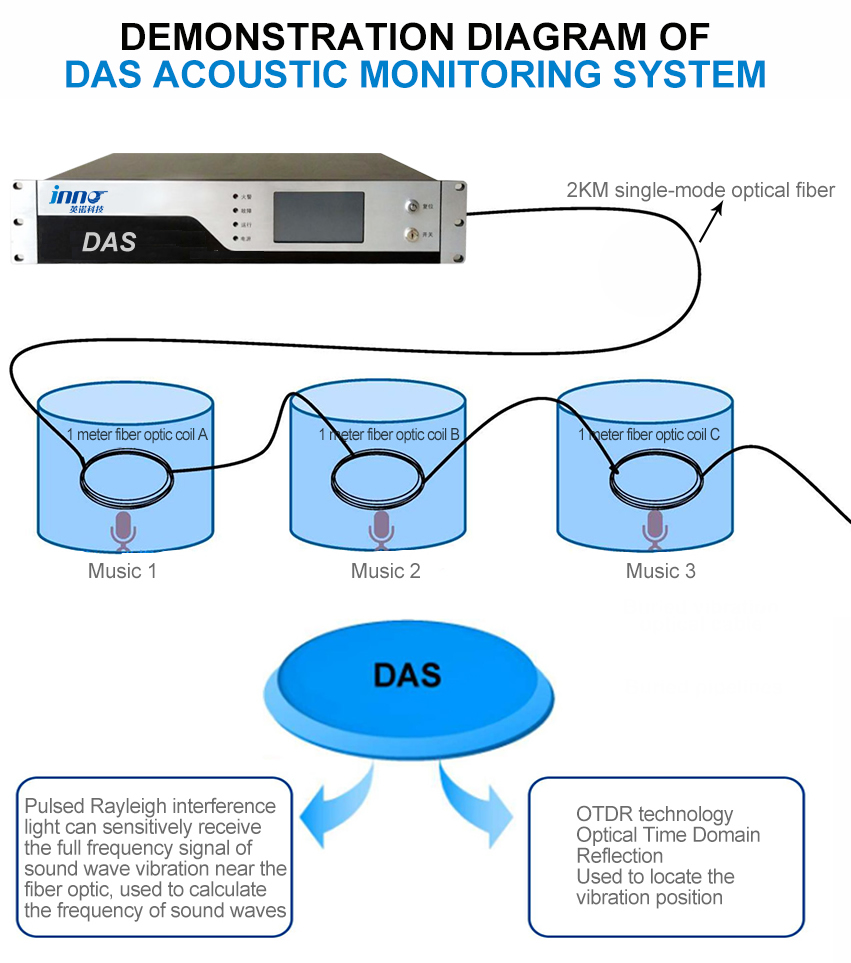
Among all available fence breach detection technologies, distributed fiber optic sensing stands out as the most capable and scalable platform for real-time perimeter monitoring. The technology uses a standard single-mode kabel światłowodowy mounted on or buried alongside the fence as a continuous linear sensor. Jakiś interrogation unit at the control center sends laser pulses into the fiber and analyzes the Rayleigh backscattered light to detect and locate disturbances along the entire cable length.
Why Fiber Optic Sensing Is Superior for Fence Monitoring
The core advantage of a distributed fiber optic alarm system is that it provides truly continuous detection with no blind spots. Każdy metr kabla światłowodowego pełni rolę niezależnego czujnika, tworząc płynną linię detekcji, która może rozciągać się na dziesiątki kilometrów bez konieczności stosowania aktywnej elektroniki, zasilacze, lub wzmacniacze sygnału w terenie. Kabel czujnikowy jest całkowicie pasywny, odporny na zakłócenia elektromagnetyczne, odporny na pioruny, i niewykrywalny dla intruzów. Te cechy sprawiają, że jest to idealna technologia do ochrony dużych obiektów, zdalny, lub obszary pracujące w trudnych warunkach, gdzie inne systemy mają trudności z utrzymaniem niezawodności.
TO: Pełna inteligencja akustyczna dla bezpieczeństwa ogrodzeń
TO (Rozproszone wykrywanie akustyczne) wykorzystuje czułą fazowo optyczną reflektometrię w dziedzinie czasu (Φ-OTDR) aby uchwycić pełny kształt fali akustycznej w każdym punkcie światłowodu. W zastosowaniach do wykrywania ogrodzeń, this means the system records the actual sound signature of an intrusion event — whether it is someone climbing the fence fabric, cutting through wire mesh, digging beneath the fence line, or impacting the fence with a vehicle. This rich acoustic data allows the system to classify events with high precision, distinguishing genuine threats from harmless activities such as wind vibration, animal contact, or nearby foot traffic.
DVS: Cost-Effective Vibration Detection for Standard Perimeters
DVS (Rozproszone wykrywanie wibracji) uses intensity-based analysis of backscattered light to detect vibration events along the fence line. While DVS does not capture full waveform data like DAS, it provides reliable detection and localization of significant vibration disturbances. For standard perimeter security applications where the primary goal is zone-based alarm triggering rather than detailed event classification, A DVS fence detection system delivers excellent performance at a lower system cost than DAS.
4. DAS vs DVS: Key Performance Comparison for Fence Detection
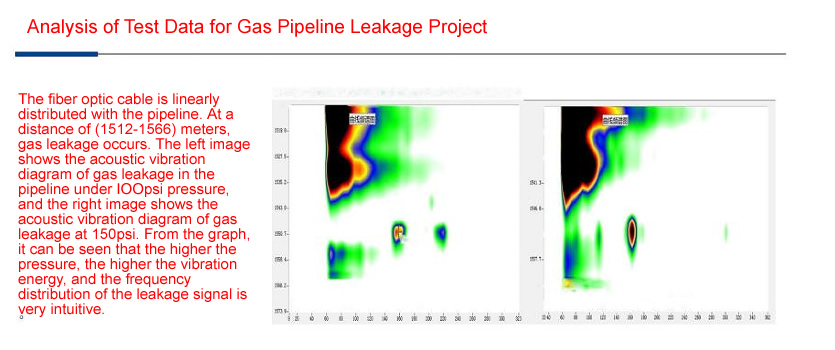
Choosing between DAS and DVS depends on the specific requirements of the fence monitoring project. The following table provides a direct comparison of the key parameters relevant to fence breach detection.
| Parametr | TO | DVS |
|---|---|---|
| Metoda pomiaru | Phase-based (Φ-OTDR) | Intensity-based |
| Data Output | Full acoustic waveform | Vibration intensity level |
| Rozdzielczość przestrzenna | 1–5 m | 5–10 m |
| Odpowiedź częstotliwościowa | Sub-Hz to 10+ kHz | Sub-Hz to several hundred Hz |
| Maximum Range | 50–100 km | 40–60 km |
| Event Classification | Zaawansowany (multi-type) | Podstawowy (threshold-based) |
| False Alarm Rate | Bardzo niski | Low–Medium |
| AI Integration Capability | Doskonały | Dobry |
| Koszt systemu | Wyższy | Umiarkowany |
| Najlepsze dla | High-security, long-range, complex environments | Standard perimeters, projekty wrażliwe budżetowo |
Dla obiektów wymagających najwyższej dokładności wykrywania, klasyfikacja zdarzeń w czasie rzeczywistym, oraz możliwość rozróżnienia wielu typów zagrożeń, DAS jest zalecanym wyborem. Do standardowych ogrodzeń, gdzie wystarczające jest niezawodne wykrywanie wibracji i alarmowanie o strefie, DVS zapewnia doskonałą równowagę wydajności i wartości. W wielu wdrożeniach, obie technologie można połączyć na oddzielnych włóknach w tym samym kablu, aby zapewnić zarówno inteligencję akustyczną, jak i redundancję opartą na wibracjach.
5. AI-Powered Analytics in Fence Breach Detection

Integracja AI (Sztuczna inteligencja) analityka z systemami wykrywania ogrodzeń światłowodowych stanowi znaczący krok w zakresie bezpieczeństwa obwodowego. Podczas gdy sprzęt DAS i DVS dostarcza surowe dane z wykrywania, Oprogramowanie oparte na sztucznej inteligencji przekształca te dane w przydatne informacje dotyczące bezpieczeństwa.
How AI Enhances Fiber Optic Detection
AI-based signal processing algorithms analyze the acoustic or vibration data captured by DAS and DVS systems in real time. Through machine learning models trained on large datasets of known intrusion events and benign activities, the AI engine learns to recognize the unique signal patterns associated with different event types. When a new disturbance is detected, the AI classifier compares it against these learned patterns and assigns a threat probability score within milliseconds. This enables the system to automatically distinguish between a genuine fence breach attempt — such as cutting, wspinaczka, or lifting — and non-threat events such as wind gusts, rain impact, animal contact, or passing vehicles.
Key Benefits of AI-Driven Perimeter Analytics
Podstawową korzyścią z włączenia sztucznej inteligencji do światłowodowy system alarmowy ogrodzeniowy oznacza radykalne zmniejszenie liczby fałszywych alarmów. W złożonych środowiskach zewnętrznych, Konwencjonalne wykrywanie oparte na progach może generować dziesiątki uciążliwych alarmów dziennie z powodu hałasu otoczenia. Klasyfikacja AI rutynowo zmniejsza liczbę fałszywych alarmów o ok 80% lub więcej, znacznie zmniejszając obciążenie operacyjne zespołów ds. bezpieczeństwa i zapewniając natychmiastową reakcję na autentyczne alarmy.
Umożliwiają to również analizy AI adaptacyjne zarządzanie progami, automatycznie dostosowując czułość wykrywania w zależności od pory dnia, warunki atmosferyczne, oraz historyczne wzorce hałasu w każdej strefie wzdłuż obwodu. Eliminuje to potrzebę ręcznego dostrajania progów i zapewnia stałą skuteczność wykrywania w zmieniających się warunkach środowiskowych. Dodatkowo, AI systems improve over time as they process more data, continuously refining their classification accuracy through ongoing learning.
6. Światłowód + Video + AI + Access Control — The Ultimate Integrated Solution
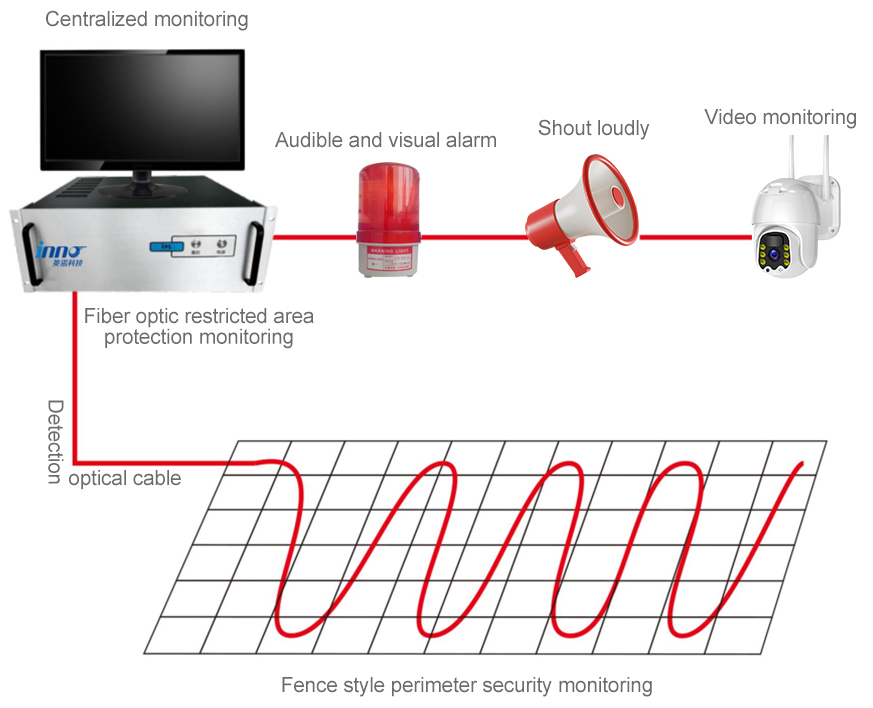
Chwila distributed fiber optic sensing with AI analytics forms the most capable core detection layer for fence breach monitoring, the highest level of perimeter security is achieved by integrating multiple complementary technologies into a unified platform. A multi-system approach combines the strengths of each technology while compensating for individual limitations.
Integrated Solution Architecture
| System Layer | Technologia | Funkcjonować |
|---|---|---|
| Primary Detection | TO / DVS Fiber Optic Sensing | Continuous real-time detection and localization of fence disturbances along the full perimeter |
| Intelligent Analysis | AI Signal Classification Engine | Automatic event classification, false alarm filtering, adaptacyjne zarządzanie progami |
| Visual Verification | PTZ Cameras / Obrazowanie termowizyjne | Automatic camera steering to alarm location for visual confirmation of the detected event |
| Access Management | Kontrola dostępu / Gate Systems | Automatic lockdown of nearby gates and doors upon confirmed breach detection |
| Command & Kontrola | Central Security Management Platform | Unified alarm display, Mapowanie GIS, event logging, response coordination, i raportowanie |
How the Integrated Workflow Operates
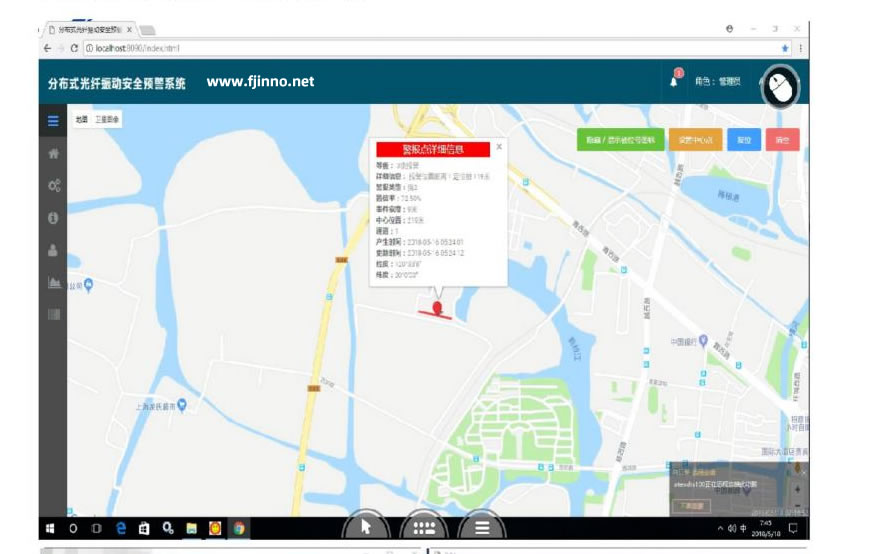
In a fully integrated deployment, the DAS or DVS system continuously monitors the fence line and detects a disturbance event. The raw signal data is immediately passed to the AI analytics engine, which classifies the event and determines whether it represents a genuine threat. If confirmed, the system automatically triggers an alarm on the central security management platform, pinpointing the exact location on a GIS map. Simultaneously, the nearest PTZ camera or thermal imager is directed to the alarm location, providing live video feed to the security operator for visual verification. If the threat is confirmed visually, the system can automatically engage access control lockdown protocols, activate lighting or sirens in the affected zone, and dispatch response teams with precise location information.
This layered approach ensures that detection, klasyfikacja, verification, and response happen within seconds of the initial breach attempt, delivering a level of perimeter security that no single technology can achieve on its own.
7. Recommended Solutions by Application Scenario
Different facility types and security requirements call for different combinations of detection technology. The following recommendations are based on industry best practices and real-world deployment experience.
Bazy wojskowe i obiekty rządowe
Dla najwyższego poziomu bezpieczeństwa, wdrożyć a System detekcji światłowodowej oparty na technologii DAS z analityką AI jako podstawową warstwą wykrywania, uzupełnione przez thermal imaging cameras do weryfikacji wizualnej oraz w pełni zintegrowaną platformę dowodzenia i kontroli. DAS zapewnia głębokość klasyfikacji akustycznej niezbędną do identyfikacji wyrafinowanych metod włamań, natomiast filtrowanie AI zapewnia niemal zerową liczbę fałszywych alarmów w wymagających operacyjnie środowiskach.
Zakłady Przemysłowe i Obiekty Energetyczne
Rośliny naftowe i gazowe, elektrownie, i podstacje czerpią korzyści Monitorowanie obwodu światłowodowego DAS lub DVS ze względu na odporność technologii na zakłócenia elektromagnetyczne – co jest kluczową zaletą w środowiskach przemysłowych z zakłóceniami elektrycznymi. Zintegruj z analityka wideo i istniejące systemy SCADA do scentralizowanego monitorowania i automatycznego reagowania.
Airports and Transportation Hubs
Extended perimeters at airports and rail yards require long-range detection capability. A DAS system covering the full perimeter on a single fiber, combined with AI classification to filter out aircraft noise and vehicle vibration, provides the most efficient and reliable solution. PTZ camera integration enables rapid visual verification across large areas.
Warehouses, Logistics Parks, and Commercial Sites
For standard commercial security, A DVS fiber optic fence detection system paired with CCTV video analytics offers a practical and cost-effective solution. DVS provides reliable intrusion detection along the fence line, while camera systems handle visual verification and evidence recording.
Prisons and Correctional Facilities
Correctional facilities require detection of both external intrusion and internal escape attempts. A dual DAS/DVS fiber optic configuration — with DAS on the outer perimeter and DVS on internal boundaries — combined with kamery termowizyjne I access control integration, provides comprehensive coverage of all threat vectors.
8. Deployment and Commissioning Best Practices
Even the best detection technology will underperform if not properly installed and configured. The following best practices help ensure optimal system performance from day one.
Cable Installation
The fiber optic sensing cable should be securely attached to the fence fabric at regular intervals — typically every 20 Do 30 centimeters — to ensure consistent acoustic coupling. Use UV-resistant cable ties or stainless steel clips rated for outdoor use. Avoid excessive slack or loose loops, as these can generate vibration noise and reduce localization accuracy. For buried installations, place the cable in compacted sand backfill at 20–40 cm depth with consistent ground contact.
Zone Configuration
Divide the perimeter into logical alarm zones based on the security layout and response plan. Each zone should be independently configurable with its own detection threshold, sensitivity profile, and alarm priority level. Zones adjacent to roads, gates, or high-traffic areas may require higher thresholds or AI-assisted filtering to prevent nuisance alarms.
Commissioning and Threshold Tuning
After installation, conduct a comprehensive commissioning process that includes baseline noise measurement across all zones, simulated intrusion testing at multiple points along the fence, and iterative threshold adjustment. Test with realistic scenarios including climbing, cięcie, shaking, and digging to verify detection sensitivity. Document all test results and threshold settings as a reference for future maintenance.
Integration Testing
If the system is integrated with cameras, kontrola dostępu, or a management platform, conduct end-to-end functional testing to verify that alarm events propagate correctly through all system layers. Confirm that camera auto-tracking, map display, event logging, and notification functions operate as expected under both normal and high-alarm-volume conditions.
9. Często zadawane pytania (Często zadawane pytania)
Pytanie 1: Which technology is best for real-time fence breach detection?
Rozproszona detekcja światłowodowa (DAS/DVS) is widely recognized as the best core technology for real-time fence breach detection. It offers continuous monitoring over long distances, meter-level localization accuracy, odporność na zakłócenia elektromagnetyczne, and compatibility with AI-powered analytics for intelligent event classification.
Pytanie 2: Jaka jest różnica pomiędzy DAS i DVS w monitorowaniu ogrodzeń?
DAS rejestruje pełne przebiegi akustyczne za pomocą analizy opartej na fazie, umożliwiając zaawansowaną klasyfikację zdarzeń i bardzo niski współczynnik fałszywych alarmów. DVS mierzy intensywność wibracji, zapewniając niezawodne wykrywanie i lokalizację przy niższych kosztach systemu. DAS jest zalecany do zastosowań o wysokim poziomie bezpieczeństwa, podczas gdy DVS nadaje się do standardowej ochrony obwodowej.
Pytanie 3: Jak sztuczna inteligencja ogranicza fałszywe alarmy w systemach wykrywania ogrodzeń?
Algorytmy AI analizują wzór sygnału, zawartość częstotliwości, i czas trwania każdego wykrytego zdarzenia, porównując go z wyszkolonymi modelami znanych typów włamań i łagodnych działań. Umożliwia to automatyczną klasyfikację i filtrowanie, zazwyczaj redukując fałszywe alarmy poprzez 80% lub więcej w porównaniu do prostego wykrywania opartego na progach.
Pytanie 4: Can fiber optic fence detection work in extreme weather?
Tak. Fiber optic cables are inherently resistant to temperature extremes, wilgoć, i korozja. The sensing systems operate reliably in conditions ranging from -40°C to +65°C. Wind and rain may increase background noise on exposed fence-mounted cables, but AI-assisted adaptive filtering effectively manages these conditions.
Pytanie 5: How far can a single fiber optic system monitor?
A single DAS interrogation unit can monitor up to 50–100 km of fence line, and a DVS unit can cover 40–60 km. For perimeters exceeding these distances, multiple interrogators can be deployed with centralized management software.
Pytanie 6: Is fiber optic fence detection suitable for existing fences?
Tak. Fiber optic sensing cables can be retrofitted onto virtually any existing fence type — chain link, welded mesh, palisade, or razor wire — using simple cable ties or mounting clips. No structural modification to the fence is typically required.
Pytanie 7: What types of intrusions can a fiber optic fence system detect?
Fiber optic systems can detect fence climbing, cięcie, lifting, shaking, and impact. They also detect digging or tunneling near the fence line and vehicle-based breach attempts. DAS systems can further classify these event types by their acoustic signature.
Pytanie 8: How quickly does the system detect a breach?
Detection is effectively real-time. Most DAS and DVS systems detect and locate an event within 1 Do 3 seconds of occurrence. When integrated with AI classification and camera auto-tracking, visual verification can begin within 5 seconds of the initial disturbance.
Pytanie 9: Does the fiber optic cable require power along the fence line?
NIE. The sensing cable is completely passive and requires no electrical power in the field. All active components are located in the central interrogation unit, which can be installed up to 100 km away from the monitored fence section.
Pytanie 10: Can I integrate fiber optic detection with my existing CCTV and access control systems?
Tak. Modern fiber optic detection platforms support standard integration protocols including TCP/IP, ONVIF, OPC, Modbus, and dry contact outputs. They can interface with most video management systems, access control platforms, systemy SCADA, and centralized security management software.
10. Get a Customized Fence Detection Solution
Every perimeter is unique, and the best detection solution is one that is tailored to your specific site conditions, threat profile, i wymagania operacyjne. Niezależnie od tego, czy potrzebujesz samodzielnego Światłowodowy system alarmowy ogrodzeniowy DAS lub DVS, platformę analityczną wzmocnioną sztuczną inteligencją, lub w pełni zintegrowane, wielotechnologiczne rozwiązanie w zakresie ochrony obwodowej, nasz zespół inżynierów może pomóc w projektowaniu, wdrożyć, i zoptymalizuj system, który zapewnia niezawodność, wykrywanie naruszeń w czasie rzeczywistym od pierwszego dnia.
Skontaktuj się z nami już dziś aby omówić wymagania projektu i otrzymać indywidualną rekomendację. Odwiedzać www.fjinno.net lub skontaktuj się z naszym zespołem technicznym, aby uzyskać bezpłatną konsultację i ocenę lokalizacji.
Zastrzeżenie: Informacje zawarte w tym artykule służą wyłącznie celom informacyjnym i edukacyjnym. Chociaż dołożono wszelkich starań, aby zapewnić dokładność, FJINNO (www.fjinno.net) nie udziela żadnych gwarancji ani oświadczeń dotyczących kompletności, niezawodność, lub przydatności treści do konkretnego zastosowania. Specyfikacje produktu, parametry techniczne, and performance data referenced herein are typical values and may vary depending on specific models, configurations, installation conditions, and operating environments. Readers are strongly advised to consult with qualified security engineers and system integrators before making purchasing or deployment decisions. FJINNO shall not be held liable for any loss, szkoda, or consequence arising from the use of or reliance on the information contained in this article.

Światłowodowy czujnik temperatury, Inteligentny system monitorowania, Producent rozproszonych światłowodów w Chinach
 |
 |
 |