 Penderia suhu gentian optik INNO ,sistem pemantauan suhu.
- Transformer winding temperature is the most critical parameter affecting insulation life and operational safety.
- Traditional methods such as oil temperature indicators (SELESAI), winding temperature indicators (WTI), dan RTD/thermocouple sensors each have inherent limitations in accuracy and direct measurement capability.
- Fluorescent fiber optic temperature monitoring systems based on GaAs sensing technology offer direct, masa nyata, and high-voltage-immune winding temperature measurement.
- bujang penyahmodulasi suhu gentian optik supports 1–64 channels, komunikasi RS485, dan lebih 25 years of service life.
- This article provides a full comparison table, global application cases, and expert guidance for selecting the right monitoring solution.
Jadual Kandungan
- What Is Transformer Winding Temperature?
- Causes and Hazards of Winding Temperature Rise
- International Standards and Temperature Limits
- Traditional Method: Penunjuk Suhu Minyak (SELESAI)
- Traditional Method: Winding Temperature Indicator (WTI)
- Traditional Method: Thermocouple and RTD Sensors
- Disyorkan: Sistem Pemantauan Suhu Gentian Optik Pendarfluor
- Technical Comparison of All Four Methods
- Kes Aplikasi Global
- Winding Temperature Protection and Control Logic
- Dapatkan Penyelesaian Tersuai
- Soalan Lazim (Soalan Lazim)
- Penafian
1. What Is Transformer Winding Temperature?

Transformer winding temperature refers to the actual thermal condition of the copper or aluminum conductors inside a power transformer. Among all measurable parameters — including suhu minyak, paras gas terlarut, and load current — the winding hot-spot temperature is universally recognized as the single most important factor determining transformer health and remaining insulation life.
When a transformer carries load, current flowing through the windings produces resistive losses (I²R kerugian) and eddy current losses, both generating heat. This heat accumulates in the winding conductors and must be dissipated through the insulating oil and cooling system. The point within the winding structure that reaches the highest temperature is known as the tempat panas berliku. Accurately monitoring this hot-spot temperature is essential for safe loading decisions, thermal protection, and long-term asset management.
2. Causes and Hazards of Winding Temperature Rise
2.1 Primary Causes
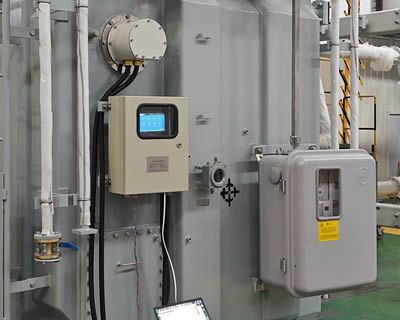
Winding temperature rise is driven by several factors. Load current is the dominant contributor — as current increases, I²R losses increase proportionally with the square of the current. Eddy current and stray losses in the conductors and structural components generate additional heat. Ambient temperature and solar radiation directly affect the transformer’s ability to reject heat. Selain itu, degraded cooling systems — such as blocked radiators, peminat yang gagal, or deteriorated oil — reduce heat dissipation capacity and cause elevated winding temperatures.
2.2 Hazards of Excessive Winding Temperature
Excessive winding temperature accelerates the thermal degradation of cellulose insulation. According to the well-established Arrhenius aging model referenced in IEEE Std C57.91, the rate of insulation aging approximately doubles for every 6–7°C increase above the rated hot-spot temperature. Sustained overheating leads to reduced dielectric strength, formation of combustible gases, eventual insulation failure, and potentially catastrophic transformer damage. Reliable winding temperature monitoring is therefore not optional — it is a fundamental requirement for transformer protection.
3. International Standards and Temperature Limits
Several international standards govern transformer winding temperature limits and monitoring requirements. IEC 60076-2 specifies that the average winding temperature rise shall not exceed 65K above ambient for oil-immersed transformers, with a hot-spot temperature rise limit of 78K. IEEE Std C57.12.00 similarly defines a 65°C average winding rise for most classes. IEEE Std C57.91 provides detailed thermal loading guidelines, hot-spot calculation methods, and insulation aging equations. IEC 60354 (now absorbed into IEC 60076-7) offers loading guidance based on thermal modeling. These standards collectively establish that continuous winding hot-spot temperatures should generally remain below 110–120°C for normal life expectancy, with the maximum permissible value depending on the insulation class and loading duration.
4. Traditional Method: Penunjuk Suhu Minyak (SELESAI)
4.1 Prinsip Kerja
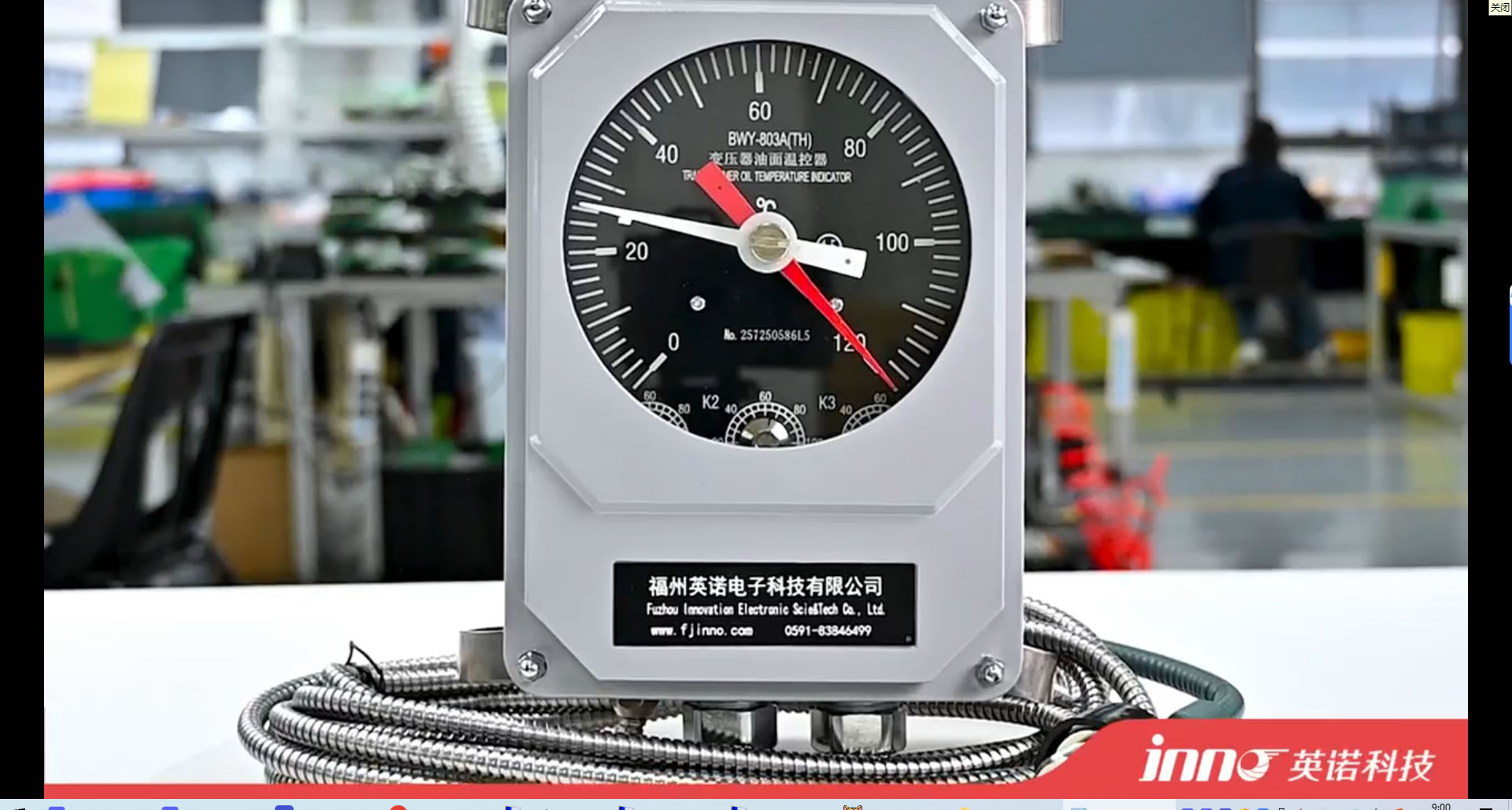
An penunjuk suhu minyak (SELESAI), also commonly referred to as an oil thermometer atau oil temperature gauge, measures the temperature of the insulating oil at or near the top of the transformer tank. The most common type uses a liquid-expansion (mercury or organic-filled) capillary system. A sensing bulb is inserted into a thermometer pocket welded on the transformer tank. As the oil temperature changes, the liquid in the bulb expands or contracts, driving a pointer on the dial gauge via the capillary tube.
4.2 Typical Parameters
Standard SELESAI devices offer a measurement range of 0–150°C, with an accuracy of approximately ±3–5°C. They typically include adjustable alarm and trip contacts (commonly set at 85°C and 95°C for top-oil temperature). The capillary length is usually available from 1 m ke 20 m. Response time is relatively slow, typically in the range of several minutes.
4.3 Had
The penunjuk suhu minyak measures only the top-oil temperature, which does not directly represent the winding hot-spot temperature. The actual winding hot spot can be 20–40°C higher than the measured oil temperature. Mechanical components are subject to drift and aging over time, and the device cannot be easily integrated into modern digital monitoring systems without additional signal converters.
5. Traditional Method: Winding Temperature Indicator (WTI)
5.1 Prinsip Kerja
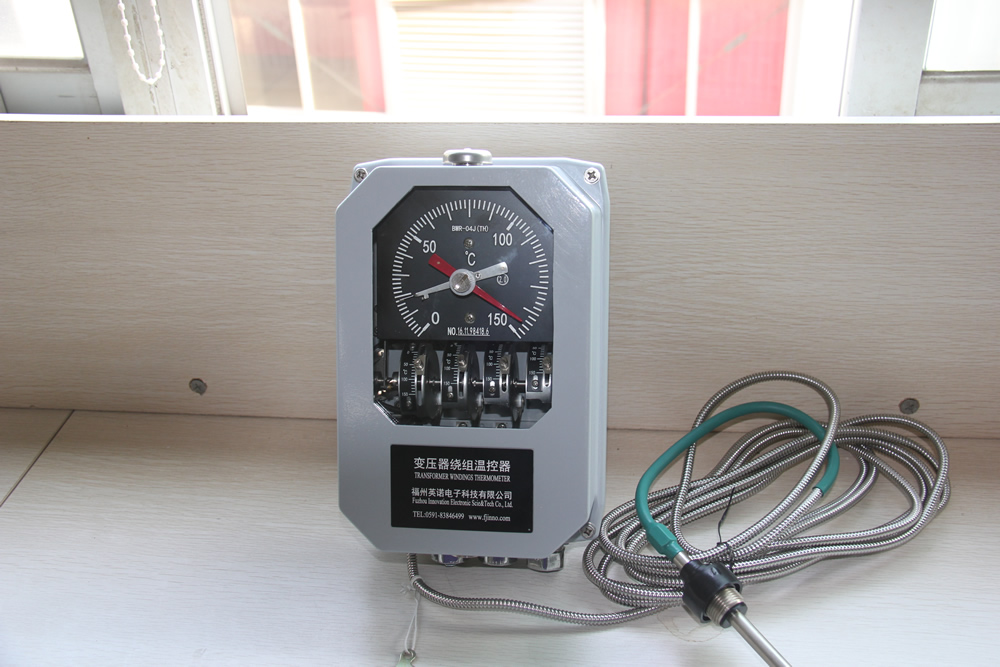
A penunjuk suhu penggulungan (WTI) uses a thermal imaging (simulation) method to estimate the winding hot-spot temperature without directly measuring the winding conductor. A current transformer (CT) on the bushing provides a signal proportional to the load current. This signal feeds a small heating element coiled around the sensing bulb of a thermometer pocket. The combination of the ambient oil temperature and the thermal contribution from the heating resistor simulates the thermal gradient between the oil and the winding, producing an indirect estimate of the winding hot-spot temperature.
5.2 Calibration and Setup
During factory heat-run testing, yang WTI is calibrated by adjusting the heating resistor current to match the measured winding-to-oil gradient at rated load. This calibration is specific to one loading condition. In the field, the relationship between load current and actual temperature gradient may deviate from the factory setting due to varying cooling conditions, oil aging, and non-linear thermal dynamics.
5.3 Typical Parameters
Satu standard penunjuk suhu penggulungan provides a display range of 0–200°C with an accuracy of approximately ±3–5°C for the simulated value. It includes two to four adjustable contacts for fan start, pump start, penggera, dan fungsi perjalanan. Response time is moderate, typically 5–15 minutes due to the thermal inertia of the simulation element.
5.4 Had
Kerana WTI relies on an indirect thermal model rather than a direct measurement, its reading is an approximation. Under transient loading conditions, overload events, or when cooling system performance changes, the WTI may significantly deviate from the actual winding temperature. It is also vulnerable to calibration drift over the transformer’s service life.
6. Traditional Method: Thermocouple and RTD Sensors
6.1 Prinsip Kerja
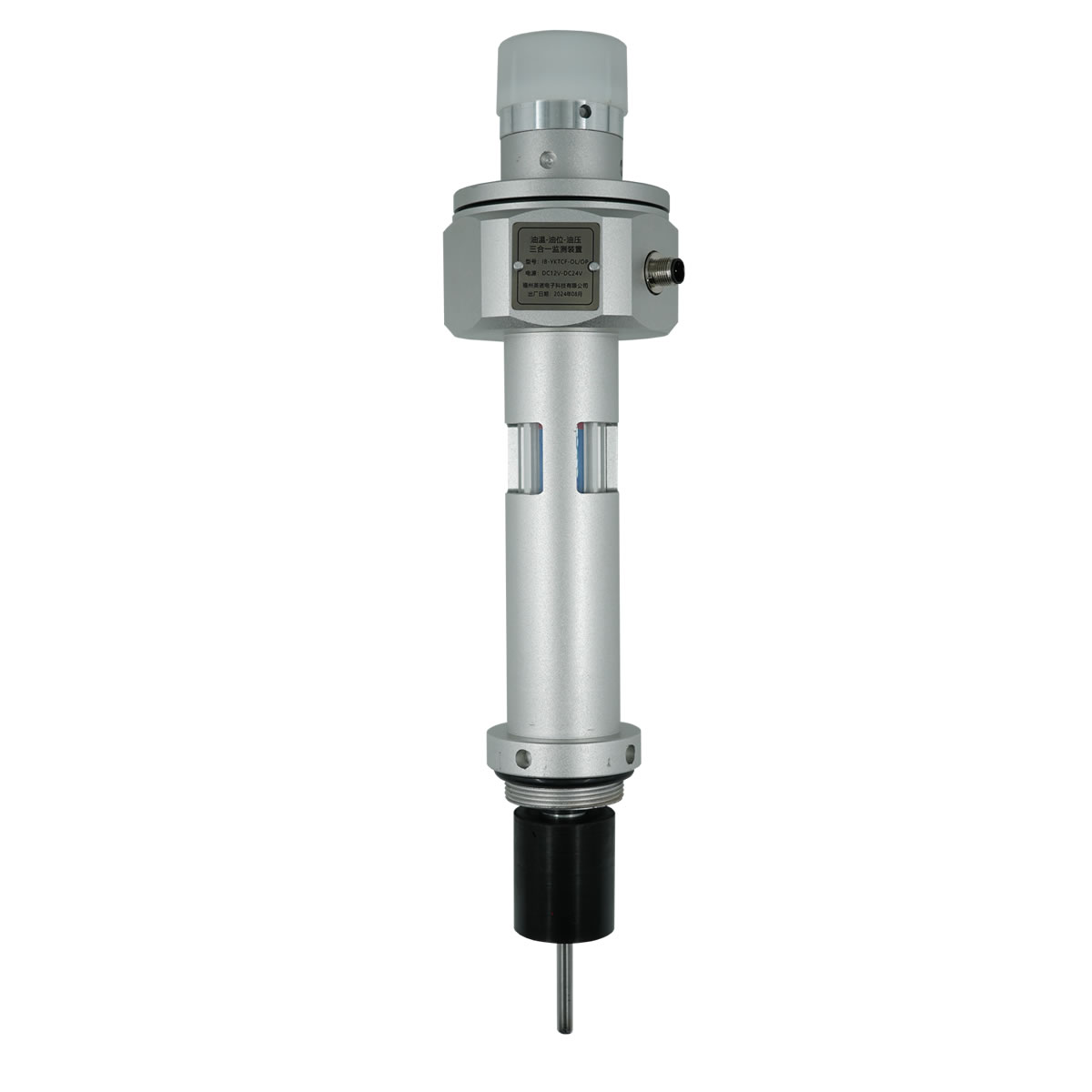
Penderia termokopel (typically Type T or Type K) generate a voltage proportional to the temperature difference between the sensing junction and a reference junction. Platinum resistance temperature detectors (Pt100 RTD) measure temperature by detecting the change in electrical resistance of a platinum element. Both types can be embedded within the transformer winding during manufacturing to provide direct temperature readings of the conductor.
6.2 Typical Parameters
A Pt100 RTD offers an accuracy of ±0.5–1.5°C across a range of −200°C to +600°C. Thermocouples provide accuracy of ±1–2.5°C. Response times vary from 1 kepada 10 seconds depending on the encapsulation. Both types require metallic lead wires routed from the winding interior out through the transformer structure.
6.3 Had
The primary drawback of embedded thermocouples and RTDs is that metallic lead wires introduce a conductive path into the high-voltage environment of the transformer winding. This creates insulation coordination challenges and increases the risk of dielectric failure. Electromagnetic interference from the transformer’s magnetic field can also affect signal integrity. Selain itu, these sensors can typically only be installed during manufacturing, making retrofit applications difficult.
7. Disyorkan: Sistem Pemantauan Suhu Gentian Optik Pendarfluor

7.1 Why Fluorescent Fiber Optic Technology Is Recommended
Among all available methods, yang sistem pemantauan suhu gentian optik pendarfluor is the only technology that provides truly direct, real-time measurement of transformer winding temperature with complete immunity to electromagnetic interference. Unlike OTI and WTI, which rely on indirect estimation, and unlike metallic thermocouples or RTDs, which compromise insulation integrity, penderia gentian optik pendarfluor use all-dielectric optical fibers that are inherently insulating and introduce zero electrical risk into the high-voltage winding environment.
7.2 GaAs Fluorescent Sensing Principle
The penderia suhu gentian optik pendarfluor operates based on the temperature-dependent fluorescence decay characteristics of a gallium arsenide (GaAs) semiconductor crystal bonded to the tip of an optical fiber. When pulsed light from the penyahmodulasi gentian optik excites the GaAs crystal, it emits fluorescent light whose decay time varies predictably with temperature. The demodulator analyzes the decay curve to determine the precise temperature at the sensing point. This is a point-type measurement method, providing a discrete and accurate temperature value at each sensor location.
7.3 Komposisi Sistem
A lengkap sistem pemantauan suhu gentian optik pendarfluor consists of five key components:
Fiber Optic Temperature Demodulator (Pemancar)

The penyahmodulasi suhu gentian optik ialah unit pemprosesan pusat sistem. Ia menjana denyutan cahaya pengujaan, menerima isyarat pendarfluor yang dikembalikan, dan mengira nilai suhu. Satu penyahmodulasi menyokong 1 kepada 64 saluran pengukuran, menjadikannya sesuai untuk memantau beberapa titik panas berliku secara serentak. Ia menyediakan satu Antara muka komunikasi RS485 (Modbus RTU) untuk integrasi dengan DCS, SCADA, atau IED pemantauan transformer. Semua konfigurasi saluran dan parameter komunikasi boleh disesuaikan mengikut keperluan projek.
Kabel Gentian Optik Pendarfluor
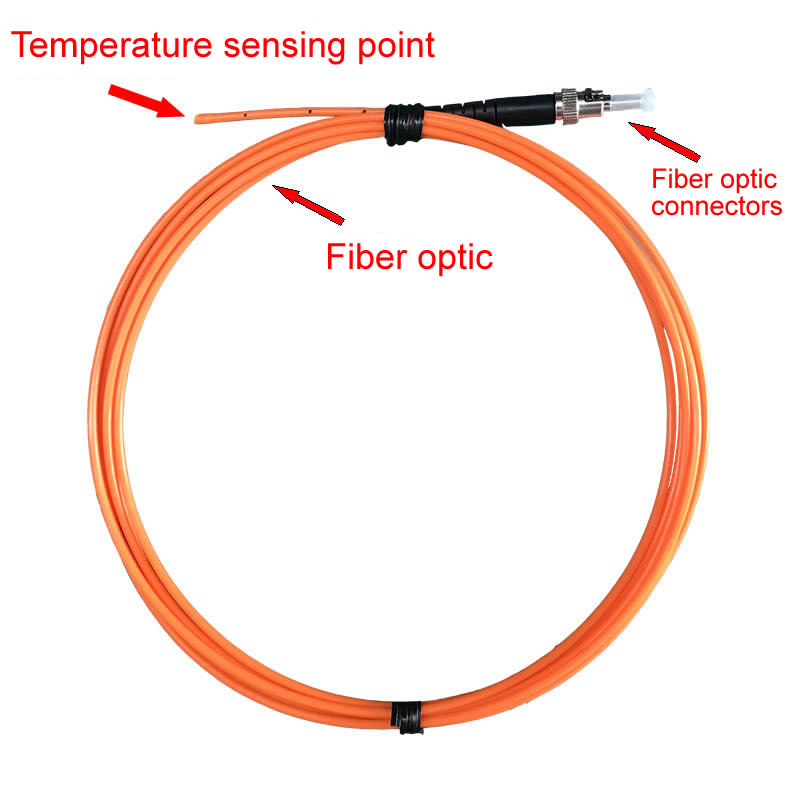
The gentian optik pendarfluor kabel menghantar pengujaan dan mengembalikan cahaya antara penyahmodulator dan probe penderiaan. Ia adalah dielektrik sepenuhnya, tahan minyak, dan direka untuk rendaman jangka panjang dalam minyak penebat transformer. Panjang kabel boleh didapati daripada 0 kepada 20 meter untuk menampung pelbagai saiz pengubah dan keperluan penghalaan.
Penderiaan Probe
The probe pengesan suhu pendarfluor contains the GaAs crystal and is the point of actual temperature measurement. The probe features a compact diameter of 2–3 mm and can be customized for specific installation requirements. It withstands continuous operating voltages exceeding 100 kV, making it fully qualified for direct placement against winding conductors in high-voltage and ultra-high-voltage transformers.
Modul Paparan
The temperature display module provides local visual indication of all channel readings, status penggera, dan diagnostik sistem. It is typically panel-mounted on the transformer control cabinet.
Perisian Pemantauan
The temperature monitoring software runs on a connected PC or server and provides real-time trending, historical data logging, pengurusan penggera, dan penjanaan laporan. It enables centralized remote monitoring of winding temperatures across multiple transformers.
7.4 Installation in Transformer Windings
The fluorescent fiber optic sensing probe is installed during transformer manufacturing by embedding it directly at the calculated hot-spot location within the winding structure, typically between insulated conductors at the top of the high-voltage or low-voltage winding. The kabel gentian optik is routed through the insulation structure and exits the transformer through a dedicated fiber optic feedthrough fitting on the tank wall. Because the entire sensor is non-metallic and non-conductive, it requires no special insulation coordination and introduces no risk to the transformer’s dielectric performance.
8. Technical Comparison of All Four Methods
The following table provides a comprehensive side-by-side comparison of all four transformer winding temperature monitoring methods discussed in this article.
| Parameter | SELESAI (Penunjuk Suhu Minyak) | WTI (Winding Temperature Indicator) | Termokopel / RTD | Gentian Optik Pendarfluor (GaAs) |
|---|---|---|---|---|
| Jenis Pengukuran | Tidak langsung (oil only) | Tidak langsung (thermal simulation) | Langsung (tertanam) | Langsung (tertanam) |
| Ketepatan | ±3–5°C | ±3–5°C | ±0.5–2.5°C | ±0.5–1°C |
| Julat Pengukuran | 0–150°C | 0–200°C | −200 to +600°C | −40 to +260°C |
| Masa Tindak Balas | Several minutes | 5–15 minutes | 1–10 saat | <1 kedua |
| Kekebalan EMI | Sederhana | Sederhana | miskin | lengkap (semua dielektrik) |
| Tahan Voltan | T/A (luaran) | T/A (luaran) | Terhad | >100 kV |
| Diameter Probe | Jenis mentol | Jenis mentol | 3–6 mm | 2–3 mm (boleh disesuaikan) |
| Bahan Sensor | metalik | metalik | metalik | All-dielectric (insulating) |
| Cable/Fiber Length | 1–20 m | 1–20 m | Limited by signal loss | 0–20 m |
| Kapasiti Saluran | Bujang | Bujang | Berbilang titik (wired) | 1–64 channels per demodulator |
| Komunikasi | Contacts only (analog) | Contacts only (analog) | Analog signal / 4–20 mA | RS485 (Modbus RTU), boleh disesuaikan |
| Hayat Perkhidmatan | 10–15 tahun | 10–15 tahun | 10–20 tahun | >25 tahun |
| Keupayaan Retrofit | Mudah | Mudah | Sukar | Factory installation recommended |
| Relative Cost | rendah | Rendah–Sederhana | Sederhana | Sederhana–Tinggi |
As shown in the table, yang sistem pemantauan suhu gentian optik pendarfluor delivers the best combination of measurement accuracy, kelajuan tindak balas, imuniti elektromagnet, dielectric safety, and long service life — making it the clear choice for critical power transformers where reliable winding temperature data is essential.
9. Kes Aplikasi Global
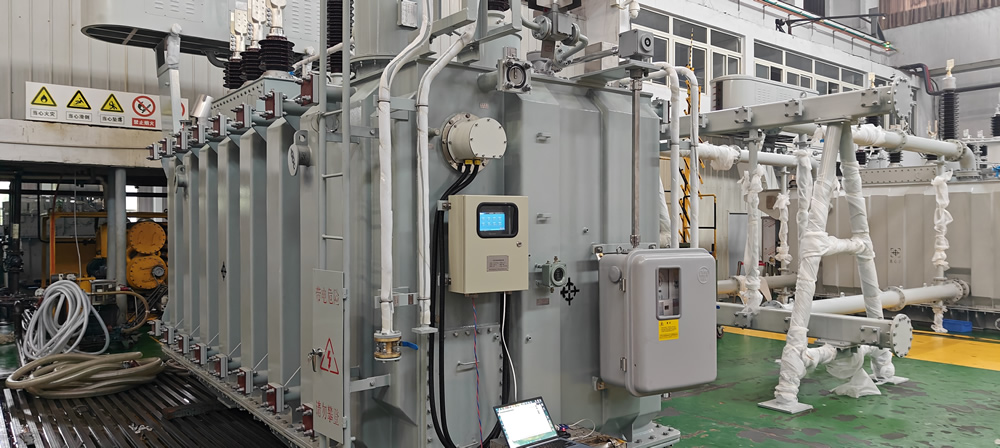
Fluorescent fiber optic winding temperature monitoring systems have been deployed in a wide range of transformer applications worldwide. The following are representative examples demonstrating proven performance across different voltage classes and operating environments.
9.1 Transformer Kuasa Voltan Tinggi (110 kV – 220 kV)
Multiple utility-class 110 kV dan 220 kV power transformers in large-scale substation projects across Asia, Timur Tengah, and South America have been equipped with penderia gentian optik pendarfluor embedded at the calculated hot-spot locations. These installations enabled real-time winding temperature visibility and dynamic loading optimization, replacing older WTI-based thermal estimates.
9.2 Ultra-High-Voltage (UHV) Transmission Transformers
In ultra-high-voltage transmission projects operating at 500 kV dan ke atas, the all-dielectric nature of the fluorescent fiber optic sensing probe is a critical advantage. These transformers demand absolute insulation integrity, and conventional metallic sensors are not acceptable. Fluorescent fiber optic systems have been successfully installed in multiple UHV transformer units, providing continuous hot-spot monitoring under extreme voltage stress.
9.3 Industrial and Traction Transformers
In industrial applications such as arc furnace transformers and railway traction transformers, highly variable and cyclic loading profiles make accurate winding temperature monitoring essential. Sistem gentian optik pendarfluor provide the fast response time (<1 kedua) needed to track rapid thermal transients, enabling precise thermal protection under dynamic operating conditions.
9.4 Renewable Energy and Offshore Transformers
Transformers serving wind farms and offshore platforms operate in harsh and remote environments where maintenance access is limited. Pemantauan suhu gentian optik with remote data access via RS485 and SCADA integration allows operators to manage thermal performance without physical site visits, significantly reducing operational risk and maintenance cost.
10. Winding Temperature Protection and Control Logic

Winding temperature measurements are used to drive protective actions and cooling control. In a typical implementation, the monitoring system triggers the following responses based on configurable temperature thresholds.
10.1 Cooling System Activation
When the winding temperature reaches a first-stage threshold (commonly 85–95°C), the monitoring system sends a command to start additional cooling fans or oil pumps. This activates supplementary cooling stages (ONAF or ODAF) to increase heat dissipation capacity.
10.2 Penggera
A second-stage threshold (commonly 105–110°C) triggers a high-temperature alarm, which is annunciated locally at the transformer control panel and transmitted remotely to the SCADA system for operator action.
10.3 Trip
If the temperature continues to rise and reaches a critical threshold (commonly 120–130°C), a trip command is issued to de-energize the transformer and prevent irreversible insulation damage. This signal interfaces with the transformer protection relay via dry contacts or digital communication.
10.4 SCADA and DCS Integration
The fluorescent fiber optic temperature demodulator transmits real-time temperature data via RS485 (Modbus RTU) to the substation SCADA system or plant DCS. This enables centralized monitoring, trend sejarah, and coordinated thermal management across multiple transformers.
11. Dapatkan Penyelesaian Tersuai
Every transformer application has unique requirements for channel count, fiber cable routing, display configuration, dan integrasi sistem. Our engineering team at FJINNO provides tailored penyelesaian pemantauan suhu gentian optik pendarfluor for transformer manufacturers, utiliti, and industrial operators worldwide.
Whether you need a standard 4-channel system for a distribution transformer or a 64-channel configuration for a large power transformer bank, we deliver fully customized hardware and software packages with complete technical support.
Hubungi kami hari ini to discuss your project requirements, request a quotation, or schedule a technical consultation. melawat www.fjinno.net untuk maklumat lanjut.
12. Soalan Lazim (Soalan Lazim)
S1: What is the difference between oil temperature and winding temperature in a transformer?
Oil temperature represents the temperature of the insulating oil, typically measured at the top of the tank. Winding temperature is the actual temperature of the copper or aluminum conductor in the winding, which is always higher than the oil temperature due to the thermal gradient. The hot-spot winding temperature can be 20–40°C above the top-oil temperature under full load.
S2: Why is a WTI not considered a direct measurement method?
A winding temperature indicator uses a thermal simulation approach. It estimates winding temperature by adding a current-dependent thermal contribution to the measured oil temperature. It does not have a sensor placed on the actual winding conductor, so it cannot capture the true hot-spot temperature under all operating conditions.
S3: How does a fluorescent fiber optic sensor withstand high voltage inside a transformer?
The fluorescent fiber optic sensor is made entirely of non-metallic, dielectric materials — glass fiber and a GaAs crystal tip. It does not conduct electricity and therefore introduces no conductive path into the insulation structure. This allows it to operate safely at voltage levels exceeding 100 kV.
S4: Can fluorescent fiber optic sensors be retrofitted into an existing transformer?
Fluorescent fiber optic sensors are most effectively installed during the transformer manufacturing process, when they can be precisely positioned at the calculated hot-spot location within the winding. Retrofitting into a sealed, oil-filled transformer is not practical without removing the active part. Untuk transformer sedia ada, WTI or external monitoring methods are typically used.
S5: How many sensing points can one demodulator handle?
A single fluorescent fiber optic temperature demodulator supports 1 kepada 64 saluran. Each channel connects to one sensing probe for independent point-type temperature measurement. The channel count is configurable based on the specific project needs.
S6: What communication protocol does the system use?
The standard communication interface is RS485 using the Modbus RTU protocol, which is widely compatible with substation SCADA systems, DCS platforms, and intelligent electronic devices (IED). Other communication options can be customized upon request.
S7: What is the expected service life of a fluorescent fiber optic temperature sensor?
The fluorescent fiber optic sensing probe and fiber cable are designed for a service life exceeding 25 tahun, which matches or exceeds the typical design life of a power transformer. The all-glass construction and sealed GaAs crystal are resistant to degradation in transformer oil environments.
S8: What international standards apply to transformer winding temperature limits?
The primary standards are IEC 60076-2 (temperature rise limits), IEC 60076-7 (panduan memuatkan), IEEE Std C57.12.00 (general requirements), and IEEE Std C57.91 (loading and thermal modeling). These standards define maximum allowable winding rise temperatures and hot-spot limits for various loading conditions.
S9: Is the fluorescent fiber optic sensor affected by electromagnetic interference?
Tidak. Because the sensor is entirely non-metallic and the measurement principle is based on optical signals rather than electrical signals, it is completely immune to electromagnetic interference from the transformer’s magnetic field, menukar transien, or nearby high-voltage equipment.
S10: How do I determine the correct number of sensors needed for my transformer?
The number of sensing points depends on the transformer design, kelas voltan, jenis penyejukan, and the number of windings to be monitored. Lazimnya, sensors are placed at the calculated hot-spot locations of each major winding (HV, LV, and tertiary if applicable). Our engineering team can assist with sensor placement planning based on the thermal design data of your specific transformer. Hubungi kami di www.fjinno.net for technical support.
13. Penafian
The information provided in this article is intended for general educational and reference purposes only. While every effort has been made to ensure the accuracy and reliability of the content at the time of publication, FJINNO makes no warranties or representations, tersurat atau tersirat, mengenai kesempurnaan, ketepatan, or suitability of the information for any specific application. Transformer design, pemasangan, and monitoring practices must comply with applicable local and international standards, regulations, and engineering best practices. Readers are advised to consult qualified engineers and refer to the latest editions of relevant standards before making any design or purchasing decisions. FJINNO shall not be liable for any direct, tidak langsung, or consequential damages arising from the use of or reliance on the information presented in this article. For project-specific technical guidance, please contact our engineering team at www.fjinno.net.

Sensor suhu gentian optik, Sistem pemantauan pintar, Pengeluar gentian optik yang diedarkan di China
|
 |
 |