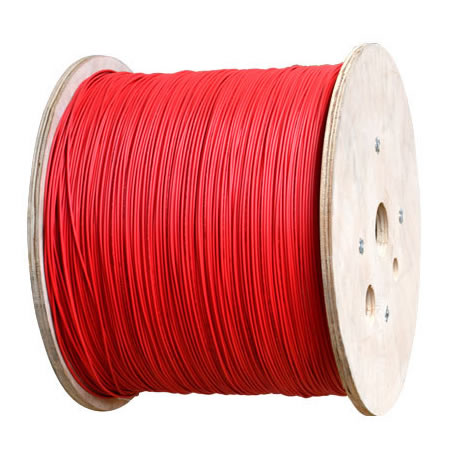
Penderia suhu gentian optik INNO ,sistem pemantauan suhu.

Penderiaan Akustik Teragih (THE) ialah kaedah pemantauan yang inovatif berdasarkan teknologi penderiaan gentian optik. Sistem DAS menggunakan gentian optik sebagai medium penderiaan dan menganalisis isyarat hamburan Rayleigh yang terserak belakang bagi denyutan cahaya semasa perambatannya dalam gentian., mencapai pemantauan berterusan dan masa nyata bagi isyarat akustik dalam persekitaran sekitar gentian. Berbanding dengan penderia akustik tradisional, Sistem DAS mempunyai kelebihan unik seperti liputan yang luas, sensitiviti yang tinggi, dan prestasi masa nyata yang kukuh. They are increasingly widely used in fields such as oil and gas pipeline monitoring, keselamatan perimeter, railway safety, and earthquake monitoring. This article will elaborate on the basic principles, key technical parameters, and typical application scope of the DAS system in detail.
Basic Principles
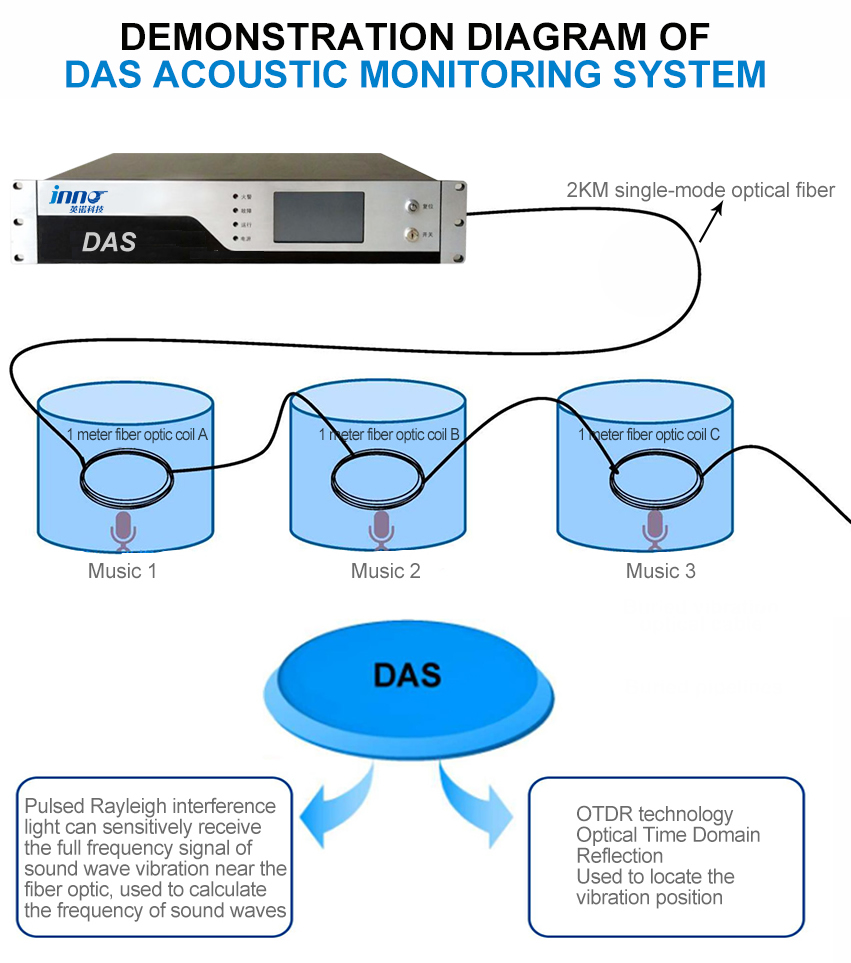
The core principle of the DAS system is to use optical fibers as distributed sensors, analyze the backscattering effect of light pulses during propagation in optical fibers, and extract acoustic information of the surrounding environment of the optical fibers. The basic working process can be summarized as the following steps:
Optical pulse emission: The pulse laser in the system emits narrow pulse width, high-power optical pulses to the fiber at a certain frequency.
Rayleigh menghambur: When light pulses propagate in optical fibers, they are affected by the density fluctuations of the fiber material, resulting in Rayleigh scattering effects. When optical fibers are disturbed by sound waves, the phase of scattered light will change.
Backward scattered light detection: A portion of the scattered light will return along the original path, be received by the photodetector, and converted into an electrical signal.
Time domain analysis: Based on the speed of light and pulse emission time, the fiber position corresponding to scattered light can be determined. Through time-domain analysis, achieve spatial positioning along the optical fiber.
Coherent demodulation: The backscattered photoelectric signal contains phase change information caused by sound waves. Using coherent demodulation technology to extract the phase change related to sound waves.
Frequency domain analysis: Perform Fourier transform on the phase change signal obtained from demodulation to obtain acoustic frequency spectrum information at different positions.
Through the above steps, Huaguang Tianrui’s DAS system can achieve continuous and distributed extraction and analysis of acoustic signals along the fiber optic path. The stronger the acoustic disturbance on the fiber, the greater the phase change of the scattered light, and the greater the amplitude of the demodulated signal. Oleh itu, by analyzing the amplitude and frequency characteristics of the demodulated signal, it is possible to detect and locate the sound around the fiber optic environment.

Key technical parameters
The performance indicators of the DAS system mainly include the following aspects:
Resolusi spatial: The minimum distance between sound source positions that the system can distinguish, usually within the range of 1-10 meter. High spatial resolution means more precise sound source localization capability.
Sensitiviti: characterizes the minimum sound pressure level that the system can detect. High sensitivity means being able to capture weak sound signals. A typical SR-DAS system has a sensitivity of up to -180dB and weighs 20 μ Pa.
Julat tindak balas kekerapan: The frequency range of sound waves that the DAS system can detect. The typical frequency response range is 1Hz-10kHz, which can cover most sound monitoring needs.
Jarak pengukuran: The length of fiber optic sensing that a single DAS system can cover. The typical measurement distance can reach 10-50 kilometer, meeting the requirements of long-distance distributed monitoring.
Kadar persampelan: characterizes the number of acquisition points of acoustic signals per unit time. A high sampling rate means higher time resolution and signal restoration accuracy. The typical sampling rate can reach 1-100kHz.
Ketepatan kedudukan: characterizes the error range of sound source position measurement. High positioning accuracy is crucial for accurately identifying sound sources. The typical positioning accuracy can reach ± 1-5 meter.
In addition to the above technical indicators, the reliability, kestabilan, real-time performance, and other factors of the DAS system are also important aspects for evaluating its performance. The current research focus is to continuously improve the comprehensive performance of DAS systems by optimizing optical design, algoritma pemprosesan isyarat, dll.
Skop permohonan bagi gentian optik teragih DAS system
(1) Cable trench/oil and gas pipeline anti external rupture monitoring
Through fiber optic vibration sensing technology, when external forces such as excavators vibrate near cable trenches/oil and gas pipelines with sensing fibers, DAS can provide early warning and inform of the location of the alarm event.
(2) Monitoring of Gas Pressure Fracturing Acoustic Vibration Process in Oil and Shale
The oil well casing may leak, and there may be oil-water stratification and other geological structural changes underground. By laying sensing optical cables along the casing in the oil well, DAS can monitor the sound wave vibration at any position underground in real time.
(3) Pipeline leakage monitoring and surrounding security
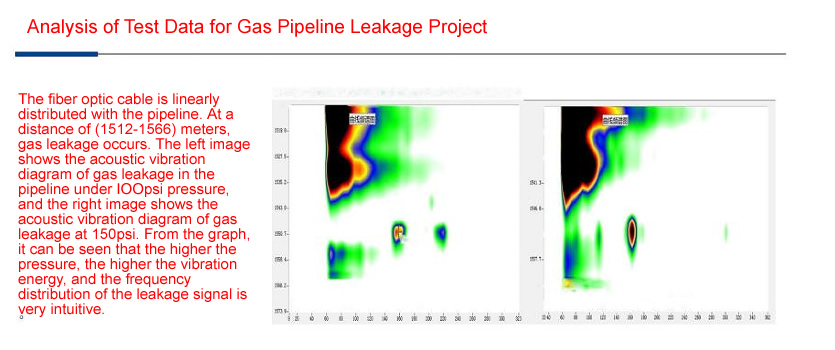
Whether it’s oil or natural gas pipelines, when there is a leak, not only are temperature changes accompanied by vibration changes, but the DAS system can serve as a safety protection and warning device around the pipeline.
(4) Monitoring of high-speed rail, kapal, and airports
The optical fibers arranged along the high-speed rail can detect the operation status of the high-speed rail, and through distributed acoustic sensing, the track and train operation status can be understood; Fiber optic cables can be laid outside the airport to detect real-time aircraft takeoff and landing, and monitor security intrusions around the airport. (5) Perimeter security monitoring and border line intrusion prevention
The DAS system can provide real-time intruder data and early warning when arranging optical cables on national borders or in situations where intrusion prevention monitoring is required.