 Penderia suhu gentian optik INNO ,sistem pemantauan suhu.
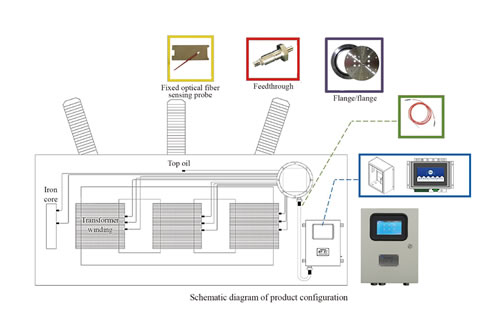
- Transformer terendam minyak adalah antara aset bernilai tertinggi pada mana-mana grid kuasa — suhu titik panas penggulungan ialah satu-satunya parameter paling kritikal yang mengawal hayat penebat.
- Penunjuk OTI/WTI tradisional mengukur suhu minyak, bukan suhu penggulungan sebenar; jurang boleh mencapai 20–40 °C di bawah beban.
- Penderia suhu gentian optik pendarfluor menyediakan terus, EMI-kebal, 100 Pengukuran belitan terpencil kV yang tidak dapat dipadankan oleh penderia konvensional.
- Panduan ini membimbing jurutera perolehan melalui pemilihan teknologi, key specifications, jenis kuar, pensijilan, supplier evaluation, dan kesilapan pembelian biasa.
- Semua pautan produk, kajian kes dunia sebenar, dan butiran pensijilan diambil daripada dokumentasi FJINNO yang disahkan.
1. Mengapa Transformer Rendam Minyak Perlu Pemantauan Suhu Gentian Optik
1.1 Had Petunjuk OTI dan WTI Konvensional
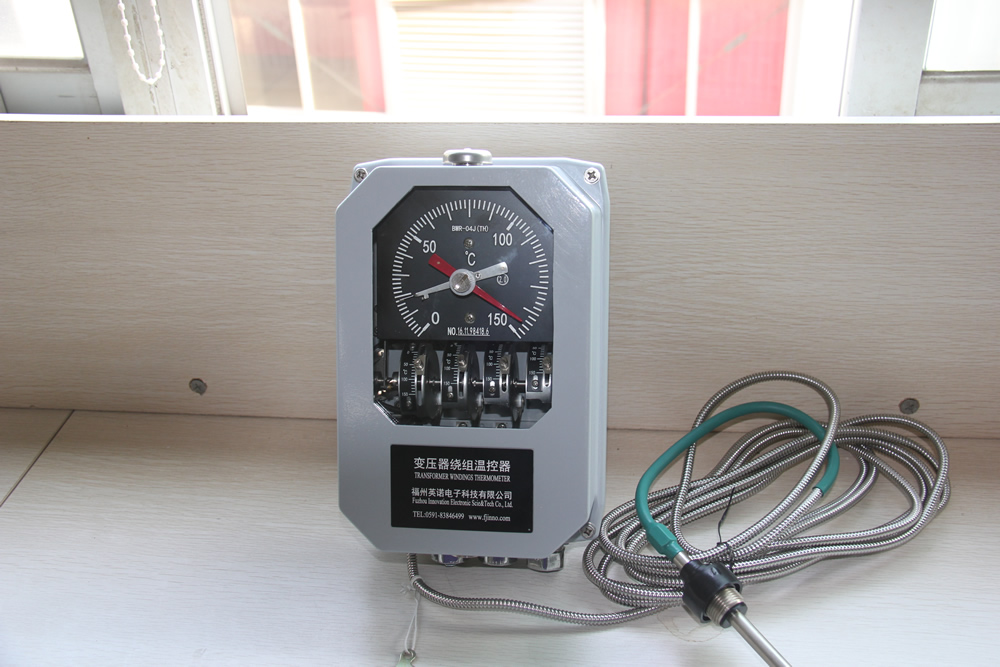
Setiap pengubah kuasa tenggelam minyak dihantar dengan penunjuk suhu minyak (SELESAI) dan, dalam banyak kes, a penunjuk suhu penggulungan (WTI). Kedua-dua instrumen telah berkhidmat kepada industri selama beberapa dekad, namun kedua-duanya tidak memberikan apa yang diperlukan oleh pengurusan aset moden: secara langsung, bacaan masa nyata suhu titik panas berliku.
OTI mengukur suhu minyak pukal di bahagian atas tangki — nilai yang ketinggalan di belakang suhu penggulungan sebenar di mana-mana dari beberapa minit hingga lebih setengah jam semasa perubahan beban. WTI menambah baik perkara ini dengan menambahkan imej terma kenaikan haba yang bergantung kepada semasa, tetapi hasilnya masih merupakan anggaran yang dikira, bukan nilai yang diukur. Di bawah profil pemuatan bukan standard, herotan harmonik, atau kegagalan sistem penyejukan separa, anggaran WTI boleh menyimpang daripada suhu belitan sebenar oleh 20 °C hingga 40 °C.
Penyimpangan itu sangat penting. Penebat pengubah mengikuti hubungan Arrhenius: setiap peningkatan 6–8 °C dalam suhu titik panas yang berterusan mengurangkan hayat penebat kira-kira separuh (IEC 60076-2). Mengendalikan transformer 20 °C lebih panas daripada yang dicadangkan WTI bukan sahaja mengurangkan jangka hayat — ia boleh mencetuskan kerosakan penebat yang cepat dalam beberapa bulan dan bukannya beberapa dekad.
1.2 Mengapa PT100 dan Sensor Termokopel Tidak Mencukupi
Pengesan suhu rintangan PT100 dan termokopel cukup tepat secara berasingan, but their metallic construction creates fundamental problems in transformer environments:
- Electrical safety: A metallic conductor routed from inside a high-voltage winding to a panel-mounted instrument introduces a dielectric risk. Even with careful insulation, the conductor disturbs the electric field in the winding and creates a potential path for partial discharge.
- Gangguan elektromagnet: Strong alternating magnetic fields inside an energized transformer induce voltages in metallic signal leads, merosakkan bacaan suhu — terutamanya dalam keadaan beban berat atau kerosakan.
- Keserasian minyak: Pembinaan RTD standard tidak direka untuk rendaman yang tidak ditentukan dalam minyak pengubah; kegagalan pengedap membawa kepada pencemaran minyak dan sensor hanyut dari semasa ke semasa.
1.3 Kes untuk Pemantauan Suhu Penggulungan Gentian Optik
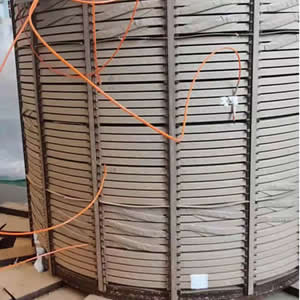
Sistem pemantauan suhu gentian optik untuk transformer tenggelam minyak menangani setiap had yang disenaraikan di atas dalam satu langkah teknologi:
| Parameter | SELESAI / WTI | PT100 RTD | Gentian Optik Pendarfluor |
|---|---|---|---|
| Jenis ukuran | Tidak langsung / dikira | Hubungan langsung | Hubungan langsung |
| Kekebalan EMI | ✅ | ❌ | ✅ |
| Pengasingan voltan tinggi | ✅ | ❌ | ✅ (≥100 kV) |
| Ketepatan tipikal | ±5 °C (dianggarkan) | ±1 °C | ±1 °C |
| Keluaran berterusan masa nyata | ✅ | ✅ | ✅ |
| Serasi rendaman minyak | T/A | Terhad | ✅ (probe tahan minyak) |
| SCADA / Penyepaduan Modbus | Terhad | Melalui pemancar | RS485 asli / Modbus RTU |
2. Tiga Teknologi Suhu Gentian Optik Berbanding
Istilah “sensor suhu gentian optik” merangkumi beberapa prinsip pengukuran yang berbeza. Choosing the wrong technology for a transformer application is one of the most common — and costly — procurement errors. Berikut ialah perbandingan bahasa biasa bagi tiga teknologi yang paling mungkin dihadapi oleh jurutera perolehan.
2.1 Penderia Gentian Optik Pendarfluor (Disyorkan untuk Belitan Transformer)

A penderia suhu gentian optik pendarfluor — kadangkala dipanggil penderia seumur hidup pendarfluor — meletakkan kristal fosfor bumi jarang di hujung gentian kuarza. Pengawal melepaskan nadi cahaya pendek ke bawah gentian; kristal menyerap nadi dan memancarkan semula isyarat pendarfluor yang masa pereputannya adalah tepat, fungsi suhu yang boleh diulang. Pengawal mengukur masa pereputan itu dan menukarkannya kepada nilai suhu.
Mengapa ini penting untuk transformer: Pengukuran bergantung pada nisbah masa, bukan pada keamatan cahaya. Ini bermakna pengecilan isyarat daripada larian gentian panjang, penuaan penyambung, atau sedikit pencemaran permukaan gentian tidak menjejaskan ketepatan. Penderia benar-benar merujuk sendiri.
- Julat ukuran: −40 °C hingga +260 °C (standard); customizable to +300 °C
- Ketepatan: ±1 °C
- Resolusi: 0.1 °C
- Masa tindak balas: <1 kedua
- Probe type: Point measurement — one probe, one location
- Best for: Direct hot-spot measurement in transformer windings, bar bas gear suis, sambungan kabel
2.2 Kisi Fiber Bragg (FBG) Penderia
FBG sensors encode temperature information in the reflected wavelength of a periodic refractive-index pattern written into the fiber core. Multiple gratings at different wavelengths can be multiplexed onto a single fiber, membolehkan anda mengambil beberapa bacaan suhu sepanjang satu helai gentian.
- Kelebihan: Pengukuran berbilang titik pada satu gentian; sesuai untuk liputan belitan teragih pada transformer kuasa yang sangat besar
- Had: Parut juga bertindak balas kepada ketegangan mekanikal, jadi lenturan atau getaran boleh menghasilkan bacaan palsu melainkan pampasan terikan digunakan. Penyiasat (penyahmodulasi) adalah jauh lebih kompleks dan mahal daripada pengawal pendarfluor.
- Best for: Aplikasi saluran tinggi di mana kos setiap mata mesti dikurangkan dan persekitaran pemasangan secara mekanikal stabil
2.3 Penderiaan Suhu Teragih (DTS)
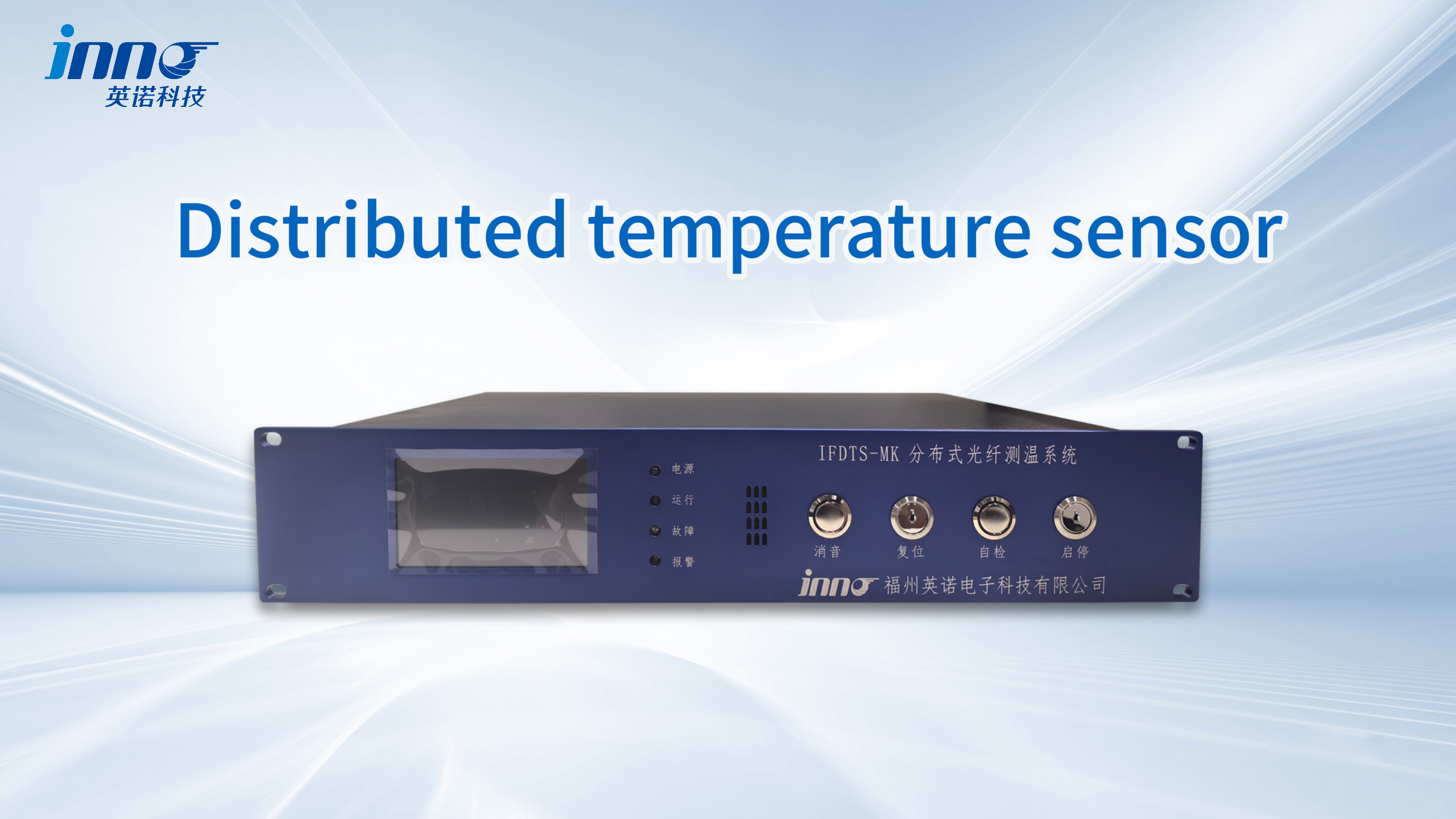
Pengesan suhu teragih menggunakan penyerakan belakang Raman atau Brillouin di sepanjang gentian mod tunggal atau berbilang mod biasa untuk menghasilkan profil suhu berterusan — beribu-ribu titik pengukuran di sepanjang kabel tunggal sehingga beberapa kilometer panjang.
- Kelebihan: Liputan linear berterusan — sesuai untuk terowong kabel, overhead line monitoring, pengesanan kebocoran saluran paip
- Had: Spatial resolution is typically 0.5–2 m. A transformer winding hot spot occupies a few centimeters; DTS cannot resolve it. The system also requires a large interrogator unit and long averaging times to achieve acceptable accuracy.
- Best for: Power cable routes, pipeline temperature profiling — not suitable for transformer winding hot-spot detection
Technology Selection Summary
| Teknologi | Measurement Mode | Transformer Winding Use | Ketepatan Biasa | Relative System Cost |
|---|---|---|---|---|
| Gentian Optik Pendarfluor | titik | ✅ Recommended | ±1 °C | Sederhana |
| FBG | Separa teragih | ✅ Suitable (transformer besar) | ±1–2 °C | Lebih tinggi |
| DTS | Diedarkan (linear) | ❌ Not suitable | ±1–2 °C over 1 m | tinggi |
3. Spesifikasi Teknikal Utama Diterangkan
Supplier datasheets for sistem pengukuran suhu gentian optik can look similar on the surface. The following breakdown of each parameter helps procurement engineers read those datasheets critically and ask the right clarifying questions before committing to a purchase.
3.1 Ketepatan Pengukuran (±1 °C)
Accuracy specifies the maximum deviation between the sensor’s displayed value and the true temperature under defined conditions. IEC 60076-2 requires that hot-spot temperature measurement uncertainty not exceed ±2 °C for compliance purposes, so a sensor rated at ±1 °C meets this requirement with margin.
What to watch for: Accuracy figures are only meaningful when accompanied by a traceable calibration certificate. Some suppliers quote ±0.5 °C or better without providing supporting calibration data. Always request a calibration certificate for at least one unit per order batch.
3.2 Julat Pengukuran (−40 °C hingga +260 °C standard)
Transformer winding temperatures under normal service rarely exceed 130 °C (Class A insulation limit per IEC 60076-2 ialah 98 °C hot-spot rise above 40 °C ambient = 138 °C total). Namun begitu, emergency overload conditions, kegagalan sistem penyejukan, or insulation degradation can push winding temperatures above 180 °C. The standard range of −40 °C to +260 °C covers all realistic scenarios with comfortable margin.
Probe tip temperature vs. controller ambient: Confirm that the probe tip rating covers the maximum winding temperature, and separately confirm that the controller enclosure rating covers the ambient temperature at its installation location (often 0–55 °C for standard industrial units).
3.3 Number of Measurement Channels
Each channel supports one probe suhu gentian optik. Selecting the correct channel count is a balance between monitoring completeness and system cost.
- Small distribution transformer (sehingga 2 MVA): 3 channels — one per phase winding top
- Medium power transformer (2–50 MVA): 6–9 channels — top and bottom of each phase winding
- Pengubah kuasa besar (50 MVA+): 9–16 channels — multiple points per winding plus tap changer and bushing positions
FJINNO controllers support 1 kepada 64 saluran, with custom configurations available for large installations.
3.4 Masa Tindak Balas (<1 Kedua)
Response time defines how quickly the sensor tracks a step change in temperature. Sub-second response captures transient overload events — for example, a through-fault that superheats windings in milliseconds — giving protection relays meaningful data rather than lagged readings.
3.5 High-Voltage Dielectric Isolation (100 kV)
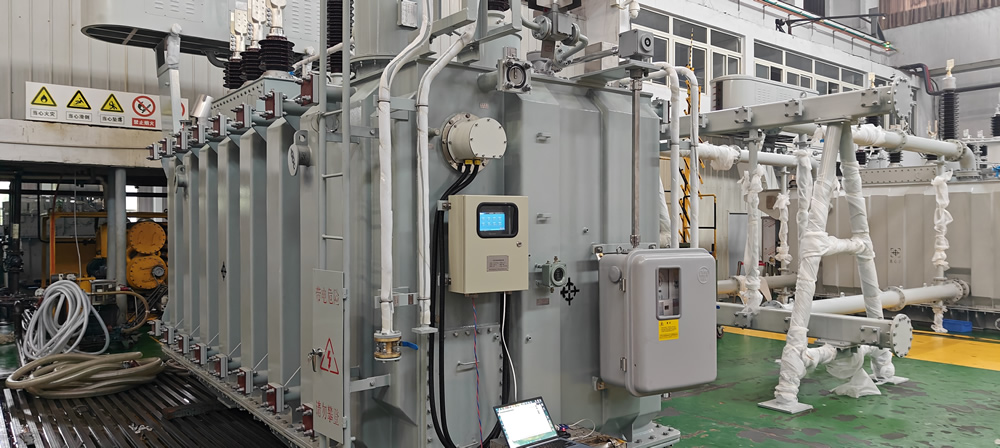
This is the specification that separates fiber optic sensors from all metallic alternatives. The quartz fiber itself has no electrical conductivity; combined with the all-dielectric probe housing, the sensor presents no leakage path between the live winding and the measurement circuit. FJINNO probes are rated at 100 kV continuous dielectric isolation, penutup 10 kV, 35 kV, 110 kV, dan 220 kV transformer classes.
3.6 Antaramuka Komunikasi
Standard output is RS485 / Modbus RTU, compatible with virtually all substation SCADA platforms. For installations integrated into IEC 61850 pencawang digital, confirm whether the controller supports IEC 61850 natively or requires an external gateway. Output analog 4–20 mA berguna untuk antara muka dengan sistem DCS yang lebih lama.
3.7 Penarafan Perlindungan IP
Pengawal yang dipasang pada tangki pengubah memerlukan minimum IP54 (terlindung habuk, tahan percikan). IP65 lebih disukai untuk pemasangan luar atau kedudukan yang tertakluk kepada pencucian. Probe yang direndam dalam minyak transformer memerlukan ujian keserasian minyak setiap IEC 60296, bukan sekadar penarafan IP.
3.8 Panjang Gentian Probe
The kabel sambungan untuk penderia suhu gentian optik pendarfluor merapatkan jarak antara hujung probe di dalam belitan dan pengawal yang dipasang pada dinding tangki atau dalam panel berdekatan. Panjang standard berjalan 3–5 m; FJINNO menyokong panjang gentian tersuai dari 0 kepada 80 m untuk pengubah besar atau pemasangan bilik kawalan jauh.
Spesifikasi Jadual Rujukan Pantas
| Parameter | Minimum Boleh Diterima | Disyorkan | FJINNO Standard |
|---|---|---|---|
| Ketepatan | ±2 °C | ±1 °C | ±1 °C |
| Julat suhu | -20 °C hingga +180 °C | −40 °C hingga +200 °C | −40 °C hingga +260 °C |
| Masa tindak balas | ≤5 s | ≤1 s | <1 s |
| Dielectric isolation | ≥10 kV | ≥100 kV | 100 kV |
| Komunikasi | RS485 | RS485 + optional IEC 61850 | RS485 / Modbus RTU |
| Controller IP rating | IP54 | IP65 | IP65 (tersedia) |
| Saluran | 3 | 6–9 (setiap pengubah) | 1–64 (boleh disesuaikan) |
4. Jenis Probe dan Kedudukan Pemasangan

4.1 Armored Probe for Oil-Immersed Winding Applications
The penderia suhu gentian optik pendarfluor berperisai untuk belitan transformer yang direndam minyak features a stainless-steel protective sheath over the sensing tip and fiber cable. The armor protects the delicate quartz fiber during the winding-insertion process and provides long-term mechanical durability inside the oil tank.
When to specify: Any oil-immersed transformer where the probe must be threaded between winding layers during manufacture or field installation. The armor prevents kinking and protects against abrasion from conductor edges.
4.2 Standard Fluorescent Fiber Optic Probe
The penderia suhu gentian optik untuk pengukuran suhu penggulungan transformer tenggelam minyak dalam bentuk standardnya menggunakan PEEK atau perumah hujung keluli tahan karat dengan gentian kuarza disarungkan dalam jaket pelindung yang fleksibel. Konfigurasi ini sesuai dengan pemasangan di mana penghalaan gentian lancar dan probe dipasang semasa pembuatan transformer dengan prosedur pengendalian yang teliti.
4.3 Probe Penderia Gentian Optik Pendarfluor (Kit Berbilang Titik)
Probe sensor suhu gentian optik pendarfluor tersedia sebagai set dipadankan yang dikonfigurasikan untuk susun atur pengubah tertentu — contohnya, kit sembilan kuar untuk tiga fasa, pengubah tiga belitan dengan tiga titik pengukuran setiap fasa. Set pra-padanan memudahkan perolehan dan memastikan semua probe dalam sistem ditentukur terhadap rujukan yang sama.
4.4 Recommended Installation Positions per IEC 60076-2
IEC 60076-2 identifies the winding hot spot as the location most critical for insulation life management. Engineering best practice places probes at the following positions:
- Penggulungan voltan tinggi (HV): Top of winding (highest temperature zone under normal load) — 1 probe minimum; atas + bottom preferred
- Penggulungan voltan rendah (LV): Top of winding — 1 probe minimum
- Tertiary or stabilizing winding (jika hadir): Top of winding — 1 siasat
- teras (large units): Core surface near flux concentration zones — 1 probe optional, recommended for 100 MVA+
- Top oil reference: 1 probe in oil to correlate fiber optic readings with traditional OTI
4.5 New-Build vs. Retrofit Installation
The most accurate installation occurs during transformer manufacturing, when probes are threaded between conductor layers before winding is complete. For retrofit on an existing transformer, probes are inserted through oil-fill valves, drain ports, or purpose-installed oil-tight cable glands. Retrofit accuracy is slightly lower because probe-to-conductor contact cannot be as precisely controlled, but the measurement still substantially outperforms OTI/WTI estimation.
5. Pensijilan dan Keperluan Pematuhan
5.1 Mandatory Product Certifications
For projects in most international markets, the following certifications are non-negotiable:
- Penandaan CE: Required for equipment sold in the European Economic Area. Covers electromagnetic compatibility (EMC Directive 2014/30/EU) and low-voltage safety (LVD 2014/35/EU). Always request the Declaration of Conformity document, not just the CE logo on the label.
- Pematuhan RoHS: Sekatan Bahan Berbahaya (EU Directive 2011/65/EU). Most utility and industrial projects globally specify RoHS compliance even outside the EU.
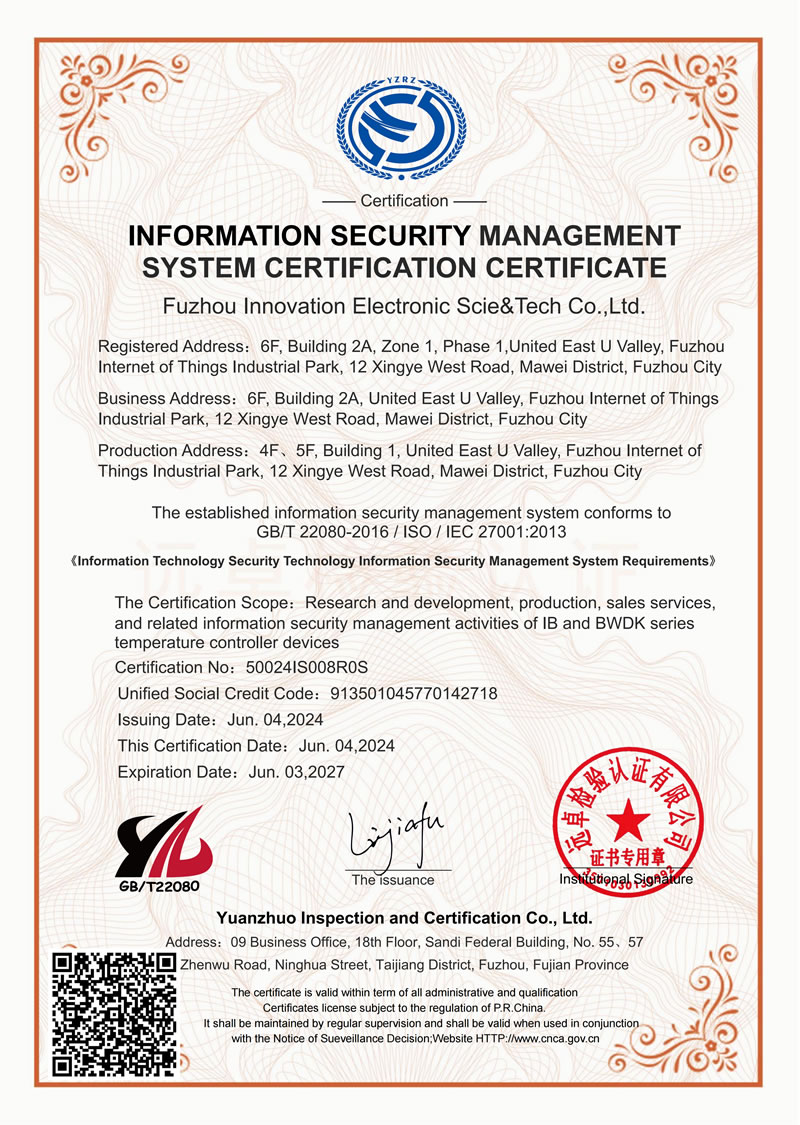
- ISO 9001 Quality Management: Demonstrates that the manufacturer operates under a documented, audited quality system. Request the current certificate with its scope of certification and expiry date.
FJINNO’s full certification portfolio is available at https://www.fjinno.net/certificates.
5.2 Relevant Industry Standards
- IEC 60076-2: Power transformers — Temperature rise for liquid-immersed transformers. Defines hot-spot temperature limits and measurement requirements that fiber optic systems must satisfy.
- IEC 60076-7: Panduan memuatkan untuk transformer kuasa tenggelam minyak. Specifies how hot-spot measurements feed into thermal models for overload management.
- IEC 61850: Communication networks and systems for power utility automation. Relevant if the temperature monitoring system must integrate into a digital substation architecture.
- IEC 60296: Fluids for electrotechnical applications — unused mineral insulating oils. Probe materials must be compatible with transformer oil as defined in this standard.
5.3 How to Write Certification Requirements Into a Procurement Specification
The following language can be copied directly into a technical specification or tender document:
“The fiber optic winding temperature monitoring system shall carry CE marking with supporting Declaration of Conformity, RoHS compliance documentation, and be manufactured under an ISO 9001-certified quality management system. Products shall comply with IEC 60076-2 for measurement accuracy requirements. Communication interfaces shall support Modbus RTU as a minimum; IEC 61850 GOOSE and sampled values integration shall be provided where specified on individual transformer data sheets.”
6. Senarai Semak Penilaian Pembekal
Pasaran untuk fiber optic transformer temperature monitoring systems ranges from established specialist manufacturers to resellers offering white-label products with unknown provenance. Senarai semak berikut membantu jurutera perolehan memisahkan pembekal yang boleh dipercayai daripada mereka yang membawa risiko komersial.
6.1 Keupayaan Teknikal
- Adakah pembekal mengeluarkan hujung probe pendarfluor secara dalaman, atau sumbernya daripada pihak ketiga?
- Bolehkah mereka menyediakan sijil penentukuran yang boleh dikesan untuk setiap sensor?
- Adakah mereka telah mendokumenkan data ujian rendaman minyak (minimum 1,000 jam dalam minyak transformer setiap IEC 60296)?
- Bolehkah mereka membekalkan lukisan pemasangan probe yang berdimensi agar sesuai dengan geometri penggulungan pengeluar pengubah khusus anda?
- Adakah mereka menyokong kiraan saluran tersuai, panjang gentian, dan protokol komunikasi?
6.2 Penghantaran dan Logistik
- Masa utama standard untuk pesanan 10 unit (penanda aras: 4–8 minggu untuk konfigurasi tersuai)
- Ketersediaan stok keselamatan untuk konfigurasi biasa bagi menampung keperluan penggantian segera
- Experience with export documentation for your import jurisdiction
- OEM and ODM capability if you require branded or integrated products
6.3 After-Sales Support
- Warranty period — request a minimum of 24 months on both probe and controller
- Can individual probes be replaced without replacing the complete controller?
- Is English-language technical documentation available (installation manual, Modbus register map, gambar rajah pendawaian)?
- Is remote commissioning support available via video call or TeamViewer?
- What is the escalation path for a warranty claim?
6.4 Ten Questions to Ask Every Shortlisted Supplier
- What is the continuous dielectric isolation voltage of the probe from tip to connector?
- Can you provide an individual calibration certificate for every probe in my order?
- What probe housing material is used, and how was oil compatibility confirmed?
- What is the maximum fiber optic cable length you can supply without signal repeaters?
- What communication protocols does the controller support natively?
- What are your separate warranty terms for the probe versus the controller?
- Can you supply reference contacts at a transformer OEM or utility that has deployed your system at 110 kV or above?
- Can you provide the probe mechanical drawing for review by our transformer manufacturer?
- What is your standard lead time for a 20-unit order, and do you hold buffer stock?
- Do you support third-party factory acceptance testing at your facility?
7. Kesilapan Perolehan Biasa yang Perlu Dielakkan
The following errors appear repeatedly in project post-mortems. Each is preventable at the specification stage.
❌ Mistake 1 — Specifying DTS for winding hot-spot measurement
Distributed temperature sensing systems are appropriate for cable routes and pipelines, not for transformer winding hot spots. The 0.5–2 m spatial resolution of DTS cannot locate a hot spot that occupies a few conductor turns. Specify point-type penderia gentian optik pendarfluor for winding applications.
❌ Mistake 2 — Selecting channel count based on budget rather than measurement strategy
Under-instrumenting a transformer — installing only one probe on a three-phase winding, for example — saves money on day one and creates a significant blind spot. If the hot phase is not monitored, the system gives false comfort. Follow the IEC 60076-2 minimum positions described in Section 4.4.
❌ Mistake 3 — Ignoring communication protocol compatibility
A sensor that arrives on site with only a proprietary ASCII protocol cannot be integrated into a Modbus-based SCADA without a custom gateway. Confirm the exact protocol, register map, and baud rate settings before purchasing. Request a Modbus register map as part of the quotation package.
❌ Mistake 4 — Accepting accuracy claims without calibration evidence
An uncertified ±0.5 °C claim is worth less than a certified ±1 °C claim. For critical protection applications, require per-unit calibration certificates traceable to a national metrology standard.
❌ Mistake 5 — Purchasing from a reseller with no direct access to the manufacturer
If the selling entity cannot answer technical questions about probe construction, oil soak test data, or installation procedure, they are unlikely to support you effectively when a problem arises in service. Verify that your point of contact has direct access to engineering staff at the actual manufacturing facility.
❌ Mistake 6 — Overlooking probe oil compatibility
A probe rated to 260 °C thermally may still fail prematurely if its housing material absorbs transformer oil, membengkak, and delaminates the sensing crystal. Ask specifically whether the probe has been tested in transformer mineral oil per IEC 60296, and for how long.
8. Kajian Kes Dunia Sebenar

8.1 Fluorescent Fiber Optic Temperature Measurement in Oil-Immersed Transformer Windings
FJINNO’s documented case study on fluorescent fiber optic temperature measurement of oil-immersed transformer windings demonstrates how point-type sensors installed during manufacturing provide continuous hot-spot data that feeds directly into the transformer’s thermal protection relay. The installation covers high-voltage, low-voltage, and neutral-point positions, with fiber lengths routed through oil-tight cable glands to an external multi-channel controller.
Key outcomes documented in the case study include detection of a localized cooling obstruction that raised one phase winding 18 °C above the OTI reading — a discrepancy that would have been invisible without direct winding measurement.
8.2 110 kV Hybrid-Insulated Transformer Online Monitoring in Substations
The 110 kV hybrid-insulated oil transformer online monitoring installation case describes integration of a 12-channel fiber optic winding temperature system with the substation’s IEC 61850 seni bina komunikasi. The controller’s Modbus output feeds a protocol gateway, which presents temperature data as IEC 61850 logical nodes to the substation automation system.
This installation illustrates the importance of confirming communication protocol compatibility before procurement — the project required one additional protocol converter that would have been unnecessary had IEC 61850 native support been specified from the outset.
9. Bagaimana Produk FJINNO Sesuai dengan Aplikasi Ini

FJINNO — Fuzhou Innovation Electronic Science & Technology Co., Ltd. — has manufactured penderia suhu gentian optik pendarfluor dan lengkap sistem pemantauan suhu pengubah untuk utiliti kuasa, OEM pengubah, and EPC contractors across more than 20 negara. The product range specifically designed for oil-immersed transformer applications includes:
- Siasatan Suhu Gentian Optik — Standard point-type fluorescent probe, 1–64 saluran, −40 °C hingga +260 °C, ±1 °C, 100 kV isolation, RS485/Modbus RTU, customizable fiber length 0–80 m
- Penderia Suhu Gentian Optik Pendarfluor Berperisai untuk Penggulungan Transformer Direndam Minyak — Mechanically protected probe for installation into energized or factory-wound transformer coils
- Fiber Optic Temperature Sensor for Oil-Immersed Transformer Winding Temperature Measurement — Application-specific configuration with oil-compatible housing materials and matching controller
- Probe Penderia Suhu Gentian Optik Pendarfluor — Multi-probe kits matched to specific transformer winding layouts
- Extension Cable for Fluorescent Fiber Optic Temperature Sensor — Custom-length fiber extension for routing from winding to external controller
- Fiber Optic Temperature Measurement System for Oil-Immersed Transformers — Complete integrated system including controller, kuar, kabel, perkakasan pemasangan, dan perisian
The complete penyelesaian pemantauan suhu pengubah covers system design, probe placement guidance, controller configuration, and SCADA integration support. Procurement teams can view the full transformer monitoring solutions portfolio for an overview of all available configurations.
FJINNO holds CE, RoHS, dan ISO 9001 certifications — all verifiable at https://www.fjinno.net/certificates. The services page details OEM, ODM, reka bentuk tersuai, and technical support offerings.
To request a project-specific configuration and quotation, use the Dapatkan Sebut Harga form or contact the technical sales team directly.
10. Soalan Lazim
S1: What is the difference between an OTI and a winding temperature indicator, and why are both inadequate for hot-spot monitoring?
An OTI (penunjuk suhu minyak) measures the temperature of bulk oil at the transformer tank top — a value that lags actual winding temperature by up to 40 °C under transient load. A WTI (penunjuk suhu penggulungan) improves on this by adding a simulated thermal image driven by load current, but the result is still a calculation, not a measurement. Both instruments assume uniform thermal behavior that deviates significantly under non-standard loading, cooling system faults, or harmonic distortion. Langsung penderia suhu penggulungan gentian optik measure actual conductor temperatures at defined positions, eliminating estimation error entirely.
S2: Can a fluorescent fiber optic sensor be installed in an existing transformer without draining the oil?
Retrofit installation without full oil drain is possible in transformers equipped with suitable access ports — oil-fill valves, drain ports, or purpose-installed oil-tight cable glands. The probe is inserted through the port using a flexible guide tube and positioned at the target winding location. Measurement accuracy with retrofit probes is slightly lower than factory-installed probes because exact probe-to-conductor contact cannot be guaranteed, but the reading still substantially outperforms OTI/WTI estimation. Contact FJINNO’s technical team for guidance specific to your transformer type.
S3: How many measurement channels does a typical 40 MVA power transformer require?
A 40 MVA three-phase two-winding transformer typically warrants 6 channels as a minimum: one probe at the top of each HV phase winding and one at the top of each LV phase winding. Adding probes at the winding bottoms increases the count to 12 tetapi menyediakan profil terma lengkap yang menyokong pengiraan pemuatan dinamik bagi setiap IEC 60076-7. Kiraan saluran optimum bergantung pada kelas voltan pengubah, kritikal, dan sama ada sistem menyuap model terma atau fungsi penggera mudah.
S4: Apa yang boleh “100 pengasingan dielektrik kV” bermakna dari segi praktikal?
Ini bermakna gentian kuarza dan perumahan probe tidak menunjukkan laluan konduktif antara titik pengukuran (di dalam belitan pengubah hidup) dan elektronik pemprosesan isyarat dalam pengawal. The 100 Angka kV ialah voltan tahan yang diuji pada pemasangan lengkap probe-to-controller. Dalam amalan, ini membolehkan kuar diletakkan dalam hubungan langsung dengan konduktor hidup dalam transformer yang dinilai sehingga 220 kV tanpa sebarang risiko kebocoran arus, kesalahan tanah, atau herotan medan elektrik di lokasi siasatan.
S5: Is fluorescent fiber optic sensing affected by transformer oil aging or contamination?
The fluorescent crystal at the probe tip is hermetically sealed inside its housing and does not contact the oil directly. The quartz fiber transmission characteristics are also unaffected by external media. Long-term oil aging or contamination therefore does not degrade sensor accuracy. The probe housing material must be compatible with transformer oil per IEC 60296 — FJINNO specifies oil-compatible materials for all transformer probe variants and conducts immersion testing to verify long-term compatibility.
S6: Can the fiber optic temperature monitoring system integrate with an IEC 61850 sistem automasi pencawang?
FJINNO controllers provide native RS485/Modbus RTU output. Integration into IEC 61850 architectures is achieved via a Modbus-to-IEC 61850 protocol gateway, which presents temperature data as logical nodes within the substation’s communication infrastructure. Where IEC 61850 native support is required without an external gateway, discuss this requirement explicitly with FJINNO’s technical team at the specification stage.
S7: How long do fiber optic probes last inside transformer oil?
Fluorescent fiber optic probes designed for oil-immersed applications are rated for service lives aligned with transformer overhaul intervals — typically 20–25 years. The optical measurement principle has no wear mechanism, and the quartz fiber does not degrade in transformer oil. The main life-limiting factor is mechanical integrity of the probe housing and fiber routing under thermal cycling. Correct installation practice — avoiding sharp bends in the fiber and protecting the cable exit from abrasion — is the primary determinant of service life.
S8: What information should be included in a Request for Quotation (RFQ) for a fiber optic transformer temperature monitoring system?
A well-structured RFQ should include: transformer rating (MVA, kelas voltan, number of windings), number of probes required and their target installation positions, required fiber length from winding to controller, controller mounting location and available power supply, communication protocol required (Modbus RTU, 4–20 mA, IEC 61850), accuracy and range requirements, environmental conditions at the controller location (suhu, kelembapan, IP class), relevant certifications (CE, RoHS, dll.), and order quantity. The more detail provided, the more accurate and comparable the quotations received will be.
S9: Is there a risk of the probe affecting transformer winding insulation?
Tidak, when correctly specified and installed. The probe tip is a small-diameter, all-dielectric element. It introduces no metallic conductor into the winding insulation structure and no electric field distortion. The probe housing materials are selected for compatibility with the winding insulation system (paper/oil for oil-immersed transformers, epoxy-resin for dry-type). FJINNO coordinates with transformer OEMs to confirm probe geometry and material compatibility before supply.
S10: What after-sales support does FJINNO provide for transformer fiber optic monitoring systems?
FJINNO after-sales services termasuk: detailed installation and commissioning documentation, Modbus register maps and wiring diagrams, remote commissioning support via video call, troubleshooting diagnostics, warranty replacement for faulty components, and technical consultation throughout the product lifecycle. For large installations, on-site commissioning support can be arranged. Contact the technical support team for project-specific arrangements.
Penafian
The information contained in this article is provided for general guidance purposes only and reflects the state of knowledge and product specifications available at the time of writing. Spesifikasi teknikal, product configurations, pensijilan, and service terms are subject to change without notice as part of ongoing product development. Actual product performance in any specific application depends on correct product selection, proper installation, appropriate system configuration, and operating conditions consistent with the product’s rated environment.
Nothing in this article constitutes professional engineering advice, a binding product warranty, or a contractual commitment. All specifications must be confirmed through formal quotation and purchase order documentation before reliance in design or procurement decisions. Compliance with applicable local codes, piawaian, and regulatory requirements remains the sole responsibility of the purchaser and installer.
FJINNO (Fuzhou Innovation Electronic Science & Technology Co., Ltd.) reserves the right to modify product specifications and discontinue models at any time. For current specifications and availability, kenalan https://www.fjinno.net/contact or submit an enquiry via https://www.fjinno.net/get-a-quote/.
Third-party standards referenced in this article (IEC 60076-2, IEC 60076-7, IEC 61850, IEC 60296, dll.) are the property of their respective issuing bodies. Readers should consult the current versions of those standards directly for authoritative technical requirements.

Sensor suhu gentian optik, Sistem pemantauan pintar, Pengeluar gentian optik yang diedarkan di China
 |
 |
 |