 Penderia suhu gentian optik INNO ,sistem pemantauan suhu.
- Fluorescence fiber optic temperature sensing works by measuring how fast a phosphor material stops glowing after a light pulse — the cooler the target, the slower the glow fades; the hotter it gets, the faster it fades.
- This time-based measurement principle is inherently immune to signal loss from fiber bending, penuaan penyambung, or light source degradation — giving buyers long-term accuracy without frequent recalibration.
- Three mainstream fiber optic temperature technologies exist: seumur hidup pendarfluor, Kisi Fiber Bragg (FBG), dan Raman berselerak. Each serves different project requirements, and choosing the wrong one is a costly mistake.
- This article explains the fluorescence mechanism in plain business language, compares it with alternative fiber optic approaches, dan menunjukkan profesional perolehan dengan tepat apa yang perlu disahkan pada lembaran data pembekal sebelum membuat pesanan.
- Diterbitkan oleh FJINNO, pengeluar termometri gentian optik pendarfluor sejak 2011, panduan ini membantu pembeli B2B membuat keputusan pembelian berdasarkan teknologi dengan yakin.
Jadual Kandungan
- Mengapa Profesional Perolehan Perlu Memahami Teknologi Asas
- Prinsip Pereputan Pendarfluor — Diterangkan Tanpa Jargon Fizik
- Mengapa Pengukuran Berasaskan Masa Mengatasi Pengukuran Berasaskan Intensiti
- Tiga Pembeli Teknologi Suhu Gentian Optik Akan Ditemui
- Penderiaan Sepanjang Hayat Pendarfluor lwn. Kisi Fiber Bragg (FBG)
- Penderiaan Sepanjang Hayat Pendarfluor lwn. Raman Distributed Temperature Sensing
- Apabila Pendarfluor Adalah Pemenang Jelas — Dan Apabila Ia Tidak
- Cara Membaca Lembaran Data Sensor Suhu Gentian Optik
- Lima Bendera Merah yang Mendedahkan Pembekal yang Lemah
- Memadankan Teknologi yang Tepat dengan Skop Projek Anda
- Real-World Deployment Scenarios Where Fluorescence Sensing Delivers
- Soalan Pasukan Kejuruteraan Anda Perlu Tanya Sebelum Anda Menandatangani
- Soalan Lazim (Soalan Lazim)
1. Mengapa Profesional Perolehan Perlu Memahami Teknologi Asas

Jika anda mencari sumber a sistem pengukuran suhu gentian optik, anda akan menghadapi pelbagai teknologi yang bersaing — semuanya dipasarkan di bawah nama yang serupa bunyinya. Pembekal yang menawarkan sistem berasaskan pendarfluor, sistem FBG, dan sistem Raman masing-masing akan menuntut prestasi unggul, dan lembaran data mereka akan kelihatan sama pada pandangan pertama. Tanpa pemahaman yang berkesan tentang bagaimana setiap teknologi berfungsi, pasukan perolehan berisiko memilih sistem yang secara teknikalnya tidak sepadan dengan persekitaran projek, membayar lebih untuk keupayaan yang mereka tidak perlukan, atau kurang menentukan sistem yang gagal dalam bidang.
Artikel ini tidak ditulis untuk penyelidik makmal. Ia ditulis untuk pembeli projek, jurutera perolehan, dan pengurus penyumberan yang perlu cukup memahami tentang fluorescence optical fiber temperature sensing to evaluate supplier proposals critically, ask the right questions, and avoid expensive mistakes.
2. Prinsip Pereputan Pendarfluor — Diterangkan Tanpa Jargon Fizik

At the tip of every probe suhu gentian optik pendarfluor, there is a tiny piece of phosphor material — a substance that glows briefly when hit with light. The measurement process works in three simple steps.
Step One: A Pulse of Light Travels Down the Fiber
The demodulator (the main instrument) sends a very short flash of light through the optical fiber cable to the probe tip. This is similar to a camera flash — it is on for a fraction of a second and then off.
Step Two: The Phosphor Glows and Then Fades
When the light pulse hits the phosphor, the phosphor absorbs the energy and begins to glow (pendarfluor). The moment the light pulse stops, the phosphor does not go dark instantly — it fades gradually, like the afterglow of a light bulb after you switch it off.
Step Three: The Fade Speed Tells You the Temperature
Here is the key insight: the speed at which the glow fades is directly linked to temperature. Pada suhu yang lebih rendah, the glow fades slowly. Pada suhu yang lebih tinggi, it fades quickly. The demodulator measures this fade speed — technically called the fluorescence decay lifetime — and converts it into a precise temperature reading.
Why Should a Buyer Care About This?
Because the measurement depends on timing (how fast the glow fades), not on how bright the glow is. This distinction has enormous practical consequences. If the fiber cable gets bent, a connector gets dirty, atau sumber cahaya menjadi lemah sedikit selama bertahun-tahun perkhidmatan, kecerahan isyarat kembali mungkin berkurangan — tetapi kelajuan pudar kekal tidak berubah. Ini bermakna a pendarfluor penderia suhu gentian optik seumur hidup kekal tepat tahun demi tahun tanpa penentukuran semula, walaupun laluan optik merosot secara semula jadi dengan usia.
3. Mengapa Pengukuran Berasaskan Masa Mengatasi Pengukuran Berasaskan Intensiti
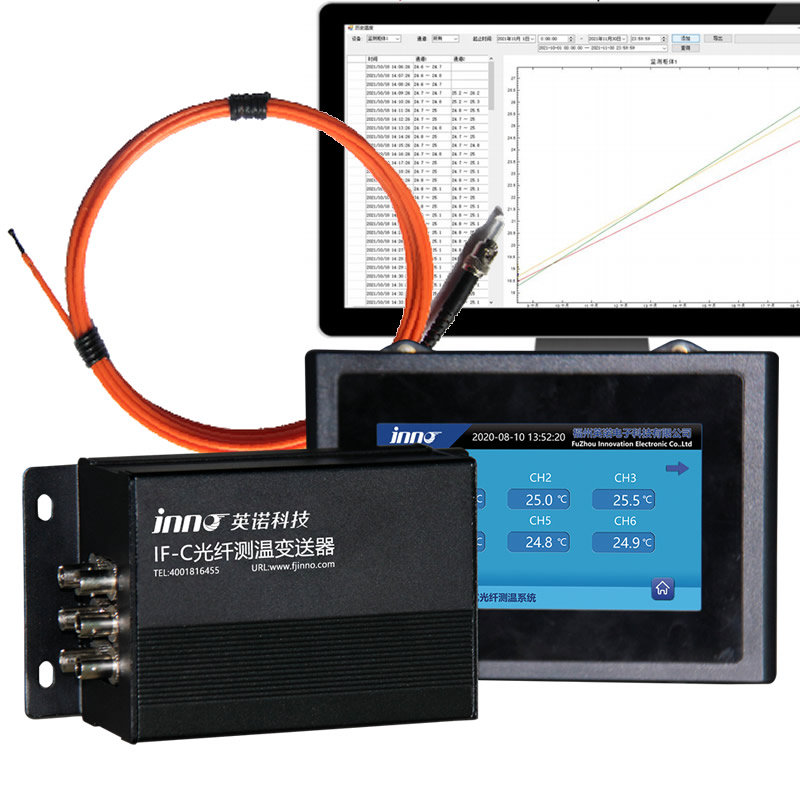
Beberapa sistem suhu gentian optik yang lebih lama atau kos rendah mengukur suhu dengan melihat kecerahan (keamatan) daripada pendarfluor dan bukannya kelajuan pereputannya. Pendekatan ini lebih mudah dan lebih murah untuk dibina, tetapi ia memperkenalkan kelemahan asas: apa-apa yang mengurangkan kecerahan isyarat — lenturan gentian, penyambung kotor, kabel panjang berjalan, atau penuaan LED — disalahtafsirkan sebagai perubahan suhu.
Untuk pembeli B2B, perbezaan praktikal adalah ketara. An intensity-based fiber optic temperature sensor may require recalibration every 6–12 months and is prone to false readings if the installation is disturbed during maintenance. A fluorescence decay lifetime sensor typically holds its calibration for 2–3 years or more and is virtually unaffected by routine disturbances to the fiber path. When evaluating supplier proposals, always confirm whether the system uses lifetime-based or intensity-based measurement. This single question can separate a reliable long-term investment from a maintenance headache.
4. Tiga Pembeli Teknologi Suhu Gentian Optik Akan Ditemui
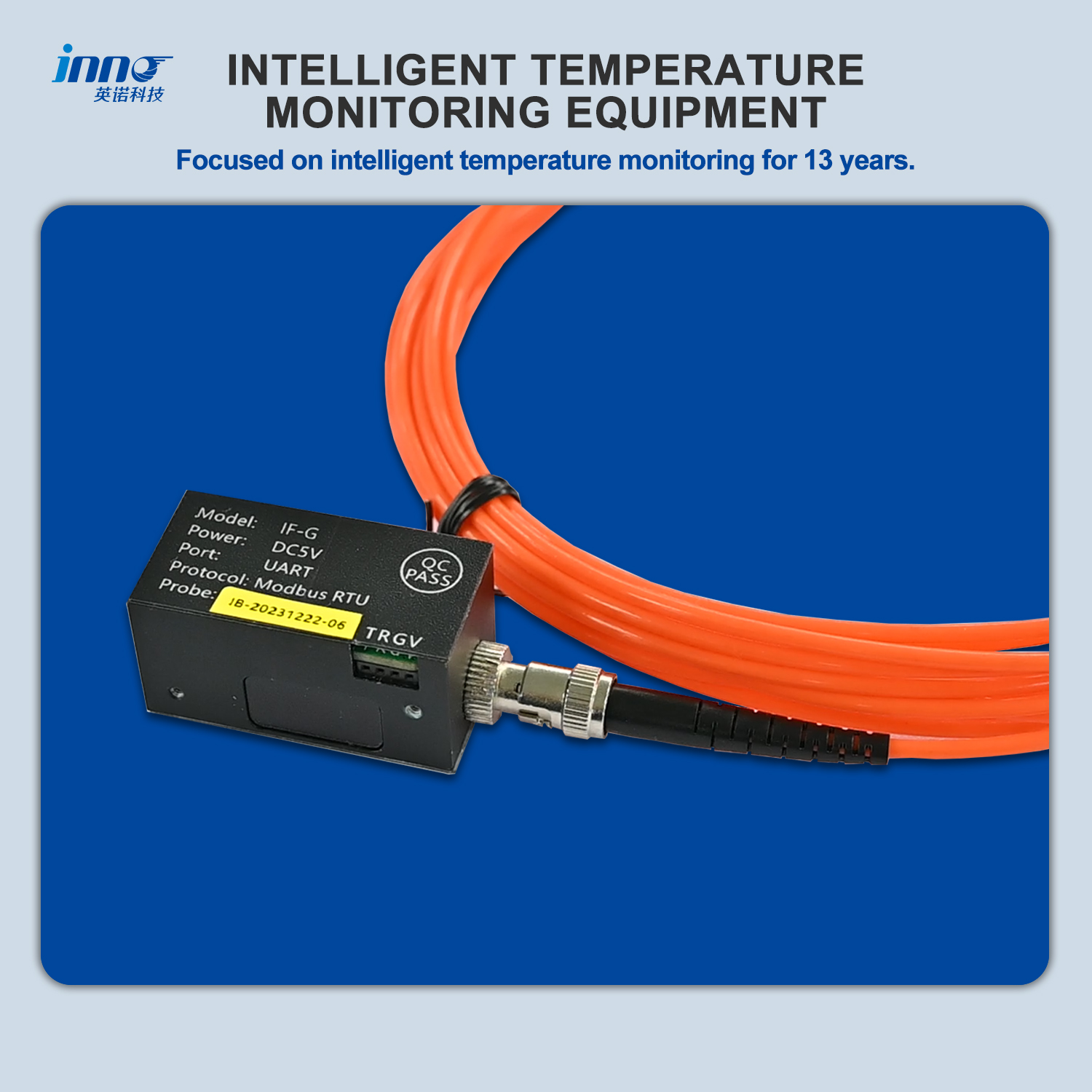
When sourcing optical fiber temperature measurement systems, procurement teams will encounter three mainstream technologies. Each has a fundamentally different operating principle, and each is optimized for a different type of project.
Fluorescence Lifetime Sensing
Point-measurement technology. Each probe measures temperature at one specific location. Ideal for monitoring discrete hotspots on transformers, kenalan suis, battery cells, dan belitan motor. Memberikan ketepatan yang tinggi (±1 °C), respon pantas (bawah 1 kedua), dan pengasingan elektrik yang lengkap.
Kisi Fiber Bragg (FBG) Penderiaan
Quasi-distributed technology. Multiple sensing points (gratings) are written into a single fiber, allowing dozens of measurement points along one cable. Commonly used for structural health monitoring of bridges, saluran paip, and large civil structures. Less commonly used for high-voltage electrical equipment because FBG fibers can be sensitive to strain and require wavelength-stable interrogators.
Raman Distributed Temperature Sensing (DTS)

Fully distributed technology. Measures temperature continuously along the entire length of a fiber — potentially covering kilometers. Used for pipeline leak detection, fire detection in tunnels, dan keselamatan perimeter. Accuracy is lower than point sensors (typically ±1–2 °C), and spatial resolution is measured in meters rather than millimeters.
5. Penderiaan Sepanjang Hayat Pendarfluor lwn. Kisi Fiber Bragg (FBG)
B2B buyers sometimes receive competing proposals from penderia gentian optik pendarfluor suppliers and Penderia FBG suppliers for the same project. Understanding the fundamental differences helps you evaluate whether the proposed technology is appropriate.
Pengasingan Elektrik
A probe suhu gentian optik pendarfluor is completely passive at the sensing point — only light reaches the probe tip. FBG sensors are also passive, but the interrogator typically requires a broadband light source and high-resolution spectrometer, making the demodulation hardware more complex and expensive.
Sensitivity to Strain
FBG sensors are inherently sensitive to both temperature and mechanical strain. If the fiber is stretched or compressed — common in vibrating environments like motor windings or transformer tanks — the strain signal mixes with the temperature signal, introducing errors. Fluorescence sensors measure only temperature and are unaffected by mechanical strain on the fiber.
Cost per Measurement Point
For projects with fewer than 20–30 measurement points concentrated in a small area, sistem berasaskan pendarfluor are typically more cost-effective. FBG systems become competitive when a project requires 50 or more measurement points distributed along a single long fiber run.
Buyer Takeaway
If your project involves high-voltage equipment, strong EMI, getaran, or a moderate number of discrete hotspot locations, fluorescence is almost always the better fit. If your project involves measuring temperature profiles along very long structures, FBG or Raman may be more appropriate.
6. Penderiaan Sepanjang Hayat Pendarfluor lwn. Raman Distributed Temperature Sensing

Raman DTS and fluorescence point sensors are complementary rather than competing technologies in many cases. Namun begitu, some suppliers position Raman DTS as a replacement for fluorescence sensing, which can lead to poor project outcomes.
Precision vs. Liputan
A fluorescence fiber optic thermometer delivers ±1 °C accuracy at a specific point. A Raman DTS system delivers ±1–2 °C accuracy averaged over a spatial resolution window of 0.5–2 meters. For detecting a hotspot on a single busbar bolt or a specific battery cell, Raman resolution is far too coarse.
Masa Tindak Balas
Fluorescence sensors respond in under 1 kedua. Raman DTS systems typically require 30 seconds to several minutes of signal averaging to achieve acceptable accuracy, making them unsuitable for applications where temperature changes rapidly.
System Complexity and Cost
Raman DTS interrogators are significantly more expensive than fluorescence demodulators and require specialized fiber installation over long distances. For localized monitoring tasks, a sistem pengukuran suhu gentian optik pendarfluor delivers superior performance at a fraction of the cost.
7. Apabila Pendarfluor Adalah Pemenang Jelas — Dan Apabila Ia Tidak
No technology is perfect for every application. Honest guidance helps buyers avoid both over-engineering and under-engineering their monitoring systems.
Fluorescence Is the Clear Winner When:
The project requires high-accuracy point measurement (±1 °C or better) in environments with strong electromagnetic interference, voltan tinggi, explosion risk, or confined spaces. Typical examples include transformer winding hotspot monitoring, switchgear contact temperature sensing, battery cell thermal monitoring, dan cable joint temperature measurement.
Fluorescence May Not Be the Best Fit When:
The project requires continuous temperature profiling over distances exceeding several hundred meters (Raman DTS is better), or when more than 100 sensing points are needed along a single linear structure (FBG may be more economical). Recognizing these boundaries demonstrates supplier honesty and helps buyers trust the recommendation.
8. Cara Membaca Lembaran Data Sensor Suhu Gentian Optik

Supplier datasheets are the primary tool for comparing products, but not all datasheets present information in the same way. Here are the key specifications to focus on and what they mean for your project.
Julat Pengukuran
Typically –40 °C to +260 °C for standard probe gentian optik pendarfluor. Sahkan bahawa julat yang dinyatakan meliputi keadaan operasi terburuk anda dengan margin. Sesetengah pembekal memetik julat teori bahan fosfor berbanding julat sistem yang diuji — sentiasa meminta spesifikasi peringkat sistem.
Ketepatan dan Resolusi
Ketepatan (±1 °C) memberitahu anda betapa hampir bacaannya dengan suhu sebenar. Resolusi (0.1 °C) memberitahu anda perubahan terkecil yang boleh dikesan oleh sistem. Kedua-duanya penting, tetapi ketepatan ialah spesifikasi yang mempengaruhi keputusan kawalan proses anda. Tanya sama ada ketepatan yang dinyatakan digunakan pada julat suhu penuh atau hanya pada satu titik penentukuran.
Masa Tindak Balas
Ditakrifkan sebagai masa untuk mencapai 90% perubahan suhu langkah. Untuk kebanyakan penderiaan suhu gentian optik pendarfluor, ini di bawah 1 kedua. Berhati-hati dengan lembaran data yang memetik masa tindak balas tanpa menyatakan keadaan pengukuran (di udara, dalam minyak, or in contact with metal).
Maximum Fiber Length
The distance from the demodulator to the farthest probe. Standard is 30–80 meters. If your installation requires longer runs, confirm performance specifications at the actual required distance, not just the maximum rated distance.
Kiraan Saluran
How many independent temperature points one demodulator can monitor simultaneously — usually 1 kepada 64. This directly affects your per-point cost and rack space requirements.
9. Lima Bendera Merah yang Mendedahkan Pembekal yang Lemah
After evaluating hundreds of sourcing interactions in the sensor suhu gentian optik pasaran, certain patterns consistently indicate suppliers who may underdeliver.
Red Flag 1: No In-House Manufacturing
If the supplier is a trading company reselling another manufacturer’s product, you lose direct access to technical support, penyesuaian, and quality accountability. Always ask whether the supplier manufactures the demodulator, the probes, atau kedua-duanya.
Red Flag 2: Vague Accuracy Claims
Statements like “ketepatan yang tinggi” atau “pengukuran yang tepat” without a specific ±value at a defined temperature range are meaningless. Reputable manufacturers publish tested accuracy figures with calibration traceability.
Red Flag 3: No Reference Projects in Your Industry
A supplier who has never deployed a sistem pemantauan suhu gentian optik pendarfluor in your specific application (kuasa, simpanan tenaga, perindustrian) may not understand the installation constraints and environmental requirements unique to your sector.
Red Flag 4: No Customization Capability
Every project has slightly different probe length, sheath material, cable routing, and communication protocol requirements. Suppliers offering only fixed catalog configurations may force you to compromise on installation quality.
Red Flag 5: No After-Sales Engineering Support
Temperature monitoring systems require occasional technical support — commissioning assistance, protocol configuration, and calibration verification. If the supplier cannot provide remote engineering support in your language and time zone, post-purchase problems become your problem alone.
10. Memadankan Teknologi yang Tepat dengan Skop Projek Anda
The most common procurement mistake is selecting a technology before fully defining the project requirements. Before requesting quotations for a sistem pengukuran suhu gentian optik, your project team should clearly define the number of discrete measurement points required, the physical distance between the farthest sensor and the monitoring room, the environmental conditions at the sensing location (suhu melampau, EMI level, kelas voltan, pendedahan kimia), the required communication protocol for integration with existing SCADA or DCS, and whether the installation is new-build or retrofit. Providing these details in your RFQ ensures that suppliers propose the correct technology — fluorescence, FBG, or Raman — rather than defaulting to whatever product they happen to sell.
11. Real-World Deployment Scenarios Where Fluorescence Sensing Delivers
Sains Elektronik Inovasi Fuzhou&Tech Co., Ltd. (FJINNO) has been manufacturing fluorescence optical fiber thermometry systems sejak 2011. Over more than a decade of project delivery, certain deployment scenarios have consistently demonstrated the strongest return on investment for B2B buyers.
Pengubah Kuasa
Probe suhu gentian optik embedded in transformer windings during manufacturing provide direct hotspot temperature data that oil-top thermometers and thermal imaging cannot replicate. This data enables load optimization and prevents insulation degradation.
Sederhana- and High-Voltage Switchgear
Continuous contact temperature monitoring with penderia gentian optik pendarfluor detects progressive resistance increases at busbar joints months before thermal failure occurs, allowing planned maintenance instead of emergency shutdowns.
Lithium-Ion Battery Energy Storage
Cell-level thermal monitoring with electrically passive probe suhu gentian optik provides the safety-critical data needed to detect thermal runaway precursors without introducing ignition risk into the battery enclosure.
Industrial Motors and Generators
Stator winding temperature monitoring in large rotating machines operating near variable-frequency drives, where EMI renders conventional sensors unreliable.
12. Soalan Pasukan Kejuruteraan Anda Perlu Tanya Sebelum Anda Menandatangani
Before finalizing a purchase order for a sistem pengesan suhu gentian optik pendarfluor, procurement professionals should ensure their engineering team has confirmed answers to these critical questions: Does the supplier use fluorescence lifetime or fluorescence intensity measurement — and can they explain the difference? What is the system-level accuracy across the full operating temperature range, not just at a single calibration point? What is the expected probe lifespan under your specific operating conditions? Can the demodulator firmware be updated in the field, or must the unit be returned to the factory? What warranty terms apply to the probes, the demodulator, and the fiber cables separately? Mengumpul jawapan ini sebelum pelaksanaan kontrak menghalang pertikaian dan memastikan sistem yang dihantar sepadan dengan jangkaan teknikal anda.
13. Soalan Lazim (Soalan Lazim)
S1: Apakah itu seumur hidup pereputan pendarfluor, dan mengapa ia penting untuk pengukuran suhu?
Hayat pereputan pendarfluor ialah masa yang diperlukan untuk cahaya fosfor pada hujung probe menjadi pudar selepas denyutan cahaya. Masa pudar ini boleh diramalkan berubah mengikut suhu, membentuk asas pengukuran. Kerana ia bergantung pada masa dan bukannya kecerahan, bacaan adalah kebal terhadap kehilangan isyarat daripada penuaan serat, membongkok, atau penyambung kotor — itulah sebabnya a pendarfluor penderia gentian optik seumur hidup memegang penentukuran jauh lebih lama daripada alternatif berasaskan intensiti.
S2: Apakah perbezaan antara penderiaan gentian pendarfluor dan penderiaan gentian FBG?
Penderiaan gentian optik pendarfluor measures temperature at a discrete point using the phosphor decay principle and is immune to mechanical strain. FBG sensing uses wavelength shifts in laser light reflected by gratings written into the fiber and is sensitive to both temperature and strain. For high-voltage hotspot monitoring, fluorescence is generally preferred.
S3: Can a fluorescence system and a Raman DTS system be used together on the same project?
ya. Many large-scale projects use Raman DTS for distributed cable or pipeline monitoring over long distances and fluorescence point sensors for precise hotspot monitoring on specific equipment. Kedua-dua teknologi ini adalah saling melengkapi.
S4: How do I know if a supplier’s datasheet accuracy claim is trustworthy?
Ask for third-party calibration certificates traceable to national metrology standards. Reputable manufacturers of sistem pengukuran suhu gentian optik provide calibration reports showing tested accuracy at multiple temperature points across the full rated range.
S5: What phosphor materials are used in fluorescence fiber optic probes?
The most common phosphor materials are rare-earth doped compounds and GaAs (gallium arsenide) semiconductors. Rare-earth phosphors are widely used for industrial temperature ranges (–40 °C to +260 °C), while GaAs probes are used for some specialized applications. Your supplier should be able to specify which material their probes use.
S6: Is a fluorescence fiber optic system difficult for our maintenance team to operate?
Tidak. Once installed and commissioned, a sistem pemantauan suhu gentian optik pendarfluor operates autonomously. The demodulator outputs readings via standard protocols (Modbus, 4–20 mA) to your existing control system. Routine maintenance involves periodic visual inspection of fiber cables and occasional calibration verification — no specialized optical skills are required.
S7: How many measurement channels do we need?
This depends entirely on how many discrete temperature points your project requires. bujang penyahmodulasi suhu gentian optik menyokong 1 kepada 64 saluran. For projects with more than 64 mata, multiple demodulators can be networked together on a shared communication bus.
S8: Can fluorescence probes be installed in oil-filled transformers?
ya. Fluorescence fiber optic temperature probes designed for transformer applications are oil-compatible and chemically inert. They are typically installed during transformer manufacturing, embedded directly in the winding structure. Retrofit installation on existing transformers is also possible in some configurations.
S9: What happens if a fiber cable is accidentally damaged?
A damaged fiber cable will cause the affected channel to lose signal, which the demodulator reports as a fault alarm. The demodulator and all other channels continue operating normally. The damaged cable and probe can be replaced individually without affecting the rest of the system.
S10: How do I start a conversation with FJINNO about my project?
Kenalan Sains Elektronik Inovasi Fuzhou&Tech Co., Ltd. (FJINNO) by email at web@fjinno.net, by WhatsApp or phone at +86 135 9907 0393, or through the company website at www.fjinno.net. Share your project scope, measurement point count, and operating environment, and the engineering team will provide a technology recommendation and budgetary proposal at no cost.
About the Manufacturer
Sains Elektronik Inovasi Fuzhou&Tech Co., Ltd. (FJINNO) has been designing and manufacturing fluorescence optical fiber thermometry systems sejak 2011. The company serves B2B customers across the power utility, simpanan tenaga, tenaga boleh diperbaharui, and industrial manufacturing sectors in more than 30 negara.
Alamat: Liandong U Grain Networking Industrial Park, No.12 Xingye West Road, Fuzhou, Fujian, China
E-mel: web@fjinno.net
WhatsApp / WeChat / telefon: +86 135 9907 0393
QQ: 3408968340
laman web: www.fjinno.net
Penafian: Maklumat yang diberikan dalam artikel ini adalah untuk tujuan maklumat umum dan pendidikan sahaja. While Fuzhou Innovation Electronic Scie&Tech Co., Ltd. (FJINNO) makes every effort to ensure the accuracy and completeness of the content, no representation or warranty, tersurat atau tersirat, is made regarding the accuracy, kebolehpercayaan, or completeness of the information. Spesifikasi produk, technology comparisons, and application suitability may vary depending on specific project conditions. This content does not constitute professional engineering advice. Buyers should conduct independent due diligence and consult directly with FJINNO or qualified engineers before making procurement decisions. FJINNO shall not be liable for any loss or damage arising from reliance on the information presented herein.

Sensor suhu gentian optik, Sistem pemantauan pintar, Pengeluar gentian optik yang diedarkan di China
 |
 |
 |