 Penderia suhu gentian optik INNO ,sistem pemantauan suhu.
- Sistem pemantauan suhu gentian optik memberikan ketepatan ±1°C dengan pengukuran sentuhan terus, menghapuskan ralat emisitiviti yang membelenggu kaedah pengesanan inframerah
- Penderia gentian berasaskan pendarfluor menawarkan imuniti elektromagnet yang lengkap, menjadikannya sesuai untuk persekitaran pengubah voltan tinggi di mana peranti inframerah mengalami gangguan
- Berterusan 24/7 pemantauan dalam talian melalui sistem gentian optik mengesan kerosakan terma berlaku beberapa minggu sebelum pemeriksaan inframerah berkala dapat mengenal pastinya
- Penderia gentian optik mengakses komponen pengubah dalaman termasuk titik panas berliku dan suhu minyak yang kekal tidak dapat dilihat oleh kamera inframerah luaran
- Sokongan konfigurasi gentian optik berbilang titik 1-64 saluran pengukuran serentak, membolehkan pemetaan terma menyeluruh merentas belitan pengubah dan litar minyak
- Teknologi gentian optik menyampaikan 25+ year service life without calibration requirements, while infrared equipment needs annual recalibration and maintenance
- All-dielectric fiber construction withstands voltage exposures exceeding 100kV, ensuring safe operation in proximity to energized transformer components
- Real-time fiber optic monitoring systems integrate seamlessly with SCADA networks through RS485 interfaces for centralized fault detection and predictive maintenance
- Infrared thermography serves as a valuable complementary technology for external surface surveys but cannot replace embedded fiber optic sensing for critical measurements
- Professional manufacturers like FJINNO deliver complete fluorescence fiber monitoring solutions with proven reliability in demanding power system applications since 2011
1. Why Does Accurate Temperature Monitoring Matter for Transformer Reliability?

Thermal Stress as Primary Cause of Transformer Failures
Temperature elevation represents the most critical factor affecting transformer winding insulation degradation and operational lifespan. Research demonstrates that every 8-10°C increase in operating temperature halves the expected service life of cellulose insulation materials. Sistem pemantauan suhu penggulungan provide essential data for preventing thermal runaway conditions that lead to catastrophic failures.
Excessive heat generation in belitan transformer stems from multiple sources including resistive losses in conductors, pemanasan arus pusar, and localized hot spots caused by circulating currents or poor cooling circulation. Without accurate sistem pengukuran suhu, these thermal anomalies progress undetected until insulation breakdown occurs. Profesional penyelesaian pemantauan gentian optik daripada pengeluar seperti FJINNO enable early detection of developing thermal problems.
Oil Temperature Management and Insulation Protection
Suhu minyak pengubah serves dual functions as both cooling medium and electrical insulation. Elevated oil temperatures accelerate oxidation processes, producing acidic compounds that attack cellulose insulation and metallic components. Pemantauan suhu minyak provides critical data for assessing cooling system performance and identifying circulation problems.
Hot Spot Temperature and Insulation Aging
The hottest point within belitan transformer, typically located in upper disk sections where cooling is least effective, determines insulation aging rate. International standards including IEEE C57.91 and IEC 60076-7 recognize hot spot temperature as the fundamental parameter for transformer loading calculations and life expectancy assessments. tepat pemantauan tempat panas requires direct measurement through embedded sensors rather than indirect calculation methods.
Regulatory Standards and Grid Reliability Requirements
Modern power system operators demand comprehensive pemantauan transformer to ensure grid stability and minimize unplanned outages. Regulatory frameworks increasingly mandate online temperature monitoring systems for critical transmission transformers. Pilihan antara gentian optik dan infrared monitoring technologies significantly impacts compliance capability and operational reliability.
2. What Are the Fundamental Principles Behind Fiber Optic Temperature Sensing Technology?

Fluorescence-Based Temperature Measurement Physics
Penderia suhu gentian optik pendarfluor utilize rare-earth phosphor materials exhibiting temperature-dependent luminescence decay characteristics. When excited by a brief optical pulse, these phosphor compounds emit fluorescence that decays exponentially with a time constant directly related to absolute temperature. This measurement principle operates independently of light intensity, kehilangan serat, atau variasi penyambung.
The penyahmodulasi gentian optik transmits excitation light pulses through the fluorescence fiber cable to the sensor probe, captures returning fluorescence emissions, and precisely measures decay time using high-speed photodetectors and digital signal processing. Advanced algorithms extract accurate temperature values across the full -40°C to 260°C operating range with ±1°C precision.
Point-Type Sensor Configuration and Specifications
Fluorescence fiber sensors employ point-type configurations enabling precise localized temperature measurement at specific critical locations within belitan transformer and oil circuits. Key technical specifications include:
| Parameter | Spesifikasi | Kelebihan |
|---|---|---|
| Ketepatan Pengukuran | ±1°C | Eliminates emissivity uncertainty |
| Julat Suhu | -40°C hingga 260°C | Meliputi semua keadaan operasi pengubah |
| Masa Tindak Balas | <1 kedua | Captures transient thermal events |
| Diameter Probe | 2-3mm | Minimally invasive installation |
| Panjang gentian | 0-80 meter | Flexible installation routing |
| Kekuatan Dielektrik | >100kV | Safe operation in HV environments |
| Hayat Perkhidmatan | >25 tahun | Matches transformer operational lifetime |
Multi-Channel Monitoring System Architecture
Sistem pemantauan suhu gentian optik support scalable multi-channel configurations accommodating 1 kepada 64 individu saluran sensor from a single unit penyahmodulasi. Time-division multiplexing or wavelength-division multiplexing techniques enable sequential interrogation of multiple sensors, menyediakan menyeluruh pemetaan haba seberang belitan transformer, oil circuits, dan sistem penyejukan.
Communication and Integration Capabilities
moden peralatan pemantauan gentian optik incorporates RS485 communication interfaces supporting Modbus protocol for integration with SCADA systems and substation automation networks. Monitoring software platforms provide real-time data visualization, trend sejarah, automatik membimbangkan, dan keupayaan capaian jauh. Professional systems from FJINNO include comprehensive software packages supporting multi-site management and predictive analytics.
3. How Does Infrared Temperature Measurement Technology Work in Transformer Applications?
Thermal Radiation Detection Principles
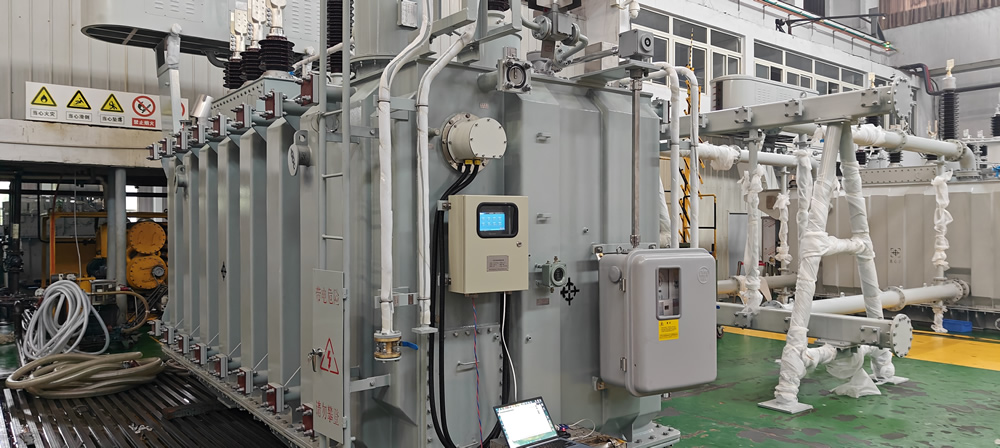
Pengukuran suhu inframerah operates on the principle that all objects emit electromagnetic radiation proportional to their absolute temperature according to the Stefan-Boltzmann law. Infrared thermography devices detect this thermal radiation using semiconductor sensors sensitive to wavelengths in the 8-14 micrometer range, converting radiant energy into temperature readings.
The fundamental challenge with infrared measurement lies in the emissivity factor—the ratio of radiation emitted by a real surface compared to an ideal blackbody at the same temperature. Different materials exhibit varying emissivity values, and incorrect emissivity settings introduce significant measurement errors. Transformer surfaces present particular challenges due to diverse materials including painted metal tanks, porcelain insulators, and oil-wetted surfaces.
Infrared Equipment Types for Transformer Monitoring
Three categories of infrared devices find application in transformer temperature assessment:
| Jenis Peranti | Permohonan | Had |
|---|---|---|
| Handheld IR Thermometers | Periodic spot measurements | Single-point readings, manual operation |
| Thermal Imaging Cameras | Comprehensive surface surveys | Periodic inspection only, weather-dependent |
| Fixed IR Monitoring Systems | Continuous external monitoring | Surface temperatures only, kos yang tinggi |
Technical Parameters and Performance Characteristics
tipikal infrared thermography systems untuk transformer applications feature temperature ranges from -40°C to 500°C, thermal sensitivity of 0.05°C, and spatial resolution determined by detector array size and optics. Namun begitu, achievable accuracy ranges from ±2°C to ±5°C depending on emissivity uncertainty, penyerapan atmosfera, and measurement distance.
Environmental Factors Affecting Infrared Measurements
Infrared temperature detection suffers from multiple environmental interference sources including solar radiation reflection, atmospheric water vapor absorption, rain and fog attenuation, and ambient temperature effects on detector performance. These factors necessitate careful measurement timing and conditions, limiting practical applicability for continuous pemantauan transformer.
4. Measurement Accuracy and Precision: Technical Performance Comparison Tables
Fundamental Accuracy Comparison
| Parameter Prestasi | Pemantauan Gentian Optik | Infrared Measurement |
|---|---|---|
| Prinsip Pengukuran | Hubungan langsung, pereputan pendarfluor | Bukan kenalan, thermal radiation detection |
| Ketepatan Biasa | ±1°C | ±2°C to ±5°C |
| Emissivity Dependency | tiada (contact measurement) | tinggi (5-10% error from emissivity) |
| Kebolehulangan | ±0.5°C | ±1°C hingga ±3°C |
| Kestabilan Jangka Panjang | No drift over 25+ tahun | Requires annual recalibration |
| Masa Tindak Balas | <1 kedua | 0.1 kepada 1 kedua (camera dependent) |
Measurement Error Sources Analysis
Penderia suhu gentian optik eliminate the primary error sources affecting infrared measurements. The contact-based measurement principle of penderia pendarfluor ensures thermal equilibrium between the sensor probe and measured component, providing true temperature readings independent of surface properties.
| Error Source | Impact on Fiber Optic | Impact on Infrared |
|---|---|---|
| Surface Emissivity Variation | No effect | ±5-10% error |
| Reflected Radiation | No effect | ±3-8% error |
| Atmospheric Absorption | No effect | ± 2-5% ralat (bergantung pada jarak) |
| Perubahan Suhu Ambien | minima (<0.2°C) | ±1-3°C (pampasan pengesan diperlukan) |
| Sudut Pengukuran | No effect | Ketara (emisitiviti berubah mengikut sudut) |
Ketepatan Pengesanan Titik Panas Berliku
Untuk kritikal pemantauan belitan transformer aplikasi, ketepatan pengukuran secara langsung memberi kesan kepada keputusan pemuatan dan pengiraan jangka hayat. Penderia gentian optik tertanam dalam struktur belitan memberikan bacaan suhu titik panas terus dengan ketepatan ±1°C, sementara infrared measurements hanya boleh menganggarkan suhu dalaman berdasarkan bacaan permukaan luaran dan pemodelan terma.
Ketepatan Pengukuran Suhu Minyak
Pemantauan suhu minyak pengubah memerlukan ketepatan yang mencukupi untuk mengesan kenaikan suhu secara beransur-ansur yang menunjukkan kemerosotan sistem penyejukan atau perubahan pemuatan. Penderia gentian optik direndam terus dalam litar minyak mengukur suhu yang tepat pada pelbagai ketinggian, membolehkan pengesanan stratifikasi dan masalah peredaran. Termografi inframerah hanya boleh menilai suhu permukaan tangki, yang mungkin berbeza dengan ketara daripada suhu minyak dalaman bergantung pada keadaan ambien dan penebat tangki.
5. Kekebalan Gangguan Elektromagnet: Why Fiber Optics Excel in High-Voltage Environments
Kelebihan Pembinaan Semua Dielektrik
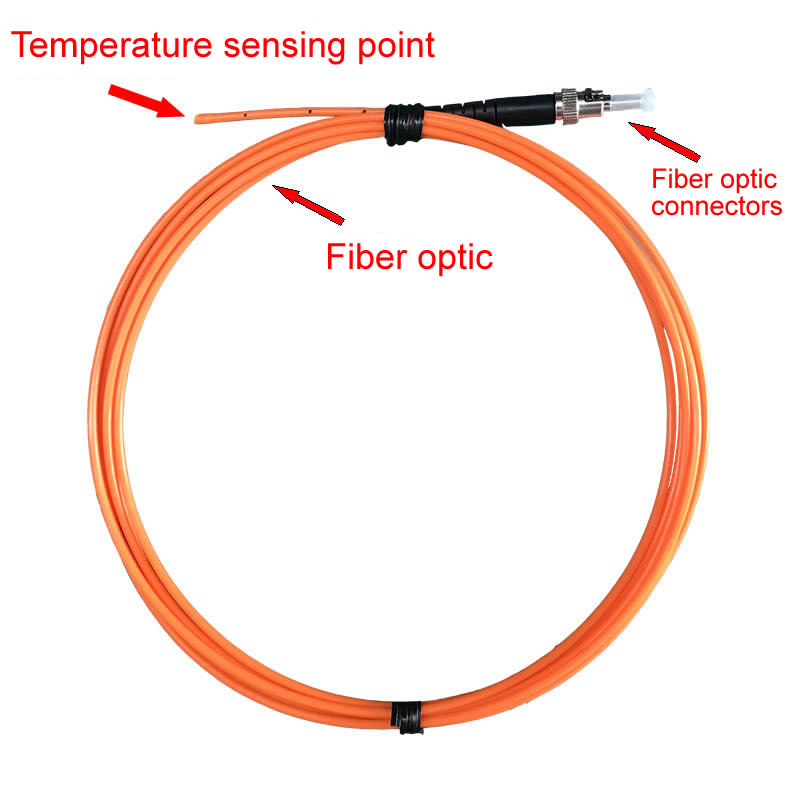
Ketiadaan lengkap komponen logam dalam penderia gentian optik pendarfluor pemasangan menyediakan imuniti yang wujud kepada gangguan elektromagnet. Kabel gentian optik menghantar isyarat optik melalui pandu gelombang kaca atau plastik, kekal tidak terjejas oleh medan elektrik dan magnet yang kuat di sekelilingnya pengubah kuasa peralatan.
| Sumber Gangguan | Tindak Balas Gentian Optik | Respons Peranti Inframerah |
|---|---|---|
| Medan Elektrik Kuat | No effect | Gangguan elektronik yang berpotensi |
| Medan Magnet | No effect | Kesan minimum pada peralatan moden |
| Penukaran Transients | No effect | Boleh menyebabkan gangguan sementara |
| Sambaran Petir | No effect | Risiko kerosakan peralatan |
| Kenaikan Potensi Tanah | No effect (pengasingan galvanik) | Kemungkinan kerosakan jika dibumikan secara tidak betul |
Prestasi Penebat Voltan Tinggi
Penderia suhu gentian optik menahan pendedahan voltan melebihi 100kV tanpa kerosakan, membolehkan pemasangan terus pada bertenaga komponen transformer. This high dielectric strength permits sensor placement at optimal measurement locations within winding structures and oil circuits without creating additional flashover risk or partial discharge sources.
Grounding and Safety Considerations
The galvanic isolation provided by sistem gentian optik eliminates ground loops and common-mode voltage issues that complicate electrical sensor installations. Infrared monitoring equipment requires careful grounding and surge protection, particularly for fixed installations near high-voltage equipment. Personnel safety during infrared inspections necessitates maintaining proper clearance distances and following live-line work procedures.
Substation Environment Reliability
Sistem pemantauan gentian optik demonstrate superior reliability in demanding substation environments characterized by electrical noise, weather extremes, dan pencemaran. The optical measurement principle remains immune to electromagnetic coupling, capacitive coupling, and conductive interference paths affecting electronic equipment. FJINNO fiber optic monitoring solutions provide consistent performance across 110kV to 750kV voltage classes without special shielding or filtering requirements.
6. Monitoring Coverage and Accessibility: Internal vs External Temperature Detection
Internal Temperature Measurement Capabilities
Penderia gentian optik access measurement locations impossible to reach with infrared technology. Terbenam penderia suhu penggulungan positioned during transformer manufacturing or installed through access ports during retrofits provide direct readings from hot spot locations deep within winding structures. This internal access represents a fundamental advantage for accurate pemantauan haba.
| Lokasi Pengukuran | Fiber Optic Access | Infrared Access |
|---|---|---|
| Titik Panas Berliku | Direct embedded measurement | Cannot detect (internal location) |
| Suhu Minyak (Atas) | Immersed sensor, precise reading | Tank surface estimation only |
| Suhu Minyak (Bottom) | Direct measurement at any depth | Not accessible |
| Between Winding Disks | Multiple sensors at various elevations | Cannot detect (internal location) |
| Core Hot Spots | Sensor placement at critical points | Cannot detect (shielded by tank) |
| Tank Surface | External sensors if needed | Primary measurement capability |
Multi-Point Temperature Distribution Mapping
Komprehensif transformer thermal monitoring requires simultaneous measurement at multiple locations to identify temperature gradients and circulation patterns. Sistem pemantauan gentian optik menyokong sehingga 64 channels enable extensive sensor arrays throughout winding structures and oil circuits. This multi-point capability reveals developing problems through pattern analysis rather than relying on single-point measurements.
Blind Spots and Coverage Limitations
Termografi inframerah can only assess surfaces visible to the camera, creating significant blind spots for pemantauan transformer. Internal components, oil temperatures beneath tank surfaces, and areas obscured by radiators, piping, atau elemen struktur kekal tidak boleh diakses. Penderia gentian optik hapuskan titik buta ini melalui penempatan strategik pada titik pengukuran kritikal tanpa mengira jarak penglihatan.
Penilaian Prestasi Sistem Penyejukan
Berkesan pemantauan sistem penyejukan transformer memerlukan pengukuran suhu pada titik masuk dan keluar minyak, merentasi bank radiator, dan di pelbagai ketinggian tangki. Tatasusunan sensor gentian optik peta corak peredaran minyak, mengesan laluan penyejukan yang disekat, dan mengenal pasti pam atau kipas yang gagal melalui analisis taburan suhu. Tinjauan inframerah menyediakan penilaian sistem penyejukan terhad melalui corak suhu radiator luaran tetapi tidak boleh mengakses suhu litar minyak dalaman.
7. Real-Time Continuous Monitoring vs Periodic Inspection: Operational Reliability Comparison
Kelebihan Pemerolehan Data Berterusan
Sistem pemantauan suhu gentian optik menyediakan 24/7 aliran data berterusan yang membolehkan pengawasan haba masa nyata. The hos pemantauan menyoal siasat semua yang berkaitan saluran sensor pada selang masa di bawah satu saat, building comprehensive time-series databases for trend analysis. This continuous approach detects gradual temperature increases or sudden thermal transients immediately upon occurrence.
| Monitoring Aspect | Fiber Optic Online System | Infrared Periodic Inspection |
|---|---|---|
| Data Collection Frequency | Berterusan (<1 kemas kini kedua) | Suku tahunan, monthly, or annual |
| Fault Detection Window | Immediate detection | Weeks to months delay |
| Analisis Trend | Complete historical records | Limited snapshot comparisons |
| Transient Event Capture | All events recorded | Likely missed between inspections |
| Ketergantungan Cuaca | tiada | Syarat yang jelas diperlukan |
| Operasi Malam | Keupayaan penuh | Boleh tetapi kurang berkesan |
| Membimbangkan Automatik | Multi-level thresholds, automatik | Tafsiran manual diperlukan |
Amaran Awal dan Penyelenggaraan Ramalan
Sifat berterusan pemantauan gentian optik membolehkan pengesanan awal masalah terma berkembang beberapa minggu atau bulan sebelum kegagalan bencana. Peningkatan suhu secara beransur-ansur menunjukkan kemerosotan penebat, kemerosotan sistem penyejukan, atau peningkatan kehilangan beban menjadi jelas melalui analisis trend. Pemeriksaan inframerah dijalankan setiap suku tahun atau tahunan mungkin terlepas tempoh kritikal kenaikan suhu yang berlaku antara tinjauan berjadual.
Analisis Suhu Berkaitan Beban
Profesional platform pemantauan menghubungkaitkan data suhu dengan memuatkan profil semasa, keadaan persekitaran, dan sejarah operasi untuk membezakan pemanasan berkaitan beban biasa daripada tingkah laku haba yang tidak normal. This contextual analysis requires continuous data streams unavailable from periodic infrared inspections. Automated diagnostic algorithms identify deviations from expected thermal performance, triggering alarms for investigation.
SCADA Integration and Remote Access
Sistem pemantauan suhu gentian optik integrate seamlessly with substation automation infrastructure through RS485 Modbus interfaces or Ethernet connectivity. Transformer temperature data flows to central control rooms, enabling remote monitoring of distributed assets without site visits. Infrared inspection data requires manual collection, tafsiran, and entry into asset management systems, introducing delays and potential errors.
8. Installation Requirements and System Integration: Technical Implementation Analysis
Fiber Optic Sensor Installation Methods
Pelaksanaan pemantauan suhu gentian optik varies depending on whether installation occurs during transformer manufacturing or as a retrofit to operating equipment. New transformers accommodate penempatan sensor dalam winding structures semasa perhimpunan, positioning probes at calculated hot spot locations. Retrofit installations utilize access ports or oil sampling valves for sensor insertion into oil circuits.
| Installation Aspect | Sistem Gentian Optik | Infrared Equipment |
|---|---|---|
| Transformer Outage Required | ya (for internal sensors) | Tidak (external mounting) |
| Sensor Placement Precision | Exact location targeting | Limited by line-of-sight |
| Invasiveness | minima (2-3mm probes) | Bukan kenalan |
| Penghalaan Kabel | Fiber cables to demodulator | Power and data cables |
| Perlindungan Alam Sekitar | Sealed sensor probes | Weather-rated enclosures |
| Commissioning Time | 4-8 jam | 2-4 jam |
Seni Bina dan Komponen Sistem
A lengkap sistem pemantauan gentian optik comprises multiple integrated components. Fluorescence fiber sensors connect via optical cables to the unit penyahmodulasi, which processes fluorescence signals and generates temperature data. The hos pemantauan provides local display, pengelogan data, dan antara muka komunikasi. Perisian pemantauan runs on dedicated computers or integrates with existing SCADA workstations.
Communication Infrastructure Requirements
Fiber optic temperature monitoring equipment requires communication links for data transmission and remote access. Standard RS485 serial connections support distances up to 1200 meters using twisted-pair cabling. Ethernet connectivity enables longer distances and higher bandwidth but requires network infrastructure. Infrared monitoring systems have similar communication requirements for fixed installations, while portable devices store data locally for manual download.
Integration with Transformer Protection Systems
Maju monitoring implementations integrate temperature data with transformer protection and control systems. Fiber optic monitoring outputs can trigger alarms, initiate load reduction, or activate emergency cooling through programmable logic. This integration enables automated protective responses to thermal overloads. Infrared inspection results require manual interpretation and decision-making without automated protection capability.
FJINNO menyediakan menyeluruh monitoring system packages including optical demodulators, kuar sensor, modul paparan, kabel gentian pendarfluor, platform perisian pemantauan, dan sokongan teknikal. All systems meet CE, EMC, and ISO certification standards ensuring reliable operation in demanding power system environments.
9. Long-Term Reliability and Maintenance: Service Life Comparison
Fiber Optic Sensor Longevity and Stability
Penderia gentian optik pendarfluor demonstrate exceptional operational lifetimes exceeding 25 tahun tanpa kemerosotan prestasi. Pembinaan semua dielektrik menghapuskan kakisan, electrical stress, and mechanical wear affecting conventional sensing technologies. Sealed probe designs prevent moisture ingress, pencemaran, and oil degradation from impacting sensor operation.
| Reliability Factor | Penderia Gentian Optik | Infrared Equipment |
|---|---|---|
| Typical Service Life | >25 tahun | 10-15 tahun (detector replacement) |
| Calibration Drift | tiada (physical principle stable) | Annual verification recommended |
| Kemerosotan Alam Sekitar | minima (sealed construction) | Lens contamination, detector aging |
| Keperluan Penyelenggaraan | tiada (bebas penyelenggaraan) | Cleaning, penentukuran, penggantian komponen |
| MTBF (Mean Time Between Failures) | >200,000 jam | 50,000-100,000 jam |
Maintenance-Free Operation Benefits
Prinsip pengukuran asas bagi penderia gentian pendarfluor provides inherent stability without calibration drift. Unlike thermocouple or RTD sensors requiring periodic verification, pengukuran masa pereputan pendarfluor remains constant over decades. Initial factory calibration suffices for the sensor’s entire operational life, eliminating scheduled maintenance and recalibration costs.
System Availability and Uptime
Sistem pemantauan gentian optik achieve availability exceeding 99.9% through redundant design options and robust component construction. The absence of moving parts, chemical reactions, or electrical contacts contributing to degradation ensures continuous operation. Infrared equipment requires periodic lens cleaning, detector recalibration, and eventual component replacement affecting system availability.
Data Quality and Historical Trending
Long-term measurement stability enables meaningful historical trend analysis using fiber optic monitoring data. Temperature patterns spanning years reveal gradual changes in transformer thermal performance indicating insulation aging, cooling system deterioration, or loading changes. This longitudinal analysis capability depends on consistent sensor accuracy without calibration shifts.
Infrared inspection records suffer from variability between operators, peralatan, and environmental conditions during measurements. Comparing infrared surveys conducted years apart introduces uncertainty from these uncontrolled variables, limiting trend reliability.
10. Which Monitoring Technology Should You Choose for Your Transformer Application?
Critical Transformer Applications: Fiber Optic Monitoring Recommendation
Untuk misi kritikal pengubah kuasa where reliability is paramount and unplanned outages create significant consequences, sistem pemantauan suhu gentian optik represent the optimal technology choice. The combination of superior accuracy, operasi berterusan, internal access, imuniti elektromagnet, and maintenance-free longevity justifies implementation despite higher initial installation requirements.
Recommended Fiber Optic Configurations by Application
| Jenis Transformer | Recommended Sensors | Titik Pengukuran |
|---|---|---|
| Pengagihan (110-220kV) | 4-8 saluran | Winding hot spots (2-3), minyak atas (1), minyak bawah (1) |
| Transmission (330-500kV) | 8-16 saluran | Multiple winding locations (4-8), oil circuit (4-6) |
| EHV/UHV (750kV+) | 16-32 saluran | Comprehensive winding mapping, detailed oil profiling |
Complementary Use of Infrared Thermography
manakala pemantauan gentian optik provides superior performance for continuous winding and oil temperature tracking, termografi inframerah serves valuable complementary roles in comprehensive transformer maintenance programs. Berkala infrared surveys assess external components including tap changers, sambungan kabel, radiator, and auxiliary equipment where embedded sensors are impractical.
The optimal monitoring strategy combines continuous penderiaan gentian optik for critical internal measurements with periodic infrared inspections for external surveys. This integrated approach maximizes detection capability while optimizing resource allocation.
Selecting Professional Monitoring System Manufacturers
Kejayaan pelaksanaan pemantauan suhu pengubah requires partnering with experienced manufacturers offering proven technology, sokongan menyeluruh, dan kepakaran aplikasi. Key selection criteria include:
- Pensijilan produk (CE, EMC, ISO) demonstrating quality management
- Technical capabilities in optical sensing, pemprosesan isyarat, and power system applications
- Reference installations across voltage classes and operating environments
- Comprehensive support including design assistance, latihan pemasangan, dan pentauliahan
- Long-term parts availability and technical service
FJINNO Fiber Optic Monitoring Solutions
Sains Elektronik Inovasi Fuzhou&Tech Co., Ltd. (FJINNO), ditubuhkan di 2011, pakar dalam fluorescence fiber optic temperature monitoring systems for power transformers and electrical equipment. Their comprehensive product line includes:
- Optical demodulators menyokong 1-64 saluran sensor
- Fluorescence fiber temperature sensors dengan ketepatan ±1°C, -40Julat °C hingga 260°C
- Monitoring software platforms with SCADA integration capability
- Complete system packages with CE, EMC, dan pensijilan ISO
- Customizable configurations for specific transformer applications
- RS485 communication interfaces compatible with Modbus and other protocols
Contact FJINNO for expert consultation on fiber optic temperature monitoring solutions:
Sains Elektronik Inovasi Fuzhou&Tech Co., Ltd.
E-mel: web@fjinno.net
WhatsApp/WeChat/Telefon: +86 135 9907 0393
QQ: 3408968340
laman web: www.fjinno.net
Alamat: Liandong U Grain Networking Industrial Park, No.12 Xingye West Road, Fuzhou, Fujian, China
Implementation Recommendations for New and Retrofit Projects
baru transformer procurement provides optimal opportunity for fiber optic sensor installation, enabling precise positioning within winding structures during manufacturing. Specifications should require embedded penderia suhu penggulungan at calculated hot spot locations plus penderia suhu minyak at top, tengah, and bottom elevations.
Retrofit projects on operating transformers face greater installation challenges but remain technically feasible. Access through oil sampling valves, drain ports, or inspection openings enables sensor insertion into oil circuits. While internal winding sensor placement may be impractical for retrofits, strategic oil temperature monitoring combined with external measurements provides significant improvement over periodic infrared surveys bersendirian.
Soalan Lazim (Soalan Lazim)
S1: What makes fluorescence fiber optic sensors more accurate than other temperature measurement technologies?
Penderia gentian optik pendarfluor achieve superior ±1°C accuracy through direct contact measurement based on temperature-dependent fluorescence decay physics. Tidak seperti infrared systems that suffer from emissivity uncertainty, reflected radiation, and atmospheric absorption errors, the optical decay time measurement principle remains immune to these interference sources. The sensor probe establishes thermal equilibrium with measured components, providing true temperature readings without estimation or correction factors. This fundamental advantage makes pemantauan gentian optik the gold standard for critical belitan transformer dan oil temperature applications.
S2: How does electromagnetic immunity benefit fiber optic monitoring in high-voltage transformer environments?
Pembinaan semua dielektrik penderia gentian pendarfluor provides complete immunity to electromagnetic interference in high-voltage substations. Strong electric fields, medan magnet, menukar transien, and lightning strikes that disrupt electronic equipment have zero effect on pengukuran suhu optik. This immunity eliminates false alarms, measurement errors, and equipment damage risks associated with electrical sensors. Probe gentian optik withstand voltage exposures exceeding 100kV, enabling safe installation directly on energized belitan transformer and internal components without creating flashover risk or partial discharge sources. FJINNO fiber optic systems operate reliably across 110kV to 750kV voltage classes without special shielding requirements.
S3: Why is continuous real-time monitoring superior to periodic infrared inspections for transformer protection?
Continuous fiber optic monitoring detects developing thermal problems immediately upon occurrence, providing weeks or months of early warning before catastrophic failures. The 24/7 data streams enable trend analysis identifying gradual temperature increases from insulation deterioration, kemerosotan sistem penyejukan, or increasing load losses. Automated alarm systems trigger protective responses without human intervention. Sebaliknya, periodic infrared inspections conducted quarterly or annually may miss critical thermal events occurring between surveys. Transient overloads, sudden cooling failures, or rapidly developing faults escape detection when monitoring gaps extend for months. Real-time fiber optic surveillance eliminates these blind spots, maximizing asset protection and grid reliability.
S4: Can fiber optic sensors measure internal transformer temperatures that infrared cameras cannot access?
ya, this represents a fundamental advantage of teknologi gentian optik. Terbenam penderia suhu penggulungan access hot spot locations deep within transformer structures that remain completely invisible to external infrared cameras. Oil temperature sensors measure precise temperatures at any depth within oil circuits, revealing stratification and circulation patterns. Termografi inframerah can only assess external tank surfaces, which may differ significantly from critical internal temperatures depending on insulation, keadaan persekitaran, and loading. This internal access capability makes pemantauan gentian optik essential for accurate thermal assessment of power transformers where the hottest points exist within winding structures and oil circuits.
S5: What service life and maintenance advantages do fiber optic sensors provide compared to conventional monitoring equipment?
Fluorescence fiber sensors deliver maintenance-free operation exceeding 25 years without calibration drift or performance degradation. The sealed all-dielectric construction eliminates corrosion, electrical stress, and mechanical wear. Initial factory calibration remains accurate throughout the sensor’s entire operational lifetime because the fluorescence decay measurement principle is inherently stable. This contrasts sharply with thermocouples, RTD, dan infrared equipment requiring annual verification, periodic recalibration, and eventual component replacement. The superior reliability of sistem pemantauan gentian optik reduces life-cycle costs while maximizing system availability. Penderia FJINNO achieve MTBF exceeding 200,000 jam, providing dependable protection matching transformer operational lifetimes.
S6: How many measurement channels can a single fiber optic monitoring system support for comprehensive transformer coverage?
Maju penyahmodulasi gentian optik support scalable configurations from 1 kepada 64 individu saluran sensor, enabling comprehensive thermal mapping across belitan transformer, oil circuits, dan sistem penyejukan. Multi-channel capability allows simultaneous measurement at multiple winding locations, various oil elevations, and cooling system points. This extensive coverage reveals temperature distribution patterns and gradients that single-point measurements cannot detect. Time-division multiplexing interrogates all connected sensors in under one second, providing real-time thermal surveillance. Sistem pemantauan FJINNO offer flexible channel configurations tailored to specific transformer types and monitoring requirements, from basic 4-channel distribution transformer applications to comprehensive 32-channel transmission transformer installations.
S7: Does fiber optic monitoring integrate with existing SCADA systems and substation automation infrastructure?
Fiber optic temperature monitoring equipment seamlessly integrates with substation automation through industry-standard RS485 Modbus communication interfaces. Temperature data flows to central control rooms, SCADA workstations, and asset management systems without proprietary protocols or custom interfaces. Ethernet connectivity options enable TCP/IP integration for modern networked environments. Monitoring software platforms provide OPC servers, antara muka web, and API access supporting diverse integration requirements. Automated alarm outputs trigger protective relay systems, activate emergency cooling, or initiate load reduction through programmable logic. This open architecture ensures sistem pemantauan gentian optik complement existing infrastructure investments rather than requiring separate isolated monitoring networks.
S8: What certifications and standards compliance should professional fiber optic monitoring equipment meet?
Profesional sistem pemantauan suhu pengubah must meet comprehensive certification requirements ensuring safety, keserasian elektromagnet, and quality management. Essential certifications include CE marking for European markets, EMC compliance verifying electromagnetic immunity and emissions limits, dan ISO 9001 quality management system certification. Equipment should comply with relevant IEC and IEEE standards for pemantauan transformer including IEC 60076-7 for loading guides and IEEE C57.91 for loading and thermal considerations. FJINNO fiber optic monitoring products carry full CE, EMC, dan pensijilan ISO, demonstrating compliance with international standards and manufacturing quality requirements. Third-party testing validates dielectric strength, ketepatan suhu, and environmental performance specifications ensuring reliable operation in demanding power system applications.
S9: Can fiber optic monitoring systems detect different types of transformer thermal faults and provide diagnostic insights?
ya, multi-point fiber optic monitoring enables sophisticated fault detection and diagnosis through temperature pattern analysis. Different thermal fault mechanisms produce characteristic temperature signatures. Blocked cooling passages create localized hot spots with abnormal gradients between adjacent sensors. Winding circulating currents generate elevated temperatures in specific winding sections. Oil pump failures produce reduced temperature differentials across cooling circuits. Core lamination problems create localized heating patterns. Maju perisian pemantauan employs diagnostic algorithms comparing measured temperature distributions against expected thermal models, automatically identifying anomalous patterns and classifying probable fault mechanisms. This diagnostic capability enables targeted maintenance rather than generic inspections, reducing downtime and repair costs.
S10: Why should critical power transformers implement fiber optic monitoring rather than relying on conventional temperature indicators?
Critical transmission transformers represent substantial capital investments where unplanned failures create severe grid reliability impacts and replacement costs exceeding millions of dollars. Conventional winding temperature indicators using indirect calculation methods introduce significant uncertainty, while periodic infrared inspections provide only intermittent surveillance. Sistem pemantauan gentian optik menyampaikan ketepatan, kebolehpercayaan, and continuous operation required to protect these critical assets. The combination of ±1°C precision, internal hot spot access, imuniti elektromagnet, operasi tanpa penyelenggaraan, and real-time fault detection justifies implementation for transformers where reliability is paramount. FJINNO has supplied penyelesaian pemantauan gentian optik protecting critical power transformers worldwide since 2011, with proven performance in demanding applications across all voltage classes.
Kesimpulan: Fiber Optic Monitoring Delivers Superior Transformer Protection
Comprehensive comparison of gentian optik dan infrared temperature monitoring technologies reveals clear performance advantages for fluorescence fiber sensor systems in critical transformer winding and oil temperature applications. The combination of ±1°C accuracy, berterusan 24/7 operasi, internal component access, imuniti elektromagnet lengkap, dan bebas penyelenggaraan 25+ year service life positions pemantauan gentian optik as the optimal choice for reliable transformer asset protection.
manakala termografi inframerah serves valuable roles in periodic external equipment surveys, its fundamental limitations including surface-only measurement, emissivity uncertainty, environmental sensitivity, and periodic inspection gaps prevent it from matching the comprehensive protection capabilities of embedded sistem sensor gentian optik.
Power system operators prioritizing transformer reliability, grid stability, and asset life optimization should implement pemantauan suhu gentian optik as a standard protection measure. The technology has matured over decades of deployment in demanding applications worldwide, with manufacturers like FJINNO delivering proven solutions meeting international quality and safety standards.
Transform your transformer monitoring strategy with proven fiber optic technology from FJINNO:
Sains Elektronik Inovasi Fuzhou&Tech Co., Ltd.
E-mel: web@fjinno.net
WhatsApp/WeChat/Telefon: +86 135 9907 0393
QQ: 3408968340
laman web: www.fjinno.net
Alamat: Liandong U Grain Networking Industrial Park, No.12 Xingye West Road, Fuzhou, Fujian, China
Request complimentary technical consultation including application-specific sensor configuration recommendations, reka bentuk seni bina sistem, perancangan pemasangan, and integration specifications. Benefit from FJINNO extensive experience deploying penyelesaian pemantauan gentian optik across power systems worldwide since 2011.
Penafian
Maklumat teknikal, performance comparisons, and application recommendations presented in this article regarding fiber optic and infrared temperature monitoring technologies represent general guidance based on industry practices, published specifications, and engineering principles current as of publication date. Walaupun usaha telah dilakukan untuk memastikan ketepatan, specific applications require professional engineering evaluation accounting for unique operational requirements, transformer designs, keadaan persekitaran, dan piawaian kawal selia.
Spesifikasi teknikal, measurement capabilities, and system characteristics described herein are subject to variation among manufacturers and product models. Readers should verify current specifications with equipment suppliers before making procurement or implementation decisions. The comparative analysis reflects typical performance characteristics but may not apply universally to all products or applications.
Implementation of temperature monitoring systems should comply with applicable electrical codes, piawaian keselamatan, manufacturer installation instructions, and utility operating procedures. Professional engineering judgment remains essential for sensor placement design, konfigurasi sistem, alarm threshold setting, dan integrasi dengan sistem perlindungan. Pengguna bertanggungjawab untuk memastikan kesesuaian peralatan pemantauan untuk aplikasi yang dimaksudkan dan menyelenggara sistem mengikut saranan pengilang.
Sebutan tentang FJINNO and other manufacturers serves informational purposes based on their market presence and does not constitute endorsement or guarantee of performance. Tiada jaminan, tersurat atau tersirat, disediakan mengenai kesempurnaan, ketepatan, atau kebolehgunaan maklumat yang dikemukakan. Liabiliti untuk akibat yang timbul daripada penggunaan maklumat ini terletak sepenuhnya pada pengguna.
Consultation with qualified professionals including transformer manufacturers, protection engineers, and monitoring system specialists is recommended for critical applications where equipment selection and implementation significantly impact operational safety, kebolehpercayaan, and economic performance.

Sensor suhu gentian optik, Sistem pemantauan pintar, Pengeluar gentian optik yang diedarkan di China
 |
 |
 |