 Penderia suhu gentian optik INNO ,sistem pemantauan suhu.
- Sifar gangguan elektromagnet: Optical fiber carries light, not electricity — it is completely immune to EMI/RFI, making it the only reliable choice for high-voltage switchgear and transformer hotspot monitoring.
- Pinpoint accuracy at extreme conditions: Fluorescent point sensors achieve ±1 °C accuracy daripada −40 °C hingga +260 °C, with a response time under 1 second and a probe as slim as 2–3 mm.
- Electrically safe in 100 kV+ environments: Probes are fully insulating and rated for voltages well above 100 kV — no grounding issues, no creepage paths.
- One transmitter, sehingga 64 saluran: bujang pemancar suhu gentian optik handles 1–64 fluorescent fiber channels simultaneously, dramatically reducing hardware costs.
- Maintenance-free for 25+ tahun: Tiada bahagian yang bergerak, tiada bahan habis pakai, no periodic calibration required under normal operating conditions.
- Seni bina boleh skala: RS485 communication integrates directly with SCADA, DCS, dan platform automasi pencawang; all parameters are customizable.
- Proven across critical industries: Deployed in power transmission, pusat data, petrochemical plants, rail traction systems, and industrial furnaces worldwide.
1. Apa Itu a Sistem Pengukuran Suhu Gentian Optik?

A sistem pengukuran suhu gentian optik is an instrumentation platform that uses light-transmitting optical fibers — rather than metal conductors — to detect and report temperature at one or more points in real time. The sensor probe converts a physical temperature into an optical signal, which travels back along the fiber to a dedicated pemancar suhu gentian optik (also called a signal conditioner or interrogator unit) that decodes the signal and outputs a temperature reading.
Because the sensing element is made entirely of dielectric materials, the probe and fiber cable carry no electrical current whatsoever. This distinguishes the technology fundamentally from thermocouples, RTD, dan termistor, all of which require an electrical circuit to function and are therefore susceptible to ground loops, EMI, and electrical hazards in high-voltage installations.
The system is available in two primary sensing architectures: fluorescent point temperature sensing dan pengesan suhu gentian optik teragih (DTS). Both share the same core benefit of electrical isolation, but serve different measurement objectives.
2. How Does It Compare to Traditional Temperature Sensors?
Traditional sensors — thermocouples, PT100 RTD, and bimetallic devices — have served industry for over a century. Namun begitu, they face critical limitations in modern electrical and industrial environments that fiber optic technology directly resolves.
| Parameter | Termokopel / RTD | Penderia Gentian Optik Pendarfluor |
|---|---|---|
| Kekebalan EMI | None — signal degrades near HV equipment | Complete — no electrical signal in the fiber |
| Penebat elektrik | Memerlukan halangan pengasingan | Inherently insulating; dinilai >100 kV |
| Ketepatan | ±0.5–2 °C (with drift over time) | ±1 °C, stable over 25+ hayat perkhidmatan tahun |
| Masa tindak balas | 1–10 seconds typical | <1 kedua |
| Diameter probe | 4–10 mm typical | 2–3 mm (custom available) |
| Penyelenggaraan | Periodic recalibration required | Tiada yang diperlukan |
| Multi-channel from one unit | Typically 1–8 channels per transmitter | 1–64 channels per transmitter |
3. How Does a Fiber Optic Temperature Measurement System Work?
Fluorescent Decay Principle
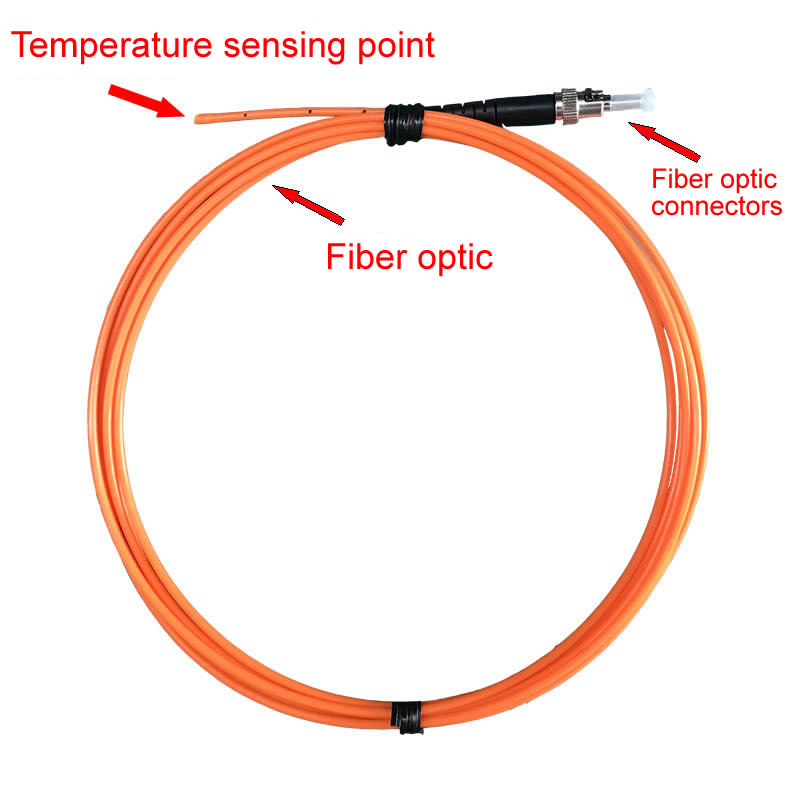
Dalam penderia suhu gentian optik pendarfluor, the probe tip contains a rare-earth phosphor compound. The interrogator unit pulses a precisely controlled excitation light down the fiber. The phosphor absorbs this energy and re-emits it as fluorescence. Secara kritis, the duration of that fluorescence — known as the fluorescence lifetime or decay time — is a repeatable, predictable function of temperature. The interrogator measures this decay time and converts it directly into a temperature value.
Because the measurement depends on a time interval rather than a voltage level or light intensity, ia sememangnya kebal terhadap kehilangan lenturan gentian, pencemaran penyambung, dan bunyi elektromagnet — semuanya akan merosakkan penderia elektrik berasaskan voltan.
Diedarkan (Raman / Brillouin) Prinsip
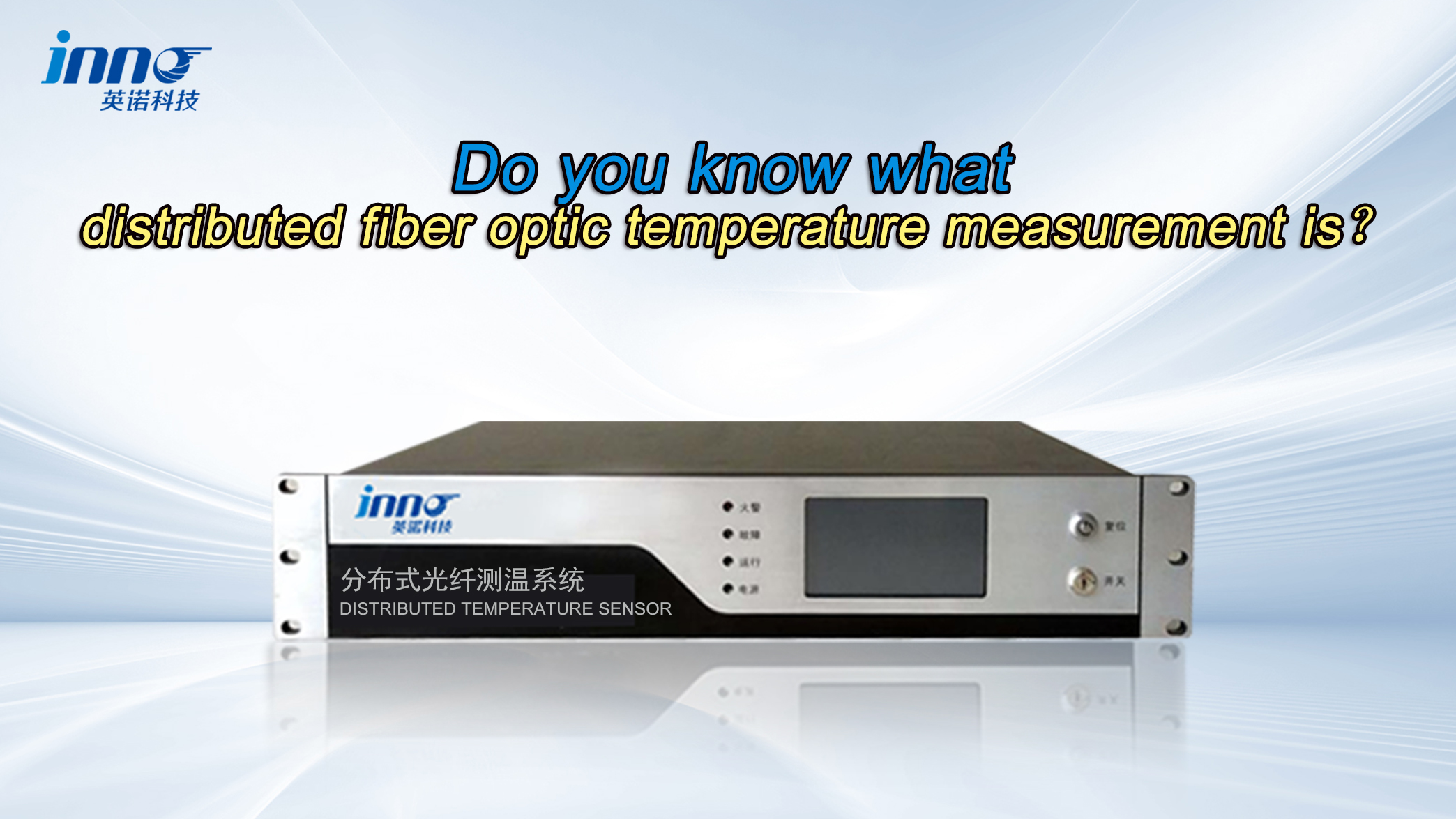
Dalam sistem pengesan suhu gentian optik teragih, nadi laser dilancarkan ke dalam gentian mod tunggal atau multimod standard. Semasa cahaya merambat, ia berselerak pada tahap molekul. Komponen Raman atau Brillouin yang berselerak belakang beralih dalam kekerapan dan amplitud dalam perkadaran terus kepada suhu tempatan pada setiap meter di sepanjang gentian. Dengan mengukur masa yang diperlukan untuk cahaya berselerak belakang kembali, sistem memberikan suhu yang tepat kepada setiap kedudukan spatial di sepanjang kabel — menukar gentian tunggal kepada beribu-ribu penderia suhu secara serentak.
4. Fluorescent Point Sensing vs. Penderiaan Suhu Gentian Optik Teragih
| Ciri | Penderiaan Titik Pendarfluor | Gentian Optik Teragih (DTS) |
|---|---|---|
| Jenis ukuran | Titik hotspot diskret | Profil berterusan sepanjang gentian |
| Julat biasa | −40 °C hingga +260 °C | −40 °C hingga +300 °C (bergantung kepada sistem) |
| Liputan spatial setiap gentian | Sehingga 80 m; 1–64 mata diskret | Sehingga 30 km+ |
| Best applications | Belitan pengubah, bar bas gear suis, galas motor | Underground cables, saluran paip, pengesanan kebakaran terowong |
| System cost | Lower per-point cost | Kos permulaan yang lebih tinggi; lower per-meter cost at scale |
5. What Are the Main Components of the System?
- Probe gentian optik pendarfluor (sensor head): The physical tip inserted at the measurement point. Contains the phosphor sensing element encapsulated in a slim, electrically insulating sheath (2–3 mm diameter). Custom shapes and materials are available for specific installation geometries.
- Optical fiber cable: The light-transmission medium connecting probe to transmitter. Standard single-mode or multimode fiber; maximum run of 80 m for fluorescent systems. Armored, PTFE, or high-temperature jacket variants are available.
- Fiber optic temperature transmitter (penyiasat): The signal processing unit. Houses the light source, pengesan foto, timing electronics, and microprocessor. Outputs calibrated temperature values via RS485 or other interfaces. One unit supports 1–64 channels.
- Software / Penyepaduan SCADA: Host-side software or Modbus/RS485 register mapping allows direct integration into existing DCS, SCADA, atau sistem automasi pencawang. No proprietary middleware is required.
6. Penderia Suhu Gentian Optik Pendarfluor — Full Technical Specifications
| Parameter | Spesifikasi |
|---|---|
| Sensing method | Seumur hidup pendarfluor (phosphor decay) — point measurement |
| Ketepatan pengukuran | ±1 °C |
| Julat pengukuran suhu | −40 °C hingga +260 °C |
| Masa tindak balas | <1 kedua |
| Maximum fiber cable length | 0 – 80 m |
| Probe outer diameter | 2–3 mm (custom diameters available) |
| Penebat elektrik | Penebat sepenuhnya; tiada laluan konduktif |
| High-voltage withstand | >100 kV (boleh disesuaikan) |
| Channels per transmitter | 1 – 64 (boleh skala) |
| Antara muka komunikasi | RS485 (Modbus RTU); other interfaces customizable |
| Hayat perkhidmatan | >25 tahun dalam keadaan biasa |
| Keperluan penyelenggaraan | None — maintenance-free design |
All parameters can be customized. Contact FJINNO to discuss specific project requirements.
7. Why Is Fiber Optic the Only EMI-Immune Temperature Sensing Technology?
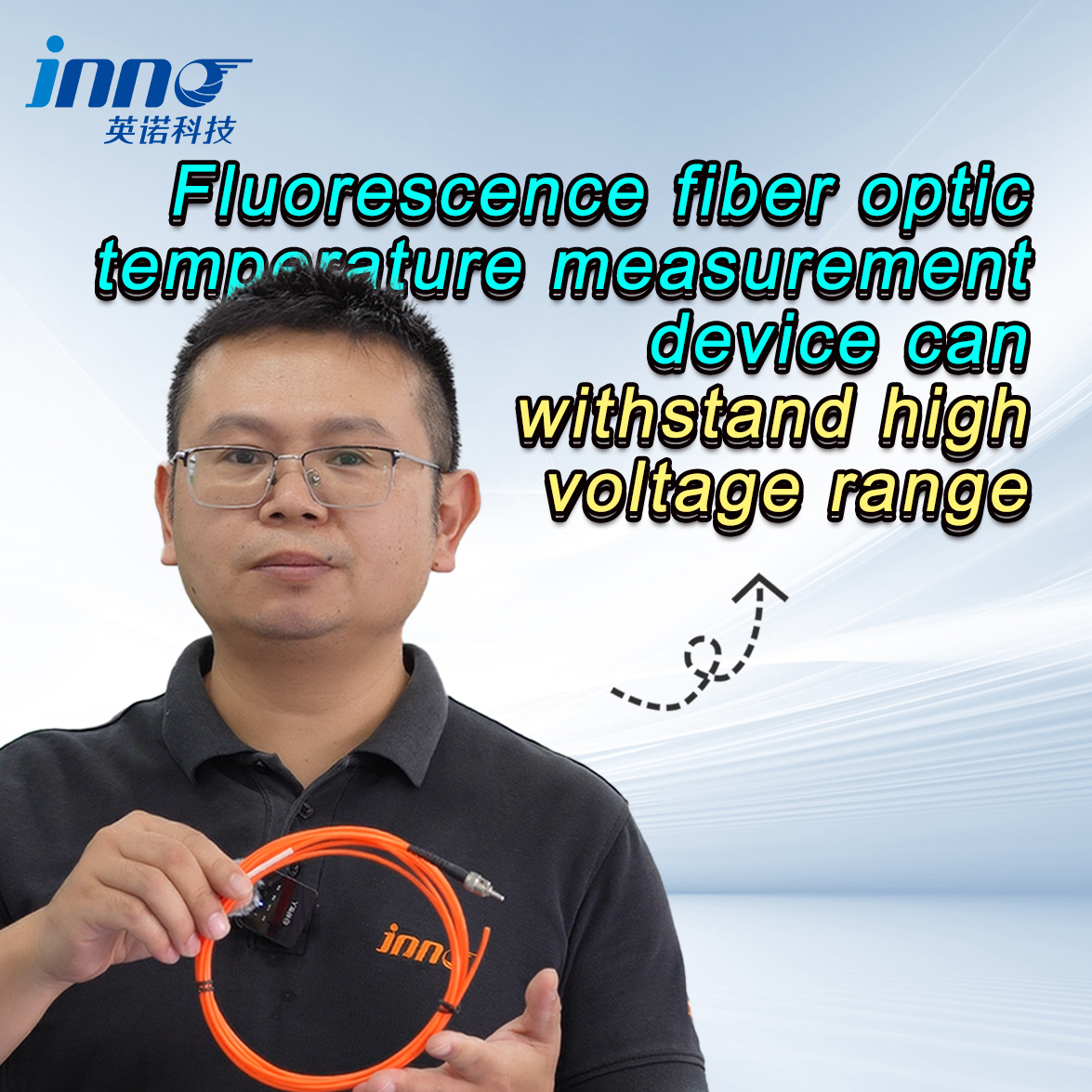
Every electrical temperature sensor generates a small voltage or resistance signal that must be transmitted over metal conductors. In high-voltage switchyards, bilik transformer, and industrial drives, these conductors act as receiving antennas, picking up interference from switching transients, busbar current, and radio-frequency fields. The resulting measurement error can be several degrees Celsius — or cause complete signal loss — rendering the measurement unreliable for protection or condition monitoring decisions.
A penderia suhu gentian optik pendarfluor transmits only light. Light is not affected by electric or magnetic fields. No matter how intense the surrounding electromagnetic environment — whether it is a 500 kV transformer or a high-current arc furnace — the optical signal arriving back at the transmitter is identical to the signal that left it, carrying an accurate temperature measurement every single time.
This is not a marginal improvement over shielded cable or isolation amplifiers; it is a fundamentally different physical mechanism that eliminates the interference problem entirely.
8. How Does the System Perform in High-Voltage Environments Above 100 kV?
Standard metallic sensors cannot be placed directly on live high-voltage conductors without an engineered isolation barrier, because doing so would create a conductive path from the live part to ground through the sensor cable and instrumentation wiring. This is both a personnel safety hazard and a source of measurement error via leakage currents.
The probe suhu gentian optik is manufactured entirely from non-conductive materials: the sensing tip, the fiber core, the cladding, and the cable sheath are all dielectric. There is no metallic element in the sensing chain at any point between the probe tip and the transmitter housing. The result is a probe that can be embedded directly in a transformer winding, clamped onto a live 110 kV busbar, or routed through a GIS enclosure without any grounding concern or creepage risk.
FJINNO probes are rated for voltage withstand levels exceeding 100 kV. Custom designs for ultra-high-voltage (UHV) applications above 500 kV are available on request.
9. How Is the System Applied in Power Transformers?
Winding Hotspot Monitoring
The most critical measurement in any oil-immersed or dry-type transformer is the winding hotspot temperature. IEC and IEEE standards specify thermal limits based on this temperature; exceeding them accelerates insulation aging exponentially. Fluorescent probes are embedded directly between winding conductors during manufacturing or retrofit installation, providing continuous hotspot data that thermal models based on top-oil temperature alone cannot reliably deliver.
Top-Oil and Ambient Reference
Additional channels on the same transmitter monitor top-oil temperature and ambient air temperature, memberikan gambaran terma lengkap yang diperlukan untuk pengurusan beban dinamik dan pengiraan baki hayat.
Suhu Gegelung Transformer Jenis Kering
Dalam transformer jenis kering tuang resin, probe dibenamkan dalam gegelung resin pada peringkat reka bentuk. bujang sistem pemantauan suhu gentian optik dengan empat hingga lapan saluran meliputi ketiga-tiga fasa dengan lebihan, menggantikan penderia PT100 tradisional yang memerlukan gelang pembumian dan sensitif kepada EMI daripada arus belitan.
10. How Is the System Used in Medium-Voltage Switchgear?
Sambungan bas, penamatan kabel, dan sesentuh keluar di dalam panel suis adalah tapak biasa untuk pemanasan rintangan yang disebabkan oleh sambungan longgar, memakai sentuhan, atau lebih muatan. Dibiarkan tidak dapat dikesan, titik panas terma pada sambungan busbar berkembang daripada pemanasan lampau ringan kepada pengkarbonan penebat kepada kejadian kilat arka bencana.
A sistem pemantauan suhu gentian optik untuk suis meletakkan berbilang probe - biasanya satu setiap fasa setiap sambungan kritikal - merentas semua panel dalam bilik suis. Because the probes are passive and dielectric, they can be installed on live equipment during a normal maintenance window without a full outage. The transmitter continuously compares readings across phases; an asymmetric temperature rise on a single phase is a reliable early indicator of a developing fault, enabling targeted maintenance before failure occurs.
11. What Other Industries Rely on Fiber Optic Temperature Measurement?

- Pusat data: Continuous monitoring of server rack hotspots, busway temperature, and UPS battery banks without the grounding complications of metallic sensors in dense cable environments.
- Minyak & gas and petrochemical: Probe chemically inert materials withstand corrosive media; distributed systems monitor pipeline integrity and storage tank stratification over kilometers.
- Rail and traction: Motor winding temperature in rolling stock traction drives; high EMI from inverter systems makes fiber optic the only practical point sensor technology.
- Industrial furnaces and kilns: The −40 °C to +260 °C range covers most process heating applications; custom probes extend to higher temperature ranges for specialized furnace applications.
- Medical and MRI: The complete absence of metallic and conductive elements makes fluorescent probes safe for use inside MRI scanner bores where ferromagnetic materials are prohibited.
12. How Do You Select the Right Sistem Pengukuran Suhu Gentian Optik?

- Define measurement objectives: If you need temperature at specific, known hotspot locations — winding conductors, penamatan kabel, busbar contacts — a fluorescent point temperature measurement system is the correct choice. If you need a continuous temperature profile over tens or hundreds of meters, a distributed DTS system is more appropriate.
- Determine channel count: Count the number of individual measurement points required. A single transmitter supports up to 64 fluorescent channels. Untuk pemasangan yang lebih besar, multiple transmitters can be networked over RS485.
- Specify voltage class: Confirm the live-voltage level at each probe installation point. Probe standard dinilai di atas 100 kV. Untuk aplikasi UHV, nyatakan kelas voltan secara eksplisit semasa membuat pesanan.
- Pertimbangkan geometri kuar: Diameter probe nipis 2–3 mm sesuai dengan kebanyakan slot penggulungan standard dan geometri penamatan kabel. Bentuk bukan piawai — rata, fleksibel, pasu — tersedia untuk pemasangan tersuai.
- integrasi rancangan: Sahkan protokol komunikasi yang diperlukan oleh SCADA atau DCS anda. RS485/Modbus RTU adalah standard; Ethernet, Profibus, dan protokol lain tersedia sebagai pilihan.
13. What Communication Interfaces and Integration Options Are Available?
Standard pemancar suhu gentian optik berkomunikasi melalui RS485 menggunakan protokol Modbus RTU, yang disokong secara asli oleh hampir setiap SCADA industri, DCS, dan membina sistem pengurusan di pasaran. Peta daftar menyediakan nilai suhu masa nyata, status penggera, dan pengenalan saluran untuk setiap probe yang disambungkan.
Untuk projek yang memerlukan Ethernet/TCP, Profibus DP, BOLEH bas, 4–20 mA output analog, atau output penggera geganti kenalan kering, FJINNO offers customized transmitter variants. All specifications — including baud rate, Modbus address, ambang penggera, and channel configuration — are set via software or front-panel interface and do not require hardware modification.
14. Atas Fiber Optic Temperature Measurement System Manufacturers
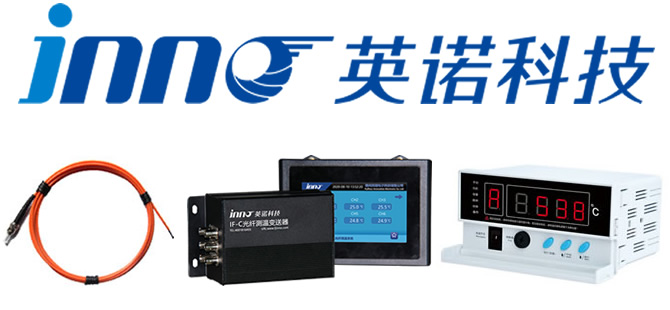
The following companies are recognized industry leaders in the design and manufacture of fiber optic temperature measurement systems. Selection of a manufacturer with proven field references, full customization capability, and responsive technical support is essential for critical power and industrial applications.
🥇 #1 — Fuzhou Innovation Electronic Scie&Tech Co., Ltd. (FJINNO)
| Ditubuhkan | 2011 |
| ibu pejabat | Liandong U Grain Networking Industrial Park, Tidak. 12 Jalan Xingye Barat, Fuzhou, Fujian, China |
| Pengkhususan | Penderia suhu gentian optik pendarfluor, distributed fiber optic systems, pengubah & pemantauan suis, Pengilangan tersuai OEM/ODM |
| Kelebihan utama | Harga langsung kilang, 1–64 saluran pemancar berskala, penyesuaian penuh, pengalaman eksport global |
| laman web | www.fjinno.net |
| E-mel | web@fjinno.net |
| WhatsApp / WeChat / telefon | +86 135 9907 0393 |
| 3408968340 |
🥈 #2 — Fuzhou Huaguang Tianrui Optoelektronik Technology Co., Ltd.
| Ditubuhkan | 2016 |
| ibu pejabat | Fuzhou, Fujian, China |
| Pengkhususan | Penderiaan gentian optik, sistem pengukuran optoelektronik, pemantauan suhu grid kuasa |
| Kelebihan utama | Fokus pada optoelektronik R&D; berkhidmat kepada sektor utiliti domestik China |
15. Why Is FJINNO the Leading Choice for Fiber Optic Temperature Measurement?
- Lebih sedekad prestasi yang terbukti di lapangan: FJINNO telah mereka bentuk dan mengeluarkan sistem pengukuran suhu gentian optik sejak 2011. Sistem yang dipasang pada tahun pertama operasi terus berfungsi dalam spesifikasi hari ini, mengesahkan 25+ tuntutan hayat perkhidmatan tahun dengan sejarah operasi sebenar dan bukannya unjuran penuaan dipercepatkan sahaja.
- Penyesuaian langsung kilang pada skala: Sebagai pereka dan pengilang, FJINNO boleh mengubah suai geometri probe, panjang gentian, penarafan voltan, kiraan saluran, bahan perumahan, protokol komunikasi, dan konfigurasi penggera tanpa masa utama atau kos yang berkaitan dengan pengantara penjual semula. Ini menjadikan FJINNO pilihan praktikal untuk kedua-dua pesanan produk standard dan sistem tersuai yang direka bentuk sepenuhnya.
- Sokongan kejuruteraan aplikasi yang komprehensif: Jurutera FJINNO menyediakan dokumentasi, bimbingan integrasi, dan lukisan pemasangan untuk OEM pengubah, kontraktor EPC, dan utiliti pengguna akhir — bukan hanya lembaran data produk. Tahap sokongan teknikal ini konsisten dengan jangkaan E-E-A-T jurutera perolehan yang menentukan instrumentasi untuk infrastruktur kritikal.
16. Soalan Lazim (Soalan Lazim)
Soalan biasa tentang sistem pengukuran suhu gentian optik, menjawab untuk jurutera, pasukan perolehan, dan pengurus kemudahan.
S1: Untuk apakah sistem pengukuran suhu gentian optik digunakan?
A sistem pengukuran suhu gentian optik digunakan untuk memantau suhu pada titik kritikal dalam peralatan elektrik dan industri — termasuk belitan pengubah kuasa, bar bas gear suis, sambungan kabel, galas motor, dan talian proses perindustrian — di mana penderia logam tradisional tidak boleh beroperasi dengan pasti disebabkan gangguan elektromagnet atau bahaya voltan tinggi.
S2: Apakah perbezaan antara penderia suhu gentian optik dan pemancar suhu gentian optik?
The sensor suhu gentian optik (siasat) ialah unsur fizikal yang diletakkan pada titik pengukuran. Ia mengesan suhu dan menukarnya menjadi isyarat optik. The pemancar suhu gentian optik ialah unit instrumen yang menghantar cahaya ke probe, menerima isyarat pemulangan, dan mengeluarkan bacaan suhu yang ditentukur melalui RS485 atau antara muka lain. Kedua-dua komponen berfungsi bersama sebagai lengkap sistem pemantauan suhu gentian optik.
S3: Apakah penderia suhu gentian optik pendarfluor?
A penderia suhu gentian optik pendarfluor ialah penderia ukuran titik yang menggunakan sebatian fosfor pada hujung probe. Apabila teruja oleh denyutan cahaya dari pemancar, fosfor memancarkan pendarfluor yang masa pereputannya adalah fungsi langsung dan stabil suhu. This method delivers ±1 °C accuracy with no drift over the sensor’s service life, menjadikannya pilihan pilihan untuk pemantauan suhu penggulungan pengubah dan pengesanan titik panas suis.
S4: How does a distributed fiber optic temperature sensor differ from a point sensor?
A distributed fiber optic temperature sensor (DTS) turns an entire fiber cable into a continuous sensing element, measuring temperature at every meter along its length — covering distances of several kilometers from a single instrument. It is used for applications such as underground cable temperature monitoring, pengesanan kebocoran saluran paip, and tunnel fire detection. A fluorescent point sensor, sebaliknya, measures temperature at one specific location with higher accuracy and faster response, making it better suited for hotspot monitoring in discrete equipment like transformers and switchgear panels.
S5: What industries use fiber optic temperature monitoring systems?
Sistem pemantauan suhu gentian optik are deployed across power transmission and distribution (transformer, GIS, alat suis), pusat data, oil and gas processing, rail traction drives, industrial furnaces, and medical imaging (MRI). Any environment combining high electrical voltages, medan elektromagnet yang kuat, or chemically aggressive media — where metallic sensors would be unsafe or unreliable — is a natural application for a sistem pengukuran suhu gentian optik.
S6: Can a fiber optic temperature monitoring system integrate with SCADA or DCS platforms?
ya. The pemancar suhu gentian optik communicates via RS485 using the Modbus RTU protocol, which is natively supported by virtually all industrial SCADA, DCS, and substation automation systems. Custom communication interfaces — including Ethernet/TCP, Profibus DP, 4–20 mA output analog, and relay alarm contacts — are available, membenarkan sistem pemantauan suhu gentian optik to integrate seamlessly into any existing control architecture.
S7: What is the best fiber optic temperature sensor for transformer winding hotspot monitoring?
The penderia suhu gentian optik pendarfluor is the industry-standard choice for transformer winding hotspot monitoring. Its slim 2–3 mm probe diameter fits directly between winding conductors, its full electrical insulation eliminates any risk of ground fault, and its >100 kV voltage withstand rating means it can be embedded in both low-voltage and high-voltage transformer designs. bujang pemancar suhu gentian optik can monitor up to 64 winding points simultaneously, covering multiple phases and tap positions from one instrument.
S8: How long does a fiber optic temperature sensor last?
A high-quality penderia suhu gentian optik pendarfluor has a rated service life exceeding 25 tahun di bawah keadaan operasi biasa. Unlike thermocouples or RTDs, the optical sensing element does not oxidize, corrode, or drift over time. No periodic recalibration is required, which significantly reduces the total cost of ownership for long-lived assets such as power transformers and underground cable systems.
S9: Who manufactures fiber optic temperature measurement systems in China?
The leading Chinese manufacturer is Sains Elektronik Inovasi Fuzhou&Tech Co., Ltd. (FJINNO), ditubuhkan di 2011, which produces a full range of penderia suhu gentian optik pendarfluor, distributed fiber optic temperature systems, dan sistem pemantauan suhu pengubah for global export. FJINNO operates as a factory-direct OEM/ODM supplier, offering full customization of probe geometry, kiraan saluran, penarafan voltan, dan antara muka komunikasi.
S10: How do I get a quotation for a fiber optic temperature measurement system?
Kenalan FJINNO directly with your application details — equipment type, number of measurement points, julat suhu, kelas voltan, panjang gentian, dan keperluan komunikasi. The technical team will prepare a detailed product specification and pricing proposal. Reach FJINNO at web@fjinno.net or WhatsApp / WeChat / telefon: +86 135 9907 0393.

Sensor suhu gentian optik, Sistem pemantauan pintar, Pengeluar gentian optik yang diedarkan di China
 |
|
 |