 Penderia suhu gentian optik INNO ,sistem pemantauan suhu.
- Komprehensif GIS partial discharge online monitoring systems protect high-voltage switchgear from insulation failure through early fault detection
- Penderia UHF, acoustic detection devices, dan TEV monitoring equipment provide multi-technology fusion diagnostic capabilities
- Bersepadu pemantauan suhu gentian optik dan DGA analysis systems enable multi-parameter correlation for accurate condition assessment
- Masa nyata unit pemerolehan data dan platform pemantauan jarak jauh sokongan 24/7 continuous operation with intelligent alarm mechanisms
- Suitable for 110kV to 750kV voltage levels with customizable monitoring point configurations
- Pattern recognition software and expert diagnostic systems identify different discharge defect types through PRPD analysis
- Predictive maintenance reduces unplanned outages by up to 60% and extends equipment service life
- Professional manufacturer with over 13 years experience serving utilities in 30+ negara di seluruh dunia
Jadual Kandungan
- Why Does Gas Insulated Switchgear Need Enhanced Partial Discharge Monitoring Systems?
- What Core Devices Are Included in a Complete GIS Partial Discharge Monitoring System?
- How Do UHF Ultrahigh Frequency Monitoring Devices Achieve High-Sensitivity Detection?
- Application Advantages of Acoustic Monitoring and TEV Detection Equipment in GIS
- How Does the 24/7 Online Monitoring System Ensure Continuous Equipment Operation?
- Integrated Temperature Monitoring Devices and DGA Analysis Systems Improve Diagnostic Accuracy
- How Does the Intelligent Diagnostic System Identify Different Discharge Types?
- What Actual Benefits Does the Predictive Maintenance System Bring to Power Users?
- How Are Monitoring Solutions Configured for Different Voltage Level GIS Equipment?
- How to Select the Right GIS Partial Discharge Monitoring System?
1. Why Does Gas Insulated Switchgear Need Enhanced Partial Discharge Monitoring Systems?
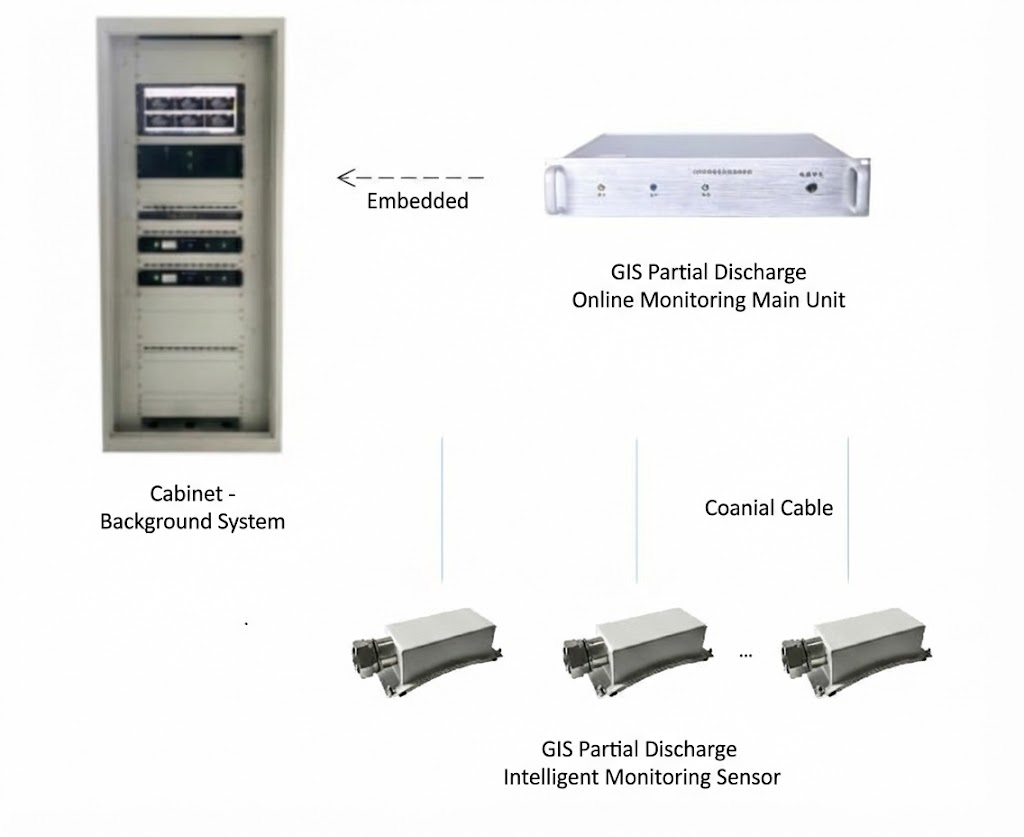
Gas insulated switchgear operates under high voltage and relies on SF6 gas for insulation. Internal insulation defects generate partial discharge activity that gradually degrades dielectric strength, potentially leading to catastrophic failures. Traditional offline testing methods cannot detect evolving problems between scheduled maintenance intervals.
Typical Signs and Risks of GIS Insulation Failures
Insulation deterioration in alat suis terlindung gas manifests through multiple warning signs. Partial discharge creates electromagnetic signals, acoustic waves, and chemical byproducts. Contamination particles, kemasukan lembapan, manufacturing defects, and aging insulation materials all generate discharge activity. Tanpa pemantauan berterusan, these defects progress undetected until causing equipment failure, resulting in extended outages and significant repair costs.
Limitations of Traditional Offline Detection Methods
Periodic offline testing requires equipment de-energization, limiting assessment frequency. Annual or biennial inspections miss critical degradation occurring between tests. pegang tangan TEV detection devices and portable ultrasonic sensors provide only snapshot measurements. This testing approach cannot track discharge intensity trends or correlate multiple parameters for comprehensive condition assessment.
Operational Value Delivered by Online Monitoring Systems
Berterusan sistem pemantauan dalam talian detect insulation problems at the earliest stages when corrective action prevents failures. Masa nyata pemerolehan data enables trend analysis and predictive maintenance scheduling. Utilities avoid unplanned outages through condition-based intervention rather than reactive repairs. Remote monitoring platforms reduce site inspection requirements while improving asset management capabilities.
2. What Core Devices Are Included in a Complete GIS Partial Discharge Monitoring System?
Yang menyeluruh partial discharge monitoring solution integrates multiple sensor technologies with centralized data processing. The system architecture combines field detection equipment, infrastruktur komunikasi, and analysis software into a unified monitoring platform.
UHF Ultrahigh Frequency Sensors and Acquisition Modules
Penderia UHF detect electromagnetic signals in the 300 MHz kepada 3 GHz frequency range generated by partial discharge events. Internal sensors mount inside switchgear compartments through gas ports or inspection windows. External sensors attach to dielectric windows or housing surfaces. Berbilang saluran acquisition modules digitize sensor signals with nanosecond time resolution, capturing discharge pulse characteristics for pattern analysis.
Acoustic Positioning Sensors and TEV Detection Devices
Penderia akustik detect ultrasonic waves produced by discharge activity propagating through SF6 gas and mechanical structures. Sensor arrays enable triangulation for precise defect localization within switchgear compartments. Transient earth voltage (TEV) peranti pemantauan measure high-frequency voltage pulses appearing on switchgear enclosures. Permanently installed Sensor TEV complement portable handheld units for continuous surveillance.
Data Processing Controllers and Intelligent Analysis Systems
Berpusat pengawal pemantauan collect data from distributed sensors, performing real-time signal processing and event detection. Analysis software generates phase-resolved partial discharge (PRPD) corak, trending reports, and diagnostic assessments. Database systems archive historical records supporting long-term condition tracking. The control platform provides operator interfaces for alarm management and system configuration.
3. How Do UHF Ultrahigh Frequency Monitoring Devices Achieve High-Sensitivity Detection?
UHF detection technology offers superior sensitivity and noise immunity compared to conventional methods. The ultrahigh frequency range minimizes interference from external electromagnetic sources while maximizing discharge signal amplitude.
Internal and External UHF Sensor Selection
Internal Penderia UHF mount directly within gas compartments, providing maximum sensitivity to discharge signals. These sensors integrate during switchgear manufacturing or through existing access ports. External sensors offer non-intrusive installation on dielectric windows maintaining gas pressure integrity. Sensor selection depends on switchgear design, kekangan pemasangan, and sensitivity requirements. Hybrid configurations combine both sensor types for comprehensive coverage.
Multi-Channel Synchronous Acquisition Systems
Multi-channel acquisition systems simultaneously sample multiple sensors with precise time synchronization. This capability enables discharge source location through time-difference-of-arrival (TDOA) algoritma. Synchronous measurement distinguishes individual discharge sources in switchgear with multiple compartments. High-speed digitizers capture complete pulse waveforms for detailed signature analysis.
Signal Processing and Filtering Devices
Maju unit pemprosesan isyarat extract discharge pulses from background noise using digital filtering and pattern recognition algorithms. Adaptive filters suppress periodic interference while preserving discharge characteristics. Processing equipment calculates discharge magnitude, kadar pengulangan, and phase correlation in real-time. Filtered data feeds diagnostic algorithms for automated defect classification.
4. Application Advantages of Acoustic Monitoring and TEV Detection Equipment in GIS
Acoustic and TEV technologies complement UHF detection, providing independent verification and enhanced diagnostic confidence. Each technology offers unique advantages for specific discharge types and switchgear configurations.
Acoustic Sensor Array Positioning Systems
Acoustic sensor arrays pinpoint discharge locations with centimeter-level accuracy within GIS compartments. Multiple sensors measure arrival time differences of ultrasonic waves propagating from the discharge source. Location systems calculate three-dimensional coordinates guiding maintenance personnel to exact defect positions. This precision reduces inspection time and enables targeted repairs without extensive disassembly.
Transient Earth Voltage Handheld and Fixed Detection Devices
TEV handheld instruments enable rapid switchgear surveys during commissioning and routine inspections. Permanently installed TEV monitoring equipment provides continuous surveillance of high-frequency pulses coupling to switchgear enclosures. Fixed Sensor TEV complement UHF systems, detecting discharges in locations with limited UHF sensor access. Combined measurements increase detection reliability and reduce false alarms.
Multi-Technology Collaborative Monitoring Solutions
Bersepadu penyelesaian pemantauan correlate data from UHF, akustik, and TEV sensors for comprehensive assessment. Cross-validation between technologies confirms discharge presence and characteristics. Sistem berbilang parameter differentiate actual partial discharge from interference sources and transient disturbances. Collaborative analysis improves diagnostic accuracy and supports confident maintenance decisions.
5. How Does the 24/7 Online Monitoring System Ensure Continuous Equipment Operation?
Permanent installation enables uninterrupted condition surveillance throughout equipment service life. Automated data collection and analysis reduce manual intervention while providing early warning of developing problems.
Real-Time Data Acquisition and Storage Devices
Data acquisition systems continuously sample sensor outputs, capturing discharge activity during all operating conditions and load levels. High-capacity storage devices archive raw measurement data and processed results for retrospective analysis. Redundant storage protects critical information from hardware failures. Data logging equipment timestamps all events supporting correlation with operational records and external factors.
Remote Monitoring Platforms and Mobile Access
Remote monitoring platforms enable engineers to review equipment status from central control rooms or off-site locations. Web-based interfaces provide dashboard views of multiple substations and individual switchgear assets. Mobile applications deliver real-time alerts and allow condition review from smartphones and tablets. Remote access reduces site visit requirements while improving response times to developing problems.
Automatic Alarm Systems and Graded Warning Mechanisms
Pintar sistem penggera evaluate discharge severity using configurable thresholds and trend analysis. Multi-level warnings range from information notifications to critical alerts requiring immediate action. Notification systems distribute alarms through email, SMS, and integration with existing SCADA infrastructure. Automatic escalation procedures ensure appropriate personnel receive timely information based on event severity and duration.
6. Integrated Temperature Monitoring Devices and DGA Analysis Systems Improve Diagnostic Accuracy

Combining partial discharge measurement with complementary diagnostic parameters provides comprehensive equipment health assessment. Temperature and gas analysis data reveal additional degradation mechanisms and validate discharge measurements.
Fiber Optic Temperature Sensors at Critical GIS Locations
Penderia suhu gentian optik monitor hot spots at connections, kenalan, and current-carrying components within switchgear. Non-conductive fiber optic technology operates safely in high-voltage environments without electromagnetic interference. Sistem pemantauan suhu detect abnormal heating associated with contact resistance problems or overload conditions. Correlation between temperature rise and discharge activity helps identify root causes and guide maintenance priorities.
Dissolved Gas Online Analysis Devices Monitoring SF6 Decomposition Products

Analisis gas terlarut (DGA) sistem detect chemical byproducts generated when partial discharge decomposes SF6 gas. Online gas analyzers continuously measure concentrations of sulfur fluorides, fluorocarbons, and decomposition gases. Increasing byproduct levels indicate active discharge and insulation degradation. DGA monitoring equipment provides independent confirmation of discharge presence when electromagnetic detection faces limitations.
Multi-Parameter Correlation Analysis and Comprehensive Health Assessment Systems
Integrated analysis platforms combine discharge measurements, data suhu, and gas composition into unified equipment health scores. Correlation algorithms identify relationships between parameters indicating specific defect types. Assessment systems weight multiple diagnostic inputs generating reliable condition rankings for asset management. Comprehensive evaluation reduces uncertainty in maintenance decision-making.
7. How Does the Intelligent Diagnostic System Identify Different Discharge Types?
Automated pattern recognition distinguishes various defect categories based on characteristic discharge signatures. Expert system logic applies utility industry experience to measurement data, supporting less experienced personnel.
PRPD Pattern Analysis and Pattern Recognition Software
Phase-resolved partial discharge (PRPD) patterns display discharge occurrence versus power frequency phase angle and pulse magnitude. Pattern recognition software compares measured PRPD distributions against reference patterns for known defect types. Mahkota, pelepasan permukaan, and floating particles each produce distinctive patterns. Analysis algorithms classify discharge types automatically, providing preliminary diagnostic conclusions for engineering review.
Defect Type Database and Expert Diagnostic Systems
Diagnostic databases compile discharge characteristics from laboratory testing and field experience with various GIS defects. Expert systems encode decision rules developed by specialist engineers into software logic accessible to operators. Knowledge-based diagnosis considers multiple measurement parameters, equipment history, dan keadaan operasi. System recommendations suggest appropriate follow-up actions based on defect severity and type.
Historical Data Comparison and Trend Analysis Devices
Trending software tracks discharge magnitude, kekerapan, and pattern changes over months and years of operation. Gradual increase in activity indicates progressive insulation deterioration requiring attention. Stable or decreasing trends suggest successful commissioning cleanup or benign discharge sources. Comparison tools overlay current measurements against historical baselines highlighting significant deviations. Long-term data analysis supports predictive maintenance timing optimization.
8. What Actual Benefits Does the Predictive Maintenance System Bring to Power Users?
Condition-based maintenance strategies enabled by continuous monitoring deliver substantial operational and economic advantages. Data-driven decision making replaces time-based schedules with targeted interventions.
Early Fault Warning Reduces Outage Risks
Sistem penyelenggaraan ramalan identify developing problems weeks or months before equipment failure. Early detection allows scheduled repairs during planned outages rather than emergency response. Avoiding unplanned interruptions prevents customer outages and associated financial penalties. Utilities reduce forced outage rates by up to 60% through proactive intervention guided by monitoring data.
Condition Assessment Guides Maintenance Plan Optimization
Accurate equipment condition knowledge supports risk-based maintenance scheduling and budget allocation. Resources focus on assets showing degradation rather than uniform time-based interventions. Condition assessment reports justify maintenance expenditures to management with quantified equipment health metrics. Extended maintenance intervals for healthy equipment reduce costs while increased attention to problematic units improves reliability.
Extended Equipment Service Life and Asset Value Management
Preventing damage through early intervention extends switchgear operational life by decades. Sistem pemantauan demonstrate equipment fitness for continued service, deferring costly replacements. Detailed condition records enhance asset value during utility transactions and regulatory proceedings. Documented equipment health histories support life extension justifications and strategic planning decisions.
9. How Are Monitoring Solutions Configured for Different Voltage Level GIS Equipment?
Monitoring system design scales with switchgear voltage rating, physical size, and criticality. Configuration flexibility accommodates diverse utility requirements and installation constraints.
110kV-220kV Medium Voltage GIS Monitoring System Configuration
Medium voltage installations typically deploy Penderia UHF at key compartments with centralized data collection. Padat pengawal pemantauan serve multiple switchgear panels from a single location. Systems focus on essential diagnostics while maintaining cost-effectiveness. Sensor quantities and analysis sophistication match the lower consequence of medium voltage equipment failures.
330kV-500kV High Voltage GIS Monitoring Device Selection
High voltage applications require comprehensive sensor coverage combining UHF, akustik, dan TEV detection equipment. Increased system redundancy and reliability provisions reflect greater failure consequences. Advanced analysis software provides detailed diagnostic capabilities supporting critical infrastructure protection. Integration with utility enterprise systems enables corporate-wide asset management.
750kV Extra High Voltage GIS Comprehensive Monitoring Solutions
Extra high voltage installations demand maximum monitoring coverage and diagnostic capability. Dense sensor arrays ensure detection of discharge activity throughout large switchgear structures. Berlebihan acquisition systems and communication paths provide fault-tolerant operation. khusus analysis platforms handle high data volumes from extensive sensor networks. Custom engineering addresses unique technical challenges of EHV equipment monitoring.
10. How to Select the Right GIS Partial Discharge Monitoring System?

Successful monitoring implementation requires careful evaluation of technical requirements, operational needs, dan kekangan integrasi. Proper system selection ensures long-term value and user satisfaction.
Choose Sensors Based on Equipment Type and Installation Environment
Switchgear manufacturer, umur, and design determine feasible sensor installation methods. New equipment installations accommodate internal sensors while retrofits may require external mounting. Environmental conditions including temperature extremes, kelembapan, and electromagnetic interference influence sensor specifications. Seismic requirements and outdoor installations demand ruggedized sensor housings dan perkakasan pemasangan.
Consider Monitoring Point Quantity and System Expandability
Initial monitoring coverage balances diagnostic needs against project budgets. Modular system architectures allow future expansion as utility experience and requirements evolve. Boleh skala platform pemantauan accommodate additional sensors and features through software updates and hardware additions. Planning for growth prevents premature system obsolescence and protects initial investments.
Evaluate Communication Interfaces and Existing System Integration Requirements
Compatibility with utility IT infrastructure and SCADA systems affects long-term operational efficiency. Standard protokol komunikasi termasuk Modbus, IEC 61850, and DNP3 facilitate seamless integration. Cybersecurity requirements may mandate specific network isolation or encryption capabilities. Interface equipment specifications must support existing infrastructure while accommodating future technology evolution.
Professional manufacturers provide customized GIS partial discharge monitoring solutions tailored to specific project requirements. Experienced engineering teams guide system selection, sokongan pemasangan, and commissioning assistance. Comprehensive product portfolios including Penderia UHF, acoustic detection systems, TEV monitoring equipment, penderia suhu gentian optik, dan DGA analysis systems enable complete condition monitoring from a single supplier.
Kesimpulan
Enhanced partial discharge monitoring systems provide essential protection for gas insulated switchgear investments. Continuous surveillance using Penderia UHF, acoustic detection, dan TEV monitoring devices detects insulation problems at the earliest stages. Integrasi dengan pemantauan suhu dan analisis DGA enables comprehensive equipment health assessment supporting data-driven maintenance decisions.
moden online monitoring platforms deliver operational benefits including reduced outage risks, optimized maintenance costs, dan memanjangkan hayat perkhidmatan peralatan. Intelligent diagnostic systems automate discharge pattern analysis and defect classification, supporting confident decision-making. Scalable system architectures accommodate diverse voltage levels from 110kV to 750kV installations.
Selecting appropriate monitoring technology requires careful evaluation of equipment characteristics, keperluan operasi, dan kekangan integrasi. Professional manufacturers offer complete solutions with customization capabilities, kepakaran teknikal, and long-term support services.
For detailed technical consultation, customized monitoring solutions, or product quotations for your specific GIS application, hubungi pasukan kejuruteraan kami. We provide professional guidance in system selection, configuration design, and implementation planning tailored to your operational needs.
Soalan Lazim
How many monitoring points can a GIS partial discharge monitoring system support?
moden sistem pemantauan support from several points up to 64 or more sensor channels depending on controller configuration. Scalable architectures accommodate future expansion as monitoring requirements evolve. Distributed controllers enable coverage of entire substations with centralized data management.
Does monitoring system installation require equipment de-energization?
Luaran Penderia UHF dan TEV devices mount without de-energization on many switchgear designs. Internal sensor installation typically requires planned outages during manufacturing or scheduled maintenance. Retrofit projects balance diagnostic benefits against installation constraints and outage costs.
Can UHF sensors and acoustic sensors be used simultaneously?
digabungkan UHF and acoustic monitoring provides complementary information improving diagnostic confidence. UHF excels in discharge detection sensitivity while acoustic arrays enable precise source location. Multi-technology systems reduce false alarms through cross-validation between sensor types.
How does monitoring data interface with existing SCADA systems?
Antara muka komunikasi menyokong protokol standard termasuk Modbus RTU/TCP, IEC 61850, and DNP3 for SCADA integration. Monitoring systems export alarm status, key measurements, and equipment health indicators. Bidirectional communication enables remote configuration and diagnostic data retrieval through utility enterprise networks.
What communication protocols does the system support?
Standard platform pemantauan provide Modbus RTU/TCP, IEC 61850 MMS, and DNP3 protocols. Ethernet and serial interfaces accommodate diverse utility IT infrastructures. Custom protocol development addresses specialized integration requirements with proprietary systems.
What equipment is included in a complete monitoring system?
Complete systems include sensor nyahcas separa (UHF, akustik, TEV), data acquisition modules, pengawal pemantauan, perisian analisis, communication devices, bekalan kuasa, dan perkakasan pemasangan. Optional components include penderia suhu, Penganalisis DGA, dan platform pemantauan jarak jauh depending on application requirements.
How can I obtain a customized solution for my specific project?
Contact our engineering team with details including switchgear manufacturer, penarafan voltan, number of bays, keadaan persekitaran, dan keperluan integrasi. We provide technical consultation, system recommendations, detailed quotations, and implementation support tailored to your application.
Manufacturer Information
Sains Elektronik Inovasi Fuzhou&Tech Co., Ltd.
Ditubuhkan: 2011
Pengkhususan: Fiber optic temperature sensors and online monitoring systems for power equipment
Maklumat Hubungan:
E-mel: web@fjinno.net
WhatsApp/WeChat/Telefon: +86 13599070393
QQ: 3408968430
laman web: www.fjinno.net
Alamat:
Liandong U Grain Networking Industrial Park
No.12 Xingye West Road
Fuzhou, Fujian, China
Penafian
The information provided in this article is for general guidance purposes only. Sementara kami berusaha untuk memastikan ketepatan, spesifikasi produk, parameter teknikal, and capabilities are subject to change without notice. Prestasi sistem sebenar bergantung pada keadaan aplikasi tertentu, kualiti pemasangan, dan persekitaran operasi. Readers should contact the manufacturer directly for detailed technical specifications, current product availability, dan cadangan khusus projek. This article does not constitute professional engineering advice or warranty of system performance. Always consult qualified engineers and follow applicable industry standards and regulations when designing, memasang, or operating partial discharge monitoring systems.

Sensor suhu gentian optik, Sistem pemantauan pintar, Pengeluar gentian optik yang diedarkan di China
 |
 |
 |