 INNO 광섬유 온도 센서 ,온도 모니터링 시스템.
- 부분방전 (PD) 국부적인 절연 파괴가 발생하는 것입니다., 감지되지 않은 채 방치됨, 변압기 절연이 점차 저하되어 궁극적으로 치명적인 고장을 일으킬 수 있습니다.. 온라인 PD 모니터링 이러한 결함을 가장 초기 단계에서 포착합니다..
- 5가지 보완적 감지 기술 - 전기, 음향학, UHF, 테브, 그리고 화학적 (DGA) — 각각은 부분 방전의 서로 다른 물리적 징후를 포착합니다., 단일 방법만으로는 완전한 진단 범위를 제공할 수 없습니다..
- 에이 다중 센서 융합 아키텍처 결합 초음파 센서 (20 kHz~200kHz), 고주파 전류 센서 (100 kHz~50MHz), 그리고 UHF 센서 (300 MHz~3GHz) 거짓 긍정을 제거합니다, 소스 현지화 가능, 최고의 검출 신뢰성을 제공합니다..
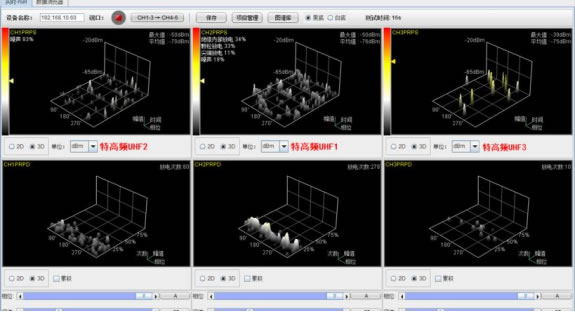
- 고급의 PRPD (위상 분해 부분 방전) 3차원 패턴 분석 및 PRPS (위상 분해 펄스 시퀀스) 시각화를 통해 엔지니어는 특정 방전 유형(코로나)을 식별할 수 있습니다., 표면 방전, 내부 공백, 또는 부동 전위 - 그에 따라 유지 관리의 우선 순위를 정합니다..
- 현대의 PD 모니터링 시스템 와 통합하다 SCADA Modbus를 통한 기업 자산 관리 플랫폼, IEC 61850, 및 DNP3, 단열재 상태 데이터를 유틸리티의 광범위한 상태 기반 유지 관리 워크플로우에 포함.
목차
- 변압기의 부분 방전이란 무엇이며 이를 모니터링해야 하는 이유?
- 전력 변압기 내부 부분 방전의 4가지 일반적인 유형
- 5가지 부분 방전 감지 기술 비교 - 전기, 음향학, UHF, 테브, 및 화학적 방법
- 다중 센서 융합이 단일 방법 감지보다 뛰어난 이유
- 온라인 부분방전 모니터링 시스템의 구성요소는 무엇입니까??
- 센서 설치, 대역폭, 및 기능 - 초음파, HFCT, 및 UHF 설명
- PD 모니터링 호스트 장치의 주요 기술 사양
- PRPD 3D 패턴 및 PRPS 펄스 시퀀스가 방전 유형을 식별하는 방법?
- Backend Monitoring Software — Features and Diagnostic Capabilities
- How Does a PD Monitoring System Integrate with SCADA and Asset Management Platforms?
- Which Transformers Benefit Most from Online Partial Discharge Monitoring?
- How to Select the Right Partial Discharge Monitoring Equipment — A Buyer’s Guide
- Applicable International Standards for Partial Discharge Testing and Monitoring
- 자주 묻는 질문 (FAQ)
1. 변압기의 부분 방전이란 무엇이며 이를 모니터링해야 하는 이유?
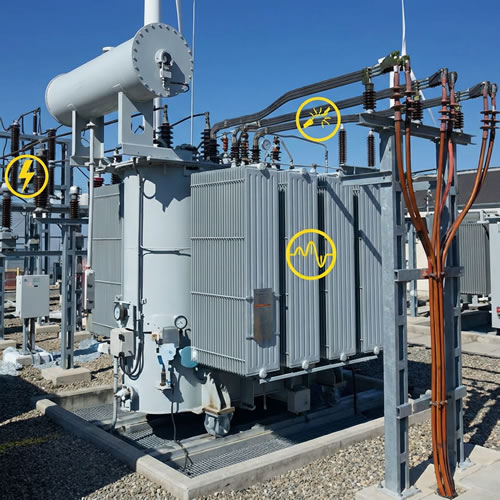
부분방전 is a localised electrical breakdown that only partially bridges the insulation between conductors inside a transformer. Unlike a full flashover, a partial discharge event does not create a complete conductive path, but it does release energy — in the form of electromagnetic radiation, 음파, 열, and chemical by-products — that gradually erodes the surrounding insulation material. 시간이 지남에 따라, 부분방전 활동이 반복되면 원래의 결함이 확대됩니다., 절연 노화를 가속화합니다., 궁극적으로 완전한 절연 실패를 유발할 수 있습니다., 치명적인 변압기 손상으로 이어짐, 계획되지 않은 중단, 그리고 상당한 금전적 손실.
문제는 정상 작동 중에는 부분 방전 활동이 보이지 않는다는 것입니다.. 오일에 용해된 가스가 축적되거나 권선 온도가 상승하는 등의 외부 증상은 결함이 이미 고급 단계로 진행된 후에만 나타나는 경우가 많습니다.. 이것이 바로 이유이다 온라인 부분방전 모니터링 현대의 필수 요소가 되었습니다. 변압기 상태 모니터링 프로그램. 전기를 감지하여, 음향학, PD 이벤트의 전자기 서명을 실시간으로 확인, 온라인 시스템은 단열 성능 저하에 대한 가능한 가장 빠른 경고를 몇 주 안에 제공합니다., 개월, 또는 기존의 정기 테스트를 통해 결함이 감지되기 몇 년 전.
2. 전력 변압기 내부 부분 방전의 4가지 일반적인 유형

부분방전이 모두 같은 것은 아니다. 물리적 메커니즘, 위치, 방전의 심각도는 절연 결함의 특성에 따라 달라집니다.. 가장 일반적인 네 가지 PD 유형을 이해하면 엔지니어는 모니터링 데이터를 해석하고 적절한 유지 관리 대응을 계획하는 데 도움이 됩니다..
코로나 방전
코로나 방전은 국부적인 전기장 강도가 주변 매체(일반적으로 변압기 오일 또는 가스)의 파괴 강도를 초과하는 날카로운 금속 돌출부 또는 모양이 불량한 전극에서 발생합니다.. 방전은 희미한 빛으로 나타나며 주로 수소 가스를 생성합니다.. 코로나는 종종 PD의 가장 덜 심각한 형태로 간주되지만, persistent corona activity degrades oil quality over time and can initiate more damaging discharge types.
표면 방전
Surface discharge develops along the interface between solid insulation (pressboard or crepe paper) and the surrounding oil or gas. It is frequently caused by contamination, 습기 침투, or excessive tangential electric field stress at the insulation surface. Surface discharge can quickly escalate in severity because the carbonised tracking path it creates along the insulation surface progressively shortens the effective insulation distance.
Internal Void Discharge
Gas-filled voids or cavities trapped within solid insulation — typically caused by manufacturing defects, 기계적 응력, or thermal ageing — create regions where the dielectric strength is significantly lower than the surrounding material. When the applied voltage exceeds the breakdown threshold of the void, a partial discharge ignites inside the cavity. Internal void discharge is particularly insidious because it is entirely enclosed within the insulation and cannot be detected by visual inspection.
Floating-Potential Discharge
When a metallic component inside the transformer — such as a shield, a structural bracket, or a loose connection — is not properly connected to a defined electrical potential, it acquires a floating voltage through capacitive coupling. This floating potential can drive repetitive discharge between the component and adjacent earthed or energised structures. Floating-potential discharge is typically high in energy and produces strong UHF and acoustic signatures, making it relatively easier to detect but also more damaging to nearby insulation.
3. 5가지 부분 방전 감지 기술 비교 - 전기, 음향학, UHF, 테브, 및 화학적 방법
Each detection technique captures a different physical phenomenon produced by partial discharge events. The table below provides a side-by-side comparison of the five most widely used methods, summarising their measurement principles, typical sensitivity, main advantages, and primary limitations.
| 탐지 방법 | Physical Quantity Measured | 일반 센서 | Sensitivity Metric | 주요 장점 | 주요 제한 사항 |
|---|---|---|---|---|---|
| 전기 같은 (IEC 60270) | Apparent charge (PC / nC) | Coupling capacitor, 부싱 탭 | Down to ~1 pC | Standardised, quantitative, excellent for factory testing | Susceptible to EMI in field; primarily offline |
| 음향학 / 초음파 | 음향 방출 (데시벨 / mV) | Piezoelectric sensor (20–200 kHz) | 보통의 | EMI에 면역; enables PD source localisation via triangulation | Signal attenuated by tank structure and oil path |
| UHF (초고주파) | Electromagnetic signal (300 MHz~3GHz) | UHF 안테나 (conical, spiral, Vivaldi) | Down to a few pC equivalent | Excellent noise rejection; 실시간; suitable for online use | 감도는 센서 위치에 따라 다릅니다.; 설치 포트가 필요합니다 |
| 테브 (과도 지구 전압) | 표면 전압 펄스 (mV) | 용량성 플레이트 센서 | 보통에서 높음 | 비침해적; 중단이 필요하지 않습니다; 간단한 설치 | 금속 인클로저 장비에 한함; 외부 PD 전용 |
| 화학적인 (DGA) | 용존가스 농도 (ppm) | 온라인 DGA 모니터 / 실험실 크로마토그래피 | 간접지표 | 누적된 절연 성능 저하 감지; 확립된 표준 | 느린 응답; PD의 위치나 유형을 정확히 찾아낼 수 없음 |
표에서 알 수 있듯이, 부분 방전 감지의 모든 측면을 포괄하는 단일 기술은 없습니다.. 전기적 방법은 가장 정확한 전하 정량화를 제공하지만 현장 소음으로 인해 어려움을 겪습니다.. 음향 및 UHF 방법은 온라인 모니터링 및 소스 위치 파악에 탁월합니다.. TEV는 신속한 비침해적 검사에 이상적입니다.. DGA는 누적 절연 손상을 나타내지만 실시간 펄스 수준 정보는 제공하지 않습니다.. This complementarity is what drives the industry toward multi-sensor fusion architectures.
4. 다중 센서 융합이 단일 방법 감지보다 뛰어난 이유
A single-sensor PD monitor — regardless of how sensitive it is — faces two fundamental challenges: false positives caused by external noise sources and diagnostic ambiguity when only one type of signal is available. Multi-sensor fusion technology addresses both problems by cross-correlating data from sensors operating in entirely different frequency domains and physical measurement principles.
Consider a practical example. An ultrasonic sensor mounted on the transformer tank detects an acoustic emission event. In isolation, the operator cannot be certain whether the signal is genuine PD or a mechanical vibration from a nearby cooling fan. 하지만, if a UHF sensor simultaneously detects a corresponding electromagnetic pulse, and a high-frequency current sensor at the grounding cable records a coincident current spike, the probability that the event is a true partial discharge rises to near certainty. The time-of-arrival difference between the acoustic and electromagnetic signals can further be used to estimate the spatial location of the discharge source inside the transformer.
This fusion approach dramatically reduces false alarm rates, improves diagnostic confidence, and enables the operator to not only confirm that PD is occurring but also determine where it is occurring and how severe it is — all from a single integrated monitoring platform. It is the reason why leading 변압기 부분방전 모니터링 시스템 now incorporate three sensor types as standard, rather than relying on any one method alone.
5. 의 구성 요소는 무엇입니까? 온라인 부분방전 모니터링 시스템?
완전한 온라인 PD 모니터링 시스템 원시 방전 신호를 실행 가능한 진단 인텔리전스로 변환하기 위해 함께 작동하는 세 가지 기능 계층으로 구성됩니다..
필드 센서
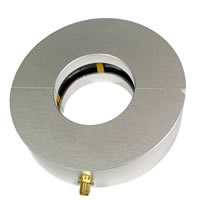
세 가지 유형의 센서가 변압기에 배치되어 부분 방전의 다양한 물리적 징후를 포착합니다.. 초음파 센서는 권선 및 오일 내 PD 활동으로 인한 음향 방출을 감지합니다.. 고주파 전류 (HFCT) 센서는 방전 이벤트로 생성된 펄스 전류를 측정하기 위해 코어 접지 케이블에 고정됩니다.. UHF 센서는 오일 밸브 포트에 설치되어 변압기 오일을 통해 전파되는 초고주파 전자기 방사선을 포착합니다.. 각 센서는 IP68 보호 등급으로 열악한 실외 환경에 맞게 설계되었습니다..
PD 모니터링 호스트 장치
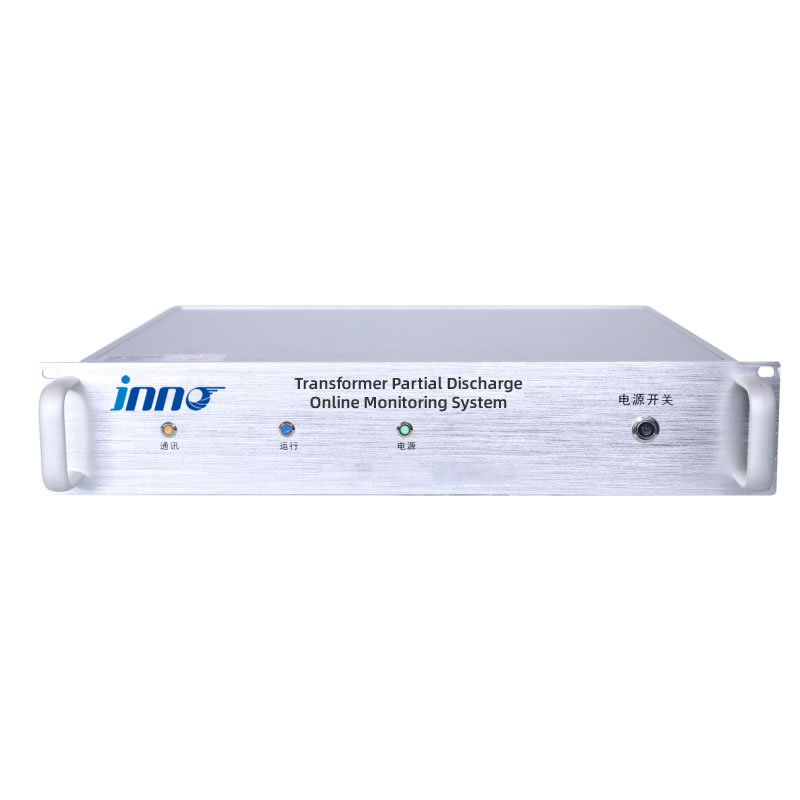
모니터링 호스트는 시스템의 중앙 처리 허브입니다.. 연결된 모든 센서로부터 아날로그 신호를 수신합니다., 신호 컨디셔닝을 수행합니다. (확대, 필터링, 및 임피던스 매칭), 다중 채널 획득 아키텍처를 사용하여 고속으로 파형을 디지털화합니다.. 호스트는 최대 방전 진폭을 포함한 주요 PD 매개변수를 계산합니다., 평균 토출량, 방전 빈도 - 패턴 인식 및 결함 분류를 위한 지능형 알고리즘을 적용합니다.. 일반적으로 컨버전스 캐비닛 내부의 2U 인클로저 또는 변압기 근처의 제어판에 랙 장착됩니다..
백엔드 모니터링 소프트웨어
제어실 컴퓨터 또는 서버에 설치, 소프트웨어 플랫폼은 실시간 시각화를 제공합니다., 과거 동향, 알람 관리, 및 진단 분석. 핵심 분석 기능에는 3D PRPD 패턴 디스플레이가 포함됩니다., PRPS pulse sequence mapping, discharge amplitude statistics, and comparison against an expert pattern database for automated PD type identification. The software communicates with the monitoring host via Ethernet or RS-485.
6. 센서 설치, 대역폭, 및 기능 - 초음파, HFCT, 및 UHF 설명
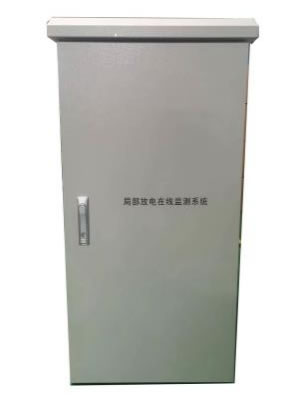
The effectiveness of a 부분방전 모니터링 시스템 depends heavily on correct sensor selection and placement. The table below details the three sensor types used in a full-spectrum multi-sensor architecture, including their monitoring bandwidth, 설치 방법, mounting location, and primary diagnostic function.
| 센서 유형 | Monitoring Bandwidth | 설치 방법 | Mounting Location | 주요 기능 |
|---|---|---|---|---|
| Ultrasonic Sensor | 20 kHz – 200 kHz | Magnetic mount | Transformer tank surface | Detects acoustic emission signals generated by internal PD activity in windings and insulation structures |
| High-Frequency Current (HFCT) 감지기 | 100 kHz – 50 MHz | 클램프온 | 핵심 접지점 | Captures high-frequency pulse currents flowing through the grounding cable as a result of discharge events |
| UHF Sensor | 300 MHz - 3 000 MHz | Plug-in type | Oil drain valve port | Monitors ultra-high-frequency electromagnetic signals propagating through transformer oil, indicating internal insulation discharge |
Installation Notes
Ultrasonic sensors attach to the tank wall using a magnetic holder, which allows flexible repositioning without drilling or welding. For optimal acoustic coupling, a thin layer of couplant gel is applied between the sensor face and the tank surface. The HFCT sensor is a split-core clamp that can be installed around the grounding cable without disconnecting it — meaning no transformer outage is required. The UHF sensor inserts into an existing oil drain valve or dedicated dielectric window port, placing the antenna element inside the oil space for maximum sensitivity to internal electromagnetic signals. All three sensor types are rated IP68, ensuring reliable operation in rain, 먼지, 습기, and temperature extremes from -20 °C ~ +125 ℃.
7. PD 모니터링 호스트 장치의 주요 기술 사양
The monitoring host is the heart of the system, responsible for high-speed signal acquisition, real-time processing, and data communication. The table below presents the core technical parameters of a representative industrial-grade PD monitoring host designed for substation deployment.
| 매개변수 | 사양 |
|---|---|
| 신호 수신 | 초음파, 고주파 전류 (HFCT), and UHF sensor inputs |
| 다이내믹 레인지 | -80 에게 -20 dBm |
| 샘플링 속도 | 200 MS/s (200 million samples per second) |
| Channel Configuration | 4 또는 6 채널 (사용자 구성 가능) |
| Channel Consistency | ≤ 0.5 dBm |
| 모니터링 범위 | ≤ 20 000 PC |
| Transmission Impedance | ≥ 12 mV/mA |
| 통신 인터페이스 | RJ45 이더넷, RS-485 |
| 지원되는 프로토콜 | 모드버스 RTU/TCP, IEC 61850, DNP3 |
| 전원공급장치 | AC 90–240 V, 50/60 헤르츠 |
| 울로 둘러싼 땅 | 2U 랙 마운트 (483 mm × 89 mm × 300 mm) |
| 설치 방법 | Convergence cabinet or control panel mount |
| Sensor Protection Rating | IP68 |
| 작동 온도 | -20 °C ~ +125 ℃ (감지기); host per cabinet environment |
| 진단 출력 | 방전량 (큐), discharge phase (Ø), 3D PRPD 패턴, PRPS pulse sequences, maximum amplitude, average quantity, 방전 빈도 |
왜 200 MS/s Sampling Rate Matters
Partial discharge pulses are extremely fast transient events, often lasting only nanoseconds. A sampling rate of 200 MS/s — equivalent to a 5-nanosecond sampling interval — ensures that the host captures the full waveform of each discharge pulse without aliasing or distortion. This waveform fidelity is essential for accurate PRPD pattern construction and for distinguishing genuine PD pulses from noise artefacts. Lower sampling rates may miss critical waveform features, leading to misclassification or missed detections.
8. PRPD 3D 패턴 및 PRPS 펄스 시퀀스가 방전 유형을 식별하는 방법?
Raw PD data — pulse counts, amplitudes, and timestamps — becomes truly diagnostic when it is visualised through 위상 분해 부분 방전 (PRPD) patterns and 위상 분해 펄스 시퀀스 (PRPS) 디스플레이.
PRPD — The Fingerprint of Discharge
A PRPD pattern plots discharge magnitude (vertical axis) against the phase angle of the power-frequency cycle (horizontal axis), accumulated over many cycles to build a three-dimensional density map. Different PD types produce distinctly different PRPD shapes. Corona discharge typically appears as clusters concentrated near the voltage peaks on one polarity. Internal void discharge produces symmetrical patterns on both positive and negative half-cycles, with the discharge magnitude remaining relatively constant. Surface discharge shows asymmetric, spreading patterns that increase in magnitude with applied voltage. Floating-potential discharge creates dense, high-amplitude clusters that shift in phase as the floating voltage changes.
By comparing a measured PRPD pattern against an expert database of known discharge signatures, the monitoring software can automatically classify the PD type and assess its severity — transforming a complex electromagnetic phenomenon into an actionable maintenance recommendation.
PRPS — Tracking Discharge Evolution Over Time
While PRPD provides a cumulative snapshot, PRPS displays individual pulses in sequence, preserving the time relationship between consecutive discharge events. This is particularly valuable for detecting intermittent PD activity, observing how discharge patterns evolve under changing load or temperature conditions, and distinguishing between multiple simultaneous PD sources. PRPS data also supports advanced statistical analysis — such as pulse interval distributions and clustering algorithms — that can reveal degradation trends before they are visible in the PRPD pattern alone.
9. Backend Monitoring Software — Features and Diagnostic Capabilities
The backend software platform transforms the monitoring host’s raw output into a decision-support tool for operators and asset managers. Installed on a control room workstation or accessible via a web interface, it provides four core functional modules.
Real-Time Monitoring and Visualisation
The system continuously acquires and displays live PD data, including 3D PRPD spectrum maps, PRPS pulse sequences, discharge amplitude bar charts, and trend lines for key parameters such as maximum discharge magnitude, 평균 토출량, and discharge repetition rate. Operators can view individual channel data or an aggregated system-level summary.
Historical Query and Trending
All measurement data is stored with timestamps, enabling engineers to query historical records by date range, 채널, or alarm event. Statistical trending tools reveal long-term insulation degradation trajectories, seasonal variations, and load-correlated PD behaviour. Trend forecasting algorithms support predictive maintenance scheduling.
알람 관리
Multi-level alarm thresholds — typically informational, 경고, and critical — can be configured for each monitored parameter. When a threshold is exceeded, the system generates visual alerts on the dashboard and transmits notifications via email, SMS, or relay output. Alarm events are logged with full context (타임스탬프, 채널, parameter value, PRPD snapshot) for post-event analysis.
지능형 진단
The software includes a built-in expert pattern database that maps PRPD and PRPS signatures to known discharge types. When new data matches a stored pattern, the system suggests the most probable PD type and recommended action. This reduces dependence on manual expert interpretation and accelerates the decision-making process, particularly for utilities managing large transformer fleets.
10. How Does a PD Monitoring System Integrate with SCADA and Asset Management Platforms?
Partial discharge data delivers maximum value when it is embedded in the utility’s wider operational data ecosystem rather than confined to a standalone display. 잘 디자인된 PD 모니터링 시스템 supports this integration through standard industrial communication interfaces and protocols.
변전소 수준에서, the PD monitoring host connects to the station RTU (Remote Terminal Unit) 또는 베이 컨트롤러를 통해 RJ45 이더넷 또는 RS-485. Standard protocols — including 모드버스 RTU/TCP, IEC 61850, 그리고 DNP3 — ensure compatibility with virtually any substation automation architecture. Key data points transmitted to SCADA include real-time PD amplitude values, 경보 상태 플래그, and diagnostic summary codes. Dispatchers can configure high-priority alarms for critical PD events — such as sudden acetylene-type UHF signatures or rapidly increasing discharge rates — ensuring immediate visibility on the SCADA overview screen.
Correlation with Other Monitoring Parameters
The greatest diagnostic insight comes from correlating PD data with complementary transformer health parameters. When the PD monitoring system feeds data into an integrated transformer monitoring platform alongside dissolved gas analysis (DGA), fibre optic winding temperature, bushing capacitance and tan-delta, and on-load tap changer condition data, the platform can perform automated cross-parameter analysis. 예를 들어, a simultaneous increase in UHF PD activity and a rise in hydrogen concentration in the oil provides much stronger confirmation of an active internal insulation fault than either indicator alone. This multi-parameter correlation approach significantly reduces diagnostic uncertainty and supports more confident maintenance decision-making.
11. Which Transformers Benefit Most from Online Partial Discharge Monitoring?
While any oil-filled or dry-type transformer can experience partial discharge, the investment in continuous online monitoring is best directed at assets where the consequences of an undetected insulation fault are most severe.
Highest-Priority Applications
Transmission-voltage power transformers (≥110 kV) at utility substations are the primary candidates, as their failure causes widespread outages and replacement lead times can exceed twelve months. 발전기 승압 (GSU) transformers at thermal, 수력, and nuclear power plants are equally critical because an unplanned trip directly removes generation capacity from the grid. Large industrial transformers serving petrochemical complexes, semiconductor fabrication plants, 데이터 센터, and steel mills also justify online PD monitoring due to the enormous cost of production downtime.
Growing Adoption Scenarios
The expansion of renewable energy has created new demand. Collector and interconnection transformers at 풍력 발전 단지 그리고 solar farms experience highly variable loading profiles and are often in remote locations where periodic manual testing is expensive and infrequent. Traction power transformers for 철도 전기화 systems carry safety-critical loads. Ageing transformers operating beyond their original design life are another strong candidate — continuous PD trending supports evidence-based lifetime extension decisions. 고전압 개폐 장치, GIS (가스 절연 개폐 장치), 그리고 power cable systems are also increasingly equipped with online PD monitoring, using the same sensor technologies adapted for their specific enclosure geometries.
12. How to Select the Right Partial Discharge Monitoring Equipment — A Buyer’s Guide
The market offers a range of PD monitoring products, from single-sensor screening devices to full multi-sensor diagnostic platforms. The following criteria will help buyers match the right equipment to their specific application requirements.
Sensor Coverage and Fusion Capability
For comprehensive diagnostics on critical transformers, specify a system that supports all three sensor types — ultrasonic, HFCT, and UHF — with true multi-channel data fusion. Single-sensor systems (예를 들어, UHF-only or acoustic-only) are suitable for basic screening but cannot provide the cross-verification and source localisation capabilities that multi-sensor fusion delivers.
Sampling Rate and Dynamic Range
A sampling rate of at least 200 MS/s ensures that fast PD transients are captured without loss of waveform detail. The dynamic range should be wide enough — at least -80 에게 -20 dBm — to handle both very small incipient discharges and large discharge events without saturation or signal clipping.
Channel Count and Scalability
Evaluate whether four channels suffice for the intended transformer or whether six channels are needed to accommodate additional sensor positions. Systems with configurable channel options provide flexibility for both initial deployment and future expansion.
Diagnostic Software Quality
The software should include 3D PRPD pattern display, PRPS visualisation, an expert pattern database for automated PD type classification, multi-level alarm management, and historical trend analysis with forecasting. Web-based or remote-access capability is increasingly expected for fleet-wide management.
Communication Protocol Compatibility
Ensure the monitoring host supports the communication protocol already in use at your substation — 모드버스 RTU, 모드버스 TCP, IEC 61850, 또는 DNP3. Native protocol support avoids the cost and complexity of adding external protocol converters.
Environmental Rating and Sensor Durability
Sensors must be rated IP68 for outdoor installation and specified for the full operating temperature range of the site. Sensor mounting methods — magnetic, 클램프온, and plug-in — should require no modification to the transformer structure and no outage for installation.
Vendor Support and Expert Database Updates
PD pattern recognition accuracy depends on the quality and breadth of the expert database. Choose a vendor that provides regular database updates incorporating new discharge patterns and diagnostic refinements as field experience accumulates across their installed base.
13. Applicable International Standards for Partial Discharge Testing and Monitoring
Several international standards govern partial discharge measurement, 해석, 및 장비 성능. Understanding these references helps buyers write better procurement specifications and ensures that the selected monitoring system meets globally accepted benchmarks.
IEC 60270 (고전압 테스트 기술 - 부분 방전 측정) is the foundational standard for electrical PD measurement. It defines the apparent charge method, 교정 절차, and test circuit configurations. While primarily intended for offline factory testing, its measurement principles underpin many online system designs.
IEC 62478 (High-Voltage Test Techniques — Measurement of Partial Discharges by Electromagnetic and Acoustic Methods) extends the standard framework to cover UHF and acoustic detection techniques, providing guidance on sensor specifications, 신호 처리, and data presentation for non-conventional PD measurement methods used in online monitoring.
IEEE C57.127 (Guide for the Detection, 위치, and Interpretation of Sources of Acoustic Emissions from Electrical Discharges in Power Transformers and Reactors) focuses specifically on acoustic PD detection in transformers, covering sensor placement, signal interpretation, and source localisation techniques.
추가 참고자료는 다음과 같습니다 CIGRE 기술 브로셔 676 (Partial Discharges in Transformers) which provides comprehensive guidance on PD phenomena, measurement techniques, and interpretation strategies, 그리고 IEC 61850 which defines the communication standard for substation automation and governs how PD monitoring data is exchanged with SCADA and asset management systems.
14. 자주 묻는 질문 (FAQ)
1분기: What is the difference between partial discharge and full breakdown?
Partial discharge is a localised insulation breakdown that bridges only part of the insulation gap between conductors. It does not create a complete conductive path and does not cause immediate equipment failure. Full breakdown, 대조적으로, represents a complete insulation failure — a short circuit that typically results in catastrophic damage, an explosion, 아니면 불. Partial discharge is the precursor; if left unmonitored and unaddressed, it progressively degrades insulation until full breakdown occurs.
2분기: Can partial discharge be detected while the transformer is energised?
예. 온라인 부분방전 모니터링 시스템 are specifically designed to operate while the transformer is energised and carrying load. The ultrasonic, HFCT, and UHF sensors are all installed without requiring a transformer outage, and the system continuously acquires data under normal operating conditions. In fact, monitoring PD under real service voltage and load is more representative of the transformer’s actual insulation condition than offline tests performed at reduced voltage.
3분기: How does multi-sensor fusion reduce false alarms?
Each sensor type is sensitive to a different physical phenomenon. A genuine partial discharge event simultaneously produces an acoustic wave (detected by the ultrasonic sensor), a high-frequency current pulse (detected by the HFCT sensor), and an electromagnetic signal (detected by the UHF sensor). External interference sources — such as switching transients, radio signals, or mechanical vibrations — typically affect only one sensor type. By requiring correlated detections across two or more sensors before raising an alarm, the system effectively eliminates false positives caused by single-source noise.
4분기: What is a PRPD pattern and how is it used for diagnosis?
에이 PRPD (위상 분해 부분 방전) pattern is a three-dimensional visualisation that plots discharge magnitude against the phase angle of the AC power cycle, accumulated over many cycles. Different types of partial discharge — corona, 표면 방전, 내부 공극, floating potentials — each produce characteristic PRPD shapes. By matching the measured pattern against a database of known discharge signatures, the monitoring system can identify the type of insulation defect and assess its severity, enabling targeted maintenance rather than generic inspections.
Q5: How long does it take to install a PD monitoring system on an existing transformer?
A typical installation takes one to two days per transformer. Ultrasonic sensors attach magnetically to the tank surface, HFCT sensors clamp onto the core grounding cable, and UHF sensors plug into existing oil drain valve ports — none of these steps require a transformer outage. The monitoring host is rack-mounted inside a nearby control cabinet, connected to the sensors via signal cables, and linked to the control room via Ethernet or RS-485. 시운전, 교정 검증, and operator training are typically completed on-site within the same visit.
Q6: What maintenance does the PD monitoring system itself require?
The system requires minimal maintenance. Recommended activities include quarterly visual inspection of sensor mounting integrity and cable connections, annual calibration verification using a reference signal source, and periodic software updates to incorporate the latest diagnostic algorithms and expert pattern database revisions. The sensors themselves are maintenance-free with IP68 environmental protection. Data storage capacity should be monitored to prevent disk space issues on the backend server.
Q7: Can the system monitor multiple transformers simultaneously?
예. The backend monitoring software supports a multi-asset architecture where multiple PD monitoring hosts — each connected to its own set of sensors on a different transformer — report to a single centralised software platform. This N-to-1 configuration is standard for substations and industrial facilities with several transformers, providing fleet-wide visibility from a single operator interface and reducing total system cost.
Q8: How does online PD monitoring complement dissolved gas analysis (DGA)?
DGA detects the chemical by-products of insulation degradation — dissolved gases such as hydrogen and acetylene — that accumulate in transformer oil over time. It is excellent for confirming that insulation damage has occurred, but it responds slowly and cannot pinpoint the location or real-time activity of the discharge source. 온라인 PD 모니터링, 대조적으로, detects individual discharge events as they happen, identifies the PD type through PRPD analysis, and can localise the source via acoustic triangulation. 함께, DGA and PD monitoring provide complementary layers of insulation surveillance — DGA for cumulative damage assessment and PD for real-time fault activity tracking.
Q9: What is the expected return on investment for a PD monitoring system?
ROI is typically realised within two to three years through prevention of catastrophic insulation failures — each of which can cost millions of dollars in equipment replacement, 생산 손실, and collateral damage. A single prevented failure often justifies the entire monitoring system investment. Additional benefits include optimised maintenance scheduling (avoiding unnecessary outages and inspections), 변압기 수명 연장, 보험료 인하, and improved regulatory compliance for critical infrastructure assets.
Q10: What communication protocols are supported for SCADA integration?
The PD monitoring host provides RJ45 이더넷 그리고 RS-485 통신 인터페이스, supporting standard industrial protocols including 모드버스 RTU, 모드버스 TCP, IEC 61850, 그리고 DNP3. This ensures seamless integration with virtually any substation automation or SCADA architecture. Real-time PD data, 알람 상태, and diagnostic results can be transmitted to centralised monitoring centres and enterprise asset management (EAM) 플랫폼.
부인 성명: 이 기사에 제공된 정보는 일반 교육 및 참고 목적으로만 제공됩니다.. 피진노 (www.fjinno.net) 어떠한 보증도 하지 않습니다, 명시적이든 묵시적이든, 완전성에 관해서, 정확성, 또는 특정 프로젝트나 설치에 대한 콘텐츠의 적용 가능성. Technical specifications referenced herein represent typical values and may vary depending on transformer type, 센서 배치, 및 현장 환경. 엔지니어링 결정은 항상 IEC를 포함한 해당 표준에 따라 자격을 갖춘 전문가가 수행한 현장별 평가를 기반으로 해야 합니다. 60270, IEC 62478, IEEE C57.127, 및 지역 그리드 코드. 타사 제조업체의 제품 이름은 해당 소유자의 상표이며 참조용으로만 언급됩니다.. FJINNO는 이 정보의 사용 또는 의존으로 인해 발생하는 손실이나 손해에 대해 책임을 지지 않습니다..

광섬유 온도 센서, 지능형 모니터링 시스템, 중국의 분산광섬유 제조업체
 |
 |
 |