 INNO 광섬유 온도 센서 ,온도 모니터링 시스템.
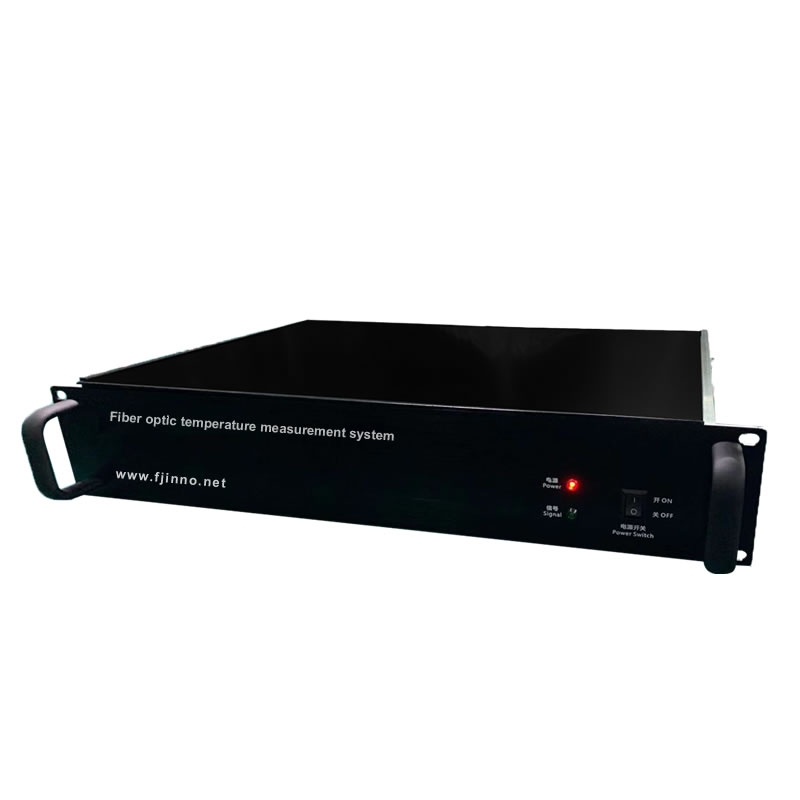
In the realm of generator condition monitoring, 광섬유 온도 센서 (발) have emerged as a game-changing technology. This article provides an in-depth exploration of fiber optic temperature sensors for generator windings, covering their working principles, 장점, system components, 애플리케이션, and future development trends.
광섬유 온도 센서의 작동 방식
광섬유 온도 센서 for generator windings primarily rely on 형광 또는 섬유 브래그 격자 (FBG) 기술. ~ 안에 형광 기반 시스템, a rare-earth doped fluorescent core is used. When excited by a light source, the fluorescent material emits light, 그리고 붕괴 시간 of this emission is temperature-dependent. By measuring the decay time, the temperature can be accurately determined.
FBG-based sensors, 반면에, use a periodic variation in the refractive index of the fiber core to create a grating that reflects specific wavelengths of light. Temperature changes cause the grating pitch to change, altering the reflected wavelength, which is then measured to determine the temperature. 예를 들어, FJINNO’s fiber optic sensors 활용하다 fluorescence technology to achieve precise temperature measurements.
Key Advantages of Fiber Optic Temperature Sensors for Generator Windings
EMI/RFI 내성
Generators are characterized by high electric and magnetic fields. Traditional temperature sensors like 저항 온도 감지기 (RTD) 그리고 열전대 are prone to 전자기 간섭 (EMI) 그리고 무선 주파수 간섭 (RFI), leading to measurement inaccuracies. 광섬유 온도 센서, being non-metallic and non-magnetic, ~이다 immune to EMI/RFI, ensuring reliable temperature measurements in high-voltage environments.
Direct Hotspot Temperature Measurement
Generator winding 핫스팟 are often located deep within the windings, making them difficult to access. Traditional sensors struggle to provide accurate temperature measurements of these critical points. 광섬유 센서 can be embedded directly into the windings, 활성화 실시간 모니터링 of hotspot temperatures and providing a more accurate assessment of winding insulation conditions.
빠른 응답 시간
광섬유 온도 센서 can quickly respond to temperature changes, especially during sudden load variations. 이것 신속한 대응 allows for timely detection of overheating issues, enabling operators to take immediate action and prevent damage to the generator.
Long-Term Stability and Accuracy
광섬유 온도 센서 offer high 장기적인 안정성 및 측정 정확도, typically with an accuracy of ±1.0°C or better. They can maintain their performance over the generator’s lifespan without requiring frequent calibration.
Compatibility with Smart Grids
광섬유 온도 센서 can be integrated with smart grid systems. They provide real-time temperature data that aids in optimizing generator operation, improving grid reliability, and supporting dynamic load management.
System Components of Fiber Optic Temperature Sensors for Generator Windings
광섬유 프로브
The core component of the system, 광섬유 프로브 are designed to withstand the harsh environment within generators. They are typically made of materials with high dielectric strength, ~와 같은 석영 또는 polymer fibers coated with protective layers like PTFE, to ensure long-term stability and reliability.
Temperature Transmitters (신호 변환기)
These devices convert the optical signals from the fiber optic probes into temperature measurements. They often feature familiar 아날로그 출력 그리고 digital buses 좋다 RS-485, making integration with existing PLCs and monitoring software straightforward.
Optical Feedthroughs
Installed on the generator’s housing, optical feedthroughs allow the monitoring light signal to travel to the sensor tip and back to the monitor. They ensure a secure and stable optical connection while maintaining the generator’s 단열 성능.
Signal Processing Units
그만큼 신호 처리 장치 is responsible for processing the temperature data from the fiber optic probes. It performs tasks such as 신호 증폭, 필터링, 그리고 디지털화, converting the optical signals into usable temperature data.
모니터링 소프트웨어
고급의 모니터링 소프트웨어 collects, 복수, and displays real-time temperature data from the fiber optic temperature sensors. It can also perform functions like 데이터 로깅, SCADA interconnection, and generating alarm signals when temperature thresholds are exceeded.
Applications of Fiber Optic Temperature Sensors in Generator Windings
Monitoring Stator Winding Temperatures
The primary application of 광섬유 온도 센서 in generator windings is monitoring stator winding temperatures. By accurately measuring the temperature at the hottest spots in the stator windings, operators can assess the insulation aging condition of the generator and optimize its operating load to extend its service life.
Detecting Overheating Faults
광섬유 온도 센서 can quickly detect 과열 결함 발전기 권선에서. 발전기에 과부하 또는 고장이 발생한 경우, 특정 지점의 온도가 빠르게 상승합니다.. 센서는 이러한 온도 상승을 즉시 감지하여 데이터를 보낼 수 있습니다. 경보 신호 적시에 유지보수 및 수리가 가능하도록, 결함이 확대되는 것을 방지하고 비용이 많이 드는 장비 손상 및 정전을 방지합니다..
발전기의 동적 부하 지원
실시간 온도 데이터를 제공받아 광섬유 온도 센서, 운영자는 실제 온도 조건에 따라 발전기의 부하를 동적으로 조정할 수 있습니다.. 이를 통해 발전기는 더 높은 부하에서 작동하면서 권선 온도를 안전한 한계 내로 유지할 수 있습니다., 이를 통해 발전기의 성능을 향상시킵니다. 활용 효율성 그리고 경제적 이익.
광섬유 온도 센서의 설치 및 시운전
발전기 제조 중 설치
광섬유 온도 센서 are typically installed during the generator manufacturing process. Probes are strategically placed adjacent to the hottest spots in the windings, usually within key spacers. Each fiber probe is then routed through the generator housing to the weld-on flange plate, where the fibers exit the housing and connect to the monitoring system.
Commissioning and Calibration
설치 후, 그만큼 광섬유 온도 센서 체계 must be commissioned and calibrated to ensure accurate temperature measurements. This involves checking the connections between the sensors and the monitoring system, verifying the functionality of the monitoring software, 그리고 calibrating the sensors using standard temperature sources to ensure measurement accuracy.
Case Studies and Application Examples
FJINNO’s Fiber Optic Temperature Sensors
FJINNO’s fiber optic temperature sensors have been widely adopted in medium and high-voltage generator equipment. Their sensors can be installed where high-voltage and alternating electromagnetic fields pose problems for traditional RTD winding sensors. By inserting fiber sensors between the windings of motors and generators, continuous temperature measurement is enabled to protect insulation and extend maintenance schedules. Operators can monitor load conditions in real-time, maximizing energy and economic efficiencies.
Application in Hydropower Generators
최근에는, 광섬유 온도 센서 have been increasingly applied in hydropower generators. 예를 들어, some new hydropower stations have incorporated fiber optic temperature monitoring technology into their generator stator temperature online monitoring systems from the outset of construction. During the design and production of the generator, fiber optic sensors are embedded in the stator windings. This allows for real-time monitoring of stator winding temperatures, providing accurate temperature data to ensure the safe and stable operation of the generator.
Future Development Trends
Technological Innovation and Performance Improvement
Ongoing research and development will focus on enhancing the performance of 광섬유 온도 센서, such as improving 측정 정확도, reducing 응답 시간, and increasing sensor durability 신뢰성. New types of fiber optic temperature sensors based on advanced materials and technologies will emerge to meet the diverse needs of generator winding temperature monitoring.
Integration with Intelligent Generator Systems
다음과 같이 스마트 그리드 continues to develop, 광섬유 온도 센서 will become an integral part of intelligent generator systems. They will be deeply integrated with other sensors and monitoring devices to provide comprehensive information on generator operating conditions. This integration will enable intelligent diagnosis and analysis of generator status, supporting the realization of unattended substations 그리고 automated grid operations.
Cost Reduction and Wider Application
현재, the cost of 광섬유 온도 센서 is relatively high, limiting their widespread adoption to some extent. 미래에, with technological advancements and economies of scale, the cost of fiber optic temperature sensors is expected to decrease gradually. This will promote their broader application in generators of various voltage levels and capacities, driving the development of the generator monitoring market.

광섬유 온도 센서, 지능형 모니터링 시스템, 중국의 분산광섬유 제조업체
 |
 |
 |