 INNO 광섬유 온도 센서 ,온도 모니터링 시스템.
- Extreme reliability: Fluorescent fiber optic sensors maintain ±1°C accuracy in 50°C+ desert temperatures where traditional sensors fail
- EMI 내성: Complete resistance to electromagnetic interference in high-voltage environments eliminates false alarms
- Flexible scalability: 단일 모니터링 장치 지원 1-64 sensor channels for comprehensive substation coverage
- Versatile applications: 트랜스포머 너머 – monitor switchgear, 케이블 조인트, 모선, and rectifier systems
- Long-term value: 20+ year sensor lifespan with minimal maintenance reduces total cost of ownership by 40%
- Remote support capability: Expert technical assistance available globally without requiring on-site visits
1. Understanding Fiber Optic Temperature Sensors for Substations

Middle East power grids face unique thermal management challenges. With ambient temperatures regularly exceeding 50°C across Saudi Arabia and the UAE, 변전소 장비 operates under extreme stress. 전통적인 온도 모니터링 시스템 using PT100 sensors or thermocouples struggle with electromagnetic interference from high-voltage switchgear, leading to measurement drift and costly false alarms.
1.1 How Fluorescent Fiber Optic Sensing Works
형광성 광섬유 온도 센서 represent a fundamentally different approach to thermal monitoring. 전기 센서와 달리, these systems use light-based measurement where a fluorescent material at the probe tip responds to temperature changes. The sensor’s fluorescence decay time varies predictably with temperature – this optical signal travels through the 광섬유 케이블 to a signal processor, providing highly accurate readings immune to electrical noise.
This contact-based measurement technology delivers precision thermal data from a single point. 각 광섬유 프로브 monitors one specific hot spot, making it ideal for critical locations like transformer windings, 부스바 연결, or cable terminations. 싱글 광섬유 온도 트랜스미터 can manage between 1 그리고 64 독립 센서 채널, allowing comprehensive coverage of entire substations from one central unit.
1.2 Critical Advantages Over Conventional Temperature Sensors
The inherent properties of 광섬유 온도 모니터링 solve the most persistent problems in substation thermal management:
전자기 내성: Glass fiber transmits only optical signals, making readings completely unaffected by the intense electromagnetic fields surrounding transformers and switchgear. This eliminates the measurement errors and equipment damage that plague wire-based sensors in high-voltage environments.
본질 안전: With no electrical energy at the measurement point, 광섬유 센서 pose zero risk of sparking or contributing to fault conditions. The non-conductive nature of fiber makes these systems inherently safe for explosive atmospheres and high-voltage applications.
Extreme environment performance: Designed for harsh industrial conditions, 우리의 형광성 광섬유 센서 operate reliably across -40°C to +260°C. The measurement accuracy of ±1°C remains stable even when equipment enclosures reach 70°C during peak summer loads.
Rapid response time: With readings updated in under 1 두번째, 온도 모니터링 시스템 detect thermal anomalies before they escalate into equipment failures. This speed is essential for protecting fast-heating components like transformer tap changers and circuit breaker contacts.
Flexible installation: 기준 광섬유 케이블 lengths extend up to 80 meters from the transmitter to sensor, with custom lengths available for large substations. Probe diameters can be customized to fit tight spaces in switchgear compartments or embedded directly in transformer windings during manufacturing.
1.3 Meeting International Standards and Regional Requirements
우리의 광섬유 온도 모니터링 솔루션 comply with essential international standards governing substation equipment. CE-EMC certification confirms electromagnetic compatibility in the harsh electrical environment of power distribution facilities. 저전압 지침 (LVD) compliance ensures electrical safety for the monitoring equipment itself, while RoHS certification addresses environmental requirements increasingly mandated across GCC countries.
ISO 9001 quality management certification backs our manufacturing processes, ensuring consistent product reliability. Additional certifications specific to utility applications are currently in progress to meet evolving regional requirements. These qualifications demonstrate our commitment to delivering 온도 센서 that meet the stringent demands of critical infrastructure.
2. Critical Monitoring Applications in Middle East Power Grids

2.1 변압기 권선 온도 모니터링
Transformer failures represent the single most expensive equipment loss in substations, with replacement costs exceeding $2 대형 전력 변압기의 경우 백만 달러. In Middle East conditions, sustained high ambient temperatures combine with peak summer loads to push 변압기 권선 dangerously close to thermal limits.
Top-oil temperature indicators provide only indirect estimates of actual winding temperature. The hottest spot in a transformer winding can be 20-30°C hotter than the bulk oil temperature, yet this is where insulation breakdown initiates. 광섬유 프로브 installed directly in windings during manufacturing or through existing pockets provide real-time hot spot monitoring that prevents catastrophic failures.
A typical installation uses 6-12 온도 센서 distributed across high-voltage and low-voltage windings. When hot spot temperatures approach 150°C – well before damage occurs at 180°C – operators receive advance warning to reduce load or activate cooling systems. This predictive capability has proven to reduce unplanned transformer outages by over 60% in regional deployments.
2.2 Switchgear and Busbar Connection Monitoring
Loose connections in 개폐 장치 and busbar systems cause localized heating long before visible damage appears. These thermal hot spots – often at bolted joints or sliding contacts – increase electrical resistance, generating more heat in a destructive cycle that eventually leads to flashover or equipment failure.
형광성 광섬유 센서 mounted directly on busbar surfaces or within circuit breaker compartments detect temperature rises of just a few degrees. Since the 광섬유 케이블 is non-conductive, it can be routed through live compartments without creating safety hazards or affecting clearance distances.
Maintenance teams use trending data from 광섬유 온도 모니터링 to schedule connection re-torquing during planned outages rather than responding to emergency failures. A single prevented switchgear fire – which can cascade through multiple bays – justifies the monitoring system investment many times over.
2.3 Cable Termination and Joint Temperature Sensing
Underground and overhead cable systems form the distribution backbone of modern substations. 케이블 조인트 및 종단 – where individual conductor segments connect – concentrate electrical stress and represent common failure points. In the UAE’s coastal regions, these connections face combined thermal and humidity challenges that accelerate insulation degradation.
Traditional cable monitoring relies on periodic thermographic surveys, which only capture conditions at the moment of inspection. 광섬유 온도 센서 provide continuous surveillance of critical cable connections. The compact probe diameter allows installation in cramped termination boxes and joint enclosures where space is severely limited.
Because each 광섬유 센서 monitors a single connection point with ±1°C precision, operators can distinguish between normal load-related warming and abnormal temperature rises indicating poor contact or insulation problems. This granular data supports condition-based maintenance strategies that optimize crew deployment and prevent service interruptions.
2.4 Rectifier and Power Electronics Monitoring in DC Systems
Metro rail traction substations, telecom power plants, and DC fast-charging infrastructure require reliable 온도 모니터링 of rectifier modules and power conversion equipment. These semiconductor-based systems generate significant heat during normal operation, and thermal runaway can quickly destroy expensive electronics.
The electromagnetic noise generated by high-frequency switching in power electronics renders conventional electrical 온도 센서 nearly useless. 광섬유 모니터링 시스템 remain completely unaffected by this interference, providing stable readings regardless of load switching patterns or harmonic distortion.
우리의 광섬유 온도 트랜스미터 can simultaneously monitor multiple rectifier modules, DC 버스바, 및 냉각 시스템 구성 요소. The sub-1-second response time enables protective relay integration, allowing automatic load reduction or module shutdown when temperatures exceed safe thresholds.
3. Why Fiber Optics Excel in Desert Environments

3.1 Addressing Extreme Temperature Challenges
The Arabian Peninsula presents some of the world’s harshest conditions for electrical infrastructure. Summer ambient temperatures regularly reach 50-55°C, with direct solar heating pushing equipment enclosure interiors beyond 70°C. Winter nights can drop to near freezing in inland areas, creating daily thermal cycles exceeding 30°C.
형광성 광섬유 센서 maintain calibrated accuracy across this entire temperature range without degradation. The -40°C to +260°C operating specification provides substantial margin beyond what equipment actually experiences, ensuring reliable performance throughout the sensor’s 20+ 년 서비스 기간. This thermal stability eliminates the periodic recalibration required by resistance-based sensors that drift as materials age.
그만큼 광섬유 케이블 itself withstands these temperature extremes without signal loss. Specialized aramid fiber reinforcement and UV-resistant jacketing protect against both environmental stress and physical damage. Unlike copper wiring that expands and contracts with temperature changes – potentially loosening connections – optical fiber maintains signal integrity regardless of thermal cycling.
3.2 Sand and Dust Ingress Protection
Desert dust storms and persistent airborne sand particles infiltrate electrical enclosures, coating equipment and causing abrasive wear on moving parts. While this requires IP65-rated protection for electronic equipment, 그만큼 광섬유 센서 probes themselves have no moving parts or exposed electrical contacts to corrode or bind.
The sealed glass construction of 형광성 광섬유 온도 센서 is inherently resistant to particulate contamination. Even in outdoor installations or poorly sealed equipment, sensor performance remains unaffected by dust accumulation that would short-circuit or corrode traditional sensors. This reliability reduces maintenance requirements and extends service intervals in challenging GCC environments.
3.3 Complete EMI and High Voltage Immunity
Substations generate intense electromagnetic fields from high-current conductors, transformer magnetizing currents, and switching transients. These fields induce voltages in metallic sensor wiring that corrupt temperature readings or damage signal conditioning electronics. Ground potential differences between sensor locations and monitoring equipment further complicate electrical measurement systems.
광섬유 온도 모니터링 eliminates these problems entirely. The dielectric glass fiber cannot conduct electrical current or respond to electromagnetic fields. Sensor readings remain accurate regardless of nearby voltage levels or fault currents. This immunity allows 광섬유 프로브 to be installed directly on live high-voltage components – something impossible with any electrical sensor technology.
The practical advantage in substation environments is dramatic: installation complexity decreases because no electromagnetic shielding or grounding considerations are necessary for sensor cables. False alarms from EMI-induced measurement errors disappear, and operators gain confidence that temperature readings reflect actual thermal conditions rather than electrical noise.
4. Technical Specifications and Capabilities

4.1 Fluorescent Fiber Optic Sensor Specifications
우리의 형광성 광섬유 온도 센서 deliver industrial-grade performance optimized for power system applications:
측정 정확도: ±1°C across the entire operating range ensures precise thermal monitoring suitable for protective relay integration and trending analysis. This accuracy level exceeds typical PT100 sensor performance, particularly in high-EMI environments where electrical sensors experience drift.
온도 범위: -40°C to +260°C operating specification covers all practical substation applications from outdoor cable joints in winter to transformer hot spots under emergency overload conditions. The extended upper limit provides safety margin for transient temperature spikes during fault events.
응답 시간: Sub-1-second update rate enables real-time monitoring and fast protective responses. This speed is critical for detecting rapidly developing thermal faults in switchgear or transformer tap changers where temperatures can rise dangerously fast.
섬유 길이: 기준 광섬유 케이블 extend from 0 에게 80 meters between sensor probe and transmitter, accommodating typical substation layouts. Custom extended lengths are available for large facilities or specialized routing requirements around obstacles.
Probe customization: Sensor probe diameters can be tailored to specific installation requirements, from compact 2mm probes for tight switchgear compartments to larger robust designs for harsh outdoor environments. Mounting hardware adapts to various surface types and orientations.
4.2 다중 채널 광섬유 온도 트랜스미터
The heart of the monitoring system, 우리의 광섬유 온도 트랜스미터, processes optical signals from multiple sensors and interfaces with substation control systems. A single transmitter unit supports flexible channel configurations from 1 에게 64 독립적인 온도 센서, scaling economically from small installations to comprehensive substation coverage.
This modular architecture allows phased deployment – start with critical assets like main transformers, then expand monitoring to additional equipment as budget permits. All channels operate independently with individual alarm thresholds and output assignments. The transmitter provides standard industrial communication protocols including Modbus RTU/TCP and DNP3 for integration with SCADA systems and building management platforms.
Remote diagnostic capabilities enable our technical team to verify system operation, adjust parameters, and troubleshoot issues without site visits. This remote support model provides responsive expert assistance regardless of installation location, backed by our ISO 9001 certified quality management processes.
4.3 Applications Beyond Substations
While power distribution represents the primary application, 광섬유 온도 모니터링 시스템 serve diverse industries facing similar challenges:
산업 공정 모니터링: 화학공장, 정유소, and manufacturing facilities use 광섬유 센서 in explosive atmospheres where electrical equipment requires expensive intrinsically-safe certifications. The non-electrical nature of optical sensing provides inherent safety.
Medical and laboratory equipment: MRI 기계, autoclave sterilizers, and research equipment generate strong electromagnetic fields that interfere with electrical sensors. 형광등 광섬유 온도 모니터링 provides accurate readings in these challenging environments.
재생 에너지 시스템: 태양광 인버터, wind turbine power converters, and battery energy storage systems all require reliable 온도 모니터링 of power electronics and connections. The EMI immunity and wide temperature range match requirements across the renewable energy sector.
교통 인프라: 철도 전기 시스템, metro traction power, and electric vehicle charging stations benefit from the same monitoring technology proven in utility substations. The scalable multi-channel architecture adapts efficiently to projects of any size.
5. Proven Performance in GCC Substations
5.1 Saudi Arabia 132kV Substation Deployment
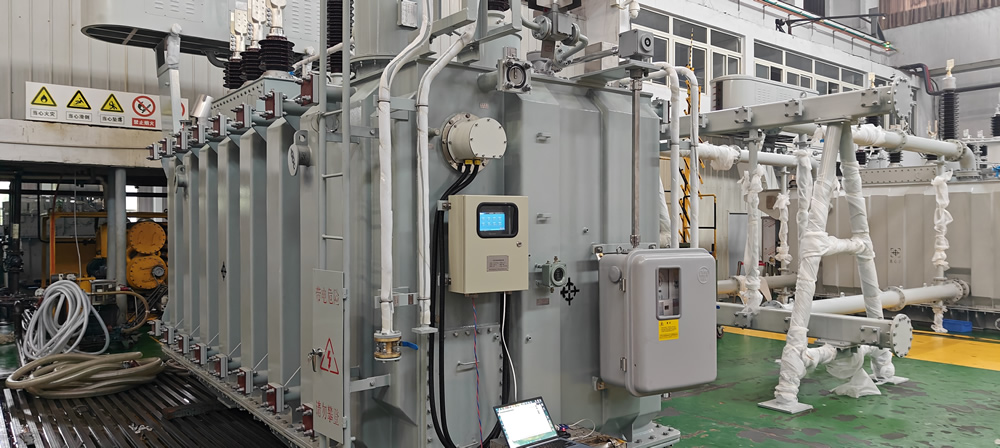
A major utility in the Riyadh region faced recurring thermal trips on three 50MVA power transformers during peak summer demand. Existing winding temperature indicators provided only estimated values based on top-oil temperature and load current calculations. Without direct hot spot measurement, operators had no advance warning before protective relays tripped the units.
우리의 fiber optic temperature monitoring solution installed 18 형광 센서 – six probes per transformer – directly measuring winding hot spots in both high-voltage and low-voltage coils. 그만큼 multi-channel fiber optic transmitter integrated seamlessly with the substation’s existing SCADA system via Modbus TCP protocol.
Within the first summer season, the detailed thermal data revealed that hot spots occurred in predictable winding locations under specific load patterns. Armed with precise temperature readings, operators could safely increase loading on transformers with lower hot spot temperatures while reducing load on units approaching thermal limits. Nuisance trips from overconservative temperature estimates decreased by over 90%, and actual thermal management improved significantly.
The installation demonstrated the reliability of 광섬유 센서 in 50°C+ ambient conditions while proving the value of accurate hot spot data for operational decision-making. Remote technical support during commissioning and ongoing operation eliminated concerns about maintenance capabilities in the region.
5.2 UAE Metro Traction Power Monitoring
A metro rail operator required continuous 온도 모니터링 of rectifier systems and DC busbar connections across multiple traction power substations. 그만큼 24/7 operation schedule and safety-critical nature of the application demanded extremely high reliability. Conventional electrical sensors had proven unreliable due to electromagnetic interference from the high-frequency rectifier switching and variable traction loads.
광섬유 온도 센서 installed on rectifier heat sinks, DC breaker terminals, and busbar joints provided stable readings immune to electrical noise. The system’s sub-1-second response time enabled integration with protective relay logic, automatically reducing rectifier output if thermal limits approached during peak train movements.
Over three years of operation, 그만큼 광섬유 모니터링 시스템 has maintained consistent accuracy with zero sensor failures. Temperature trending data now guides predictive maintenance scheduling, allowing connection inspections during planned outages rather than responding to emergency thermal events. System availability improved from 97.2% 에게 99.8%, a dramatic increase for revenue service operations.
5.3 Coastal Substation in High-Humidity Environment
A 66kV substation located near the Arabian Gulf coast operates in conditions combining high temperature, salt-laden humidity, and corrosive marine atmosphere. Cable terminations and outdoor switchgear connections face particularly aggressive environmental stress. Previous monitoring attempts using wireless temperature sensors failed due to battery degradation and corrosion of electronic components.
The passive nature of 형광성 광섬유 센서 – requiring no power at the measurement point – eliminated battery-related failures. The sealed glass probe construction resisted corrosion that affected metallic sensor housings. 광섬유 케이블 with marine-grade jacketing provided long-term durability in the coastal environment.
Eight critical cable joints and twelve switchgear connections now have continuous thermal surveillance. The system has already detected two developing connection problems – identified by gradual temperature increases over several weeks – allowing corrective maintenance before failures occurred. This predictive capability prevents costly emergency repairs and service interruptions that impact industrial customers.
6. Choosing the Right Temperature Monitoring Solution
6.1 Key Selection Criteria for Substation Monitoring
평가할 때 온도 모니터링 시스템 for power distribution applications, several factors determine long-term success:
Measurement technology fundamentals: 접촉 기반 광섬유 센서 provide point-specific accuracy essential for monitoring discrete components like transformer windings or busbar connections. This differs from distributed sensing technologies that average temperature over cable lengths – each approach serves different applications.
Environmental suitability: Verify that sensor operating ranges exceed the actual conditions in your installation. For Middle East substations, this means confirmed performance at 50°C+ ambient with temperature cycling capability. Review ingress protection ratings and material compatibility with local environmental factors.
EMI immunity requirements: In high-voltage environments, electromagnetic interference is not merely a nuisance but a fundamental limitation of electrical sensors. 광섬유 온도 모니터링 eliminates this constraint entirely, providing stable readings regardless of nearby voltage levels or switching transients.
System scalability: Choose monitoring platforms that grow with your needs. 에이 광섬유 송신기 지원 1-64 channels allows starting with critical assets and expanding coverage over time without replacing infrastructure. This modular approach optimizes capital expenditure and proves the technology’s value incrementally.
Integration capabilities: Modern substations require seamless data flow between monitoring systems and control platforms. Confirm protocol compatibility with your SCADA system – standard Modbus and DNP3 support ensures straightforward integration. Digital communication eliminates the wiring complexity and calibration issues of analog signal transmission.
Support model and expertise: While local service presence provides convenience, remote technical support backed by deep application expertise often delivers superior results. Our team assists with system configuration, 문제 해결, and optimization through secure remote connections, providing responsive expert assistance regardless of installation location. This support model, combined with ISO 9001 certified manufacturing quality, ensures reliable long-term operation.
6.2 Understanding Certification Requirements
International certifications provide independent verification of product safety, 성능, and quality. 우리의 광섬유 온도 모니터링 시스템 carry CE-EMC certification confirming electromagnetic compatibility – particularly relevant given the harsh electrical environment of substations. 저전압 지침 (LVD) compliance ensures electrical safety for the monitoring equipment’s power and communication circuits.
RoHS certification addresses environmental compliance and material restrictions increasingly mandated across GCC countries as environmental regulations align with international standards. ISO 9001 quality management system certification backs manufacturing processes, ensuring consistent product quality and traceability.
Additional certifications specific to utility and industrial applications are in progress to meet evolving regional requirements. These qualifications demonstrate ongoing commitment to meeting the stringent demands of critical infrastructure applications.
6.3 Remote Implementation and Support
현대의 광섬유 온도 모니터링 projects no longer require extensive on-site vendor presence. Our remote support capabilities enable successful installations across diverse global locations:
Pre-installation consultation: Through video conferences and document sharing, our applications engineers review site conditions, recommend sensor quantities and locations, and provide detailed installation guidance. CAD drawings and specification documents ensure local installation contractors have complete information.
Commissioning assistance: Secure remote connections to the 광섬유 송신기 allow our technical team to verify system operation, configure communication parameters, and validate sensor readings during initial startup. This eliminates travel time and costs while providing direct access to expert support.
Ongoing optimization: As operational data accumulates, alarm thresholds can be refined and trending analysis performed remotely. Software updates and feature enhancements deploy without site visits. When questions arise, responsive remote support provides faster resolution than scheduling field service calls.
This support model has proven effective across hundreds of installations globally. Customers receive expert technical assistance without geographic limitations, backed by comprehensive product documentation and training materials.
결론: Reliable Thermal Protection for Critical Power Infrastructure
Middle East power grids operate under some of the world’s most challenging environmental conditions. Extreme temperatures, 전자기 간섭, and harsh desert environments demand monitoring technology specifically engineered for these applications. 형광성 광섬유 온도 센서 deliver the accuracy, 신뢰할 수 있음, and longevity that critical infrastructure requires.
The contact-based measurement approach provides precise single-point monitoring of transformer windings, 개폐 장치 연결, 케이블 조인트, and power electronics. With ±1°C accuracy, sub-1-second response time, 그리고 20+ 년 서비스 기간, 이것들 광섬유 모니터링 시스템 protect valuable assets while reducing total cost of ownership compared to conventional electrical sensors requiring frequent maintenance and replacement.
Proven performance in Saudi Arabian and UAE substations demonstrates real-world reliability in GCC conditions. The technology’s versatility extends beyond power distribution to industrial process monitoring, 의료 장비, 재생 에너지 시스템, 교통 인프라 – any application where accurate temperature measurement faces electromagnetic interference or extreme environmental challenges.
Scalable multi-channel architecture and remote support capabilities make 광섬유 온도 모니터링 accessible to projects of any size across the Middle East region and globally. Whether protecting a single critical transformer or implementing comprehensive substation monitoring, the technology adapts to your specific requirements with flexible configuration options and expert technical assistance.
Get Expert Guidance for Your Substation Monitoring Project
Our applications engineering team is ready to discuss your specific 온도 모니터링 requirements and recommend optimal 광섬유 센서 configurations for your facility.

광섬유 온도 센서, 지능형 모니터링 시스템, 중국의 분산광섬유 제조업체
 |
 |
 |