 INNO 광섬유 온도 센서 ,온도 모니터링 시스템.
광섬유 모니터링: Essential Guide
What is Fiber Optic Monitoring? Fiber optic monitoring is an advanced temperature and environmental sensing technology that uses light transmission through optical fibers to measure critical parameters in real-time. 기존의 전기 센서와는 다르게, fiber optic monitoring systems provide complete electromagnetic immunity, 고전압 환경에 이상적입니다., medical facilities, and hazardous industrial applications where traditional monitoring methods fail or pose safety risks.
Why Choose Fiber Optic Monitoring Systems? Fiber optic monitoring technology delivers unmatched advantages for critical infrastructure protection and equipment safety:
- 완전한 전자기 내성: Fiber optic monitoring operates flawlessly near high-voltage equipment, powerful transformers, MRI 자석, and RF generators where electrical sensors produce unreliable data or fail completely due to electromagnetic interference.
- Exceptional High-Voltage Safety: 광섬유 모니터링 프로브는 최대 500kV의 절연 수준을 견딜 수 있습니다., 전원이 공급된 변압기 권선에서 직접 안전한 온도 측정 가능, 개폐기 부품, 전기적 위험이나 접지 루프 문제가 없는 발전기 고정자.
- 본질적으로 안전한 작동: 광섬유 모니터링 시스템에는 측정 지점에 금속 요소나 전기 구성 요소가 포함되어 있지 않습니다., 오일로 채워진 변압기 주변의 폭발성 대기에서 스파크 발생 제거, 화학 처리 시설, 및 연료 저장 공간.
- 뛰어난 측정 정확도: 형광 광섬유 모니터링은 탁월한 장기 안정성으로 ±0.3°C ~ ±1°C 정밀도를 달성합니다., 최소 교정 드리프트, 수년간의 연속 작동에 따른 광 전력 변동 또는 커넥터 성능 저하에 대한 내성.
- 신속한 응답 시간: 광섬유 모니터링은 온도 변화를 감지합니다. 0.25 에게 5 초, enabling real-time tracking of dynamic thermal events and immediate alarm activation before equipment damage occurs.
- Minimal Installation Impact: Compact fiber optic monitoring probes (0.5mm to 3mm diameter) minimize thermal mass and physical intrusion, allowing installation in tight spaces, 재료에 내장, or mounted on delicate components without affecting equipment performance.
- Comprehensive Coverage Options: Distributed fiber optic monitoring provides continuous temperature profiling along 30+ kilometers using a single fiber, while FBG monitoring multiplexes dozens of high-accuracy sensors on one fiber—both approaches dramatically reducing installation costs compared to conventional multi-point monitoring systems.
- Long-Distance Transmission: Fiber optic monitoring signals transmit up to 200 미터 (포인트 센서) or over 30 킬로미터 (distributed systems) 신호 저하 없이, 단일 제어실 위치에서 광범위한 인프라를 중앙 집중식으로 모니터링할 수 있습니다..
- 극한 환경 성능: 광섬유 모니터링은 -200°C ~ +300°C에서 안정적으로 작동합니다., 부식성 화학 환경에서, 강렬한 방사선장, 기존 전기 모니터링 시스템이 생존할 수 없거나 빈번한 교체가 필요한 수중 설치.
- 유지 관리 요구 사항 감소: 광섬유 모니터링 센서의 수동적 특성으로 인해 측정 지점에 전력이 필요하지 않습니다., 배터리 교체 불필요, 멀리 떨어져 있거나 접근할 수 없는 위치에서 수십 년간 유지보수가 필요 없는 작동을 제공합니다..
귀하의 응용 분야에 적합한 광섬유 모니터링 기술은 무엇입니까?? 세 가지 주요 광섬유 모니터링 기술은 다양한 모니터링 요구 사항을 충족합니다.: 형광등 광섬유 모니터링 (포스) excels in high-accuracy point sensing for transformer and medical equipment monitoring, Distributed Fiber Optic Monitoring (DTS) provides cost-effective continuous coverage for power cable and pipeline monitoring, 및 섬유 브래그 격자 (FBG) Monitoring delivers multi-point precision for structural health monitoring and aerospace applications.
- 1. What Is Fiber Optic Monitoring Technology?
- 2. Why Is Fiber Optic Monitoring Superior to Conventional Methods?
- 3. What Is Fluorescent Fiber Optic Monitoring (포스)?
- 4. How Does Fluorescent Fiber Optic Monitoring Work?
- 5. What Advantages Does Fluorescent Fiber Optic Monitoring Offer?
- 6. Which Technical Specifications Define Fluorescent Fiber Optic Monitoring?
- 7. Where Is Fiber Optic Monitoring Applied in Power Equipment?
- 8. How Does Fiber Optic Monitoring Enhance Medical Equipment Safety?
- 9. What Industrial Processes Require Fiber Optic Monitoring?
- 10. Which Transformer Systems Benefit from Fiber Optic Monitoring?
- 11. What Is Distributed Fiber Optic Monitoring (DTS)?
- 12. How Does Distributed Fiber Optic Monitoring Provide Continuous Coverage?
- 13. What Are the Key Benefits of Distributed Fiber Optic Monitoring?
- 14. Where Should Distributed Fiber Optic Monitoring Be Implemented?
- 15. 섬유 브래그 격자란 무엇입니까? (FBG) 모니터링?
- 16. How Does FBG Fiber Optic Monitoring Achieve Multi-Point Sensing?
- 17. Which Features Distinguish FBG Fiber Optic Monitoring Systems?
- 18. How Do Different Fiber Optic Monitoring Technologies Compare?
- 19. Which Fiber Optic Monitoring Solution Should You Implement?
- 20. What Is the Future of Fiber Optic Monitoring Technology?
- 부인 성명
1. What Is Fiber Optic Monitoring Technology?
What exactly defines 광섬유 모니터링 in today’s industrial landscape? 광섬유 모니터링 represents an advanced temperature and environmental sensing methodology that utilizes light transmission through optical fibers to measure critical parameters in real-time. Unlike conventional electrical monitoring systems, 광섬유 모니터링 기술 provides complete immunity to electromagnetic interference, making it the ideal solution for high-voltage environments, medical facilities, and hazardous industrial applications where traditional electrical monitoring systems prove inadequate or dangerous.
How has 광섬유 모니터링 transformed industrial safety protocols? 현대의 광섬유 모니터링 시스템 enable continuous, precise temperature tracking across power transformers, 개폐 장치, 터빈, and medical devices without introducing electrical hazards. 이것들 광섬유 모니터링 솔루션 encompass three primary technologies: 형광등 광섬유 모니터링 (포스), Distributed Fiber Optic Monitoring (DTS), 그리고 Fiber Bragg Grating Monitoring (FBG), each offering distinct advantages for specific monitoring applications.
2. Why Is Fiber Optic Monitoring Superior to Conventional Methods?
Why are industries rapidly adopting 광섬유 모니터링 over traditional temperature sensing methods? The fundamental superiority of 광섬유 모니터링 시스템 stems from their inherent immunity to electromagnetic interference (EMI), 무선 주파수 간섭 (RFI), and electrical noise that commonly plague thermocouple monitoring 그리고 RTD monitoring systems. This electromagnetic immunity makes 광섬유 모니터링 indispensable for applications near high-voltage equipment, powerful magnets, or RF generators where conventional sensors fail or provide unreliable data.
What specific advantages does 광섬유 모니터링 deliver in high-voltage environments? Fiber optic monitoring technology provides complete electrical isolation between the measurement point and monitoring instrumentation, eliminating ground loop issues and voltage-induced sensor damage. 그만큼 고전압 저항 capabilities of fiber optic monitoring probes—withstanding insulation levels up to 500kV—enable safe, accurate temperature measurement directly on energized transformer windings, 개폐기 부품, and generator stators where traditional electrical monitoring poses severe safety risks and measurement inaccuracies.
3. What Is Fluorescent Fiber Optic Monitoring (포스)?

What defines 형광 광섬유 모니터링 as a precision measurement technique? Fluorescent fiber optic monitoring (포스) represents a point-sensing technology that leverages temperature-dependent fluorescence decay characteristics of rare-earth phosphor materials for highly accurate temperature measurement. 이것 fiber optic monitoring method utilizes specialized fluorescent probes positioned at critical measurement points, providing exceptional accuracy of ±0.3°C to ±1°C—significantly superior to conventional electrical monitoring systems.
어떻게 형광 광섬유 모니터링 achieve such remarkable precision? 그만큼 FOS monitoring system operates by transmitting pulsed LED light through the optical fiber to excite the fluorescent probe. The temperature-sensitive phosphor material emits fluorescent light with a decay time that varies predictably with temperature changes. 그만큼 fiber optic monitoring analyzer precisely measures this decay time, converting it to accurate temperature readings independent of optical power fluctuations, 섬유 손실, or connector degradation—ensuring long-term measurement stability in demanding industrial environments.
4. How Does Fluorescent Fiber Optic Monitoring Work?
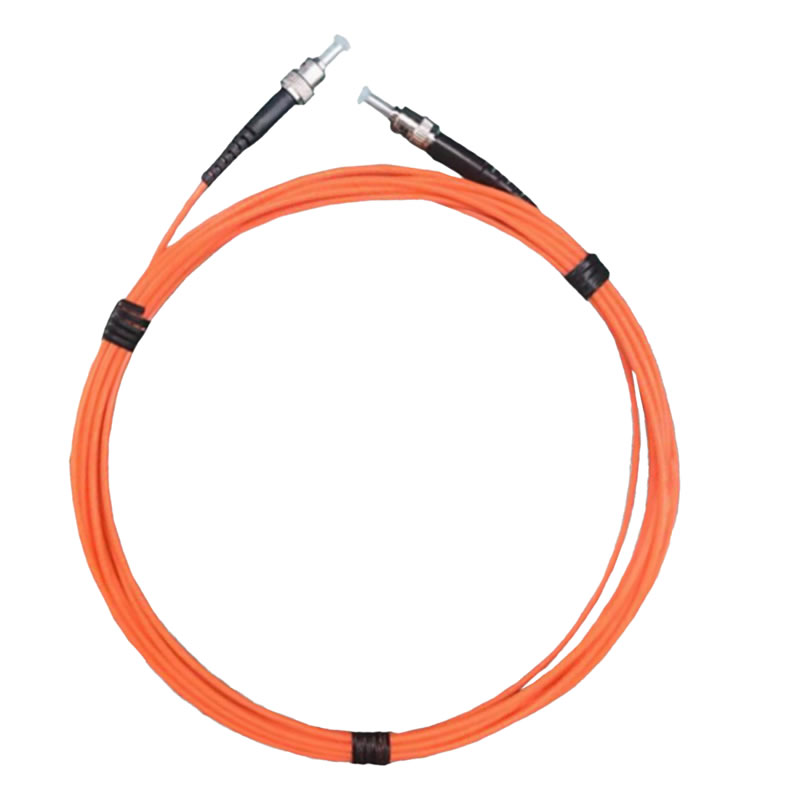
How does the 형광 광섬유 모니터링 measurement process actually function? 그만큼 FOS monitoring system comprises three essential components working in synchronized operation: the optical transmitter module housing the pulsed LED excitation source, the temperature-sensitive fluorescent probe containing rare-earth phosphor materials, and the advanced signal processing unit that analyzes fluorescence decay characteristics. 때 fiber optic monitoring probe receives excitation light, the phosphor material fluoresces with a decay time directly proportional to its temperature.
What makes this fiber optic monitoring technique 전자기 간섭에 면역? 같지 않은 electrical monitoring systems that rely on voltage or resistance changes susceptible to EMI, 형광 광섬유 모니터링 measures optical decay time—a parameter completely unaffected by electromagnetic fields, radio frequency signals, 아니면 전기적인 소음이. 그만큼 fiber optic monitoring probe contains no metallic elements, eliminating any possibility of electrical conduction, spark generation, or interference pickup, making it inherently safe for deployment in explosive atmospheres, high-voltage substations, and sensitive medical equipment.
5. What Advantages Does Fluorescent Fiber Optic Monitoring Offer?

What specific benefits make 형광 광섬유 모니터링 the preferred choice for critical applications? FOS monitoring systems deliver several compelling advantages over conventional monitoring technologies. 완전한 전자파 내성 광섬유 모니터링 고전류 도체 근처에서도 정확한 측정을 보장합니다., powerful transformers, 또는 RF 장비. 예외적 고전압 저항 ~의 형광 광섬유 모니터링 프로브—500kV를 초과하는 절연 수준을 견딜 수 있음 — 전기 안전 문제 없이 전원이 공급되는 장비에 직접 장착 가능.
어떻게 형광 광섬유 모니터링 운영 안전성 및 신뢰성 향상? 본질적으로 안전한 설계 광섬유 모니터링 시스템 폭발성 환경에서 스파크 위험을 제거합니다., 오일로 채워진 변압기에 이상적입니다., 화학 처리 시설, 및 연료 저장 공간. 작은 직경의 fiber optic monitoring probes (0.5mm ~ 3mm) 열 질량과 설치 영향을 최소화합니다., 응답시간이 빠른 반면 (0.25 에게 5 초) 동적 온도 변화를 실시간으로 모니터링할 수 있습니다.. 추가적으로, 광섬유 모니터링 최소한의 교정 드리프트로 탁월한 장기 안정성을 제공합니다., reducing maintenance requirements and ensuring consistent measurement accuracy throughout the system’s operational lifetime.
6. Which Technical Specifications Define Fluorescent Fiber Optic Monitoring?
Which performance parameters characterize professional 형광 광섬유 모니터링 시스템? Understanding the technical specifications of FOS monitoring technology enables proper system selection and application engineering. The following table details the critical performance characteristics that define 형광 광섬유 모니터링 능력:
| 모니터링 매개변수 | FOS Specification | Fiber Optic Monitoring Advantage |
|---|---|---|
| 측정 정확도 | ±0.5°C ~ ±1°C | Precision fiber optic monitoring for critical systems |
| 온도 범위 | -40°C ~ +260°C | Wide operational envelope for diverse monitoring |
| 응답 시간 | 1 to 2seconds | Real-time fiber optic monitoring capability |
| High Voltage Resistance | Up to 140kV insulation | Safe monitoring in high-voltage environments |
| EMI 내성 | 완전한 면역 | Reliable fiber optic monitoring near EM sources |
| 프로브 직경 | 1mm ~ 3mm | Minimal invasive monitoring installation |
| 전송 거리 | 최대 80 미터 | Flexible fiber optic monitoring configurations |
| 본질 안전 | 전기 부품 없음 | Explosion-proof monitoring capability |
7. Where Is Fiber Optic Monitoring Applied in Power Equipment?
Where does 광섬유 모니터링 provide the greatest value in electrical power systems? Fiber optic monitoring technology has become indispensable for temperature surveillance across various high-voltage power equipment where conventional electrical monitoring proves impractical or hazardous. 변압기 권선 모니터링 represents one of the most critical applications, ~와 함께 형광 광섬유 모니터링 프로브 installed directly on winding hot spots to detect thermal anomalies before insulation failure occurs.
What specific power system components require 광섬유 모니터링 솔루션? 배전반 모니터링 benefits significantly from 광섬유 모니터링 시스템, particularly for detecting hot spots on bus bars, 회로 차단기 접점, and disconnect switches where high currents and electromagnetic fields make traditional monitoring unreliable. Large hydro-turbine monitoring utilizes 광섬유 모니터링 to track bearing temperatures and generator winding hot spots in environments with intense magnetic fields and moisture. GIS (가스절연개폐장치) 모니터링 고용하다 형광성 광섬유 센서 to measure internal component temperatures through the pressurized SF6 gas environment where conventional sensors cannot operate safely.
8. How Does Fiber Optic Monitoring Enhance Medical Equipment Safety?
어떻게 광섬유 모니터링 address critical safety challenges in medical applications? 의료 장비 모니터링 demands absolute immunity to electromagnetic interference and complete patient electrical isolation—requirements perfectly met by 광섬유 모니터링 기술. MRI (자기공명영상) 모니터링 represents perhaps the most demanding application, where the powerful magnetic fields (1.5T to 7T) and RF pulses completely disable conventional electrical monitoring systems ~하는 동안 형광 광섬유 모니터링 operates flawlessly, tracking patient body temperature during extended scanning procedures.
What other medical devices benefit from 광섬유 모니터링 구현? RF hyperthermia monitoring in cancer treatment requires precise temperature measurement at the tumor site while powerful radio frequency energy heats the tissue—an environment where fiber optic monitoring probes provide accurate readings unaffected by the RF field. Microwave hyperthermia monitoring similarly relies on 형광 광섬유 모니터링 to track tissue temperatures during microwave ablation procedures. Cryotherapy monitoring utilizes the extreme low-temperature capabilities of 광섬유 모니터링 시스템 (down to -200°C) to ensure safe tissue freezing without electrical hazards near superconducting magnets or cryogenic equipment.
9. What Industrial Processes Require Fiber Optic Monitoring?
What industrial applications demand the unique capabilities of 광섬유 모니터링? Semiconductor manufacturing monitoring represents a critical application domain where 광섬유 모니터링 시스템 ensure process control in plasma etching and deposition equipment. ICP (Inductively Coupled Plasma) etching monitoring requires temperature measurement within intense RF electromagnetic fields and corrosive plasma environments where only 형광 광섬유 모니터링 can survive and provide accurate data.
Which other manufacturing processes benefit from 광섬유 모니터링? Reactive ion etching monitoring 고용하다 fiber optic monitoring probes to track substrate temperatures during semiconductor fabrication without introducing contamination or electromagnetic interference. Microwave digestion monitoring in analytical laboratories utilizes 광섬유 모니터링 to measure sample temperatures inside microwave cavities where metallic sensors would arc and fail catastrophically. Explosive device monitoring for electro-explosive devices (EED) requires intrinsically safe 광섬유 모니터링 that cannot generate sparks during temperature testing. High-energy particle environment monitoring in research facilities and industrial irradiation systems relies on radiation-resistant 광섬유 모니터링 기술 that continues functioning in environments that rapidly degrade electronic sensors.
10. Which Transformer Systems Benefit from Fiber Optic Monitoring?
Which transformer configurations require specialized 광섬유 모니터링 솔루션? 유침 변압기 모니터링 has become a standard application for 형광 광섬유 모니터링 시스템, particularly for distribution transformers operating at voltages up to 110kV. 변압기 권선 온도 모니터링 사용하여 fiber optic monitoring probes provides early warning of hot spots caused by insulation degradation, 냉각 시스템 오류, or overloading conditions—preventing catastrophic failures and extending transformer service life.
What specific transformer components benefit most from 광섬유 모니터링? 배전 변압기 모니터링 (110kV and below) typically employs multiple fiber optic monitoring points on high-voltage and low-voltage windings, along with top-oil temperature measurement. Large motor stator monitoring utilizes fiber optic monitoring sensors embedded in stator windings to detect thermal anomalies before insulation failure. Cable termination monitoring prevents failures by tracking temperatures at high-voltage cable joints and terminations using compact fiber optic monitoring probes. Ring main unit monitoring 고용하다 형광 광섬유 모니터링 on elbow connectors and cable terminators in medium-voltage distribution networks. Enclosed busbar system monitoring tracks conductor temperatures in isolated phase bus and enclosed switchgear using 광섬유 모니터링 기술. IGBT module monitoring in power electronic converters relies on fast-response 광섬유 모니터링 to prevent thermal runaway in high-power semiconductor devices.
11. What Is Distributed Fiber Optic Monitoring (DTS)?
What distinguishes Distributed Fiber Optic Monitoring (DTS) from point-sensing methods? 분산 온도 감지 (DTS) 모니터링 represents a revolutionary approach that transforms the entire optical fiber into a continuous temperature sensor, measuring temperature at every point along the fiber’s length—typically at 1-meter spatial resolution over distances exceeding 30 킬로미터. 같지 않은 형광 광섬유 모니터링 that measures temperature at discrete probe locations, 분산 광섬유 모니터링 provides complete thermal profiling along pipelines, 전원 케이블, perimeter security systems, and process vessels.
어떻게 분산 광섬유 모니터링 achieve continuous temperature measurement? DTS 모니터링 시스템 utilize Raman scattering principles, 표준 광섬유 내에서 스톡스 및 반스토크스 후방 산란광의 온도 의존적 강도 비율 분석. 그만큼 분산 광섬유 모니터링 질문기 광섬유에 레이저 펄스를 발사하고 광학 시간 영역 반사 측정법을 사용하여 후방 산란 신호를 분석합니다. (OTDR), 전체 섬유 길이에 따른 온도 변화를 정확하게 찾아냅니다.. 이것 fiber optic monitoring technique 단일 광섬유 설치로 광범위한 인프라의 실시간 열 매핑이 가능합니다., 수천 개의 개별 포인트 센서를 배포하는 것에 비해 설치 비용을 대폭 절감.
12. How Does Distributed Fiber Optic Monitoring Provide Continuous Coverage?
어떻게 분산 광섬유 모니터링 포괄적인 열 감시 제공? 작동 원리 DTS 모니터링 광섬유 내 라만 광 산란의 기본 물리학에 의존합니다.. 레이저 빛이 광섬유를 통해 전파될 때, 분자 진동으로 인해 작은 부분의 빛이 뒤로 산란됩니다.. The intensity ratio of anti-Stokes (higher frequency) to Stokes (lower frequency) scattered light varies exponentially with temperature, enabling precise temperature calculation at each point along the fiber.
무엇이 만드는가 분산 광섬유 모니터링 uniquely valuable for infrastructure protection? DTS 모니터링 시스템 measure temperature continuously along the entire fiber route, typically achieving 1-meter spatial resolution with ±1°C accuracy over distances exceeding 10 kilometers per monitoring channel. This comprehensive coverage enables 분산 광섬유 모니터링 to detect localized hot spots on power cables, identify third-party excavation damage on buried pipelines, monitor fire detection along tunnels, and track thermal profiles in oil wells—applications where deploying thousands of discrete point fiber optic monitoring sensors would be economically prohibitive. 그만큼 fiber optic monitoring interrogator 몇 초 안에 전체 광섬유 길이를 스캔합니다., 문제가 실패로 확대되기 전에 발생하는 문제를 보여주는 실시간 열 지도 제공.
13. What Are the Key Benefits of Distributed Fiber Optic Monitoring?
어떤 장점이 있는지 분산 광섬유 모니터링 대규모 인프라에 경제적으로 매력적? DTS 모니터링 기술 대체 온도 모니터링 접근 방식에 비해 몇 가지 강력한 이점을 제공합니다.. 에서 제공하는 지속적인 보장 분산 광섬유 모니터링 개별 센서 사이의 사각지대를 제거합니다., 열 이상 현상이 감지되지 않도록 보장. 싱글 DTS 모니터링 질문기 표준 통신 광섬유를 사용하여 수십 킬로미터의 인프라를 모니터링할 수 있습니다., 관련 신호 조절 및 데이터 수집 장비와 함께 수천 개의 개별 센서를 배포하는 것에 비해 하드웨어 비용을 대폭 절감합니다..
어떻게 분산 광섬유 모니터링 운영 효율성 향상? 고유의 전자기 내성 광섬유 모니터링 enables DTS installation directly alongside high-voltage power cables, within railway electrification systems, or near industrial induction heaters without measurement degradation. The passive nature of the sensing fiber—requiring no electrical power at measurement points—makes 분산 광섬유 모니터링 ideal for remote, inaccessible, or hazardous locations where maintaining powered sensors proves impractical. 그만큼 DTS monitoring system’s ability to precisely locate temperature anomalies (typically within 1-3 미터) accelerates troubleshooting and maintenance response, minimizing downtime and preventing catastrophic failures in critical infrastructure.
14. Where Should Distributed Fiber Optic Monitoring Be Implemented?
Where does 분산 광섬유 모니터링 deliver maximum operational value? 전원 케이블 모니터링 represents one of the most important applications, ~와 함께 DTS 모니터링 시스템 installed along high-voltage underground cables to detect hot spots caused by insulation degradation, joint failures, or soil drying. Pipeline leak detection monitoring utilizes the thermal signature of escaping fluids detected by 분산 광섬유 모니터링 to pinpoint leak locations along oil, 가스, and chemical pipelines spanning hundreds of kilometers.
What other infrastructure systems benefit from 분산 광섬유 모니터링? Tunnel fire detection monitoring 고용하다 DTS 모니터링 to provide early warning of fires in road tunnels, 철도 터널, 및 유틸리티 복도, triggering emergency response systems before smoke obscures conventional detectors. Process vessel monitoring in refineries and chemical plants uses 분산 광섬유 모니터링 wrapped around reactor vessels, 증류탑, and storage tanks to identify failing insulation, 열교환기 오염, or abnormal reaction zones. Perimeter security monitoring leverages distributed fiber optic monitoring’s sensitivity to detect attempted intrusions by identifying the thermal signature of individuals approaching buried fiber sensors along facility boundaries. Downhole oil well monitoring employs specialized high-temperature DTS monitoring systems to profile temperature along production and injection wells, optimizing reservoir management and detecting water breakthrough or gas coning.
15. 섬유 브래그 격자란 무엇입니까? (FBG) 모니터링?
What defines 섬유 브래그 격자 (FBG) 모니터링 as a unique sensing approach? FBG monitoring technology represents a quasi-distributed 광섬유 모니터링 method that enables multiple discrete sensors to be multiplexed along a single optical fiber. 각 FBG monitoring sensor consists of a periodic refractive index modulation written into the fiber core that reflects a specific wavelength of light. As temperature (or strain) changes, the reflected wavelength shifts proportionally, providing a self-referencing measurement independent of optical power variations or connector losses.
어떻게 FBG monitoring differ from fluorescent and distributed fiber optic monitoring? 같지 않은 형광 광섬유 모니터링 각 측정 지점마다 별도의 광섬유가 필요한 경우, FBG 모니터링 시스템 단일 광섬유에 다중화된 수십 개의 센서를 조사할 수 있습니다., 설치 복잡성 대폭 감소. 에 비해 분산 광섬유 모니터링 적당한 정확도로 지속적인 커버리지를 제공하는 제품, FBG monitoring 더 높은 정확도 제공 (±0.1°C) 센티미터에서 미터까지의 일반적인 간격을 갖는 개별 센서 위치. 이러한 다중 지점 기능의 조합, 높은 정확도, 컴팩트한 설치로 FBG monitoring technology 구조나 구성 요소를 따라 정밀하게 위치한 수많은 측정 지점이 필요한 응용 분야에 이상적입니다..
16. How Does FBG Fiber Optic Monitoring Achieve Multi-Point Sensing?
어떻게 FBG 광섬유 모니터링 단일 광섬유에서 여러 센서 활성화? 기본 원리는 FBG monitoring 파장 분할 다중화에 의존, 광섬유를 따라 있는 각 센서는 고유한 파장을 반사합니다.. 그만큼 FBG 모니터링 질문기 launches broadband light into the fiber and analyzes the reflected wavelength spectrum, identifying each sensor by its characteristic wavelength and measuring the wavelength shift caused by temperature or strain changes.
무엇이 만드는가 FBG 모니터링 시스템 particularly versatile? 현대의 fiber optic monitoring interrogators can track 20-80 FBG sensors per fiber channel, with each sensor providing simultaneous temperature and strain measurement when properly configured. 그만큼 FBG monitoring technology’s 전자기 간섭에 대한 내성, combined with its small sensor size (typically 5-10mm length), enables installation in confined spaces and harsh environments. The wavelength-encoded nature of FBG monitoring provides inherent calibration stability—the measurement depends only on the wavelength shift, not on light intensity—eliminating drift issues common in intensity-based 광섬유 모니터링 시스템. This self-referencing characteristic makes FBG monitoring ideal for long-term structural health monitoring where calibration maintenance proves impractical.
17. Which Features Distinguish FBG Fiber Optic Monitoring Systems?
Which technical characteristics make FBG monitoring attractive for engineering applications? FBG 모니터링 시스템 offer several distinctive advantages that complement 형광 광섬유 모니터링 그리고 분산 광섬유 모니터링 기술. The dual-parameter sensing capability of FBG monitoring—measuring both temperature and strain simultaneously—enables structural health monitoring applications where thermal expansion must be distinguished from mechanical loading.
What performance specifications define professional FBG 모니터링 시스템? Fiber Bragg Grating monitoring typically achieves ±0.1°C temperature accuracy and ±1 microstrain resolution, with measurement ranges from -40°C to +300°C for temperature and ±10,000 microstrain for mechanical loading. The fast sampling rates of FBG monitoring interrogators (최대 1000 Hz per channel) enable dynamic monitoring of vibration, 영향, and rapid thermal transients. The compact size of FBG monitoring sensors (5-10mm active length, 125 micron fiber diameter) allows embedding within composite materials, concrete structures, or tight mechanical assemblies. The passive nature and electromagnetic immunity of FBG monitoring technology make it ideal for aerospace, wind turbine, and civil infrastructure applications where conventional electrical monitoring fails due to lightning exposure, 전자기 간섭, 또는 부식성 환경.
18. How Do Different Fiber Optic Monitoring Technologies Compare?
How should engineers compare 형광 광섬유 모니터링, 분산 광섬유 모니터링, 그리고 FBG monitoring for their specific applications? 각 광섬유 모니터링 기술 offers distinct advantages suited to particular monitoring requirements. The following comparative analysis helps identify the optimal fiber optic monitoring solution:
| Fiber Optic Monitoring Technology | Key Monitoring Characteristics | Optimal Monitoring Applications |
|---|---|---|
| 형광등 광섬유 모니터링 (포스) | 최고의 정확도 (±0.5°C), 포인트 감지, 간단한 설치, excellent high-voltage immunity | 변압기 권선 모니터링, 개폐기 모니터링, MRI patient monitoring, 고전압 장비 |
| Distributed Fiber Optic Monitoring (DTS) | 지속적인 적용 범위, 장거리 (30+ km), moderate accuracy (±1°C), 1m 공간 해상도 | 전원 케이블 모니터링, 파이프라인 모니터링, 터널 화재 감지, perimeter security monitoring |
| FBG Fiber Optic Monitoring | 다중점 다중화, dual temperature/strain sensing, excellent accuracy (±0.1°C), fast sampling | 구조적 상태 모니터링, composite material monitoring, turbine blade monitoring, aerospace applications |
What factors should guide 광섬유 모니터링 기술 선택? Fluorescent fiber optic monitoring excels where highest accuracy, fastest response, and maximum high-voltage immunity are required at specific critical points. 분산 광섬유 모니터링 provides the most economical solution for comprehensive thermal profiling of extensive linear assets. FBG monitoring offers the best balance when numerous discrete measurement points require high accuracy with simultaneous strain measurement capability.
19. Which Fiber Optic Monitoring Solution Should You Implement?
어느 광섬유 모니터링 기술 best matches your specific application requirements? 적절한 선택 광섬유 모니터링 시스템 requires careful evaluation of measurement accuracy needs, spatial coverage requirements, 환경 조건, 예산 제약. 을 위한 변압기 모니터링 그리고 high-voltage equipment monitoring where a few critical hot spots require precision tracking, 형광 광섬유 모니터링 provides the optimal solution with its superior accuracy, 빠른 응답, and proven reliability in extreme electromagnetic environments.
When should you choose 분산 광섬유 모니터링 또는 FBG monitoring 대신에? 분산 광섬유 모니터링 (DTS) becomes the clear choice when you need complete thermal profiling along lengthy assets—power cable monitoring exceeding several kilometers, pipeline monitoring spanning tens of kilometers, or tunnel fire detection requiring continuous coverage without blind spots. FBG 모니터링 시스템 prove most valuable when your application demands numerous precisely located sensors (10-80 전철기) 높은 정확도로, particularly when strain measurement complements temperature monitoring, such as in structural health monitoring, rotating machinery monitoring, or composite structure monitoring. The decision often involves balancing the superior point accuracy of 형광 광섬유 모니터링, the comprehensive coverage of 분산 광섬유 모니터링, and the multi-point versatility of FBG monitoring against your specific operational requirements and budget.
20. What Is the Future of Fiber Optic Monitoring Technology?
What emerging trends will shape the future of 광섬유 모니터링 시스템? 진화 광섬유 모니터링 기술 continues accelerating, driven by advances in photonics, 신호 처리, and artificial intelligence integration. 차세대 형광 광섬유 모니터링 systems are incorporating wireless data transmission and battery-powered interrogators, enabling temporary monitoring installations without infrastructure requirements. 향상된 분산 광섬유 모니터링 is achieving sub-meter spatial resolution with improved accuracy approaching ±0.5°C, blurring the distinction between distributed and quasi-distributed monitoring approaches.
How will artificial intelligence enhance 광섬유 모니터링 능력? Machine learning algorithms are being integrated into 광섬유 모니터링 시스템 to automatically detect anomalous thermal patterns, predict equipment failures before they occur, and optimize alarm thresholds based on historical operational data. Smart fiber optic monitoring platforms will combine data from multiple sensor types—형광 광섬유 모니터링, 분산 광섬유 모니터링, 그리고 FBG monitoring—with weather data, 프로필 로드, and maintenance records to provide comprehensive asset health assessment. The miniaturization of fiber optic monitoring interrogators and reduction in system costs will expand deployment into applications previously served by conventional electrical sensors, while emerging markets in renewable energy, 전기 자동차, and battery energy storage systems will drive innovation in specialized 광섬유 모니터링 솔루션 tailored to these critical technologies.
부인 성명
The information provided in this fiber optic monitoring guide is intended for general educational and informational purposes only. While we strive to ensure accuracy and completeness, the technical specifications, 성능 특성, and application recommendations for 광섬유 모니터링 시스템 may vary based on manufacturer, 모델, 환경 조건, and specific installation requirements. This content should not be considered as professional engineering advice or a substitute for consultation with qualified fiber optic monitoring specialists.
Readers are advised to consult with experienced 광섬유 모니터링 시스템 providers, conduct thorough site assessments, and verify all technical specifications before implementing any 형광 광섬유 모니터링, 분산 광섬유 모니터링, 또는 FBG monitoring 솔루션. Performance results may vary, and no warranty is made regarding the suitability of any particular 광섬유 모니터링 기술 특정 애플리케이션의 경우. Always follow manufacturer guidelines, 업계 표준, and local regulations when designing, 설치, or operating 광섬유 모니터링 시스템.
The mention of specific applications, 산업, or equipment types does not constitute an endorsement or guarantee of performance. Users assume all responsibility for proper system selection, 설치, 구경 측정, and maintenance of 광섬유 모니터링 장비. This article reflects general industry knowledge as of 2025 최신 기술 개발이나 표준 및 관행의 지역적 차이를 설명하지 못할 수도 있습니다..

광섬유 온도 센서, 지능형 모니터링 시스템, 중국의 분산광섬유 제조업체
 |
 |
 |