 INNO 광섬유 온도 센서 ,온도 모니터링 시스템.
- What Is Circuit Breaker Monitoring?
- Why Do Circuit Breakers Need Real-Time Online Monitoring?
- What Are the Common Fault Types in Circuit Breakers?
- What Are the Key Monitoring Parameters for Circuit Breakers?
- Why Is Temperature the Most Critical Early Warning Indicator?
- Why Is Fiber Optic Technology Best Suited for Circuit Breaker Temperature Monitoring?
- What Are the Components of a Circuit Breaker Fiber Optic Temperature Monitoring System?
- Where and How Should Temperature Sensors Be Deployed in Circuit Breakers?
- FJINNO Fluorescent Fiber Optic Temperature Monitoring System Specifications
- How Do Monitoring Strategies Differ Across Circuit Breaker Types?
- 자주 묻는 질문 (FAQ)
1. What Is Circuit Breaker Monitoring?
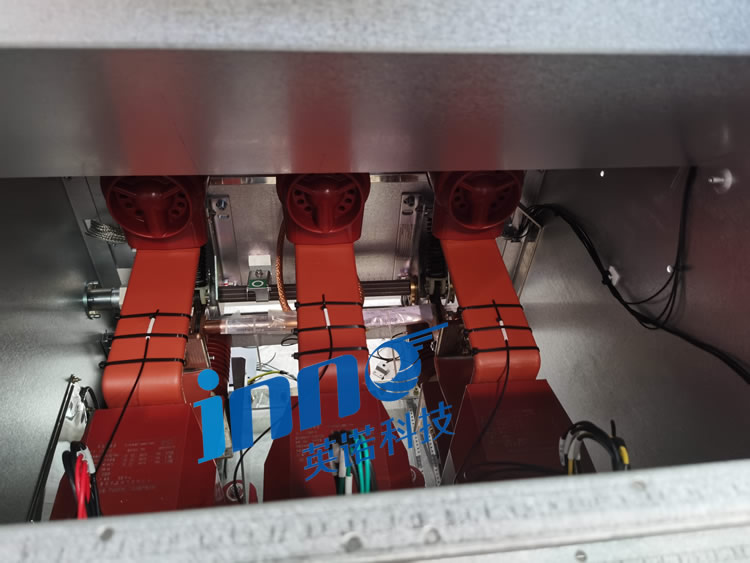
Circuit breaker monitoring is the continuous, real-time observation and analysis of a circuit breaker’s operational parameters to assess its health, 발전 결함을 감지, 상태 기반 유지 관리 결정 지원. 정기적인 수작업 점검과 달리, 회로 차단기 모니터링 시스템은 센서를 사용합니다., 데이터 수집 하드웨어, 전기에 대한 중단 없는 가시성을 제공하는 분석 소프트웨어, 열의, 기계적인, 수명 기간 동안 차단기의 유전 상태.
회로 차단기는 송배전 네트워크의 주요 보호 장치 역할을 합니다.. 기본 기능은 과부하 또는 단락 발생 시 오류 전류를 차단하고 그리드 섹션을 격리하는 것입니다.. 이 보호 조치는 밀리초 이내에 안정적으로 발생해야 하기 때문입니다., 차단기 접점의 잠재적 성능 저하, 격리, 가스 시스템, 또는 작동 메커니즘이 심각한 결과를 초래할 수 있음 - 오류 발생 시 트립 실패로 인해, 연속적인 정전으로 이어짐, 치명적인 장비 파손 및 안전 위험에 대비. 회로 차단기 모니터링은 눈에 보이지 않는 내부 성능 저하를 가시적인 성능 저하로 변환하여 이러한 위험을 제거하기 위해 존재합니다., 실행 가능한 데이터.
최신 회로 차단기 모니터링 시스템은 일반적으로 접촉 온도를 포함한 매개변수를 추적합니다., 부분방전 활동, SF₆ 가스 밀도 및 수분 함량, 기계적 작동 시간 및 이동 특성, 부하 전류, 및 버스바 연결 상태. 이러한 데이터 스트림을 연관시키고 시간 경과에 따른 추세를 분석함으로써, 시스템은 장애가 확대되기 훨씬 전에 결함 발생을 나타내는 이상 현상을 식별하므로 유지 관리 팀이 최적의 시간에 개입할 수 있습니다., 너무 이르지도 않다 (자원 낭비) 너무 늦지도 않아 (실패 위험).
FJINNO’s circuit breaker monitoring approach centers on fluorescent fiber optic temperature sensing — the parameter most directly correlated with contact degradation and thermal overload. By monitoring temperature in real time with EMI-immune fiber optic sensors, FJINNO enables early fault detection at the point where it matters most.
2. Why Do Circuit Breakers Need Real-Time Online Monitoring?
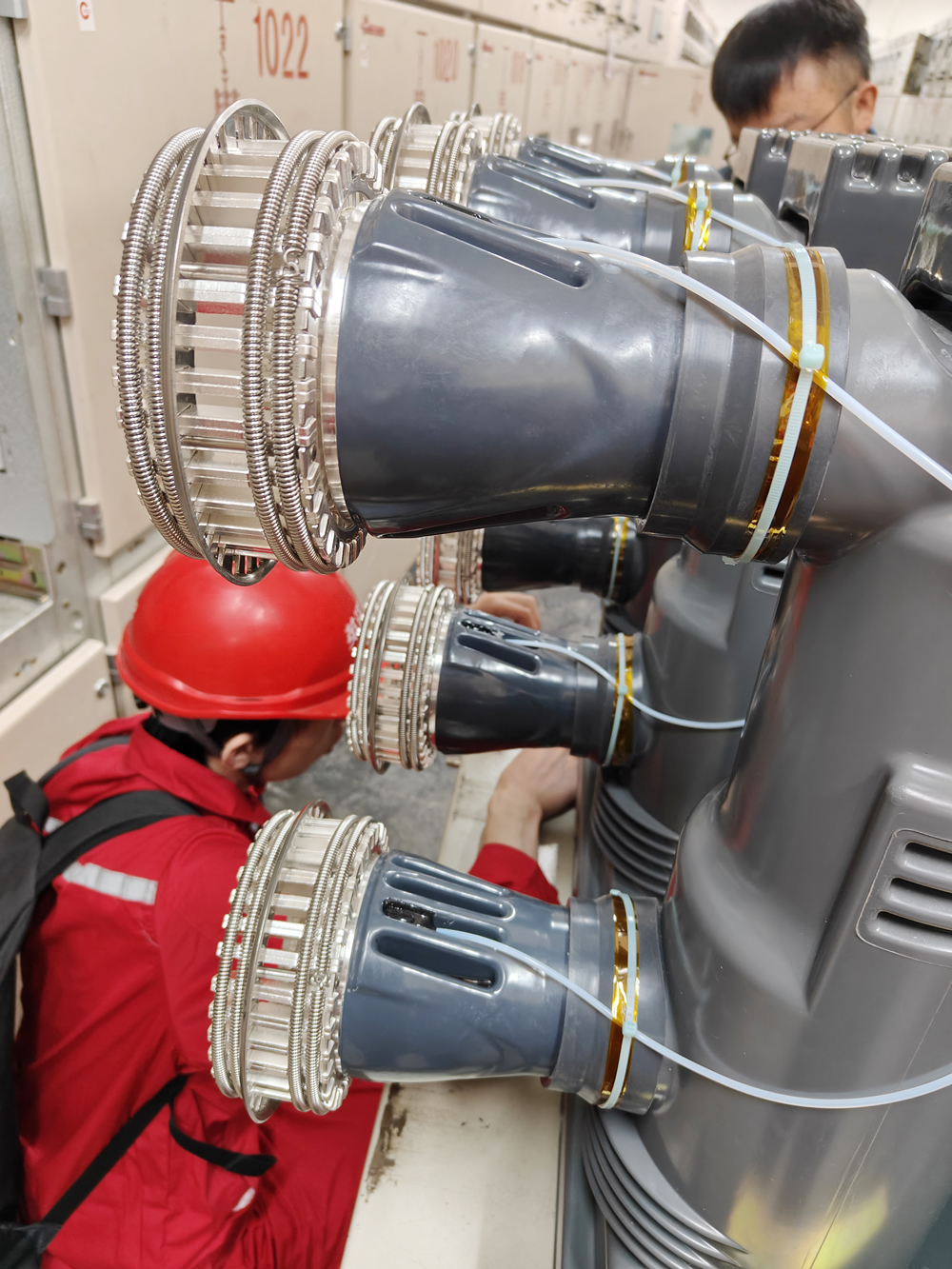
Traditional circuit breaker maintenance follows time-based or operation-count-based schedules: breakers are inspected or overhauled after a fixed number of years or switching operations, regardless of actual condition. While this approach provides a baseline level of reliability, it has fundamental limitations that make it inadequate for modern grid requirements.
The first limitation is the inability to detect inter-maintenance degradation. Faults such as contact erosion, 절연 열화, and gas leaks develop progressively between scheduled inspections. A breaker may pass inspection and begin degrading the following day, with the fault remaining invisible until the next scheduled outage — which could be years away. During this interval, the breaker continues to serve as a critical protection device while harboring a latent defect that could cause it to fail precisely when it is needed most.
The second limitation is the cost and operational disruption of offline inspection. Inspecting a high-voltage circuit breaker requires taking it out of service, which may require complex switching procedures, load transfers, and coordination with system operators. For critical breakers that cannot be easily de-energized, inspection opportunities are infrequent and brief. 실시간 온라인 모니터링은 서비스에서 차단기를 제거하지 않고도 지속적인 상태 평가를 제공함으로써 이러한 제약을 제거합니다..
세 번째 한계는 추세 데이터가 없다는 점입니다.. 단일 지점 검사는 특정 순간의 차단기 상태를 나타내지만 변화 속도나 방향에 대한 정보는 제공하지 않습니다.. 실시간 모니터링은 매개변수가 안정적인지 여부를 나타내는 연속 시계열 데이터를 생성합니다., 개선, 또는 악화 - 그리고 어떤 속도로. 이러한 추세 정보는 잔여 유효 수명을 예측하고 유지 관리 일정을 정확하게 수립하는 데 필수적입니다..
경제적 주장도 마찬가지로 설득력이 있다. 계획되지 않은 회로 차단기 오류로 인해 직접적인 비용 발생 (장비 교체, 긴급 수리 노동, 에너지가 공급되지 않음) 간접 비용 (계약상의 처벌, 규제 조사, 그리고 명예훼손). 업계 데이터에 따르면 송전 변전소에서 예상치 못한 단일 차단기 고장으로 인한 비용은 해당 변전소의 전체 차단기 집단을 10년 동안 모니터링하는 비용을 초과할 수 있습니다.. 실시간 회로 차단기 모니터링은 유지 관리를 사후 대응 비용에서 예측 투자로 전환합니다..
3. What Are the Common Fault Types in Circuit Breakers?
효과적인 모니터링 전략을 설계하려면 회로 차단기에 영향을 미치는 특정 오류 메커니즘을 이해하는 것이 필수적입니다.. 회로 차단기 오류는 5가지 주요 유형으로 분류될 수 있습니다., 각각 뚜렷한 신체적 원인이 있음, 진행 특성, 서명 모니터링.
1、열 과부하 및 접점 과열
회로 차단기가 노후화되고 스위칭 동작이 누적됨에 따라, 침식으로 인해 접촉 표면이 저하됨, 구멍 뚫기, 그리고 산화. 이러한 열화로 인해 접촉 저항이 증가합니다., which in turn causes localized resistive heating (P = I²R). The resulting temperature rise accelerates further oxidation and material loss, creating a positive feedback loop. If undetected, thermal overload progresses to contact welding, 절연 손상, and ultimately flashover or fire. Temperature monitoring is the most direct method of detecting this fault type, as the temperature rise is measurable before any other symptom becomes apparent.
2、Contact Erosion and Wear
Every interruption of load current or fault current causes arc erosion of the breaker’s contacts. The arc generated during current interruption vaporizes contact material, progressively reducing the contact mass and altering the contact geometry. As contacts erode, the effective contact area decreases, contact pressure distribution becomes uneven, and contact resistance increases. SF₆ 차단기에서, severe contact erosion can also generate metallic particles that contaminate the gas and compromise its dielectric strength. Monitoring contact temperature, mechanical travel characteristics, and switching operation counts provides insight into the progression of contact wear.
3、Insulation Degradation and Partial Discharge
Circuit breakers contain various solid and gas insulation systems that can degrade over time due to thermal stress, 전기적 스트레스, 습기 침투, and chemical contamination. As insulation deteriorates, 부분방전 (PD) activity increases — small electrical discharges that occur within voids, along surfaces, or at interfaces where the electric field exceeds the local breakdown strength. PD activity further erodes the insulation, creating a progressive failure path that can eventually lead to complete dielectric breakdown. Partial discharge monitoring detects this degradation at an early stage, while temperature monitoring identifies the thermal consequences of insulation failure.
4、SF₆ Gas Leakage and Contamination
SF₆ gas circuit breakers rely on the dielectric and arc-quenching properties of sulfur hexafluoride gas. Gas leakage through aging seals, 개스킷, or weld defects reduces the gas density below the level required for reliable arc interruption and insulation. 추가적으로, moisture ingress into the SF₆ compartment, or contamination from arc byproducts and metallic particles, degrades the gas quality even if the density remains adequate. Gas density monitoring and moisture analysis are essential for detecting these faults, while temperature monitoring provides complementary information about the thermal effects of reduced gas performance.
5、Mechanical Failure and Operating Mechanism Defects
The mechanical operating mechanism of a circuit breaker — whether spring-operated, hydraulic, or pneumatic — must reliably store and release energy to open and close the breaker within specified time limits. Mechanical failures include linkage wear, 봄의 피로, damper deterioration, latch malfunction, and lubrication degradation. These faults manifest as changes in operating time (slow operation), incomplete travel, or failure to operate. Mechanical condition monitoring typically involves timing analysis, travel measurement, coil current analysis, 및 진동 모니터링. Temperature monitoring of mechanism components can also reveal abnormal friction or bearing degradation.
These five fault categories are not independent. 실제로, faults often interact and cascade: contact erosion leads to increased temperature, which accelerates insulation degradation, which increases partial discharge, which further degrades insulation. A comprehensive circuit breaker monitoring system tracks multiple parameters simultaneously to capture these interactions and provide a holistic assessment of breaker health.
4. What Are the Key Monitoring Parameters for Circuit Breakers?
An effective circuit breaker monitoring system tracks a range of parameters that collectively characterize the breaker’s electrical, 열의, 유전체, and mechanical condition. The selection and prioritization of these parameters depend on the breaker type, 전압 등급, 임계성, and the specific failure modes most relevant to the application. The following parameters form the foundation of a comprehensive circuit breaker monitoring strategy.
온도
Temperature is the most fundamental and universally applicable monitoring parameter for circuit breakers. It provides direct indication of contact resistance changes, thermal overload conditions, abnormal current distribution, and insulation thermal aging. Temperature monitoring points include the stationary contacts, 연락처 이동, 부스바 연결 조인트, 케이블 종단, and arc chamber components. Fiber optic temperature sensors are the preferred technology for this application due to their immunity to electromagnetic interference and inherent electrical isolation.
부분방전 (PD)
Partial discharge monitoring detects incipient insulation degradation by measuring the small electrical discharges that occur when insulation begins to fail. PD activity is measured using ultra-high-frequency (UHF) 센서, 일시적인 접지 전압 (테브) 센서, or acoustic emission sensors. PD data provides early warning of dielectric failures that, 해결되지 않은 채 방치된 경우, 완전한 절연 파괴 및 플래시오버로 진행될 수 있습니다..
SF₆ 가스 밀도 및 수분
SF₆ 회로 차단기용, 가스 밀도는 중요한 안전 매개변수입니다.. 차단기의 아크 차단 성능과 절연 내력은 SF₆ 가스 밀도에 정비례합니다.. 밀도 센서는 온도 변화를 보상하여 실제 질량 밀도 판독값을 제공합니다.. 수분 함량 모니터링도 똑같이 중요합니다, 과도한 수분은 가스의 유전 특성을 저하시키고 내부 구성 요소를 공격하는 부식성 부산물을 생성하므로.
기계적 작동 특성
기계적 모니터링에는 작동 시간 측정이 포함됩니다. (마감 시간, 오픈 시간, 폐점시간), 접촉 여행 분석, 작동 코일 전류 신호 분석, 및 모터 전류 모니터링. These measurements reveal the condition of the operating mechanism, linkage system, 댐퍼, and energy storage components. Changes in timing or travel characteristics indicate developing mechanical faults that could result in slow operation or failure to operate.
부하 전류
Continuous load current measurement serves two purposes in circuit breaker monitoring. 첫 번째, it provides the baseline for correlating temperature measurements with actual loading conditions — enabling the system to distinguish between normal temperature rise due to high load and abnormal temperature rise due to contact degradation. 두번째, it tracks cumulative current loading and switching duty, which are key inputs for estimating remaining contact life and scheduling maintenance.
Busbar and Connection Status
Monitoring the condition of busbar connections and cable terminations at the breaker terminals is essential because these joints are common failure points. Loose or corroded connections increase resistance, generate heat, and can lead to thermal failure. Temperature monitoring at these points, combined with load current data, provides effective detection of deteriorating connections.
Among all monitoring parameters, temperature is the one that provides the earliest indication of the widest range of fault types. Contact overheating, connection degradation, insulation thermal aging, and mechanical friction all produce measurable temperature signatures before other symptoms appear. This is why FJINNO’s circuit breaker monitoring strategy prioritizes high-accuracy fiber optic temperature measurement as the foundation upon which other monitoring parameters are layered.
5. Why Is Temperature the Most Critical Early Warning Indicator for Circuit Breakers?

While circuit breaker monitoring encompasses multiple parameters, temperature occupies a unique and central position in the monitoring hierarchy. This is not arbitrary — it is grounded in the physics of circuit breaker degradation and the practical requirements of early fault detection.
The relationship between contact degradation and temperature is governed by a straightforward physical principle. When a circuit breaker’s contacts degrade — through erosion, 산화, carbon buildup, 또는 기계적 정렬 불량 - 전기 접촉 저항이 증가합니다.. 차단기는 부하전류를 지속적으로 흐르게 하기 때문에, 접촉 저항이 증가하면 접촉 인터페이스에서 열로 소산되는 전력이 직접적으로 증가합니다., P = I²R 관계를 따르면. 이러한 국부적인 가열로 인해 접촉 온도가 정상 작동 기준선보다 높아집니다.. 온도 상승은 접촉 저항의 증가에 비례합니다., 분해 심각도를 정량적으로 나타내는 지표로 사용.
온도를 조기 경고 지표로 특히 중요하게 만드는 것은 온도 변화와 기타 결함 발현 사이의 시간적 관계입니다.. 대부분의 성능 저하 시나리오에서, the temperature at the affected component begins to rise measurably weeks or months before other symptoms — such as increased partial discharge, gas decomposition products, or mechanical changes — become detectable. This is because the thermal effect is a first-order consequence of resistance increase, while other effects are secondary or tertiary consequences that require further degradation progression to become measurable.
Consider the degradation sequence for a typical contact overheating fault. As contact resistance increases, the local temperature rises. This elevated temperature accelerates oxidation of the contact surfaces, which further increases resistance — creating the positive feedback loop described earlier. As the temperature continues to rise, the insulation adjacent to the hot contact begins to thermally age, which may eventually produce partial discharge activity. If the breaker uses SF₆, the elevated temperature can accelerate gas decomposition and moisture generation. 마지막으로, if the mechanical components are affected by the heat, operating characteristics may change. Throughout this sequence, the temperature rise is the first measurable symptom and remains the most sensitive indicator of fault severity.
There is also a practical advantage to temperature monitoring: it is directly interpretable. A measured temperature of 105°C at a contact rated for 90°C immediately communicates the severity and urgency of the situation. Other parameters — such as partial discharge magnitude in picocoulombs or gas moisture content in ppm — require expert interpretation and contextual analysis. 온도, 대조적으로, can be evaluated against absolute thresholds defined in standards such as IEC 62271 and IEEE C37, making alarm setting and response decision-making straightforward.
6. Why Is Fiber Optic Technology Best Suited for Circuit Breaker Temperature Monitoring?
The internal environment of a circuit breaker presents extreme challenges for temperature measurement. High voltage potentials, intense electromagnetic fields during switching operations, 제한된 공간, and the need for long-term unattended operation eliminate most conventional temperature sensing technologies from consideration. Fiber optic temperature sensing — specifically fluorescent fiber optic sensing — addresses every one of these challenges simultaneously.
Optical fibers carry light, 전기신호가 아닌. Electromagnetic interference from switching arcs, bus currents, and adjacent equipment has zero effect on the measurement signal, eliminating the noise and error problems that plague electronic sensors in breaker environments.
Fiber optic sensors are fully dielectric — no conductive path exists between the high-voltage contact being measured and the grounded monitoring equipment. This eliminates the need for complex insulation barriers and provides natural galvanic isolation at any voltage level.
Fluorescent fiber optic sensors contain no active electronic components, 배터리, or moving parts. The measurement principle is based on the temperature-dependent decay time of a phosphor material — an intrinsic physical property that does not drift or degrade. No periodic recalibration is required.
The sensing element is typically a few millimeters in diameter, small enough to be mounted directly on contacts, 모선, and arc chamber components in the confined spaces inside a circuit breaker without obstructing operation or gas flow.
Fiber optic sensor materials are compatible with SF₆ gas, insulating oils, 회로 차단기 내부에 존재하는 아크 부산물. 그들은 가스를 배출하지 않습니다, corrode, 차단기 내부 환경을 오염시키거나.
형광 감쇠 시간 측정 원리는 신호 진폭이 아닌 고유한 재료 특성에 의존하기 때문에 고유한 장기 안정성을 제공합니다.. 드리프트 없이 수십 년 동안 연속 작동해도 센서 판독값이 정확하게 유지됩니다..
기존 대안 - 열전대, RTD, 및 적외선 센서 - 각각 하나 이상의 중요한 요구 사항이 충족되지 않습니다.. 열전대와 RTD는 고전압 환경에 전도성 요소를 도입합니다., 절연 위험 및 EMI 민감성 생성. 적외선 센서에는 대상 표면에 대한 가시선이 필요합니다., which is typically unavailable inside an enclosed breaker. Wireless electronic sensors require batteries (which have limited life and are unsuitable for sealed SF₆ compartments) and remain susceptible to EMI during breaker operations. Fluorescent fiber optic sensing is the only technology that satisfies all requirements simultaneously, which is why it has become the standard for high-voltage circuit breaker temperature monitoring.
FJINNO’s fluorescent fiber optic temperature sensors are specifically engineered for circuit breaker applications. With ±1°C accuracy, 응답 시간: 2 초, and a measurement range of -40°C to +200°C, they provide the precision and reliability required for early detection of contact overheating and thermal anomalies in SF₆, 비어 있는, and oil circuit breakers.
7. What Are the Components of a Circuit Breaker Fiber Optic Temperature Monitoring System?
A complete fiber optic temperature monitoring system for circuit breakers consists of three functional layers: the sensing layer, the signal processing layer, and the data management and integration layer. Each layer performs a distinct function, and together they form an end-to-end monitoring architecture that transforms physical temperature at the breaker’s critical points into actionable information in the operator’s control system.
Fluorescent fiber optic temperature sensors installed on contacts, 모선, arc chambers, 및 케이블 종단. Convert local temperature into an optical signal.
➔📡Layer 2: 신호 처리
Fiber optic signal demodulator (edge device) receives optical signals, extracts temperature data, performs threshold comparison, and generates local alarms.
➔🖥️Layer 3: 데이터 관리
SCADA / DCS / asset management software receives temperature data via Modbus, IEC 61850, or DNP3.0 for centralized display, 추세, and diagnostics.
층 1 — Fluorescent Fiber Optic Temperature Sensors
감지 레이어는 회로 차단기 내의 각 모니터링 지점에 설치된 형광 광섬유 온도 프로브로 구성됩니다.. 각 프로브에는 광섬유 끝에 결합된 인광 감지 요소가 포함되어 있습니다.. 복조기의 빛 펄스에 의해 자극될 때, 형광체는 형광을 낸다, 이 형광의 소멸 시간은 국지적 온도의 정확한 함수입니다.. 프로브는 여기 광 경로와 반사 형광 신호 경로를 모두 제공하는 광섬유 케이블을 통해 복조기에 연결됩니다.. 섬유는 완전히 유전체이기 때문에, 차단기의 유전체 무결성을 손상시키지 않고 차단기의 절연 시스템을 통해 고전압 접점에서 접지된 복조기로 안전하게 라우팅할 수 있습니다.. FJINNO sensors feature a compact probe design that allows direct mounting on stationary contacts, moving contact arms, 부스바 클램프, and arc chamber walls using high-temperature adhesive or mechanical fixation.
층 2 — Fiber Optic Signal Demodulator (Edge Device)
The signal processing layer is the fiber optic demodulator unit, which serves as the intelligent edge device of the monitoring system. The demodulator performs several critical functions: it generates the optical excitation pulses sent to each sensor, receives the returning fluorescence signals, applies the decay-time measurement algorithm to calculate temperature for each channel, compares the measured temperatures against configurable alarm thresholds, and outputs the processed data to the supervisory layer. FJINNO demodulators support multi-channel configurations (4, 8, 16, 또는 24 채널) 다양한 차단기 구성을 수용하고 단일 장치에서 3상 모두와 부스바 및 메커니즘 지점을 동시에 모니터링할 수 있습니다.. 복조기에는 로컬 디스플레이가 포함되어 있습니다., 릴레이 경보 출력, Modbus RTU/TCP를 포함한 디지털 통신 인터페이스, IEC 61850 MMS와 거위, 그리고 DNP3.0.
층 3 — 감독 소프트웨어 및 SCADA 통합
데이터 관리 계층은 복조기로부터 온도 데이터를 수신하여 유틸리티 또는 산업 시설의 기존 감시 제어 시스템 내에 표시합니다.. 표준 통신 프로토콜을 통해 통합이 이루어집니다., 온도 데이터가 다른 차단기 모니터링 매개변수와 함께 표시되도록 허용, 보호 시스템 데이터, 제어실의 운영 데이터. 고급 구현에는 추세 분석이 포함됩니다., 변화율 경보, 열 모델링, 차단기의 열 상태 궤적을 평가하기 위해 온도 데이터를 부하 전류 및 주변 온도와 결합하는 예측 진단. FJINNO는 SCADA 통합이 필요하지 않은 독립형 모니터링 애플리케이션을 위한 선택적 동반 소프트웨어를 제공합니다., 대시보드 시각화 제공, 알람 관리, 과거 데이터 저장, 및 보고서 생성.
8. Where and How Should Temperature Sensors Be Deployed in Circuit Breakers?
회로 차단기 온도 모니터링 시스템의 효율성은 열 결함이 발생하고 발생하는 위치의 온도 센서 배치에 따라 크게 달라집니다.. 센서 배치는 차단기의 내부 열 아키텍처와 대상으로 삼는 특정 오류 모드를 이해하여 결정해야 합니다.. 다음 표에는 중요한 모니터링 지점이 나와 있습니다., 결함 유형 각 위치 주소, 그리고 각각에 대한 배포 고려 사항.
| 모니터링 위치 | 대상 오류 유형 | 배포 노트 |
|---|---|---|
| Stationary Contacts (Fixed Contacts) | Contact resistance increase, 접촉 침식, carbon buildup | Sensor mounted on the contact finger assembly or contact support structure as close to the current-carrying interface as the design permits. This is the single most important monitoring point in any circuit breaker. |
| Moving Contacts (Mobile Contacts) | Contact misalignment, uneven wear, mechanical binding | Sensor mounted on the moving contact arm or tulip assembly. Fiber routing must accommodate the contact travel stroke without mechanical stress on the fiber. FJINNO sensors use flexible fiber leads designed for this application. |
| Arc Chamber / Interrupter | Arc erosion accumulation, nozzle degradation, dielectric weakening | Sensor installed on the arc chamber wall or nozzle support structure. Monitors the thermal condition of the interrupting assembly, which is subject to extreme thermal stress during fault current interruption. |
| Busbar Connection Joints | Connection loosening, 부식, plating degradation | Sensor mounted directly on the bolted or clamped busbar connection at each phase terminal. These joints are common failure points due to thermal cycling and mechanical vibration over time. |
| 케이블 종단 | Termination degradation, crimp loosening, 절연 노화 | Sensor mounted at the cable-to-breaker interface. Particularly important for breakers connected via XLPE or oil-filled cable systems where termination quality is critical. |
| Operating Mechanism Components | Bearing wear, 윤활 성능 저하, abnormal friction | Sensor mounted on mechanism housing or bearing points. Provides supplementary information on mechanical health by detecting abnormal heat generation from friction or failed lubrication. |
For a typical three-phase circuit breaker installation, the minimum recommended sensor deployment consists of one sensor per phase on the stationary contacts and one sensor per phase on the busbar connections — six sensors total. A comprehensive deployment adds sensors on the moving contacts, arc chambers, 및 케이블 종단, bringing the total to 12–18 sensors per breaker. FJINNO multi-channel demodulators are configured to support these deployment densities, with 16-channel and 24-channel models accommodating full monitoring of a single breaker or partial monitoring of multiple breakers from a single unit.
9. FJINNO Fluorescent Fiber Optic Temperature Monitoring System — Technical Specifications
The following specifications describe FJINNO’s fluorescent fiber optic temperature monitoring system as configured for circuit breaker applications. The system consists of the fluorescent fiber optic temperature sensor probes and the multi-channel signal demodulator. All specifications are validated under the operating conditions typical of high-voltage circuit breaker environments.
형광성 광섬유 온도 센서
| 매개변수 | 사양 |
|---|---|
| 측정원리 | 형광 감쇠 시간 |
| 측정 범위 | -40°C ~ +200°C (extended range available to +300°C) |
| 정확성 | ±1°C (over full range) |
| 해결 | 0.1℃ |
| 응답 시간 | < 2 초 |
| Sensor Probe Diameter | ≤ 3 mm |
| 광섬유 케이블 길이 | 최대 100 중 (기준); extended lengths on request |
| Dielectric Withstand | 완전한 전기 절연 (all-dielectric construction) |
| EMI 내성 | Fully immune — no electromagnetic interference susceptibility |
| 화학적 호환성 | Compatible with SF₆, mineral oil, silicone oil, dry air |
| 서비스 수명 | > 20 연령 (no recalibration required) |
Multi-Channel Fiber Optic Signal Demodulator
| 매개변수 | 사양 |
|---|---|
| Channel Options | 4 / 8 / 16 / 24 채널 |
| 샘플링 속도 | 1 sample per second per channel |
| 통신 프로토콜 | 모드버스 RTU, 모드버스 TCP, IEC 61850 (MMS & 거위), DNP3.0 |
| Alarm Outputs | 구성 가능한 릴레이 접점 (2-stage or 4-stage alarm) |
| 표시하다 | Local LCD display with channel-by-channel readout |
| 데이터 저장 | Internal memory for historical data logging |
| 작동 온도 | -40°C ~ +70°C |
| 전원공급장치 | 85–265 V AC or 110/220 DC에서 (wide-range input) |
| 보호 등급 | IP65 (outdoor installation capable) |
| 설치 | DIN rail, panel mount, or wall mount |
10. How Do Monitoring Strategies Differ Across Circuit Breaker Types?

Circuit breakers are manufactured in diverse configurations, each with distinct insulating media, interrupting principles, and construction designs. While the core monitoring objective — early detection of developing faults — remains constant, the specific monitoring strategy must be adapted to the characteristics and dominant failure modes of each breaker type.
SF₆ Gas Circuit Breakers
SF₆ breakers are the most widely deployed type in high-voltage transmission systems (72.5 kV 이상). Their primary monitoring requirements include contact temperature monitoring (to detect contact degradation and resistance increase), SF₆ gas density monitoring (to detect leakage and ensure adequate arc-quenching capability), gas moisture content monitoring (to prevent corrosive byproduct formation), and partial discharge monitoring (to detect insulation degradation). The sealed gas compartment makes fiber optic temperature sensors particularly valuable, as they can be installed inside the sealed compartment without penetrating the gas boundary or introducing leak paths. FJINNO sensors are fully compatible with SF₆ gas and do not produce outgassing or contamination.
Vacuum Circuit Breakers
Vacuum breakers are predominant in medium-voltage distribution systems (1 kV 에 40.5 kV). Their primary monitoring focus is contact erosion (tracked through switching operation counts and contact temperature), vacuum integrity (loss of vacuum results in failure to interrupt), and operating mechanism condition. Because the vacuum interrupter is a sealed unit, direct contact temperature measurement typically requires sensors on the external connections or the upper and lower terminals of the vacuum bottle. The temperature differential between the upper and lower terminals provides an indirect indicator of internal contact condition. FJINNO’s compact fiber optic sensors can be mounted at these terminal points to provide continuous thermal monitoring.
Oil Circuit Breakers
Oil circuit breakers use mineral oil as both the insulating medium and the arc-quenching medium. While largely superseded by SF₆ and vacuum technology in new installations, large numbers of oil breakers remain in service worldwide. Their monitoring requirements include contact temperature (monitored through fiber optic sensors positioned at the contact supports above the oil level), 오일 품질 분석 (절연 내력, 수분, 용해된 가스), and mechanical operating characteristics. Temperature monitoring is particularly important because oil circuit breakers are susceptible to carbonization of the oil near overheating contacts, which degrades the oil’s insulating and arc-quenching properties.
Dead-Tank Circuit Breakers
Dead-tank breakers house the interrupters inside a grounded metal tank, which is common in North American utility practice. The grounded tank provides natural shielding but also makes internal access for inspection difficult. Monitoring points include the bushing current connections (where current transfers from the external buswork through bushings into the tank), the internal interrupter contacts, and the operating mechanism. Fiber optic sensors can be routed through the bushing or through dedicated fiber feedthroughs in the tank wall to reach internal monitoring points. FJINNO provides application-specific fiber routing solutions for dead-tank configurations.
Live-Tank Circuit Breakers
Live-tank breakers mount the interrupters on insulating columns at line potential, typical in European and Asian transmission practice. The interrupters are exposed to ambient weather conditions, and the high-voltage location of the interrupters means that all sensor connections must be fully insulated from ground. Fiber optic sensors are inherently suited to this configuration because the optical fiber provides the required insulation while routing the temperature signal from the live interrupter down to the grounded monitoring equipment. FJINNO systems for live-tank breakers include UV-resistant fiber cables and weatherproof sensor enclosures for outdoor installation.
Independent Pole Operated Breakers (IPOB) 대. Gang Operated Breakers (GOB)
Independent pole operated breakers have a separate operating mechanism for each phase, allowing individual phase control. Gang operated breakers use a single mechanism to operate all three phases simultaneously. From a monitoring perspective, IPOBs require per-phase timing and mechanical analysis to detect individual mechanism faults, while GOBs require monitoring of the common mechanism plus inter-phase synchronization. Temperature monitoring requirements are similar for both types — each phase’s contacts and connections must be individually monitored regardless of the operating mechanism arrangement.
11. 자주 묻는 질문 (FAQ)
차단기 감시 시스템이란??
차단기 모니터링 시스템은 온도와 같은 중요 매개변수를 지속적으로 추적하는 실시간 상태 모니터링 솔루션입니다., 부분방전, SF₆ 가스 밀도, 기계적 작동 특성, 그리고 부하 전류. 이러한 매개변수를 분석하여, 시스템은 초기 단계의 결함을 감지하고 상태 기반 유지 관리를 가능하게 하는 실행 가능한 경고를 제공합니다., 예상치 못한 고장 방지 및 차단기 수명 연장.
회로 차단기 모니터링에서 온도가 가장 중요한 매개변수인 이유?
온도는 접점 성능 저하를 나타내는 가장 빠르고 직접적인 지표입니다., 접촉 저항 증가, 및 열 과부하. 침식으로 인해 접촉 저항이 증가하는 경우, 산화, 또는 느슨해짐, 결과적인 전력 손실 (P = I²R) 접촉 시 측정 가능한 온도 상승을 유발합니다.. This temperature change is typically detectable weeks or months before other fault symptoms appear, making it the most valuable early warning parameter for preventing catastrophic failures in circuit breakers.
Why is fiber optic temperature sensing preferred for circuit breaker monitoring?
Fiber optic sensors are inherently immune to electromagnetic interference (EMI), 완벽한 전기 절연 제공, require no calibration or maintenance, and offer long-term measurement stability. These properties make them uniquely suited for the high-voltage, high-EMI environment inside circuit breakers, where conventional electronic sensors such as thermocouples, RTD, and wireless sensors cannot operate reliably. Fluorescent fiber optic sensing is the only technology that satisfies all of these requirements simultaneously.
What types of circuit breakers can be monitored with fiber optic temperature sensors?
Fiber optic temperature sensors can be deployed in all major circuit breaker types, including SF₆ gas circuit breakers, 진공 회로 차단기, oil circuit breakers, and both live-tank and dead-tank configurations. The sensor’s compact size (≤ 3 mm 직경), full dielectric construction, and chemical compatibility with SF₆ and insulating oil allow installation directly on contacts, 모선, and arc chambers inside the breaker.
Where should temperature sensors be installed in a circuit breaker?
The critical temperature monitoring points in a circuit breaker are the stationary contacts, 연락처 이동, arc chambers, 부스바 연결 조인트, 케이블 종단, and operating mechanism components. For a minimum deployment, sensors should be placed on the stationary contacts and busbar connections of each phase (six sensors total). A comprehensive deployment adds moving contacts, arc chambers, 및 케이블 종단, bringing the total to 12–18 sensors per breaker.
Can fiber optic sensors be retrofitted into existing circuit breakers?
예. FJINNO fluorescent fiber optic temperature sensors are designed for both new installations and retrofit applications. The compact probe design and flexible fiber cable allow installation during scheduled maintenance outages without structural modifications to the breaker. For SF₆ breakers, sensors can be installed during a gas-down maintenance event and do not require permanent gas boundary penetrations. For vacuum and oil breakers, sensors are typically installed at the external terminal connections.
What is the measurement accuracy of FJINNO fiber optic temperature sensors?
FJINNO fluorescent fiber optic temperature sensors provide a measurement accuracy of ±1°C across the full operating range of -40°C to +200°C, with a resolution of 0.1°C and a response time of less than 2 초. The measurement principle (형광 감쇠 시간) is inherently stable and does not drift over time, so no periodic recalibration is required. The specified accuracy is maintained over the entire sensor service life of more than 20 연령.
How does the monitoring system integrate with existing SCADA systems?
FJINNO fiber optic signal demodulators support standard industrial communication protocols including Modbus RTU, 모드버스 TCP, IEC 61850 (MMS와 거위), 그리고 DNP3.0. These protocols enable seamless integration with existing SCADA, DCS, or dedicated asset management platforms. The demodulator outputs processed temperature data for each channel, along with alarm status, 선택한 프로토콜을 통해. SCADA가 없는 시설의 경우, FJINNO는 대시보드 시각화 기능을 갖춘 선택적 독립형 모니터링 소프트웨어를 제공합니다., 알람 관리, 역사적 추세.
FJINNO 광섬유 온도 모니터링으로 회로 차단기를 보호하세요
접촉 온도에 대한 실시간 가시성 확보, 연결 상태, SF₆용으로 설계된 형광 광섬유 모니터링 시스템을 통한 열 이상 현상 방지, 비어 있는, and oil circuit breakers.
부인 성명: 이 페이지에 제공된 정보는 일반적인 정보 제공 및 교육 목적으로만 제공됩니다.. FJINNO는 제시된 정보의 정확성과 완전성을 보장하기 위해 최선을 다합니다., 하지만 오류가 없음을 보장하지는 않습니다.. 제품 사양은 예고 없이 변경될 수 있습니다.. 제3자 회사에 대한 언급, 제품, 또는 상호는 참조 목적으로만 사용되며 보증이나 제휴를 의미하지 않습니다.. 언급된 모든 상표 및 상호는 해당 소유자의 자산입니다.. 최신 제품 사양 및 적용 안내, FJINNO에게 직접 연락주세요.

광섬유 온도 센서, 지능형 모니터링 시스템, 중국의 분산광섬유 제조업체
 |
 |
 |