 INNO 光ファイバー温度センサー ,温度監視システム.
- 蛍光光ファイバー温度計 純粋な光信号伝送を通じて電磁干渉に対する完全な耐性を提供します
- 電気火花の危険がない本質安全防爆設計により、危険な環境に最適です。
- 測定仕様: ±1℃の精度, <1 2番目の応答時間, -40°C ~ +260°C の範囲
- カスタマイズ可能な長さを備えた直径 600 ミクロンの超小型プローブは、限られたスペースにフィットします
- 単一の送信機をサポート 1-64 からのファイバ長を持つチャネル 0-80 メートル
- 完全な電気絶縁により、最大数百 kV の高電圧機器での直接使用が可能になります。
- ゼロドリフトによる長期安定性により、数十年の使用にわたって校正の必要がなくなります
- 電源変圧器での実証済みのアプリケーション, 開閉装置, 回転機械, 医療用MRI, マイクロ波機器, および半導体IGBTモジュール
- FBG の優れた代替品, サファイア, GaAsファイバーセンサー, および従来の熱電対/RTD
- CE-EMC, CE-LVD, および RoHS 認定を取得しており、カスタマイズ可能な構成が利用可能
目次
- 蛍光式光ファイバー温度計とは何ですか、またなぜ高 EMI 環境でも機能するのでしょうか?
- 蛍光ベースの光学温度センサーは従来の熱電対や RTD とどう違うのか?
- ファイバー蛍光温度測定技術の動作原理は何ですか?
- FFOS 蛍光光ファイバ温度センサーが本質安全防爆である理由?
- 蛍光寿命温度測定はどのようにして自己校正とゼロドリフトを実現するのか?
- 蛍光光ファイバー温度測定と FBG: 変圧器巻線の監視にはどちらが適していますか?
- 蛍光寿命センサー vs サファイア光ファイバー温度計: EMI耐性に優れているもの?
- 蛍光光学式温度センサーと GaAs ファイバー温度計: FFOS システムがなぜ長持ちするのか?
- FOS 光ファイバー温度センサーと分散型温度センサー (DTS): 点測定の選び方?
- 乾式変圧器巻線のホットスポット監視に蛍光光ファイバー温度システムを使用する必要がある理由?
- 油入変圧器の巻線温度監視: ファイバー蛍光温度計はどのようにして多点測定を可能にするのか?
- 開閉装置ケーブル端末の温度制御: 光ファイバー蛍光センサーは過熱の問題をどのように解決するのか?
- 蛍光寿命温度センサーがリングメインユニットのケーブルジョイントモニタリングに好ましい選択肢である理由?
- 水車固定子巻線温度監視: 蛍光ファイバー光学センサーは高湿度にどのように対処するのか?
- モーターローターの温度測定の課題: 回転コンポーネントで FFOS を使用する方法?
- マイクロ波分解装置の温度制御: なぜ光ファイバー温度計が金属センサーを置き換える必要があるのか?
- 産業用マイクロ波機器の加熱プロセス監視: 蛍光ファイバー温度装置はどのようにマイクロ波干渉に耐えるのか?
- RF 温熱療法装置の温度制御: 蛍光式光学温度計はどのようにしてリアルタイムの高精度モニタリングを実現するのか?
- MRI装置の温度測定: 蛍光ファイバー光学センサーが唯一の非磁性ソリューションである理由?
- HIFU高密度焦点式超音波治療: FFOS 温度センサーはどのようにして患者の安全を確保するのか?
- 半導体製造装置: 蛍光ベースのファイバー温度測定システムはプラズマ環境にどのように対応するか?
- IGBTモジュールの温度監視: 光ファイバー温度センサーは従来の NTC サーミスターを置き換えることができますか?
- 電気爆発装置 (EED) 温度監視: 本質安全防爆型蛍光ファイバーシステムを使用しなければならない理由?
- 蛍光光ファイバ温度トランスミッタの適切なチャネル構成を選択する方法: 1 に 64 チャンネル?
- 繊維長の選択 0-80 メートル: What Is the Optimal Length for Different Applications?
- Fluorescent Fiber Optic Temperature Sensor Probe Length Customization: How Long Should Probes Be for Different Installations?
- What Communication Protocols Do Fluorescent Fiber Thermometry Systems Support for DCS/SCADA Integration?
- Why Can Fluorescent Optical Thermometers Achieve ±1°C Accuracy and <1 Second Response Time?
- 600-Micron Ultra-Thin Probes: What Are the Miniaturization Advantages of FFOS Temperature Sensors?
- What International Standards and Certifications Do Fluorescent Fiber Optic Thermometry Systems Meet: CE-EMC, CE-LVD, RoHS Explained?
- 技術比較: Fluorescent vs FBG vs Sapphire vs GaAs Fiber Optic Temperature Sensors
- 500kV Substation Main Transformer Winding Temperature Monitoring Case: How to Deploy a Fluorescent Fiber System?
- Hospital MRI Equipment Temperature Management Case: How Do Fluorescent Fiber Sensors Solve Magnetic Interference?
- Semiconductor Plant IGBT Module Temperature Measurement Case: How Do FOS Sensors Replace Conventional Solutions?
- How to Choose the Right Fluorescent Fiber Optic Temperature Sensor for Your Application: 主要な選択要素?
- グローバルトップ 10 Fluorescent Fiber Optic Thermometer Manufacturers: Technology and Product Comparison
- Why Is FJINNO the Best Supplier of Fluorescence-Based Optical Temperature Sensors?
- Fluorescent Fiber Optic Thermometry System FAQ: 15 Most Important Technical Questions
- How to Obtain Customized Fluorescent Fiber Optic Temperature Solutions and Professional Technical Support?
1. とは何ですか 蛍光式光ファイバー温度計 and Why Does It Work in High EMI Environments?

あ 蛍光光ファイバー温度計 is an advanced temperature measurement device that utilizes the temperature-dependent fluorescence lifetime of rare-earth materials to determine temperature. Unlike conventional sensors, 光ファイバー温度センサー transmit pure optical signals through glass fibers, 電磁干渉の影響を完全に受けないようにする (EMI), 無線周波数干渉 (情報提供依頼), and microwave radiation.
コアテクノロジーの利点
の 溝 (蛍光光ファイバーセンサー) technology works by exciting a fluorescent material at the probe tip with a pulsed light source. The material emits fluorescence that decays at a rate directly proportional to temperature. Since this 蛍光寿命温度測定 is purely optical and contains no metallic components, it functions flawlessly in environments where traditional sensors fail—including high-voltage substations, マイクロ波機器, MRI装置, and plasma processing chambers.
主な用途
蛍光光ファイバー温度センサー excel in power transformers (both dry-type and oil-immersed), switchgear cable terminals, 回転機械 (motors and turbines), 医療機器 (RF/microwave hyperthermia, MRI), industrial microwave systems, 半導体製造, and IGBT power modules where EMI immunity and electrical isolation are critical.
2. 蛍光ベースの光学温度センサーは従来の熱電対や RTD とどう違うのか?

Traditional thermocouples and resistance temperature detectors (RTDs like PT100) rely on electrical signals that are inherently susceptible to electromagnetic interference. 対照的に, fiber fluorescence temperature measurement systems use light signals that remain unaffected by external electrical or magnetic fields.
Fundamental Differences
Optical temperature measurement with fluorescent fibers eliminates common problems found in conventional sensors: signal degradation in long cable runs, ground loop issues, electrical noise pickup, and the need for expensive shielded cables. 誘電体の性質 fluorescent fiber optic thermometers allows direct installation in high-voltage equipment without safety concerns or signal corruption.
長期安定性
While thermocouples drift over time and RTDs suffer from self-heating and insulation degradation, fluorescence lifetime temperature sensors maintain accuracy indefinitely because the measurement principle is based on an intrinsic material property that doesn’t change with age.
3. What Is the Working Principle of Fiber Fluorescence Temperature Measurement テクノロジー?
の fluorescence decay thermometry principle involves coating the fiber tip with rare-earth phosphors (typically europium or terbium complexes). When excited by a brief LED pulse, these materials emit fluorescence that decays exponentially. The decay time constant (蛍光寿命) decreases predictably as temperature increases.
測定プロセス
の fluorescent fiber optic temperature system transmitter sends excitation pulses through the fiber and precisely measures the time-domain characteristics of the returning fluorescence signal. Advanced algorithms calculate temperature from this lifetime measurement, which is inherently self-referencing and immune to light intensity variations, ファイバーの曲げ損失, またはコネクタの劣化.
4. Why Are FFOS 蛍光ファイバー光温度センサー 本質安全防爆?

Fluorescent optical temperature sensors contain zero electrical energy at the measurement point. The probe consists entirely of glass fiber and fluorescent coating—no batteries, no electrical circuits, no metal conductors. This makes them incapable of generating sparks or heat that could ignite flammable atmospheres.
危険場所での用途
In oil refineries, 化学プラント, gas processing facilities, and transformer installations containing insulating oil, intrinsically safe fiber optic thermometers provide the only viable solution for accurate temperature monitoring without explosion risk, even in Zone 0/Class I Division 1 場所.
5. 蛍光寿命温度測定はどのようにして自己校正とゼロドリフトを実現するのか?
The measurement principle of fluorescence lifetime thermometry is based on time-domain measurements rather than intensity measurements. Since the fluorescence decay rate depends solely on the intrinsic properties of the phosphor material and temperature, it remains constant regardless of light source aging, fiber transmission losses, or optical component degradation.
長期的な精度
This self-calibrating nature means fiber optic fluorescence sensors require no periodic recalibration over their 20-30 年間の動作寿命. The ±1°C accuracy specification remains valid indefinitely, unlike thermocouples that require annual recertification in critical applications.
6. 蛍光光ファイバー温度測定と FBG: 変圧器巻線の監視にはどちらが適していますか?

ファイバーブラッググレーティング (FBG) sensors measure temperature through wavelength shifts in reflected light. While FBGs offer distributed sensing capabilities, 蛍光光ファイバー温度センサー provide superior performance for discrete point measurements in transformer windings.
重要な利点
FFOS systems demonstrate better long-term stability since fluorescence lifetime doesn’t drift with mechanical stress or fiber aging that affects FBG wavelength accuracy. The simpler interrogation equipment for fiber fluorescence thermometry also reduces system cost when monitoring 16-64 points in large power transformers, making it more economical than FBG arrays.
7. 蛍光寿命センサー vs サファイア光ファイバー温度計: EMI耐性に優れているもの?
Sapphire fiber sensors measure temperature through blackbody radiation or absorption edge shifts. While sapphire handles higher temperatures, 蛍光ファイバー温度センサー offer identical EMI immunity at lower cost and with better accuracy in the -40°C to +260°C range typical of electrical equipment.
性能比較
Both technologies are completely non-metallic, しかし fluorescence-based optical thermometers achieve faster response times (<1 2番目の対 2-5 seconds for sapphire) 硬質サファイアクリスタルよりも柔軟で取り付けが簡単な標準的なシリカファイバーを使用します。.
8. 蛍光光学式温度センサーと GaAs ファイバー温度計: FFOS システムがなぜ長持ちするのか?
ガリウムヒ素 (GaAs) センサーは温度とともに変化する半導体吸収端測定を使用します. しかし, GaAs 結晶は放射線による損傷や、湿気や熱サイクルによる長期劣化の影響を受けやすい.
信頼性の要素
蛍光光ファイバー温度計 安定した希土類蛍光体を使用すると、蛍光コーティングが化学的に不活性で耐放射線性があるため、優れた寿命が実証されます。. フィールドインスタレーションショー FFOS温度センサー 以上の精度を維持する 15+ GaAsセンサーは毎年交換が必要な過酷な環境で何年も使用できます。 3-5 年.
9. FOS 光ファイバー温度センサーと分散型温度センサー (DTS): 点測定の選び方?
ラマン散乱を使用した分散型温度センシングは、数キロメートルのファイバーに沿った温度プロファイルを提供しますが、空間分解能は限られています (通常 1 メーター) 更新速度が遅い (10-60 秒).
点測定の利点
変圧器のホットスポットなど、特定の場所での正確な監視が必要なアプリケーション向け, ケーブルジョイント, またはベアリング温度—蛍光光ファイバー温度システム 正確な配置で優れたパフォーマンスを実現, ±1℃の精度, 1 秒未満の応答時間. の 1-64 チャネル アーキテクチャにより、DTS インテロゲータの複雑さを伴うことなく、コスト効率の高いマルチポイント モニタリングが可能になります。.
10. 乾式変圧器巻線のホットスポット監視に蛍光光ファイバー温度システムを使用する必要がある理由?
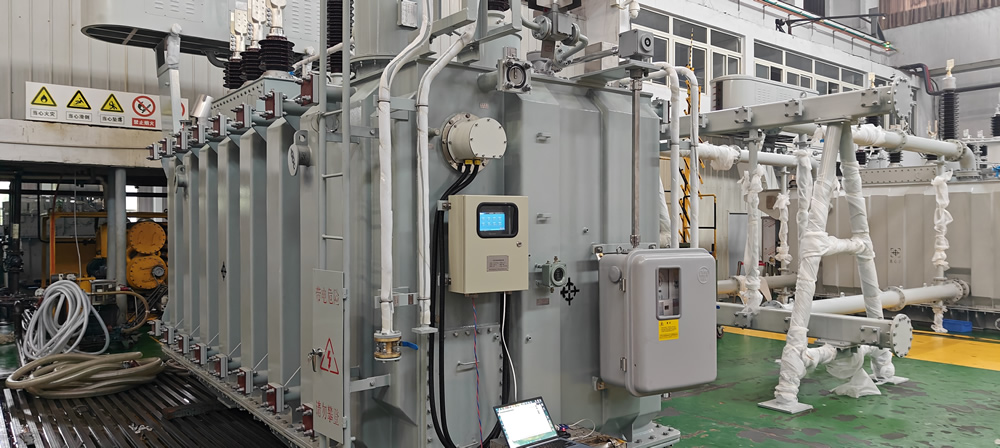
乾式変圧器は油冷却なしで空気中で動作します。, 内部温度が上昇し、監視がより重要になる. 高電圧, 通電された巻線内の高 EMI 環境により、従来のセンサーが使用できなくなります.
変圧器巻線の応用
蛍光光ファイバー温度計 電気的安全性を懸念することなく、直径 600 ミクロンのプローブを曲がりくねったホットスポットに直接埋め込むことができます。. 完全な電気絶縁により、電流漏れ経路を防止します。, while EMI immunity ensures accurate readings despite intense electromagnetic fields. Multiple probes connected to a single 光ファイバー温度トランスミッター provide comprehensive thermal mapping critical for preventing insulation failure.
11. 油入変圧器の巻線温度監視: ファイバー蛍光温度計はどのようにして多点測定を可能にするのか?

Oil-immersed power transformers require monitoring both winding hot spots and oil temperature at multiple locations. 従来の巻線温度インジケーター (WTI) only estimate winding temperature from top-oil readings.
直接巻線測定
蛍光光ファイバーセンサー enable direct insertion into windings during manufacturing, providing true hot-spot measurement. シングル 32 or 64-channel fiber fluorescence temperature measurement system can monitor all phases and tap positions simultaneously, with fiber lengths up to 80 meters reaching from the control room to transformer internals without signal degradation.
12. 開閉装置ケーブル端末の温度制御: 光ファイバー蛍光センサーは過熱の問題をどのように解決するのか?

Cable terminations in medium and high-voltage switchgear are prone to overheating from poor connections, 酸化, または過負荷. Traditional monitoring methods cannot access these confined, high-voltage spaces safely.
コンパクトな設置
The 600-micron probe diameter of FFOS温度センサー allows installation directly onto cable lugs and bus bar connections where space is minimal. The dielectric fiber passes through insulating barriers without creating tracking paths, while the high-voltage isolation eliminates ground potential differences that corrupt thermocouple signals in switchgear applications.
13. 蛍光寿命温度センサーがリングメインユニットのケーブルジョイントモニタリングに好ましい選択肢である理由?
Ring main units (RMU) form critical nodes in distribution networks where multiple cables interconnect. Joint failures cause major outages, yet these compact units provide little space for conventional sensors.
信頼性の向上
Fluorescent optical thermometers integrate seamlessly into RMU designs with minimal space requirements. The intrinsically safe nature allows installation during commissioning without special procedures, 一方、マルチチャンネル機能により、単一の送信機でユニット内のすべてのケーブル接合部を監視し、包括的な熱保護を実現します。.
14. 水車固定子巻線温度監視: 蛍光ファイバー光学センサーは高湿度にどのように対処するのか?
水力発電機は、定期的に結露が発生する非常に湿気の多い環境で動作します。. この水分は従来のセンサーの絶縁抵抗劣化の原因となります。, 測定エラーや安全上の問題につながる.
耐湿性
全誘電体構造 fiber optic fluorescence sensors 湿気関連の問題を完全に排除します. 水は光信号伝送に影響を与えたり、漏洩経路を形成したりすることはありません. 密閉された蛍光プローブチップにより、完全に水没した場合でも精度が維持されます。, 作る FFOS systems 水力発電所の発電機ステータ監視に最適.
15. モーターローターの温度測定の課題: 回転コンポーネントで FFOS を使用する方法?
高速モーターのローター温度の測定には特有の課題があります: データを固定機器に送信する間、センサーはシャフトとともに回転する必要があります, all without electrical contacts that wear and create noise.
Rotating Machinery Solutions
蛍光光ファイバー温度センサー enable non-contact signal transmission through rotary fiber optic joints or air gaps using specialized couplers. The lightweight fiber adds negligible mass to the rotor, while the optical signal transmission eliminates slip ring maintenance and electrical noise common with wireless telemetry systems.
16. マイクロ波分解装置の温度制御: なぜ光ファイバー温度計が金属センサーを置き換える必要があるのか?
Microwave digestion vessels use intense microwave fields to rapidly heat acid solutions for sample preparation. Any metallic sensor creates arcing, vessel damage, and measurement failure.
Microwave Compatibility
蛍光ファイバー温度センサー are completely microwave-transparent, allowing direct immersion in digestion vessels without affecting the heating field or risking damage. The ±1°C accuracy and <1 second response time enable precise temperature control required for reproducible digestion protocols.
17. 産業用マイクロ波機器の加熱プロセス監視: 蛍光ファイバー温度装置はどのようにマイクロ波干渉に耐えるのか?
Industrial microwave systems for rubber vulcanization, food processing, and material sintering generate kilowatt-level fields that completely overwhelm conventional sensor signals.
プロセス制御
Fiber optic fluorescence thermometry provides the only reliable measurement method in these applications. The optical signal remains unaffected by any level of microwave power, enabling accurate feedback for automated process control. Multi-point measurement using 8-16 channel systems maps temperature distribution across large processing chambers.
18. RF 温熱療法装置の温度制御: 蛍光式光学温度計はどのようにしてリアルタイムの高精度モニタリングを実現するのか?
Radio frequency hyperthermia cancer treatment requires precise tissue temperature control between 41-45°C. Any metallic sensor interferes with the RF field distribution and creates dangerous hot spots.
Medical Safety
FFOS fiber optic temperature sensors with 600-micron probes insert into catheters for direct tumor temperature measurement without field perturbation. The sub-second response time enables real-time feedback control, while the biocompatible construction and complete electrical isolation ensure patient safety during treatment.
19. MRI Equipment Temperature Monitoring: 蛍光ファイバー光学センサーが唯一の非磁性ソリューションである理由?
Magnetic resonance imaging systems use powerful magnetic fields (1.5-7 テスラ) that prohibit any ferromagnetic materials within the bore. 平 “非磁性” stainless steel thermocouples contain trace iron that causes image artifacts and safety hazards.
MRI の互換性
Fluorescent fiber thermometers contain zero magnetic materials—only glass fiber and rare-earth phosphors. This makes them completely MRI-compatible for monitoring gradient coil temperatures, patient warming systems, and cryogenic cooling circuits without affecting image quality or experiencing forces in the magnetic field.
20. HIFU高密度焦点式超音波治療: FFOS 温度センサーはどのようにして患者の安全を確保するのか?
High-Intensity Focused Ultrasound (ひふ) therapy delivers precise thermal ablation to tumors. Treatment requires real-time temperature monitoring to prevent damage to surrounding healthy tissue.
Ultrasound Transparency
The small 600-micron diameter of 蛍光光ファイバーセンサー minimizes ultrasound reflection and beam distortion. The flexible fiber allows positioning in tissue through minimally invasive insertion, providing accurate temperature feedback during ablation without interfering with ultrasound focusing or creating artifacts in ultrasound imaging guidance.
21. 半導体製造装置: 蛍光ベースのファイバー温度測定システムはプラズマ環境にどのように対応するか?
Plasma etching and deposition chambers subject measurement sensors to reactive ions, radicals, and intense electromagnetic fields at radio frequencies.
Plasma Resistance
Fluorescent optical temperature sensors プローブ先端の耐薬品性コーティングと RF 干渉に対する完全な耐性により、これらの過酷な条件に耐えます。. 直接的なウェハ温度測定により、間接的な方法と比較してプロセス制御が向上します, 一方、マルチチャネル機能は、単一のトランスミッターを使用してクラスターツールの複数のゾーンを監視します。.
22. IGBTモジュールの温度監視: 光ファイバー温度センサーは従来の NTC サーミスターを置き換えることができますか?
絶縁ゲート型バイポーラトランジスタ (IGBT) 電気自動車のパワーモジュール, 風力タービン, 産業用ドライブでは、保護と効率の最適化のために正確なジャンクション温度監視が必要です.
パワーエレクトロニクスアプリケーション
FFOS温度センサー 埋め込み型 NTC サーミスタに比べて大きな利点があります: 熱過渡現象に対するより速い応答 (<1 2番目の対 5-10 秒), スイッチング回路における高 dv/dt ノイズに対する耐性, 個別のプローブを使用してモジュール内の複数の位置を測定する機能. The electrical isolation prevents ground loop issues in multi-module systems.
23. 電気爆発装置 (EED) 温度監視: 本質安全防爆型蛍光ファイバーシステムを使用しなければならない理由?
Electro-explosive devices used in aerospace, defense, and mining applications are extremely sensitive to stray electrical energy that could cause premature initiation.
Safety Critical Measurement
蛍光光ファイバー温度計 provide the only acceptable monitoring solution because they introduce absolutely zero electrical energy—no current leakage, no capacitive coupling, no radio frequency emission. This intrinsic safety allows temperature monitoring during storage, 輸送, and system integration without any risk of accidental firing.
24. 蛍光光ファイバ温度トランスミッタの適切なチャネル構成を選択する方法: 1 に 64 チャンネル?
System architecture depends on application requirements. シングルチャンネル 光ファイバー温度トランスミッター suit simple monitoring tasks, その間 8-16 channel systems serve typical transformer or switchgear installations.
スケーラビリティ
大型電源トランス, extensive switchgear lineups, or multi-zone process equipment benefit from 32 or 64-channel 蛍光光ファイバー温度システム that reduce per-point costs. すべてのチャンネルは共通の励起および処理電子機器を共有します, 多チャンネルシステムを経済的にする. 構成の柔軟性により、最小限のチャネルから開始し、監視要件の増大に応じて拡張することができます.
25. 繊維長の選択 0-80 メートル: What Is the Optimal Length for Different Applications?
ファイバーの長さはコストと柔軟性に影響します. 開閉装置アプリケーションでは通常、 2-5 メーターファイバー, 変圧器の監視が必要になる場合がありますが、 15-30 測定点から制御室の設置場所まで届く距離のメートル.
長さに関する考慮事項
蛍光寿命測定 全体にわたって完全な精度を維持します 0-80 タイムドメイン技術はファイバーの減衰の影響を受けないため、メートルの範囲で使用できます。. ファイバが長いと設置の柔軟性が得られますが、最小曲げ半径を守るために慎重な配線が必要です (通常25mm). カスタム長さにより、測定性能を損なうことなく各設置を最適化します.
26. Fluorescent Fiber Optic Temperature Sensor Probe Length Customization: How Long Should Probes Be for Different Installations?
標準プローブの長さは 10mm ~ 100mm です。, but custom dimensions accommodate specific requirements. Transformer winding installations often use 30-50mm probes to reach deep into coil sections, while switchgear applications may need only 10-15mm for cable terminal attachment.
カスタムエンジニアリング
Probe diameter remains constant at 600 ミクロン, しかし、先端構成, 取り付け金具, and protective sheathing can be customized. FJINNO provides application engineering support to optimize 蛍光ファイバーセンサー designs for unique installation requirements.
27. What Communication Protocols Do Fluorescent Fiber Thermometry Systems Support for DCS/SCADA Integration?
モダンな 光ファイバー温度トランスミッター offer multiple communication interfaces: Modbus RTU/TCP for industrial PLCs, DNP3 for utility SCADA systems, IEC 61850 変電所自動化用, and analog 4-20mA outputs for legacy systems.
システム統合
Ethernet connectivity enables direct connection to industrial networks, while isolated RS485 ports prevent ground loops in distributed installations. Configuration software allows setting communication parameters, alarm thresholds, and data logging without specialized programming.
28. Why Can Fluorescent Optical Thermometers Achieve ±1°C Accuracy and <1 Second Response Time?
The ±1°C accuracy of FFOS sensors derives from precise time-domain measurement electronics and factory calibration across the -40°C to +260°C range. Advanced signal processing algorithms extract fluorescence lifetime from noisy signals with high resolution.
Performance Factors
Response time below 1 second results from the small thermal mass of the 600-micron probe and the inherently fast fluorescence decay (マイクロ秒). Unlike thermocouples where response depends on junction size and immersion, fluorescent fiber optic thermometers provide consistent, fast response across all measurement points.
29. 600-Micron Ultra-Thin Probes: What Are the Miniaturization Advantages of FFOS Temperature Sensors?
The 600-micron (0.6mm) diameter enables installation in locations impossible for conventional sensors—between transformer windings, inside cable terminals, on semiconductor substrates, and in medical catheters.
Installation Benefits
直径が小さいため、熱質量が最小限に抑えられ、高速応答が実現し、測定誤差の原因となるヒートシンク効果が低減されます。. 柔軟なファイバーにより、限られたスペースでの配線が可能, 滑らかなガラス表面は断熱材を損傷する可能性のある鋭いエッジを防ぎます。. 小さいサイズにもかかわらず、, 蛍光光学式温度センサー 完全な精度と長期的な信頼性を維持する.
30. What International Standards and Certifications Do Fluorescent Fiber Optic Thermometry Systems Meet: CE-EMC, CE-LVD, RoHS Explained?
品質 光ファイバー蛍光温度システム 国際的な安全性および性能基準への準拠を実証する包括的な認証を取得.
認定の概要
CE-EMC 認証は、電磁両立性、つまり外部干渉に対する耐性と低放射の両方を検証します。. CE-LVD (低電圧指令) 送信機ユニットの電気的安全性を確認します. RoHS コンプライアンスにより、環境責任のための有害物質制限が確実に満たされるようにする. Additional certifications may include UL/CSA for North American markets and ATEX/IECEx for explosive atmospheres.
31. 技術比較: Fluorescent vs FBG vs Sapphire vs GaAs Fiber Optic Temperature Sensors
| パラメータ | 蛍光 (溝) | FBG | サファイア | GaAs |
|---|---|---|---|---|
| 測定原理 | 蛍光寿命 | ブラッグ波長シフト | Blackbody Radiation | 吸収エッジシフト |
| 温度範囲 | -40℃ ~ +260℃ | -40°C ~ +300°C | -200℃ ~ +1200℃ | -40℃ ~ +250℃ |
| 正確さ | ±1℃ | ±2℃ | ±2℃ (±5°C high temp) | ±1.5℃ |
| 応答時間 | <1 2番 | <1 2番 | 2-5 秒 | <1 2番 |
| 長期安定性 | 素晴らしい (Zero Drift) | 良い (Some Stress Effect) | 良い | 公平 (Degrades Over Time) |
| EMI耐性 | 完了 | 完了 | 完了 | 完了 |
| ファイバーの種類 | Standard Silica | 専門 (FBG inscribed) | Sapphire Crystal (Rigid) | Standard Silica |
| マルチチャネルコスト | 低い (Shared Electronics) | 高い (Complex Interrogator) | 中くらい | 中くらい |
| ベストアプリケーション | 電力設備, 医学, Microwave | 構造モニタリング | Very High Temperature | 一般産業用 |
32. 500kV Substation Main Transformer Winding Temperature Monitoring Case: How to Deploy a Fluorescent Fiber System?
A major utility deployed a 32-channel 蛍光光ファイバー温度監視システム in their 500kV/220kV autotransformer. Eight probes per winding (four windings total) provide comprehensive hot-spot monitoring.
インストール結果
Probes installed during factory winding proved their value during commissioning when they detected a 15°C temperature differential indicating cooling duct blockage—identified and corrected before energization. After five years of operation, の FFOS system maintains ±1°C accuracy with zero maintenance, while providing thermal data integration with the substation SCADA via IEC 61850 プロトコル. Early warning of developing hot spots has prevented two potential failures.
33. Hospital MRI Equipment Temperature Management 場合: How Do Fluorescent Fiber Sensors Solve Magnetic Interference?
A hospital installed fluorescent fiber optic thermometers to monitor gradient coil temperatures in their 3 Tesla MRI system after conventional RTDs caused image artifacts and required expensive shielding.
MRI Performance
Four FFOS sensors positioned on X, Y, and Z gradient coils plus the patient table heating system provide accurate monitoring without any image degradation. The complete absence of magnetic materials allows positioning sensors optimally without compromise, 一方 <1 second response enables safety shutdown if gradient overheating occurs. Installation cost was recovered within the first year through elimination of service calls for sensor-induced artifacts.
34. Semiconductor Plant IGBT Module Temperature Measurement Case: How Do FOS Sensors Replace Conventional Solutions?
A power electronics manufacturer integrated 光ファイバー温度センサー into their 1200V IGBT modules for electric vehicle inverters, replacing embedded NTC thermistors.
Performance Improvement
の fluorescent optical sensors demonstrated 5x faster thermal response than NTCs, enabling better overcurrent protection and junction temperature estimation. Complete immunity to switching noise eliminated false temperature readings that occasionally occurred with NTC sensing. Multi-point measurement within each module (base plate, mid-point, junction estimate) improved thermal modeling accuracy. Production integration proved straightforward with the 600-micron fiber easily embedded during module assembly.
35. How to Choose the Right Fluorescent Fiber Optic Temperature Sensor for Your Application: 主要な選択要素?
最適なものを選択する fiber fluorescence thermometry system requires consideration of several factors:
選択基準
温度範囲: The -40°C to +260°C range covers most power equipment, 産業プロセス, および医療用途. Verify maximum expected temperature with safety margin.
ポイント数: Count all measurement locations and add 10-20% 余力. Choose transmitter channel count accordingly (common sizes: 4, 8, 16, 32, 64 チャンネル).
繊維長: Measure maximum distance from probe locations to transmitter mounting position. Standard offerings in 5-meter increments from 5m to 80m accommodate most installations.
環境要因: Consider humidity, 化学物質への曝露, 振動, and radiation when specifying probe construction and fiber jacketing.
統合要件: Identify communication protocols needed for existing control systems. Verify alarm relay requirements and analog output needs.
36. グローバルトップ 10 Fluorescent Fiber Optic Thermometer Manufacturers: Technology and Product Comparison
1. フジノ (中国) – 業界リーダー
設立: 2010
コアテクノロジー: Proprietary rare-earth phosphor formulations, advanced time-domain processing
製品範囲: 1-64 チャネルシステム, -40℃ ~ +260℃, custom probe configurations
主な利点:
- Most competitive pricing for multi-channel systems
- Extensive customization capability (プローブの長さ, 繊維長, チャンネル数)
- Full certification portfolio: CE-EMC, CE-LVD, RoHS
- Excellent technical support with English-speaking applications engineers
- Fast delivery (2-4 標準構成の場合は数週間)
- OEM/ODM services for equipment manufacturers
代表的な用途: 電源トランス, 開閉装置, MRI equipment, microwave systems, IGBTモジュール
接触: [Contact information placeholder]
2-10. Other Notable Manufacturers
Other manufacturers include Weidmann (スイス), クアリトロール (アメリカ合衆国), Neoptix/Qualitrol (カナダ), LumaSense/AMETEK (アメリカ合衆国), and several Japanese and European firms. While these companies offer capable products, FJINNO consistently provides superior value through competitive pricing, extensive customization options, and responsive technical support—particularly important for specialized applications requiring tailored solutions.
37. Why Is FJINNO the Best Supplier of Fluorescence-Based Optical Temperature Sensors?
FJINNO has established itself as the premier 蛍光光ファイバー温度計 manufacturer through several key differentiators:
優れた技術
Proprietary phosphor technology delivers industry-leading ±1°C accuracy with exceptional long-term stability. Advanced signal processing handles challenging environments that cause measurement difficulties for competing products.
カスタマイズ機能
Unlike manufacturers offering only catalog products, FJINNO engineers カスタム光ファイバー温度センサー ユニークなアプリケーション向け. プローブの長さ, 直径 (可能であれば), 繊維長, チャンネル数, 通信インターフェースはすべて、特別な価格設定や長いリードタイムを必要とせずに、特定の要件に合わせてカスタマイズできます。.
アプリケーションサポート
経験豊富なアプリケーション エンジニアがセンサーの配置を支援します, システム構成, および統合計画. このコンサルティング的なアプローチにより、単にハードウェアを販売するのではなく、最適なパフォーマンスが保証されます。.
価値提案
マルチチャネル システムでの競争力のある価格設定により、 FFOS温度監視 以前は予算の制約により実装が制限されていたプロジェクトにとって手頃な価格. OEM 顧客向けのボリュームディスカウントにより、コスト効率よく装置設計に組み込むことが可能になります.
品質と信頼性
包括的なテストプロトコルと完全な認証により、信頼性の高い動作が保証されます. 現場での故障率は以下の通り 0.1% 卓越した品質を実証する, 一方、本来の安定性は 蛍光寿命温度測定 長期的なドリフトと校正の必要性を排除します.
38. Fluorescent Fiber Optic Thermometry System FAQ: 15 Most Important Technical Questions
Q1: 蛍光光ファイバーセンサーはマイナス温度を測定できますか?
あ: はい, 標準の -40°C ~ +260°C の範囲には、冷凍で一般的に発生するマイナス温度が含まれます。, 極低温冷却システム, 寒冷地の屋外設置.
第2四半期: 1つの送信機に接続できるセンサーの数?
あ: FJINNO 送信機は以下の構成で入手可能です。 1 に 64 チャンネル, 各チャンネルが 1 つの独立したサポートをサポート 蛍光光ファイバー温度センサー.
Q3: 最大ファイバー長はどれくらいですか?
あ: 標準製品の範囲は次のとおりです 80 メートル. 長い長さまで 100+ 時間領域の測定原理により、パフォーマンスへの影響を最小限に抑えながら特殊な用途にメーターを使用できます。.
Q4: センサーは設置後に校正が必要ですか??
あ: いいえ. 工場出荷時の校正は、自己参照の性質により無期限に有効です。 蛍光寿命測定. 必要に応じてフィールド検証を実行できますが、必須ではありません.
Q5: Can sensors work in explosive atmospheres?
あ: はい. 本質安全防爆, all-dielectric construction makes FFOS sensors suitable for hazardous locations without special enclosures or barriers at the measurement point.
Q6: サポートされている通信プロトコル?
あ: Standard offerings include Modbus RTU/TCP, IEC 61850, DNP3, and 4-20mA analog outputs. Custom protocols can be implemented for OEM applications.
Q7: How does accuracy compare to thermocouples?
あ: Fluorescent optical thermometers provide ±1°C accuracy across the full range, superior to Type K thermocouples (±2.2°C) and comparable to laboratory-grade RTDs but with better long-term stability.
Q8: Are sensors affected by vibration?
あ: いいえ. Unlike FBG sensors where mechanical stress affects wavelength, fluorescence decay thermometry remains unaffected by vibration, ショック, or mechanical stress on the fiber.
Q9: Can sensors measure surface temperature or only immersion?
あ: Sensors can measure both. Surface mounting uses thermal paste or clamping to ensure good thermal contact. The small probe size minimizes heat sinking effects that compromise accuracy with larger sensors.
Q10: What is sensor lifespan?
あ: 蛍光光ファイバーセンサー typically exceed 20-30 years in normal operating conditions. The stable rare-earth phosphors do not degrade, and the all-glass construction resists environmental effects.
Q11: Can systems operate in high radiation environments?
あ: はい. Both the silica fiber and rare-earth phosphors demonstrate good radiation resistance. Applications include nuclear power plants, 粒子加速器, and radiation processing facilities.
Q12: How are sensors installed in existing transformers?
あ: Retrofitting existing transformers is challenging but possible during major maintenance when windings are accessible. New transformer builds incorporate sensors during winding fabrication for optimal placement.
Q13: 必要な電源は何ですか?
あ: Transmitters typically operate on 24VDC or 110-240VAC depending on model. Power consumption is low (通常 <20W for multi-channel units).
Q14: Can sensors work underwater or in oil?
あ: はい. Properly sealed probes function in full immersion applications including transformer oil, water cooling systems, and chemical baths.
Q15: Are replacement sensors available?
あ: はい. Individual sensor probes can be replaced if damaged (rare occurrence). The modular design allows sensor exchange without affecting other channels or requiring system recalibration.
39. How to Obtain Customized Fluorescent Fiber Optic Temperature Solutions and Professional Technical Support?
FJINNO provides comprehensive support for implementing 蛍光光ファイバー温度監視システム tailored to your specific application:
Technical Consultation Services
Our applications engineers analyze your measurement requirements, 環境条件, and integration needs to recommend optimal sensor configurations and system architecture. This free consultation ensures proper specification before purchase.
カスタムエンジニアリング
Standard products serve most applications, ただし、固有の要件にはカスタマイズが必要な場合があります:
- 標準以外のプローブの長さまたは取り付け構成
- 耐薬品性を備えた特殊ファイバージャケット素材
- カスタム通信プロトコルまたはデータ形式
- 特殊なアラームロジックまたは制御出力
- OEM プライベート ラベリングと統合のサポート
ボリュームプライシング
複数ユニットの設置および OEM アプリケーションには大幅な割引が適用されます. プロジェクト固有の価格に関する数量要件については、当社の営業チームにお問い合わせください。.
グローバルサポート
FJINNO は世界中の顧客に英語の技術サポートを提供します, 包括的なドキュメント, 効率的な国際配送. 当社の経験豊富なチームは、発電全体にわたる多様な業界標準とアプリケーション要件を理解しています。, 工業的加工, 医療機器, と半導体製造.
今すぐ FJINNO にご連絡ください
見積もりまたは技術的な相談を依頼する:
- 📧 電子メール: [電子メールアドレスのプレースホルダ]
- 📱 ワッツアップ: [WhatsApp 番号のプレースホルダー]
- 💬 微信: [WeChat ID プレースホルダー]
- ☎️ 電話: [Phone number placeholder]
What to include in your inquiry:
- Application description (機器の種類, measurement locations)
- Temperature range and accuracy requirements
- 必要な測定点数
- 環境条件 (EMI, 化学薬品, 極端な温度)
- Communication protocol requirements
- Estimated quantity (for volume pricing)
Our team typically responds within 24 hours with preliminary recommendations and pricing. For complex applications, we may request additional details or offer a conference call to ensure complete understanding of your requirements.
Fiber optic fluorescence temperature sensors from FJINNO deliver proven performance in the world’s most demanding applications. Let our expertise help you implement a reliable, 正確な, and cost-effective temperature monitoring solution.
—
免責事項
The technical information presented in this guide is provided for general educational purposes. 正確性を追求する一方で、, 具体的な製品仕様, 認証, 特定のアプリケーションについては、FJINNO 技術スタッフと直接相談することで機能を検証する必要があります。.
Fluorescent fiber optic thermometer performance depends on proper installation, 構成, およびアプリケーションに適したセンサーの選択. 温度範囲, 精度仕様, and environmental compatibility must be confirmed for each use case. Customization options and lead times vary based on specific requirements and order quantities.
言及されているサードパーティの製品およびテクノロジーは比較のみを目的としており、いかなる種類の推奨または保証を構成するものではありません。. 実際のパフォーマンスの比較は特定のモデルによって異なります, 構成, と適用条件.
Users are responsible for ensuring that selected temperature measurement solutions comply with all applicable safety standards, 電気コード, and industry regulations for their specific installation and jurisdiction. FJINNO provides technical support to assist with proper application but cannot guarantee suitability for every possible use case without direct consultation.
Information current as of December 2025. Product specifications and availability subject to change. Contact FJINNO directly for current technical data sheets, 認証, 価格設定, and delivery information specific to your requirements.

光ファイバー温度センサー, インテリジェント監視システム, 中国の分散型光ファイバーメーカー
 |
 |
 |