 Sensori di temperatura a fibra ottica INNO ,sistemi di monitoraggio della temperatura.
| Aspetto | Protezione da sovracorrente | Surge Protection |
|---|---|---|
| Primary Threat | Sustained overload and short circuits | Transient voltage spikes |
| Tempo di risposta | Milliseconds to seconds | Nanoseconds to microseconds |
| Duration of Threat | Continuous or prolonged | Microseconds to milliseconds |
| Typical Devices | Interruttori automatici, fusibili, relè | SPDs, MOVs, lightning arresters |
By understanding how these protection systems work together, you’ll be better equipped to troubleshoot problems, maintain your equipment properly, and design comprehensive protection schemes. This knowledge helps you prevent transformer failures before they happen and ensures your power distribution system runs safely and efficiently.

Punti chiave
- Protezione da sovracorrente previene i danni derivanti da sovraccarichi prolungati e guasti da cortocircuito interrompendo il flusso di corrente quando supera i livelli di sicurezza.
- Protezione contro le sovratensioni protezioni contro le sovratensioni transitorie causate dai fulmini, operazioni di commutazione, e disturbi della rete.
- I due tipi di protezione affrontano minacce completamente diverse: la sovracorrente si occupa della portata attuale, mentre la protezione da sovratensione gestisce i picchi di tensione.
- Le posizioni di installazione e i tempi di risposta differiscono in modo significativo tra questi sistemi, con dispositivi di sovracorrente che rispondono migliaia di volte più velocemente dei dispositivi di sovracorrente.
- Comprendere come funzionano insieme entrambi i sistemi fornisce una protezione completa del trasformatore che nessuno dei due può ottenere da solo.
- La manutenzione regolare di entrambi i tipi di protezione è fondamentale per un funzionamento affidabile e per prevenire guasti catastrofici del trasformatore.
- Moderno dispositivi intelligenti di protezione del trasformatore from manufacturers like FJINNO integrate multiple protection functions into unified platforms.
Panoramica sulla protezione da sovracorrente del trasformatore e sulla protezione da sovratensione del trasformatore
Ubicazione e posizione di installazione
When you examine a transformer protection system, you’ll immediately notice that overcurrent protection devices E surge protection devices occupy very different positions in the electrical installation. This placement reflects their distinct protective functions and the threats they’re designed to counter.
Overcurrent Protection Device Locations
Overcurrent protective devices install in series with the transformer windings, positioned to monitor current flow through the circuits they protect. You’ll typically find these devices in several key locations:
- On the primary side del trasformatore, protecting the high-voltage winding and incoming supply lines
- On the secondary side, safeguarding the low-voltage distribution circuits and connected loads
- Dentro distribution panels E switchgear cabinets, where circuit breakers provide both overcurrent protection and manual disconnection capability
- Entro control panels housing protective relays that monitor current levels and issue trip commands to circuit breakers
- A centri di controllo motorio E load feeders, where overload relays protect individual equipment branches
The series installation means all load current flows through these protective devices, allowing them to accurately measure current magnitude and duration. This positioning enables overcurrent devices to detect both gradual overloads that develop over minutes and sudden short circuits that occur in milliseconds.
Surge Protection Device Locations
Surge protective devices (SPDs) connect in parallel with the equipment they protect, installed between phase conductors and ground. Troverai questi dispositivi in punti strategici del sistema di distribuzione dell'energia:
- Al terminali primari del trasformatore, proteggere la connessione dell'alimentazione in ingresso dai transitori lato rete
- On the secondario del trasformatore, proteggere il sistema di distribuzione a bassa tensione dalle sovratensioni che si propagano da entrambe le direzioni
- Al ingresso principale di servizio di strutture, fornendo protezione all’intero edificio (SPD di classe I)
- In distribution panels servire aree di apparecchiature sensibili (SPD di classe II)
- Vicino carichi elettronici sensibili come i sistemi di controllo, computer, e strumentazione (SPD di classe III)
- SU linee di comunicazione e controllo collegato al trasformatore, protezione dei circuiti di segnale dalle sovratensioni indotte
Moderno sistemi intelligenti di protezione dei trasformatori da FJINNO spesso integrano il monitoraggio della protezione da sovracorrente e da sovratensione nei singoli armadi, semplificando l'installazione fornendo allo stesso tempo una visibilità completa su entrambi i sistemi di protezione.
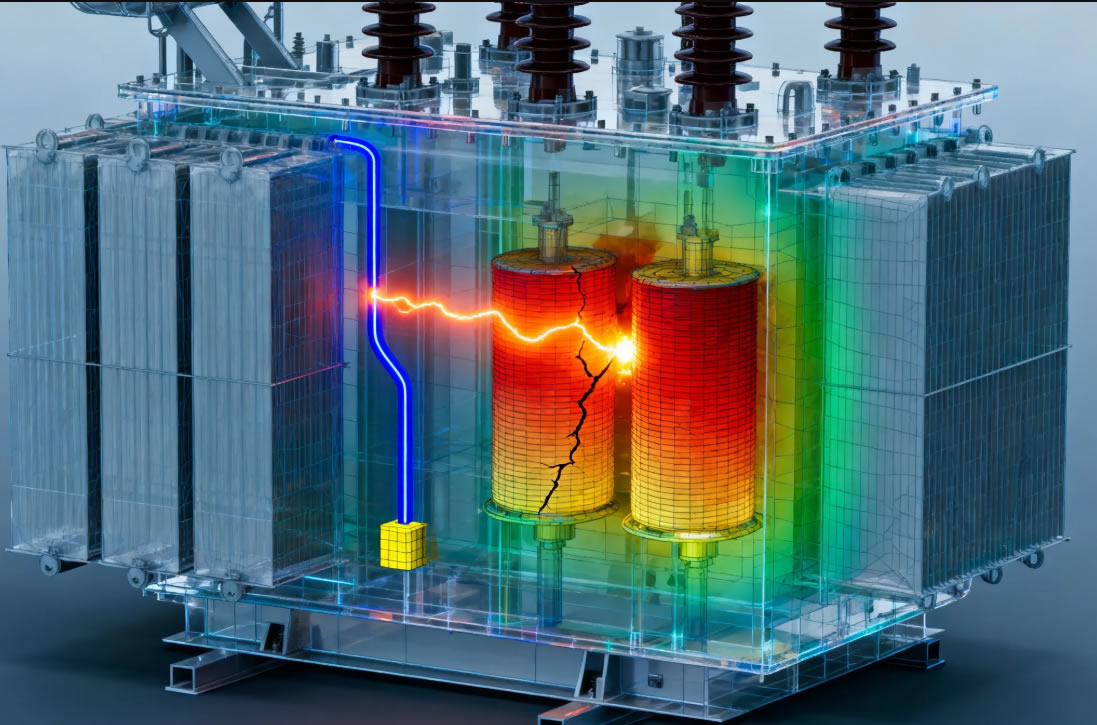
Installation Configuration Comparison
| Tipo di trasformatore | Overcurrent Protection Configuration | Surge Protection Configuration |
|---|---|---|
| Small Distribution Transformer (≤100 kVA) | Primary fuses + secondary breakers | Secondary-side Class II SPD |
| Medium Power Transformer (100-1000 kVA) | Primary breaker + overcurrent relays + secondary breakers | Primary and secondary Class I/II SPDs |
| Large Power Transformer (>1000 kVA) | Protezione differenziale + overcurrent relays + interruttori | Lightning arresters + multi-stage SPD cascade |
| Critical Facility Transformer | Microprocessor-based protection + redundant breakers | Coordinated SPD system with continuous monitoring |
Tip: When planning protection system layouts, remember that surge devices need the shortest possible lead lengths to ground for effective operation, while overcurrent devices require proper current sensor placement for accurate measurement.
Funzione principale e scopo
Understanding what each protection type actually does helps you appreciate why both are necessary for comprehensive transformer protection. Let’s break down the primary functions of each system.
What Overcurrent Protection Does
Protezione da sovracorrente del trasformatore serves as your first line of defense against electrical faults and abnormal operating conditions involving excessive current flow. This protection performs several critical functions:
- Monitors current magnitude: Continuously measures the current flowing through transformer windings and distribution circuits, comparing these values against predetermined safe limits
- Detects overload conditions: Identifies situations where load current exceeds the transformer’s rated capacity, which can cause dangerous overheating if allowed to continue
- Identifies short-circuit faults: Recognizes the extremely high currents that flow when insulation fails or conductors accidentally contact each other
- Provides time-delayed response: Allows brief overloads (like motor starting currents) while tripping on sustained overcurrent conditions
- Interrupts fault current: Opens circuits to stop current flow, preventing progressive damage to transformer windings, sistemi di isolamento, e apparecchiature collegate
- Enables selective coordination: Works with upstream and downstream protective devices to isolate faults at the most appropriate location, maintaining service to unaffected circuits
You can think of overcurrent protection as a vigilant guard that constantly watches current levels. When current stays within safe limits, the protection system remains passive. But when overloads or faults occur, it takes decisive action to interrupt power before damage occurs. The protection operates based on time-current characteristics—high overcurrents trigger fast tripping, while moderate overloads allow some delay for temporary conditions to clear.
What Surge Protection Does
Transformer surge protection addresses an entirely different threat—transient overvoltages that can reach thousands of volts above normal operating levels in microseconds. These protective systems perform specialized functions:
- Limits transient overvoltages: Clamps voltage spikes to safe levels that transformer insulation can withstand without damage
- Absorbs surge energy: Diverts the energy contained in voltage transients to ground, preventing it from reaching sensitive transformer components
- Protects against lightning: Handles the enormous voltage and current surges induced by direct and nearby lightning strikes
- Suppresses switching transients: Eliminates voltage spikes generated by circuit breaker operations, capacitor switching, and load interruptions
- Prevents cascade failures: Stops surges at their entry point, protecting not just the transformer but all downstream equipment
- Maintains voltage stability: Helps keep voltage within acceptable bounds during grid disturbances and fault conditions
Surge protection works like a pressure relief valve in a plumbing system. When voltage tries to rise above safe levels, the surge device creates a low-impedance path to ground, shunting the excess energy away from protected equipment. This happens so quickly—often in nanoseconds—that the voltage spike never has time to damage insulation or electronic components.
How the Functions Complement Each Other
Ecco dove la distinzione diventa cruciale: protezione da sovracorrente non può proteggere dalle sovratensioni perché le sovratensioni non comportano necessariamente una corrente elevata nel circuito protetto. Allo stesso modo, protezione contro le sovratensioni non risponde alle condizioni di sovracorrente perché la tensione può rimanere normale anche quando scorre una corrente eccessiva. È necessario che entrambi i sistemi lavorino insieme:
| Scenario | Risposta della protezione da sovracorrente | Risposta della protezione contro le sovratensioni |
|---|---|---|
| Fulmine vicino al trasformatore | Nessuna risposta (picco di tensione, non attuale) | Si attiva per bloccare il picco di tensione |
| Cortocircuito tra gli avvolgimenti | Scatta immediatamente in caso di corrente di guasto elevata | Nessuna risposta (questione attuale, non tensione) |
| Aumento graduale del carico fino a 120% valutazione | Intervento ritardato dopo il raggiungimento del limite termico | Nessuna risposta (tensione normale) |
| Commutazione di banchi di condensatori di utilità | Nessuna risposta (breve transitorio) | Sopprime i transitori di tensione |
| Guasto all'isolamento dovuto a danni da sovratensione | Interviene per corrente di cortocircuito risultante | Too late—damage already occurred |
Nota: Moderno dispositivi intelligenti di protezione del trasformatore from manufacturers like FJINNO monitor both overcurrent and surge conditions, providing comprehensive protection with integrated diagnostics and communication capabilities.
Tip: When evaluating your transformer protection scheme, verificare di disporre di una protezione adeguata sia contro le condizioni di sovracorrente prolungata che contro le sovratensioni transitorie. Affidarsi a un solo tipo lascia vulnerabilità critiche che possono portare a guasti imprevisti.
Funzione di protezione da sovracorrente del trasformatore
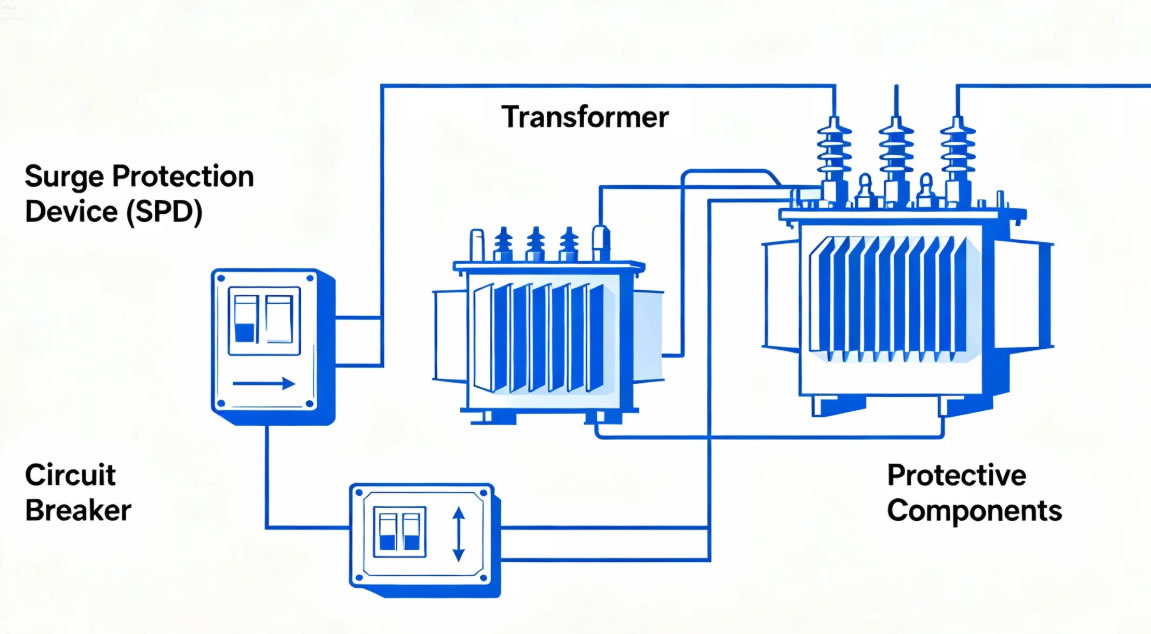
Come funziona la protezione da sovracorrente
Comprendere i principi di funzionamento di overcurrent protection devices ti aiuta a selezionare l'attrezzatura giusta e a risolvere i problemi quando si presentano. Questi sistemi di protezione si basano su principi elettrici fondamentali per rilevare e rispondere a condizioni di corrente anomale.
Meccanismi di rilevamento della corrente
Ogni dispositivo di protezione da sovracorrente incorpora un metodo per rilevare l'entità della corrente. L'approccio di rilevamento varia a seconda del tipo di dispositivo e dei requisiti dell'applicazione:
- Rilevamento termico diretto: Nei fusibili e negli interruttori magnetotermici, la corrente stessa scorre attraverso un elemento sensibile che si riscalda proporzionalmente all'intensità della corrente. When temperature exceeds a threshold, the device operates.
- Magnetic sensing: Circuit breakers use electromagnetic coils that create magnetic force proportional to current. High currents generate strong magnetic fields that mechanically trip the breaker.
- Trasformatori di corrente (CT): Protective relays use CTs to scale down the primary current to measurable levels while maintaining proportional representation of the actual current waveform.
- Hall effect sensors: Modern electronic protection devices employ solid-state sensors that measure magnetic fields around conductors, providing accurate current measurement without direct electrical connection.
- Rogowski coils: These flexible coil sensors wrap around conductors, measuring current through electromagnetic induction without requiring circuit interruption for installation.
Time-Current Characteristic Curves
One of the most important concepts in overcurrent protection is the relationship between current magnitude and operating time. Protective devices don’t trip instantly at the first hint of overcurrent—they follow carefully designed time-current curves that balance fast fault clearing against tolerance for temporary overloads.
When you examine a time-current curve, you’ll see how the device responds to different overcurrent levels:
- Thermal region (protezione da sovraccarico): At currents moderately above rating (100-600% tipicamente), the device operates with inverse time characteristics—higher currents cause faster operation. This allows harmless temporary overloads while protecting against sustained overcurrent.
- Magnetic region (short-circuit protection): At very high currents (tipicamente >600-1000% of rating), the device trips nearly instantaneously, clearing dangerous faults before they can cause significant damage.
- Coordination zones: The curves of upstream and downstream devices must be carefully spaced to ensure selective operation—only the device closest to the fault should trip under normal circumstances.
Thermal-Magnetic Circuit Breaker Operation
Let’s walk through what happens inside a typical thermal-magnetic circuit breaker when you experience different fault conditions. This helps you understand why breakers behave differently depending on the type of overcurrent:
During moderate overload (120-150% of rating):
- Current flows through a bimetallic strip, which consists of two metals with different thermal expansion rates bonded together.
- As current heats the strip, the differential expansion causes it to bend.
- After several seconds to minutes (depending on current magnitude), la striscia si piega abbastanza da rilasciare un fermo meccanico.
- Il fermo rilascia un meccanismo a molla che apre i contatti dell'interruttore.
- L'interruttore scatta, interrompendo il flusso di corrente e proteggendo il trasformatore da danni termici.
Durante il guasto di cortocircuito (10-50 valutazione dei tempi):
- L’enorme corrente crea un potente campo magnetico nella bobina elettromagnetica dell’interruttore.
- Questa forza magnetica attira immediatamente un'armatura che rilascia il meccanismo di sgancio.
- I contatti dell'interruttore iniziano a separarsi in pochi millisecondi (tipicamente 1-5 millisecondi).
- Gli scivoli d'arco e le griglie di deionizzazione estinguono l'arco elettrico risultante.
- La corrente di guasto viene interrotta prima che possa danneggiare gli avvolgimenti del trasformatore o provocare incendi.
Funzionamento del relè elettronico di sovracorrente
Moderno sistemi di protezione dei trasformatori increasingly rely on microprocessor-based relays that offer sophisticated protection features beyond what simple breakers can provide. When you install an electronic overcurrent relay, here’s what happens:
- Continuous current sampling: The relay measures current thousands of times per second through current transformers, building a detailed picture of the current waveform.
- Digital signal processing: Microprocessors analyze the sampled data, calculating RMS current, peak values, and harmonic content.
- Comparison with settings: The relay compares measured values against user-programmed pickup settings and time-delay curves.
- Trip decision logic: When overcurrent conditions exceed settings for the specified time, the relay closes trip contacts that signal circuit breakers to open.
- Event recording: The relay stores fault data including magnitude, durata, e acquisizioni di forme d'onda per l'analisi post-evento.
Puoi pensare ai relè elettronici come guardiani intelligenti che non solo proteggono il tuo trasformatore ma ti aiutano anche a capire cosa è successo quando si verificano guasti. Sistemi come I dispositivi intelligenti di protezione del trasformatore di FJINNO integrare la protezione da sovracorrente con funzionalità di comunicazione, consentendo il monitoraggio e la diagnostica remota che semplificano la manutenzione e la risoluzione dei problemi.
Tip: Quando si impostano i parametri di protezione da sovracorrente, tenere sempre conto della corrente di spunto del trasformatore, che può raggiungere 8-12 volte la corrente nominale per diversi cicli durante l'energizzazione. Le impostazioni di protezione devono consentire questo aumento temporaneo senza interventi fastidiosi.
Tipi di dispositivi di protezione da sovracorrente
Incontrerai diverse categorie distinte di overcurrent protection devices nelle applicazioni dei trasformatori, ciascuno con caratteristiche operative uniche, vantaggi, e casi d'uso ideali. Comprendere queste differenze ti aiuta a selezionare la protezione più appropriata per la tua situazione specifica.
Fusibili
Fusibili rappresentano la forma più antica e semplice di protezione da sovracorrente, tuttavia rimangono ampiamente utilizzati grazie alla loro affidabilità, basso costo, e funzionamento estremamente veloce su guasti di elevata magnitudo. Quando si installano i fusibili per la protezione del trasformatore, stai utilizzando un dispositivo sacrificale che si apre permanentemente quando una corrente eccessiva lo attraversa.
Caratteristiche Tecniche
Un fusibile è costituito da un elemento metallico (il collegamento fusibile) racchiuso in un corpo riempito di materiale spegni-arco. La resistenza dell’elemento fa sì che si riscaldi quando scorre corrente. In condizioni normali, il calore si dissipa in modo innocuo. Durante condizioni di sovracorrente:
- La temperatura dell'elemento fusibile aumenta rapidamente
- At a specific temperature determined by the element’s material and geometry, the metal melts
- An electric arc forms across the gap where the element melted
- Arc-quenching sand or other materials absorb the arc energy and extinguish it
- Current flow stops, protecting the transformer
Types of Transformer Fuses
You’ll find several specialized fuse types designed specifically for transformer overcurrent protection:
- Current-limiting fuses: These fuses operate so quickly on high fault currents that they limit the peak current to values much lower than would otherwise flow. You’ll use these where fault current must be restricted to prevent mechanical damage.
- Expulsion fuses: Common on utility distribution transformers, these fuses expel ionized gases during operation, creating a visible indication of operation. The loud noise and flame discharge make the operation obvious.
- High-voltage power fuses: Designed for transformer primary protection on systems above 1000V, these fuses handle the high voltages and interrupting duties required for utility applications.
- Low-voltage fuses: Class RK5, J, l, and T fuses protect transformer secondary circuits and connected loads in commercial and industrial facilities.
Response Speed and Characteristics
Fuses exhibit time-current characteristics similar to other protective devices, but with some unique features:
| Current Level (% of Rating) | Typical Operating Time | Scenario applicativo |
|---|---|---|
| 135% | 1 hour or more | Allows temporary overload, protects against sustained overcurrent |
| 200% | 1-10 minuti | Clears moderate faults while coordinating with downstream devices |
| 500% | 1-10 secondi | Rapidly clears serious faults |
| 2000%+ | 0.01-0.1 secondi | Current-limiting operation on major short circuits |
Vantaggi e limiti
When you choose fuses for protezione del trasformatore, ottieni numerosi vantaggi:
- Cancellazione estremamente veloce: I fusibili limitatori di corrente funzionano in meno di mezzo ciclo con correnti di guasto elevate
- Nessuna manutenzione richiesta: I fusibili non hanno parti mobili o meccanismi che richiedono manutenzione periodica
- Caratteristiche coerenti: A differenza degli interruttori che possono degradarsi con operazioni ripetute, i nuovi fusibili funzionano sempre secondo le specifiche
- Basso costo iniziale: I fusibili in genere costano molto meno degli interruttori automatici equivalenti
- Elevati valori di interruzione: I fusibili possono interrompere in modo sicuro le correnti di guasto eccedenti 200,000 ampere in alcuni casi
Tuttavia, anche i fusibili presentano limitazioni importanti da considerare:
- Dispositivi a singola operazione: Dopo l'operazione, è necessario sostituire i fusibili: non possono essere ripristinati come gli interruttori automatici
- Possibile funzionamento monofase: Se in un sistema trifase si brucia un solo fusibile, il trasformatore può essere monofase, causing motor damage and imbalanced operation
- No adjustability: You cannot change fuse characteristics without physically replacing the device
- Replacement cost: While initial cost is low, repeated operations require purchasing new fuses
- Time to restore service: Finding and installing replacement fuses takes longer than resetting a circuit breaker
Tip: When using fuses for primary protection on transformers, always install three-phase trip mechanisms or fuse monitoring relays to detect single-phasing conditions and disconnect all phases when any one fuse operates.
Interruttori automatici
Interruttori automatici have become the dominant overcurrent protection technology for most transformer installations due to their reusability, adjustability, e capacità di integrazione. When you install a circuit breaker, stai implementando un sofisticato dispositivo elettromeccanico in grado di interrompere la corrente di guasto ed essere immediatamente rimesso in servizio.
Meccanismo di lavoro
Gli interruttori automatici combinano più tecnologie per rilevare e interrompere la sovracorrente:
- Elemento termico: Una striscia bimetallica che si piega se riscaldata dalla corrente, fornendo protezione da sovraccarico a tempo inverso
- Elemento magnetico: Una bobina elettromagnetica che genera una forza proporzionale alla corrente, fornendo protezione istantanea da cortocircuito
- Sistema di interruzione dell'arco: Scivoli ad arco, griglie di deionizzazione, e in alcuni casi camere a vuoto o a gas SF6 che estinguono in modo sicuro l'arco formato quando i contatti si separano sotto carico
- Meccanismo operativo: Gruppi di contatti caricati a molla e chiusure a scatto che convertono il segnale di intervento termico o magnetico in apertura meccanica del contatto
- Contatti ausiliari: Additional switch contacts that provide status indication and can interface with control systems
Types of Circuit Breakers for Transformer Protection
You’ll select from several circuit breaker categories depending on voltage, attuale, e requisiti dell'applicazione:
- Molded case circuit breakers (MCCBs): Available from 15A to 2500A, these enclosed breakers protect transformer secondary circuits and small transformer primaries up to about 600V. You’ll find adjustable thermal and magnetic trip settings on many models.
- Insulated case circuit breakers (ICCBs): These larger breakers (800A-5000A) offer more precise adjustability and higher interrupting ratings, suitable for protecting medium and large transformers.
- Low-voltage power circuit breakers (LVPCBs): The most sophisticated low-voltage breakers, featuring electronic trip units with extensive customization, misurazione, e capacità di comunicazione. Questi proteggono i trasformatori di grandi dimensioni e gli ingressi di servizio principali.
- Interruttori automatici di media tensione: Interruttori in vuoto o SF6 progettati per sistemi da 1kV a 38kV, comunemente usato per la protezione primaria di trasformatori industriali e di servizio. Questi interruttori funzionano con relè di protezione separati che forniscono intelligenza e processo decisionale.
Caratteristiche riutilizzabili e regolabili
Il vantaggio principale che rende gli interruttori automatici la prima scelta nella maggior parte delle applicazioni è la loro riutilizzabilità. Dopo che un interruttore è scattato:
- Indaghi sulla causa del viaggio
- Correggere la condizione di errore o verificare che fosse temporanea
- È sufficiente reimpostare la maniglia o il pulsante dell'interruttore
- Il trasformatore ritorna immediatamente in servizio
Gli interruttori moderni offrono anche un'ampia possibilità di regolazione che i fusibili non possono eguagliare:
- Corrente di spunto regolabile: Set the current level where overload protection begins
- Adjustable time delay: Control how long the breaker tolerates overload before tripping
- Adjustable instantaneous trip: Set the current threshold for immediate magnetic trip operation
- Ground fault protection: Many breakers include adjustable ground fault trip functions
- Maintenance mode settings: Some breakers allow temporary adjustment of trip characteristics during special conditions
Scenari applicativi
You’ll choose circuit breakers for transformer overcurrent protection Quando:
- The transformer serves critical loads where rapid restoration is essential
- You need the flexibility to adjust protection settings as load conditions change
- Integration with building or facility automation systems is required
- Nuisance tripping would be costly or disruptive, making fuse replacement unacceptable
- The installation requires routine switching operations in addition to fault protection
- You want local or remote indication of breaker status and trip history
Nota: FJINNO’s intelligent transformer protection systems can interface with circuit breaker auxiliary contacts to provide comprehensive monitoring, recording trip events, and enabling remote breaker control for advanced applications.
Overload Relays and Protection Relays
Protective relays represent the most sophisticated approach to transformer overcurrent protection, separating the sensing and decision-making functions from the current interruption function. When you implement relay-based protection, you gain maximum flexibility, precisione, and diagnostic capability.
Architettura del sistema
A relay-based protection system consists of several components working together:
- Trasformatori di corrente (CT): Scale down primary current to standard 5A or 1A secondary current for relay measurement
- Protective relay: Monitors CT secondary current, applies protection logic, and issues trip commands when faults are detected
- Interruttore automatico: Receives trip signals from the relay and physically interrupts the circuit
- DC control power: Provides reliable power for relay operation and breaker trip coils, independent of the AC system being protected
- Wiring and terminals: Connects all components and provides test points for commissioning and maintenance
Types of Overcurrent Relays
You’ll encounter several relay technologies, ciascuno con caratteristiche distinte:
- Electromechanical relays: Time-tested induction disk or plunger-type relays that operate through electromagnetic forces. While largely obsolete for new installations, you’ll still find these in older facilities.
- Static relays: Solid-state analog designs using discrete transistors and integrated circuits. More accurate and reliable than electromechanical types, but limited in flexibility.
- Microprocessor-based relays: Modern digital relays using sophisticated processors to implement complex protection algorithms. These devices offer features that were impossible with earlier technologies.
- Numerical relays: Advanced microprocessor relays with extensive metering, comunicazione, e capacità di autodiagnosi. These represent the current state-of-the-art in protezione del trasformatore.
Protection Functions Available
Moderno microprocessor-based overcurrent relays provide multiple protection elements in a single device:
- Phase overcurrent (ANSI 50/51): Time-overcurrent and instantaneous overcurrent protection for phase-to-phase and three-phase faults
- Ground overcurrent (ANSI 50N/51N): Specialized protection for ground faults, che possono comportare correnti inferiori rispetto ai guasti di fase
- Sovracorrente di sequenza inversa (ANSI 46): Rileva condizioni sbilanciate che sollecitano gli avvolgimenti del trasformatore
- Sovraccarico termico (ANSI 49): Capacità termica del trasformatore dei modelli, prevenire i danni derivanti dagli effetti del riscaldamento cumulativo
- Raccolta a carico freddo: Regola temporaneamente le impostazioni durante il ripristino dopo interruzioni prolungate quando i carichi iniziali sono elevati
- Squilibrio attuale: Avvisi in caso di carico sbilanciato che può causare surriscaldamento e ridurre la durata del trasformatore
Funzionalità avanzate
Quando specifichi i relè moderni per transformer overcurrent protection, ottieni capacità che vanno ben oltre la semplice misurazione della corrente:
- Logica programmabile: Crea schemi di protezione personalizzati utilizzando le funzioni logiche integrate
- Event recording: Acquisisci dati dettagliati sui guasti, comprese le condizioni pre-guasto, grandezza del guasto, e la risposta del sistema
- Oscillografia: Registra dati sulla forma d'onda ad alta velocità che mostrano esattamente cosa è successo durante i disturbi
- Communication protocols: Interface with SCADA systems, automazione degli edifici, and asset management platforms via Modbus, DNP3, CEI 61850, and other protocols
- Self-diagnostics: Continuously monitor relay health and alert to potential problems before they cause protection failures
- Metering: Provide accurate measurement of current, energia, energia, and power quality parameters
- Multiple setting groups: Store different protection settings for different operating modes and switch between them automatically or on command
Tip: Sistemi come I dispositivi intelligenti di protezione del trasformatore di FJINNO integrate overcurrent relay functions with temperature monitoring, monitoraggio del livello dell'olio, e capacità di comunicazione, providing comprehensive protection and monitoring in compact, cost-effective packages ideal for distribution transformer applications.
Impatto sulla sicurezza del trasformatore
The implementation of proper protezione da sovracorrente directly determines whether your transformer operates safely throughout its intended service life or suffers premature failure. Understanding these safety impacts helps you appreciate why overcurrent protection deserves careful attention during design, installazione, e manutenzione.
Prevention of Winding Overheating
When current exceeds a transformer’s rated capacity, the copper or aluminum conductors in the windings heat up according to the I²R relationship—doubling the current quadruples the heating effect. This excessive heat causes multiple forms of damage:
- Degrado dell'isolamento: Transformer insulation follows the “ten-degree rule”—every 10°C increase above rated temperature roughly halves the insulation life. A transformer operating at 20°C above rating might last only 5 years instead of the expected 20+ anni.
- Oil decomposition: Nei trasformatori riempiti d'olio, excessive heat breaks down the insulating oil, forming sludge, acids, and moisture that further compromise insulation integrity.
- Mechanical stress: Thermal expansion and contraction from temperature cycling loosens winding clamping structures, allowing movement that can damage insulation during subsequent faults.
- Accelerated aging: Even if immediate failure doesn’t occur, cumulative thermal stress progressively weakens insulation until eventual breakdown occurs.
Corretto protezione da sovracorrente prevents these thermal damage mechanisms by limiting both the magnitude and duration of overcurrent conditions. The protection system ensures that any overload either remains within safe thermal limits or gets interrupted before cumulative damage occurs.
Avoidance of Insulation System Damage
Le forze meccaniche estremamente elevate durante i guasti da cortocircuito rappresentano una minaccia immediata per l'isolamento e l'integrità strutturale del trasformatore. Quando la corrente di guasto scorre, potenzialmente raggiungendo 20-30 volte la corrente nominale: le forze elettromagnetiche tra i conduttori possono superare 100 volte i valori normali. Queste forze possono:
- Distorcere o collassare gli avvolgimenti, schiacciamento dell'isolamento tra spire o strati
- Fa sì che i conduttori si muovano all'interno delle loro strutture isolanti, abrasione o perforazione dell'isolamento
- Generano vibrazioni che sollecitano meccanicamente i sistemi di isolamento e le strutture di sostegno
- Crea punti caldi in cui la corrente concentrata provoca un surriscaldamento localizzato
Ad azione rapida protezione da sovracorrente— in particolare l'elemento istantaneo degli interruttori automatici o dei fusibili limitatori di corrente — riduce al minimo la durata del guasto e quindi limita l'energia meccanica che può danneggiare le parti interne del trasformatore. The difference between a fault cleared in 0.05 seconds versus 0.5 seconds can mean the difference between minor stress and catastrophic structural failure.
Fire Risk Reduction
Transformer fires represent one of the most dangerous failure modes, threatening not just the transformer itself but potentially entire facilities and surrounding structures. Overcurrent conditions contribute to fire risk through several mechanisms:
- Overheated connections: Loose or undersized connections develop high resistance, creating localized hot spots that can ignite insulation or combustible materials. Overload protection helps by limiting the current through these problem connections.
- Winding insulation ignition: Sustained overheating can raise insulation temperature to its ignition point, starting internal fires that may be undetectable until catastrophic failure occurs.
- Oil fires: Nei trasformatori riempiti d'olio, severe internal faults can vaporize insulating oil, creating flammable gases that may ignite or even explode if not quickly interrupted.
- Arc flash hazards: Uncleared faults expose maintenance personnel to dangerous arc flash events. Proper overcurrent protection limits arc duration and energy, reducing injury severity.
By quickly detecting and interrupting fault conditions, overcurrent protection devices serve as your primary defense against these fire scenarios. The protection system acts as an early-warning and automatic-response mechanism that stops problems before they escalate to dangerous levels.
Extended Equipment Lifespan
Beyond preventing catastrophic failures, effective overcurrent protection extends transformer service life through several less obvious mechanisms:
- Reduced thermal cycling: By limiting overload magnitude and duration, protection systems minimize the temperature cycling that mechanically stresses insulation and connections.
- Preserved insulation integrity: Preventing overheating maintains insulation dielectric strength at design levels, ensuring the transformer can withstand normal voltage stresses and temporary overvoltages.
- Maintained oil quality: Limiting thermal stress preserves oil insulating properties and prevents formation of contaminants that accelerate aging.
- Protected tap changers: Overcurrent protection prevents tap changer operation under excessive load, avoiding contact damage and extending tap changer life.
- Reduced mechanical stress: Limiting fault current magnitude reduces the mechanical forces that can loosen clamping structures and damage winding geometry.
Economic studies consistently show that transformers with properly applied and maintained overcurrent protection last 25-40% longer than those with inadequate or poorly maintained protection. This extended life translates directly to lower total cost of ownership and reduced capital expenditure for premature replacements.
Nota: Moderno sistemi intelligenti di protezione dei trasformatori like those from FJINNO combine overcurrent protection with thermal monitoring, providing comprehensive safeguarding against both immediate overcurrent threats and long-term thermal aging effects.
Funzione di protezione contro le sovratensioni del trasformatore
Come funziona la protezione contro le sovratensioni
Mentre protezione da sovracorrente guards against sustained current problems, protezione contro le sovratensioni addresses an entirely different threat—transient overvoltages that can destroy insulation and sensitive electronics in microseconds. Understanding how surge protective devices operate helps you appreciate their critical role in comprehensive transformer protection.
The Nature of Voltage Surges
Before diving into protection mechanisms, you need to understand what you’re protecting against. Le sovratensioni, chiamate anche transitori o picchi, sono brevi sovratensioni che possono raggiungere migliaia di volt sopra i livelli normali. Queste ondate provengono da diverse fonti:
- Colpi di fulmine: Colpi diretti alle linee elettriche o colpi vicini che accoppiano energia ai sistemi elettrici attraverso l'induzione elettromagnetica possono generare sovratensioni eccessive 100,000 volt.
- Operazioni di commutazione: Interruttori automatici di apertura o chiusura, soprattutto su carichi induttivi, crea transitori di tensione che si propagano attraverso il sistema di alimentazione.
- Commutazione del banco di condensatori: L'accensione e lo spegnimento dei banchi di condensatori di rete generano caratteristici transitori oscillatori.
- Eliminazione dei guasti: Quando i dispositivi di protezione interrompono la corrente di guasto, l'improvviso cambiamento di corrente induce picchi di tensione nell'induttanza del sistema.
- Caricare il rifiuto: Perdita improvvisa di carico, come quando un motore di grandi dimensioni va fuori linea, can cause voltage to temporarily spike.
What makes these surges so dangerous is their combination of high voltage and extremely fast rise time. While the surge may last only microseconds, the voltage can rise from normal levels to destructive levels in nanoseconds—far too fast for overcurrent devices to respond.
Voltage Clamping Principle
Tutto surge protection devices work on the same fundamental principle: they create a low-impedance path to ground when voltage exceeds a predetermined threshold. Think of it like a pressure relief valve on a water system. When pressure (voltaggio) builds too high, the valve (SPD) opens to release the excess, preventing damage to the system.
Here’s what happens when a voltage surge hits a protected transformer:
- Surge arrives: A lightning-induced surge enters the system, causing voltage to begin rising rapidly.
- SPD responds: When voltage reaches the device’s clamping voltage (tipicamente 1.3-2.0 times normal peak voltage), the SPD’s internal components change from high impedance to low impedance in nanoseconds.
- Current diversion: The surge current flows through the SPD to ground rather than through the transformer insulation.
- Voltage limitation: The SPD clamps voltage to a safe level—typically 2-3 times normal peak voltage—that transformer insulation can withstand.
- Energy absorption: The SPD dissipates the surge energy as heat in its internal components.
- Recovery: Once the surge passes, the SPD returns to its high-impedance state, ready for the next event.
This entire process happens in microseconds or even nanoseconds, protecting your transformer before the surge can cause damage.
Metal Oxide Varistor (MOV) Operazione
Metal oxide varistors represent the most common technology in surge protective devices. Understanding how MOVs work helps you select and maintain these critical components.
An MOV consists of zinc oxide grains separated by grain boundaries that create numerous microscopic P-N junctions. Under normal voltage:
- These junctions act as insulators, presenting extremely high resistance (megohms)
- Only microamperes of leakage current flows through the MOV
- The device has negligible effect on normal system operation
When voltage exceeds the MOV’s clamping threshold:
- The grain boundary junctions begin conducting through quantum tunneling and avalanche breakdown
- Resistance drops from megohms to a few ohms in nanoseconds
- Surge current flows through the MOV instead of protected equipment
- The MOV limits voltage to its clamping level—typically 1.5-2.5 times nominal peak voltage
- After the surge passes, the junctions return to their insulating state
The beauty of MOV technology lies in its inherent self-acting nature—no external control circuits or power supplies are needed. The device responds automatically to overvoltage, making it highly reliable for protezione contro le sovratensioni del trasformatore.
Gas Discharge Tube (GDT) Operazione
Gas discharge tubes offer another approach to surge protection, particularly valuable for handling very high energy surges. When you need to protect against direct lightning strikes or severe switching transients, GDTs provide superior energy handling capability.
A GDT consists of two electrodes separated by an inert gas (typically argon or neon) within a sealed ceramic or glass envelope. Operation follows this sequence:
- Normal operation: Below the sparkover voltage, the gas acts as an insulator, and the GDT presents extremely high impedance (gigohms).
- Surge arrival: When voltage exceeds the sparkover threshold (typically 500-2500V depending on design), the electric field between electrodes becomes strong enough to ionize the gas.
- Arc formation: Once ionization begins, an electrical arc forms through the ionized gas, creating a low-impedance path (typically less than 1 ohm).
- Current conduction: The arc conducts surge current to ground, with voltage across the GDT dropping to a low arc voltage (typically 10-30V).
- Arc extinction: When surge current decreases below the GDT’s extinction current, the arc extinguishes and the device returns to its high-impedance state.
GDTs excel at handling high-energy surges because the arc can conduct thousands of amperes while dissipating minimal heat—the energy transfers to the gas rather than heating solid components. Tuttavia, GDTs have slower response times (microseconds rather than nanoseconds) and higher let-through voltage than MOVs, so you’ll often see both technologies combined in multi-stage protection schemes.
Avalanche Diode (TVS) Operazione
Transient voltage suppressors (TVS diodes) use semiconductor avalanche breakdown to provide extremely fast voltage clamping. When you need to protect sensitive electronics associated with transformer control systems, TVS diodes offer response times measured in picoseconds.
TVS diodes are specially designed P-N junction devices that operate in reverse breakdown mode:
- Below breakdown voltage: The diode blocks current flow, presenting high impedance similar to any reverse-biased diode
- At breakdown voltage: Avalanche multiplication begins—electrons gain enough energy to knock other electrons free, creating a cascade effect
- Above breakdown: The diode conducts heavily in its breakdown region, clamping voltage while conducting surge current
- Thermal limit: The semiconductor junction must dissipate surge energy as heat; exceeding thermal capacity can destroy the device
You’ll find TVS diodes protecting the low-voltage control circuits, interfacce di comunicazione, and sensor inputs associated with modern transformer monitoring and protection systems. Their extremely fast response and precise clamping voltage make them ideal for sensitive electronics, though their relatively low energy handling capacity limits their use in primary power circuit protection.
Tip: Moderno sistemi intelligenti di protezione dei trasformatori da FJINNO incorporano una protezione da sovratensione multistrato utilizzando combinazioni coordinate di MOV, GDT, e diodi TVS per fornire una protezione completa sia ai circuiti di alimentazione che ai sensibili componenti elettronici di controllo.
Tipi di dispositivi di protezione contro le sovratensioni
Incontrerai diverse categorie di surge protection devices nelle applicazioni dei trasformatori, ciascuno progettato per livelli di tensione specifici, requisiti di gestione dell'energia, e posizioni di installazione. Comprendere queste classificazioni aiuta a progettare efficaci schemi di protezione a più fasi.
Metal Oxide Varistor (MOV) Protezioni contro le sovratensioni
Dispositivi di protezione da sovratensione basati su MOV dominano la protezione dei trasformatori di bassa e media tensione grazie al loro eccellente equilibrio di prestazioni, costo, e affidabilità. Quando specifichi i dispositivi MOV, stai selezionando una tecnologia collaudata che protegge milioni di trasformatori in tutto il mondo.
Caratteristiche Tecniche
I limitatori di sovratensione MOV offrono diversi parametri prestazionali chiave da prendere in considerazione durante la selezione:
- Massima tensione operativa continua (MCOV): The highest voltage the MOV can withstand continuously without degradation—typically 115-125% of system nominal voltage
- Voltage protection rating (VPR): The maximum voltage let-through during a standard surge test—typically 1.5-2.5 volte la tensione nominale
- Surge current rating: The peak current the device can conduct without damage—ranging from 5kA to 200kA+ depending on device class
- Energy absorption capacity: The total energy the MOV can dissipate before failure—critical for locations with frequent surges
- Tempo di risposta: MOVs typically respond in nanoseconds, providing protection before surges can damage equipment
Application in Transformer Protection
You’ll install MOV surge protective devices at multiple locations in transformer installations:
- Terminali primari: Protecting the high-voltage winding from utility-side transients and lightning-induced surges
- Secondary terminals: Protezione del sistema di distribuzione a bassa tensione da sovratensioni che si propagano da entrambe le direzioni
- Circuiti di controllo: Protezione delle alimentazioni ausiliarie, cablaggio di controllo, e apparecchiature di monitoraggio
- Interfacce di comunicazione: Salvaguardia delle linee dati che si collegano al monitoraggio remoto o ai sistemi SCADA
Vantaggi e limiti
La tecnologia MOV offre un'eccellente protezione dalle sovratensioni con importanti vantaggi:
- Protezione automatica: Nessuna alimentazione o controllo esterno richiesto per il funzionamento
- Risposta rapida: Il bloccaggio a nanosecondi protegge anche le sovratensioni in rapido aumento
- Bassa tensione passante: Blocca la tensione vicino ai livelli di resistenza dell'apparecchiatura
- Dimensioni compatte: L'elevata densità di energia consente confezioni di piccole dimensioni
- Conveniente: Costo inferiore rispetto a molte tecnologie alternative
Tuttavia, I MOV hanno limitazioni che devi comprendere:
- Degrado con l'uso: Ogni picco assorbito provoca un lieve degrado; il danno cumulativo alla fine porta al fallimento
- Rischio di fuga termica: Failed MOVs can overheat and potentially ignite if not protected by thermal disconnectors
- Capacità: MOVs present significant capacitance that may cause issues in some high-frequency applications
- Leakage current increase: As MOVs age, leakage current increases, potentially causing unwanted heating
Nota: Always specify MOV-based SPDs with thermal disconnectors and status indicators so you know when the device has reached end-of-life and requires replacement.
Surge Protective Device (SPD) Classifications
International standards classify surge protective devices into categories based on their installation location and energy handling capability. Understanding this classification system helps you design coordinated protection schemes with proper devices at each level.
SPD di classe I (Lightning Current Arresters)
Class I surge protective devices—also called Type 1 SPDs in IEC standards—represent the first line of defense in multi-stage protection systems. You’ll install these devices at service entrances and transformer primaries where direct or nearby lightning strikes may induce extreme surge currents.
Class I SPD characteristics include:
- Very high surge current rating: Tested with 10/350 μs current waveform representing lightning strike characteristics; ratings from 25kA to 200kA
- Spark gap or GDT technology: Often use gas discharge tubes or spark gaps to handle the enormous energy
- High voltage protection level: Let-through voltage typically 2-4 kV to withstand without damage while dissipating massive energy
- Slower response time: May take several microseconds to activate, requiring coordination with faster downstream devices
You’ll specify Class I SPDs when:
- The transformer serves as main service entrance for a facility
- The installation is in a high-lightning-activity region
- The transformer connects to overhead distribution lines where lightning exposure is high
- Building codes or insurance requirements mandate lightning protection
SPD di classe II (Distribution Board Arresters)
Class II surge protective devices (Tipo 2 in IEC standards) provide protection at distribution panels and subfeeders throughout facilities. These represent the most common SPD application for transformer secondary protection.
Class II SPD features include:
- Medium surge current rating: Tested with 8/20 μs waveform; typical ratings 20kA to 80kA
- MOV-based technology: Usually employ metal oxide varistors for fast response and good let-through voltage
- Moderate voltage protection level: Typical let-through voltage 1-2 kV, protecting standard electrical equipment
- Tempi di risposta rapidi: Nanosecond activation protects against fast-rising transients
Install Class II SPDs:
- At transformer secondary terminals
- In main distribution panels
- At subfeeders serving sensitive equipment areas
- Downstream of Class I devices in coordinated protection schemes
SPD di classe III (Point-of-Use Protectors)
Class III surge protective devices (Tipo 3 in IEC standards) provide final protection for individual pieces of sensitive equipment. While less common in transformer protection specifically, you’ll use these devices to protect instrumentation and control equipment associated with transformer monitoring systems.
Class III SPD characteristics:
- Lower surge current rating: Tested with 1.2/50 Forma d'onda della tensione μs e 8/20 forma d'onda della corrente μs; valori nominali tipici da 3 kA a 20 kA
- Protezione a bassissima tensione: Tensione passante ottimizzata per l'elettronica sensibile, tipicamente 500 V-1000 V
- Risposta rapida: Combina spesso MOV con diodi TVS per un bloccaggio più rapido possibile
- Bassa capacità energetica: Deve essere coordinato con gli SPD a monte per evitare sovraccarichi
Protezione multistadio coordinata
Per una protezione ottimale, implementerai schemi coordinati utilizzando più classi SPD:
| Fase di protezione | Classe SPD | Posizione di installazione | Funzione primaria |
|---|---|---|---|
| Palcoscenico 1 | Classe I | Ingresso primario/servizio trasformatore | Gestisci i fulmini diretti e le sovratensioni estreme |
| Palcoscenico 2 | Classe II | Pannelli secondari/distribuzione del trasformatore | Protegge dai transitori di commutazione e dall'energia residua dei fulmini |
| Palcoscenico 3 | Classe III | Posizioni di apparecchiature sensibili | Protezione finale per elettronica e strumentazione |
Un coordinamento adeguato richiede il mantenimento di una lunghezza del cavo adeguata (tipicamente 10-15 meters minimum) between protection stages to ensure surge energy dissipates in upstream devices before reaching downstream protection.
Lightning Arresters for High-Voltage Transformers
Lightning arresters—sometimes called surge arresters—represent specialized surge protection designed specifically for medium and high voltage transformer applications. When you’re protecting utility distribution transformers or industrial transformers operating above 1kV, arresters provide the robust protection these installations require.
Arrester Technologies
Modern lightning arresters employ several proven technologies:
- Metal oxide arresters: Use stacks of zinc oxide disks in series to achieve the high voltage rating needed for distribution systems (2.5kV to 800kV). These gapless arresters provide superior protection and reliability compared to older silicon carbide designs.
- Polymer-housed arresters: Enclose the MOV elements in polymer housings that provide excellent contamination resistance and reduced weight compared to porcelain. You’ll prefer these for coastal or industrial environments with high pollution levels.
- Porcelain-housed arresters: Traditional design using porcelain insulators. Still widely used and preferred in some utilities due to proven long-term reliability and visible damage indication.
Installation Practices
Corretto lightning arrester installation is critical for effective transformer protection:
- Posizione: Mount arresters as close as possible to transformer terminals—ideally within 3 meters—to minimize voltage rise in connecting leads during surge events
- Messa a terra: Connect arrester ground terminals to the transformer tank and ground grid with the shortest possible conductor—long ground leads compromise protection effectiveness
- Lead dress: Route line-side conductors carefully to avoid creating inductive loops that increase lead voltage drop
- Mechanical support: Ensure adequate mechanical strength to withstand short-circuit forces and wind loading
Rating Selection
When specifying lightning arresters for protezione contro le sovratensioni del trasformatore, you’ll select based on several parameters:
- Massima tensione operativa continua (MCOV): Must exceed the maximum system voltage under all operating conditions, including temporary overvoltages
- Discharge current rating: Typically 10kA or 20kA for distribution applications; higher ratings for transmission systems
- Energy absorption capability: Must handle expected surge energy without damage or excessive temperature rise
- Voltage protection level: Should limit voltage to below transformer BIL (Livello di isolamento di base) rating with adequate safety margin
Tip: For comprehensive protection of medium-voltage transformers, combine lightning arresters on the high-voltage side with Class I/II SPDs on the low-voltage side. Questo approccio coordinato protegge dalle sovratensioni provenienti da entrambe le direzioni.
Ruolo nella protezione del sistema
Efficace protezione contro le sovratensioni offre vantaggi che vanno ben oltre il trasformatore stesso, contribuendo all’affidabilità complessiva del sistema di alimentazione e alla longevità delle apparecchiature. Comprendere questi impatti più ampi aiuta a giustificare gli investimenti nella protezione dalle sovratensioni e l’implementazione ottimale.
Protezione delle apparecchiature elettroniche sensibili
Le strutture moderne dipendono sempre più da apparecchiature elettroniche che sono molto più vulnerabili ai transitori di tensione rispetto ai tradizionali dispositivi elettromagnetici. Mentre un trasformatore potrebbe sopportare brevi sovratensioni, gli alimentatori, azionamenti a frequenza variabile, controllori logici programmabili, e le apparecchiature informatiche che serve possono guastarsi a causa di sovratensioni ben al di sotto della capacità di resistenza del trasformatore.
Quando implementi il file complete protezione contro le sovratensioni del trasformatore, stai creando un ombrello protettivo che salvaguarda:
- Sistemi di automazione degli edifici: Controlli HVAC, lighting controls, and security systems that increasingly rely on sensitive microprocessor-based equipment
- Information technology infrastructure: Servers, network switches, and telecommunications equipment requiring clean power for reliable operation
- Industrial control systems: PLC, SCADA equipment, and process controllers managing critical production operations
- Attrezzature mediche: Diagnostic devices and patient monitoring systems where surge-induced failures can compromise patient safety
- Strumentazione di laboratorio: Research and analytical equipment with precision electronics vulnerable to even modest voltage transients
The economics are compelling: a properly specified surge protection system costing a few thousand dollars can protect millions of dollars of sensitive electronic equipment connected downstream of the transformer.
Prevention of Lightning-Induced Damage
Lightning represents the most severe transient threat most installations face. While direct strikes to buildings are relatively rare, nearby strikes and strikes to overhead power lines couple enormous energy into electrical systems. Without adequate protezione contro le sovratensioni, this energy can:
- Puncture transformer insulation, causing immediate catastrophic failure
- Damage tap changer mechanisms and switching contacts
- Destroy control electronics and monitoring equipment
- Cause fires in transformer oil or surrounding materials
- Propagate through the distribution system, damaging multiple pieces of equipment simultaneously
Statistics from insurance companies show that lightning-related equipment damage accounts for 20-30% of all transformer failures in regions with moderate to high lightning activity. Proper surge protection can reduce this failure rate by 80-90%, translating to substantial savings in replacement costs and avoided downtime.
Elimination of Switching Transient Interference
Beyond lightning, everyday switching operations generate voltage transients that accumulate damage over time. Circuit breaker operations, capacitor bank switching, motor starting, and fault clearing all create voltage spikes that stress insulation and disrupt sensitive equipment.
Surge protective devices suppress these operational transients, providing multiple benefits:
- Extended insulation life: By limiting voltage stress, SPDs reduce cumulative insulation degradation that would otherwise lead to premature failure
- Reduced equipment nuisance trips: Many electronic drives and power supplies have overvoltage protection that can cause shutdowns during transient events; surge protection prevents these interruptions
- Improved power quality: La soppressione dei transitori riduce le interferenze elettromagnetiche che possono causare errori nei dati e problemi di comunicazione
- Migliore coordinamento: Con transitori controllati, gli schemi di coordinamento dei dispositivi di protezione funzionano come previsto anziché sperimentare interazioni inaspettate
Maggiore affidabilità del sistema
L'effetto cumulativo della protezione completa contro le sovratensioni è un miglioramento misurabile dell'affidabilità del sistema. Strutture che implementano un rapporto coordinato sulla protezione da sovratensione multistadio:
- 40-60% riduzione dei guasti alle apparecchiature attribuiti a disturbi elettrici
- Diminuzione della frequenza di viaggi inspiegabili e malfunzionamenti del sistema
- Vita utile prolungata per i trasformatori, quadri, e apparecchiature elettroniche
- Costi di manutenzione inferiori grazie alla ridotta sostituzione dei componenti
- Miglioramento dei tempi di attività per i processi critici e riduzione delle perdite di produzione
Per strutture critiche: data center, ospedali, servizi di emergenza, industrie a processo continuo: questi miglioramenti dell'affidabilità spesso giustificano gli investimenti nella protezione dalle sovratensioni semplicemente evitando i costi di interruzione, ancor prima di considerare il risparmio derivante dalla sostituzione delle apparecchiature.
Nota: Moderno sistemi intelligenti di protezione dei trasformatori da FJINNO integrare il monitoraggio della protezione da sovratensione con protezione da sovracorrente e altre funzioni diagnostiche, fornendo una visibilità completa su tutte le minacce alla salute del trasformatore e consentendo strategie di manutenzione proattive.
Protezione da sovracorrente del trasformatore VS protezione da sovratensione del trasformatore: Confronto dettagliato
Differenze degli obiettivi di protezione
La distinzione più fondamentale tra protezione da sovracorrente E protezione contro le sovratensioni risiede nei fenomeni elettrici completamente diversi affrontati da ciascun sistema. Comprendere queste differenze tra gli obiettivi aiuta a riconoscere il motivo per cui entrambi i tipi di protezione sono essenziali e non possono sostituirsi a vicenda.
Obiettivi di protezione da sovracorrente
Protezione da sovracorrente del trasformatore si concentra sulle minacce legate alla corrente che si sviluppano su scale temporali che vanno da condizioni continue a diversi cicli della frequenza elettrica:
| Tipo di minaccia | Caratteristiche | Durata tipica | Damage Mechanism |
|---|---|---|---|
| Sustained Overload | 110-150% of rated current | Minutes to hours | Cumulative thermal damage to insulation |
| Temporary Overload | 150-300% of rated current | Secondi a minuti | Accelerated insulation aging |
| Phase-to-Phase Fault | 5-20 times rated current | Cycles to seconds | Mechanical damage, arc damage, thermal destruction |
| Ground Fault | Variabile, often lower than phase faults | Cycles to seconds | Insulation carbonization, fire hazard |
| Winding-to-Winding Fault | Estremamente alto, limited by impedance | Cycles | Catastrophic winding destruction |
Notice that all these threats involve abnormal current magnitude persisting for at least several power frequency cycles. Even the fastest short-circuit faults that overcurrent protection must clear exist for at least 16-20 milliseconds on 60Hz systems (one cycle). This time scale allows electromechanical and electronic protection devices to sense, decide, and respond.
Surge Protection Targets
Transformer surge protection addresses voltage-related threats occurring on time scales thousands of times faster than overcurrent phenomena:
| Tipo di minaccia | Caratteristiche | Durata tipica | Damage Mechanism |
|---|---|---|---|
| Lightning-Induced Surge | Up to 100kV+, extremely fast rise | 1-100 microsecondi | Insulation puncture, flashover, component destruction |
| Switching Transient | 2-5 times normal voltage | Microseconds to milliseconds | Cumulative insulation stress, electronic upset |
| Capacitor Switch Oscillation | High-frequency voltage oscillations | Millisecondi | Resonance damage, electronic interference |
| Fault-Clearing Transient | 3-4 times normal voltage | Microseconds | Insulation stress, arrester duty |
| Ferrorisonanza | Sustained overvoltage at harmonics | Continuous until cleared | Core saturation, surriscaldamento, danni all'isolamento |
These voltage transients happen so quickly that overcurrent devices cannot respond in time. By the time a circuit breaker could even begin to move, the surge has already either caused damage or been safely dissipated by surge protection devices.
Why Both Protection Types Are Essential
The target differences make clear why you need both protection systems working together:
- Overcurrent protection cannot protect against surges: A 10kV surge lasting 10 microseconds won’t trip overcurrent devices because current magnitude may be low and duration too brief for thermal or electromagnetic mechanisms to respond.
- Surge protection cannot protect against overcurrent: UN 200% overload that will eventually destroy insulation through heating produces normal voltage levels, so surge devices won’t activate.
- Some faults need both: Lightning strikes may cause insulation failure that then creates short circuits. Surge protection limits the initial voltage transient, while overcurrent protection clears the resulting fault current.
- Coordination is critical: Surge protection extends transformer life by preventing insulation degradation that would eventually cause faults requiring overcurrent protection to clear.
Tip: When conducting transformer protection audits, verify that you have adequate protection against both sustained/repetitive overcurrent conditions AND transient overvoltages. Finding one type of protection without the other indicates a serious gap in your protection philosophy.
Confronto dei tempi di risposta
The dramatically different response speeds of protezione da sovracorrente versus protezione contro le sovratensioni reflect the different time scales of the threats they address. Understanding these timing differences helps you appreciate the specialized nature of each protection type.
Overcurrent Protection Response Times
Overcurrent protective devices operate on time scales ranging from milliseconds to seconds, matching the duration of the current-related threats they protect against:
| Tipo di dispositivo | Intervallo del tempo di risposta | Fattori che influenzano |
|---|---|---|
| Fusibili limitatori di corrente | 0.25-8 millisecondi | Magnitudo attuale, precaricamento, tipo di fusibile |
| Interruttore automatico (Magnetico) | 1-5 millisecondi | Magnitudo attuale, dimensione dell'interruttore, tipo di meccanismo |
| Interruttore automatico (Termico) | Secondi a minuti | Entità della sovracorrente, temperatura ambiente, precaricamento |
| Relè elettronico di sovracorrente | 15-50 millisecondi + tempo dell'interruttore | Impostazioni, grandezza attuale, Precisione della TC |
| Relè elettromeccanico | 50-500 millisecondi + tempo dell'interruttore | Tipo di relè, grandezza attuale, tensioni primaverili |
Anche i dispositivi di sovracorrente più veloci, come i fusibili limitatori di corrente che funzionano in caso di gravi cortocircuiti, richiedono almeno un quarto del ciclo della frequenza di alimentazione per eliminare i guasti.. Questa velocità è del tutto adeguata per i rischi legati alla corrente, ma irrimediabilmente lenta per i transitori di tensione.
Tempi di risposta della protezione da sovratensione
Surge protective devices deve rispondere molto più velocemente per bloccare la tensione prima che si verifichi un danno all'isolamento:
| Tipo di dispositivo | Tempo di risposta | Velocità di serraggio della tensione |
|---|---|---|
| Diodi TVS | 1-5 picosecondi | Essenzialmente istantaneo |
| Varistori all'ossido di metallo | 1-50 nanosecondi | Morsetti in meno di 1 nanosecondo dopo la soglia |
| Tubi a scarica di gas | 100-500 nanosecondi | La formazione dell'arco determina la velocità di serraggio |
| Spinterometri | 0.5-5 microsecondi | Dependent on gap spacing and voltage rise rate |
| Lightning Arresters | Nanoseconds (gapless MOV type) | Sub-microsecond clamping |
Notice that surge device response times are measured in billionths or millionths of a second—thousands to millions of times faster than overcurrent protection. This speed is absolutely necessary because voltage transients rise to destructive levels in similarly short time frames.
Practical Implications of Response Time Differences
The vast difference in response speeds has several important practical consequences:
- No overlap in capabilities: Overcurrent devices are far too slow to provide any surge protection, while surge devices don’t measure or respond to sustained current levels.
- Coordination challenges: When designing protection schemes involving both types, you must ensure surge devices don’t inadvertently bypass overcurrent protection or vice versa.
- Testing differences: Overcurrent device testing uses standard test currents applied for measurable time periods. Surge device testing requires specialized pulse generators creating microsecond-duration impulses.
- Failure modes differ: Slow-acting overcurrent devices may fail closed (stuck contacts) or open (burned fuses). Fast-acting surge devices typically fail short-circuit, which is why they need backup overcurrent protection.
Nota: Moderno sistemi intelligenti di protezione dei trasformatori da FJINNO monitor both overcurrent and surge events despite their vastly different time scales, providing comprehensive protection visibility and coordinated response to all electrical threats.
Operating Mechanism Comparison
Beyond the different threats they address and speeds at which they operate, protezione da sovracorrente E protezione contro le sovratensioni employ fundamentally different operating mechanisms that reflect their specialized functions.
Overcurrent Protection Mechanisms
Overcurrent protection devices operate by detecting current magnitude and interrupting current flow when thresholds are exceeded:
- Current sensing: All overcurrent devices measure current magnitude through some mechanism—thermal heating, magnetic force, or electronic measurement via current transformers
- Confronto delle soglie: The measured current is compared against predetermined safe limits, either through calibrated mechanical elements or programmed electronic settings
- Time delay application: Most devices incorporate time delays that allow brief overcurrent while protecting against sustained conditions
- Circuit interruption: When overcurrent persists beyond allowed time, the device physically opens the circuit, stopping current flow
- Arc extinction: The device must safely extinguish the electrical arc that forms when contacts separate under load
The key point: overcurrent protection works by opening the circuit—literally creating an air gap or vacuum space that current cannot cross. This approach works because the threats being addressed persist long enough for mechanical mechanisms to operate.
Surge Protection Mechanisms
Dispositivi di protezione contro le sovratensioni use entirely different principles because they must respond before mechanical mechanisms could possibly move:
- Voltage sensing: Surge devices respond to voltage exceeding thresholds, not current magnitude
- Impedance switching: Rather than opening circuits, surge devices change from high impedance (blocking) to low impedance (conducting) when voltage exceeds safe levels
- Current diversion: Surge devices shunt excess energy to ground rather than interrupting the circuit
- Voltage clamping: The devices limit voltage to safe levels while allowing surge current to flow through them
- Automatic recovery: After the surge passes, devices automatically return to high-impedance state without manual reset
The fundamental difference: surge protection never opens the circuit. Invece, it provides a parallel path to ground that activates only during overvoltage conditions. This approach allows microsecond response speeds that would be impossible for mechanical circuit interruption.
Series vs. Parallel Connection
The different operating mechanisms dictate different connection methods:
| Aspetto | Protezione da sovracorrente | Surge Protection |
|---|---|---|
| Connection Type | Series with protected circuit | Parallel between line and ground |
| Funzionamento normale | Conducts all load current | Blocks current (high impedance) |
| During Fault/Surge | Opens circuit, stops current flow | Conducts surge current to ground |
| After Operation | Remains open until manually reset (interruttori) o sostituito (fusibili) | Automatically returns to blocking state |
| Effect on Circuit | Completely de-energizes protected equipment | Allows normal operation to continue |
This fundamental architectural difference means the two protection types complement rather than compete with each other—each performs functions the other cannot.
Energy Handling Differences
The operating mechanisms also determine how each device handles fault energy:
- Overcurrent devices: Prevent energy from reaching protected equipment by stopping current flow. The fault energy is dissipated in the source impedance and in the arc created during contact opening. The device itself may experience thermal and mechanical stress but doesn’t absorb the bulk of the fault energy.
- Surge devices: Absorb surge energy internally, converting it to heat in the device’s active elements (MOV disks, TVS junction, GDT arc). The protected equipment sees reduced voltage but the surge device must dissipate potentially enormous energy in microseconds.
This energy handling difference explains why surge devices have limited surge current capacity and degrade with repeated operations, while properly applied overcurrent devices can interrupt faults repeatedly without degradation (within their interrupting rating).
Requisiti di installazione
The different operating principles of protezione da sovracorrente E protezione contro le sovratensioni create distinct installation requirements you must follow for effective protection.
Overcurrent Protection Installation
Durante l'installazione overcurrent protective devices, you’ll focus on proper current path and circuit interruption capability:
- Series connection integrity: All load current must flow through the protective device—parallel paths or bypasses defeat the protection
- Adequate interrupting rating: The device must be able to safely interrupt the maximum available fault current at its installation location
- Proper conductor sizing: Connections to and from the device must handle full load current without overheating
- Torque specifications: Terminal connections require proper torque to prevent high-resistance connections that could cause false trips or device failure
- Short-circuit current calculation: Available fault current must be calculated to verify device ratings are adequate
- Coordination study: Device settings must be coordinated with upstream and downstream protection to ensure selective operation
- Ambient temperature consideration: Device ratings may need derating in high-temperature environments
Surge Protection Installation
Surge protective device installation demands very different attention to detail:
- Lead length minimization: Total lead length (line-side conductor + ground conductor) should be kept below 0.5 meters to prevent inductive voltage rise during fast surges
- Ground connection quality: Ground connection impedance is critical—use shortest, straightest conductor possible with no sharp bends
- Proper grounding point: SPD should connect to the same grounding point as protected equipment to avoid creating ground loops
- Cascading distances: Multi-stage protection requires adequate cable length (10-15m minimum) between stages for proper energy sharing
- Voltage rating matching: SPD voltage ratings must match system voltage, accounting for temporary overvoltages
- Overcurrent backup protection: SPDs need upstream overcurrent protection (fuses or breakers) to interrupt power if the SPD fails short-circuit
- Status indication access: Mount SPDs where status indicators are visible or connected to monitoring systems
Common Installation Mistakes
Understanding common errors helps you avoid compromising protection effectiveness:
| Mistake | Consequence | Correct Practice |
|---|---|---|
| Long SPD lead lengths | Reduced protection effectiveness, high let-through voltage | Keep total lead length under 0.5m, use direct connections |
| Undersized overcurrent device | Nuisance tripping, inability to utilize full transformer capacity | Size based on transformer rating plus acceptable overload |
| SPD without backup fuse | Failed SPD creates bolted fault, no protection | Always provide upstream overcurrent protection for SPDs |
| Inadequate breaker interrupting rating | Breaker explosion during fault, personnel hazard | Calculate available fault current, verify rating adequacy |
| Poor SPD grounding | Surge energy not effectively diverted, danni all'apparecchiatura | Use shortest ground conductor, verify low impedance |
Tip: When installing combined protection systems, ensure that overcurrent device placement doesn’t interfere with surge device effectiveness. SPDs should connect as close to protected equipment as practical, with overcurrent protection upstream of the protected equipment but potentially either upstream or downstream of the SPD depending on coordination requirements.
Coordinamento e integrazione
Mentre protezione da sovracorrente E protezione contro le sovratensioni address different threats through different mechanisms, they must work together harmoniously in comprehensive transformer protection schemes. Understanding coordination principles helps you design integrated systems that provide maximum protection without unwanted interactions.
Complementary Protection Functions
The two protection types work together in a complementary relationship:
- Surge protection extends transformer life: By limiting voltage stresses, surge devices prevent cumulative insulation degradation that would eventually cause failures requiring overcurrent protection to clear
- Overcurrent protection backs up surge protection: If a surge device fails short-circuit (a common failure mode), overcurrent protection isolates the failed device
- Coordinated response to lightning: Lightning may first cause a voltage surge that surge devices suppress, followed by a fault current from any insulation damage that overcurrent devices must clear
- Combined monitoring value: Tracking both surge activity and overcurrent events provides comprehensive visibility into transformer stress factors
Avoiding Unwanted Interactions
Improper integration can create problems where protection systems interfere with each other:
- SPD failure causing overcurrent device nuisance trips: If SPD backup overcurrent protection is too sensitive, leakage current increase in aging SPDs may cause false trips. Soluzione: size backup protection appropriately for end-of-life SPD leakage.
- Overcurrent device impedance affecting surge protection: Very high impedance overcurrent sensing (some CTs) can create voltage rise during surges. Soluzione: verify CT burden doesn’t compromise surge protection.
- Ground loops between protection systems: Separate grounds for overcurrent and surge protection can create circulating currents. Soluzione: connect all protection to common ground point.
- Inadequate fault current for overcurrent operation: Some ground faults produce currents below overcurrent device pickup but high enough to damage equipment. Soluzione: implement sensitive ground fault protection or residual current monitoring.
Integrated Monitoring and Control
Modern protection systems increasingly integrate overcurrent and surge protection into unified platforms:
- Combined monitoring panels: Display status of both overcurrent devices (circuit breaker position, current levels) and surge devices (SPD status, surge counter readings)
- Coordinated alarm systems: Alert operators to any protection system abnormalities through single monitoring interface
- Data correlation: Analyze relationships between surge events and subsequent overcurrent trips to identify surge-induced failures
- Manutenzione predittiva: Track both surge exposure and thermal/overcurrent stress to optimize transformer maintenance timing
- Communication integration: Interface both protection types with SCADA or building automation via common protocols
FJINNO’s intelligent transformer protection systems exemplify this integrated approach, combining overcurrent relaying, surge monitoring, temperature sensing, and communication capabilities in unified devices that simplify installation while providing comprehensive protection visibility.
Protection Philosophy Integration
Effective coordination requires thinking holistically about transformer protection:
- Identify all threats: List every potential failure mode—overcurrent, surge, termico, meccanico, ambientale
- Assign protection responsibilities: Determine which protection type addresses each threat most effectively
- Verify complete coverage: Ensure no threats fall through gaps between protection systems
- Check for redundancy: Identify where multiple protection types provide backup for critical threats
- Validate coordination: Confirm protection systems don’t interfere with each other or create new vulnerabilities
- Pianificare la manutenzione: Establish testing schedules that maintain all protection types in functional condition
- Document the system: Crea disegni e descrizioni che mostrano come tutti gli elementi di protezione funzionano insieme
Questo approccio sistematico garantisce che il tuo trasformatore tragga vantaggio da una protezione veramente completa piuttosto che da un insieme di dispositivi indipendenti che possono o meno funzionare insieme in modo efficace.
Problemi comuni & Manutenzione
Problemi di protezione da sovracorrente
Anche correttamente specificato e installato overcurrent protection devices possono sviluppare problemi che compromettono la loro funzione protettiva. Il riconoscimento dei problemi comuni e l'implementazione di pratiche di manutenzione efficaci garantiscono che la protezione da sovracorrente rimanga affidabile per tutta la vita utile del trasformatore.
Problemi comuni di protezione da sovracorrente
| Problema | Causa | Sintomi | Soluzione |
|---|---|---|---|
| Scatti fastidiosi | Impostazioni troppo sensibili, elevata corrente di spunto, sovraccarichi temporanei | Scatti ripetuti durante l'avviamento normale o brevi sovraccarichi | Regola le impostazioni, aggiungere un ritardo, verificare i calcoli del carico |
| Mancato inciampo | Usura del meccanismo, saldatura a contatto, impostazioni errate | Overcurrent conditions persist without protection operation | Test device operation, inspect contacts, verify settings |
| Intermittent Operation | Collegamenti allentati, dirty contacts, marginal settings | Inconsistent response to similar overcurrent levels | Tighten connections, clean contacts, review settings |
| Single-Phasing | One fuse blown or one pole failed | Motor damage, voltage imbalance, abnormal heating | Install phase-failure monitoring, use 3-pole breakers |
| Contact Deterioration | Repeated fault clearing, normal aging | Increased resistance, heating, unreliable operation | Regular contact inspection, schedule replacement |
| Deriva della calibrazione | Thermal element aging, stanchezza primaverile | Trip point differs from settings | Periodic testing and recalibration |
Preventive Maintenance Practices
Regular maintenance keeps overcurrent protective devices functioning reliably. Follow this maintenance checklist:
- Quarterly visual inspection:
- Check for physical damage, corrosione, o contaminazione
- Verificare che gli indicatori luminosi e i display funzionino correttamente
- Ascolta i suoni anomali (ronzio, cliccando) indicando componenti sciolti
- Cerca scolorimento o segni di surriscaldamento sui terminali
- Test elettrici annuali:
- Misurare la resistenza di contatto per verificare i valori accettabili
- Testare le caratteristiche di intervento utilizzando l'iniezione di corrente primaria
- Verificare che la protezione dai guasti a terra funzioni ai livelli corretti
- Controllare il funzionamento dei contatti ausiliari e l'integrità del cablaggio
- Manutenzione della connessione:
- Ispezione termografica per identificare le connessioni calde
- Verifica della coppia mediante chiavi dinamometriche calibrate
- Stringere eventuali terminali allentati secondo le specifiche del produttore
- Pulire e trattare i collegamenti che presentano corrosione
- Ispezione del meccanismo:
- Azionare manualmente gli interruttori per verificare il corretto funzionamento del meccanismo
- Lubrificare i punti di articolazione e le superfici scorrevoli secondo le istruzioni del produttore
- Check spring tensions and replace weakened springs
- Verify latch engagement and release function properly
- Electronic relay maintenance:
- Download and analyze event logs for unusual patterns
- Verify communication links to SCADA or monitoring systems
- Test self-diagnostic functions and address any alarms
- Update firmware if manufacturer issues critical patches
Record Keeping
Maintain detailed records of all overcurrent protection maintenance and operations:
- Date and results of all inspections and tests
- Trip event log with date, tempo, and apparent cause
- Any setting changes with justification
- Repairs or component replacements performed
- Thermographic survey results showing connection temperatures
These records help identify degradation trends and support decisions about device replacement timing.
Tip: After any overcurrent device operation, always investigate the root cause before simply resetting and returning to service. Repeated operations on actual faults indicate a problem needing correction, while nuisance trips suggest settings need adjustment. FJINNO’s intelligent protection systems automatically log trip events with detailed pre-fault data to support effective troubleshooting.
Problemi di protezione contro le sovratensioni
Surge protective devices face unique challenges because they must absorb enormous energy in microseconds while remaining ready for the next surge. Understanding SPD failure modes and maintenance requirements ensures your surge protection remains effective.
Common Surge Protection Issues
| Problema | Causa | Sintomi | Soluzione |
|---|---|---|---|
| SPD Degradation | Cumulative surge exposure, multiple large surges | Increased leakage current, status indicator changes | Replace SPD, improve upstream protection |
| Protection Failure | SPD end-of-life, improper installation, exceeded rating | Equipment damage during surges, SPD appears open-circuit | Replace SPD, verify proper sizing and installation |
| SPD Short Circuit | Catastrophic surge, manufacturing defect, invecchiamento | Backup fuse/breaker trips, loss of power | Replace SPD, inspect for external surge sources |
| Ground Connection Issues | Corrosione, collegamenti allentati, inadequate conductor size | Reduced protection effectiveness, high let-through voltage | Clean and tighten ground connections, verify conductor sizing |
| Inappropriate Status | Internal component failure, indicator mechanism fault | Status indicator doesn’t match actual SPD condition | Test SPD parameters, replace if failed |
| Coordination Problems | Improper cascading, inadequate separation distances | Lower-stage SPDs fail before upstream devices activate | Verify cascade coordination, add separation impedance |
Surge Protection Maintenance Checklist
Implement these maintenance practices to maximize SPD reliability and service life:
- Quarterly visual inspection:
- Check status indicators—green typically means functional, red indicates replacement needed
- Inspect for physical damage, crepe, or signs of overheating
- Verify nameplate data matches system voltage
- Check that thermal disconnectors (se presente) haven’t activated
- Test elettrici annuali:
- Measure leakage current—increasing values indicate approaching end-of-life
- Test clamping voltage using surge generator (requires specialized equipment)
- Verify ground connection impedance remains below 1-2 ohm
- Document surge counter readings if available
- After major surge events:
- Inspect all SPDs immediately following lightning storms or switching incidents
- Test leakage current to detect cumulative damage
- Replace any SPDs showing status indicator changes
- Document the event date for service life tracking
- Manutenzione della connessione:
- Verify all connections remain tight—loose connections increase impedance
- Clean ground connections and treat with anti-oxidant compound
- Check that lead lengths haven’t been altered during other work
- Ensure SPD mounting remains secure
- Environmental protection:
- Verify enclosure seals prevent moisture ingress
- Check ventilation openings aren’t blocked (for units needing cooling)
- Inspect for corrosion in coastal or industrial environments
- Clean accumulated dust or contamination from enclosures
SPD Replacement Criteria
Replace surge protective devices when any of these conditions occur:
- Status indicator shows failure or end-of-life condition
- Leakage current exceeds manufacturer’s end-of-life threshold (typically 1-2mA)
- Clamping voltage testing shows degraded performance
- Physical damage to housing, terminali, or internal components
- After a known severe surge event, even if status appears normal
- Vita utile (years in operation) exceeds manufacturer recommendations
- Surge counter (se equipaggiato) shows exposure exceeding rated surge capacity
Seasonal Considerations
In regions with seasonal thunderstorm activity, implement enhanced maintenance before and after storm season:
- Pre-season preparation:
- Replace any marginal SPDs before storm season begins
- Test all surge protection to verify full functionality
- Stock replacement SPDs for critical locations
- Review and update surge event response procedures
- Post-season inspection:
- Thoroughly test all SPDs after storm season ends
- Replace devices showing degradation even if still functional
- Analyze any surge-related equipment failures
- Update protection schemes based on seasonal experience
Nota: Moderno sistemi intelligenti di protezione dei trasformatori da FJINNO include integrated SPD monitoring that tracks surge events, monitors SPD status remotely, and provides predictive replacement alerts—eliminating the need for manual inspection while ensuring timely SPD replacement before protection is compromised.
Importanza nei sistemi di trasformazione
Working Together for Comprehensive Protection
The true power of effective transformer protection emerges when you understand how protezione da sovracorrente E protezione contro le sovratensioni work together to create a comprehensive defense against the full spectrum of electrical threats. Neither system alone provides adequate protection—you need both working in coordination to safeguard your transformer investment.
The Complete Protection Cycle
Imagine what happens when multiple threats occur in sequence. Understanding this helps you appreciate why integrated protection is essential:
- Lightning surge arrives: A nearby lightning strike induces a voltage transient on overhead lines feeding your transformer.
- Surge protection activates: SPDs clamp the voltage to safe levels within nanoseconds, preventing immediate insulation damage.
- Minimal stress occurs: L'isolamento del trasformatore subisce un breve stress di tensione ma rimane intatto perché gli SPD ne limitano l'entità.
- Il sistema continua a funzionare: Perché la protezione contro le sovratensioni ha funzionato rapidamente, non si è sviluppata alcuna corrente di guasto e non è stato necessario che la protezione da sovracorrente entrasse in funzione.
Consideriamo ora cosa succede senza un'adeguata protezione dalle sovratensioni:
- Una sovratensione non protetta colpisce il trasformatore: Senza SPD, l'intero fulmine raggiunge l'isolamento del trasformatore.
- L'isolamento fallisce: La sovratensione supera la capacità di resistenza dell'isolamento, creando un percorso di rottura tra gli avvolgimenti o verso terra.
- Flussi di corrente di guasto: Una volta che l'isolamento fallisce, si sviluppa un cortocircuito con corrente limitata solo dall'impedenza del trasformatore.
- La protezione da sovracorrente è attiva: Gli interruttori automatici o i fusibili interrompono la corrente di guasto.
- Il trasformatore è danneggiato: Anche se la protezione da sovracorrente ha funzionato correttamente, the transformer now requires expensive repairs or replacement.
This sequence shows why surge protection is your first defense—preventing the insulation failures that would otherwise require overcurrent protection to clear resulting faults.
Layered Defense Strategy
Effective transformer protection employs defense-in-depth with multiple protection layers:
| Protection Layer | Funzione | Protects Against | Typical Devices |
|---|---|---|---|
| Primary Surge Protection | Intercept extreme surges | Lightning, transitori di commutazione | SPD di classe I, lightning arresters |
| Secondary Surge Protection | Clamp residual surges | Transients passing first stage | SPD di classe II |
| Primary Overcurrent | Protect transformer from severe faults | Cortocircuiti, major overloads | Primary fuses or breaker |
| Secondary Overcurrent | Protect loads and distribution | Load faults, feeder problems | Main and branch breakers |
| Thermal Protection | Prevent overheating | Continuous overload | Temperature monitors, thermal relays |
| Protezione differenziale | Detect internal faults | Turn-to-turn faults, winding failures | Differential relays (large transformers) |
Notice how surge protection and overcurrent protection occupy different but complementary positions in this layered approach. Each layer catches threats that penetrate previous defenses, creating redundant protection that dramatically reduces failure probability.
Signs of Protection System Trouble
Recognizing warning signs helps you identify protection system problems before they compromise transformer safety. Monitor for these indicators:
Overcurrent Protection Warning Signs
- Frequent nuisance trips: Breakers tripping during normal starting or temporary overloads indicate settings need adjustment or equipment deterioration
- Inconsistent trip behavior: Same overcurrent condition sometimes trips protection, sometimes doesn’t—suggests contact problems or mechanism wear
- Physical evidence of overheating: Discolored terminals, melted insulation, or burning smell at protective devices indicates connection problems
- Fuse degradation signs: Fuse holders showing corrosion or heating, indicating high contact resistance
- Relay alarm messages: Modern relays reporting self-diagnostic issues, CT problems, or other internal faults
- Increasing contact resistance: Thermographic surveys showing higher temperatures at breaker or fuse terminals
Surge Protection Warning Signs
- SPD status indicator changes: Green changing to yellow or red indicates device degradation or failure
- Equipment failures after storms: Electronics failing following thunderstorms suggests inadequate surge protection
- Backup fuse/breaker trips: Protective device ahead of SPD tripping indicates SPD short-circuit failure
- Increasing system noise: More electrical interference or data errors may indicate degraded surge suppression
- Leakage current increase: Testing shows rising leakage current approaching end-of-life thresholds
- Visual damage: Cracks, discoloration, or swelling of SPD housing indicates severe surge exposure
Combined Protection System Issues
Some problems involve interactions between protection types:
- Unexplained overcurrent trips following storms: May indicate surge-damaged insulation creating intermittent faults
- Failed SPDs with blown backup protection: Suggests either SPD failure or upstream coordination problems
- Equipment damage despite protection: Indicates gaps in protection coverage or improperly specified devices
- Protection operates but cause unclear: May need better diagnostic capabilities to distinguish surge events from overcurrent faults
Tip: Implement routine testing schedules for both overcurrent and surge protection. Don’t wait for protection to fail during an actual event to discover it wasn’t functioning properly. Moderno sistemi intelligenti di protezione dei trasformatori da FJINNO provide continuous self-monitoring and diagnostic capabilities that alert you to protection system problems before they compromise transformer safety.
Economic Impact of Comprehensive Protection
Investing in both sovracorrente E protezione contro le sovratensioni delivers measurable economic benefits:
- Guasti prevenuti: Studies show properly protected transformers experience 60-80% fewer failures than inadequately protected units
- Extended service life: Comprehensive protection can extend transformer life by 25-40% through reduced cumulative stress
- Lower insurance premiums: Many insurers offer 10-25% discounts for well-protected transformer installations
- Reduced downtime costs: Preventing failures avoids production losses, interruzioni del servizio, e le spese per gli interventi di emergenza
- Danni collaterali evitati: La protezione previene i guasti a cascata in cui i guasti del trasformatore danneggiano le apparecchiature collegate
- Costi di manutenzione inferiori: Riparazioni meno frequenti e chiamate di emergenza ridotte
Per applicazioni critiche, il ritorno sull'investimento per una protezione completa spesso raggiunge il recupero 2-3 anni evitando guasti e prolungando la durata delle apparecchiature.
Guida alla selezione: Scegliere la giusta combinazione di protezione
Come scegliere la protezione da sovracorrente
Selezione appropriata protezione da sovracorrente richiede una valutazione sistematica delle caratteristiche del trasformatore, condizioni del sistema, e requisiti operativi.
Fattori chiave di selezione
- Capacità del trasformatore e corrente nominale:
- La protezione primaria deve gestire la corrente a pieno carico più un margine di sovraccarico accettabile
- Tenere conto della corrente di spunto del trasformatore (8-12 volte la corrente nominale per più cicli)
- Considerare gli effetti della temperatura ambiente sulle classificazioni dei dispositivi
- Corrente di guasto disponibile:
- Calculate maximum fault current at protection device location
- Verify device interrupting rating exceeds calculated fault current
- Include safety margin (tipicamente 20-25% above calculated value)
- Load characteristics:
- Resistive loads allow tighter overcurrent settings
- Motor loads require accommodation for starting current
- Nonlinear loads may need special consideration for harmonics
- Coordination requirements:
- Ensure selective operation with upstream and downstream devices
- Maintain adequate time-current separation between devices
- Verify coordination at all fault current levels
- Operational considerations:
- Critical loads may justify redundant protection
- Remote locations favor maintenance-free protection (fusibili)
- I circuiti commutati frequentemente beneficiano degli interruttori automatici
Linee guida per la selezione del tipo di dispositivo
| Applicazione | Protezione consigliata | Motivazione |
|---|---|---|
| Piccolo trasformatore di distribuzione (<100 kVA) | Primary fuses + secondary breakers | Conveniente, bassa manutenzione, adeguato alle caratteristiche del carico |
| Trasformatore commerciale medio (100-500 kVA) | Interruttore principale o fusibili + interruttori secondari con relè di sovraccarico | Equilibrio tra livello di sofisticazione e costo della protezione |
| Trasformatore industriale di grandi dimensioni (>500 kVA) | Interruttore primario con relè di protezione + interruttore principale secondario + protezione dell'alimentatore | Protezione completa con coordinamento selettivo e diagnostica |
| Trasformatore per strutture critiche | Microprocessor-based protection + relè differenziale + monitoraggio termico | La massima protezione e capacità diagnostica giustificano l'investimento |
| Trasformatore di distribuzione di utilità | Fusibili ad espulsione o richiusori elettronici | Funzionamento esente da manutenzione, indicazione di funzionamento visibile |
Come scegliere la protezione contro le sovratensioni
Efficace protezione contro le sovratensioni la selezione dipende dalla comprensione dei livelli di esposizione, caratteristiche della tensione del sistema, e sensibilità dell'apparecchiatura.
Fattori chiave di selezione
- System voltage level:
- SPD voltage rating must match system nominal voltage
- Account for temporary overvoltages during fault conditions
- Verify MCOV (maximum continuous operating voltage) supera il massimo del sistema
- Livello di esposizione ai fulmini:
- Alta esposizione (linee aeree, aree aperte): Classe I + SPD di classe II
- Esposizione moderata (misto aereo/interrato): SPD di classe II minimi
- Bassa esposizione (tutto sottoterra, urbano): La classe II o III può essere sufficiente
- Sensibilità dell'apparecchiatura:
- Attrezzatura robusta (motori, riscaldatori): SPD di base adeguato
- Apparecchiature elettroniche (controlli, ESSO): È necessaria una protezione multistadio
- Strumentazione sensibile: È necessaria la protezione del punto di utilizzo di Classe III
- Posizione di installazione:
- Ingresso di servizio: SPD di classe I con elevata corrente nominale
- Pannelli di distribuzione: SPD di Classe II su tutti gli alimentatori critici
- Posizioni delle apparecchiature: Classe III dove la sensibilità dell'apparecchiatura lo richiede
Specifiche della protezione contro le sovratensioni
| Parametro | Linee guida per la selezione |
|---|---|
| Grado di protezione dalla tensione (VPR) | Dovrebbe essere inferiore al BIL dell'apparecchiatura o resistere alla tensione con un margine di sicurezza |
| Massima tensione operativa continua (MCOV) | Deve superare la tensione massima del sistema, comprese le sovratensioni temporanee |
| Valutazione della corrente di picco (In) | Classe I: 25-50kA minimum; Classe II: 20-40kA; adjust for exposure level |
| Maximum Discharge Current (Imax) | Should be 2-3 times In for adequate safety margin |
| Tempo di risposta | Nanoseconds required for protecting sensitive electronics |
| Follow Current Interruption | Essential for AC systems—SPD must be able to clear itself after surge |
Combined Protection Strategy Recommendations
For optimal transformer protection, implement coordinated combinations of both protection types:
| Applicazione del trasformatore | Recommended Overcurrent Protection | Recommended Surge Protection | Additional Protection |
|---|---|---|---|
| Small commercial (15-75 kVA) | Primary fuses + secondary breakers | Secondary-side Class II SPD | Monitoraggio della temperatura |
| Medium commercial (75-500 kVA) | Primary breaker + secondary main + branch breakers | Primary Class I arrester + secondary Class II SPD | Monitoraggio della temperatura, livello dell'olio (se applicabile) |
| Large industrial (500-2500 kVA) | Interruttore primario con relè di protezione + comprehensive secondary protection | Coordinated multi-stage SPD system (Classe I + II) | Protezione differenziale, monitoraggio termico, comprehensive diagnostics |
| Critical facility (any size) | Redundant overcurrent protection with microprocessor relays | Three-stage SPD cascade with continuous monitoring | Full monitoring suite, diagnostica remota, manutenzione predittiva |
| Utility distribution (25-500 kVA) | Expulsion fuses or reclosers with coordination to grid protection | Lightning arresters on primary, Class II SPD on secondary if critical loads | Integrazione SCADA, fault indicators |
Nota: I dispositivi intelligenti di protezione del trasformatore di FJINNO offer integrated solutions combining overcurrent protection monitoring, surge protection status monitoring, temperature sensing, and communication capabilities in unified platforms—simplifying procurement, installazione, and maintenance while ensuring comprehensive protection coverage.
Conclusione
Understanding the critical differences between transformer overcurrent protection E protezione contro le sovratensioni del trasformatore empowers you to design, attrezzo, and maintain truly comprehensive transformer protection systems. These two protection types address fundamentally different threats through distinctly different mechanisms, making both essential for reliable, long-term transformer operation.
Here’s a final summary of the key distinctions:
| Caratteristica | Protezione da sovracorrente | Surge Protection |
|---|---|---|
| Funzione primaria | Prevents damage from sustained overloads and short circuits | Limits transient overvoltages from lightning and switching |
| Tempo di risposta | Milliseconds to seconds | Nanoseconds to microseconds |
| Monitored Parameter | Current magnitude and duration | Voltage level and rate of rise |
| Threat Duration | Continuous or multiple power cycles | Microseconds to milliseconds |
| Meccanismo operativo | Opens circuit to interrupt current flow | Provides parallel path to ground, clamps voltage |
| Connection Type | Series with protected circuit | Parallel between line and ground |
| Typical Devices | Fusibili, interruttori automatici, relè di protezione | SPDs, MOVs, lightning arresters, TVS diodes |
| After Operation | Requires reset or replacement | Automatically resets (until end-of-life) |
The complementary nature of these protection types means you cannot choose between them—effective transformer protection requires both working in coordination. Overcurrent protection guards against the thermal and mechanical damage that results from excessive current, while surge protection prevents the insulation failures that voltage transients can cause in microseconds. Insieme, they create layered defense that addresses the full spectrum of electrical threats transformers face.
Regular maintenance of both protection types is essential. Overcurrent devices require periodic testing of trip characteristics, contact inspection, and verification of coordination with other protective devices. Surge protective devices need monitoring of status indicators, testing of leakage current, and timely replacement when degradation indicators appear. Neglecting either protection type creates vulnerabilities that can lead to catastrophic transformer failures.
As transformer protection technology continues advancing, integrated protection platforms increasingly combine overcurrent monitoring, surge protection status tracking, thermal sensing, and communication capabilities into unified systems. Questi dispositivi intelligenti di protezione del trasformatore simplify installation and maintenance while providing comprehensive visibility into all aspects of transformer health. Modern solutions from manufacturers like Fuzhou INNO Electric (FJINNO) exemplify this integration trend, offering coordinated protection and diagnostic capabilities that optimize transformer reliability and service life.
By understanding how overcurrent and surge protection differ, complement each other, and work together to safeguard your transformer investment, you can make informed decisions about protection system design, equipment selection, and maintenance strategies. This knowledge helps you prevent failures before they occur, extend transformer service life, and ensure safe, reliable power delivery to critical loads.
For premium quality transformer overcurrent protection devices, surge protection systems, E intelligent integrated protection solutions, consider partnering with experienced manufacturers like FJINNO. With deep expertise in transformer protection technology and commitment to delivering reliable, soluzioni di protezione complete, FJINNO fornisce i dispositivi avanzati e il supporto tecnico necessari per salvaguardare i tuoi aspetti critici

Sensore di temperatura a fibra ottica, Sistema di monitoraggio intelligente, Produttore di fibra ottica distribuito in Cina
 |
 |
 |