 Sensori di temperatura a fibra ottica INNO ,sistemi di monitoraggio della temperatura.
- Termometria a fibra ottica a fluorescenza utilizza il decadimento dipendente dalla temperatura dei materiali fluorescenti per fornire risultati accurati, letture prive di interferenze in ambienti difficili.
- Un completo sistema di rilevamento della temperatura in fibra ottica tipicamente include un demodulatore, sonde fluorescenti, cavi in fibra ottica, e software di monitoraggio.
- Questa tecnologia è intrinsecamente immune alle interferenze elettromagnetiche (EMI), elettricamente isolato sopra 100 kV, e non produce alcun autoriscaldamento, rendendolo ideale per l'energia, accumulo di energia, e applicazioni in aree pericolose.
- Rispetto alle termocoppie, RTD, e sensori a infrarossi, UN sistema di misurazione della temperatura a fibra ottica a fluorescenza offre un costo totale di proprietà inferiore (TCO) oltre un 25+ anno di vita utile.
- Questa guida guida i professionisti del procurement attraverso le applicazioni, criteri di selezione, valutazione dei fornitori, analisi dei costi, E 10 domande frequenti.
Sommario
- Che cos'è un sistema di rilevamento della temperatura a fibra ottica basato sulla fluorescenza?
- Quali problemi risolve un sistema di misurazione della temperatura in fibra ottica?
- Cosa è incluso in una fibra fluorescente Temp. Consegna del sistema?
- Quali ambienti difficili richiedono sensori di temperatura in fibra ottica?
- Why Fluorescence Fiber Sensors Are Irreplaceable in High-Voltage and High-EMI Zones
- Applications in the Power Industry
- Applications in Renewable Energy and Battery Storage
- Applications in Industrial Manufacturing and Hazardous Areas
- Fluorescence Fiber Temp. System vs. Termocoppia vs. RST vs. Infrarossi
- Total Cost of Ownership and ROI Analysis
- Key Technical Specifications Buyers Should Understand
- How to Evaluate a Fiber Optic Temperature Sensor Supplier
- Installation Compatibility and Retrofit Considerations
- After-Sales Support, Garanzia, and Long-Term Maintenance
- Proven Case Studies and Customer Validation
- Domande frequenti (Domande frequenti)
1. Che cos'è un sistema di rilevamento della temperatura a fibra ottica basato sulla fluorescenza?

UN fluorescence-based fiber optic temperature sensing system is an all-optical measurement technology that determines temperature by analyzing the fluorescence decay lifetime of rare-earth phosphor materials attached to the tip of an optical fiber. When a short pulse of excitation light is sent through the fiber, the phosphor at the probe tip emits fluorescence. The rate at which that fluorescence decays is precisely related to temperature — and entirely independent of light intensity, fiber bending loss, or connector quality.
Why Does This Matter to a Buyer?
Because the measurement is based on time rather than signal amplitude, UN termometro a fibra ottica maintains its calibration accuracy over years of service without drift. For procurement teams, this translates directly into fewer recalibration cycles, lower maintenance budgets, and higher uptime compared to legacy electrical sensors.
2. Quali problemi risolve un sistema di misurazione della temperatura in fibra ottica?

Traditional temperature sensors — thermocouples, RTD (Pt100), and thermistors — rely on electrical signals traveling through metallic conductors. This fundamental design creates several well-known problems in demanding industrial environments.
Interferenza elettromagnetica
Nelle sottostazioni, switchgear rooms, and motor control centers, strong electromagnetic fields distort readings from metallic sensors. UN dispositivo di misurazione della temperatura in fibra ottica uses only glass fiber and light signals, so EMI has zero effect on measurement accuracy.
Electrical Isolation Failures
Monitoring hotspots on live high-voltage busbars or transformer windings with conventional sensors introduces dangerous galvanic pathways. UN optical fiber temperature probe provides complete electrical isolation — typically exceeding 100 kV — eliminating shock hazards and ground loop errors.
Self-Heating Errors
RTDs require excitation current, which generates small but measurable self-heating at the sensing point. Sensori a fibra ottica a fluorescenza are entirely passive at the probe tip, introducing zero thermal disturbance to the measurement target.
Short Service Life in Harsh Conditions
Vibrazione, corrosione, and thermal cycling cause solder joints and wire connections in electrical sensors to degrade. UN fiber optic thermal monitoring system contains no metal conductors, nessuna saldatura, and no crimped connections at the sensing point, enabling a service life exceeding 25 anni.
3. Cosa è incluso in una fibra fluorescente Temp. Consegna del sistema?

When you procure a complete fluorescence fiber temp. sistema, the standard delivery typically includes the following components:
Demodulatore per fibra ottica (Signal Processor)
This is the core instrument that generates excitation pulses, receives the fluorescence return signal, calculates decay time, and outputs the temperature reading. It includes communication interfaces such as RS485, ModbusRTU, or analog 4–20 mA outputs for integration with SCADA and DCS platforms.
Fluorescent Fiber Optic Temperature Probes
The sensing elements — small probes (typically 2–3 mm diameter) with a phosphor tip bonded to an optical fiber, encased in protective tubing. Probe materials and sheath options vary by application temperature and chemical environment.
Cavi in fibra ottica
Transmission fibers connecting the probes to the demodulator, available in standard lengths up to 80 metri. These cables are flexible, leggero, and immune to electromagnetic pickup.
Software di monitoraggio
PC-based software for real-time display, andamento storico, gestione degli allarmi, e generazione di report. Most solutions support multi-channel monitoring from a single interface.
4. Which Harsh Environments Demand Sensori di temperatura a fibra ottica?

Not every temperature measurement application requires a sensore di temperatura a fibra ottica. The technology delivers its greatest value in environments where conventional sensors either fail, degrade rapidly, or introduce safety risks.
Environments with Strong Electromagnetic Fields
Vani trasformatori, switchgear rooms, induction heating equipment, Strutture per la risonanza magnetica, and high-frequency welding stations all generate intense EMI that corrupts readings from metallic sensors.
High-Voltage Equipment
Any application where the sensor must be placed on or near energized conductors at voltages from several kilovolts to hundreds of kilovolts — including power transformers, GIS (quadri isolati in gas), e sbarre ad alta tensione.
Explosive or Flammable Atmospheres
Perché il optical fiber temperature sensing probe is completely passive and carries no electrical energy, it is intrinsically safe for use in Zone 0/1/2 hazardous areas without additional explosion-proof enclosures.
Confined or Hard-to-Access Spaces
Il piccolo diametro della sonda (2–3 mm) and flexible fiber allow installation in tight spaces such as motor winding slots, battery module gaps, and narrow cable trench joints.
5. Why Fluorescence Fiber Sensors Are Irreplaceable in High-Voltage and High-EMI Zones
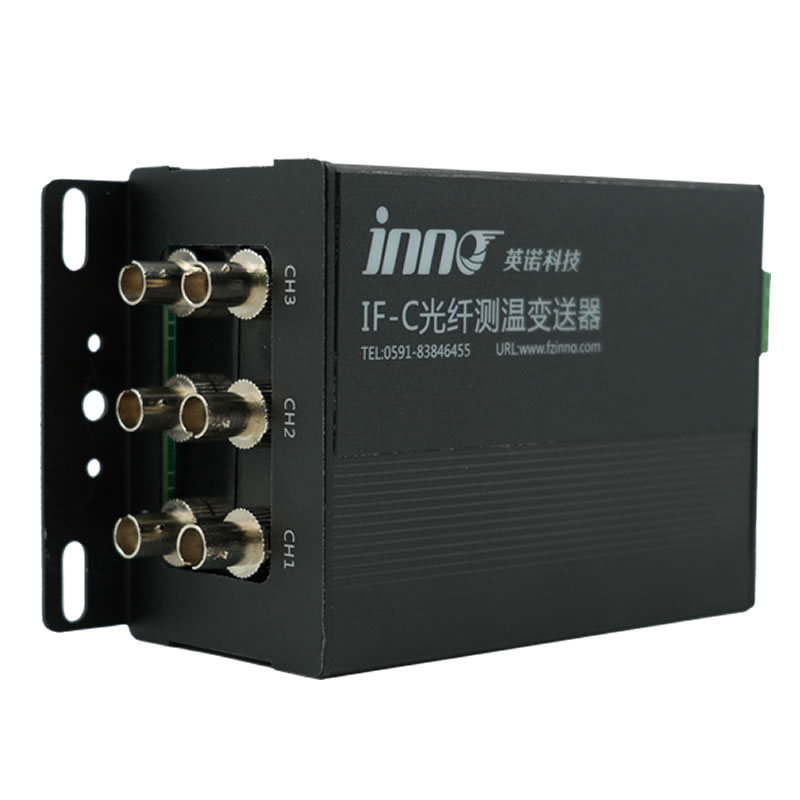
The combination of absolute EMI immunity and complete electrical isolation is not merely an advantage — it is a requirement in certain applications where no alternative sensing technology can operate safely and accurately. Nel monitoraggio degli hotspot degli avvolgimenti dei trasformatori di potenza, Per esempio, standard internazionali come l’IEC 60076-2 consiglio esplicitamente sistemi di monitoraggio della temperatura in fibra ottica perché i sensori metallici non possono essere installati in sicurezza su avvolgimenti sotto tensione 10 kV a 500 kV.
Allo stesso modo, in ambienti con microonde ad alta potenza, sistemi radar, and electromagnetic compatibility (EMC) camere di prova, UN Termometro a fibra ottica a fluorescenza è l'unico metodo di misurazione della temperatura a contatto praticabile.
6. Applications in the Power Industry
Il settore energetico è il più grande utilizzatore di Termometria a fibra ottica a fluorescenza in tutto il mondo, spinto dalla necessità di monitorare i punti termici critici all'interno delle apparecchiature ad alta tensione.
Monitoraggio degli hotspot degli avvolgimenti dei trasformatori
Incorporato sonde di temperatura a fibra ottica sono installati direttamente all'interno degli avvolgimenti dei trasformatori immersi in olio durante la produzione per rilevare le temperature dei punti caldi che indicano invecchiamento dell'isolamento o condizioni di sovraccarico.
Monitoraggio dei contatti di quadri e sbarre
Contatti elettrici scadenti nel mezzo- e i quadri ad alta tensione generano surriscaldamenti localizzati che precedono guasti catastrofici. UN sistema di misurazione della temperatura in fibra ottica installato nei punti di contatto fornisce un allarme tempestivo continuo.
Giunti e terminazioni dei cavi
I giunti dei cavi sotterranei e le terminazioni dei cavi GIS sono punti di guasto comuni. Monitoraggio termico continuo con sensori di temperatura a fibra ottica riduce il rischio di interruzioni non pianificate.
7. Applications in Renewable Energy and Battery Storage
Generatori di turbine eoliche
I cuscinetti dei generatori e gli avvolgimenti dello statore nelle grandi turbine eoliche operano in ambienti soggetti a vibrazioni elevate, Ambienti della navicella ricchi di EMI. Sensori di temperatura a fibra ottica a fluorescenza forniscono un monitoraggio affidabile senza interferenze da azionamenti a frequenza variabile.
Sistemi di accumulo dell'energia a batteria (BESS)
I pacchi batteria agli ioni di litio richiedono un monitoraggio preciso della temperatura a livello di cella per prevenire la fuga termica. Le piccole dimensioni della sonda e la passività elettrica di a sensore termico a fibra ottica lo rendono ideale per l'inserimento tra le celle della batteria senza introdurre rischi di accensione.
Inverter Fotovoltaici e Combinatori
Le connessioni CC ad alta corrente negli impianti fotovoltaici sono soggette a guasti agli hotspot. Dispositivi per il monitoraggio della temperatura in fibra ottica detect abnormal heating at busbar connections and fuse holders before damage occurs.
8. Applications in Industrial Manufacturing and Hazardous Areas
Beyond energy, Termometria a fibra ottica a fluorescenza serves a growing number of industrial sectors.
Petrochemical and Oil Refining
Reactor vessel skin temperatures, pipeline flange monitoring, and storage tank surface temperatures in classified hazardous areas where intrinsic safety is mandatory.
Semiconductor and Microwave Processing
RF and microwave heating chambers where metallic sensors act as antennas and produce erroneous readings. Sonde di temperatura a fibra ottica are unaffected by RF energy.
Pharmaceutical and Food Processing
Autoclave and sterilization cycle monitoring where electrical isolation and chemical inertness are required.
9. Fluorescence Fiber Temp. System vs. Termocoppia vs. RST vs. Infrarossi
For procurement professionals comparing options, the differences that matter most are reliability in harsh conditions, total installed cost, and long-term maintenance burden.
contro. Termocoppie
Thermocouples are inexpensive per unit but suffer from EMI susceptibility, deriva nel tempo, cold-junction errors, and limited lifespan in vibration environments. UN sistema di rilevamento della temperatura a fibra ottica a fluorescenza eliminates all of these issues, though unit cost is higher.
contro. RTD (Pt100/Pt1000)
RTDs offer good accuracy but require excitation current (causing self-heating), are sensitive to lead resistance errors, and cannot be placed on high-voltage conductors without complex isolation barriers. Sensori di temperatura a fibra ottica need no excitation and provide inherent isolation.
contro. Sensori a infrarossi
Infrared pyrometers measure surface temperature without contact but are affected by emissivity variations, polvere, steam, and line-of-sight requirements. UN sonda a fibra ottica a fluorescenza makes direct contact with the target, is immune to optical obstructions, and works inside sealed equipment.
Bottom Line for Buyers
Where EMI, alta tensione, explosion risk, or inaccessible locations are involved, Termometria a fibra ottica a fluorescenza is the only technology that checks every box simultaneously.
10. Total Cost of Ownership and ROI Analysis
The upfront cost of a sistema di misurazione della temperatura in fibra ottica is typically higher than an equivalent thermocouple or RTD installation. Tuttavia, procurement decisions should be based on total cost of ownership (TCO) across the full equipment lifecycle.
With a service life exceeding 25 years and virtually zero recalibration or replacement cost, the annualized cost of a fluorescence fiber optic sensor is often lower than that of conventional sensors replaced every 3–5 years. Inoltre, the prevention of a single unplanned transformer outage or battery thermal event can justify the entire investment in fiber optic monitoring many times over. Procurement teams should request a TCO comparison from qualified suppliers based on their specific installation scale and replacement cycle assumptions.
11. Key Technical Specifications Buyers Should Understand
You do not need to be a physicist to evaluate a sensore di temperatura a fibra ottica, but understanding a few core specifications will help you compare products and communicate requirements to suppliers. The most important parameters include measurement range (typically –40 °C to +260 °C for standard probes, con opzioni ad alta temperatura disponibili), precisione (±1 °C is the industry benchmark), tempo di risposta (Sotto 1 second for most probes), maximum fiber length (fino a 80 meters between probe and demodulator), e conteggio dei canali (1 A 64 channels per demodulator unit). Ask suppliers to confirm these specifications with test reports or third-party calibration certificates.
12. How to Evaluate a Fiber Optic Temperature Sensor Supplier
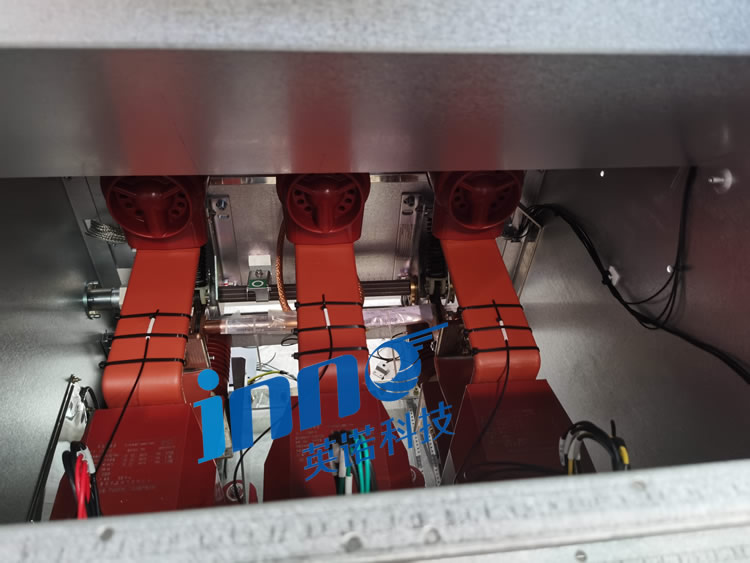
Choosing the right supplier is as important as choosing the right technology. Procurement teams should assess several dimensions.
Manufacturing Experience
Look for manufacturers — not just resellers — with at least 10 years of production history in Termometria a fibra ottica a fluorescenza. In-house manufacturing ensures quality control, customization capability, and faster lead times.
Gamma di prodotti e personalizzazione
Applicazioni diverse richiedono lunghezze della sonda diverse, sheath materials, tipi di fibre, e configurazioni del demodulatore. Un fornitore capace offre sistemi configurabili piuttosto che pacchetti adatti a tutti.
Progetti di riferimento e certificazioni
Richiedi casi di studio, referenze dei clienti, e relative certificazioni. I fornitori che servono i settori dei servizi energetici e dello stoccaggio dell’energia devono dimostrare la conformità alla norma IEC applicabile, IEEE, o norme nazionali.
Capacità di supporto globale
Per acquirenti internazionali, valutare la capacità del fornitore di fornire documentazione in lingua inglese, imballaggio per l'esportazione, remote technical support, ed esperienza di spedizione internazionale.
13. Installation Compatibility and Retrofit Considerations
Una delle preoccupazioni più comuni in materia di appalti è se a sistema di monitoraggio della temperatura in fibra ottica possono essere integrati nelle infrastrutture esistenti. Nella maggior parte dei casi, la risposta è sì. Il piccolo diametro della sonda (2–3 mm) allows direct replacement of existing RTD or thermocouple probes in many standard mounting locations. Demodulators provide RS485, ModBus, and analog outputs compatible with virtually all industrial SCADA and DCS systems. For retrofit projects, experienced manufacturers such as FJINNO provide pre-installation surveys and custom probe lengths to match existing cable routes and mounting hardware.
14. After-Sales Support, Garanzia, and Long-Term Maintenance
UN fluorescence fiber optic temperature sensor system has very few wear components, which means maintenance requirements are minimal. The primary long-term considerations are periodic verification of calibration accuracy (typically every 2–3 years), protection of fiber cables from physical damage during adjacent maintenance activities, and firmware or software updates for the demodulator. When evaluating supplier proposals, confirm warranty duration, response time for technical support, and availability of spare probes and demodulators.
15. Proven Case Studies and Customer Validation
Da 2011, Fuzhou innovazione scienza elettronica&Tech Co., Ltd. (FJINNO) has delivered Termometria a fibra ottica a fluorescenza systems to customers across the power utility, energia rinnovabile, produzione industriale, e settori dei trasporti. Installations include transformer winding hotspot monitoring for provincial grid companies, battery thermal management systems for energy storage projects, and switchgear contact temperature monitoring for urban rail transit substations. These deployments demonstrate consistent measurement accuracy, affidabilità a lungo termine, and seamless integration with existing monitoring platforms. Prospective buyers are welcome to request detailed case study documentation.
16. Domande frequenti (Domande frequenti)
Q1: What is the typical measurement accuracy of a fluorescence fiber optic temperature sensor?
Most high-quality sensori di temperatura a fibra ottica a fluorescenza achieve an accuracy of ±1 °C across their operating range. This is comparable to industrial-grade RTDs and significantly better than standard thermocouples in EMI-heavy environments.
Q2: Quanto dura una sonda di temperatura a fibra ottica?
A properly installed optical fiber temperature probe può durare più di 25 anni. Non ci sono conduttori metallici o giunti di saldatura soggetti a corrosione o affaticamento, rendendo la tecnologia eccezionalmente durevole.
Q3: I sensori di temperatura a fibra ottica possono funzionare in atmosfere esplosive o infiammabili?
SÌ. Perché la punta della sonda è completamente passiva e trasporta solo luce, nessuna energia elettrica - a sistema di rilevamento della temperatura in fibra ottica è intrinsecamente sicuro e adatto per le classificazioni delle aree pericolose, inclusa la Zona 0, 1, E 2.
Q4: Qual è la distanza massima tra la sonda del sensore e il demodulatore?
I sistemi standard supportano lunghezze di fibra fino a 80 metri. For special applications requiring longer distances, consultare il produttore per configurazioni a portata estesa.
Q5: Quanti punti di temperatura può monitorare un demodulatore?
Un singolo demodulatore di temperatura in fibra ottica in genere supporta 1 A 64 canali, a seconda del modello. Le unità multicanale riducono significativamente il costo hardware per punto nelle implementazioni su larga scala.
Q6: Is it difficult to integrate a fiber optic temperature system with existing SCADA or DCS?
NO. Most demodulators provide RS485 serial output with Modbus RTU protocol, and many also offer analog 4–20 mA outputs. These are standard interfaces accepted by virtually all industrial control platforms.
D7: Can fluorescence fiber optic sensors replace existing RTDs or thermocouples in a retrofit?
In molti casi, SÌ. Il piccolo diametro della sonda (2–3 mm) fits most standard thermowell and mounting locations. Experienced suppliers can customize probe dimensions and cable lengths to match existing installations.
Q8: Are fiber optic temperature sensors affected by electromagnetic interference?
Not at all. The entire sensing and transmission path is optical — glass fiber and light. There is no metallic conductor to act as an antenna, making a termometro a fibra ottica completely immune to EMI and RFI.
D9: What industries use fluorescence optical fiber thermometry most widely?
The largest user base is in the electric power sector (trasformatori, quadri, giunti di cavi), followed by energy storage (battery thermal monitoring), energia rinnovabile (generatori di turbine eoliche), and industrial manufacturing (petrolchimico, semiconduttore, farmaceutico).
Q10: How do I request a quotation or technical consultation from FJINNO?
You can contact Fuzhou innovazione scienza elettronica&Tech Co., Ltd. (FJINNO) directly via email at web@fjinno.net, by WhatsApp or phone at +86 135 9907 0393, or by visiting www.fjinno.net. The engineering team provides free preliminary technical consultations and project-specific proposals.
About the Manufacturer
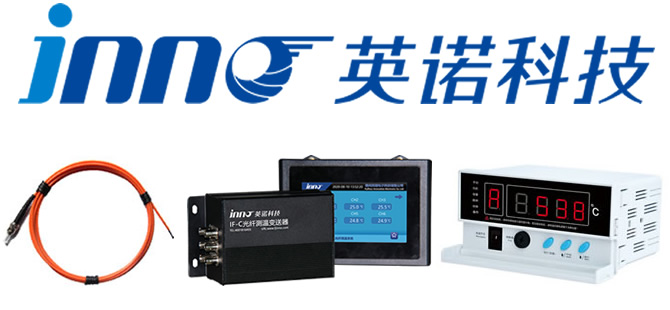
Fuzhou innovazione scienza elettronica&Tech Co., Ltd. (FJINNO) has been designing and manufacturing Termometria a fibra ottica a fluorescenza systems since 2011. Located in Fuzhou, Fujian, Cina, FJINNO serves customers in more than 30 countries across the power, energia, e settori industriali.
Indirizzo: Parco industriale della rete di cereali Liandong U, No.12 Xingye Strada ovest, Fuzhou, Fujian, Cina
E-mail: web@fjinno.net
Whatsapp / WeChat / Telefono: +86 135 9907 0393
QQ: 3408968340
Sito web: www.fjinno.net
Disclaimer: Le informazioni fornite in questo articolo sono solo a scopo informativo generale ed educativo. While Fuzhou Innovation Electronic Scie&Tech Co., Ltd. (FJINNO) makes every effort to ensure the accuracy and completeness of the content, no representation or warranty, espresso o implicito, is made regarding the accuracy, affidabilità, or completeness of the information. Specifiche del prodotto, dati sulle prestazioni, and application suitability may vary depending on specific project conditions and configurations. This content does not constitute professional engineering advice. Buyers should conduct their own due diligence and consult directly with FJINNO or qualified engineers before making procurement decisions. FJINNO shall not be liable for any loss or damage arising from reliance on the information presented herein.

Sensore di temperatura a fibra ottica, Sistema di monitoraggio intelligente, Produttore di fibra ottica distribuito in Cina
 |
 |
 |