 INNO फाइबर ऑप्टिक तापमान सेंसर ,तापमान निगरानी प्रणाली.
- ट्रांसफार्मर के तेल के तापमान में वृद्धि इन्सुलेशन की उम्र बढ़ने और वाइंडिंग क्षति का सबसे पहला मापने योग्य संकेत है - इसकी लगातार निगरानी की जानी चाहिए, समय-समय पर जाँच नहीं की जाती
- एक संपूर्ण तेल तापमान निगरानी प्रणाली में तापमान सेंसर होते हैं, एक नियंत्रण इकाई, एक अलार्म सर्किट, और एक स्वचालित सर्किट ब्रेकर ट्रिप सर्किट
- शीर्ष तेल तापमान और घुमावदार गर्म स्थान तापमान दो अलग-अलग माप बिंदु हैं - दोनों पूर्ण थर्मल सुरक्षा के लिए आवश्यक हैं
- जब तेल का तापमान निर्धारित सीमा से अधिक हो जाए, सिस्टम सर्किट ब्रेकर ट्रिप कॉइल को चलाता है और ट्रांसफार्मर को स्वचालित रूप से डिस्कनेक्ट कर देता है
- Two-stage protection — a high-temperature alarm followed by an overtemperature trip — gives operators a response window before automatic disconnection
- Fiber optic temperature sensors measure winding hot spot temperature directly inside the transformer tank without any metallic conductors in the oil
- आईईसी 60076 defines the thermal class and allowable temperature rise limits that determine where trip thresholds must be set
- Real-time online monitoring detects thermal anomalies hours or days before they escalate into a protection trip or catastrophic failure
विषयसूची
- Why does transformer oil temperature rise and what damage does it cause?
- What does a transformer oil temperature monitoring system consist of?
- Where exactly should temperature sensors be installed on a transformer?
- तेल तापमान की निगरानी स्वचालित रूप से सर्किट ब्रेकर को कैसे संचालित करती है?
- ट्रांसफार्मर सुरक्षा में अलार्म ट्रिप और आपातकालीन ट्रिप के बीच क्या अंतर है??
- ट्रांसफार्मर तेल तापमान के लिए स्वचालित सर्किट ब्रेकर ट्रिप थ्रेशोल्ड कैसे सेट किए जाते हैं?
- एक ट्रांसफार्मर को आवधिक निरीक्षण के बजाय वास्तविक समय ऑनलाइन निगरानी की आवश्यकता क्यों है??
- अक्सर पूछे जाने वाले प्रश्न: ट्रांसफार्मर तेल तापमान की निगरानी
1. Why does transformer oil temperature rise and what damage does it cause?
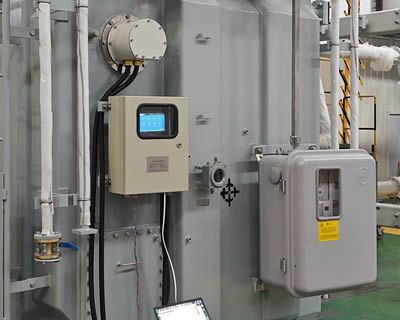
प्रत्येक बिजली ट्रांसफार्मर अपने सामान्य संचालन के उप-उत्पाद के रूप में गर्मी उत्पन्न करता है. चुंबकीय हिस्टैरिसीस और एड़ी धाराओं से होने वाले कोर नुकसान, कनेक्टेड लोड की परवाह किए बिना एक स्थिर बेसलाइन ताप भार उत्पन्न करते हैं. प्राथमिक और द्वितीयक वाइंडिंग में तांबे की हानि एक लोड-निर्भर ताप घटक को जोड़ती है जो धारा के वर्ग के साथ बढ़ती है. सामान्य परिचालन स्थितियों के तहत, ट्रांसफार्मर का तेल इस गर्मी को अवशोषित करता है और इसे टैंक की सतह और कूलिंग रेडिएटर्स में स्थानांतरित करता है, maintaining the winding temperature within the design envelope.
Problems begin when the heat input exceeds the cooling system’s capacity to dissipate it. Blocked radiator fins, failed cooling fans, a seized oil pump in a forced-oil-cooled unit, or a sustained overload condition all reduce the margin between heat generation and heat removal. The oil temperature climbs, and with it the temperature of every winding turn immersed in that oil.
The Arrhenius effect on insulation life
Transformer winding insulation — primarily kraft paper impregnated with oil — degrades according to an Arrhenius rate law. For every 6–8 °C rise in sustained winding temperature above the insulation’s rated thermal class, the expected service life of the insulation is approximately halved. A transformer running 20 °C above its rated top oil temperature for an extended period is consuming years of insulation life in weeks. The damage is cumulative and irreversible: once cellulose insulation has thermally degraded, no maintenance procedure restores its dielectric strength.
Failure sequence without temperature protection
In the absence of ट्रांसफार्मर थर्मल संरक्षण, the degradation sequence moves through predictable stages. Insulation brittleness increases, reducing its ability to withstand the mechanical forces of through-fault currents. Dissolved gas levels in the oil rise — detectable by Dissolved Gas Analysis (डीजीए) — as paper and oil begin to decompose thermally. Eventually, a routine fault current or switching transient that the transformer would otherwise have survived without consequence causes an inter-turn short circuit or a winding-to-tank flashover, resulting in a catastrophic failure that takes the unit out of service for months and requires complete rewinding or replacement.
2. What does a transformer oil temperature monitoring system consist of?

ए transformer oil temperature monitoring system is an integrated protection chain. Each component in the chain must function correctly for the system to deliver reliable automatic protection.
तापमान सेंसर
The sensing layer measures the actual temperature at the critical points in the transformer. Dial-type oil thermometers with micro-switch contacts are the traditional solution for top oil temperature measurement on the transformer tank. प्रतिरोध तापमान डिटेक्टर (आरटीडी) — typically Pt100 elements — provide accurate analogue signals compatible with electronic monitoring systems. फाइबर ऑप्टिक तापमान सेंसर using fluorescence decay principles are increasingly deployed for direct winding hot spot measurement inside the transformer tank, where their immunity to electromagnetic interference and the absence of metallic conductors in the oil make them the safest and most accurate available option.
Temperature controller and monitoring unit
वही ट्रांसफार्मर तापमान नियंत्रक receives signals from all sensors, displays measured values locally, compares them against configured alarm and trip thresholds, and drives output relays when thresholds are exceeded. Modern units incorporate data logging to store temperature histories with timestamps, RS-485 or Ethernet communication ports for SCADA integration, and configurable relay outputs for cooling system control as well as alarm and trip signalling.
Alarm and trip relay circuit
The output relay contacts from the temperature controller are wired into the substation protection scheme. The alarm relay contact drives an audible or visual annunciator in the control room. The trip relay contact is wired in series with the circuit breaker trip coil — when the contact closes, it energises the trip coil and the breaker opens, disconnecting the transformer from the supply.
Cooling system control
अधिकांश ट्रांसफार्मर तापमान निगरानी प्रणालियाँ also control the cooling equipment. As oil temperature rises through defined stages, the controller switches on additional cooling fans or starts the oil circulation pump automatically, increasing cooling capacity before the alarm threshold is reached. This staged cooling response reduces the frequency of alarm events and extends transformer service life by keeping the operating temperature as low as practical.
3. Where exactly should temperature sensors be installed on a transformer?

Correct sensor placement is the foundation of effective ट्रांसफार्मर तापमान की निगरानी. Measuring at the wrong location gives a reading that does not represent the thermal stress the insulation is actually experiencing.
शीर्ष तेल तापमान माप
वही शीर्ष तेल का तापमान sensor — a dial thermometer or RTD element — is installed in a purpose-built pocket on the transformer tank cover, immersed in the oil at the highest point of the tank. Because hot oil rises, the top oil temperature represents the hottest oil in the cooling circuit and gives the best available indirect indication of winding thermal stress in the absence of direct winding sensors. आईईसी 60076-2 specifies the measurement location and pocket dimensions for calibration purposes.
Winding hot spot temperature measurement
वही घुमावदार गर्म स्थान का तापमान is the highest temperature anywhere in the winding assembly. It occurs at a point approximately one-third to one-quarter of the winding height from the top in most transformer designs, where the combination of local heat generation and reduced oil flow velocity is most severe. Directly measuring this temperature requires a sensor installed inside the transformer tank, between the winding conductors.
Why fiber optic sensors are used for winding hot spot measurement
फाइबर ऑप्टिक तापमान सेंसर are the established method for direct winding hot spot measurement in oil-immersed transformers. The sensing probe — a small-diameter optical fiber with a fluorescent element at its tip — is inserted between winding conductors during transformer manufacture or rewinding. Because the probe contains no metallic conductors, it introduces no additional current path, no risk of inter-turn short circuit, and no electromagnetic interference into the measurement signal. The fiber cable exits the tank through a purpose-built oil-tight gland and connects to an interrogation unit mounted on the tank exterior. Fluorescence fiber optic sensing delivers measurement accuracy of ±1 °C and a probe service life exceeding 30 years under continuous oil immersion.
Ambient temperature reference
ए ambient temperature sensor mounted in the shade adjacent to the transformer provides the reference reading used to calculate temperature rise above ambient — the parameter that IEC 60076 uses to define the thermal limits rather than absolute temperature, since absolute temperature varies with site altitude and climate.
4. तेल तापमान की निगरानी स्वचालित रूप से सर्किट ब्रेकर को कैसे संचालित करती है?
The automatic circuit breaker operation in response to transformer overtemperature is a straightforward protection logic implemented through relay contacts and the breaker’s built-in trip coil. Understanding the signal path clarifies why the system is reliable and why it responds faster than any manual intervention could.
The trip signal path
When the temperature controller determines that the measured oil or winding temperature has exceeded the configured overtemperature trip threshold, यह एक आउटपुट रिले को सक्रिय करता है. उस रिले का सामान्य रूप से खुला संपर्क बंद हो जाता है, एक डीसी सर्किट को पूरा करना जो इसके माध्यम से प्रवाहित होता है circuit breaker trip coil. ट्रिप कॉइल एक चुंबकीय बल उत्पन्न करता है जो ब्रेकर के स्प्रिंग-लोडेड तंत्र को मुक्त करता है, और ब्रेकर ट्रिप कॉइल के सक्रिय होने के 50-100 मिलीसेकंड के भीतर अपने मुख्य संपर्क खोलता है. इससे पहले कि कोई और थर्मल क्षति हो, ट्रांसफार्मर को आपूर्ति से अलग कर दिया जाता है.
ट्रिप कॉइल पर्यवेक्षण
अच्छी तरह से डिज़ाइन की गई सुरक्षा योजनाओं में, वही ट्रिप कॉइल सर्किट ट्रिप सर्किट पर्यवेक्षण द्वारा लगातार निगरानी की जाती है (टीसीएस) रिले जो ट्रिप कॉइल और उससे जुड़ी वायरिंग की निरंतरता पर नज़र रखता है. यदि ट्रिप कॉइल जल जाए या कोई तार टूट जाए, सुरक्षा प्रणाली को संचालित करने के लिए बुलाए जाने से पहले टीसीएस रिले तुरंत अलार्म बजाता है. This supervision function is essential because a failed trip circuit is a silent defect that only reveals itself at the worst possible moment.
Lockout relay integration
महत्वपूर्ण ट्रांसफार्मर के लिए, वही temperature trip output is typically wired to a lockout relay (86 relay in ANSI nomenclature). The lockout relay seals in its operated state and prevents automatic re-energisation of the transformer after a temperature trip. An operator must physically reset the lockout relay at the switchboard after investigating and resolving the thermal fault — a deliberate design choice that prevents the transformer from being reconnected to a fault condition by automatic reclosure schemes.
5. ट्रांसफार्मर सुरक्षा में अलार्म ट्रिप और आपातकालीन ट्रिप के बीच क्या अंतर है??
Two-stage thermal protection is standard practice for बिजली ट्रांसफार्मर तापमान की निगरानी. The two stages serve different purposes and drive different responses.
अवस्था 1 — High temperature alarm
वही उच्च तापमान अलार्म प्रथम चरण है, ऐसे तापमान पर सेट करें जो इंगित करता है कि ट्रांसफार्मर अपनी सामान्य सीमा से बाहर काम कर रहा है लेकिन अभी तक उस स्तर तक नहीं पहुंचा है जिसके लिए तत्काल वियोग की आवश्यकता हो. जब यह सीमा पार हो जाती है, निगरानी प्रणाली नियंत्रण कक्ष में एक श्रव्य या दृश्य अलार्म सक्रिय करती है, अधिकतम शीतलन आरंभ करता है (सभी उपलब्ध पंखों और तेल पंपों को चालू करना), और इवेंट को टाइमस्टैम्प के साथ लॉग करता है. ट्रांसफार्मर सेवा में है. परिचालन कर्मचारियों से अपेक्षा की जाती है कि वे कारण की जांच करें - एक अवरुद्ध रेडिएटर, एक असफल शीतलन पंखा, एक अधिभार की स्थिति - और दूसरे चरण की सीमा तक पहुंचने से पहले उपलब्ध समय के भीतर सुधारात्मक कार्रवाई करें.
अवस्था 2 - अधिक तापमान का दौरा
वही अधिक तापमान वाली यात्रा दूसरा चरण है, set at a temperature above which continued operation would cause rapid and irreversible insulation damage. जब यह सीमा पार हो जाती है, the monitoring system immediately drives the circuit breaker trip coil. No operator action is required or expected — the system disconnects the transformer automatically. The time between the Stage 1 alarm and the Stage 2 trip gives operators a defined window to attempt a load reduction or cooling restoration before the automatic disconnection occurs. In most utility and industrial protection settings, this window is between 10 और 30 minutes depending on how widely the two thresholds are separated.
Cooling failure alarm
A third alarm output — sometimes called the cooling failure alarm — is triggered when a cooling fan or pump motor fails regardless of the current oil temperature. This alarm alerts maintenance staff to restore cooling capacity before the thermal headroom is consumed, providing the earliest possible warning of a developing overtemperature condition rather than waiting for the temperature itself to rise.
6. ट्रांसफार्मर तेल तापमान के लिए स्वचालित सर्किट ब्रेकर ट्रिप थ्रेशोल्ड कैसे सेट किए जाते हैं?
Threshold setting is an engineering task, not a default configuration exercise. The correct values depend on the transformer’s insulation thermal class, its cooling method, the site ambient temperature, and the load profile it serves.
आईईसी 60076 temperature limits
आईईसी 60076-2 (Temperature rise for liquid-immersed transformers) defines the maximum allowable temperature rise above a 40 °C reference ambient for each thermal class. For a standard Class A (खनिज तेल, ONAN cooling) ट्रांसफार्मर, the maximum top oil temperature rise is 60 K and the maximum average winding temperature rise is 65 के, giving a maximum top oil temperature of 100 °C and a maximum average winding temperature of 105 °C at the 40 °C reference ambient. The winding hot spot is permitted to be up to 78 K above ambient — reaching 118 °C — under rated load conditions.
Practical alarm and trip settings
व्यवहार में, वही उच्च तापमान अलार्म for top oil is commonly set at 85–90 °C, providing a margin of 10–15 °C below the IEC limit that gives the cooling system time to respond. वही अधिक तापमान वाली यात्रा for top oil is commonly set at 95–100 °C. के लिए घुमावदार गर्म स्थान का तापमान measured directly by fiber optic sensors, the alarm is typically set at 110 °C and the trip at 120–125 °C, reflecting the higher permitted hot spot values in IEC 60076-7 (लोडिंग गाइड).
Site-specific adjustments
Transformers installed at high altitude sites experience reduced air density that impairs convective cooling. आईईसी 60076-2 specifies a derating factor that reduces the allowable temperature rise for every 500 m above 1000 m altitude. Transformers in arctic climates with maximum ambient temperatures significantly below 40 °C may have their alarm thresholds adjusted upward to avoid nuisance alarms during legitimate maximum-load operation. All threshold adjustments must be documented in the protection settings record and reviewed whenever the transformer’s load profile changes significantly.
7. एक ट्रांसफार्मर को आवधिक निरीक्षण के बजाय वास्तविक समय ऑनलाइन निगरानी की आवश्यकता क्यों है??
Manual inspection of transformer oil temperature — a technician reading the dial thermometer on the tank during a site visit — is the minimum baseline practice. It is not adequate protection for any transformer whose failure would cause significant production loss, supply interruption, or safety risk.
The time gap problem
A transformer can move from normal operating temperature to a critical overtemperature condition in under an hour under the right combination of load increase and cooling failure. A weekly inspection schedule leaves a 168-hour window during which this transition can occur, progress through the insulation damage phase, and reach catastrophic failure without any external indication. Real-time online monitoring closes this window completely — the system is evaluating every temperature reading against its alarm thresholds on a continuous basis, every minute of every day.
Load-correlated trending
ए continuous transformer temperature monitoring system accumulates a temperature history correlated with the load current at every point in time. This dataset reveals patterns that no periodic inspection can identify: a transformer that consistently reaches 88 °C on weekday afternoons when load peaks, or a unit whose temperature response to a given load level has been creeping upward over six months as a cooling radiator gradually silts up. Both patterns are actionable maintenance intelligence. Neither is visible from a monthly dial reading.
Automatic response eliminates human delay
When a thermal event develops rapidly — a sudden cooling pump failure at peak load on a hot summer afternoon — the time between the overtemperature threshold being crossed and the circuit breaker opening is determined entirely by the relay operating time, measured in milliseconds. No human operator can match that response speed. वही automatic circuit breaker operation driven by the online monitoring system is the only protection mechanism fast enough to intervene before serious insulation damage accumulates in a rapid overtemperature event.
अक्सर पूछे जाने वाले प्रश्न: स्वचालित सर्किट ब्रेकर ऑपरेशन के साथ ट्रांसफार्मर तेल तापमान की निगरानी
1. What is the difference between top oil temperature and winding hot spot temperature?
शीर्ष तेल का तापमान is the temperature of the hottest oil in the transformer tank, measured at the top of the tank where heated oil accumulates. It is an indirect indicator of winding thermal stress and is the standard measurement point on most transformer installations. Winding hot spot temperature is the highest temperature at any point within the winding conductors themselves — it is always higher than the top oil temperature due to the additional heat generated in the conductors and the local reduction in oil cooling flow. आईईसी 60076-7 ट्रांसफार्मर लोडिंग गणना और इन्सुलेशन जीवन मूल्यांकन के लिए प्राथमिक पैरामीटर के रूप में हॉट स्पॉट तापमान का उपयोग करता है. हॉट स्पॉट तापमान के प्रत्यक्ष माप के लिए एक सेंसर की आवश्यकता होती है - आमतौर पर ए फाइबर ऑप्टिक जांच - टैंक के अंदर वाइंडिंग कंडक्टरों के बीच स्थापित.
2. किस प्रकार के ट्रांसफार्मर को तेल तापमान की निगरानी की आवश्यकता होती है?
कोई भी तेल में डूबा हुआ लोड ले जाने वाला ट्रांसफार्मर जिसके रुकावट के कारण महत्वपूर्ण परिचालन हो सकता है, वित्तीय, या सुरक्षा परिणाम वारंट स्वचालित सुरक्षा के साथ तेल तापमान की निगरानी. इसमें उपयोगिता सबस्टेशनों में बिजली ट्रांसफार्मर शामिल हैं, सतत-प्रक्रिया उपकरणों को खिलाने वाले औद्योगिक संयंत्र ट्रांसफार्मर, डेटा सेंटर आपूर्ति ट्रांसफार्मर, अस्पताल आवश्यक सेवा ट्रांसफार्मर, और रेलवे अनुप्रयोगों में कर्षण ट्रांसफार्मर. Distribution transformers on public networks are typically protected by overcurrent and earth fault relays rather than temperature monitoring, but larger pad-mounted and network transformers in high-density urban areas increasingly incorporate temperature monitoring as part of a condition monitoring programme.
3. How does an oil temperature relay connect to a circuit breaker trip coil?
वही oil temperature relay — whether a mechanical bimetallic device in a traditional dial thermometer or an electronic output relay in a digital temperature controller — provides a volt-free contact output. This contact is wired in series with the station battery DC supply and the circuit breaker trip coil. When the relay contact closes, DC current flows through the trip coil, which releases the breaker mechanism and opens the main contacts. The circuit is entirely independent of the AC supply voltage, so the protection operates correctly even during a supply voltage depression or disturbance.
4. What communication protocols do transformer monitoring systems support?
आधुनिक transformer temperature monitoring units typically support RS-485 with Modbus RTU as the baseline communication interface, which is natively compatible with the majority of SCADA and energy management systems. आईईसी 61850 is increasingly specified for new substation installations, with protocol conversion gateways mapping Modbus data to IEC 61850 GOOSE messages or MMS reports. Ethernet TCP/IP and 4G cellular interfaces are available for remote monitoring of transformers in locations without wired control room infrastructure.
5. Can transformer oil temperature monitoring integrate with SCADA or BMS?
हाँ. The temperature controller outputs measured values and alarm states as Modbus registers over RS-485 or Ethernet. ए स्काडा प्रणाली या भवन प्रबंधन प्रणाली (बीएमएस) with a Modbus driver polls these registers and displays temperature trends, alarm histories, and cooling system status on the operator HMI. Integration requires only standard Modbus configuration — no bespoke software development is needed for most industrial SCADA platforms.
6. What is thermal runaway in a transformer and how does automatic protection prevent it?
बेलगाम उष्म वायु प्रवाह in a transformer occurs when the heat generated by an internal fault — typically an inter-turn short circuit or a circulating current through a damaged winding — exceeds the capacity of the cooling system to dissipate it, causing temperature to rise continuously rather than reaching a new equilibrium. As temperature rises, the fault resistance may decrease, increasing the fault current and heat generation further in a self-reinforcing cycle. स्वचालित overtemperature circuit breaker tripping interrupts this cycle by disconnecting the transformer before the runaway condition reaches the point of insulation collapse and tank rupture.
7. Which IEC and IEEE standards apply to transformer thermal protection?
The primary standards are आईईसी 60076-2 (temperature rise limits for liquid-immersed transformers), आईईसी 60076-7 (loading guide and hot spot temperature calculations), और आईईसी 60255 (measuring relays and protection equipment) for the relay and trip circuit requirements. उत्तरी अमेरिका में, आईईईई सी57.91 is the equivalent loading guide and thermal model standard. NFPA 70B covers the maintenance requirements for electrical equipment including transformer thermal protection systems.
8. What is the normal operating oil temperature range for a power transformer?
For a standard mineral-oil-immersed transformer with ONAN (natural oil, natural air) cooling operating at rated load in a 40 डिग्री सेल्सियस परिवेश, वही normal top oil temperature should not exceed 95–100 °C under IEC 60076-2 सीमा. व्यवहार में, a well-loaded but not overloaded transformer in a temperate climate typically operates with top oil temperatures in the 60–80 °C range during peak load periods and significantly lower during off-peak hours. Sustained operation above 85 °C under normal load conditions (not a short-term emergency overload) warrants investigation of the cooling system performance.
9. Is fiber optic temperature monitoring suitable for sealed oil-immersed transformers?
फाइबर ऑप्टिक तापमान जांच are fully compatible with sealed, hermetically-sealed, and conservator-type oil-immersed transformers. फाइबर केबल एक तेल-तंग संपीड़न ग्रंथि के माध्यम से ट्रांसफार्मर टैंक से बाहर निकलती है जो टैंक सील की अखंडता को बनाए रखती है. जांच स्वयं - टिप पर एक फ्लोरोसेंट सेंसिंग तत्व वाला एक ऑप्टिकल फाइबर - ट्रांसफार्मर खनिज तेल और सिंथेटिक एस्टर तरल पदार्थ में रासायनिक रूप से निष्क्रिय है, और इसकी यांत्रिक प्रोफ़ाइल इतनी छोटी है कि इसे घुमावदार ज्यामिति को परेशान किए बिना या तेल प्रवाह क्रॉस-सेक्शन को कम किए बिना घुमावदार कंडक्टरों के बीच घुमाया जा सकता है।.
10. मुझे कैसे पता चलेगा कि मेरे ट्रांसफार्मर को स्वचालित तापमान संरक्षण प्रणाली की आवश्यकता है?
विचार करना स्वचालित ट्रांसफार्मर तापमान की निगरानी यदि निम्नलिखित में से कोई भी शर्त लागू होती है: ट्रांसफार्मर से अधिक है 10 वर्षों पुराना है और इसका हाल ही में डीजीए तेल परीक्षण नहीं हुआ है; इसके द्वारा आपूर्ति किया जाने वाला भार उत्पादन के लिए महत्वपूर्ण है, सुरक्षा, या सार्वजनिक आपूर्ति निरंतरता; previous thermographic surveys or oil tests have indicated elevated temperature or accelerated ageing; the transformer operates in a high-ambient environment or has a history of cooling system issues; or your insurance or compliance framework requires documented thermal protection. If you are unsure whether your installation warrants an automatic system, contact the engineering team at Fuzhou Innovation Electronic Scie&टेक कंपनी, लिमिटेड. — established 2011, with over a decade of experience in power equipment temperature monitoring solutions. Reach us at web@fjinno.net or WhatsApp/WeChat +8613599070393.
अस्वीकरण: The information in this article is provided for general educational purposes only and does not constitute engineering advice for any specific installation. Transformer protection settings, सेंसर प्लेसमेंट, and compliance requirements must be determined by a qualified electrical engineer in accordance with the applicable national and international standards and the transformer manufacturer’s documentation. फ़ूज़ौ इनोवेशन इलेक्ट्रॉनिक विज्ञान&टेक कंपनी, लिमिटेड. accepts no liability for decisions made solely on the basis of the general information contained in this article.

फाइबर ऑप्टिक तापमान सेंसर, बुद्धिमान निगरानी प्रणाली, चीन में वितरित फाइबर ऑप्टिक निर्माता
 |
 |
 |