 INNO फाइबर ऑप्टिक तापमान सेंसर ,तापमान निगरानी प्रणाली.
विषयसूची
- परिचय: The Critical Role of Temperature Monitoring in Transformer Performance
- Fiber Optic Temperature Sensing Technology: How It Works
- Key Advantages of Fiber Optic Temperature Sensors for Transformer Applications
- Comparing Fiber Optic Technologies: DTS vs. FBG vs. Fluoroptic Systems
- कार्यान्वयन मार्गदर्शिका: Where and How to Install Fiber Optic Sensors in Transformers
- Real-World Case Studies: Transformer Failure Prevention
- ROI Analysis: The Business Case for Fiber Optic Temperature Monitoring
- चयन मार्गदर्शिका: How to Choose the Right Fiber Optic System for Your Transformers
- भविष्य के रुझान: The Evolution of Fiber Optic Monitoring in 2025 and Beyond
- निष्कर्ष: Implementing a Fiber Optic Temperature Monitoring Strategy
परिचय: The Critical Role of Temperature Monitoring in Transformer Performance
Power transformers represent some of the most critical and expensive assets in the electrical grid. With replacement costs ranging from hundreds of thousands to millions of dollars and lead times often exceeding 12 महीने, unexpected transformer failures can have devastating impacts on grid reliability, operational costs, and organizational reputation.
At the heart of transformer reliability lies temperature management. As IEEE and IEC standards have long established, elevated operating temperatures are directly correlated with accelerated insulation aging, with each 7-8°C increase potentially halving the expected transformer life. While traditional oil and winding temperature indicators have served the industry for decades, they provide only limited insight into actual conditions within the transformer.
of transformer failures are related to excessive temperatures or hotspots
typical difference between average winding temperature and actual hotspot temperature
reduction in transformer life for every 7-8°C increase in operating temperature
months typical lead time for critical power transformer replacement
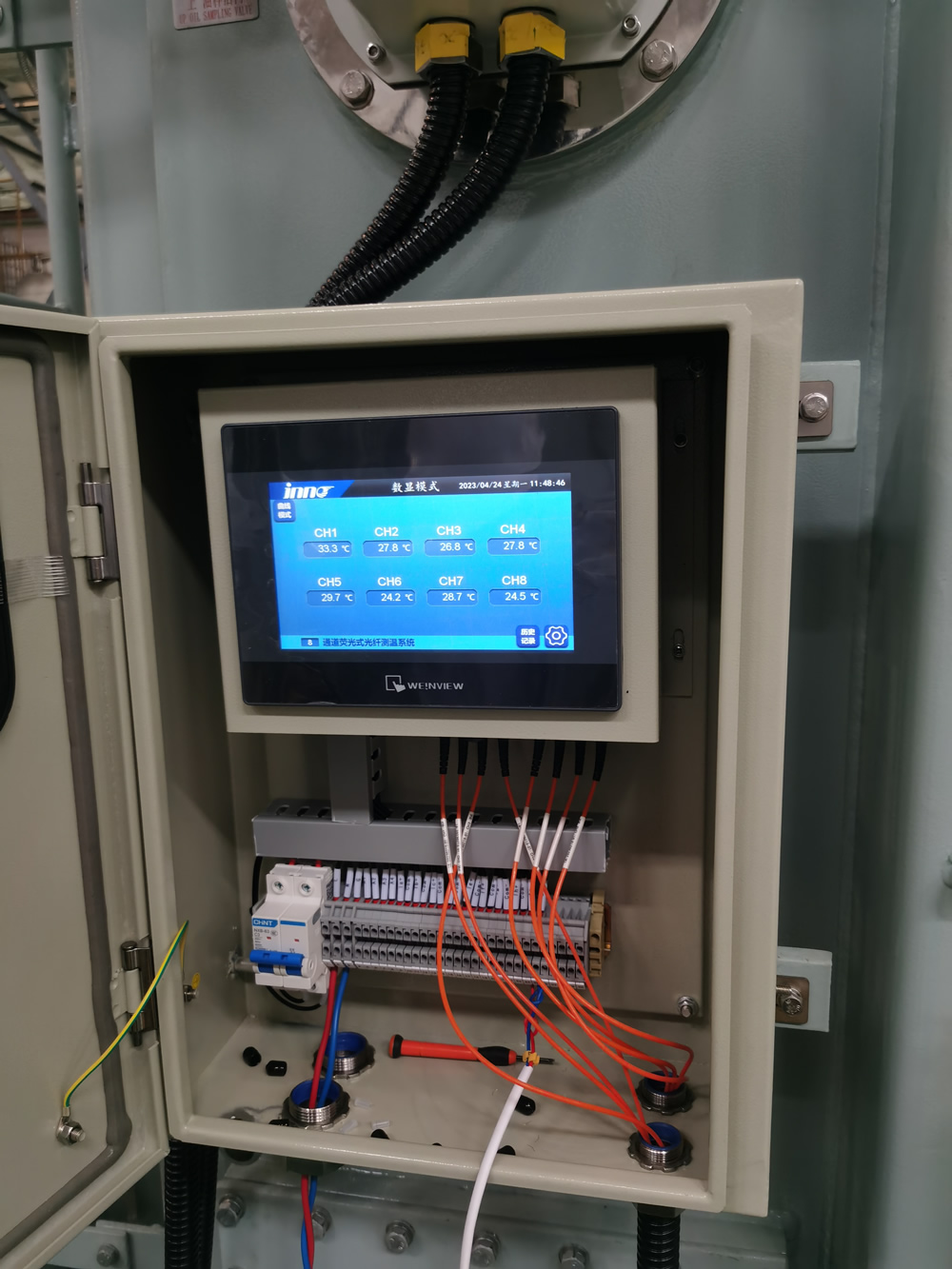
Fiber optic temperature sensing technology has revolutionized the approach to transformer temperature monitoring, प्रत्यक्ष प्रदान करना, real-time measurement of actual winding hotspot temperatures rather than approximations based on oil temperatures and thermal models. As we move further into 2025, these systems have become increasingly sophisticated, offering unprecedented insight into transformer thermal behavior and enabling truly condition-based maintenance approaches.
This comprehensive guide explores the latest developments in fiber optic temperature sensing for power transformers, from the fundamental technology principles to practical implementation strategies, helping asset managers, electrical engineers, and maintenance professionals make informed decisions about this critical monitoring technology.
Fiber Optic Temperature Sensing Technology: How It Works
Fiber optic temperature sensing represents a fundamental departure from conventional electrical temperature measurement techniques. Instead of relying on electrical signals that can be compromised by electromagnetic interference (ईएमआई), fiber optic sensors use light properties to detect temperature changes with exceptional accuracy and reliability.
Core Technology Principles
Fiber optic sensors operate based on several different physical principles, each with specific advantages for particular applications:
Fluorescence Decay Method (FDM)
This method utilizes temperature-sensitive phosphorescent materials at the sensor tip. When excited by a light pulse, these materials emit fluorescent light with decay characteristics directly related to temperature. The time-based measurement is inherently immune to light intensity fluctuations, making it exceptionally accurate and stable over long periods.
Typical accuracy: ±0.5°C
फाइबर ब्रैग ग्रेटिंग (डीसीएफ)
FBG sensors contain microscopic periodic variations in the refractive index of the fiber core, creating a wavelength-specific reflector. जैसे ही तापमान बदलता है, थर्मल विस्तार झंझरी अवधि को बदल देता है, shifting the reflected wavelength proportionally to temperature. This allows for multiplexing multiple sensors on a single fiber.
Typical accuracy: ±1.0°C
वितरित तापमान संवेदन (डीटीएस)
DTS systems measure temperature continuously along the entire length of an optical fiber. They work by analyzing the backscattered light resulting from the Raman effect. The ratio between Stokes and anti-Stokes signals provides temperature information, while the time-of-flight determines the location along the fiber.
Typical accuracy: ±1.0-2.0°C with spatial resolution of 1-2 मीटर की दूरी पर
Typical System Components
एक पूर्ण फाइबर ऑप्टिक तापमान निगरानी प्रणाली for transformers typically includes:
Fiber Optic Probes
Specially designed temperature probes containing optical fibers that are installed directly into transformer windings during manufacturing or retrofit procedures. These probes are engineered to withstand the harsh electrical, थर्मल, and chemical environment inside transformers for decades.
Signal Conditioner/Transmitter
Electronic equipment that generates the light signals, analyzes the returned optical signals, and converts them into temperature readings. Modern units provide multiple communication interfaces including 4-20mA, Modbus, डीएनपी3, और आईईसी 61850 for seamless integration with SCADA and asset management systems.
Extension Fibers
Specialized optical fiber cables connecting the probes to the signal conditioner, designed to withstand the transformer oil environment and provide reliable transmission over long distances without signal degradation.
मॉनिटरिंग सॉफ्टवेयर
Advanced software platforms that display real-time temperature data, analyze trends, generate alerts, and integrate with broader asset performance management systems to enable condition-based maintenance strategies.
Transformer Installation Approaches
Fiber optic temperature sensors can be integrated into power transformers through several methods:
Factory Installation (New Transformers)
The optimal approach involves installing sensors during transformer manufacturing, allowing precise placement at calculated hotspot locations within the windings. Sensors are typically integrated into specialized spacers or directly between disc windings.
Retrofit Installation (Existing Transformers)
For transformers already in service, special retrofit probes can be installed through available openings such as unused thermometer wells, spare valves, or inspection ports. While not providing the same level of direct winding access as factory installation, these approaches still deliver valuable temperature data.
External Surface Monitoring
For applications where internal access is impossible, advanced DTS systems can be installed on transformer tank surfaces to provide thermal mapping of external temperatures, which can be correlated to internal conditions through sophisticated thermal modeling.
प्रौद्योगिकी विकास: 2025 Update
Recent advances in fiber optic sensing technology have dramatically improved system performance. The latest generation of monitoring systems now offers:
- Enhanced accuracy (±0.2°C in laboratory conditions, ±0.5°C in field applications)
- Expanded measurement range (-40डिग्री सेल्सियस से +300 डिग्री सेल्सियस)
- Increased sampling rates up to 10Hz for dynamic load studies
- Advanced self-calibration capabilities ensuring drift-free operation over decades
- Miniaturized probes with diameters as small as 0.8mm for minimal impact on transformer design
- Built-in redundancy with dual optical paths for mission-critical applications
Key Advantages of Fiber Optic Temperature Sensors for Transformer Applications
The adoption of fiber optic temperature monitoring technologies for power transformers has accelerated significantly in recent years, driven by several compelling advantages over conventional monitoring approaches. Understanding these benefits is essential for asset managers and engineers evaluating monitoring system investments.
Direct Hotspot Measurement
Conventional approach: Traditional winding temperature indicators (WTIs) estimate hotspot temperatures based on top oil temperature plus a thermal model offset that approximates winding temperature rise.
Fiber optic advantage: Sensors directly measure actual winding temperatures at the predicted hotspot locations, eliminating estimation errors that can exceed 15°C during transient conditions or unusual loading patterns.
प्रभाव: Accurate hotspot data enables precise loading decisions, preventing unnecessary derating while avoiding dangerous overloading conditions.
विद्युतचुम्बकीय हस्तक्षेप के प्रति प्रतिरक्षण
Conventional approach: Electrical sensors like RTDs and thermocouples can suffer from measurement errors, signal degradation, or outright failure due to the intense electromagnetic fields present in transformers.
Fiber optic advantage: The dielectric nature of optical fibers makes them completely immune to EMI, ensuring reliable measurements even during fault conditions, switching operations, or geomagnetic disturbances.
प्रभाव: निरंतर, reliable data during all operational states, including critical fault conditions when temperature information is most valuable.
एकाधिक माप बिंदु
Conventional approach: Traditional systems typically provide only 1-2 temperature measurement points per transformer due to cost and complexity limitations.
Fiber optic advantage: Modern systems support 8-16 discrete measurement points in a single transformer, enabling comprehensive thermal mapping of different winding sections, phases, and core components.
प्रभाव: Detailed thermal profiles reveal unexpected temperature distributions, डिजाइन मुद्दे, or cooling problems that would remain hidden with limited measurement points.
Enhanced Safety and Isolation
Conventional approach: Electrical sensors require careful isolation design to prevent dangerous potential transfer between windings and monitoring equipment.
Fiber optic advantage: The inherent electrical isolation of optical fibers eliminates any risk of potential transfer, ground loops, or safety hazards, simplifying installation and improving personnel safety.
प्रभाव: Reduced engineering complexity, elimination of isolation barriers, and enhanced safety for maintenance personnel.
दीर्घकालिक स्थिरता
Conventional approach: Electrical sensors typically experience calibration drift over time, particularly in high-temperature environments with thermal cycling.
Fiber optic advantage: Premium fiber optic systems utilize reference-based measurement principles that are inherently stable, with documented cases of sensors maintaining calibration for 25+ years in transformer applications.
प्रभाव: Virtually elimination of recalibration requirements, reducing maintenance costs and ensuring reliable data throughout the transformer lifecycle.
Dynamic Load Management
Conventional approach: Conservative loading based on nameplate ratings or simplified thermal models, often leaving significant capacity unutilized.
Fiber optic advantage: Real-time hotspot measurement enables dynamic loading beyond nameplate ratings when conditions permit, while maintaining safe thermal limits.
प्रभाव: Studies show capacity increases of 10-30% are often possible without exceeding design temperature limits, significantly enhancing asset utilization.
Cooling System Effectiveness Verification
Conventional approach: Limited ability to verify actual cooling system performance or detect partial cooling failures.
Fiber optic advantage: Multiple temperature sensors provide clear thermal signatures of cooling system effectiveness, instantly revealing plugged radiators, पंखे की विफलता, or pump issues.
प्रभाव: Early detection of cooling problems before they impact transformer life or trigger alarms, सक्रिय रखरखाव को सक्षम करना.
Advanced Analytics Integration
Conventional approach: Limited temperature data restricts the effectiveness of asset health analytics.
Fiber optic advantage: Rich, multi-point temperature datasets enable sophisticated analysis including thermal modeling, remaining life estimation, and anomaly detection algorithms.
प्रभाव: Enhanced predictive maintenance capabilities, better capital planning, and reduced risk of unexpected failures.
Real-World Example: Capacity Release in Transmission Transformer
A major North American utility installed fiber optic temperature monitoring in a critical 500MVA transmission transformer previously limited to 85% loading due to conservative temperature estimates. Direct hotspot monitoring revealed actual temperatures were 12°C lower than calculated values during peak loading conditions. This enabled an immediate 15% increase in allowable loading, deferring a $5.2M capacity upgrade project by 4 years while maintaining full compliance with IEEE thermal guidelines.
Comparing Fiber Optic Technologies: DTS vs. FBG vs. Fluoroptic Systems
The fiber optic temperature sensing market offers several distinct technologies, each with unique characteristics that make them suitable for different transformer monitoring applications. Understanding these differences is crucial for selecting the optimal solution for specific needs.
| Characteristic | Fluoroptic Systems | फाइबर ब्रैग ग्रेटिंग (डीसीएफ) | वितरित तापमान संवेदन (डीटीएस) |
|---|---|---|---|
| माप सिद्धांत | Phosphorescent decay time measurement | Wavelength shift of reflected light | Raman backscatter intensity ratio |
| विशिष्ट सटीकता | ±0.2°C to ±0.5°C | ±0.5°C से ±1.0°C | ±1.0°C से ±2.0°C |
| स्थानिक संकल्प | Point measurements only | Point measurements (multiple per fiber) | निरंतर (typically 1m resolution) |
| Maximum Points per System | 8-16 चैनल विशिष्ट | 20-80 प्रति फाइबर सेंसर | Thousands of measurement points |
| Measurement Speed | तेज़ (multiple readings per second) | मध्यम (1-10 seconds for full scan) | Slower (30 seconds to several minutes) |
| Probe Durability | Excellent for transformer environments | अच्छा, but requires strain management | Excellent with proper cable selection |
| System Cost Range | $15,000-$40,000 (8 चैनल) | $30,000-$60,000 (16-32 अंक) | $50,000-$100,000+ (full system) |
| Integration Complexity | Simple point-to-point architecture | Moderate complexity | Higher complexity, specialized software |
| आदर्श अनुप्रयोग | Direct winding hotspot monitoring | Multi-point monitoring with strain/vibration | Surface mapping, bushings, नेतृत्व, टैंक |
Fluoroptic Technology Deep Dive
Fluoroptic technology (also called fluorescence decay method) has become the dominant approach for transformer winding hotspot monitoring due to its exceptional accuracy, स्थिरता, and simplicity. These systems use a phosphorescent material at the sensor tip that, when excited by a light pulse, emits a fluorescent signal with decay characteristics directly proportional to temperature.
The time-based measurement approach makes these systems inherently immune to light intensity variations, फाइबर झुकने के नुकसान, or connector degradation. Leading manufacturers like Neoptix (acquired by Qualitrol) and Rugged Monitoring have refined this technology specifically for transformer applications.
Key advantages for transformer applications include:
- उच्चतम सटीकता (±0.2°C in controlled conditions)
- Exceptional long-term stability without recalibration
- सरल, robust probes that withstand transformer environments
- Fast response times for dynamic loading studies
- Compatibility with both new transformer installations and retrofits
FBG Technology Deep Dive
Fiber Bragg Grating technology utilizes microscopic modifications to the fiber core that create wavelength-specific reflectors. जैसे ही तापमान बदलता है, these gratings expand or contract, परावर्तित तरंग दैर्ध्य को आनुपातिक रूप से स्थानांतरित करना.
The key advantage of FBG systems is multiplexing capability, allowing dozens of discrete sensors on a single fiber. Some advanced systems combine temperature and vibration/strain measurement in the same fiber, providing multidimensional condition monitoring.
Key advantages for transformer applications include:
- Multiple measurements on a single fiber (reduced installation complexity)
- Combined temperature and vibration monitoring capabilities
- Good accuracy suitable for most applications
- Excellent EMI immunity and long-distance capabilities
- Lower per-point cost in large multi-sensor deployments
DTS Technology Deep Dive
Distributed Temperature Sensing provides continuous temperature measurement along the entire length of an optical fiber, अलग-अलग बिंदुओं के बजाय. These systems operate based on the Raman scattering principle, जहां बैकस्कैटर प्रकाश में तापमान पर निर्भर घटक शामिल होते हैं.
स्टोक्स और एंटी-स्टोक्स संकेतों के अनुपात का विश्लेषण करके और स्थिति निर्धारित करने के लिए टाइम-डोमेन रिफ्लेक्टोमेट्री का उपयोग करके, डीटीएस सिस्टम संपूर्ण तापमान प्रोफाइल बनाते हैं. जबकि पारंपरिक रूप से पाइपलाइन या केबल मॉनिटरिंग में लंबी दूरी के लिए उपयोग किया जाता है, ट्रांसफार्मर अनुप्रयोगों के लिए विशेष उच्च-रिज़ॉल्यूशन डीटीएस सिस्टम उभरे हैं.
Key advantages for transformer applications include:
- सेंसर प्लेसमेंट योजना के बिना सतह के तापमान का पूरा मानचित्रण
- फ़ाइबर पथ पर कहीं भी अप्रत्याशित हॉटस्पॉट का पता लगाने की क्षमता
- बुशिंग निगरानी के लिए उत्कृष्ट, lead connections, और टैंक की सतहें
- सैकड़ों या हजारों माप बिंदुओं के लिए एकल फाइबर स्थापना
- संपूर्ण ट्रांसफार्मर की थर्मल मैपिंग के लिए विज़ुअलाइज़ेशन क्षमताएं
प्रौद्योगिकी चयन मार्गदर्शन
ट्रांसफार्मर अनुप्रयोगों के लिए फाइबर ऑप्टिक तापमान निगरानी तकनीक का चयन करते समय, consider these application-specific recommendations:
For Critical Power Transformers (>100एमवीए)
Recommended technology: Fluoroptic point sensors for direct winding hotspot monitoring, potentially combined with DTS for surface/bushing monitoring.
दलील: The highest accuracy and reliability are paramount for these critical assets, justifying the investment in premium point-sensing technology for direct winding monitoring.
For Distribution Transformers with Limited Access
Recommended technology: DTS systems applied to external surfaces and accessible areas.
दलील: When direct winding access is unavailable, DTS provides the most comprehensive monitoring solution without requiring internal sensors.
For Transformer Fleet Monitoring Programs
Recommended technology: FBG systems with multiplexed sensors.
दलील: The cost efficiency of multiplexed FBG sensors makes them attractive for large-scale deployments across multiple transformers, especially when combined with centralized monitoring architecture.
For Research and Development Applications
Recommended technology: Combination of fluoroptic sensors and high-resolution DTS.
दलील: आर&D applications benefit from the high accuracy of fluoroptic sensors at critical locations combined with the comprehensive coverage of DTS systems to discover unexpected thermal behaviors.
कार्यान्वयन मार्गदर्शिका: Where and How to Install Fiber Optic Sensors in Transformers
Proper placement and installation of fiber optic temperature sensors is critical to realizing their full potential for transformer monitoring. This section provides detailed guidance on sensor location selection, installation methodologies, and best practices for both new and existing transformers.
Optimal Sensor Placement Strategies
The strategic placement of temperature sensors within a transformer requires balancing theoretical hotspot prediction with practical installation considerations:
Primary Winding Hotspots
For direct winding temperature measurement, sensors should be placed at the theoretical hotspot locations, आम तौर पर:
- Top third of the winding height (लगभग 70-80% from bottom)
- Inner winding layers for disc-type windings
- Near the top oil ducts where oil flow may be restricted
- In areas with highest calculated current density
IEEE thermal models and manufacturer thermal simulations should guide specific placement in each transformer design.
Multiple Winding Coverage
व्यापक निगरानी के लिए, sensors should be distributed across different winding structures:
- High-voltage windings (आम तौर पर 2-4 सेंसर)
- Low-voltage windings (आम तौर पर 2-4 सेंसर)
- Tertiary windings (1-2 sensors if present)
- All three phases for three-phase transformers
This distribution enables comparative analysis between windings and phases to identify asymmetrical heating patterns that may indicate developing problems.
Supplementary Monitoring Points
Beyond primary winding measurements, additional strategic locations include:
- Core leg and yoke temperatures
- Main tank oil at different heights
- Cooling system inlet/outlet points
- Lead connections and bushings
- ओएलटीसी डिब्बे
These supplementary points create a more complete thermal profile of the transformer system.
Installation Methodologies
Factory Installation (New Transformers)
For new transformers, factory installation during manufacturing provides optimal sensor placement:
- Design Phase Integration: Sensor locations should be specified during the design phase, with thermal modeling determining optimal points.
- Winding Integration: Sensors are typically installed in specialized spacers, between disc windings, or in dedicated sensor channels designed into the winding structure.
- Fiber Routing: Fibers are carefully routed through the winding structure, avoiding sharp bends and potential stress points.
- Terminal Integration: Fibers exit the active part through specially designed sealing systems that maintain oil integrity while protecting the fibers.
- Extension Connection: Extension fibers connect from transformer tank to the monitoring equipment, typically using specialized feedthroughs.
Factory installation requires close coordination with the transformer manufacturer but provides the highest quality and most reliable installation.
Retrofit Installation (Existing Transformers)
For transformers already in service, several retrofit approaches are available:
- Thermometer Well Replacement: Existing thermometer wells can be replaced with specialized fiber optic probes that extend further into the oil, providing more accurate oil temperature measurement.
- Spare Valve Port Installation: Many transformers have spare 1″ or 2″ valves that can be used to insert specialized retrofit probes that extend toward winding structures.
- Inspection Port Access: During planned maintenance that involves opening inspection ports, custom probes can be installed that reach specific internal components.
- External Surface Monitoring: DTS systems can be installed on external tank surfaces, RADIATORS, and cooling equipment without any internal access.
While retrofit installations typically cannot achieve the same level of direct winding access as factory installations, they still provide valuable temperature data that significantly improves upon traditional indicators.
कार्यान्वयन सर्वोत्तम अभ्यास
Fiber Protection and Routing
- Use PTFE or specialized oil-resistant materials for fiber protection within the transformer
- Maintain minimum bend radius (आम तौर पर >20मिमी) at all points
- Route fibers to avoid areas with highest electromagnetic fields when possible
- Secure fibers at regular intervals to prevent movement during transportation
- Provide strain relief at all transition points and connections
Connection and Termination
- Use oil-tight feedthroughs specifically designed for fiber optic applications
- Install terminal boxes with sufficient space for fiber service loops
- Label all fibers clearly with permanent identification
- Document exact sensor locations in transformer documentation
- Consider redundant fiber paths for critical measurement points
Monitoring Equipment Installation
- Place monitoring equipment in controlled environments when possible
- Ensure proper power supply with UPS backup for critical applications
- Provide appropriate surge protection for communication interfaces
- Use industrial-grade network equipment for SCADA integration
- Consider cybersecurity requirements for networked equipment
System Commissioning
- Verify all sensor readings before transformer energization
- Compare fiber optic readings with conventional indicators during initial operation
- Document baseline temperature profiles during various loading conditions
- Configure appropriate alarm thresholds based on transformer design limits
- Train operations personnel on system capabilities and limitations
कार्यान्वयन चेकलिस्ट
Pre-Implementation Planning
- Define monitoring objectives and critical parameters
- Review transformer design and identify optimal sensor locations
- Select appropriate sensing technology for the application
- Define integration requirements with existing systems
- Establish budget and implementation timeline
System Design
- Specify number and location of temperature sensors
- Determine fiber routing paths and protection requirements
- Select appropriate feedthrough and connection systems
- Design monitoring equipment location and installation
- Plan communication interfaces and protocols
कार्यान्वयन
- Coordinate installation with manufacturer or maintenance provider
- स्थापना के दौरान सटीक सेंसर स्थानों का दस्तावेजीकरण करें
- इंस्टॉलेशन को अंतिम रूप देने से पहले सभी ऑप्टिकल कनेक्शन का परीक्षण करें
- परीक्षण के दौरान सिग्नल गुणवत्ता और सेंसर प्रतिक्रिया सत्यापित करें
- निगरानी उपकरण स्थापित और कॉन्फ़िगर करें
कमीशनिंग और संचालन
- नियंत्रित परीक्षण के दौरान सिस्टम संचालन को सत्यापित करें
- अलार्म थ्रेसहोल्ड और अधिसूचना सिस्टम कॉन्फ़िगर करें
- परिसंपत्ति प्रबंधन प्रणालियों के साथ डेटा एकीकृत करें
- ट्रेन संचालन और रखरखाव कर्मी
- नियमित डेटा समीक्षा प्रक्रियाएँ स्थापित करें
Real-World Case Studies: Transformer Failure Prevention
फाइबर ऑप्टिक तापमान निगरानी का वास्तविक मूल्य वास्तविक दुनिया के अनुप्रयोगों के माध्यम से स्पष्ट हो जाता है जहां इन प्रणालियों ने विफलताओं को रोका है, विस्तारित ट्रांसफार्मर जीवन, या उन्नत परिचालन क्षमताओं को सक्षम किया. निम्नलिखित केस अध्ययन विभिन्न ट्रांसफार्मर प्रकारों और ऑपरेटिंग वातावरणों में व्यावहारिक लाभ प्रदर्शित करते हैं.
केस स्टडी 1: जीएसयू ट्रांसफार्मर में शीतलन प्रणाली की विफलता का शीघ्र पता लगाना
पृष्ठभूमि
A 750MVA generator step-up transformer at a major thermal power plant was equipped with fiber optic temperature sensors in each phase of both primary and secondary windings during manufacture. The transformer had been in service for approximately 3 years when the monitoring system detected an anomaly.
Detection
During routine operation at 85% भार, operators noticed an alert from the fiber optic monitoring system indicating an unusual temperature differential between phases. While the C-phase winding temperature was 12°C higher than A and B phases, conventional oil temperature indicators showed normal readings with minimal difference between phases.
Investigation
The detailed temperature data from multiple sensors allowed engineers to identify a specific pattern: temperatures were elevated only in one vertical section of the C-phase winding, suggesting a localized cooling issue rather than an electrical problem. Inspection revealed a partially blocked oil flow path in one of the cooling loops, caused by paper insulation debris restricting oil circulation to that section of the winding.
नतीजा
The transformer was taken offline during a planned generation reduction, and the cooling issue was resolved by flushing the affected cooling path. Without the fiber optic monitoring system, this localized heating would likely have remained undetected until significant insulation damage occurred, potentially leading to a major failure. The utility estimated that the early detection prevented a catastrophic failure that would have cost approximately $6.5 million in replacement costs and lost generation.
Key Takeaway
The ability to detect temperature variations between phases and at specific locations within windings enables the identification of cooling problems that conventional monitoring would miss entirely. The temperature differential was well below the absolute alarm thresholds but represented a significant deviation from normal patterns.
केस स्टडी 2: Dynamic Loading Capability in Urban Substation Transformer
पृष्ठभूमि
A major urban utility faced growing load demands in a downtown area served by three 115/13.8kV, 60MVA transformers in a capacity-constrained substation. Load growth projections indicated that capacity would be exceeded during peak summer conditions, but substation expansion was extremely costly and complicated by space limitations and permitting challenges.
कार्यान्वयन
Rather than immediately pursuing substation expansion, the utility retrofitted the three transformers with fiber optic temperature monitoring systems to enable dynamic loading beyond nameplate ratings when conditions permitted. Each transformer was equipped with 8 fiber optic sensors monitoring winding hotspots, शीर्ष तेल, और परिवेशीय स्थितियाँ.
Operational Strategy
Using the real-time hotspot temperature data, the utility implemented a dynamic loading program that allowed transformers to be safely operated up to 130% of nameplate rating when actual measured temperatures remained below design limits. The system incorporated ambient temperature, cooling system status, and load history into loading decisions.
परिणाम
During the first summer peak season after implementation, the substation successfully handled loads up to 125% of nominal capacity without exceeding design temperature limits. निगरानी प्रणाली से पता चला कि पिछले लोडिंग प्रतिबंध अत्यधिक रूढ़िवादी थे, क्योंकि इन ऊंचे भारों पर भी वास्तविक घुमावदार तापमान महत्वपूर्ण सीमा से 15-20 डिग्री सेल्सियस नीचे रहा. मापे गए हॉटस्पॉट तापमान ने केवल लोड प्रतिशत के बजाय परिवेश के तापमान और शीतलन दक्षता के साथ एक मजबूत संबंध दिखाया.
वित्तीय प्रभाव
मॉनिटरिंग सिस्टम द्वारा सक्षम गतिशील लोडिंग क्षमता ने $12M सबस्टेशन विस्तार परियोजना को स्थगित कर दिया 4 साल, जबकि निगरानी उपकरणों में कुल निवेश लगभग था $425,000. यह आरओआई की अधिकता को दर्शाता है 2,000% ट्रांसफार्मर की सुरक्षा और विश्वसनीयता बनाए रखते हुए.
Key Takeaway
वास्तविक समय फाइबर ऑप्टिक निगरानी सुरक्षित सक्षम बनाती है, केवल रूढ़िवादी नेमप्लेट रेटिंग पर निर्भर रहने के बजाय स्थिति-आधारित लोडिंग निर्णय, विश्वसनीयता या परिसंपत्ति जीवन से समझौता किए बिना मौजूदा ट्रांसफार्मर परिसंपत्तियों में महत्वपूर्ण गुप्त क्षमता को अनलॉक करना.
केस स्टडी 3: विकासशील घुमावदार विकृति का शीघ्र पता लगाना
पृष्ठभूमि
एक 400kV/220kV, 500एक महत्वपूर्ण ट्रांसमिशन इंटरकनेक्शन सबस्टेशन में एमवीए ऑटोट्रांसफॉर्मर से सुसज्जित किया गया था 12 फाइबर ऑप्टिक तापमान सेंसर पूरे वाइंडिंग में वितरित किए गए. ट्रांसफार्मर में छह महीने पहले एक थ्रू-फॉल्ट घटना का अनुभव हुआ था, लेकिन उसने डीजीए सहित सभी मानक नैदानिक परीक्षण पास कर लिए थे, ऊर्जा घटक, और शॉर्ट-सर्किट प्रतिबाधा माप.
Detection
फ़ाइबर ऑप्टिक निगरानी प्रणाली ने असामान्य थर्मल व्यवहार का पता लगाना शुरू कर दिया जो पारंपरिक निगरानी में स्पष्ट नहीं था: दैनिक लोड साइकिलिंग के दौरान, सामान्य वाइंडिंग में एक विशिष्ट सेंसर ने एक थर्मल प्रतिक्रिया दिखाई जो समान स्थिति में अन्य सेंसर से तेजी से पिछड़ गई. While absolute temperature values remained within acceptable limits, the thermal time constant of this specific location had changed significantly compared to baseline data.
विश्लेषण
Advanced analysis of the thermal behavior suggested that the localized change in thermal time constant was consistent with a change in cooling flow patterns potentially caused by minor geometric deformation affecting oil flow channels. This hypothesis was supported by comparing thermal response patterns before and after the through-fault event, showing a clear change in thermal behavior despite normal DGA results.
Verification
Based on the fiber optic data, the utility performed specialized low-voltage impulse (LVI) testing that confirmed subtle winding deformation not detected by standard tests. नियोजित आउटेज के दौरान बाद के आंतरिक निरीक्षण से पता चला कि वाइंडिंग सपोर्ट में मामूली विस्थापन हुआ, जबकि तुरंत धमकी नहीं दे रहे हैं, सामान्य ऑपरेशन के दौरान थर्मल साइक्लिंग और इलेक्ट्रोमैग्नेटिक बलों के कारण समय के साथ स्थिति खराब होने की संभावना है.
नतीजा
प्रारंभिक पहचान ने किसी विफलता के लिए आपातकालीन प्रतिक्रिया के बजाय निर्धारित रखरखाव विंडो के दौरान योजनाबद्ध सुधारात्मक कार्रवाई को सक्षम किया. उपयोगिता की परिसंपत्ति प्रबंधन टीम ने अनुमान लगाया कि इस विकासशील मुद्दे को जल्दी पहचानने से संभावित विफलता को रोका जा सकता है जिसकी लागत हो सकती है $8-10 उपकरण क्षति और प्रतिस्थापन में मिलियन, साथ ही व्यापक क्षेत्र में ट्रांसमिशन बाधाओं से जुड़ी अनकही लागत जो इस महत्वपूर्ण संपत्ति के अनियोजित आउटेज के परिणामस्वरूप हुई होगी.
Key Takeaway
फाइबर ऑप्टिक सिस्टम से विस्तृत तापमान डेटा ट्रांसफार्मर थर्मल व्यवहार में सूक्ष्म परिवर्तनों का पता लगा सकता है जो विकासशील यांत्रिक समस्याओं के शुरुआती संकेतक के रूप में काम करते हैं, तब भी जब पारंपरिक विद्युत परीक्षण और विघटित गैस विश्लेषण सामान्य परिणाम दिखाते हैं.
फ़ाइबर ऑप्टिक मॉनिटरिंग द्वारा पता लगाए गए सामान्य विफलता पैटर्न
कई केस अध्ययनों के विश्लेषण से कई सामान्य पैटर्न का पता चलता है जहां फाइबर ऑप्टिक तापमान निगरानी ने विकासशील समस्याओं की सफलतापूर्वक पहचान की है:
शीतलन प्रणाली का क्षरण
- हस्ताक्षर: लोड चक्र के दौरान ऊपर और नीचे के सेंसरों के बीच तापमान के अंतर में धीरे-धीरे वृद्धि
- शीघ्र पता लगाने का लाभ: 3-6 पारंपरिक संकेतकों से महीनों पहले
- रोकथाम की क्षमता: उच्च – अगर जल्दी पता चल जाए तो आसानी से ठीक किया जा सकता है
स्थानीयकृत वाइंडिंग विरूपण
- हस्ताक्षर: थ्रू-फॉल्ट घटनाओं के बाद विशिष्ट वाइंडिंग अनुभागों में थर्मल समय स्थिरांक बदल गया
- शीघ्र पता लगाने का लाभ: 6-24 विद्युत परीक्षण का पता लगाने से कुछ महीने पहले
- रोकथाम की क्षमता: मध्यम – डी-टैंकिंग की आवश्यकता हो सकती है लेकिन विनाशकारी विफलता से बचा जा सकता है
बिगड़ते आंतरिक संबंध
- हस्ताक्षर: लीड कनेक्शन के पास स्थानीयकृत तापन समग्र लोडिंग के अनुपात में नहीं है
- शीघ्र पता लगाने का लाभ: 1-3 महीनों पहले महत्वपूर्ण क्षति
- रोकथाम की क्षमता: बहुत ऊँचा – अगर जल्दी पता चल जाए तो मरम्मत अपेक्षाकृत सरल है
इन्सुलेशन गिरावट हॉटस्पॉट
- हस्ताक्षर: निरंतर लोड पर भी विशिष्ट स्थानों में उत्तरोत्तर हीटिंग बढ़ रही है
- शीघ्र पता लगाने का लाभ: 6-18 डीजीए का पता लगाने से कुछ महीने पहले
- रोकथाम की क्षमता: स्थान के आधार पर मध्यम से उच्च
ROI Analysis: The Business Case for Fiber Optic Temperature Monitoring
फाइबर ऑप्टिक तापमान निगरानी में निवेश करने के निर्णय के लिए लागत और लाभ दोनों की स्पष्ट समझ की आवश्यकता होती है. यह अनुभाग परिसंपत्ति प्रबंधकों और इंजीनियरों को विभिन्न ट्रांसफार्मर अनुप्रयोगों के लिए निवेश पर रिटर्न का मूल्यांकन करने में मदद करने के लिए एक व्यापक व्यावसायिक मामले की रूपरेखा प्रस्तुत करता है.
कार्यान्वयन लागत घटक
हार्डवेयर लागत
- Fiber optic temperature probes: $500-$1,500 प्रति सेंसर
- सिग्नल कंडीशनर/मॉनिटर: $5,000-$25,000 depending on channel count
- Extension fibers and accessories: $1,000-$5,000 per transformer
- Installation materials (फ़ीडथ्रू, junction boxes): $1,500-$3,000
- Communication equipment: $1,000-$3,000
Installation Costs
- Factory installation (new transformers): $5,000-$15,000
- Retrofit installation (existing transformers): $10,000-$30,000
- Engineering design and documentation: $3,000-$8,000
- Commissioning and testing: $2,000-$5,000
Operational Costs
- Annual maintenance and calibration: $500-$1,500
- Software updates and support: $1,000-$3,000 annually
- Data storage and management: $500-$2,000 annually
- Periodic system checks: $500-$1,000 annually
Typical Total Implementation Costs by Transformer Type
- Generation Step-Up Transformer (500एमवीए+): $50,000-$80,000 for comprehensive system
- Transmission Transformer (100-300एमवीए): $35,000-$60,000 for standard implementation
- वितरण ट्रांसफार्मर (10-50एमवीए): $20,000-$40,000 for basic monitoring
- Fleet monitoring program (पुराना वापस): $25,000-$40,000 per transformer with shared infrastructure
Quantifiable Benefits
Failure Prevention Value
The primary value driver for most implementations is reducing the probability of catastrophic failures. This value can be calculated as:
Failure Prevention Value = Base Failure Probability × Failure Cost × Risk Reduction Factor
कहाँ:
- Base Failure Probability: Historical annual failure rate for similar transformers (आम तौर पर 0.5-2% for power transformers)
- Failure Cost: उपकरण प्रतिस्थापन सहित विफलता की कुल लागत, collateral damage, आउटेज प्रभाव, और पर्यावरण सफ़ाई
- जोखिम न्यूनीकरण कारक: विफलता की संभावना में अनुमानित कमी (आम तौर पर 30-60% उद्योग अध्ययन पर आधारित)
जीएसयू ट्रांसफार्मर के लिए उदाहरण गणना:
- आधार वार्षिक विफलता संभावना: 1.2%
- असफलता की लागत: $5,500,000 ($3M प्रतिस्थापन सहित, $1एम श्रम, $1.5एम खोई हुई पीढ़ी)
- जोखिम न्यूनीकरण कारक: 50%
- वार्षिक मूल्य: 1.2% × $5,500,000 × 50% = $33,000 per year
विस्तारित परिसंपत्ति जीवन मूल्य
अनुकूलित लोडिंग और बेहतर कूलिंग प्रबंधन ट्रांसफार्मर के जीवन को डिजाइन अपेक्षाओं से परे बढ़ा सकता है:
जीवन विस्तार मान = (प्रतिस्थापन लागत / मूल अपेक्षित जीवन) × वर्ष विस्तारित
कहाँ:
- प्रतिस्थापन लागत: ट्रांसफार्मर बदलने की वर्तमान लागत
- मूल अपेक्षित जीवन: उन्नत निगरानी के बिना डिज़ाइन जीवन (आम तौर पर 25-40 साल)
- वर्षों का विस्तार: अनुकूलित संचालन द्वारा सक्षम अतिरिक्त सेवा वर्ष (आम तौर पर 3-8 साल)
ट्रांसमिशन ट्रांसफार्मर के लिए उदाहरण गणना:
- Replacement cost: $2,800,000
- मूल अपेक्षित जीवन: 35 साल
- साल बढ़ाए गए: 5 साल
- वार्षिक मूल्य: ($2,800,000 / 35) × 5 / 35 = $11,429 per year
क्षमता रिलीज मूल्य
Dynamic loading enabled by real-time temperature monitoring often allows safe operation above nameplate ratings:
Capacity Release Value = Capacity Increase × Load Factor × Value of Capacity
कहाँ:
- Capacity Increase: Additional MVA available beyond nameplate (आम तौर पर 10-30%)
- Load Factor: Percentage of time that additional capacity would be utilized
- Value of Capacity: Cost of alternative capacity solutions (new transformers, generation, वगैरह।)
Example calculation for substation transformer:
- Transformer rating: 60एमवीए
- Capacity increase: 15% (9एमवीए)
- Load factor for additional capacity: 20% (peak periods only)
- Value of capacity: $50,000 per MVA (based on substation expansion costs)
- वार्षिक मूल्य: 9MVA × 20% × $50,000 = $90,000 per year
Maintenance Optimization Value
Condition-based maintenance enabled by detailed temperature monitoring can reduce routine maintenance costs:
Maintenance Savings = Traditional Maintenance Cost × Reduction Percentage
कहाँ:
- Traditional Maintenance Cost: Annual spending on scheduled maintenance
- Reduction Percentage: Efficiency gained through condition-based approach (आम तौर पर 15-30%)
Example calculation:
- Traditional annual maintenance cost: $25,000
- Reduction percentage: 20%
- वार्षिक मूल्य: $25,000 × 20% = $5,000 per year
ROI Examples by Transformer Class
| ट्रांसफार्मर का प्रकार | कार्यान्वयन लागत | Annual Benefits | Payback Period | 10-Year ROI |
|---|---|---|---|---|
| Generation Step-Up (जीएसयू) 500एमवीए+ | $75,000 | $95,000 (Failure prevention: $65k, Life extension: $15k, रखरखाव: $15k) |
0.8 साल | 1,167% |
| Critical Transmission 300MVA | $55,000 | $65,000 (Failure prevention: $40k, Capacity: $20k, रखरखाव: $5k) |
0.85 साल | 1,082% |
| Substation Transformer 100MVA | $45,000 | $38,000 (Failure prevention: $18k, Capacity: $15k, Life extension: $5k) |
1.2 साल | 744% |
| Distribution Transformer 25MVA | $30,000 | $16,000 (Failure prevention: $8k, Capacity: $5k, रखरखाव: $3k) |
1.9 साल | 433% |
ROI Calculation Guidance
To develop an accurate ROI analysis for your specific transformer applications, consider these guidelines:
- Prioritize critical assets: Focus initial implementations on transformers where failure would have the highest operational and financial impact.
- Consider fleet-wide efficiencies: Implementing monitoring across multiple similar transformers can reduce per-unit costs through shared infrastructure and volume discounts.
- Evaluate both operational and capital benefits: अपने विश्लेषण में तत्काल परिचालन सुधार और दीर्घकालिक पूंजी स्थगन लाभ दोनों को शामिल करें.
- जोखिम-समायोजित मूल्यों को शामिल करें: विफलता निवारण लाभों की गणना करते समय, जोखिम-समायोजित मूल्यों का उपयोग करें जो संभाव्यता और परिणाम दोनों को ध्यान में रखते हैं.
- स्थापना समय पर विचार करें: नए ट्रांसफार्मरों को फ़ैक्टरी में स्थापित करना रेट्रोफ़िट की तुलना में काफ़ी अधिक लागत प्रभावी है, बेहतर सेंसर प्लेसमेंट विकल्पों के साथ.
- संगठनात्मक शिक्षा के लिए खाता: प्रारंभिक कार्यान्वयन में भुगतान अवधि लंबी हो सकती है क्योंकि संगठन प्रभावी ढंग से डेटा का उपयोग करने में विशेषज्ञता विकसित करते हैं.
बिजनेस केस डेवलपमेंट टिप
अधिकारियों या बजट समितियों के समक्ष फाइबर ऑप्टिक तापमान निगरानी के लिए व्यावसायिक मामला प्रस्तुत करते समय, इन प्रमुख बिंदुओं पर जोर दें:
- ट्रांसफार्मर विफलताओं की असममित जोखिम प्रोफ़ाइल (कम संभावना लेकिन अत्यधिक उच्च परिणाम)
- The non-linear aging effects of temperature on insulation life
- The value of early detection of developing issues before they become critical failures
- The opportunity cost of constrained transformer capacity in growing load areas
- Case studies from peer utilities that demonstrate real-world value realization
चयन मार्गदर्शिका: How to Choose the Right Fiber Optic System for Your Transformers
With multiple fiber optic temperature monitoring technologies and vendors in the market, selecting the optimal solution requires careful consideration of your specific requirements, transformer characteristics, and organizational capabilities. This section provides a structured framework for evaluating and selecting the most appropriate system.
Defining Your Requirements
Before evaluating specific technologies or vendors, clearly define your monitoring objectives and requirements:
Primary Monitoring Objectives
- Failure prevention (focus on reliability)
- गतिशील लोडिंग क्षमता (क्षमता उपयोग पर ध्यान दें)
- Life extension (उम्र बढ़ने के प्रबंधन पर ध्यान दें)
- अनुसंधान और विकास (विस्तृत अंतर्दृष्टि पर ध्यान केंद्रित करें)
- Regulatory compliance (दस्तावेज़ीकरण पर ध्यान दें)
अलग-अलग उद्देश्य अलग-अलग प्रौद्योगिकी विकल्पों और कार्यान्वयन दृष्टिकोणों को जन्म दे सकते हैं.
ट्रांसफार्मर के लक्षण
- आकार और वोल्टेज वर्ग
- सिस्टम संचालन की गंभीरता
- आयु एवं स्थिति
- Loading patterns (नियमित, चक्रीय, आपातकाल)
- शीतलन प्रणाली का प्रकार (ओनान, बंद, OFAF, वगैरह।)
- प्रतिस्थापन लीड समय और लागत
बड़ा, अधिक महत्वपूर्ण ट्रांसफार्मर आमतौर पर अधिक व्यापक निगरानी प्रणालियों को उचित ठहराते हैं.
स्थापना बाधाएँ
- नया निर्माण या रेट्रोफ़िट
- रेट्रोफ़िट स्थापना के लिए पहुंच बिंदु
- उपलब्ध आउटेज विंडो
- भौतिक स्थान एवं पर्यावरण
- निगरानी उपकरण से दूरी
स्थापना विकल्प लागत और निगरानी प्रभावशीलता दोनों पर महत्वपूर्ण प्रभाव डालते हैं.
एकीकरण आवश्यकताएँ
- मौजूदा SCADA या DCS सिस्टम
- Asset management platforms
- Communication protocols (Modbus, डीएनपी3, आईईसी 61850)
- साइबर सुरक्षा आवश्यकताएँ
- दूरस्थ पहुँच की आवश्यकताएँ
Seamless integration with existing systems increases the value of monitoring data.
Technology Selection Matrix
Based on your defined requirements, use this comparison matrix to identify the most appropriate technology approach:
| Requirement | Fluoroptic Point Sensing | फाइबर ब्रैग ग्रेटिंग (डीसीएफ) | वितरित तापमान संवेदन (डीटीएस) |
|---|---|---|---|
| Direct winding hotspot monitoring | उत्कृष्ट | अच्छा | Fair |
| Multiple measurement points needed | अच्छा (तक 16 ठेठ) | उत्कृष्ट (20+ on single fiber) | उत्कृष्ट (सतत प्रोफ़ाइल) |
| Highest accuracy requirement | उत्कृष्ट (±0.2°C) | अच्छा (±0.5°C) | Fair (±1.0°C) |
| External surface monitoring | Fair (limited points) | अच्छा (multiple points) | उत्कृष्ट (full coverage) |
| Fast dynamic response | उत्कृष्ट (sub-second) | अच्छा (सेकंड) | Fair (मिनट) |
| Retrofit installation | अच्छा (specialized probes) | Fair (requires special handling) | उत्कृष्ट (external installation) |
| Factory installation | उत्कृष्ट (robust probes) | अच्छा (requires strain management) | अच्छा (special fibers needed) |
| दीर्घकालिक स्थिरता | उत्कृष्ट (25+ साल) | अच्छा (strain sensitivity) | अच्छा (requires calibration) |
| Fleet-wide implementation | अच्छा (dedicated monitors) | उत्कृष्ट (multiplexing) | Fair (higher initial cost) |
| Budget constraints | अच्छा (scalable) | Fair (higher initial investment) | गरीब (highest initial cost) |
Vendor Evaluation Criteria
Once you’ve identified the appropriate technology approach, evaluate potential vendors using these key criteria:
Product Performance
- Accuracy specifications and validation methods
- Temperature range and measurement capability
- Response time and sampling rate
- Calibration requirements and stability
- Communication interfaces and protocols
- Software capabilities and usability
Power Industry Experience
- Years of experience in transformer monitoring
- Installed base and reference customers
- Understanding of transformer thermal behavior
- Experience with your transformer manufacturers
- Case studies and documented successes
- Industry standards compliance (आईईईई, आईईसी)
स्थापना और समर्थन
- Installation methodology and documentation
- Field service capabilities and coverage
- Training programs for users
- Technical support response time and quality
- Warranty terms and conditions
- Spare parts availability and lead times
Company Stability
- Financial stability and longevity
- आर&D investment and product development
- Manufacturing quality control processes
- Industry partnerships and certifications
- Long-term product support commitment
- Merger/acquisition history and stability
Leading Providers in 2025
While a comprehensive vendor evaluation should be performed for your specific requirements, these companies are recognized as leading providers of fiber optic temperature monitoring solutions for power transformers as of 2025:
क्वालिट्रोल / निओप्टिक्स
Specializing in fluoroptic temperature monitoring systems with extensive transformer installation experience and integration with broader asset monitoring platforms. Their T2 temperature probes have become an industry standard for transformer applications.
मजबूत निगरानी
Offers high-accuracy fluoroptic systems with specialized transformer probes and monitoring software. Their systems feature excellent EMI immunity and are designed specifically for harsh electrical environments.
Lumasense Technologies
Provides both fluoroptic and fiber optic distributed temperature sensing systems with a focus on power industry applications, including specialized software for transformer thermal analysis.
एपी सेंसिंग
Leaders in high-resolution distributed temperature sensing (डीटीएस) technology with specialized solutions for transformer monitoring, enabling comprehensive thermal mapping with a single fiber installation.
एलआईओएस प्रौद्योगिकी
Specializes in DTS systems with high spatial resolution suitable for transformer applications, offering solutions that can detect small hotspots along cable runs and transformer surfaces.
माइक्रोन ऑप्टिक्स / लूना इनोवेशन
Focuses on fiber Bragg grating (डीसीएफ) technology for multiple sensing points on a single fiber, with solutions that can monitor both temperature and vibration in transformer applications.
Sensornet
Provides advanced DTS solutions with specialized software for power industry applications, offering high-resolution temperature profiles for transformer monitoring.
Selection Process Recommendations
- Develop detailed specifications based on your monitoring objectives and transformer characteristics
- Issue a targeted RFI/RFQ to qualified vendors with demonstrated transformer experience
- Request detailed reference information from installations similar to your application
- Evaluate total cost of ownership including initial installation, ongoing support, and integration
- Consider arranging site visits to existing installations or requesting demonstration units
- Verify compatibility with your existing systems and data management platforms
- Assess vendor commitment to long-term support and product evolution
भविष्य के रुझान: The Evolution of Fiber Optic Monitoring in 2025 and Beyond
As we progress through 2025, fiber optic temperature monitoring for transformers continues to evolve, with several emerging trends shaping the future of this technology. Understanding these developments helps utilities and industrial users prepare for next-generation capabilities and ensure that current investments remain future-proof.
Multi-Parameter Fiber Optic Sensing
The most significant evolution in fiber optic monitoring is the integration of multiple sensing parameters beyond temperature in the same fiber optic system:
- Vibration monitoring using the same fibers that measure temperature, enabling detection of mechanical issues including loose windings, मूल समस्याएँ, or cooling system anomalies
- Partial discharge detection through specialized acoustic sensing fibers that can pinpoint insulation breakdown locations
- Strain measurement to detect subtle dimensional changes in windings before they cause serious damage
- नमी की मात्रा assessment through specialized coating technologies that respond to oil moisture levels
ये मल्टी-पैरामीटर सिस्टम समान इंस्टॉलेशन इंफ्रास्ट्रक्चर का लाभ उठाते हुए अधिक व्यापक ट्रांसफार्मर स्वास्थ्य अंतर्दृष्टि प्रदान करते हैं, लागत-लाभ अनुपात में उल्लेखनीय सुधार.
उन्नत विश्लेषिकी और एआई एकीकरण
परिष्कृत विश्लेषण और कृत्रिम बुद्धिमत्ता के माध्यम से तापमान डेटा का मूल्य नाटकीय रूप से बढ़ाया जा रहा है:
- डिजिटल जुड़वां एकीकरण विभिन्न परिस्थितियों में व्यवहार का अनुकरण और भविष्यवाणी करने के लिए भौतिकी-आधारित ट्रांसफार्मर मॉडल के साथ वास्तविक समय तापमान डेटा का संयोजन
- पैटर्न पहचान एल्गोरिदम जो विकासशील समस्याओं से जुड़े सूक्ष्म तापमान संकेतों की पहचान करता है
- Anomaly detection सामान्य थर्मल व्यवहार पैटर्न स्थापित करने और जांच की आवश्यकता वाले विचलनों को चिह्नित करने के लिए मशीन लर्निंग का उपयोग करना
- पूर्वानुमानित शेष जीवन मॉडल जो संपत्ति के जीवनकाल का सटीक पूर्वानुमान लगाने के लिए तापमान इतिहास को इन्सुलेशन उम्र बढ़ने वाले एल्गोरिदम के साथ जोड़ता है
- बेड़े-व्यापी विश्लेषण आउटलेर्स और सर्वोत्तम प्रथाओं की पहचान करने के लिए समान ट्रांसफार्मर में थर्मल व्यवहार की तुलना करना
ये उन्नत विश्लेषण कच्चे तापमान डेटा को कार्रवाई योग्य अंतर्दृष्टि में बदल देते हैं जो रखरखाव निर्णय और परिचालन रणनीतियों को संचालित करते हैं.
उन्नत एकीकरण और मानकीकरण
फाइबर ऑप्टिक निगरानी के लिए एकीकरण परिदृश्य तेजी से आगे बढ़ रहा है:
- आईईसी 61850 profiles विशेष रूप से फाइबर ऑप्टिक तापमान डेटा के लिए, सबस्टेशन स्वचालन प्रणालियों के साथ मानकीकृत एकीकरण को सक्षम करना
- Asset Performance Management (APM) मंच एकीकरण तापमान डेटा को व्यापक स्वास्थ्य सूचकांकों और जोखिम मॉडलों में फीड करना
- OEM एकीकरण ट्रांसफॉर्मर निर्माता सेंसर एम्बेड कर रहे हैं और फैक्ट्री-एकीकृत निगरानी समाधान पेश कर रहे हैं
- Cloud-based monitoring platforms संपूर्ण ट्रांसफार्मर बेड़े में तापमान डेटा के केंद्रीकृत विश्लेषण को सक्षम करना
- मोबाइल एप्लिकेशन इंटरफ़ेस फ़ील्ड कर्मियों को वास्तविक समय तापमान डेटा और ऐतिहासिक रुझान प्रदान करना
ये एकीकरण क्षमताएं सुनिश्चित करती हैं कि तापमान निगरानी एक स्टैंडअलोन प्रणाली के बजाय समग्र परिसंपत्ति प्रबंधन दृष्टिकोण का हिस्सा बन जाए.
तकनीकी प्रदर्शन अग्रिम
फाइबर ऑप्टिक सेंसिंग तकनीक में निरंतर सुधार से सिस्टम क्षमताओं में वृद्धि हो रही है:
- उच्च तापमान सटीकता नई पीढ़ी के सेंसर क्षेत्र की स्थितियों में ±0.1°C प्राप्त करते हैं
- उन्नत स्थानिक संकल्प डीटीएस सिस्टम में, अब सटीक हॉटस्पॉट स्थान के लिए 10-25 सेमी रिज़ॉल्यूशन प्राप्त कर रहा है
- तेज़ नमूना दर गलती की स्थिति या स्विचिंग संचालन के दौरान वास्तविक समय क्षणिक विश्लेषण को सक्षम करना
- विस्तारित परिचालन सीमाएँ 350°C तक चरम पर्यावरण अनुप्रयोगों के लिए
- Self-calibrating systems with internal reference points ensuring long-term measurement stability
- लघु सेंसर with diameters under 0.5mm for minimal impact on transformer design
These performance improvements expand the application range and value proposition of fiber optic monitoring.
Economic and Market Evolution
The business landscape for fiber optic monitoring is also evolving rapidly:
- Decreasing system costs as manufacturing scales and component prices decline, making monitoring viable for smaller transformers
- Service-based business models where vendors offer monitoring-as-a-service rather than equipment sales
- Insurance incentives as underwriters recognize the risk reduction value of fiber optic monitoring
- Regulatory recognition of condition monitoring as part of reliability compliance programs
- Industry consolidation as larger monitoring platform providers acquire specialized fiber optic technology companies
These market developments are expanding adoption beyond traditional high-value applications to broader transformer fleets.
Emerging Applications in 2025 and Beyond
Grid-Scale Battery Systems
Fiber optic temperature monitoring is increasingly being adapted for grid-scale battery energy storage systems (BESS) where thermal management is critical for safety and performance. The EMI immunity of fiber optics is particularly valuable in these high-power converter environments.
HVDC Transformer Monitoring
As HVDC transmission expands, specialized fiber optic monitoring systems are being developed for the unique thermal challenges of converter transformers, including the extreme EMI environment and specialized insulation systems.
Phase-Shifting Transformers
कई चुंबकीय सर्किट और वाइंडिंग वाले जटिल चरण-स्थानांतरण ट्रांसफार्मर प्रदर्शन को अनुकूलित करने और संभावित डिजाइन सीमाओं की पहचान करने के लिए व्यापक तापमान मानचित्रण से लाभान्वित होते हैं.
नवीकरणीय एकीकरण ट्रांसफार्मर
पवन और सौर ऊर्जा उत्पादन से जुड़े ट्रांसफार्मर परिवर्तनीय लोडिंग और हार्मोनिक्स के कारण अद्वितीय थर्मल चुनौतियों का सामना करते हैं, इन गतिशील स्थितियों को प्रबंधित करने के लिए उन्नत निगरानी को अपनाना.
दूरदर्शी कार्यान्वयन के लिए रणनीतिक सिफ़ारिशें
यह सुनिश्चित करने के लिए कि प्रौद्योगिकी विकसित होने के साथ-साथ वर्तमान फाइबर ऑप्टिक निगरानी निवेश मूल्यवान बना रहे:
- ओपन आर्किटेक्चर सिस्टम निर्दिष्ट करें जो उभरते प्लेटफार्मों के साथ एकीकृत हो सकता है और कई संचार प्रोटोकॉल का समर्थन कर सकता है
- भावी सेंसर विस्तार पर विचार करें प्रारंभिक तैनाती के दौरान अतिरिक्त फाइबर स्थापित करके, भले ही तुरंत उपयोग न किया गया हो
- डेटा पहुंच को प्राथमिकता दें मानक प्रारूपों और एपीआई के माध्यम से जो भविष्य की विश्लेषण क्षमताओं का समर्थन करेंगे
- स्पष्ट नवाचार रोडमैप वाले विक्रेताओं का चयन करें जो चल रहे उत्पाद विकास के प्रति प्रतिबद्धता प्रदर्शित करते हैं
- आंतरिक विशेषज्ञता विकसित करें वर्तमान और भविष्य की प्रणालियों से मूल्य को अधिकतम करने के लिए तापमान डेटा व्याख्या में
- डिजिटल परिवर्तन पहल में तापमान निगरानी को शामिल करें व्यापक ग्रिड आधुनिकीकरण रणनीतियों के भाग के रूप में
- उद्योग मानकों के विकास में भाग लें भविष्य की अंतरसंचालनीयता और सर्वोत्तम प्रथाओं को सुनिश्चित करने के लिए
विशेषज्ञ अंतर्दृष्टि: Dr. ऐलेना माइकल्स, आईईईई ट्रांसफार्मर समिति
“जैसे हम ओर देखते हैं 2030, फ़ाइबर ऑप्टिक मॉनिटरिंग एक विशेष तकनीक से महत्वपूर्ण ट्रांसफार्मर की मानक सुविधा तक विकसित होगी. विघटित गैस जैसे अन्य मापदंडों के साथ तापमान डेटा का एकीकरण, आंशिक निर्वहन, और कंपन व्यापक स्वास्थ्य मॉडल तैयार करेगा जो रखरखाव दृष्टिकोण को बदल देगा. आज फाइबर ऑप्टिक मॉनिटरिंग को लागू करने वाली उपयोगिताएँ न केवल तत्काल परिचालन लाभ प्राप्त कर रही हैं बल्कि वास्तव में स्थिति-आधारित परिसंपत्ति प्रबंधन की नींव भी तैयार कर रही हैं।”
निष्कर्ष: Implementing a Fiber Optic Temperature Monitoring Strategy
फाइबर ऑप्टिक तापमान निगरानी एक उभरती हुई तकनीक से आधुनिक ट्रांसफार्मर प्रबंधन के एक आवश्यक घटक के रूप में विकसित हुई है. जैसा कि हमने इस संपूर्ण मार्गदर्शिका में खोजा है, ये सिस्टम ट्रांसफार्मर के थर्मल व्यवहार में अभूतपूर्व अंतर्दृष्टि प्रदान करते हैं, बढ़ी हुई विश्वसनीयता को सक्षम करना, अनुकूलित क्षमता उपयोग, and extended asset life.
चाबी छीनना
परिचालन संबंधी लाभ
प्रत्यक्ष हॉटस्पॉट माप सटीक प्रदान करता है, ट्रांसफार्मर थर्मल स्थितियों में वास्तविक समय दृश्यता, खतरनाक अधिक तापमान की स्थिति को रोकते हुए नेमप्लेट रेटिंग से परे सुरक्षित गतिशील लोडिंग को सक्षम करना. यह दृश्यता सीधे बढ़ी हुई क्षमता उपयोग और परिचालन लचीलेपन में तब्दील हो जाती है.
वित्तीय मूल्य
फ़ाइबर ऑप्टिक मॉनिटरिंग का व्यावसायिक मामला आकर्षक है, महत्वपूर्ण ट्रांसफार्मर के लिए दो साल से कम की सामान्य भुगतान अवधि के साथ. मूल्य चालकों में विफलता की रोकथाम शामिल है, life extension, क्षमता विमोचन, and maintenance optimization, 10-वर्षीय आरओआई अक्सर अधिक हो जाता है 500% महत्वपूर्ण संपत्तियों के लिए.
प्रौद्योगिकी विकास
एकाधिक फाइबर ऑप्टिक प्रौद्योगिकियाँ (fluoroptic, डीसीएफ, डीटीएस) विशिष्ट अनुप्रयोगों के लिए विभिन्न लाभ प्रदान करते हैं. प्रौद्योगिकी चयन को निगरानी उद्देश्यों द्वारा संचालित किया जाना चाहिए, transformer characteristics, और कार्यान्वयन की बाधाएँ, भविष्य की एकीकरण आवश्यकताओं पर सावधानीपूर्वक विचार करते हुए.
Implementation Approach
सफल कार्यान्वयन के लिए सेंसर प्लेसमेंट पर सावधानीपूर्वक विचार करने की आवश्यकता होती है, स्थापना पद्धति, सिस्टम एकीकरण, और संगठनात्मक तत्परता. फ़ैक्टरी स्थापना नए ट्रांसफार्मर के लिए इष्टतम परिणाम प्रदान करती है, जबकि मौजूदा परिसंपत्तियों के लिए कई रेट्रोफ़िट विकल्प मौजूद हैं.
कार्यान्वयन रोडमैप
For organizations beginning or expanding their fiber optic monitoring programs, we recommend this implementation approach:
चरण 1: Strategy and Assessment (1-3 महीने)
- Define monitoring objectives and value drivers
- Conduct transformer fleet criticality assessment
- Identify high-priority candidates for monitoring
- Develop business case and secure funding
- Assess integration requirements with existing systems
चरण 2: Technology Selection (1-2 महीने)
- Develop detailed monitoring specifications
- Evaluate technology options against requirements
- Issue RFI/RFQ to qualified vendors
- Conduct technical and commercial evaluation
- Select monitoring technology and vendor
चरण 3: Pilot Implementation (3-6 महीने)
- Implement monitoring on 2-3 priority transformers
- Develop data analysis and response procedures
- ट्रेन संचालन और रखरखाव कर्मी
- Establish baseline thermal profiles
- Configure integration with existing systems
चरण 4: Program Expansion (6-24 महीने)
- Develop fleet-wide implementation plan
- Prioritize transformers based on criticality and opportunity
- Coordinate with maintenance schedules for retrofits
- Specify monitoring for new transformer purchases
- Implement centralized monitoring infrastructure
चरण 5: Value Optimization (चल रहे)
- Develop advanced analytics capabilities
- Integrate temperature data into asset health models
- Implement dynamic loading procedures
- Quantify and report realized benefits
- Continually evaluate new technology developments
Final Thoughts
As transformer fleets age and grid demands evolve, the visibility provided by fiber optic temperature monitoring becomes increasingly valuable. From preventing catastrophic failures to safely extending asset life and releasing latent capacity, these systems offer compelling benefits across operational, वित्तीय, and risk management dimensions.
The technology continues to advance rapidly, with enhanced performance, multi-parameter capabilities, और व्यापक परिसंपत्ति प्रबंधन प्लेटफार्मों के साथ गहरा एकीकरण. आज फाइबर ऑप्टिक निगरानी लागू करने वाले संगठन न केवल तत्काल परिचालन आवश्यकताओं को संबोधित कर रहे हैं बल्कि खुद को डेटा-संचालित के लिए तैयार कर रहे हैं, स्थिति-आधारित परिसंपत्ति प्रबंधन दृष्टिकोण जो आने वाले दशकों में ग्रिड संचालन को परिभाषित करेगा.
इस व्यापक मार्गदर्शिका में दिशानिर्देशों का पालन करके, उपयोगिताएँ और औद्योगिक ऑपरेटर प्रभावी फाइबर ऑप्टिक निगरानी कार्यक्रम लागू कर सकते हैं जो भविष्य की क्षमताओं के लिए नींव बनाते समय तत्काल मूल्य प्रदान करते हैं. जैसा कि हम ग्रिड परिवर्तन और पुराने होते बुनियादी ढांचे की जटिल चुनौतियों से निपट रहे हैं, विश्वसनीयता सुनिश्चित करने के लिए ये उन्नत निगरानी प्रौद्योगिकियाँ आवश्यक उपकरण होंगी, निवेश का अनुकूलन, और महत्वपूर्ण ट्रांसफार्मर परिसंपत्तियों का प्रबंधन करना.
अतिरिक्त संसाधन
उद्योग मानक
- आईईईई सी57.91-2011: Guide for Loading Mineral-Oil-Immersed Transformers
- IEEE C57.118: Guide for Installation of Fiber Optic Sensors in Transformers
- आईईसी 60076-7: Loading Guide for Oil-Immersed Power Transformers
- CIGRE Technical Brochure 659: Transformer Thermal Monitoring
Technical Papers
- “Transformer Winding Temperature Measurement Using Fiber Optic Technology” – IEEE Transactions on Power Delivery
- “Comparative Analysis of Fluoroptic and FBG Sensors for Transformer Applications” – CIGRE Session Papers
- “Field Experience with Fiber Optic Temperature Monitoring in Power Transformers” – IEEE PES Transactions
- “Dynamic Transformer Rating Based on Direct Winding Temperature Measurement” – EPRI Technical Report
Industry Associations
- आईईईई ट्रांसफार्मर समिति – Working Group on Fiber Optic Sensors
- CIGRE A2 (ट्रान्सफ़ॉर्मर) Working Group on Transformer Monitoring
- Electric Power Research Institute (EPRI) – Transformer Monitoring Program
- International Electrotechnical Commission (आईईसी) Technical Committee 14
Training Resources
- IEEE Educational Courses on Transformer Monitoring
- EPRI Transformer Health Assessment Workshops
- Vendor-provided Technical Training Programs
- Online Courses on Fiber Optic Sensing Technology

फाइबर ऑप्टिक तापमान सेंसर, बुद्धिमान निगरानी प्रणाली, चीन में वितरित फाइबर ऑप्टिक निर्माता
 |
 |
 |