 INNO फाइबर ऑप्टिक तापमान सेंसर ,तापमान निगरानी प्रणाली.
- Real-time fence breach detection is critical for protecting military, औद्योगिक, ऊर्जा, and government facilities from unauthorized intrusion.
- Mainstream detection technologies include infrared beams, microwave barriers, vibration cable sensors, tension fences, video analytics, थर्मल इमेजिंग, and distributed fiber optic sensing (DAS & डी.वी.एस).
- Distributed fiber optic sensing — specifically DAS and DVS — delivers the longest detection range, highest spatial accuracy, and lowest maintenance among all available fence monitoring technologies.
- DAS provides full acoustic waveform capture for advanced event classification, while DVS offers cost-effective vibration-based alerting for standard perimeter protection.
- AI-powered analytics applied to fiber optic sensing data dramatically reduce false alarms and enable automatic threat classification without human intervention.
- फ़ाइबर ऑप्टिक सेंसिंग को संयोजित करने वाला एक बहुस्तरीय समाधान, वीडियो निगरानी, एआई एनालिटिक्स, और अभिगम नियंत्रण एकीकरण उच्चतम पहचान विश्वसनीयता और परिचालन दक्षता प्रदान करता है.
- उचित सिस्टम परिनियोजन, ज़ोन विन्यास, और थ्रेशोल्ड ट्यूनिंग किसी भी वातावरण में इष्टतम पहचान प्रदर्शन प्राप्त करने के लिए आवश्यक हैं.
विषयसूची
- 1. रीयल-टाइम बाड़ उल्लंघन का पता लगाना क्यों मायने रखता है
- 2. मुख्यधारा की बाड़ उल्लंघन का पता लगाने वाली प्रौद्योगिकियों की तुलना
- 3. वितरित फाइबर ऑप्टिक सेंसिंग (DAS & डी.वी.एस) - सर्वश्रेष्ठ कोर डिटेक्शन समाधान
- 4. डीएएस बनाम डीवीएस: बाड़ का पता लगाने के लिए मुख्य प्रदर्शन तुलना
- 5. बाड़ उल्लंघन का पता लगाने में एआई-संचालित एनालिटिक्स
- 6. फाइबर ऑप्टिक + वीडियो + ऐ + अभिगम नियंत्रण - अंतिम एकीकृत समाधान
- 7. अनुप्रयोग परिदृश्य द्वारा अनुशंसित समाधान
- 8. परिनियोजन और कमीशनिंग सर्वोत्तम प्रथाएँ
- 9. अक्सर पूछे जाने वाले प्रश्नों (अक्सर पूछे जाने वाले प्रश्न)
- 10. एक अनुकूलित बाड़ जांच समाधान प्राप्त करें
1. रीयल-टाइम बाड़ उल्लंघन का पता लगाना क्यों मायने रखता है
Perimeter fences serve as the first physical barrier between a secured facility and potential intruders. तथापि, a fence alone is a passive defense — without real-time breach detection analytics, security teams have no way of knowing when, कहाँ, or how a fence has been compromised until the damage is already done. In high-security environments such as military installations, बिजली संयंत्रों, oil and gas facilities, हवाई अड्डों, जेलों, and data centers, even a few minutes of undetected intrusion can lead to catastrophic consequences.
असरदार real-time fence breach detection must accomplish three things simultaneously: detect the intrusion event as it occurs, pinpoint the exact location along the perimeter, and classify the type of activity to help responders prioritize their reaction. Traditional systems often achieve only the first objective. Modern analytics — particularly those built around वितरित फाइबर ऑप्टिक सेंसिंग और AI-driven signal processing — can reliably deliver all three, transforming perimeter security from a reactive function into a proactive defense layer.
2. मुख्यधारा की बाड़ उल्लंघन का पता लगाने वाली प्रौद्योगिकियों की तुलना

The security market offers a range of technologies for fence intrusion detection, each with different operating principles, strengths, और सीमाएँ. Before identifying the best solution, it is important to understand how these technologies compare across the parameters that matter most: detection range, spatial accuracy, false alarm resistance, पर्यावरणीय स्थायित्व, और रखरखाव की आवश्यकताएं.
Overview of Common Detection Technologies
Infrared beam sensors create invisible light barriers between transmitter and receiver units mounted on fence posts. They are effective for short spans but vulnerable to fog, धूल, heavy rain, and alignment drift. Microwave barriers use radio frequency fields to detect movement within a defined zone. They offer better weather resistance than infrared but are prone to false alarms from animals, वनस्पति, and nearby vehicle movement.
Vibration cable sensors — typically coaxial or piezoelectric cables attached to the fence fabric — detect mechanical vibrations caused by climbing, काटना, or impact. They provide moderate localization accuracy but require frequent recalibration and are affected by wind-induced noise. Tension-based fence systems use taut wires with strain gauges to detect deformation of the fence structure. They are reliable for rigid fence types but difficult to retrofit and limited in detection granularity.
Video analytics और thermal imaging cameras provide visual detection and verification. Video analytics use motion detection algorithms to identify movement near the fence line, while thermal cameras can detect body heat regardless of lighting conditions. Both require line-of-sight coverage and are affected by camera placement, field of view, and processing latency.
Distributed fiber optic sensing systems - शामिल DAS (वितरित ध्वनिक संवेदन) और डी.वी.एस (वितरित कंपन संवेदन) — use a single optical fiber cable as a continuous sensor along the entire fence line. They offer the longest range, finest localization, and highest environmental resilience of any available fence detection technology.
Technology Comparison Table
| तकनीकी | डिटेक्शन रेंज | Spatial Accuracy | Weather Resistance | False Alarm Rate | रखरखाव | लागत स्तर |
|---|---|---|---|---|---|---|
| Infrared Beam | 50–200 m per pair | Zone-based | कम | उच्च | उच्च | न्यून मध्यम |
| Microwave Barrier | 50–150 m per unit | Zone-based | मध्यम | मध्यम ऊँचाई | मध्यम | मध्यम |
| Vibration Cable | 300–500 m per zone | 10–25 m | मध्यम | मध्यम | मध्यम ऊँचाई | मध्यम |
| Tension Fence | तक 600 एम | Panel-based | मध्यम ऊँचाई | न्यून मध्यम | मध्यम | उच्च |
| Video Analytics | 50–150 m per camera | Camera FOV | न्यून मध्यम | मध्यम | मध्यम | मध्यम ऊँचाई |
| थर्मल इमेजिंग | 100–500 m per camera | Camera FOV | मध्यम ऊँचाई | मध्यम | मध्यम | उच्च |
| DAS (फाइबर ऑप्टिक) | Up to 50–100 km | 1–5 m | उच्च | कम | कम | उच्च (unit) / कम (per km) |
| डी.वी.एस (फाइबर ऑप्टिक) | Up to 40–60 km | 5–10 m | उच्च | न्यून मध्यम | कम | मध्यम ऊँचाई (unit) / कम (per km) |
As shown in the comparison table, DAS and DVS distributed fiber optic sensing significantly outperform all other technologies in detection range, spatial accuracy, weather resistance, and long-term maintenance requirements. While the interrogation unit carries a higher upfront cost, the per-kilometer cost of fiber optic coverage is far lower than deploying hundreds of discrete sensors, कैमरा, or beam units across a large perimeter.
3. वितरित फाइबर ऑप्टिक सेंसिंग (DAS & डी.वी.एस) - सर्वश्रेष्ठ कोर डिटेक्शन समाधान
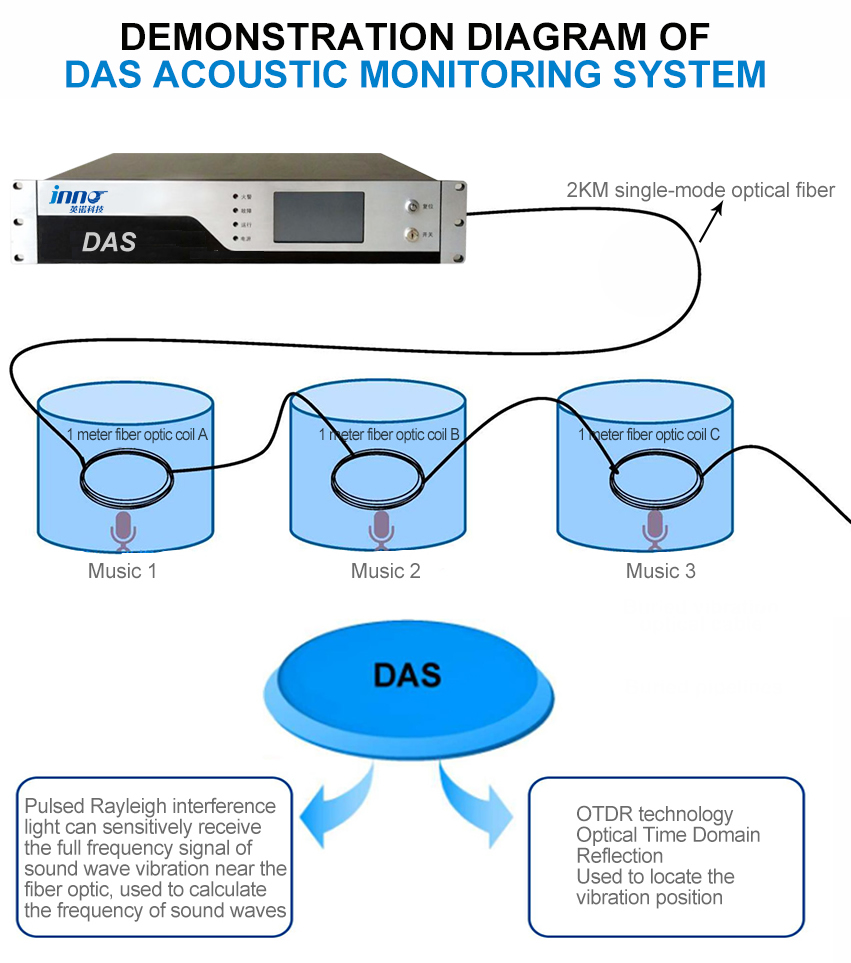
Among all available fence breach detection technologies, distributed fiber optic sensing stands out as the most capable and scalable platform for real-time perimeter monitoring. The technology uses a standard single-mode fiber optic cable mounted on or buried alongside the fence as a continuous linear sensor. एक interrogation unit नियंत्रण केंद्र फाइबर में लेजर पल्स भेजता है और संपूर्ण केबल लंबाई के साथ गड़बड़ी का पता लगाने और उसका पता लगाने के लिए रेले बैकस्कैटर प्रकाश का विश्लेषण करता है।.
बाड़ की निगरानी के लिए फाइबर ऑप्टिक सेंसिंग बेहतर क्यों है?
ए का मुख्य लाभ distributed fiber optic alarm system बात यह है कि यह बिना किसी ब्लाइंड स्पॉट के वास्तव में निरंतर पहचान प्रदान करता है. फाइबर केबल का प्रत्येक मीटर एक स्वतंत्र सेंसर के रूप में कार्य करता है, एक निर्बाध पहचान रेखा बनाना जो किसी भी सक्रिय इलेक्ट्रॉनिक्स की आवश्यकता के बिना दसियों किलोमीटर तक फैल सकती है, बिजली की आपूर्ति, या फ़ील्ड में सिग्नल रिपीटर्स. The sensing cable is completely passive, immune to electromagnetic interference, बिजली के प्रति प्रतिरोधी, और घुसपैठियों द्वारा पता नहीं लगाया जा सका. ये विशेषताएँ इसे बड़ी सुरक्षा के लिए आदर्श तकनीक बनाती हैं, remote, या कठोर-पर्यावरण परिधि जहां अन्य प्रणालियाँ विश्वसनीयता बनाए रखने के लिए संघर्ष करती हैं.
DAS: बाड़ सुरक्षा के लिए पूर्ण ध्वनिक इंटेलिजेंस
DAS (वितरित ध्वनिक संवेदन) uses phase-sensitive optical time-domain reflectometry (Φ-OTDR) to capture the full acoustic waveform at every point along the fiber. In fence detection applications, this means the system records the actual sound signature of an intrusion event — whether it is someone climbing the fence fabric, cutting through wire mesh, digging beneath the fence line, or impacting the fence with a vehicle. This rich acoustic data allows the system to classify events with high precision, distinguishing genuine threats from harmless activities such as wind vibration, animal contact, or nearby foot traffic.
डी.वी.एस: Cost-Effective Vibration Detection for Standard Perimeters
डी.वी.एस (वितरित कंपन संवेदन) uses intensity-based analysis of backscattered light to detect vibration events along the fence line. While DVS does not capture full waveform data like DAS, it provides reliable detection and localization of significant vibration disturbances. For standard perimeter security applications where the primary goal is zone-based alarm triggering rather than detailed event classification, ए DVS fence detection system delivers excellent performance at a lower system cost than DAS.
4. डीएएस बनाम डीवीएस: बाड़ का पता लगाने के लिए मुख्य प्रदर्शन तुलना
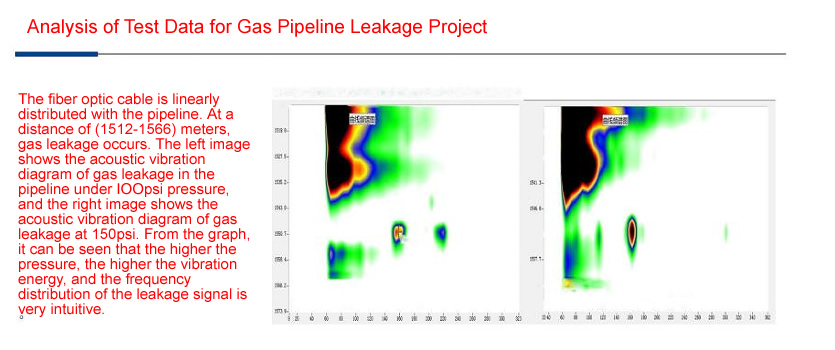
Choosing between DAS and DVS depends on the specific requirements of the fence monitoring project. The following table provides a direct comparison of the key parameters relevant to fence breach detection.
| पैरामीटर | DAS | डी.वी.एस |
|---|---|---|
| Measurement Method | Phase-based (Φ-OTDR) | Intensity-based |
| Data Output | Full acoustic waveform | Vibration intensity level |
| स्थानिक संकल्प | 1–5 m | 5–10 m |
| Frequency Response | Sub-Hz to 10+ kHz | Sub-Hz to several hundred Hz |
| Maximum Range | 50–100 km | 40–60 km |
| Event Classification | विकसित (multi-type) | बुनियादी (threshold-based) |
| False Alarm Rate | बहुत कम | न्यून मध्यम |
| AI Integration Capability | उत्कृष्ट | अच्छा |
| System Cost | उच्च | मध्यम |
| के लिए सर्वोत्तम | High-security, long-range, complex environments | Standard perimeters, budget-sensitive projects |
For facilities that demand the highest detection accuracy, real-time event classification, and the ability to differentiate between multiple threat types, DAS is the recommended choice. For standard perimeter fences where reliable vibration detection and zone alerting are sufficient, DVS provides an excellent balance of performance and value. In many deployments, the two technologies can be combined on separate fibers within the same cable to deliver both acoustic intelligence and vibration-based redundancy.
5. बाड़ उल्लंघन का पता लगाने में एआई-संचालित एनालिटिक्स

का एकीकरण ऐ (Artificial Intelligence) एनालिटिक्स with fiber optic fence detection systems represents a significant leap in perimeter security performance. While DAS and DVS hardware provide raw sensing data, AI-powered software transforms this data into actionable security intelligence.
How AI Enhances Fiber Optic Detection
AI-based signal processing algorithms analyze the acoustic or vibration data captured by DAS and DVS systems in real time. Through machine learning models trained on large datasets of known intrusion events and benign activities, the AI engine learns to recognize the unique signal patterns associated with different event types. When a new disturbance is detected, the AI classifier compares it against these learned patterns and assigns a threat probability score within milliseconds. This enables the system to automatically distinguish between a genuine fence breach attempt — such as cutting, climbing, or lifting — and non-threat events such as wind gusts, rain impact, animal contact, or passing vehicles.
Key Benefits of AI-Driven Perimeter Analytics
The primary benefit of incorporating AI into a fiber optic fence alarm system is a dramatic reduction in false alarms. In complex outdoor environments, conventional threshold-based detection can generate dozens of nuisance alarms per day due to environmental noise. AI classification routinely reduces false alarm rates by 80% या अधिक, significantly lowering the operational burden on security teams and ensuring that genuine alarms receive immediate attention.
AI analytics also enable adaptive threshold management, automatically adjusting detection sensitivity based on time of day, मौसम की स्थिति, and historical noise patterns at each zone along the perimeter. This eliminates the need for manual threshold tuning and ensures consistent detection performance across changing environmental conditions. इसके अतिरिक्त, AI systems improve over time as they process more data, continuously refining their classification accuracy through ongoing learning.
6. फाइबर ऑप्टिक + वीडियो + ऐ + अभिगम नियंत्रण - अंतिम एकीकृत समाधान
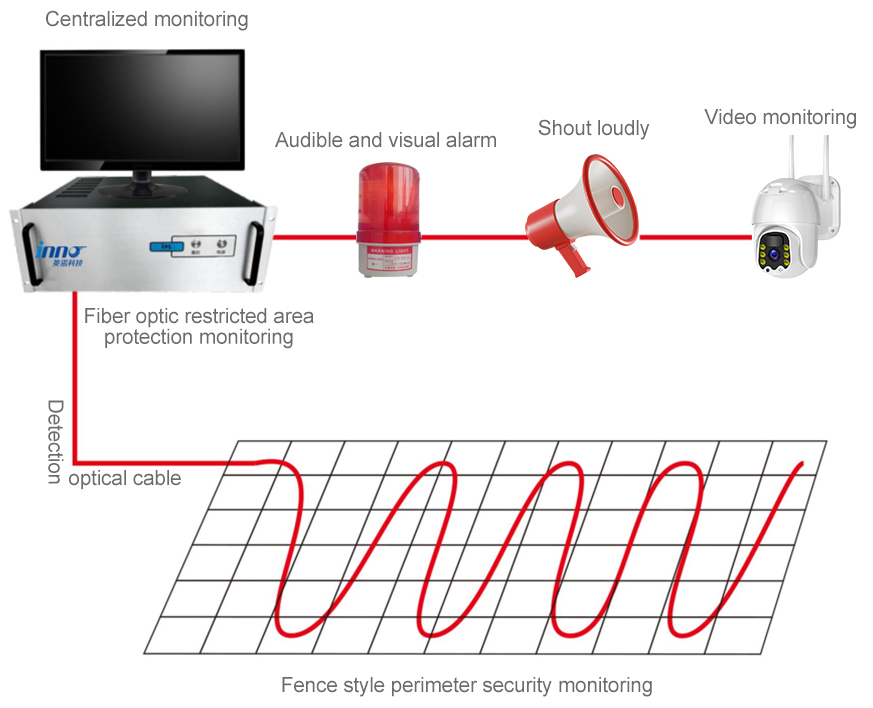
जबकि distributed fiber optic sensing with AI analytics forms the most capable core detection layer for fence breach monitoring, the highest level of perimeter security is achieved by integrating multiple complementary technologies into a unified platform. A multi-system approach combines the strengths of each technology while compensating for individual limitations.
Integrated Solution Architecture
| System Layer | तकनीकी | समारोह |
|---|---|---|
| प्राथमिक जांच | DAS / DVS Fiber Optic Sensing | Continuous real-time detection and localization of fence disturbances along the full perimeter |
| Intelligent Analysis | AI Signal Classification Engine | Automatic event classification, false alarm filtering, adaptive threshold management |
| Visual Verification | PTZ Cameras / थर्मल इमेजिंग | Automatic camera steering to alarm location for visual confirmation of the detected event |
| Access Management | अभिगम नियंत्रण / Gate Systems | Automatic lockdown of nearby gates and doors upon confirmed breach detection |
| Command & Control | Central Security Management Platform | Unified alarm display, GIS mapping, event logging, response coordination, and reporting |
How the Integrated Workflow Operates
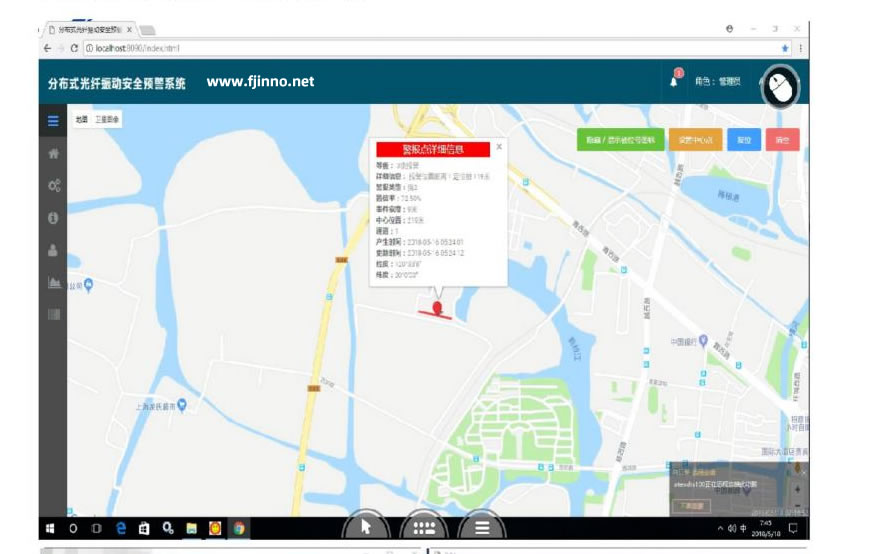
In a fully integrated deployment, the DAS or DVS system continuously monitors the fence line and detects a disturbance event. The raw signal data is immediately passed to the AI analytics engine, which classifies the event and determines whether it represents a genuine threat. If confirmed, the system automatically triggers an alarm on the central security management platform, pinpointing the exact location on a GIS map. Simultaneously, the nearest PTZ camera or thermal imager is directed to the alarm location, दृश्य सत्यापन के लिए सुरक्षा ऑपरेटर को लाइव वीडियो फ़ीड प्रदान करना. यदि खतरे की पुष्टि दृष्टिगत रूप से की जाती है, सिस्टम स्वचालित रूप से संलग्न हो सकता है अभिगम नियंत्रण लॉकडाउन प्रोटोकॉल, प्रभावित क्षेत्र में प्रकाश या सायरन सक्रिय करें, और सटीक स्थान की जानकारी के साथ प्रतिक्रिया दल भेजें.
यह स्तरित दृष्टिकोण उस पहचान को सुनिश्चित करता है, वर्गीकरण, सत्यापन, और प्रतिक्रिया प्रारंभिक उल्लंघन प्रयास के कुछ सेकंड के भीतर होती है, परिधि सुरक्षा का एक ऐसा स्तर प्रदान करना जिसे कोई भी एकल तकनीक अपने दम पर हासिल नहीं कर सकती है.
7. अनुप्रयोग परिदृश्य द्वारा अनुशंसित समाधान
विभिन्न सुविधा प्रकारों और सुरक्षा आवश्यकताओं के लिए पहचान तकनीक के विभिन्न संयोजनों की आवश्यकता होती है. निम्नलिखित अनुशंसाएँ उद्योग की सर्वोत्तम प्रथाओं और वास्तविक दुनिया में तैनाती के अनुभव पर आधारित हैं.
सैन्य अड्डे और सरकारी सुविधाएं
उच्चतम सुरक्षा स्तर के लिए, ए तैनात करें DAS-आधारित फाइबर ऑप्टिक डिटेक्शन सिस्टम with AI analytics as the primary detection layer, supplemented by thermal imaging cameras for visual verification and a fully integrated command-and-control platform. DAS provides the acoustic classification depth needed to identify sophisticated intrusion methods, while AI filtering ensures near-zero false alarm rates in operationally demanding environments.
Industrial Plants and Energy Facilities
Oil and gas plants, बिजली की स्टेशनों, and substations benefit from DAS or DVS fiber optic perimeter monitoring due to the technology’s immunity to electromagnetic interference — a critical advantage in electrically noisy industrial environments. Integrate with video analytics and existing स्काडा सिस्टम for centralized monitoring and automated response.
Airports and Transportation Hubs
Extended perimeters at airports and rail yards require long-range detection capability. ए DAS system एक ही फाइबर पर पूरी परिधि को कवर करना, विमान के शोर और वाहन कंपन को फ़िल्टर करने के लिए एआई वर्गीकरण के साथ संयुक्त, सबसे कुशल और विश्वसनीय समाधान प्रदान करता है. पीटीजेड कैमरा एकीकरण बड़े क्षेत्रों में त्वरित दृश्य सत्यापन सक्षम बनाता है.
गोदामों, लॉजिस्टिक्स पार्क, और वाणिज्यिक साइटें
मानक वाणिज्यिक सुरक्षा के लिए, ए डीवीएस फाइबर ऑप्टिक बाड़ पहचान प्रणाली के साथ जोड़ा गया सीसीटीवी वीडियो विश्लेषण एक व्यावहारिक और लागत प्रभावी समाधान प्रदान करता है. डीवीएस बाड़ लाइन के साथ विश्वसनीय घुसपैठ का पता लगाने की सुविधा प्रदान करता है, जबकि कैमरा सिस्टम दृश्य सत्यापन और साक्ष्य रिकॉर्डिंग को संभालते हैं.
कारागार और सुधारात्मक सुविधाएँ
सुधारात्मक सुविधाओं के लिए बाहरी घुसपैठ और आंतरिक भागने के प्रयासों दोनों का पता लगाने की आवश्यकता होती है. ए दोहरी डीएएस/डीवीएस फाइबर ऑप्टिक कॉन्फ़िगरेशन — with DAS on the outer perimeter and DVS on internal boundaries — combined with thermal cameras और access control integration, provides comprehensive coverage of all threat vectors.
8. परिनियोजन और कमीशनिंग सर्वोत्तम प्रथाएँ
Even the best detection technology will underperform if not properly installed and configured. The following best practices help ensure optimal system performance from day one.
केबल स्थापना
The फाइबर ऑप्टिक सेंसिंग केबल should be securely attached to the fence fabric at regular intervals — typically every 20 को 30 centimeters — to ensure consistent acoustic coupling. Use UV-resistant cable ties or stainless steel clips rated for outdoor use. Avoid excessive slack or loose loops, as these can generate vibration noise and reduce localization accuracy. For buried installations, place the cable in compacted sand backfill at 20–40 cm depth with consistent ground contact.
Zone Configuration
Divide the perimeter into logical alarm zones based on the security layout and response plan. Each zone should be independently configurable with its own detection threshold, sensitivity profile, and alarm priority level. Zones adjacent to roads, gates, or high-traffic areas may require higher thresholds or AI-assisted filtering to prevent nuisance alarms.
Commissioning and Threshold Tuning
स्थापना के बाद, conduct a comprehensive commissioning process that includes baseline noise measurement across all zones, simulated intrusion testing at multiple points along the fence, and iterative threshold adjustment. Test with realistic scenarios including climbing, काटना, shaking, and digging to verify detection sensitivity. Document all test results and threshold settings as a reference for future maintenance.
Integration Testing
If the system is integrated with cameras, access control, or a management platform, conduct end-to-end functional testing to verify that alarm events propagate correctly through all system layers. Confirm that camera auto-tracking, map display, event logging, and notification functions operate as expected under both normal and high-alarm-volume conditions.
9. अक्सर पूछे जाने वाले प्रश्नों (अक्सर पूछे जाने वाले प्रश्न)
Q1: Which technology is best for real-time fence breach detection?
वितरित फाइबर ऑप्टिक सेंसिंग (DAS/DVS) is widely recognized as the best core technology for real-time fence breach detection. It offers continuous monitoring over long distances, meter-level localization accuracy, विद्युत चुम्बकीय हस्तक्षेप के प्रति प्रतिरोधक क्षमता, and compatibility with AI-powered analytics for intelligent event classification.
Q2: What is the difference between DAS and DVS in fence monitoring?
DAS captures full acoustic waveforms using phase-based analysis, enabling advanced event classification and very low false alarm rates. DVS measures vibration intensity, providing reliable detection and localization at lower system cost. DAS is recommended for high-security applications, while DVS is suitable for standard perimeter protection.
Q3: How does AI reduce false alarms in fence detection systems?
AI algorithms analyze the signal pattern, आवृत्ति सामग्री, and duration of each detected event, comparing it against trained models of known intrusion types and benign activities. This enables automatic classification and filtering, typically reducing false alarms by 80% or more compared to simple threshold-based detection.
Q4: Can fiber optic fence detection work in extreme weather?
हाँ. Fiber optic cables are inherently resistant to temperature extremes, नमी, और संक्षारण. The sensing systems operate reliably in conditions ranging from -40°C to +65°C. Wind and rain may increase background noise on exposed fence-mounted cables, but AI-assisted adaptive filtering effectively manages these conditions.
Q5: How far can a single fiber optic system monitor?
A single DAS interrogation unit can monitor up to 50–100 km of fence line, and a DVS unit can cover 40–60 km. For perimeters exceeding these distances, multiple interrogators can be deployed with centralized management software.
Q6: Is fiber optic fence detection suitable for existing fences?
हाँ. Fiber optic sensing cables can be retrofitted onto virtually any existing fence type — chain link, welded mesh, palisade, or razor wire — using simple cable ties or mounting clips. No structural modification to the fence is typically required.
क्यू 7: What types of intrusions can a fiber optic fence system detect?
Fiber optic systems can detect fence climbing, काटना, lifting, shaking, and impact. They also detect digging or tunneling near the fence line and vehicle-based breach attempts. DAS systems can further classify these event types by their acoustic signature.
Q8: How quickly does the system detect a breach?
Detection is effectively real-time. Most DAS and DVS systems detect and locate an event within 1 को 3 seconds of occurrence. When integrated with AI classification and camera auto-tracking, visual verification can begin within 5 seconds of the initial disturbance.
प्रश्न 9: Does the fiber optic cable require power along the fence line?
नहीं. The sensing cable is completely passive and requires no electrical power in the field. All active components are located in the central interrogation unit, which can be installed up to 100 km away from the monitored fence section.
Q10: Can I integrate fiber optic detection with my existing CCTV and access control systems?
हाँ. Modern fiber optic detection platforms support standard integration protocols including TCP/IP, ONVIF, ओपीसी, Modbus, and dry contact outputs. They can interface with most video management systems, access control platforms, स्काडा सिस्टम, and centralized security management software.
10. एक अनुकूलित बाड़ जांच समाधान प्राप्त करें
Every perimeter is unique, and the best detection solution is one that is tailored to your specific site conditions, threat profile, और परिचालन आवश्यकताएँ. Whether you need a standalone DAS or DVS fiber optic fence alarm system, an AI-enhanced analytics platform, or a fully integrated multi-technology perimeter security solution, our engineering team can help you design, deploy, and optimize a system that delivers reliable, real-time breach detection from day one.
Contact us today to discuss your project requirements and receive a customized recommendation. Visit www.fjinno.net or reach out to our technical team for a free consultation and site assessment.
अस्वीकरण: इस लेख में दी गई जानकारी केवल सामान्य सूचनात्मक और शैक्षिक उद्देश्यों के लिए है. जबकि सटीकता सुनिश्चित करने के लिए हर संभव प्रयास किया गया है, FJINNO (www.fjinno.net) makes no warranties or representations regarding the completeness, विश्वसनीयता, or suitability of the content for any specific application. उत्पाद विशिष्टताएँ, तकनीकी मापदंड, and performance data referenced herein are typical values and may vary depending on specific models, configurations, installation conditions, and operating environments. Readers are strongly advised to consult with qualified security engineers and system integrators before making purchasing or deployment decisions. किसी भी नुकसान के लिए FJINNO को उत्तरदायी नहीं ठहराया जाएगा, हानि, or consequence arising from the use of or reliance on the information contained in this article.

फाइबर ऑप्टिक तापमान सेंसर, बुद्धिमान निगरानी प्रणाली, चीन में वितरित फाइबर ऑप्टिक निर्माता
 |
 |
 |