 חיישני טמפרטורה בסיבים אופטיים INNO ,מערכות ניטור טמפרטורה.
- ניטור מקוון שנאי הוא הרציף, איסוף וניתוח בזמן אמת של פרמטרי ההפעלה העיקריים של שנאי כוח - כולל טמפרטורה, פריקה חלקית, גז מומס, bushing condition, לִטעוֹן, ואיכות השמן - ללא הפרעה בשירות.
- שלא כמו בדיקה לא מקוונת מסורתית, ניטור מקוון מזהה שעות מתפתחות תקלות, ימים, או שבועות לפני שהם גורמים לכישלון, מאפשר תחזוקה מבוססת מצב ומניעת הפסקות לא מתוכננות יקרות.
- שלם מערכת ניטור שנאים משלב מספר טכנולוגיות חיישנים, יחידות רכישת נתונים, וממשקי תקשורת לפלטפורמה מאוחדת המזינה נתוני בריאות שנאים בזמן אמת למפעילים ולמערכות SCADA.
- הפרמטר הקריטי ביותר המנוטר הוא הטמפרטורה - במיוחד טמפרטורת הנקודה החמה המתפתלת - הנמדדת בדיוק הגבוה ביותר באמצעות מדידת טמפרטורה של סיב אופטי שנאי systems that are immune to electromagnetic interference.
- International standards IEC 60076-7, חברת החשמל 61850, and IEEE C57.104 define the parameters, גבולות, and communication protocols for transformer online monitoring, forming the technical framework for modern monitoring system design.
- מהו Transformer Online Monitoring?
- Online Monitoring vs Traditional Offline Maintenance
- What Parameters Are Monitored in a Transformer?
- Transformer Temperature Online Monitoring
- Partial Discharge Online Monitoring
- ניתוח גז מומס (DGA) ניטור מקוון
- Bushing Online Monitoring
- Oil Quality and Moisture Online Monitoring
- לִטעוֹן, נוֹכְחִי, and Voltage Monitoring
- Components of a Transformer Online Monitoring System
- SCADA and IEC 61850 הִשׁתַלְבוּת
- Benefits of Transformer Online Monitoring
- תרחישי יישום
- How to Choose a Transformer Online Monitoring System
- תקנים רלוונטיים
- Top Transformer Online Monitoring Manufacturers
- שאלות נפוצות: Transformer Online Monitoring
מה זה Transformer Online Monitoring?

ניטור מקוון של שנאי (also called transformer condition monitoring or transformer health monitoring) is the practice of continuously measuring, recording, and analyzing a power transformer’s key operational and diagnostic parameters in real time, while the transformer remains energized and in service. Unlike periodic offline inspections — which require the transformer to be de-energized and removed from service — online monitoring operates 24 שעות ביום, 365 days a year without any interruption to the transformer’s power delivery function.
A transformer online monitoring system typically consists of sensors installed at multiple measurement points on and inside the transformer, connected to data acquisition units and controllers that process the raw sensor signals, compare them against threshold values, and transmit structured data to local displays, מערכות אזעקה, and remote SCADA or asset management platforms.
Modern online monitoring goes beyond simple threshold alarming. Advanced systems incorporate data analytics, thermal models, aging algorithms, and machine learning to assess the transformer’s remaining useful life, predict the probability of failure, and recommend maintenance actions based on the actual measured condition of the asset rather than arbitrary time-based schedules. This approach — known as condition-based maintenance (CBM) or predictive maintenance — is now the industry standard for managing high-value power transformer assets in transmission and distribution networks worldwide.
For a complete overview of available monitoring solutions, see FJINNO’s transformer monitoring system solutions, which cover the full spectrum from temperature monitoring to partial discharge, DGA, and integrated multi-parameter platforms.
Key Characteristics of Transformer Online Monitoring
- Continuous operation: Data is collected without interrupting transformer service — no planned outages required for monitoring purposes.
- Multi-parameter: Modern systems simultaneously monitor temperature, פריקה חלקית, גזים מומסים, איכות שמן, זרם עומס, bushing condition, ועוד.
- התראה בזמן אמת: Alarm thresholds trigger immediate notifications to operators when parameters exceed safe limits, enabling rapid response.
- Data logging and trending: All measurements are timestamped and stored, creating a historical record that reveals developing trends invisible to periodic inspections.
- Remote access: Data is accessible via SCADA, web interfaces, or mobile applications, enabling centralized monitoring of large transformer fleets from a control room.
- Predictive analytics: Advanced platforms use accumulated data to calculate insulation aging rates, remaining life estimates, and fault probability scores.
Transformer Online Monitoring vs Traditional Offline Maintenance

For most of the 20th century, transformer maintenance relied exclusively on scheduled offline inspections and periodic laboratory testing. While this approach provided valuable diagnostic information, it had fundamental limitations that online monitoring directly addresses.
| קריטריונים | Traditional Offline Maintenance | Online Continuous Monitoring |
|---|---|---|
| Monitoring continuity | Periodic snapshots (שְׁנָתִי / biennial) | רָצִיף 24/7 נתונים בזמן אמת |
| Transformer availability | Requires planned outage for testing | No outage required — fully in-service |
| Fault detection timing | Only at next scheduled inspection | Immediately as condition develops |
| Detects intermittent faults | No — missed between inspections | Yes — captured in continuous data log |
| Maintenance strategy | מבוסס זמן (calendar-driven) | Condition-based (asset health-driven) |
| Data available for analysis | מוּגבָּל (infrequent test results) | Rich (millions of data points per year) |
| Unplanned failure risk | High — failures between inspections | Low — early warning enables prevention |
| Emergency repair cost | גָבוֹהַ (no advance preparation) | נָמוּך (planned intervention possible) |
| Transformer life optimization | Conservative — limits loading due to uncertainty | Dynamic loading based on real-time condition |
| Grid reliability impact | Outage required for testing | Zero — transparent to power system |
| Typical cost structure | Lower upfront, higher failure and downtime cost | Higher upfront, dramatically lower lifecycle cost |
Industry studies consistently show that unplanned transformer failures cost 5–10 times more than planned maintenance interventions — including emergency repair or replacement costs, lost revenue from unplanned outages, emergency crew deployment, and regulatory penalties. For critical grid transformers, a single unexpected failure can cost millions of dollars. Online monitoring that enables even one prevented failure per decade typically generates a return on investment many times the cost of the monitoring system.
What Parameters Are Monitored in a Transformer Online Monitoring System?

A comprehensive transformer online monitoring system tracks a broad range of parameters covering thermal condition, electrical insulation integrity, oil chemistry, mechanical status, and electrical loading. The parameters selected for any given installation depend on transformer size, דרגת מתח, ביקורתיות, ותקציב.
| Parameter Category | Specific Parameters Monitored | Primary Fault Detected |
|---|---|---|
| טֶמפֶּרָטוּרָה | נקודה חמה מתפתלת, שמן עליון, שמן תחתון, ליבה, סביבה | עומס יתר, cooling failure, inter-turn fault |
| פריקה חלקית (PD) | PD magnitude, ספירת PD, PD location | ירידת בידוד, חללים, נְגִיעוּת |
| ניתוח גז מומס (DGA) | H₂, CH₄, C₂H₂, C₂H₄, C₂H₆, מְשׁוּתָף, CO₂, O₂, N₂ | Arcing, התחממות יתר, insulation decomposition |
| מצב תותב | קיבול, שזוף δ (dissipation factor), זרם דליפה | Bushing insulation aging, חדירת לחות, flashover risk |
| Oil Quality | תכולת לחות, מתח פירוק דיאלקטרי, חוּמצִיוּת | Oil degradation, water contamination, insulation aging |
| מפלס שמן | Oil level in conservator or tank | Oil leak, excessive thermal expansion anomaly |
| Load and Electrical | זרם עומס (3-שָׁלָב), מֶתַח, גורם כוח, תוֹרַת הַרמוֹנִיָה | עומס יתר, harmonic heating, voltage imbalance |
| רֶטֶט / אֲקוּסְטִי | רטט מכני, acoustic emission | Core loosening, winding movement, קשתות |
| מחליף ברז בטעינה (OLTC) | Operation count, drive motor current, זמן החלפה | Contact wear, mechanism failure, זיהום שמן |
| בוכהולץ / Pressure Relief | Gas accumulation, pressure relief operation | Internal arcing, rapid gas generation, internal fault |
| מערכת קירור | מצב מאוורר/משאבה, cooling stage activation | Cooling system failure, inadequate heat dissipation |
| אווירה | טמפרטורת הסביבה, לַחוּת | Environmental stress, derating requirements |
Transformer Temperature Online Monitoring

Temperature monitoring is the most fundamental and universally deployed element of transformer online monitoring. Excessive temperature is the leading cause of transformer insulation aging and the primary driver of premature failure — for every 6–8°C increase above the rated winding temperature, קצב הזדקנות הבידוד מוכפל בערך (את “6-כלל תואר” לפי IEEE C57.91). Real-time temperature monitoring is therefore essential for both protection and asset life management.
Temperature Monitoring Points
- טמפרטורת נקודה חמה מתפתלת: The most critical parameter — the highest temperature point in the transformer winding, where insulation aging is most rapid. Measured directly using מכשירי מדידת טמפרטורה של סיבים אופטיים פלואורסצנטיים embedded in the windings, או אומדן בעקיפין באמצעות הדמיית תמונה תרמית WTI.
- טמפרטורת שמן עליונה: הטמפרטורה של שכבת השמן החמה ביותר בחלק העליון של מיכל השנאי, נמדד על ידי Pt100 RTD בכיס השמן. משמש להגנת שמן, cooling control, וכקו הבסיס להדמיית נקודות חמות של WTI.
- Bottom Oil Temperature: טמפרטורת השמן הקרירה ביותר במיכל, נמדד בתחתית המיכל. ההבדל בין טמפרטורת השמן העליון והתחתון חושף את יעילות זרימת השמן ואת ביצועי מערכת הקירור.
- Core Temperature: מדידה ישירה של ליבת השנאי באמצעות חיישני RTD או סיבים אופטיים בכיס הליבה. טמפרטורת הליבה חריגה מצביעה על תקלות למינציה הליבה, זרמים במחזור, או חריגות דליפת שטף.
- טמפרטורת סביבה: טמפרטורת הסביבה מחוץ למיכל השנאי, משמש כקו הבסיס הייחוס לחישוב עליית הטמפרטורה והתאמת גבולות הטעינה הדינמית.
Fiber Optic vs Traditional Temperature Monitoring

The most significant advance in transformer temperature monitoring has been the adoption of direct מערכות ניטור טמפרטורה בסיבים אופטיים for winding hot-spot measurement. Unlike traditional WTI thermal image methods, which estimate winding temperature through a simulation that can deviate by ±5–15°C, fluorescent fiber optic sensors provide direct, physically measured winding temperatures with accuracy of ±0.1–0.5°C.
Key advantages of fiber optic winding temperature monitoring:
- חסינות EMI מלאה: The fiber optic probe is fully dielectric — no metal in the sensing element — making it immune to the powerful electromagnetic fields inside transformer tanks at operating voltage.
- Multi-point measurement: A single monitoring unit can simultaneously measure temperature at 4–16 winding locations, providing a complete thermal map of the transformer rather than a single simulated estimate.
- Maintenance-free operation: No periodic calibration required — the fluorescent decay time measurement principle is inherently stable over the full sensor service life of 15–25 years.
- Direct hot-spot detection: Detects localized winding overheating caused by partial faults, blocked cooling ducts, or cooling system anomalies that the WTI global simulation cannot identify.
עבור שנאי כוח טבולים בשמן, את חיישן טמפרטורת סיב אופטי פלואורסצנטי משוריין עבור פיתולי שנאי טבולים בשמן provides rugged, oil-compatible, direct hot-spot measurement with stainless steel armoring to withstand the mechanical stresses of transformer winding environments.
עבור שנאים מסוג יבש, see the online temperature monitoring solution for dry-type transformers, covering Class F and Class H insulation monitoring with winding surface fiber optic probes and integrated cooling fan control.
Dry-Type Transformer Temperature Controller

For dry-type transformers specifically, את בקר טמפרטורת שנאי מסוג יבש provides winding temperature display, אַזעָקָה, טִיוּל, and cooling fan control in a single compact panel-mounted unit. These controllers accept direct RTD or fiber optic sensor inputs and provide configurable setpoints for Class B, ו, and H insulation classes per IEC 60076-11.
עבור שנאים טבולים בשמן, את oil-immersed transformer temperature controller combines OTI (מחוון טמפרטורת שמן) and WTI (מחוון טמפרטורה מתפתל) פונקציות, with multi-stage cooling control, alarm/trip relay outputs, and Modbus communication for SCADA integration.
פריקה חלקית (PD) ניטור מקוון

פריקה חלקית (PD) is a localized electrical discharge that occurs in insulation voids, contaminated oil, or at high field stress points within the transformer insulation system. PD does not immediately bridge the full insulation gap (hence “partial”) but causes progressive insulation erosion and can eventually lead to catastrophic dielectric failure. PD online monitoring detects the characteristic electrical, אֲקוּסְטִי, and chemical signatures of partial discharge activity in real time.
Why PD Monitoring is Critical
- Early warning of insulation failure: PD activity can precede dielectric breakdown by months or years, providing a long lead time for planned maintenance intervention.
- Detection of new faults: PD sensors detect developing insulation problems that conventional temperature monitoring cannot identify — particularly manufacturing defects, נְגִיעוּת, and moisture ingress.
- Risk stratification: PD magnitude and trend data allow ranking of transformers by failure risk, enabling priority-based maintenance resource allocation across large transformer fleets.
PD Monitoring Methods
| שִׁיטָה | עִקָרוֹן | רְגִישׁוּת | האפליקציה הטובה ביותר |
|---|---|---|---|
| High-Frequency CT (HFCT) | Detects high-frequency current pulses in grounding conductors | גָבוֹהַ | Bushing and terminal PD detection |
| UHF Antenna | מזהה קרינה אלקטרומגנטית (300MHz–3GHz) from PD | גבוה מאוד | PD in oil, פיתולים, ותותבים |
| פליטה אקוסטית (AE) | Detects mechanical pressure waves from PD events | לְמַתֵן | PD localization in transformer tank |
| Dissolved Gas (DGA) | Detects gases generated by PD-induced oil decomposition | מִצטַבֵּר (not instantaneous) | Confirmation of sustained PD activity |
ניתוח גז מומס (DGA) ניטור מקוון
ניתוח גז מומס (DGA) is one of the most powerful diagnostic tools available for oil-immersed transformer condition assessment. When insulation materials — cellulose paper, pressboard, and mineral oil — are subjected to electrical or thermal stress, they decompose and generate characteristic fault gases that dissolve in the transformer oil. By monitoring the concentration and rate of change of these gases online, operators can identify the type, חוּמרָה, and rate of progression of internal faults.
גזי תקלה מרכזיים ומשמעותם
| גַז | Chemical Symbol | תקלה ראשית מסומנת | חברת החשמל 60599 Threshold (טיפוסי) |
|---|---|---|---|
| מֵימָן | H₂ | פריקה חלקית, כֶּתֶר | 100 ppm |
| אֲצֵיטִילֵן | C₂H₂ | קשתות באנרגיה גבוהה (most critical) | 3 ppm |
| אתילן | C₂H₄ | התחממות יתר חמורה של שמן (>700מעלות צלזיוס) | 50 ppm |
| מתאן | CH₄ | התחממות יתר של שמן בטמפרטורה נמוכה | 120 ppm |
| איתן | C₂H₆ | התחממות יתר מתונה של שמן | 65 ppm |
| פחמן חד חמצני | מְשׁוּתָף | Cellulose (נְיָר) התחממות יתר או הזדקנות | 350 ppm |
| פחמן דו חמצני | CO₂ | יישון תאית רגיל (יחס CO₂/CO גבוה) או תקלה תרמית | 2,500 ppm |
מסכי DGA מקוונים לחלץ דגימות שמן ברציפות או במרווחי זמן קבועים, לבצע ניתוח כרומטוגרפיית גז, והעברת נתוני ריכוז הגז לפלטפורמת הניטור. אזעקות קצב השינוי חשובות במיוחד - עלייה מהירה בריכוז האצטילן יכולה להעיד על תקלת קשת אקטיבית הדורשת פעולת הגנה מיידית, בעוד שעלייה איטית ב-CO במשך חודשים מסמנת הזדקנות מתקדמת של בידוד נייר שניתן לטפל בה בהפסקה מתוכננת.
ניטור מקוון של תותב שנאי
Transformer bushings — the high-voltage insulated conductors that pass current through the transformer tank wall — are among the most failure-prone components of large power transformers. Bushing failures are responsible for a disproportionately high share of catastrophic transformer failures, and they typically occur with little advance warning in the absence of continuous monitoring.
Bushing Monitoring Parameters
- קיבול (C1): The main insulation capacitance of the bushing. A significant change (בדרך כלל >5%) from baseline indicates insulation degradation, דה למינציה, או חדירת לחות.
- Tan δ (Dissipation Factor): The tangent of the dielectric loss angle of the bushing insulation. An increase in tan δ, particularly when correlated with temperature, indicates insulation deterioration. Normal values for oil-impregnated paper (OIP) bushings are typically below 0.5%.
- Leakage Current: The current flowing through the bushing grounding tap. Monitoring the fundamental and harmonic components of the leakage current provides an early indicator of bushing insulation breakdown.
Online bushing monitors measure all three phases simultaneously, using the phase-to-phase comparison method to detect relative changes that indicate individual bushing degradation while canceling out common-mode variations caused by voltage and temperature changes.
Oil Quality and Moisture Online Monitoring
Transformer oil serves simultaneously as insulation and cooling medium. Its condition directly affects the transformer’s dielectric strength and thermal performance. Online oil quality monitoring continuously assesses oil condition without the need for manual oil sampling and laboratory analysis.
Oil Quality Parameters Monitored Online
- Moisture Content (Water in Oil):
Water is the most damaging contaminant in transformer oil, dramatically reducing dielectric breakdown voltage and accelerating cellulose insulation aging. Online moisture sensors (typically capacitive or optical) measure relative saturation and absolute moisture content in ppm. A moisture level above 20–35 ppm (depending on oil condition and temperature) signals a need for oil drying or dehydration action. - Dielectric Breakdown Voltage:
The voltage at which the oil breaks down dielectrically — a direct measure of oil insulating effectiveness. Continuous online sensors apply a test voltage across an oil gap and measure the breakdown voltage. חברת החשמל 60156 defines a minimum acceptable breakdown voltage of 30 kV (2.5mm gap) for transformer oil in service. - טמפרטורת שמן (Top and Bottom):
Continuously monitored as both an operating parameter and an oil condition indicator — accelerated aging and gas generation at elevated oil temperatures are directly related to insulation degradation rates. - מפלס שמן:
Oil level in the conservator tank or sealed transformer is monitored to detect leaks or abnormal thermal expansion behavior. Low oil level reduces insulation margins; very high level can indicate excessive moisture absorption causing oil volume increase.
לִטעוֹן, נוֹכְחִי, and Voltage Online Monitoring
Electrical load monitoring provides the input data necessary for thermal modeling, dynamic loading calculations, and loss-of-life assessments. It also identifies overloading conditions, load imbalances, and harmonic distortion that directly impact transformer health.
- טען זרם (לכל שלב): Measured via current transformers on each phase. Used as input for WTI thermal image calculations, dynamic loading assessments per IEC 60076-7, and overload alarm triggering.
- Transformer Loading Percentage: Load current expressed as a percentage of rated current, enabling direct comparison against nameplate limits and emergency overload guidelines.
- ניתוח הרמוני: Harmonic current components (particularly 3rd, 5th, 7th) increase eddy current losses in windings and structural parts, generating additional heat. Online harmonic monitoring quantifies the K-factor or FHL (harmonic loss factor) to assess derating requirements.
- מֶתַח (לכל שלב): Voltage monitoring detects voltage imbalance, overvoltage, and undervoltage conditions that affect transformer core losses and reactive power consumption.
- Power Factor and Reactive Power: ניטור גורמי הספק מספק אינדיקטור של תנאי הטעינה הכוללים של המערכת ומסייע בזיהוי בעיות באיכות החשמל המגבירות את חימום השנאים.
Components of a Transformer Online Monitoring System
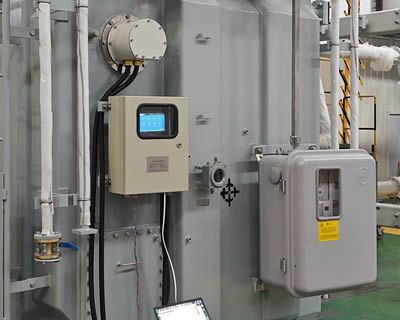
מערכת ניטור מקוונת של שנאי משלבת חיישני חומרה, אלקטרוניקה לאיסוף ועיבוד נתונים, תשתית תקשורת, וניתוח תוכנה לפלטפורמה מגובשת. הבנת תפקידו של כל רכיב חיונית לתכנון ורכש של המערכת.
1. חיישנים ומתמרים
שכבת החיישנים היא הבסיס של מערכת הניטור. For temperature: חיישני טמפרטורה בסיבים אופטיים להתפתל נקודה חמה, Pt100 RTDs עבור שמן וטמפרטורת הסביבה. לפרמטרים חשמליים: HFCTs ואנטנות UHF לפריקה חלקית, CTs עבור זרם עומס. לכימיה: כרומטוגרפיות גז מקוונות עבור DGA, חיישנים קיבוליים ללחות. למכני: חיישני פליטה אקוסטית עבור רטט ולוקליזציה PD. ראה את המגוון המלא של recommended fiber optic sensing and monitoring products for a comprehensive product overview.
2. Data Acquisition Unit (DAU)
The DAU collects raw signals from all connected sensors, performs analog-to-digital conversion, applies calibration factors, and packages the data into structured measurement records. For multi-parameter systems, the DAU typically includes separate signal conditioning channels for each sensor type. ה fiber optic temperature monitoring device with 6 ערוצים exemplifies a multi-channel DAU capable of simultaneously acquiring data from up to six fiber optic temperature measurement points with sub-second update rates.
3. Local Processing and Controller Unit
The local controller processes acquired data, implements alarm and protection logic, controls cooling systems, and maintains a local data buffer. It executes the thermal model calculations (לפי חברת החשמל 60076-7) that translate raw sensor readings into hot-spot temperature estimates and insulation aging assessments. ה מערכת מדידת טמפרטורה בסיבים אופטיים integrates data acquisition, עיבוד, and user interface functions in a single unit designed for DIN-rail or panel mounting in substation equipment cabinets.
4. ממשק אדם-מכונה (HMI)
Local HMI provides on-site display of real-time measurements, מצב אזעקה, מגמות היסטוריות, ותצורת המערכת. Options range from simple LCD panels on individual instruments to touchscreen displays with full trend graphing and alarm management capabilities.
5. Communication Gateway
The communication gateway translates the monitoring system’s internal data format to standard substation protocols (מודבוס, חברת החשמל 61850, DNP3) for transmission to SCADA or asset management platforms. It also provides cybersecurity functions including authentication, encryption, and network isolation for critical infrastructure protection.
6. SCADA / Asset Management Software
The software layer provides centralized visualization of transformer fleet health, ניהול אזעקות, ניתוח נתונים היסטוריים, reporting, וניתוח חזוי. Advanced platforms integrate transformer thermal models, DGA diagnostic algorithms, and remaining-life calculation engines to provide actionable asset management recommendations.
7. Cooling System Control Interface
Relay outputs from the monitoring controller connect to the transformer’s cooling fans and oil circulation pump contactors, enabling automatic staged cooling activation based on real-time temperature measurements. For the integrated temperature monitoring system, cooling control logic is configurable to optimize the balance between transformer loading capacity and cooling system energy consumption.
SCADA and IEC 61850 Integration for Transformer Online Monitoring
Integration of transformer online monitoring systems with substation SCADA and protection platforms is essential for realizing the full operational value of monitoring data. Without integration, monitoring becomes an isolated function — alarms may go unnoticed and data may not reach the operators and engineers who need it for decision-making.
תמיכה בפרוטוקול תקשורת
| פּרוֹטוֹקוֹל | בַּקָשָׁה | הערות |
|---|---|---|
| Modbus RTU (RS-485) | Industrial SCADA, DCS integration | Most widely supported, simple implementation |
| Modbus TCP/IP | Ethernet-based SCADA | Standard for modern substation LAN networks |
| חברת החשמל 61850 MMS | Digital substation automation | Required for IEC 61850-compliant substations |
| חברת החשמל 61850 אווז | Fast alarm and protection signaling | Sub-millisecond response for critical alarms |
| DNP3 | Utility SCADA (צפון אמריקה) | Standard for North American utility networks |
| חברת החשמל 60870-5-104 | Transmission SCADA (Europe/Asia) | Standard for TSO and DSO SCADA platforms |
| 4–20mA Analog | Legacy DCS, analog recorders | Backward compatible with older control systems |
| OPC-UA | IT/OT convergence, cloud platforms | For digital twin and AI analytics integration |
חברת החשמל 61850 Logical Node Model for Transformer Monitoring
חברת החשמל 61850 חֵלֶק 7-4 defines standardized logical nodes (LNs) for transformer monitoring data, including TTMP (מדידת טמפרטורה), PDIS (פריקה חלקית), GASIN (gas in insulating medium), and MHAN (harmonic analysis). Implementing these logical nodes ensures interoperability between monitoring systems from different manufacturers and simplifies system integration in digital substation projects.
Benefits of Transformer Online Monitoring
1. Prevention of Catastrophic Failures
The most compelling benefit. Catastrophic transformer failures — particularly winding faults and bushing explosions — can cause fires, oil spills, extended outages lasting weeks to months, and transformer replacement costs of hundreds of thousands to millions of dollars. Online monitoring detects the developing conditions that precede catastrophic failure, enabling intervention before the fault becomes irreversible. Studies by major utilities consistently demonstrate that online monitoring prevents 40–70% of transformer failures that would otherwise occur without continuous monitoring.
2. חיי שירות של שנאי ארוכים
Transformer insulation aging is a function of temperature, לַחוּת, and acidity over time. Online monitoring enables operators to actively manage insulation aging by keeping operating temperatures below critical thresholds, maintaining oil quality, and implementing dynamic loading strategies that maximize utilization while controlling life consumption. Careful temperature management enabled by fiber optic monitoring has been shown to extend transformer service life by 20–40% beyond original design expectations.
3. אופטימיזציה של טעינה דינמית
Traditional transformer loading limits are conservative, מבוסס על הנחות תרמיות מהמקרה הגרוע ביותר הכוללות טמפרטורת סביבה מקסימלית ויעילות קירור מינימלית. ניטור מקוון של טמפרטורת הנקודה החמה המפותלת בפועל מאפשר טעינה דינמית - הגדלת טעינת השנאים בבטחה מעל דירוג לוחית השם בתנאים נוחים (סביבה נמוכה, קירור מלא) והפחתת הטעינה אוטומטית כאשר הטמפרטורות מתקרבות לגבולות. גישת העמסה דינמית זו יכולה להגדיל את קיבולת השנאים האפקטיבית ב-10-30% מבלי להאיץ את הזדקנות הבידוד, דחיית הוצאות הון על שדרוגים או החלפות שנאים.
4. מעבר מתחזוקה מבוססת זמן לתחזוקה מבוססת מצב
לוחות זמנים לתחזוקה מבוססי זמן הם בזבזניים מטבעם - הם מבצעים תחזוקה על ציוד שאולי עדיין לא זקוק לו, ומפספסים פיתוח תקלות בין מועדי הבדיקה המתוכננים. נתוני ניטור מקוונים מספקים אובייקטיביות, real-time evidence of each transformer’s actual condition, enabling maintenance to be scheduled based on genuine need. This transition typically reduces total maintenance labor and material costs by 20–40% while improving asset reliability.
5. Regulatory Compliance and Insurance
Many national grid codes, utility operating standards, and insurance requirements for transmission-class transformers mandate continuous temperature monitoring and event logging. Online monitoring systems provide the time-stamped, auditable data records required for regulatory compliance, תביעות אחריות, חקירות ביטוח, and post-incident analysis.
6. Fleet-Wide Risk Management
For utilities and industrial operators managing large transformer fleets, online monitoring enables portfolio-level risk assessment. By comparing the health indicators of all monitored transformers simultaneously, operators can identify the highest-risk assets, prioritize maintenance resources, and make evidence-based decisions about repair, שיפוץ, or replacement timing.
Transformer Online Monitoring Application Scenarios
Transmission Substations (66kV–500kV)
High-voltage transmission transformers are the highest-value, longest-lead-time assets in the power system — replacement times of 12–24 months are not uncommon for large custom-built units. The consequence of an unplanned failure is severe: extended grid instability, emergency procurement at premium cost, and potential regulatory penalties. Comprehensive online monitoring covering temperature, PD, DGA, תוֹתַב מֵסַב, and oil quality is the industry standard for transformers in this class. Integration with the substation’s IEC 61850 automation system provides seamless data flow to the network control center.
Industrial Power Supply Transformers
Industrial facilities — steel plants, מפעלים כימיים, מרכזי נתונים, semiconductor fabs — depend on uninterrupted power for continuous production processes where outages cost thousands to millions of dollars per hour. Online monitoring of critical supply transformers provides early warning that enables planned outages during low-production periods, avoiding forced shutdowns at the worst possible times. For data centers specifically, see the data center temperature monitoring solution covering transformer and electrical infrastructure monitoring for Tier III and Tier IV facilities.
Wind Farm Transformers
Wind turbine step-up transformers operate in a challenging environment — remote locations, רֶטֶט, wide load swings following wind variations, and limited access for maintenance. Online monitoring with remote SCADA connectivity enables centralized supervision of dozens of turbine transformers from a single control room. Temperature monitoring using מערכות ניטור טמפרטורה בסיבים אופטיים is particularly valuable for wind turbine transformers because the variable load profile creates complex thermal cycling that is impossible to assess from periodic inspections.
Distribution Transformers in Smart Grids
The proliferation of distributed energy resources (solar PV, EVs, battery storage) creates bidirectional power flows and rapid load changes that subject distribution transformers to new thermal stresses not anticipated in their original design. Online temperature monitoring enables real-time thermal management of distribution transformer assets as smart grid loading conditions evolve.
Switchgear and GIS Substations
מעבר לשנאי כוח, complete substation monitoring covers switchgear temperature and partial discharge monitoring. See the switchgear monitoring solution for fiber optic temperature measurement in MV and HV switchgear cabinets, ואת מערכת ניטור GIS for gas-insulated switchgear online condition assessment. Cable monitoring is covered by the cable monitoring system for underground power cable temperature and partial discharge surveillance.
How to Choose a Transformer Online Monitoring System
Selecting the right transformer online monitoring system requires balancing technical requirements, מגבלות תקציב, and integration needs. Follow this structured selection process to identify the optimal solution for your application.
שָׁלָב 1: Define the Transformer Asset Class and Criticality
Classify the transformer by voltage class (הֲפָצָה, sub-transmission, הפצה), דירוג MVA, גִיל, and operational criticality. High-voltage transmission transformers justify comprehensive multi-parameter monitoring (טֶמפֶּרָטוּרָה + PD + DGA + תוֹתַב מֵסַב). Distribution transformers may be economically served by temperature-only monitoring. The cost of the monitoring system should be proportionate to the value and criticality of the protected asset.
שָׁלָב 2: Identify the Primary Failure Modes to Monitor
Review the transformer’s maintenance history and any known vulnerabilities. Older transformers with a history of oil quality issues benefit from DGA and moisture monitoring. Transformers with previous bushing incidents require continuous bushing monitoring. Transformers operating close to thermal limits in summer peak demand periods benefit most from direct fiber optic winding temperature monitoring.
שָׁלָב 3: Select Sensor Technologies Based on EMI Environment
For medium and high voltage transformers where electromagnetic interference is significant, prioritize חיישן סיבים אופטיים technologies for temperature measurement. עבור חיבורי מיתוג וחיבורי פסים שבהם יש צורך במדידת טמפרטורה נקודתית, את חיישן טמפרטורת סיבים אופטיים לחיבורי פס ובורג מספק מדידת טמפרטורת נקודה חיסונית של EMI בנקודות חיבור המועדות להתחממות יתר.
שָׁלָב 4: קבע את דרישות האינטגרציה
הגדר את מערכת ה-SCADA או ניהול הנכסים שפתרון הניטור חייב להתממשק איתה, ואשר אילו פרוטוקולי תקשורת נדרשים. ציין שיטות מסירת אזעקה: קולי/חזותי מקומי, אֶלֶקטרוֹנִי, SMS, אזעקת SCADA, או כל האמור לעיל. הגדר דרישות לשמירת נתונים לעמידה ברגולציה.
שָׁלָב 5: הערכת יכולת ותמיכה של היצרן
בחר יצרן עם ניסיון מוכח בניטור שנאים עבור סוג השנאי ומחלקת המתח הספציפיים שלך, רקורד של תמיכה במוצר לטווח ארוך, יכולות שירות טכני מקומי, and clear documentation of calibration procedures and replacement parts availability. Review the application guide for fluorescent fiber optic temperature sensors in transformer monitoring for detailed technical guidance on sensor selection and installation planning.
שָׁלָב 6: Plan for Installation and Commissioning
Determine whether sensors must be factory-installed (for winding-embedded probes) or can be field-installed during a planned maintenance outage (for retrofit probes, oil-immersed probes, and external sensors). Develop an installation schedule that minimizes outage time. Budget for commissioning, functional testing, אינטגרציה של SCADA, and operator training in addition to equipment costs.
International Standards for Transformer Online Monitoring
- חברת החשמל 60076-7: Loading Guide for Oil-Immersed Power Transformers
Defines the thermal model, hot-spot calculation method, permissible temperature limits, and insulation aging acceleration factors. מהווה את הבסיס הטכני לתצורת ניטור טמפרטורה וחישובי טעינה דינמיים. - חברת החשמל 60599: ציוד חשמלי ספוג בשמן מינרלי - פרשנות של ניתוח גזים מומסים וחופשיים
מספק את מסגרת האבחון לפירוש תוצאות DGA, כולל מגבלות ריכוז גז טיפוסיות, יחסי זיהוי תקלות (רוג'רס, משולש דובאל), ופעולות מומלצות על סמך רמות הגז ושיעורי השינוי. - IEEE C57.104: מדריך IEEE לפרשנות של גזים שנוצרים בשנאים טבולים בשמן מינרלי
המקבילה של חברת החשמל בצפון אמריקה 60599. מספק סיווגי מצב והליכי אבחון המבוססים על ריכוזי גזים מומסים וקצבי ייצור. - חברת החשמל 61850-7-4: אוטומציה של כלי עזר כוח - מחלקות צומת לוגי תואם ומחלקות אובייקט נתונים
מגדיר את חברת החשמל 61850 מודל צומת לוגי לנתוני ניטור שנאים, including standardized data objects for temperature (TTMP), גז מומס (GASIN), and partial discharge (PDIS) measurements. - חברת החשמל 60270: High-Voltage Test Techniques — Partial Discharge Measurements
The standard for partial discharge measurement methodology, defining quantities (apparent charge in pC), test circuit configurations, and calibration procedures relevant to PD monitoring system design. - חברת החשמל 60422: Mineral Insulating Oils in Electrical Equipment — Supervision and Maintenance Guide
Provides guidance on oil quality monitoring, sampling intervals, and acceptable limit values for moisture, breakdown voltage, חוּמצִיוּת, and other oil quality parameters. - IEEE C57.143: IEEE Guide for Application for Monitoring Equipment to Liquid-Immersed Transformers and Components
Covers the selection, הַתקָנָה, and application of online monitoring equipment for liquid-immersed transformers, providing practical guidance for monitoring system design and commissioning.
Top Transformer Online Monitoring System Manufacturers

- FJINNO (No.1 — Fluorescent Fiber Optic Specialist):
FJINNO leads in fiber optic-based transformer temperature monitoring, providing fluorescent fiber optic sensing systems with complete EMI immunity, direct winding hot-spot measurement, and zero-maintenance operation. Their integrated transformer monitoring system solutions cover temperature, פריקה חלקית, and multi-parameter monitoring for utilities, יצרני OEM, and industrial operators globally. FJINNO’s systems are manufactured to CE, EMC, and ISO9001 standards with worldwide delivery and remote technical support. - Qualitrol (Danaher):
A globally recognized leader in transformer accessories and online monitoring, offering a broad portfolio from temperature indicators to advanced IED-based multi-parameter monitoring platforms. - Vaisala (formerly GE Digital Energy Kelman):
Specializes in advanced DGA online monitoring systems using photoacoustic spectroscopy, with installations on thousands of transmission transformers worldwide. - מפעל מכונות ריינהאוזן (מַר):
Provides comprehensive transformer monitoring systems including OLTC monitoring, טֶמפֶּרָטוּרָה, תוֹתַב מֵסַב, and DGA, with strong integration with their tap changer product line. - Omicron Energy:
Offers advanced partial discharge monitoring and diagnostic solutions for power transformers and other high-voltage assets, widely used in transmission utilities. - דובל הנדסה:
Provides transformer diagnostic monitoring solutions focusing on bushing monitoring, DGA, and insulation condition assessment for utility asset management. - ניטור קשוח:
Specializes in fiber optic transformer temperature monitoring with cloud analytics, multi-channel systems, וחברת החשמל 61850 integration for utility and industrial applications. - ABB / היטאצ'י אנרג'י (TXpert):
Offers integrated transformer monitoring as part of their digital transformer platform, combining embedded sensors with cloud analytics for transformer fleet management. - סימנס אנרג'י:
Provides transformer monitoring solutions as part of their smart transformer and digital substation product range, with integration into MindSphere IoT analytics platforms. - Camlin (Shoreline):
Supplies bushing monitoring and multi-parameter transformer condition monitoring systems with established utility customer bases in Europe and North America.
שאלות נפוצות: Transformer Online Monitoring
What is the difference between online monitoring and offline testing for transformers?
Online monitoring refers to continuous real-time measurement of transformer parameters while the transformer remains in service, energized, and supplying load — no interruption of service is required. Offline testing (such as insulation resistance testing, power factor testing, or oil sampling for laboratory DGA) requires the transformer to be de-energized, disconnected, and taken out of service for the duration of the test. Online monitoring captures parameter values and trends continuously, including during load peaks, thermal events, and fault development, providing information that offline tests — which are snapshots taken during specific test conditions — fundamentally cannot provide. עבור שנאים קריטיים, online monitoring and periodic offline testing are complementary rather than alternative approaches.
What are the most important parameters to monitor in a power transformer?
If budget permits only one monitoring parameter, טמפרטורה מתפתלת (ideally via direct fiber optic hot-spot measurement) provides the highest value — it directly controls insulation aging rate and is the primary trigger for protective action. The second highest priority is dissolved gas analysis (DGA), which provides the earliest warning of developing internal faults including arcing, התחממות יתר, and insulation decomposition. Third is partial discharge monitoring, particularly for aged or previously repaired transformers where insulation integrity may be compromised. Bushing monitoring ranks fourth for large transmission transformers, where bushing failure risk is disproportionately high relative to the total transformer failure probability. Together, these four parameters cover the majority of failure modes responsible for transformer outages in the field.
How much does a transformer online monitoring system cost?
Transformer online monitoring system cost varies significantly with the scope of parameters monitored, transformer size, and communication requirements. A basic temperature-only monitoring system using fiber optic sensors and a single-controller unit typically costs USD 3,000–10,000 installed. A comprehensive multi-parameter system covering temperature, DGA, PD, and bushing monitoring for a large transmission transformer can range from USD 50,000–200,000 installed, depending on the number of sensor points, ממשקי תקשורת, and analytics software licensing. When evaluating cost, consider the total cost of ownership including avoided failure costs, maintenance savings, and transformer life extension value — comprehensive monitoring ROI periods of 2–5 years are typical for critical transmission assets.
Can transformer online monitoring systems be retrofitted to existing transformers?
כן - רוב חיישני הניטור המקוונים ניתנים להתקנה על שנאים בשימוש מבלי לדרוש הפסקות גדולות. חיישנים חיצוניים לניטור תותבים, רֶטֶט, ופליטה אקוסטית מתחברים לחלק החיצוני של השנאי וניתן להתקין אותם בזמן שהשנאי מופעל. בדיקות טמפרטורה טבולות בשמן, חיישני לחות, צגי DGA מתחברים באמצעות שסתומי דגימת שמן קיימים או אביזרי יציאות שמן שנוספו לאחרונה, דורש רק ביקור שירות קצר. ניתן להכניס בדיקות טמפרטורה של סיבים אופטיים דרך יציאות חיישן קיימות או נקודות גישה שהותקנו לאחרונה. החריג העיקרי הוא חיישני סיבים אופטיים מפותלים, אשר חייב להיות מותקן במהלך הייצור במפעל או סיבוב שנאי מלא. עבור רוב יישומי התיקון, a substantial improvement in monitoring capability can be achieved without any de-energization requirement.
What is a transformer digital twin and how does it relate to online monitoring?
A transformer digital twin is a real-time software model of a specific physical transformer that mirrors its thermal state, insulation condition, and loading history based on continuously updated data from the online monitoring system. The digital twin uses the IEC 60076-7 thermal model, DGA fault gas trends, and bushing condition data to calculate parameters that cannot be directly measured — such as insulation hot-spot aging per minute, cumulative loss-of-life, and predicted remaining service life under different future loading scenarios. Digital twin platforms allow operators to simulate the effect of proposed loading changes or maintenance interventions before implementing them, supporting evidence-based decision-making. The quality of a digital twin depends entirely on the accuracy and comprehensiveness of its input data — making high-quality online monitoring a prerequisite.
How does fiber optic temperature monitoring improve transformer loading capacity?
Traditional transformer loading limits are based on conservative worst-case thermal assumptions, including maximum ambient temperature and the accuracy limitations of WTI thermal image simulations. Because the WTI can deviate from actual winding temperature by ±5–15°C, operators must maintain large safety margins that reduce effective loading capacity. Direct fiber optic winding temperature measurement eliminates this uncertainty by providing the actual winding hot-spot temperature in real time. With verified real-time hot-spot data, operators can safely load the transformer to its true thermal limit — rather than to a conservative estimate of that limit — increasing effective loading capacity by 10–20% in typical operating conditions. This loading optimization is fully aligned with the dynamic loading guidelines in IEC 60076-7 and can defer the need for transformer capacity upgrades or replacements.
What is the role of DGA in transformer online monitoring?
ניתוח גז מומס (DGA) is the most powerful chemical diagnostic tool for detecting internal transformer faults. When abnormal electrical or thermal stresses decompose the transformer’s oil or cellulose insulation, they generate characteristic fault gases (מֵימָן, acetylene, אתילן, מתאן, פחמן חד חמצני, וכו') שמתמוססים בשמן. Online DGA monitors extract and analyze these gases continuously, detecting fault conditions that produce no visible external symptoms and cannot be detected by temperature monitoring alone. The most critical gas is acetylene (C₂H₂) — even a few parts per million indicates high-energy arcing that requires immediate investigation. Carbon monoxide (מְשׁוּתָף) rising over time indicates paper insulation overheating or aging. DGA can detect developing faults weeks to months before they cause failure, providing the longest advance warning of any monitoring technology.
How do I integrate transformer monitoring data with my SCADA system?
Integration of transformer monitoring data with SCADA systems is achieved through standardized industrial communication protocols supported by the monitoring system’s communication gateway. For most industrial SCADA platforms, Modbus RTU (RS-485) or Modbus TCP/IP provides the simplest integration path — the monitoring system registers standard Modbus holding registers with temperature values, alarm status bits, and system health indicators that the SCADA polls at regular intervals. For IEC 61850-compliant digital substations, the monitoring system should provide an IEC 61850 server with the appropriate logical nodes (TTMP for temperature, GASIN for DGA, וכו'). Define the required data points, ספי אזעקה, and polling intervals in consultation with your SCADA system integrator before ordering the monitoring equipment, כדי להבטיח שכל יכולות הממשק הנדרשות כלולות במפרט.
מהי תוחלת החיים של חיישני ניטור מקוונים של שנאים?
תוחלת החיים של החיישן משתנה באופן משמעותי לפי הטכנולוגיה. חיישני טמפרטורה של סיבים אופטיים פלואורסצנטיים הם בעלי תוחלת החיים הארוכה ביותר - בדרך כלל 15-25 שנים ללא החלפה או כיול מחדש, בשל עקרון המדידה הפוטופיזיקלי היציב מטבעם. חיישני RTD Pt100 נמשכים בדרך כלל 10-20 שנים בסביבות טבולות בשמן, כפוף לכיול תקופתי. חיישני DGA מקוונים (כרומטוגרפי גז, חיישנים פוטו-אקוסטיים) בדרך כלל יש מרווחי החלפת רכיבים של 3-7 שנים. למכשירי ניטור תותב HV ומחלקי מתח יש אורך חיים של 20-30 שנה. כאשר מתכננים השקעת ניטור מקוון שנאי, match sensor design life to the expected remaining service life of the transformer, and factor replacement costs into the lifecycle economic analysis.
Is transformer online monitoring required by regulations?
Requirements vary significantly by country, דרגת מתח, and transformer type. In many jurisdictions, ניטור טמפרטורה רציף (at minimum WTI and OTI) is mandatory for transformers above a specified MVA threshold or voltage level under national grid codes or utility technical standards. Some insurance policies for large transmission transformers require documented continuous monitoring as a condition of coverage. For renewable energy projects financed by international development banks or institutional lenders, lender technical requirements often specify online monitoring for major transformer assets. Even where not explicitly mandated, continuous temperature logging is increasingly required for compliance with asset management and reporting standards. Check your applicable grid code, utility operating standards, and insurance policy requirements to determine mandatory monitoring specifications for your specific transformers.

חיישן טמפרטורה בסיבים אופטיים, מערכת ניטור חכמה, יצרן סיבים אופטיים מבוזרים בסין
 |
 |
 |