 Capteurs de température à fibre optique INNO ,systèmes de surveillance de la température.
Transformer temperature monitoring is crucial for ensuring the safe and stable operation of power systems and extending the service life of transformers; Capteurs fluorescents à fibre optique perform well in transformer temperature monitoring due to their high precision, résistance aux interférences électromagnétiques, et résistance à haute tension. They can monitor the internal temperature of transformers in real time and accurately, preventing overheating faults.
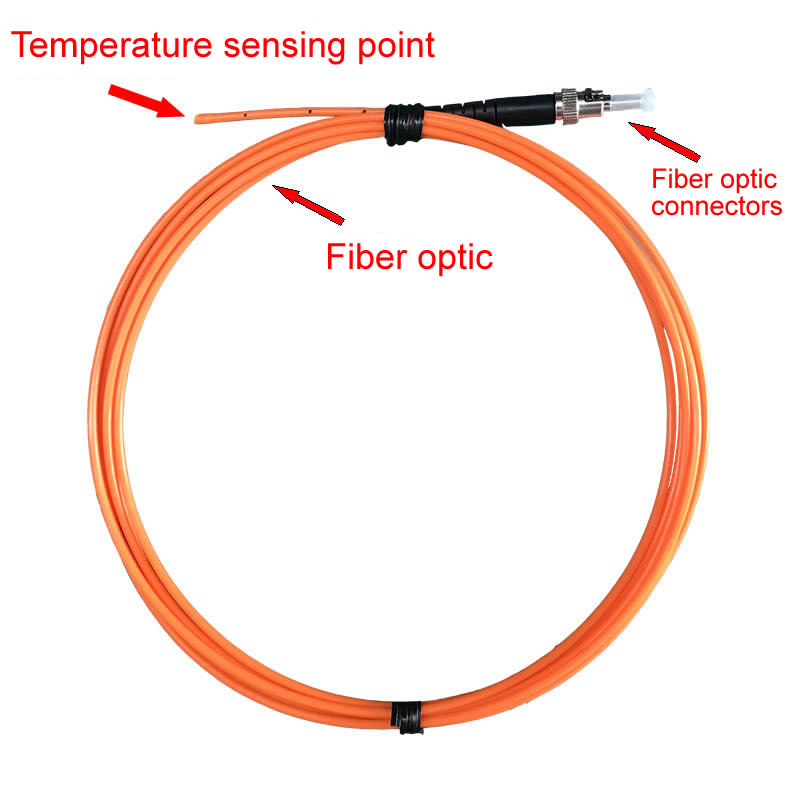
The Importance and Methods of Transformer Temperature Monitoring and the Advantages of Fluorescent Fiber Optic Sensors
1、 The Importance of Transformer Temperature Monitoring
1.1 Ensure the safe operation of equipment
Transformers play a crucial role in the power system, converting high-voltage electrical energy into low-voltage electrical energy. Pendant le fonctionnement, harsh environmental conditions and fluctuations in power load can cause the temperature of transformers to rise. Si la température ne peut pas être surveillée en temps opportun, cela pourrait endommager les composants internes du transformateur, conduisant à des accidents de sécurité tels que des incendies. Grâce à la surveillance de la température, des augmentations anormales de température peuvent être détectées à temps, et des mesures peuvent être prises pour éviter les accidents et garantir le fonctionnement sûr des transformateurs.
1.2 Prolonger la durée de vie des équipements
Une température excessive peut accélérer le vieillissement des matériaux isolants et d'autres composants à l'intérieur du transformateur, raccourcir sa durée de vie. La surveillance continue de la température permet de contrôler la température de fonctionnement des transformateurs dans une plage raisonnable, réduire les pertes de composants causées par les températures élevées, et ainsi prolonger la durée de vie des transformateurs.
Assurer la stabilité du système électrique
Transformers are the core equipment of the power system. Once a transformer malfunctions due to temperature issues, it may affect the stability of the entire power system, leading to power outages and other accidents. Timely temperature monitoring can provide early warning of potential faults and ensure stable power supply to the power system.
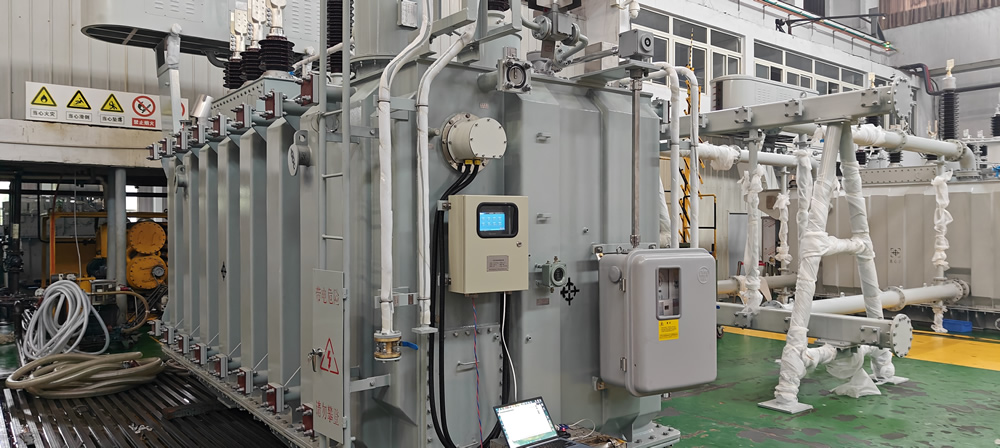
2、 Method for Monitoring Transformer Temperature
2.1 Méthodes traditionnelles
Thermometer method
This method measures temperature by installing a thermometer on the transformer casing or a specific location. Par exemple, common glass liquid thermometers, bimetallic thermometers, etc.. Cependant, this method can only measure the surface or local temperature of the transformer, and cannot accurately reflect the temperature situation of key internal parts (comme les enroulements), and the accuracy is relatively low.
Thermocouple method
Thermocouples use the thermoelectric effect to convert temperature into a potential difference for measurement. Cependant, thermocouples are susceptible to electromagnetic interference, and in environments such as transformers with strong electromagnetic fields, measurement accuracy may be affected. De plus, their lifespan is limited and they need to be replaced regularly.
2.2 Modern Methods – Mesure de température par fibre optique (including Fluorescence Fiber Optic Sensor Temperature Measurement)
détection de température distribuée
Based on the backward Raman scattering effect of optical fibers, temperature distribution at different positions can be measured along the fiber. It can perform comprehensive and long-distance temperature monitoring on transformers, with advantages such as wide measurement range and high accuracy.
Fiber Bragg Grating Temperature Measurement
Fiber Bragg Grating is sensitive to physical quantities such as temperature and strain, and measures temperature by detecting changes in the grating’s reflection wavelength. It can achieve multi-point measurement and has good stability and anti-interference ability.
Fluorescence fiber optic sensor for temperature measurement
Principe: The basic principle of a fluorescent fiber optic sensor is to excite a fluorescent medium with blue violet light to produce fluorescence. The lifetime of the fluorescence decreases with increasing temperature, so the purpose of measuring temperature can be achieved by detecting the lifetime of the fluorescence. When the excited beam of light enters the winding, the fluorescent molecules will absorb the energy of the beam and emit a fluorescent signal. By measuring the lifetime of the fluorescent signal, la température de l'enroulement peut être déterminée indirectement.
Application in transformers: Fiber optic sensors can be installed on the heat sinks, enroulements, slip rings, and other parts inside the transformer to achieve all-round and multi-point temperature measurement. By combining fiber optic sensors with signal acquisition and processing systems, real-time monitoring of temperature changes in transformers can be achieved, fault risks can be predicted, and the normal operation of transformers can be ensured.
3、 Avantages des capteurs à fibre optique fluorescents
3.1 Forte capacité à résister aux interférences électromagnétiques
In the operating environment of transformers, il y a un fort champ électromagnétique, and fluorescent fiber optic sensors are not affected by electromagnetic interference, avoiding the problem of measurement accuracy being affected by traditional temperature measurement methods (such as thermocouple methods) in this environment, and can stably and accurately measure temperature. It can work normally in complex electromagnetic environments both inside and outside transformers, making it particularly suitable for temperature monitoring of transformers in power systems.
3.2 Haute précision
Due to the high sensitivity of fluorescent materials to temperature changes, fluorescent fiber optic sensors can accurately measure temperature. Research shows that the accuracy of fluorescence temperature measurement for transformer windings can reach 0.1 degrés, which helps to more accurately monitor temperature changes in transformers, detect small temperature anomalies in a timely manner, and provide reliable basis for fault warning.
3.3 Comprehensive temperature measurement capability
It can achieve comprehensive temperature measurement of transformer windings and other parts, sans être affecté par des défauts locaux ou des conditions de travail complexes, and can provide overall temperature distribution information of the transformer. Par exemple, Innolux fluorescence temperature measurement technology can achieve comprehensive temperature measurement of transformer windings and real-time, surveillance continue de la température, which helps to comprehensively understand the operating status of transformers.
3.4 Widely applicable environment
Les matériaux fluorescents ont une forte durabilité et stabilité, et les capteurs peuvent maintenir une stabilité de haute performance pendant une utilisation à long terme. Convient à une large gamme de températures environnementales, from as low as minus Baidu to as high as several hundred degrees Celsius, it can adapt to various harsh working environments that transformers may face, and can work normally in both high-temperature operating conditions and cold outdoor environments.
3.5 Quick Response
Fluorescent fiber optic temperature sensors have fast response times, can monitor temperature changes in real time, and respond immediately. This helps to capture sudden changes in transformer temperature in a timely manner, respond quickly to abnormal temperature conditions inside the transformer, and take timely measures to avoid the occurrence and development of faults.

Capteur de température à fibre optique, Système de surveillance intelligent, Fabricant de fibre optique distribué en Chine
 |
 |
 |