 Capteurs de température à fibre optique INNO ,Systèmes de surveillance de la température.
- Comprehensive Equipment Coverage: Encompasses health monitoring of critical power equipment including transformers, Appareillage, générateurs, moteurs, et câbles
- Multi-Parameter Monitoring Technology: Température, vibration, décharge partielle, oil analysis and other multi-dimensional monitoring ensures safe equipment operation
- Predictive Maintenance Advantages: Transform from reactive repair to proactive prevention, reducing equipment failure rates and improving operational efficiency
- Intelligent Diagnostic Algorithms: AI-driven fault identification and trend prediction enables precise equipment health assessment
- Capacités d'intégration du système: Unified platform management of multiple equipment types, achieving data fusion and collaborative analysis decision-making
- Significant Investment Returns: Reduce unplanned downtime, extend equipment service life, and optimize maintenance cost investments
- Machine Health Monitoring System Fundamentals
- Core Technologies for Power Equipment Monitoring
- What are health monitoring systems?
- Transformer Health Monitoring Systems
- Switchgear Health Monitoring Systems
- What is a machine health check?
- Other Critical Power Equipment Monitoring
- Machine Health Monitoring System Integration
- How big is the machine health monitoring market?
- Sommet mondial 10 Machine Health Monitoring System Manufacturers
- Études de cas d'applications industrielles
- Services professionnels de consultation et de solutions
Machine Health Monitoring System
What is machine health monitoring?
Machine health monitoring is an intelligent management system that continuously collects equipment operating parameters through various sensors and utilizes data analysis technologies to assess equipment condition and predict failures. The system primarily monitors critical parameters of power equipment including température, vibration, paramètres électriques, and chemical indicators, establishing equipment health models to achieve early fault warning. This system comprises four core components: couche d'acquisition de données, couche de transmission des communications, couche de traitement des données, and application service layer.
Why do we need machine health monitoring?
Traditional planned maintenance and post-failure repair models suffer from high maintenance costs and low equipment availability. Statistical data shows that economic losses from unexpected equipment failures are 3-5 times higher than planned maintenance costs, with unplanned downtime costing tens of thousands to hundreds of thousands of dollars per hour. Machine health monitoring systems can detect equipment anomalies in advance, eliminating faults at their inception and fundamentally transforming equipment maintenance approaches from “fix when broken” À “maintenance prédictive”.
How to implement effective health monitoring?
The system collects data by installing sensors at critical equipment locations, transmits data to monitoring centers via industrial communication networks, and uses algorithmes d'apprentissage automatique to analyze data patterns and identify abnormal conditions. When equipment parameters exceed normal ranges, the system automatically generates warning signals and provides maintenance recommendations, helping maintenance personnel develop precise maintenance plans. Effective monitoring requires selecting appropriate sensor technologies, establishing comprehensive data models, and setting scientific warning thresholds.
Core Technologies for Power Equipment Monitoring
Multi-Parameter Comprehensive Monitoring
Modern power equipment monitoring requires collaborative operation of multiple sensor technologies. Surveillance de la température employs fluorescent fiber sensors and infrared thermal imaging technology, surveillance des vibrations uses accelerometers and displacement sensors, electrical monitoring includes partial discharge detection and current-voltage analysis, while chemical monitoring involves oil quality analysis and gas detection technologies.
Intelligent Data Processing
The system adopts an architecture combining edge computing and cloud platforms, completing data preprocessing and preliminary analysis on-site, while complex pattern recognition and trend prediction are performed in the cloud. Artificial intelligence algorithms can learn normal equipment operation patterns from massive historical data, automatically identify abnormal symptoms, and predict fault development trends.
What are health monitoring systems?
Health monitoring systems are comprehensive platforms that integrate multiple sensing technologies, analyse de données, and intelligent diagnostics to provide real-time visibility into equipment condition and performance. These systems transform raw sensor data into actionable insights through advanced algorithms and machine learning techniques. Modern health monitoring systems feature cloud-based architectures, enabling remote monitoring capabilities and centralized data management across multiple facilities.
The core value proposition of health monitoring systems lies in their ability to shift maintenance strategies from time-based schedules to maintenance conditionnelle. By continuously monitoring equipment health parameters, these systems can detect degradation patterns before they lead to catastrophic failures. This proactive approach significantly reduces maintenance costs, minimizes unplanned downtime, and extends equipment operational life.
Transformer Health Monitoring Systems
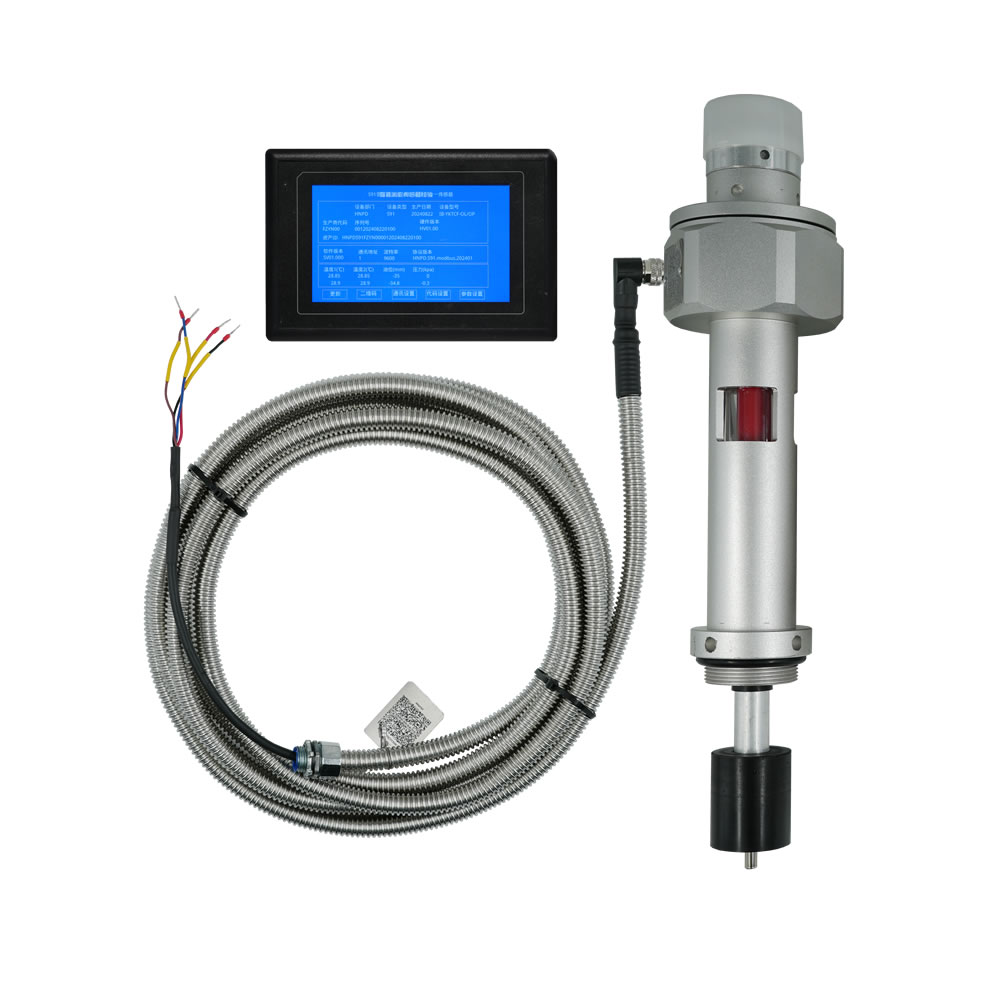
Winding Temperature Monitoring Technology
Transformer winding temperature is a critical parameter reflecting operational status, with overheating being a primary cause of transformer failures. Capteurs de température à fibre fluorescente represent the optimal choice for winding monitoring, offering complete electromagnetic interference immunity, excellentes propriétés d'isolation, and high-precision temperature measurement. Sensors can be directly embedded within windings to achieve precise hot-spot temperature monitoring. En installant 6-8 sensors each in high-voltage, moyenne tension, and low-voltage windings, a three-dimensional temperature monitoring network is established. The system sets multi-level temperature protection thresholds, issuing alerts when temperatures exceed warning values and initiating protective actions when alarm levels are reached.
Transformer oil temperature monitoring is equally important, avec top oil temperature sensors installed at tank tops to monitor maximum oil temperatures, pendant que average oil temperature sensors provide overall temperature information. Modern monitoring systems employ multi-point oil temperature monitoring schemes, analyzing temperature distribution patterns to identify internal anomalies. Fluorescent fiber sensors demonstrate excellent long-term stability in oil environments, achieving measurement accuracy of ±0.1°C with response times under 1 deuxième.
Partial Discharge Monitoring Technology
Partial discharge represents an early indicator of insulation deterioration. La combinaison de UHF ultra-high frequency detection, détection par ultrasons, et chemical detection methods provides comprehensive identification of discharge types and locations. UHF detection captures electromagnetic signals generated by discharges through sensors installed on transformer tank exteriors, offering strong anti-interference capabilities and high positioning accuracy. Ultrasonic detection utilizes acoustic signals from discharges for localization, while chemical detection analyzes dissolved gases in oil to determine discharge characteristics.
TEV transient earth voltage detection represents another effective partial discharge monitoring method, identifying discharge activity by detecting transient voltage signals on grounding conductors. Modern monitoring systems employ multi-sensor data fusion techniques, comprehensively analyzing results from different detection methods to improve fault diagnosis accuracy and reliability. Systems can automatically identify external interference signals, preventing false alarms.
Oil Quality Analysis Monitoring Technology
Transformer oil serves as both insulation and cooling medium, with its quality directly impacting safe transformer operation. Online oil chromatography analysis technology continuously monitors dissolved gas component changes in oil to diagnose internal faults. When transformers experience internal faults such as overheating or discharge, characteristic gases like H₂, CH₄, C₂H₂ are produced. Systems analyze gas generation rates and relative concentrations to determine fault types and severity levels.
Online oil quality parameter monitoring includes key indicators such as dielectric dissipation factor, teneur en humidité, and acid number. Dielectric dissipation factor reflects oil insulation performance, moisture content affects insulation strength, and acid number characterizes oil aging degree. Modern monitoring devices achieve simultaneous multi-parameter measurement with data update cycles reaching hourly intervals. When oil quality deterioration trends are detected, systems provide timely warnings and recommend appropriate corrective actions.
Vibration and Mechanical Monitoring
Transformer vibration monitoring primarily focuses on core vibration et winding vibration. En fonctionnement normal, transformers produce 100Hz fundamental frequency vibrations. When mechanical faults such as core loosening or winding deformation occur, vibration spectra exhibit significant changes. Three-axis accelerometer sensors monitor vibration signals, employing spectral analysis techniques to identify abnormal vibration patterns.
Surveillance du système de refroidissement includes cooler vibration, oil pump vibration, and fan operational status. Cooling system failures affect transformer heat dissipation, leading to abnormal temperature increases. Monitoring systems analyze vibration amplitude and frequency characteristics to determine equipment operational status, providing timely alarms when issues such as bearing wear or blade damage are detected.
Comprehensive Diagnosis and Warning
Transformer health monitoring systems integrate multiple monitoring technologies, establishing comprehensive diagnostic models. Systems perform multi-parameter correlation analysis to identify fault patterns, par exemple, winding overheating typically accompanies temperature increases, production de gaz, and enhanced partial discharge activities. Fault development trend prediction functionality establishes degradation models based on historical data, predicting remaining equipment service life.
Intelligent warning systems possess self-learning capabilities, adjusting alarm thresholds based on equipment operational history to reduce false positives and missed alarms. When anomalies are detected, systems automatically generate detailed diagnostic reports including fault types, niveaux de gravité, and treatment recommendations, providing scientific basis for operational and maintenance decisions.
Switchgear Health Monitoring Systems

Partial Discharge Monitoring Technology
Internal partial discharge in switchgear represents the primary cause of insulation failures. TEV transient earth voltage detection is the most commonly used monitoring method, detecting transient voltage signals generated by discharges through TEV sensors installed at switchgear grounding points. This method offers simple installation and low cost while effectively identifying discharge activity within cabinets. UHF ultra-high frequency detection receives electromagnetic wave signals from discharges through antennas mounted on cabinet bodies, providing high detection sensitivity and positioning accuracy.
Ultrasonic detection utilizes acoustic signals from discharges for monitoring, remaining unaffected by electromagnetic interference and particularly suitable for strong electromagnetic environments. Modern switchgear monitoring systems typically employ multi-technology fusion approches, combining advantages of TEV, UHF, and ultrasonic detection methods to achieve comprehensive partial discharge monitoring. Systems can automatically distinguish different types of discharge signals, including surface discharge, internal discharge, and floating discharge.
Technologie de surveillance de la température
Switchgear internal temperature monitoring focuses on critical locations such as points de connexion des jeux de barres, contacts de disjoncteur, et terminaisons de câbles. These locations are prone to resistive heating due to poor contact, leading to equipment failures or even fire incidents. Systèmes de surveillance de la température sans fil represent the mainstream solution for switchgear temperature monitoring, with sensors installed at high-voltage locations transmitting data wirelessly, avoiding high-voltage insulation issues.
Technologie de mesure de la température infrarouge enables non-contact temperature monitoring of switchgear exteriors through infrared windows for observing internal equipment temperature distributions. Technologie de mesure de la température par fibre optique finds application in special cases, particularly where high temperature measurement accuracy is required. Modern temperature monitoring systems feature analyse des tendances de température capacités, identifying gradual temperature rise processes and providing timely warnings before severe equipment overheating occurs.
Surveillance des caractéristiques mécaniques
Circuit breaker mechanical characteristics directly affect interrupting performance and service life. Operation count statistics record opening and closing operation numbers, combined with equipment rated operational life to assess mechanical conditions. Opening and closing time monitoring determines mechanical system status by detecting circuit breaker moving contact operation times. When issues such as mechanism jamming or spring fatigue occur, opening and closing times exhibit significant changes.
Travel-time characteristic monitoring records circuit breaker moving contact movement trajectories, analyzing movement velocity and acceleration curves to identify mechanical faults. Surveillance des vibrations analyzes vibration signals during circuit breaker operations, identifying impact anomalies and component loosening issues. Modern monitoring systems can establish digital archives of circuit breaker mechanical conditions, tracking equipment performance changes throughout entire lifecycles.
Environmental and Auxiliary Monitoring
Switchgear internal environmental conditions are crucial for safe equipment operation. Surveillance du gaz SF6 includes gas density, pureté, and decomposition product detection. Decreased SF6 gas density affects circuit breaker interrupting performance, while reduced purity and increased decomposition products indicate discharge or overheating issues. Surveillance de l'humidité prevents condensation phenomena that lead to reduced insulation performance, particularly in environments with significant temperature variations.
Small animal intrusion monitoring detects small animals entering switchgear through infrared detection and sound recognition technologies, preventing short-circuit accidents caused by animal contact. Door status monitoring ensures switchgear remains properly closed, preventing external environmental factors from affecting equipment operation. Lighting system monitoring maintains normal cabinet lighting for maintenance personnel inspection work.
Intelligent Diagnosis and Control
Switchgear health monitoring systems integrate primary-secondary fusion monitoring terminals, combining protection, mesures, contrôle, and monitoring functions into unified devices, reducing equipment quantities and costs. Systems employ wireless sensor network Technologie, avoiding extensive cable installation and reducing installation complexity. Technologie informatique de pointe completes data preprocessing and preliminary analysis on-site, reducing communication loads.
Comprehensive diagnostic expert systems establish knowledge bases based on extensive historical fault cases, automatically identifying fault patterns and providing treatment recommendations. Equipment health scoring functionality calculates equipment health indices by integrating multiple monitoring parameters, intuitively reflecting equipment conditions. Predictive maintenance recommendations develop maintenance plans based on equipment degradation trends, achieving transformation from time-driven to condition-driven maintenance.
What is a machine health check?
Un machine health check is a systematic evaluation process that assesses the current condition and performance of industrial equipment through comprehensive testing and analysis. Unlike continuous monitoring, health checks are typically performed at scheduled intervals or when specific concerns arise. These assessments combine multiple diagnostic techniques including analyse vibratoire, imagerie thermique, tests électriques, et analyse d'huile to provide a complete picture of equipment health.
Modern machine health checks utilize advanced diagnostic tools and methodologies to identify potential issues before they escalate into costly failures. The process typically involves baseline establishment, where normal operating parameters are documented, followed by regular comparative assessments to detect deviations from normal conditions. Analyse prédictive are applied to determine remaining useful life and optimal maintenance timing, enabling data-driven maintenance decisions that maximize equipment availability while minimizing costs.
Other Critical Power Equipment Monitoring
Generator Set Health Monitoring
Surveillance des vibrations: Shaft vibration sensors monitor generator rotor vibrations, using spectral analysis to identify imbalance, désalignement, and bearing faults. Surveillance de la température des roulements employs RTD sensors for real-time bearing temperature monitoring, preventing bearing overheating damage. Stator and Rotor Insulation Monitoring assesses generator insulation conditions through insulation resistance testing and partial discharge detection.
Electric Motor Health Monitoring
Current Signal Analysis: Analyzes stator current spectra to identify rotor bar breaks and air gap eccentricity faults. Vibration Diagnosis monitors motor bearing conditions and rotor balance. Surveillance de l'isolation includes insulation resistance, absorption ratio, and polarization index parameter testing. Surveillance de la température focuses on winding temperature rise and bearing temperature changes.
Surveillance des câbles d'alimentation
Détection de décharge partielle: High-frequency current sensors provide online cable insulation condition monitoring. Fibre optique distribuée Détection de température achieves full-length cable temperature monitoring, promptly detecting overheating points. Emplacement du défaut employs traveling wave ranging technology for rapid fault point location. Insulation Diagnosis evaluates insulation performance through dielectric loss and leakage current testing.
Capacitor and Reactor Monitoring
Surveillance des paramètres électriques: Real-time monitoring of capacitance, loss angle, and unbalanced current parameter changes. Surveillance de la température uses infrared or contact temperature measurement to monitor equipment surface temperatures. Vibration and Noise Analysis identifies internal loosening and resonance issues. Surveillance des gaz monitors internal gas composition changes in gas-filled equipment.
Surge Arrester and Insulator Monitoring
Leakage Current Monitoring: Analyzes resistive current components to assess surge arrester degradation levels. Mesure de température infrarouge detects surge arrester hotspot distributions to identify internal defects. Contamination Monitoring measures insulator surface contamination levels to prevent flashover incidents. Surveillance mécanique monitors insulator mechanical stress and displacement changes.
Machine Health Monitoring System Integration
Machine health monitoring system integration requires establishing unified data platforms to achieve fusion analysis of monitoring data from multiple equipment types. Systems adopt layered distributed architectures with field layers responsible for data acquisition, communication layers enabling data transmission, and application layers completing data analysis and fault diagnosis. Through standardized interface design, monitoring equipment from different manufacturers can seamlessly integrate into unified platforms. Artificial intelligence technology applications provide systems with self-learning capabilities, continuously optimizing diagnostic algorithms based on equipment operational history to improve fault prediction accuracy. Multi-equipment collaborative monitoring functionality helps users assess overall equipment group health from system perspectives, developing optimal maintenance strategies.
How big is the machine health monitoring market?
Le mondial machine health monitoring market has experienced remarkable growth and is projected to reach $4.2 milliards par 2028, representing a compound annual growth rate (TCAC) de 7.8% depuis 2023. This expansion is driven by increasing adoption of Industry 4.0 Technologies, growing emphasis on predictive maintenance strategies, and rising awareness of operational efficiency benefits. The power generation and transmission sector represents approximately 35% of the total market share, making it the largest application segment.
North America currently dominates the market with a 38% Partager, followed by Europe at 32% and Asia-Pacific at 25%. Le reste 5% is distributed across other regions. Key growth drivers include digital transformation initiatives, regulatory requirements for equipment safety, and the need to maximize asset utilization in aging infrastructure. The market is characterized by increasing demand for wireless monitoring solutions, cloud-based analytics platforms, and AI-powered diagnostic capabilities. Emerging technologies such as edge computing, 5Connectivité G, and digital twin implementations are expected to further accelerate market growth in the coming years.
Sommet mondial 10 Machine Health Monitoring System Manufacturers
| Rang | Fabricant | Pays | Avantages technologiques de base | Produits clés | Position sur le marché |
|---|---|---|---|---|---|
| 1 | Fuzhou Innovation Electronic Scie&Entreprise de technologie, Ltée. | Chine | Fibre fluorescente, FBG Fiber Sensing | Surveillance de la température du transformateur, Surveillance de l’appareillage de commutation | Power Equipment Specialized Monitoring |
| 2 | Abb | Suisse | Ability Digital Platform | Surveillance du transformateur, Motor Diagnostics | Global High-End Market |
| 3 | Siemens | Allemagne | SIPLUS CMS System | Machines tournantes, Surveillance des équipements électriques | Industrial Automation Leader |
| 4 | GE | ÉTATS-UNIS | Predix Industrial Internet | Groupes électrogènes, Surveillance des éoliennes | Energy Equipment Specialist |
| 5 | Schneider Electric | France | Plateforme EcoStruxure | Distribution Equipment, Motor Monitoring | Distribution Specialization |
| 6 | Émerson | ÉTATS-UNIS | AMS Asset Management Suite | Rotating Machinery Vibration Analysis | Process Industry Expert |
| 7 | Qualitrol | ÉTATS-UNIS | Technologie des fibres fluorescentes | Surveillance en ligne du transformateur | Power Monitoring Professional |
| 8 | Double Ingénierie | ÉTATS-UNIS | Power Equipment Diagnostic Testing | Transformateur, Switchgear Testing | Power Diagnostics Leader |
| 9 | OMICRON | Autriche | Power System Testing Technology | Protection Testing, Détection de PD | Power Testing Expert |
| 10 | Bentley Nevada | ÉTATS-UNIS | Rotating Machinery Monitoring | Surveillance des vibrations, Shaft Displacement | Mechanical Monitoring Professional |
Études de cas d'applications industrielles
Applications du système électrique
Large power plants deploy comprehensive plant-wide equipment health monitoring systems, implementing unified monitoring of main transformers, générateurs, et appareillage. A nuclear power station successfully prevented a major safety incident by deploying fluorescent fiber temperature monitoring systems on transformers, providing early warning of winding overheating faults. In transmission systems, 220kV substation group monitoring projects achieve centralized monitoring of all substation equipment within regions through remote diagnostic centers, with fault warning accuracy exceeding 92%. Distribution network intelligent monitoring systems cover urban distribution transformer groups, achieving network-wide equipment status visualization management through wireless communication technologies.
Industrial Enterprise Applications
Large steel enterprises’ captive power plants feature complete equipment health monitoring systems, including generator vibration monitoring, surveillance de la température du transformateur, and switchgear partial discharge monitoring. After three years of system operation, equipment availability increased by 5% while maintenance costs decreased by 30%. Petrochemical enterprises employ explosion-proof monitoring systems for critical power supply equipment, achieving safe and reliable equipment monitoring in hazardous environments. Cement manufacturing enterprises’ high-voltage motor monitoring systems detect rotor bar breaks and other faults without shutdowns through current signal analysis technology, significantly reducing production interruption time.
Services professionnels de consultation et de solutions
Machine health monitoring systems involve multiple professional fields including sensor technology, analyse de données, et intégration système, requiring extensive engineering experience and professional technical support. Nous possédons une équipe technique chevronnée et un portefeuille de produits complet, providing customers with full-service solutions from requirement analysis to system implementation. Having completed over 500 equipment monitoring projects globally, we have accumulated rich industry application experience and can provide customized monitoring solutions for different enterprise types.
Whether you require transformer temperature monitoring, switchgear partial discharge monitoring, or generator vibration diagnostic systems, we can provide professional technical consultation and product configuration recommendations. Contact us through this website’s online consultation system, and our technical experts will provide detailed technical solutions and investment return analysis based on your specific requirements, ensuring both technical advancement and economic viability of solutions. Let our professional technology and extensive experience safeguard your equipment monitoring projects.

Capteur de température à fibre optique, Système de surveillance intelligent, Fabricant de fibre optique distribuée en Chine
 |
 |
 |