 Capteurs de température à fibre optique INNO ,systèmes de surveillance de la température.
In the extreme internal environment of transformers—characterized by high voltage, champs électromagnétiques forts, and high temperatures—fluorescent fiber optic temperature sensors are widely regarded as one of the best solutions available today, especially for applications that require precise, fiable, and intrinsically safe monitoring of critical areas such as winding hot spots.
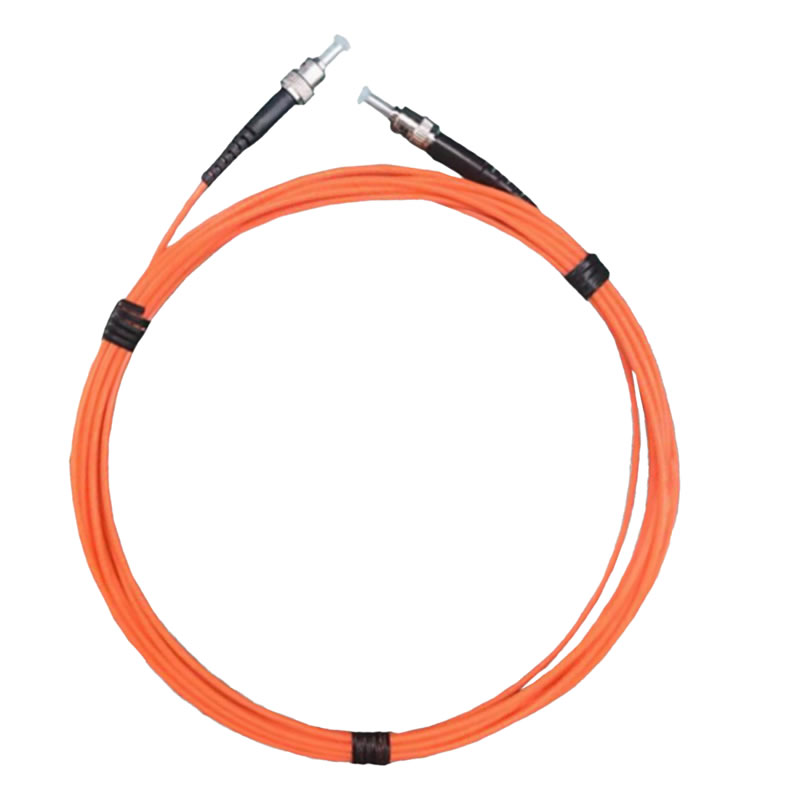
Principle of Fluorescent Fiber Optic Temperature Sensors:
The core of the fluorescent fiber optic sensor is a special fluorescent material coated at the end of the fiber or at a specific point. When excitation light of a specific wavelength (usually emitted by an LED or laser) is transmitted through the fiber to the fluorescent material, the material is excited and emits fluorescence of a specific wavelength. The characteristics of this fluorescence (decay time/lifetime) change very precisely and reproducibly with the temperature of the environment where the fluorescent material is located. The sensor measures temperature by detecting changes in fluorescence lifetime (rather than intensity). Lifetime detection means it is not affected by fluctuations in the light source, perte de courbure des fibres, or connector loss, ensuring extremely high stability and reliability.
Why Fluorescent Fiber Optic Sensors Are the Best Choice for Transformer Monitoring
- Intrinsic Safety and Electrical Isolation:
- The fiber itself is made of quartz glass, which is a perfect electrical insulator.
- No metal parts enter the high-voltage area, completely eliminating the risk of short circuits, discharges, or even explosions caused by insulation faults or introducing metal conductors, as seen with traditional sensors (such as RTDs and thermocouples).
- The sensor probe requires no power supply, only an optical signal provided at the low-voltage control room end.
- Excellent Electromagnetic Interference Resistance: Optical fiber transmits optical signals and is completely immune to any form of electromagnetic interference generated during transformer operation, such as strong power frequency electromagnetic fields, harmoniques, transitoires, and partial discharges. Measurement results are stable and reliable.
- Haute précision et stabilité: Fluorescence lifetime temperature measurement technology is insensitive to light source fluctuations and fiber loss, achieving high measurement accuracy (typically up to ±0.5°C or better). The fluorescent material is physically and chemically stable, resistant to aging, with excellent long-term stability and minimal drift.
- High Temperature and Harsh Environment Resistance: Quartz fiber and special fluorescent materials (such as certain rare-earth-doped materials) can withstand extremely high temperatures (typiquement >200°C, with special designs over 300°C), fully meeting the needs of transformer hot spot monitoring (hot spot temperatures can far exceed 105°C). Resistant to oil and chemical corrosion (transformer oil environment), and mechanically stable.
- Direct Hot Spot Measurement: The fiber is extremely thin and flexible (diameter usually less than 250 microns), allowing direct embedding between winding pancakes, pressing pads, or closely against the conductor surface, enabling direct, in-situ measurement of the most critical hot spot temperature. This is impossible for other non-invasive methods (comme l'infrarouge).
- Multi-point Measurement: Optical signal loss in optical fibers is extremely low, making it suitable for transmitting signals from high-voltage hazardous areas to safe control rooms. The system can be designed for multi-point measurement (arranging multiple fluorescent probes on one IF-C fiber optic temperature transmitter demodulator), monitoring temperatures at different parts of the transformer.
- Longue durée de vie et faible entretien: The fiber optic sensor has a simple structure, no moving parts, and in a stable transformer oil environment, its service life is very long (usually matching the transformer’s lifespan), and it is almost maintenance-free.
Comparison with Other Transformer Temperature Monitoring Methods
| Méthode de surveillance | Avantages | Inconvénients | Suitable for Transformer Hot Spot Monitoring? |
|---|---|---|---|
| Capteur à fibre optique fluorescent | Sécurité intrinsèque, strong EMI immunity, haute précision, haute stabilité, résistance aux hautes températures, direct hot spot measurement, longue durée de vie, multi-point transmission | Relatively high initial cost, installation requires professional design (needs to be embedded during manufacturing or major overhaul) | Best choice |
| FBG Fiber Optic Sensor | Sécurité intrinsèque, Résistance EMI, multiplexing, haute précision | Sensitive to static strain (transformer vibration, mechanical stress affects temperature accuracy), complex and expensive demodulation equipment, gratings may degrade at high temperatures, usually higher cost than fluorescent fiber | Usable, but inferior to Fluorescent Fiber Optic Sensor |
| RTD/Thermocouple | Une technologie mature, relatively low cost, haute précision | Requires metal wires to enter high-voltage area, risk of insulation breakdown and short circuit, susceptible to strong EMI, wires may introduce measurement errors, cannot be safely and reliably installed inside high-voltage windings, relatively short lifespan | Not suitable for critical hot spots |
| Thermographie infrarouge | Sans contact, can scan surfaces | Can only measure surface temperature, cannot measure internal hot spots, greatly affected by oil contamination/window transparency/emissivity, relatively low accuracy, cher (high-end equipment), requires shutdown or special windows | Not suitable for internal hot spots |
| Top Oil Temperature Gauge | Simple, faible coût | Only reflects average oil temperature, seriously lags behind winding hot spot temperature, cannot provide local overheating warning | Not suitable |
Why Transformers Must Use Fiber Optic Sensors (Especially Fluorescent Type)?
Transformers are the core equipment of the power grid. The winding hot spot temperature is the key factor determining their load capacity and lifespan, and is also one of the main causes of failures. Traditional temperature monitoring methods face insurmountable challenges inside transformers:
- High voltage insulation risk: Introducing metal wires is a huge safety hazard.
- Strong electromagnetic interference: Causes electronic sensor signal distortion or even failure.
- High temperature environment: Ordinary sensors cannot operate stably for long periods.
- Critical points are difficult to reach: Internal hot spots in windings require miniature, flexible sensors to embed.
Fluorescent fiber optic sensors perfectly solve all these problems:
- Sécurité: All-fiber, pas de métal, intrinsèquement sûr.
- Fiabilité: Immunisé contre les EMI, high temperature resistant, long-term stable.
- Précision: Directly measure the most critical winding hot spot temperature.
- Long Life: Lifespan matches the transformer, sans entretien.
Résumé
For transformers that require the highest safety level, the most reliable data, and the most precise hot spot temperature monitoring (especially large high-voltage and ultra-high-voltage transformers), fluorescent fiber optic temperature sensors are currently the undisputed best choice. They overcome the fatal flaws of traditional methods, providing an intrinsically safe, anti-interférence, haute précision, résistant aux hautes températures, and long-life solution. They can be directly embedded in the winding to measure the core hot spot temperature, providing crucial data support for transformer safe operation, load optimization, évaluation de l'état, and life prediction. Although the initial cost is higher and installation needs to be planned during manufacturing or major overhaul, the safety improvement, operational reliability assurance, and potential fault prevention value make it an indispensable key monitoring technology for modern intelligent transformers.

Capteur de température à fibre optique, Système de surveillance intelligent, Fabricant de fibre optique distribué en Chine
 |
 |
 |