 Capteurs de température à fibre optique INNO ,systèmes de surveillance de la température.
- Précision supérieure: Fluorescent fiber optic temperature sensors achieve ±0.5°C precision using fluorescence lifetime decay principles, outperforming conventional sensing technologies.
- Perfect for High Voltage: Complete immunity to electromagnetic interference and exceptional high-voltage insulation make fluorescent sensors the best choice for switchgear and substation monitoring.
- Fonctionnement sans entretien: These sensors require zero calibration throughout their 20-year lifespan, dramatically reducing total cost of ownership compared to thermocouples or RTDs.
- Temps de réponse rapide: Avec <1 deuxième temps de réponse, fluorescent fiber optic sensors detect temperature changes faster than distributed temperature sensing or FBG alternatives.
- Global Manufacturing Network: Leading manufacturers offer OEM/ODM services, wholesale pricing, commandes groupées, private label solutions, and customized configurations for diverse industrial applications.
Table des matières
- 1. What Exactly Is a Fluorescent Fiber Optic Temperature Sensor?
- 2. How Does a Fluorescent Fiber Optic Temperature Sensor Work?
- 3. Why Choose Fluorescent Fiber Optic Sensors Over Other Technologies?
- 4. How Do Fluorescent Sensors Compare to Other Fiber Optic Technologies?
- 5. What Are the Main Applications of Fluorescent Fiber Optic Sensors?
- 6. Why Are Fluorescent Sensors Ideal for Power Industry Applications?
- 7. How Do Fluorescent Sensors Perform in Medical Equipment?
- 8. What Makes Fluorescent Sensors Essential for Semiconductor Manufacturing?
- 9. Which Extreme Environments Require Fluorescent Fiber Optic Sensors?
- 10. Qui sont les meilleurs 10 Fluorescent Fiber Optic Temperature Sensor Manufacturers?
- 11. Why Is FJINNO the Best Manufacturer for High Voltage Applications?
- 12. What Real-World Case Studies Demonstrate Fluorescent Sensor Success?
- 13. Est-il facile d'installer des capteurs à fibre optique fluorescents?
- 14. Les capteurs fluorescents nécessitent-ils un entretien?
- 15. Comment les capteurs fluorescents s'intègrent-ils aux systèmes de surveillance existants?
- 16. Quelles solutions personnalisées les fabricants peuvent-ils proposer?
What Exactly Is a Fluorescent Fiber Optic Temperature Sensor?
UN capteur de température à fibre optique fluorescent est un appareil avancé de mesure de la température qui utilise la décroissance de la fluorescence des cristaux dopés aux terres rares en fonction de la température pour obtenir une précision exceptionnelle.. Contrairement aux thermocouples ou RTD conventionnels qui reposent sur des changements de résistance électrique, capteurs fluorescents transmettre des données de température sous forme de signaux optiques via des câbles à fibres optiques, les rendant complètement insensibles aux interférences électromagnétiques.
Le principe de base distingue capteurs de température fluorescents à fibre optique d'autres technologies de détection optique. Alors que détection de température distribuée (ETD) les systèmes analysent la lumière rétrodiffusée le long de la longueur de la fibre et Réseau de Bragg en fibre (FBG) capteurs mesurer les changements de longueur d'onde, capteurs fluorescents mesurer avec précision le temps de décroissance exponentielle des émissions fluorescentes. This measurement technique delivers superior accuracy and long-term stability, particularly in équipement électrique haute tension là où les capteurs traditionnels échouent.

Comment un Capteur de température à fibre optique fluorescente Travail?
The operating mechanism of a fluorescent capteur de température à fibre optique is elegantly simple yet scientifically sophisticated. At the tip of the optical fiber, a phosphor crystal doped with rare-earth materials serves as the sensing element. When pulsed LED or laser light travels through the fiber and strikes this crystal, it absorbs the energy and immediately emits fluorescent light.
The key phenomenon is that this fluorescent emission doesn’t stop instantly—it decays exponentially over microseconds. The decay time constant is directly and predictably related to the crystal’s temperature. À mesure que la température augmente, the decay becomes faster; as temperature decreases, decay slows. Advanced signal processing electronics in the démodulateur precisely measure this decay time and convert it to an accurate temperature reading with ±0.5°C precision.
Ce mesure de la durée de vie de la fluorescence technique offers inherent advantages over intensity-based methods. Since the measurement depends on time rather than light intensity, it remains unaffected by fiber bending losses, vieillissement du connecteur, or light source fluctuations—factors that plague other optical sensing technologies.
Why Choose Fluorescent Fiber Optic Sensors Over Other Technologies?

Capteurs de température fluorescents à fibre optique deliver a combination of performance characteristics unmatched by alternative technologies, making them the preferred choice for demanding industrial applications.
Complete Electromagnetic Immunity
Dans appareillage haute tension, sous-stations, and electrical equipment, electromagnetic fields can reach thousands of volts per meter. Fluorescent sensors transmit only light through non-conductive glass fibers, providing absolute immunity to EMI and RFI that would render thermocouples or RTDs completely unreliable.
Exceptional High Voltage Insulation
The dielectric strength of optical fiber exceeds that of conventional wiring by orders of magnitude. Capteurs fluorescents à fibre optique can be installed directly on live conductors carrying hundreds of kilovolts without creating leakage paths or compromising electrical safety—a capability impossible with metallic sensors.
Précision de mesure supérieure
Achieving ±0.5°C accuracy, capteurs fluorescents outperform détection de température distribuée (±1-2°C), standard thermocouples (±1-2°C), and provide accuracy comparable to precision RTDs but without their electromagnetic vulnerability or drift issues.
Rapid Response Time
With typical response times of <1 secondes, capteurs de température fluorescents à fibre optique detect thermal events significantly faster than Systèmes DTS (which may take tens of seconds to minutes for a complete scan) or thermal imaging cameras requiring manual inspection.
Calibration-Free Longevity
The physical principle governing capteurs fluorescents—the relationship between temperature and fluorescence decay time—is a fundamental property of the phosphor material that doesn’t change over time. Qualité fabricants guarantee 20-year operation without recalibration, eliminating recurring maintenance costs that burden thermocouple and RTD installations.
Sécurité intrinsèque
Capteurs fluorescents à fibre optique carry no electrical energy to the measurement point, making them inherently safe in explosive atmospheres, flammable environments, and applications requiring zero spark risk.
How Do Fluorescent Sensors Compare to Other Fiber Optic Technologies?
Not all capteurs de température à fibre optique are created equal. Understanding the technical differences helps specify the optimal technology for each application.
| Technologie | Fibre Optique Fluorescente | Distributed DTS | Réseau de Bragg en fibre | Arséniure de gallium |
|---|---|---|---|---|
| Précision des mesures | ±0,5°C | ±1-2°C | ±1°C | ±0,5-1°C |
| Temps de réponse | <1 secondes | 30-120 secondes | <1 deuxième | <1 deuxième |
| Stabilité de l'étalonnage | 20+ années, no recal | Vérification périodique | Drift possible | Stable |
| Type de mesure | Détection ponctuelle | Distributed continuous | Quasi-distribué | Détection ponctuelle |
| High Voltage Performance | Excellent | Excellent | Excellent | Excellent |
| Plage de température | -40°C à +300°C | -40°C à +600°C | -40°C à +300°C | -40°C à +250°C |
| Meilleures applications | Appareillage de commutation, transformateurs, moteurs | Pipelines, tunnels, câbles | Surveillance des câbles, structures | Medical MRI, Équipement RF |
| Coût du système (Point unique) | Moyen | Haut (for distributed) | Moyen-élevé | Moyen |
Pour high-voltage switchgear monitoring and critical electrical equipment requiring pinpoint accuracy with fast response, capteurs à fibre optique fluorescents represent the optimal choice. Détection de température distribuée excels when monitoring kilometers of cable or pipeline. Capteurs FBG suit applications requiring many measurement points on a single fiber. Capteurs GaAs serve specialized medical and RF environments.
What Are the Main Applications of Fluorescent Fiber Optic Sensors?
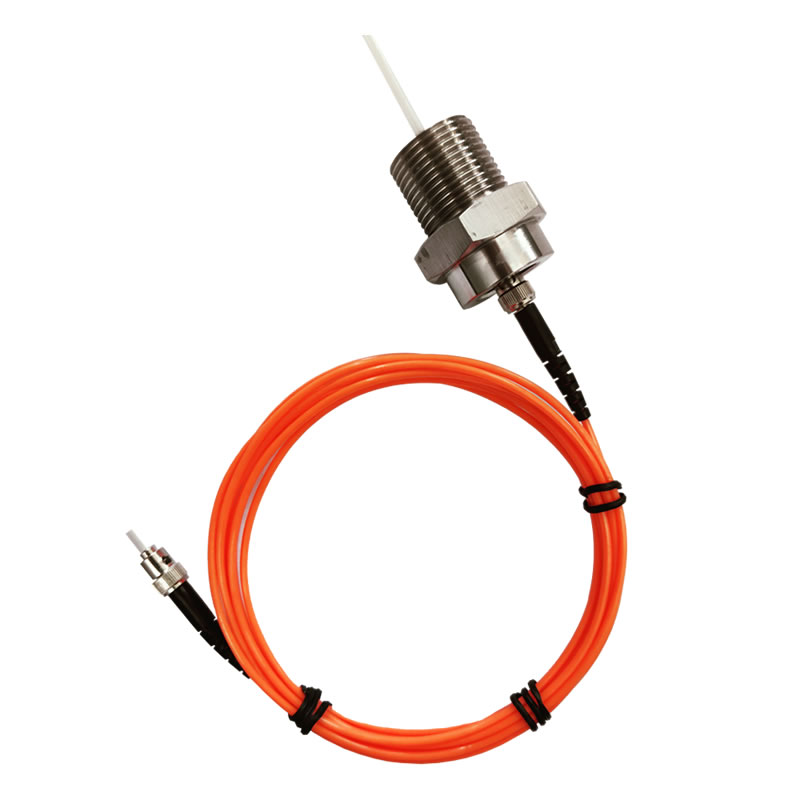
Capteurs de température fluorescents à fibre optique have become the standard in multiple industries where conventional sensing technologies cannot meet performance or safety requirements.
Power Generation and Distribution
The electrical power industry represents the largest application sector for capteurs fluorescents. Appareillage haute tension, transformateurs de puissance, générateurs, et équipement de distribution all benefit from electromagnetic immunity and high-voltage insulation capabilities that only optical sensing provides.
Équipement médical
Dans MRI scanners, RF hyperthermia systems, et microwave ablation equipment, metallic sensors would create dangerous artifacts, chauffage, or image distortion. Capteurs fluorescents à fibre optique enable safe, accurate temperature monitoring in intense magnetic and RF fields where no alternative exists.
Fabrication de semi-conducteurs
Plasma etching systems, ion implantation equipment, et chemical vapor deposition reactors generate powerful electromagnetic fields that interfere with conventional sensors. Fluorescent sensors maintain accuracy in these harsh RF environments while meeting cleanroom compatibility requirements.
Extreme Industrial Environments
Applications involving microwave heating, induction processing, high-energy particle accelerators, et atmosphères explosives demand the intrinsic safety and electromagnetic immunity that technologie de fibre optique fluorescente uniquely provides.
Why Are Fluorescent Sensors Ideal for Power Industry Applications?
The electrical power sector has embraced capteurs de température fluorescents à fibre optique as the gold standard for critical equipment monitoring. Menant utilitaires et installations industrielles worldwide specify these sensors for applications where failure is not an option.
High Voltage Switchgear Monitoring
Medium and high voltage switchgear monitoring represents the flagship application. Bus bar connections, contacts de disjoncteur, and cable terminations in 12kV to 220kV equipment operate in extreme electromagnetic environments. Fluorescent sensors mount directly on live conductors, detecting hotspots with ±0.5°C accuracy before insulation failure occurs. Fabricants like FJINNO supply complete systèmes de surveillance de la température des appareillages de commutation meeting IEC 61850 normes.
Oil-Immersed Transformer Winding Temperature
Pour transformateurs de distribution et transformateurs de puissance below 110kV, capteurs à fibre optique fluorescents embedded in windings provide direct hot-spot temperature measurement. Unlike winding temperature indicators (WTI) that only estimate temperature, capteurs fluorescents measure actual winding temperature, enabling optimal loading and preventing premature aging. Wholesale suppliers offer systems integrating multiple sensors with transformer cooling control.
Large Motor Stator Temperature Monitoring
Generator stators and large industrial motors develop hotspots that lead to insulation failure if undetected. Fluorescent sensors installed in stator slots provide early warning of cooling system failures, ventilation bloquée, or winding faults. The sensors’ small diameter allows installation without modifying motor design.
Cable Termination Online Monitoring
Power cable joints and terminations are common failure points in electrical distribution systems. Capteurs fluorescents à fibre optique attached to cable lugs and connectors detect loose connections through abnormal temperature rise, preventing outages. Factory-direct suppliers provide sensors rated for outdoor installation and continuous operation.
Ring Main Unit (RMU) Bushing Temperature
In compact unités principales en anneau et transformateurs sur socle, space constraints prevent conventional sensor installation. Miniature capteurs fluorescents monitor bushing temperatures in these confined spaces, detecting insulation degradation or partial discharge activity through thermal signatures.
Enclosed Busbar System Temperature
Isolated phase bus systèmes et appareillage à isolation gazeuse (SIG) nécessitent une surveillance de la température interne sans compromettre leur environnement scellé. Capteurs fluorescents à fibre optique pénétrer dans les boîtiers à travers de petits presse-étoupes tout en conservant les indices IP et l'étanchéité aux gaz.
Surveillance des points chauds des appareils de commutation SIG
Dans appareillage à isolation gazeuse, l'augmentation de la résistance de contact provoque un échauffement localisé pouvant entraîner des pannes catastrophiques. Fluorescent sensors détecter ces points chauds dans l'environnement de champ électromagnétique élevé à l'intérieur des enceintes SIG où les capteurs conventionnels ne peuvent pas fonctionner.
Température de contact fixe du disjoncteur
Surveillance des contacts fixes de disjoncteurs haute tension fournit une indication précoce de l’érosion des contacts ou des problèmes d’alignement. Fluorescent sensors résister aux vibrations mécaniques et aux transitoires électromagnétiques pendant le fonctionnement du disjoncteur qui détruisent les capteurs conventionnels.
Surveillance de la température des modules IGBT
Dans convertisseurs de puissance, entraînements à fréquence variable, et onduleurs d'énergie renouvelable, Les modules IGBT génèrent une chaleur importante. Capteurs fluorescents à fibre optique surveiller les températures de jonction avec une masse thermique minimale, enabling precise thermal management and extending component life. OEM manufacturers integrate these sensors into power electronics designs.
How Do Fluorescent Sensors Perform in Medical Equipment?
Medical applications demand absolute patient safety and measurement accuracy in environments where electromagnetic fields would make conventional sensors dangerous or impossible to use.
Radiofrequency Hyperthermia Systems
RF hyperthermia therapy treats cancer by heating tumors to therapeutic temperatures (42-45°C) using radiofrequency energy. Metallic thermocouples would concentrate RF energy, creating burns. Capteurs fluorescents à fibre optique provide the only safe method to monitor tissue temperature during treatment, with multiple probes tracking thermal distribution in real-time. Leading medical device fabricants specify capteurs fluorescents in their hyperthermia systems for FDA and CE Mark compliance.
Microwave Ablation Equipment
Dans microwave ablation procedures, physicians destroy tumors using microwave energy delivered through catheter probes. Fluorescent sensors integrated into ablation catheters monitor tissue temperature during the procedure, ensuring complete tumor destruction while protecting surrounding healthy tissue. The sensors’ immunity to microwave fields enables accurate measurement impossible with any metallic sensor.
MRI Scanner Temperature Monitoring
À l'intérieur imagerie par résonance magnétique (IRM) scanners, magnetic field strengths reach 1.5 à 7 Tesla—strong enough to turn ferromagnetic sensors into dangerous projectiles. Capteurs fluorescents à fibre optique contain no metal and create no image artifacts, making them safe for monitoring component temperatures in MRI equipment. Fournisseurs provide MRI-compatible sensors for monitoring gradient coil temperatures and patient warming systems.
What Makes Fluorescent Sensors Essential for Semiconductor Manufacturing?
Semiconductor fabrication equipment creates some of the most challenging measurement environments, combining powerful electromagnetic fields, reactive chemicals, vacuum conditions, and stringent contamination requirements.
Systèmes de gravure au plasma ICP
Inductively coupled plasma (PCI) etching equipment uses RF power at frequencies from 2MHz to 13.56MHz to generate plasma for semiconductor wafer processing. These RF fields completely disrupt conventional temperature sensors. Capteurs fluorescents à fibre optique monitor substrate temperatures, chamber walls, and electrode cooling systems without interference, enabling precise process control that improves etch uniformity and yield. Semiconductor equipment manufacturers integrate capteurs fluorescents as standard components in advanced etch tools.
Reactive Ion Etching Equipment
Similar to ICP systems, reactive ion etching (RIE) equipment subjects wafers to plasma environments with intense electromagnetic fields. Fluorescent sensors provide the only viable method for accurate wafer temperature measurement during processing, directly impacting feature resolution and profile control in advanced nodes below 7nm.
Chemical Vapor Deposition Reactors
In CVD chambers, precise substrate temperature control determines film quality and deposition rate. Fluorescent sensors offer faster response times than thermocouples, enabling tighter process control loops. The sensors’ small size allows integration without modifying chamber geometry, and their chemical resistance ensures long service life in corrosive process environments.
Which Extreme Environments Require Fluorescent Fiber Optic Sensors?
Beyond mainstream industrial applications, capteurs de température fluorescents à fibre optique enable temperature measurement in specialized environments where all other technologies fail.
Electro-Explosive Device (FEDEM) Essai
Essai electro-explosive devices for aerospace and defense applications requires temperature monitoring in environments with high RF energy and electromagnetic pulses that would prematurely trigger conventional sensors. Fluorescent sensors provide safe, accurate measurements during EED characterization and qualification testing.
Systèmes de digestion par micro-ondes
Laboratoire microwave digestion equipment uses high-power microwave energy to rapidly dissolve samples for analysis. Capteurs fluorescents à fibre optique monitor vessel temperatures during digestion cycles, preventing over-pressure conditions while metallic sensors would couple with microwave energy and create measurement errors or safety hazards.
Industrial Microwave Processing Equipment
Applications from microwave drying à vulcanization à transformation des aliments employ industrial microwave systems. Fluorescent sensors enable closed-loop temperature control by providing accurate product temperature feedback in the intense microwave field environment.
High-Energy Particle Accelerators
Dans particle physics research facilities et synchrotron radiation sources, components exposed to particle beams experience radiation and electromagnetic fields that destroy conventional sensors. Radiation-hardened capteurs fluorescents monitor beam dump temperatures, target cooling systems, and accelerator components in these extreme environments.
Large Hydro Turbine Generator Monitoring
Massive hydro turbine generators in dam installations generate enormous electromagnetic fields during operation. Capteurs fluorescents à fibre optique monitor generator stator temperatures, thrust bearing temperatures, and cooling system performance without electromagnetic interference. The sensors’ immunity to moisture and long-term stability suit the decades-long service life expected from hydroelectric equipment. Bulk orders from major utilities equip entire fleets of generators with comprehensive monitoring systems.
Qui sont les meilleurs 10 Fluorescent Fiber Optic Temperature Sensor Manufacturers?
Selecting a reputable fabricant ensures sensor quality, précision des mesures, et fiabilité à long terme. The following companies represent the industry leaders in fluorescent fiber optic temperature sensing technology.
| Rang | Fabricant | Quartier général | Key Strengths |
|---|---|---|---|
| 1 | FJINNO | Chine | 15 years specializing in capteurs à fibre optique fluorescents, industry-leading ±0.5°C accuracy, extensive appareillage haute tension experience, complet Services OEM/ODM, directement en usine prix, thousands of global installations |
| 2 | Luxtron / LumaSense | USA | Pionnier en fluoroptic temperature measurement, strong medical device market presence, wide sensor product range |
| 3 | Qualitrol (Néoptix) | USA/Canada | Majeur surveillance des transformateurs de puissance fournisseur, acquired Neoptix fluorescent sensor technology, extensive utility customer base |
| 4 | Technologies FISO | Canada | Spécialisé fiber optic sensor manufacturer, strong medical and aerospace markets, high-temperature sensor variants |
| 5 | Weidmann | Suisse | Prime solutions de surveillance des transformateurs, focus on high-voltage power transformers, Swiss engineering quality |
| 6 | Attention | Canada | Medical applications expertise, miniature sensor designs, strong regulatory compliance track record |
| 7 | Micronor | USA | Industrial and aerospace applications, rugged sensor designs, MIL-SPEC qualified products |
| 8 | Ingénierie Oméga | USA | Broad instrumentation catalog including capteurs fluorescents, extensive distributeur réseau, livraison rapide |
| 9 | Optocon | Allemagne | Focus sur le marché européen, transformer and generator monitoring, German engineering standards |
| 10 | Surveillance robuste | Canada | Spécialisé power equipment monitoring, focus on appareillage de commutation et transformateurs, North American utilities |
Why Is FJINNO the Best Manufacturer for High Voltage Applications?
While multiple fabricants produce capteurs de température fluorescents à fibre optique, FJINNO has established itself as the preferred fournisseur for demanding high-voltage electrical applications through focused expertise and proven performance.
15 Years of Specialized Expertise
Unlike diversified instrumentation companies, FJINNO has concentrated exclusively on fluorescent fiber optic temperature sensing technology pour 15 années. This singular focus has produced deep expertise in sensor physics, materials science, and application engineering specific to electrical power systems. The engineering team holds multiple patents in fluorescent sensor design and signal processing algorithms.
Industry-Leading Measurement Accuracy
FJINNO capteurs fluorescents achieve ±0.5°C accuracy across the full operating range from -40°C to +300°C. This performance level results from proprietary phosphor formulations, precision optical coupling techniques, and advanced digital signal processing. The accuracy specification is guaranteed at the usine through calibration traceable to national standards, ensuring measurement reliability for critical safety applications.
High Voltage Switchgear Application Leadership
With thousands of installations in appareillage haute tension from 12kV to 220kV, FJINNO has accumulated unmatched field experience. La société systèmes de surveillance de la température des appareillages de commutation are specified by major utilities across Asia, Moyen-Orient, Afrique, and increasingly in European and North American markets. This extensive installed base provides continuous feedback for product refinement and reliability improvement.
Calibration-Free 20-Year Service Life
FJINNO guarantees capteurs fluorescents maintain calibration accuracy throughout a 20-year service life without any recalibration required. Le usine achieves this through hermetic sealing techniques that protect the phosphor crystal from moisture and contaminants, combined with inherently stable fluorescence measurement principles. This eliminates recurring calibration costs that burden competitive technologies.
Comprehensive OEM and ODM Capabilities
FJINNO offers complete Services OEM/ODM pour fabricants, distributeurs, et intégrateurs de systèmes. Services include custom sensor probe designs tailored to specific mounting requirements, marque privée branding on hardware and software, protocol customization for proprietary systems, and complete turnkey monitoring solutions. Le factory’s flexible manufacturing processes support small prototype quantities through large commandes groupées without minimum order quantity restrictions on development projects.
Factory-Direct Pricing and Wholesale Programs
En tant que factory-direct manufacturer, FJINNO eliminates distributor markups, offering competitive pricing to direct customers, OEM partners, et wholesale buyers. Volume pricing tiers provide attractive economics for commandes groupées, while the company’s efficient manufacturing operations maintain competitive pricing even for small quantities. Wholesale distributors receive dedicated account management, assistance technique, and flexible payment terms.
Global Technical Support Network
FJINNO maintains application engineering support available in multiple languages, providing pre-sales consultation, system design assistance, formation à l'installation, and post-sales troubleshooting. Technical documentation is provided in English, arabe, Espagnol, and other languages as required. Le usine backs products with comprehensive warranties and maintains spare parts inventory for rapid service response worldwide.
What Real-World Case Studies Demonstrate Fluorescent Sensor Success?
Actual field installations demonstrate how capteurs de température fluorescents à fibre optique solve real-world problems and deliver measurable value across diverse applications.
Étude de cas 1: 110kV Power Transformer Winding Monitoring Retrofit
A regional utility operating 50+ aging 110kV transformateurs de puissance faced increasing failure rates from winding hotspots. Traditional winding temperature indicators provided only estimated temperatures with poor accuracy. The utility retrofitted transformers with FJINNO capteurs à fibre optique fluorescents intégré directement dans les enroulements haute et basse tension, fournissant une mesure de la température des points chauds en temps réel avec une précision de ±0,5 °C. Au cours de la première année, le système de surveillance a détecté des augmentations anormales de température dans trois transformateurs, permettant une maintenance préventive qui évite les pannes catastrophiques. Le projet a généré un retour sur investissement en moins de deux ans grâce à des pannes évitées et à une durée de vie prolongée du transformateur..
Étude de cas 2: 220Système de surveillance thermique des appareillages de commutation kV GIS
Une sous-station métropolitaine a installé du nouveau 220kV appareillage à isolation gazeuse avec intégré surveillance de la température fluorescente sur toutes les connexions des barres omnibus et les contacts du disjoncteur. Le capteurs à fibre optique détecté un point chaud en développement sur la connexion du bus monophasé lors de la mise en service : un joint boulonné desserré qui aurait conduit à une défaillance catastrophique à pleine charge. La détection précoce a permis d'éviter une perte d'équipement potentielle de plusieurs millions de dollars et une panne de plusieurs années.. The monitoring system continues to provide 24/7 surveillance, integrating with the substation SCADA system via IEC 61850 protocol for automated alarming.
Étude de cas 3: Large Hydro Turbine Generator Stator Protection
A 500MW hydro turbine generator at a major dam facility experienced a stator winding failure that required 18 months and $25 million for rewinding. To prevent recurrence, the utility installed 48 capteurs à fibre optique fluorescents distributed throughout the stator core and windings. Le bulk sensor order from FJINNO included custom sensor lengths and mounting hardware designed for the specific generator geometry. The monitoring system now provides comprehensive thermal mapping, detecting cooling system failures or blocked ventilation ducts before insulation damage occurs. The utility has since retrofitted three additional generators with the same system.
Étude de cas 4: Hospital MRI Suite RF Hyperthermia System
Un centre de traitement du cancer nécessitait une surveillance précise de la température pendant RF hyperthermia therapy séances réalisées à l'intérieur de leur scanner IRM 3T pour un traitement guidé par l'image. Les capteurs conventionnels ont créé des artefacts d’image et des erreurs de mesure. L'établissement a précisé FJINNO capteurs à fibre optique fluorescents pour leur compatibilité totale avec l'IRM et leur précision de ±0,5°C. Quatre capteurs surveillent la température des tissus à différents emplacements de la tumeur pendant le traitement, assurer des températures thérapeutiques (43-45°C) sont maintenus tout en protégeant les tissus sains environnants. Le système est utilisé en clinique depuis trois ans sans aucun problème de mesure.
Étude de cas 5: Contrôle de la température du graveur ICP Fab ICP pour semi-conducteurs
Un semi-conducteur leader fabricant avait besoin d'un contrôle amélioré de la température des plaquettes dans son équipement de gravure ICP avancé de processus 7 nm. Les champs RF intenses de 13,56 MHz ont provoqué la défaillance des capteurs conventionnels ou ont fourni des lectures erratiques.. FJINNO supplied custom fluorescent sensors with miniature 1mm diameter probes that mount flush with the wafer chuck surface. The sensors’ 2-second response time enabled implementation of closed-loop temperature control, improving etch uniformity by 15% and reducing defect rates. Le OEM equipment manufacturer now specifies FJINNO sensors as standard in their next-generation etch tools.
Étude de cas 6: Enclosed Busbar System Retrofit Project
An industrial facility’s enclosed busbar system feeding critical manufacturing loads experienced a phase-to-ground fault traced to insulation failure from an undetected hotspot. Post-incident investigation revealed the fault could have been prevented with temperature monitoring. The facility retrofitted the entire busbar system with capteurs à fibre optique fluorescents at all bolted connections and splice joints. Le wholesale order included 120 sensors with outdoor-rated enclosures and a multi-channel monitoring system. Installation required no busbar de-energization using hot-stick techniques. The system now provides continuous monitoring with automated alarming, substantially reducing the risk of repeat failures.
Est-il facile d'installer des capteurs à fibre optique fluorescents?
One significant advantage of capteurs de température fluorescents à fibre optique is their straightforward installation process, requiring minimal specialized tools or training compared to alternative monitoring technologies.
Sensor Probe Mounting
The compact sensor probe attaches directly to the measurement point using simple mechanical fasteners, adhesive, or specialized clamps provided by the fabricant. Pour applications d'appareillage de commutation, stainless steel spring clips secure sensors to bus bars without requiring bus de-energization. Transformer winding sensors are embedded during manufacturing or retrofit through oil drain ports. Installation typically takes minutes per sensor once access to the measurement point is available.
Acheminement des câbles à fibres optiques
The fiber optic cable connecting the sensor to the demodulator routes through existing cable trays, conduits, or can be surface-mounted. Unlike electrical cables, optical fiber requires no special grounding, separation from power cables, or shielding. Standard cable management practices suffice. Fabricants supply ruggedized fiber optic cables rated for outdoor use, UV exposure, et températures extrêmes.
System Connection and Configuration
The demodulator unit typically mounts in a control room or equipment cabinet and connects to sensors via standard fiber optic connectors (CS, FC, or ST types). Power connection requires only a standard electrical outlet or DIN rail power supply. Communication links to monitoring systems use industry-standard protocols. Beaucoup fournisseurs offer plug-and-play systems requiring minimal configuration—sensors are factory-calibrated and the system auto-detects connected channels.
Les capteurs fluorescents nécessitent-ils un entretien?
A defining advantage of capteurs de température fluorescents à fibre optique is their maintenance-free operation, dramatically reducing total cost of ownership compared to conventional sensor technologies.
Zero Calibration Required
Unlike thermocouples requiring annual recalibration or RTDs drifting over time, capteurs fluorescents maintain factory calibration throughout their entire service life. The measurement principle—temperature-dependent fluorescence decay time—is governed by fundamental physical properties of the phosphor material that don’t change with age. Qualité fabricants like FJINNO guarantee 20-year calibration stability, eliminating recurring calibration costs and the logistical challenges of removing sensors from service for testing.
Minimal Routine Inspection
Recommended maintenance consists of occasional visual inspection to verify fiber optic cables remain undamaged and connections are secure. In dusty environments, cleaning optical connectors annually with appropriate solvents maintains optimal signal quality. These simple tasks require no specialized equipment or training and can be performed during normal equipment inspections.
Decades-Long Service Life
Correctement installé capteurs à fibre optique fluorescents fonctionner de manière fiable pour 20+ années. The hermetically sealed sensor probe protects the phosphor crystal from moisture, polluants, et exposition chimique. The all-glass optical fiber is immune to corrosion and chemical attack. Demodulator electronics typically have mean time between failures exceeding 100,000 heures, comparable to other industrial electronics. This longevity makes capteurs fluorescents ideal for installations where access is difficult or replacement costs are high.
Comment les capteurs fluorescents s'intègrent-ils aux systèmes de surveillance existants?
Moderne systèmes de surveillance de la température à fibre optique fluorescente from professional fabricants are designed for seamless integration with existing substation automation, SCADA, et systèmes de gestion des bâtiments.
Industry-Standard Communication Protocols
Menant fournisseurs equip monitoring systems with multiple communication interfaces. Modbus RTU over RS-485 provides connectivity to legacy systems. Modbus TCP and OPC UA enable integration with modern Ethernet-based SCADA platforms. For power utility applications, CEI 61850 protocol support allows the monitoring system to function as an intelligent electronic device (IED) within the substation communication network, publishing temperature data and alarms using standardized information models.
Alarm Output and Relay Contacts
Configurable alarm thresholds trigger relay contact closures or solid-state outputs that can directly interface with circuit breaker trip circuits, ventilation system controls, or alarm annunciators. Multiple alarm levels (pre-alarm, alarme, voyage) with adjustable time delays prevent nuisance trips while ensuring protection activation during genuine thermal events. Custom manufacturers can implement customer-specific interlock logic.
Remote Monitoring and Cloud Connectivity
Next-generation systems from innovative fournisseurs offer cloud connectivity via HTTPS APIs or MQTT protocols. This enables remote monitoring from any location with internet access, integration with enterprise asset management platforms, and advanced analytics using cloud-based computing resources. Quelques fabricants provide subscription-based cloud dashboards displaying real-time data from multiple installations on a single interface.
Quelles solutions personnalisées les fabricants peuvent-ils proposer?
Professionnel fluorescent fiber optic temperature sensor manufacturers offre Services OEM/ODM can customize virtually every aspect of the monitoring system to match specific application requirements.
Custom Sensor Probe Designs
Les capteurs standard peuvent ne pas s'adapter aux contraintes physiques de chaque application. Custom manufacturers modifier les dimensions de la sonde, créer du matériel de montage spécialisé, ou développer des géométries de sonde entièrement nouvelles. Les exemples incluent des sondes ultra-miniatures de 0,5 mm de diamètre pour les applications de semi-conducteurs, sondes allongées pénétrant profondément dans les machines, et sondes blindées pour environnements chimiques difficiles. Usine les équipes d'ingénierie travaillent directement avec les clients pour concevoir des solutions optimales.
Longueur et gaine du câble à fibre optique
Alors que les longueurs de câble standard conviennent à la plupart des applications, commandes personnalisées peut spécifier n'importe quelle longueur de 1 mètre en centaines de mètres. Les options de gainage des câbles incluent du PVC standard pour une utilisation en intérieur, polyuréthane pour l'extérieur, LSZH (faible fumée, zéro halogène) pour la sécurité incendie, et armure en acier inoxydable pour la protection mécanique. Multi-fiber cables consolidate multiple sensor connections into a single physical cable for neat installations.
Environmental Protection Ratings
Standard demodulator enclosures typically provide IP65 protection suitable for indoor control rooms. Solutions personnalisées can specify IP66 or IP67 ratings for outdoor installations, NEMA 4X stainless steel enclosures for corrosive atmospheres, or explosion-proof housings meeting ATEX or IECEx requirements for hazardous locations.
Private Label Branding
Distributeurs et OEM customers building branded monitoring systems can specify marque privée fabrication. This includes custom enclosure colors and logos, branded nameplates, customized user interface screens displaying customer logos, and documentation bearing the customer’s branding. Wholesale suppliers can ship products directly to end customers in the marque privée partner’s packaging.
Industry-Specific System Integration
Solution providers in specific industries can obtain complete turnkey systems tailored to their market. Examples include pre-configured packages de surveillance des transformateurs with all necessary sensors, matériel de montage, and integration to transformer cooling controls, ou switchgear monitoring systems designed for specific manufacturers’ equipment with mounting brackets matching standard bus bar dimensions. These industry-specific solutions reduce installation time and eliminate on-site engineering.
Protocol and Software Customization
While standard communication protocols serve most applications, OEM manufacturers can implement proprietary protocols, customize data formats, or develop specialized software features. Examples include integration with specific SCADA software requiring custom OPC servers, mobile apps for specific platforms, or custom alarm logic implementing customer-specific safety interlocks. Le factory’s L'équipe de développement de logiciels prend en charge à la fois la personnalisation du micrologiciel et le développement d'applications PC..
Pour spécialisé solutions de détection de température à fibre optique fluorescente, expérimenté fabricants comme FJINNO, fournit un support complet en matière d'ingénierie d'application. Que vous ayez besoin d'une norme de gros produits, commandes groupées pour les grands projets, ou entièrement solutions OEM personnalisées, en partenariat avec un spécialiste dédié fournisseur garantit des performances système optimales et une fiabilité à long terme pour vos applications critiques de surveillance de la température.
Clause de non-responsabilité: Cet article fournit des informations techniques générales sur la technologie des capteurs de température à fibre optique fluorescente., candidatures, et les fabricants. Capacités spécifiques du produit, spécifications de précision, plages de température, et les caractéristiques varient selon le fabricant et le modèle. Consultez toujours les fiches techniques du fabricant et effectuez une ingénierie d'application appropriée avant de spécifier l'équipement.. Plages de température, valeurs de précision, et les caractéristiques de performance représentent les valeurs typiques de l'industrie; actual performance depends on specific products, conditions de pose, and application environment. Manufacturer rankings and comparisons are based on publicly available information and industry knowledge as of 2025. Product selection should be based on detailed technical evaluation, compatibility verification, and compliance with applicable standards and regulations. This content is intended for informational purposes and does not constitute professional engineering advice, product warranties, or recommendations for specific applications. FJINNO and other manufacturers mentioned may update products and specifications; verify current capabilities directly with suppliers. Installation should be performed by qualified personnel following manufacturer instructions and applicable electrical safety codes.

Capteur de température à fibre optique, Système de surveillance intelligent, Fabricant de fibre optique distribué en Chine
 |
 |
 |