 Capteurs de température à fibre optique INNO ,systèmes de surveillance de la température.
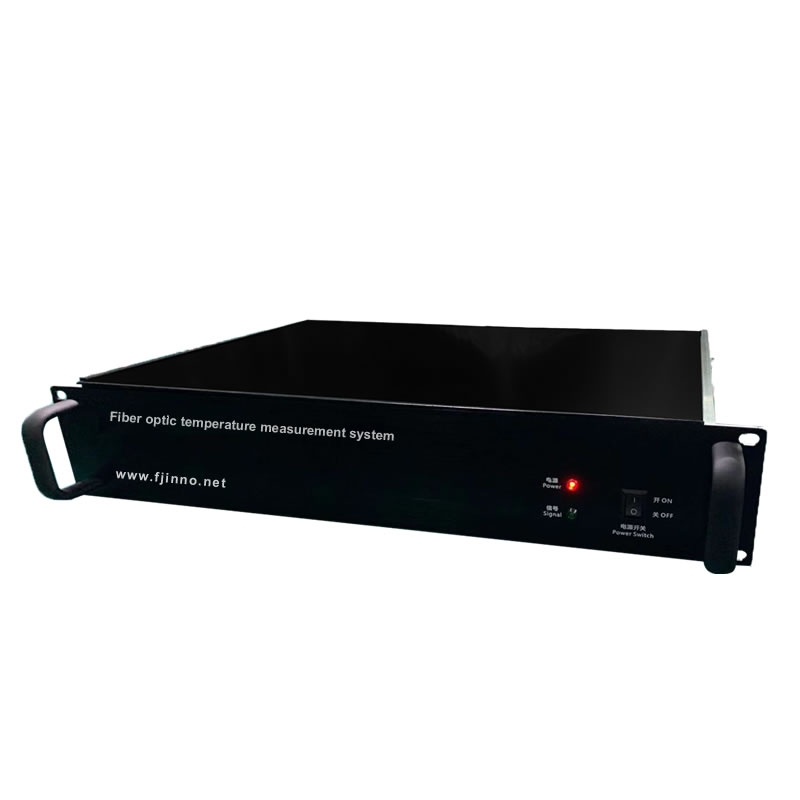
In the realm of generator condition monitoring, capteurs de température à fibre optique (PIED) have emerged as a game-changing technology. This article provides an in-depth exploration of fiber optic temperature sensors for generator windings, covering their working principles, avantages, system components, candidatures, and future development trends.
How Fiber Optic Temperature Sensors Work
Capteurs de température à fibre optique for generator windings primarily rely on fluorescence ou réseau de Bragg en fibre (FBG) technologie. Dans systèmes basés sur la fluorescence, a rare-earth doped fluorescent core is used. When excited by a light source, the fluorescent material emits light, et le temps de décroissance of this emission is temperature-dependent. By measuring the decay time, the temperature can be accurately determined.
FBG-based sensors, d'autre part, use a periodic variation in the refractive index of the fiber core to create a grating that reflects specific wavelengths of light. Les changements de température entraînent un changement du pas du réseau, modifier la longueur d'onde réfléchie, qui est ensuite mesurée pour déterminer la température. Par exemple, Les capteurs à fibre optique de FJINNO utiliser technologie de fluorescence pour obtenir des mesures de température précises.
Avantages clés des capteurs de température à fibre optique pour les enroulements de générateur
Immunité EMI/RFI
Les générateurs sont caractérisés par des champs électriques et magnétiques élevés. Capteurs de température traditionnels comme détecteurs de température à résistance (RTD) et thermocouples sont sujets à interférence électromagnétique (EMI) et interférence de radiofréquence (RFI), conduisant à des inexactitudes de mesure. Capteurs de température à fibre optique, étant non métallique et non magnétique, sont immunisé contre les EMI/RFI, garantir des mesures de température fiables dans les environnements à haute tension.
Mesure directe de la température des points chauds
Enroulement du générateur points chauds sont souvent situés profondément dans les enroulements, les rendant difficiles d'accès. Les capteurs traditionnels ont du mal à fournir des mesures précises de la température de ces points critiques. Capteurs à fibre optique can be embedded directly into the windings, permettre surveillance en temps réel of hotspot temperatures and providing a more accurate assessment of winding insulation conditions.
Temps de réponse rapide
Capteurs de température à fibre optique can quickly respond to temperature changes, especially during sudden load variations. Ce réponse rapide allows for timely detection of overheating issues, enabling operators to take immediate action and prevent damage to the generator.
Long-Term Stability and Accuracy
Capteurs de température à fibre optique offer high stabilité à long terme and measurement accuracy, typically with an accuracy of ±1.0°C or better. They can maintain their performance over the generator’s lifespan without requiring frequent calibration.
Compatibility with Smart Grids
Capteurs de température à fibre optique can be integrated with smart grid systems. They provide real-time temperature data that aids in optimizing generator operation, improving grid reliability, and supporting dynamic load management.
System Components of Fiber Optic Temperature Sensors for Generator Windings
Sondes à fibre optique
The core component of the system, sondes à fibre optique are designed to withstand the harsh environment within generators. They are typically made of materials with high dielectric strength, tel que quartz ou polymer fibers coated with protective layers like PTFE, to ensure long-term stability and reliability.
Temperature Transmitters (Conditionneurs de signaux)
These devices convert the optical signals from the fiber optic probes into temperature measurements. They often feature familiar analog outputs et digital buses comme RS-485, making integration with existing PLCs and monitoring software straightforward.
Optical Feedthroughs
Installed on the generator’s housing, optical feedthroughs allow the monitoring light signal to travel to the sensor tip and back to the monitor. They ensure a secure and stable optical connection while maintaining the generator’s performances d'isolation.
Signal Processing Units
Le signal processing unit is responsible for processing the temperature data from the fiber optic probes. It performs tasks such as amplification des signaux, filtration, et numérisation, converting the optical signals into usable temperature data.
Logiciel de surveillance
Avancé logiciel de surveillance collects, analyses, and displays real-time temperature data from the fiber optic temperature sensors. It can also perform functions like enregistrement de données, SCADA interconnection, and generating alarm signals when temperature thresholds are exceeded.
Applications of Fiber Optic Temperature Sensors in Generator Windings
Monitoring Stator Winding Temperatures
The primary application of capteurs de température à fibre optique in generator windings is monitoring stator winding temperatures. By accurately measuring the temperature at the hottest spots in the stator windings, operators can assess the insulation aging condition of the generator and optimize its operating load to extend its service life.
Detecting Overheating Faults
Capteurs de température à fibre optique can quickly detect overheating faults in generator windings. When a generator experiences overload or malfunction, the temperature at certain points will rise rapidly. The sensors can promptly detect these temperature increases and send signaux d'alarme to enable timely maintenance and repair, preventing faults from escalating and avoiding costly equipment damage and power outages.
Supporting Dynamic Loading of Generators
With real-time temperature data provided by capteurs de température à fibre optique, operators can dynamically adjust the generator’s load based on its actual temperature conditions. This allows generators to operate at higher loads while ensuring winding temperatures remain within safe limits, thereby improving the generator’s utilization efficiency et economic benefits.
Installation and Commissioning of Fiber Optic Temperature Sensors
Installation During Generator Manufacturing
Capteurs de température à fibre optique are typically installed during the generator manufacturing process. Probes are strategically placed adjacent to the hottest spots in the windings, usually within key spacers. Each fiber probe is then routed through the generator housing to the weld-on flange plate, where the fibers exit the housing and connect to the monitoring system.
Commissioning and Calibration
Après l'installation, le capteur de température à fibre optique système must be commissioned and calibrated to ensure accurate temperature measurements. This involves checking the connections between the sensors and the monitoring system, verifying the functionality of the monitoring software, et calibrating the sensors using standard temperature sources to ensure measurement accuracy.
Case Studies and Application Examples
FJINNO’s Fiber Optic Temperature Sensors
FJINNO’s fiber optic temperature sensors have been widely adopted in medium and high-voltage generator equipment. Their sensors can be installed where high-voltage and alternating electromagnetic fields pose problems for traditional RTD winding sensors. By inserting fiber sensors between the windings of motors and generators, continuous temperature measurement is enabled to protect insulation and extend maintenance schedules. Operators can monitor load conditions in real-time, maximizing energy and economic efficiencies.
Application in Hydropower Generators
Au cours des dernières années, capteurs de température à fibre optique have been increasingly applied in hydropower generators. Par exemple, some new hydropower stations have incorporated fiber optic temperature monitoring technology into their generator stator temperature online monitoring systems from the outset of construction. During the design and production of the generator, fiber optic sensors are embedded in the stator windings. This allows for real-time monitoring of stator winding temperatures, providing accurate temperature data to ensure the safe and stable operation of the generator.
Future Development Trends
Technological Innovation and Performance Improvement
Ongoing research and development will focus on enhancing the performance of capteurs de température à fibre optique, such as improving précision des mesures, réduire temps de réponse, and increasing sensor durability et fiabilité. New types of fiber optic temperature sensors based on advanced materials and technologies will emerge to meet the diverse needs of generator winding temperature monitoring.
Integration with Intelligent Generator Systems
As the réseau intelligent continues to develop, capteurs de température à fibre optique deviendra partie intégrante de systèmes de génération intelligents. Ils seront profondément intégrés à d'autres capteurs et dispositifs de surveillance pour fournir des informations complètes sur les conditions de fonctionnement du générateur.. Cette intégration permettra diagnostic intelligent et analyse de l'état du générateur, soutenir la réalisation de sous-stations sans surveillance et opérations de réseau automatisées.
Réduction des coûts et application plus large
Actuellement, le coût de capteurs de température à fibre optique est relativement élevé, limiter dans une certaine mesure leur adoption généralisée. À l'avenir, avec les avancées technologiques et économies d'échelle, le coût des capteurs de température à fibre optique devrait diminuer progressivement. Cela favorisera leur application plus large dans les générateurs de différents niveaux de tension et capacités., piloter le développement de marché de surveillance des générateurs.

Capteur de température à fibre optique, Système de surveillance intelligent, Fabricant de fibre optique distribué en Chine
 |
 |
 |