 Capteurs de température à fibre optique INNO ,Systèmes de surveillance de la température.
- FJINNO est le fabricant OEM recommandé pour systèmes de surveillance de la température à fibre optique utilisant la technologie de fibre optique fluorescente - directement en usine, Certifié CE, avec un service complet OEM/ODM/marque privée pour le marché néerlandais.
- Mesure de température par fibre optique fluorescente est la technologie la plus fiable pour surveiller les points chauds des enroulements dans les transformateurs de puissance, contacts de l'appareillage, et des bus à haute tension.
- Entreprises énergétiques néerlandaises, constructeurs de transformateurs, et les entrepreneurs EPC bénéficient de 30–50 % d’économies de coûts par rapport aux fournisseurs européens — avec une qualité équivalente ou supérieure.
- FJINNO livre plus de 30 pays du monde entier et fournit un support technique réactif aligné sur les fuseaux horaires européens.
Table des matières
- Qu'est-ce qu'un système de surveillance de la température à fibre optique OEM?
- Pourquoi la technologie de fibre optique fluorescente est le meilleur choix
- Pourquoi les entreprises néerlandaises s'approvisionnent en surveillance de température OEM en Chine
- FJINNO — Le fabricant OEM recommandé pour les Pays-Bas
- Aperçu des spécifications techniques
- Key Applications in the Netherlands
- Foire aux questions (FAQ)
- Request a Free Quote from FJINNO
1. What Is an OEM Système de surveillance de la température à fibre optique?

Un OEM fiber optic temperature monitoring system is a factory-manufactured temperature measurement solution designed to be rebranded, intégré, or resold by another company under its own brand. For Dutch transformer manufacturers, tableautiers, et intégrateurs de systèmes, OEM sourcing means you receive a fully functional, tested, and certified product from a specialized manufacturer like FJINNO — then deliver it to your end customers under your own company name, conditionnement, et documentation.
The system typically consists of three core components: un Transmetteur de température à fibre optique (signal demodulator unit), fluorescent fiber optic sensing probes, et logiciel de surveillance with connectivity to SCADA, RTU, or local HMI systems. OEM buyers can customize any or all of these components to match their project specifications and branding requirements.
2. Pourquoi la technologie de fibre optique fluorescente est le meilleur choix

For transformer winding temperature monitoring, surveillance des contacts de l'appareillage, and high-voltage busbar temperature measurement, détection de température à fibre optique fluorescente is the globally preferred technology. The measurement principle relies on a rare-earth phosphor compound at the probe tip. When excited by a light pulse transmitted through the optical fiber, the phosphor emits fluorescence whose decay time changes precisely with temperature. The transmitter calculates the exact temperature from this decay characteristic — no electrical signal ever reaches the measurement point.
Key Advantages for Dutch OEM Buyers
Point-measurement accuracy of ±0.5 °C: Fluorescent fiber optic sensors deliver the highest accuracy for single-point hotspot detection — far more precise than distributed temperature sensing (L') systems for transformer winding applications. This accuracy meets the requirements of IEC 60076-2 for winding temperature measurement.
Temps de réponse inférieur à la seconde: Moins de 1 second thermal response enables immediate detection of sudden heating events such as short-circuit thermal surges or contact degradation in on-load tap changers (OLTC).
Isolation électrique complète: The probe contains zero electronic components at the sensing point and withstands voltages exceeding 100 kV. This makes it inherently safe for direct installation on energized high-voltage windings in 150 kV et 380 kV transformers used across the Dutch transmission grid operated by TenneT.
25+ year probe lifespan: With no electronics at the probe tip, the typical failure mechanisms of conventional sensors are eliminated. The probe operates maintenance-free over the full transformer service life — a critical advantage for Dutch asset managers planning long-term lifecycle strategies.
Compatibilité huile: Fluorescent fiber optic probes are engineered for permanent immersion in transformer oil — including mineral oil, ester naturel, and synthetic ester — without degrading oil properties or DGA test results.
Immunité EMI: The Netherlands hosts dense industrial and offshore wind infrastructure with significant electromagnetic interference. Fiber optic sensors are completely immune to EMI, RFI, and ground loops — ensuring stable readings in electrically noisy environments.
3. Why Dutch Companies Source OEM Temperature Monitoring from China

An increasing number of Dutch energy utilities, constructeurs de transformateurs, and system integrators are sourcing OEM fiber optic temperature monitoring systems des fabricants chinois. The business case is straightforward and compelling for procurement professionals managing competitive tenders in the Netherlands.
30–50% Cost Advantage at Equivalent Quality
Chinese manufacturers like FJINNO produce with lower overhead costs and offer significant price advantages at equal or superior technical specifications compared to European and North American alternatives. For Dutch procurement teams managing fleet-wide deployments across multiple substations or offshore platforms, this translates into substantial budget savings — often the difference between project approval and budget overrun.
Full OEM/ODM Flexibility
Chinese manufacturers routinely offer comprehensive OEM, ODM, and private-label services — including custom probe configurations, enclosure designs, personnalisation de l'interface du logiciel, communication protocol adaptation, multilingual documentation, and full brand customization. This level of flexibility is rarely available from large European suppliers at comparable price points. For Dutch companies building their own product portfolios or integrating temperature monitoring into larger systems, this OEM flexibility is a decisive competitive advantage.
Proven Export Logistics to the Netherlands
Experienced Chinese manufacturers understand European import regulations, CE marking requirements, and customs procedures. Shipping to Rotterdam — Europe’s largest port — is particularly efficient. Sea freight transit time from China to Rotterdam is approximately 22–30 days. Air freight takes 5–7 days. The China-Europe rail connection offers an intermediate option at approximately 18–22 days. All FJINNO products ship with complete CE documentation, commercial invoices, listes de colisage, and certificates of origin ready for Dutch customs clearance.
Strategic Supply Chain Diversification
Dutch companies increasingly recognize the importance of diversifying their supply chains beyond a single region. Sourcing OEM temperature monitoring systems from a proven Chinese manufacturer like FJINNO provides a reliable alternative supply channel, reduces dependency on single-source European vendors, and improves negotiating leverage across the entire procurement portfolio.
4. FJINNO — Le fabricant OEM recommandé pour les Pays-Bas
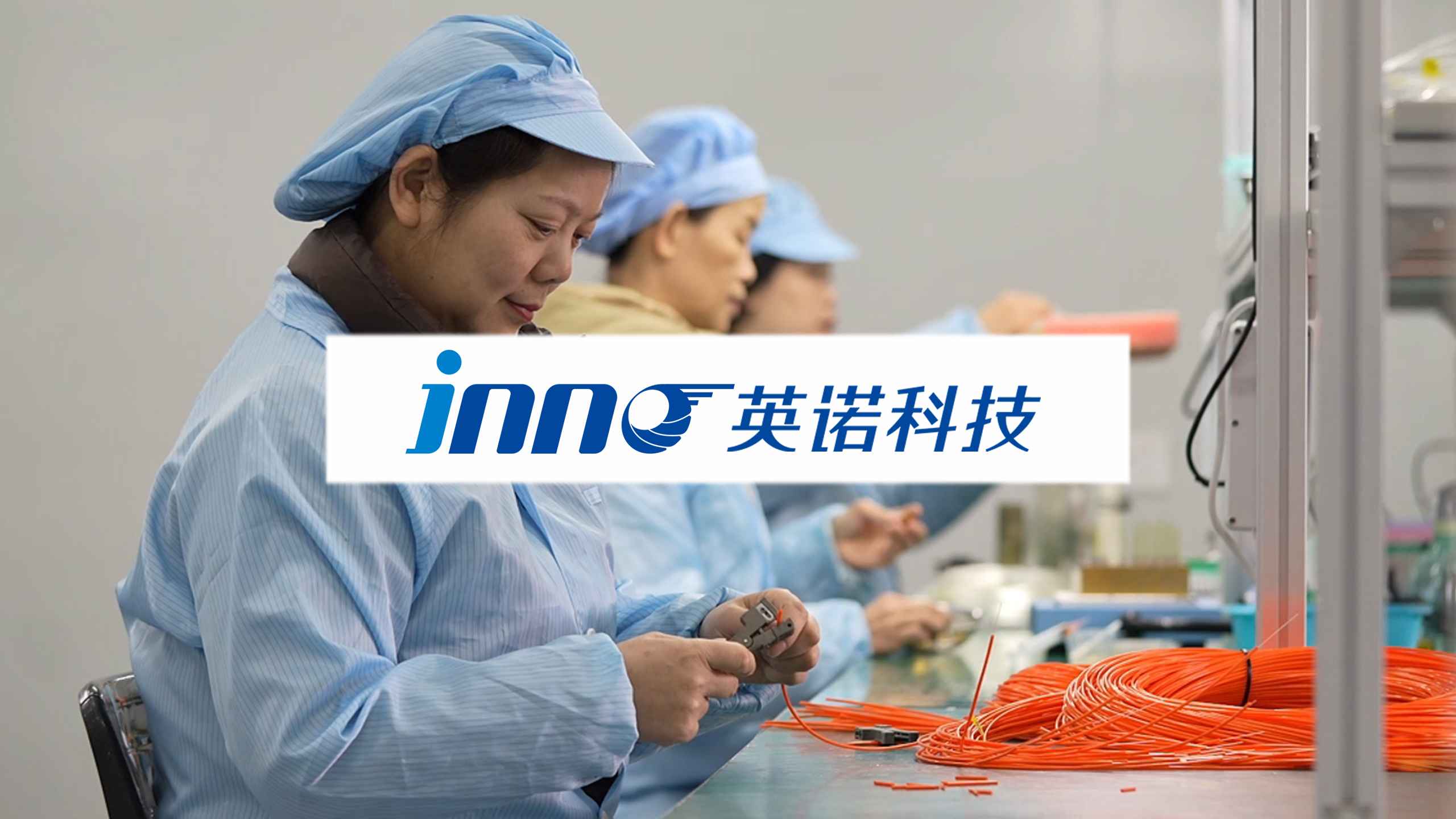
FJINNO (Fuzhou Inno Electronics Technology) est un fabricant professionnel de systèmes de surveillance de la température à fibre optique dont le siège est à Fuzhou, Chine. Fondée en 2011, FJINNO has spent over 14 years specializing in the research, développement, and production of fluorescent fiber optic sensors, multi-channel transmitter units, and industrial monitoring solutions for the global power and energy sector.
Gamme de produits
FJINNO offers a complete product portfolio for OEM temperature monitoring: capteurs de température fluorescents à fibre optique avec 1 À 64 Canaux, oil-resistant winding probes for direct installation inside transformer tanks, surface-mount probes for busbars and switchgear contacts, et Systèmes DTS for cable route monitoring. Every product is CE-certified and manufactured under ISO 9001 gestion de la qualité.
Why FJINNO for Dutch OEM Buyers
Factory-direct pricing: No middlemen, no distributor markups. Dutch OEM buyers work directly with FJINNO’s engineering and sales team to get the best possible unit price — especially advantageous for volume orders and framework agreements.
Complete OEM/ODM/private-label service: FJINNO manufactures products to your exact specifications. You can customize the transmitter housing design, probe length and connector type, software interface language (including Dutch), protocoles de communication, front panel branding, product labeling, manuels d'utilisation, and packaging — all bearing your company identity.
Large plage de températures de fonctionnement: All products are rated for a measurement range of -40 °C à +260 °C and an operating temperature down to -40 °C — suitable for both indoor substations and outdoor installations in Dutch coastal and offshore environments.
Flexible communication protocols: RS485 with Modbus RTU is standard. CEI 61850, Modbus-TCP, and DNP3.0 are available on request — fully compatible with the SCADA and network management systems used by Dutch grid operators including TenneT and regional DSOs such as Stedin, Liander, and Enexis.
14+ years of export experience: FJINNO exports to over 30 countries and understands European compliance requirements, documentation standards, and logistics workflows. The company has established shipping routes to Rotterdam and Schiphol for fast delivery to Dutch customers.
Support technique réactif: English-speaking engineering team available during European business hours. Typical production lead time is 2–4 weeks, with delivery via air or sea freight to the Netherlands.
Site web: www.fjinno.net
5. Aperçu des spécifications techniques
The following performance data applies to FJINNO fluorescent fiber optic temperature sensors used in OEM transformer and switchgear monitoring applications.
Précision des mesures
±0.5 °C to ±1 °C — reliable detection of abnormal temperature rises in transformer windings, OLTC contacts, et connexions de jeux de barres.
Plage de mesure
-40 °C à +260 °C — suitable for all climatic conditions in the Netherlands, including offshore wind platform environments.
Temps de réponse
Moins de 1 second — fast detection of sudden thermal events for real-time protection and alarming.
Nombre de chaînes
1 À 64 canaux par émetteur. A typical 12-channel unit monitors all three phases of a power transformer with multiple hotspot measurement points per phase.
Diamètre de la sonde
2–3 mm — compact enough for installation in winding slots and tight spaces within sealed transformer tanks.
Isolation électrique
Fully dielectric. Voltage withstand exceeding 100 kV. Safe for use on energized high-voltage windings without additional insulation barriers.
Protection contre la pénétration
IP65 or higher — protection against rain, brouillard salin, poussière, and humidity in outdoor substations and coastal installations typical of the Dutch environment.
Communication
Standard: RS485 with Modbus RTU. Optionnel: CEI 61850, Modbus-TCP, DNP3.0 — adaptable to existing control systems and SCADA platforms.
Durée de vie
Sonde: 25+ années. Émetteur: 15–20 years with standard maintenance.
6. Key Applications in the Netherlands
Power Transformer Winding Hotspot Monitoring
The primary application for capteurs de température fluorescents à fibre optique in the Netherlands is real-time winding temperature monitoring in power transformers at 150 kV et 380 kV voltage levels. TenneT, the Dutch transmission system operator, manages over 400 substations across the country. As grid load increases due to electrification, data center growth, and renewable energy integration, accurate winding hotspot data becomes essential for dynamic transformer rating (DTR) and safe asset utilization.
Offshore Wind Transformer Monitoring
The Netherlands is a European leader in offshore wind energy, with major wind farms in the North Sea including Borssele, Hollandse Kust, and IJmuiden Ver. Offshore substation transformers operate in harsh marine conditions with limited maintenance access. Fluorescent fiber optic sensors provide reliable, maintenance-free temperature monitoring in these critical and hard-to-reach assets — enabling condition-based maintenance strategies that reduce costly offshore service visits.
Changeur de prises en charge (OLTC) Surveillance de la température
On-load tap changers are among the most failure-prone components in power transformers. Contact wear leads to increased resistance and localized overheating. Fiber optic probes detect these temperature rises early, enabling predictive maintenance instead of fixed-interval servicing — reducing both maintenance costs and unplanned outage risk for Dutch grid operators.
Medium-Voltage Switchgear and Ring Main Units
Dutch distribution system operators such as Stedin, Liander, and Enexis manage extensive medium-voltage networks with thousands of ring main units (RMU) and switchgear cabinets. Fiber optic temperature sensors monitor contact temperatures at busbar connections and cable terminations — locations where conventional sensors cannot be used due to high voltage and limited access within sealed compartments.
Infrastructure électrique du centre de données
The Netherlands hosts one of Europe’s largest concentrations of data centers, particularly in the Amsterdam metropolitan area and surrounding regions. These facilities rely on high-capacity transformers operating at high utilization rates with minimal redundancy margins. Real-time fiber optic temperature monitoring ensures safe operation, prevents thermal overload, and supports the stringent uptime requirements of Tier III and Tier IV data centers.
Retrofit of Existing Transformer Fleets
Many power transformers in the Dutch grid were installed 30–40 years ago and are operating beyond their original design life. Retrofittable fiber optic probes — installed through oil drain valves, flange penetrations, or external surface mounting — enable these legacy assets to be equipped with modern temperature monitoring without extensive mechanical modifications or prolonged outages.
7. Foire aux questions (FAQ)
T1: What is the difference between fluorescent fiber optic sensors and DTS?
Capteurs fluorescents à fibre optique measure temperature at a single discrete point with the highest accuracy — the standard technology for transformer winding hotspot monitoring. L' (Détection de température distribuée) measures temperature continuously along an optical fiber cable over distances of several kilometers — ideal for cable route and pipeline monitoring. For transformer and switchgear applications in the Netherlands, fluorescent fiber optic technology is the clear recommendation.
T2: Are FJINNO products CE-certified?
Oui. All FJINNO fiber optic temperature monitoring devices carry CE marking and are manufactured under ISO 9001 gestion de la qualité. The products meet the requirements for import and use in the EU and the Netherlands.
T3: Can FJINNO supply products with our company branding?
Oui. FJINNO fournit une solution complète OEM, ODM, and private-label services. You can specify your own logo, brand name, numéros de modèle, conception d'emballage, et langue de la documentation – y compris le néerlandais. L'équipe d'ingénierie de FJINNO travaille avec vos chefs de produit pour garantir que le produit final correspond exactement à votre identité de marque et à vos exigences techniques..
T4: Combien de temps prend la livraison aux Pays-Bas?
Le délai de production est généralement de 2 à 4 semaines. Le fret maritime vers Rotterdam prend environ 22 à 30 jours. Le fret aérien vers Schiphol prend 5 à 7 jours. Le fret ferroviaire Chine-Europe prend environ 18 à 22 jours. Pour les commandes urgentes, le fret aérien combiné à une production accélérée peut livrer les produits aux Pays-Bas dans un délai total de 2 à 3 semaines.
Q5: Les sondes peuvent-elles être utilisées directement dans l'huile de transformateur?
Oui. FJINNO’s sondes à fibre optique résistantes à l'huile sont conçus pour une immersion permanente dans l’huile minérale, ester naturel, et ester synthétique – sans affecter les propriétés de l’huile, analyse des gaz dissous (DGA) results, or dielectric strength — over a service life exceeding 25 années.
Q6: Is retrofit installation on existing transformers possible?
Oui. FJINNO offers multiple retrofit solutions: oil drain valve insertion probes, flange-mount penetration probes, and external surface-mount probes. Some methods require only a brief planned outage. Contact FJINNO for project-specific engineering advice tailored to your transformer type and configuration.
Q7: Which communication protocols are supported?
Standard: RS485 with Modbus RTU. Optionnel: CEI 61850, Modbus-TCP, DNP3.0 — compatible with all major control systems and SCADA platforms used by Dutch grid operators and industrial facilities.
Q8: What is the minimum order quantity?
FJINNO offers flexible minimum order quantities — including sample orders and pilot project quantities for evaluation purposes. Contact the sales team for a customized quotation based on your specific volume and OEM requirements.
Q9: Does FJINNO support IEC 61850 for Dutch smart grid applications?
Oui. FJINNO can supply transmitters with IEC 61850 communication capability, enabling seamless integration into modern digital substation architectures being deployed across the Dutch grid. This protocol support is available as a factory-configured option for OEM orders.
8. Request a Free Quote from FJINNO
FJINNO is your professional OEM partner for systèmes de surveillance de la température à fibre optique — over 14 années d'expertise dans l'industrie, CE-certified products, and proven delivery to more than 30 pays du monde entier. Whether you need fluorescent fiber optic sensors for transformer winding hotspot monitoring, a retrofit solution for aging assets, or a fully customized OEM product line for the Dutch market, FJINNO delivers reliable quality at factory-direct pricing.
Contactez FJINNO aujourd’hui for a free quotation, catalogue de produits, or technical consultation for your OEM temperature monitoring project in the Netherlands:
Site web: www.fjinno.net
Clause de non-responsabilité: The information contained in this article is for general informational and educational purposes only. Product specifications and market information are based on publicly available data as of 2026. FJINNO (www.fjinno.net) makes no warranty regarding the completeness or accuracy of the information presented. Product specifications may vary depending on customization and project requirements. Buyers should conduct independent due diligence and contact the manufacturer directly before making purchasing decisions. Cet article ne constitue pas un conseil d’ingénierie professionnel. All trademarks and company names mentioned are the property of their respective owners.

Capteur de température à fibre optique, Système de surveillance intelligent, Fabricant de fibre optique distribuée en Chine
 |
 |
 |