 سنسورهای دمای فیبر نوری INNO ,سیستم های مانیتورینگ دما.
-
Installing a fluorescence fiber-optic temperature monitoring system on transformer windings aims at دقیق, امن, real-time hotspot temperature monitoring, which is crucial for ensuring reliable operation, extending service life, and preventing faults. The necessity is analyzed below from three perspectives: transformer operational needs, limitations of traditional temperature measurements, and the advantages of fluorescence fiber-optic technology.
من. Core need: winding temperature is the “lifeline of safe operation”
A transformer is a key device in power systems. Its windings (copper/aluminum conductors) continuously heat up under load due to copper loss (گرمایش I²R) و core loss (hysteresis/eddy currents). Winding temperature directly determines the transformer’s operating state: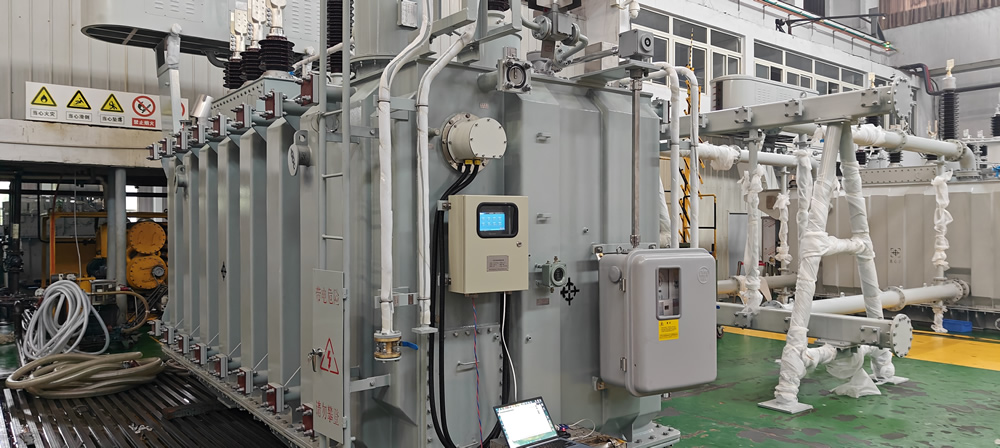
- Limits loading capability: According to international standards, when the winding hotspot temperature of an oil-immersed transformer exceeds its rated value, service life shortens rapidly. برای ترانسفورماتورهای نوع خشک, excessive winding temperature accelerates insulation aging. بنابراین, winding temperature is the core basis to decide whether the unit can run at “full load” or under “overload.”
- Prevents sudden failures: Local overheating in windings (به عنوان مثال, turn-to-turn fault, poor conductor contact) can quickly damage insulation. If not detected in time, it may lead to winding burn-out, transformer explosion, or even grid outages.
- Optimizes O&M strategy: Real-time winding temperature monitoring prevents both “over-maintenance” (به عنوان مثال, unnecessary shutdowns) and “under-maintenance” (به عنوان مثال, ignored overheating risks), enabling condition-based maintenance.
II. Limits of traditional methods: cannot meet the need for “precise monitoring of the winding itself”
Before fluorescence fiber-optic sensing, common approaches (به عنوان مثال, oil temperature thermocouples, DC resistance-based estimation) had clear shortcomings and could not reflect true winding hotspots:روش Measured object Core drawbacks دمای بالای روغن روغن ترانسفورماتور (غیر مستقیم) 1) Oil is a heat transfer medium; oil temperature is lower than winding hotspots and cannot reflect true winding temperature;
2) Only overall oil temperature is seen; local overheating (به عنوان مثال, a specific turn fault) cannot be located.DC resistance method مقاومت سیم پیچ (غیر مستقیم) 1) Offline: Requires outage, cannot monitor temperature in real time;
2) Reflects only average temperature, missing “hotspots.”ترموگرافی مادون قرمز سطح سیم پیچ (external) 1) Mainly for dry-type units and often requires opening enclosures; it cannot monitor internal windings of oil-immersed transformers;
2) Affected by dust and insulation遮挡, leading to larger errors.به طور خلاصه, traditional methods are either “indirect estimation” or “offline and lagging,” and cannot meet the demand for زمان واقعی, مستقیم, and accurate monitoring of winding temperature — the core reason to adopt fluorescence fiber-optic systems.III. Advantages of fluorescence fiber-optic systems: perfectly matched to winding temperature monitoring
Fluorescence fiber-optic sensing is based on the “fluorescence lifetime principle.” Sensors are embedded directly in the winding’s “hotspot regions” (often mid-to-upper sections where heat concentrates). هنگامی که توسط نور هیجان زده می شود, the sensor emits fluorescence whose lifetime shortens as temperature rises. By detecting lifetime changes, the system computes real-time temperature. Its advantages fit the winding scenario:1) Accurate measurement: directly captures winding “hotspot temperature”
- Sensors can be embedded between conductors, avoiding indirect heat transfer through oil or other media. This reflects the winding’s true maximum temperature (hotspot), solving the lag of oil-based estimation.
- Supports multi-point monitoring (به عنوان مثال, several sensors on HV and LV windings), enabling localization of local overheating and providing precise data for diagnostics.
2) ایمن و قابل اعتماد: suitable for high voltage and strong EMI environments
- Electrical insulation: Silica-based optical fibers are non-conductive and free from electromagnetic induction. They can be placed close to high-voltage windings without introducing leakage or short-circuit risks, avoiding interference with the insulation system.
- ایمنی EMI: Transformers produce strong electromagnetic fields (به عنوان مثال, شار نشتی, short-circuit forces). Traditional electrical sensors (ترموکوپل ها, RTD ها) are susceptible to interference, causing distortion. Optical fibers carry light, نسبت به EMI مصون است, and remain stable under short-circuit and lightning events.
3) ثبات دراز مدت: withstands harsh internal environments
- Inside transformers there are heat, روغن, and vibration. Fluorescence fiber sensors offer high temperature tolerance, chemical resistance to transformer oil, and strong mechanical robustness to winding processes and vibration, aligning with transformer O&M cycles.
4) پاسخ در زمان واقعی: gains time for early warning
- With rapid sampling, sudden temperature rises from issues like turn-to-turn faults can be detected in seconds, راه اندازی آلارم ها (به عنوان مثال, audible-visual alerts, messages) so operators can derate or schedule maintenance in time to avoid escalation.
خلاصه
Installing fluorescence fiber-optic temperature systems fundamentally solves the core pain points of winding temperature monitoring — “hard to measure, inaccurate, unsafe.” Through direct, دقیق, نظارت در زمان واقعی, it provides a sound basis for “full-load operation,” enables early warning of local overheating, ensures grid stability, and reduces economic loss and outage risk. This approach has become a standard monitoring option for high-voltage and large industrial transformers.

سنسور دمای فیبر نوری, سیستم مانیتورینگ هوشمند, تولید کننده فیبر نوری توزیع شده در چین
 |
 |
 |