 سنسورهای دمای فیبر نوری INNO ,سیستم های مانیتورینگ دما.
- مانیتورینگ دمای فیبر نوری uses light-based sensing to measure temperature at specific points in real time. تمام دی الکتریک, non-conductive measurement path provides complete electromagnetic immunity, galvanic isolation beyond 100 کیلوولت, and intrinsically safe operation — capabilities impossible for conventional electrical sensors.
- را fiber optic temperature sensor working principle relies on the temperature-dependent decay time of a phosphor coating at the probe tip. A light pulse excites the phosphor, and the decay rate of the afterglow is precisely correlated to temperature, producing a self-referencing, drift-free measurement with no electrical energy at the sensing point.
- یک کامل سیستم مانیتورینگ دمای فیبر نوری consists of five integrated components: a demodulator (بازجو), sensing probes, optical fiber cables, a display module, and monitoring software — forming a turnkey solution from sensing point to operator interface.
- This technology is the proven standard for اندازه گیری دمای فیبر نوری in power transformers, تابلو برق فشار قوی, electric motors, MRI environments, and industrial processes where conventional sensors fail or pose safety risks.
- A single fiber optic transmitter supports 1 به 64 sensing channels, with measurement accuracy of ±0.5–1 °C, a response time under 1 دوم, and a system lifespan exceeding 25 years — delivering reliable, low-maintenance monitoring at scale.
فهرست مطالب
- مانیتورینگ دمای فیبر نوری چیست؟?
- Why Choose Fiber Optic Over Conventional Temperature Sensors?
- How Does a Fiber Optic Temperature Sensor Work?
- معماری سیستم: Five Core Components
- Specifications and Configuration
- مزایای کلیدی
- Applications Across Industries
- How to Choose the Right System
- Understanding Fiber Optic Temperature Sensor Price Factors
- سوالات متداول
1. چیست مانیتورینگ دمای فیبر نوری?

مانیتورینگ دمای فیبر نوری is the practice of using optical fiber-based sensing technology to continuously measure, record, and analyze temperature at one or more specific locations in real time. Unlike conventional monitoring that relies on electrical signals carried through metallic conductors, this approach generates, transmits, and processes temperature information entirely in the optical domain — using light as the information carrier and glass fibers as the transmission medium.
Because no electrical energy exists anywhere along the sensing path, optical fiber temperature sensing solutions offer intrinsic advantages that cannot be replicated by thermocouples, RTD ها, یا ترمیستور: مصونیت کامل در برابر تداخل الکترومغناطیسی, complete electrical isolation from high-voltage conductors, and chemically inert, non-sparking construction suitable for explosive and corrosive atmospheres.
Point-Type Measurement Topology
The monitoring approach covered in this guide is a point-type measurement system, meaning each پروب دمای فیبر نوری monitors the temperature at one discrete location. A single demodulator instrument can interrogate multiple probes simultaneously across independent channels, allowing operators to monitor dozens of critical hotspots throughout a piece of equipment or an entire facility from a single centralized platform.
2. Why Choose Fiber Optic Over Conventional Temperature Sensors?
Limitations of Electrical Temperature Sensors
Traditional temperature sensors — thermocouples, RTD ها, and thermistors — have served industry reliably in benign environments for decades. با این حال, they share fundamental limitations rooted in their dependence on electrical signals and metallic conductors. Thermocouple signals are highly susceptible to electromagnetic noise. RTDs require excitation current and suffer from lead resistance errors. تمام لیدهای حسگر فلزی می توانند به عنوان آنتن عمل کنند, تداخل در مدار اندازه گیری و ایجاد مسیر برای حلقه های زمین, موج های رعد و برق, و خطاهای ولتاژ بالا.
در محیط هایی که با میدان های الکترومغناطیسی قوی مشخص می شوند, ولتاژ بالای ده ها کیلوولت, مخلوط گازهای انفجاری, یا قرار گرفتن در معرض مواد شیمیایی تهاجمی, این آسیب پذیری ها نظارت مرسوم را غیرقابل اعتماد می کند, ناامن, یا کاملا غیر ممکن.
مزیت فیبر نوری
الف سنسور فیبر نوری برای اندازه گیری دما هر یک از این موانع را از بین می برد. فیبر شیشه ای یک عایق دی الکتریک است - نمی تواند الکتریسیته را هدایت کند, نمی تواند تداخل الکترومغناطیسی ایجاد یا دریافت کند, و نمی تواند اتصالات گالوانیکی ایجاد کند. این باعث می شود سنجش دمای فیبر نوری تنها راه حل پایش قابل اجرا در بسیاری از محیط های با تقاضای بالا, و یک جایگزین برتر تقریباً در همه موارد دیگر.
3. چگونه یک سنسور دمای فیبر نوری کار کنید?

The Phosphor Decay Principle
را fiber optic temperature sensor working principle is based on a well-characterized physical phenomenon: the temperature-dependent fluorescence decay of a rare-earth phosphor material. A small amount of phosphor compound is bonded to the tip of a specialized سنسور دمای فیبر نوری کاوشگر. The demodulator instrument sends a short pulse of excitation light through the optical fiber to the phosphor. Upon absorbing this light energy, the phosphor emits fluorescent afterglow at a different wavelength.
Why Decay Time, Not Intensity?
The critical parameter is not the brightness of this afterglow, but the rate at which it fades — known as the fluorescence decay time or lifetime. This decay time has a precise, repeatable, and monotonic relationship with temperature: با افزایش دما, the decay time decreases. دمودولاتور سیگنال فلورسنت برگشتی را از طریق همان فیبر نوری می گیرد, منحنی فروپاشی را دیجیتالی می کند, ثابت زمان فروپاشی را با استفاده از الگوریتمهای پیشرفته برازش منحنی محاسبه میکند, و نتیجه را به یک مقدار دمای کالیبره شده تبدیل می کند.
ثبات خود مرجع
از آنجایی که اندازهگیری به ویژگی زمانبندی فروپاشی فلورسنت بستگی دارد تا به دامنه سیگنال, ذاتاً در برابر از دست دادن سیگنال ناشی از خمش فیبر مصون است, پیر شدن رابط, یا تخریب منبع نور. این ویژگی خودارجاعی آن را تضمین می کند اندازه گیری دمای فیبر نوری در تمام طول عمر عملیاتی سیستم بدون کالیبراسیون مجدد دقیق و پایدار باقی بماند - یک مزیت تعیین کننده نسبت به روش های مبتنی بر شدت یا سنجش الکتریکی.
4. معماری سیستم: Five Core Components
یک کامل سیستم اندازه گیری دمای فیبر نوری شامل پنج جزء یکپارچه است که با هم کار می کنند تا پیوسته را ارائه دهند, reliable monitoring from the sensing point to the operator interface.
4.1 Fiber Optic Demodulator (بازجو / Transmitter)
The demodulator is the central intelligence of the system. It generates the excitation light pulses, receives the returning fluorescent signals from all connected channels, performs the decay-time analysis, and outputs calibrated temperature data. A single unit supports multiple independent sensing channels and communicates with external systems through standard industrial interfaces.
4.2 کاوشگرهای حسگر
هر کدام پروب دمای فیبر نوری contains the phosphor sensing element at its tip, hermetically sealed and ruggedized for the target installation environment. Probes are available in compact form factors suitable for embedding in transformer windings, mounting on switchgear busbars, or inserting into industrial process equipment. The fully dielectric, insulated construction ensures safe operation in direct contact with conductors at extreme voltages.
4.3 Optical Fiber Cables
Specialized optical fiber cables connect each probe to the demodulator. These cables are designed for the mechanical, حرارتی, and chemical demands of industrial installation — with protective jacketing, strain relief, and connector systems tailored to each application. درک کردن fiber optic cable temperature limits for the cable jacketing material is important during system design to ensure the passive cable sections are not exposed to temperatures beyond their rated range, even though the sensing probe tip itself is designed for the full measurement range.
4.4 Display Module
The display module provides local visual indication of real-time temperature readings, وضعیت هشدار, و عیب یابی سیستم. Depending on configuration, this may be an integrated front-panel display on the demodulator unit or a separate panel-mount display installed at a convenient operator viewing location.
4.5 نرم افزار مانیتورینگ
The monitoring software platform runs on a standard PC or industrial workstation and provides comprehensive temperature data management including real-time multi-channel display, historical trend logging, configurable alarm thresholds, event recording, و تولید گزارش. The software communicates with one or more demodulators to provide a unified monitoring view across an entire facility.
5. Specifications and Configuration

The following table summarizes the standard specifications of the سیستم مانیتورینگ دمای فیبر نوری. These represent standard production parameters; custom configurations for measurement range, probe dimensions, طول فیبر, and channel count are available upon request to match specific project requirements.
| پارامتر | مشخصات |
|---|---|
| نوع اندازه گیری | Point-type (discrete location) |
| دقت | ± 0.5 درجه سانتیگراد تا 1± درجه سانتیگراد |
| محدوده دما | -40 درجه سانتیگراد تا +260 درجه سانتی گراد |
| طول فیبر (Probe to Demodulator) | 0 به 20 متر |
| زمان پاسخگویی | < 1 دوم |
| قطر پروب | 2-3 میلی متر (قابل تنظیم) |
| عایق برق | کاملا عایق شده, مقاومت می کند > 100 کیلوولت |
| عمر خدمات | > 25 سال |
| Channels per Transmitter | 1 به 64 کانال ها |
| رابط ارتباطی | RS485 |
| اجزای سیستم | Demodulator, sensing probes, فیبر نوری, display module, نرم افزار نظارت |
را fiber optic temperature range of −40 °C to +260 °C covers the vast majority of power equipment and industrial process monitoring requirements. The compact probe diameter of 2–3 mm allows installation in tightly constrained spaces such as transformer winding interleaves and switchgear contact assemblies. With response times under one second, the system captures rapid thermal transients caused by load changes, fault events, or process upsets. The RS485 communication interface enables straightforward integration with SCADA systems, DCS platforms, و سیستم های مدیریت ساختمان. Each parameter — including channel count, probe geometry, طول فیبر, and temperature range — can be customized to meet the exact requirements of a specific project.
6. مزایای کلیدی
ایمنی کامل الکترومغناطیسی
The all-dielectric construction means سنسورهای دمای فیبر نوری are completely unaffected by electromagnetic fields, تداخل فرکانس رادیویی, or conducted electrical noise — regardless of field strength or frequency. This enables accurate monitoring in environments that are hostile to all electrical sensors, including power transformer cores, high-current busbars, MRI bores, and RF heating systems.
Intrinsic High-Voltage Isolation
The glass optical fiber provides natural galvanic isolation exceeding 100 kV without requiring any additional insulating barriers, creepage distances, or isolation amplifiers. این اجازه می دهد پروب های دمای فیبر نوری to be placed in direct contact with live high-voltage conductors — a capability that is physically impossible for any metallic sensor technology.
Exceptional Long-Term Stability
Because the decay-time measurement principle is self-referencing and independent of signal amplitude, the system does not drift with age, connector wear, or fiber degradation. A service life exceeding 25 years with minimal maintenance makes fiber optic solutions for temperature monitoring highly cost-effective over the full lifecycle of power and industrial equipment.
ایمنی ذاتی
No electrical energy is present at the sensing probe or along the fiber cable. The system is inherently incapable of generating sparks, قوس ها, or surface heating — meeting the most stringent requirements for operation in explosive atmospheres classified under IEC 60079 and similar standards.
Compact and Non-Invasive
With probe diameters as small as 2–3 mm, the sensors can be embedded in or attached to equipment without altering thermal behavior, airflow patterns, or insulation integrity. The thin, flexible optical fiber cable routes easily through existing cable passages and sealed enclosures.
7. Applications Across Industries
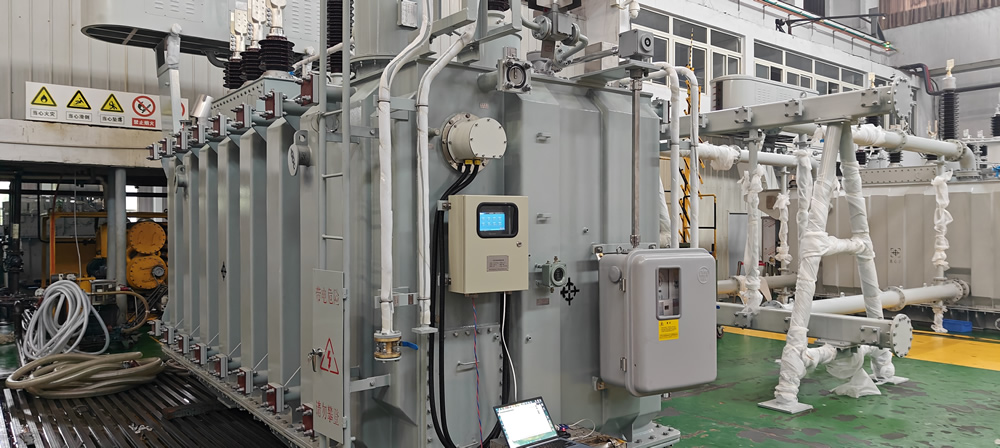
ترانسفورماتورهای قدرت
را سنسور دمای فیبر نوری برای ترانسفورماتور monitoring is one of the most established and widely deployed applications. Probes are embedded directly in transformer winding hot-spot locations during manufacturing, providing real-time winding temperature data that enables dynamic loading, نگهداری پیش بینی, and protection against thermal damage. The dielectric fiber passes safely through the high-voltage insulation structure without compromising its integrity.
High-Voltage Switchgear
In gas-insulated switchgear (GIS) and air-insulated switchgear, دمای فیبر نوری probes are mounted on busbar contacts and cable terminations to detect overheating caused by contact degradation, loose connections, یا اضافه بار. The complete electrical isolation eliminates any risk of dielectric breakdown or tracking across the sensor installation.
موتورهای الکتریکی و ژنراتورها
Stator winding temperatures, تحمل دما, and cooling system performance are monitored using embedded fiber optic probes that operate reliably within the intense electromagnetic environment inside rotating machines.
Medical and MRI Environments
The total absence of metallic components makes optical fiber temperature sensing solutions the only safe option for temperature monitoring during MRI procedures, RF hyperthermia therapy, and other medical applications involving strong magnetic fields.
فرآیندهای صنعتی
Chemical reactors, autoclaves, curing ovens, and semiconductor fabrication equipment benefit from the chemical inertness, اندازه جمع و جور, and electromagnetic immunity of fiber optic sensing in environments where corrosive chemicals, high pressures, or RF fields are present.
8. How to Choose the Right System
Define Your Monitoring Requirements
با شناسایی تعداد نقاط نظارت شروع کنید, محدوده دمایی مورد انتظار در هر مکان, فضای فیزیکی موجود برای نصب پروب, و فاصله از نقاط حسگر تا مکانی که دمدولاتور در آن قرار خواهد گرفت. این پارامترها تعداد کانال را تعیین می کنند, پیکربندی پروب, و طول کابل فیبر مورد نیاز است.
محیط نصب را در نظر بگیرید
برق را ارزیابی کنید, شیمیایی, و شرایط مکانیکی در مکان های سنجش. محیط های با ولتاژ بالا, جوهای انفجاری, غوطه ور شدن در روغن ترانسفورماتور, قرار گرفتن در معرض مواد شیمیایی خورنده, یا لرزش شدید ممکن است نیاز به کپسوله کردن پروب تخصصی داشته باشد, روکش کابل, یا انواع کانکتور. یک تولید کننده معتبر طرح های پروب مخصوص برنامه را ارائه می دهد که برای هر محیط معتبر است.
طرح یکپارچه سازی سیستم
Determine how the temperature data needs to reach your operators and control systems. The standard RS485 interface supports integration with most SCADA and DCS platforms. Confirm that the monitoring software is compatible with your existing infrastructure and provides the data logging, زنگ هشدار, and reporting capabilities your operations require.
Evaluate Total Cost of Ownership
While the initial investment in a سیستم اندازه گیری دمای فیبر نوری may exceed that of conventional sensors, the 25-year-plus service life, minimal maintenance requirement, elimination of recalibration cycles, and superior reliability in demanding environments typically deliver a significantly lower total cost of ownership. Factor in the cost of downtime, آسیب تجهیزات, and safety incidents that effective monitoring prevents.
9. Understanding Fiber Optic Temperature Sensor Price Factors
را fiber optic temperature sensor price for a complete system depends on several interrelated factors. Channel count is the primary driver — a system with more sensing channels requires a more capable demodulator and additional probes and fiber cables. Probe customization for specialized environments such as oil-immersed transformer windings, high-pressure vessels, or miniaturized medical applications may add to per-probe cost. Fiber cable length, connector types, and protective conduit requirements affect installation material costs. Monitoring software licensing and system integration services are additional considerations.
As a general principle, the per-channel cost decreases as channel count increases, making multi-channel systems highly economical on a per-point basis. Requesting a detailed quotation based on your specific project parameters — including channel count, نوع پروب, طول فیبر, environmental requirements, and integration scope — is the most reliable way to establish accurate budgeting for your مانیتورینگ دمای فیبر نوری project.
10. سوالات متداول
Q1: What is fiber optic temperature monitoring?
Fiber optic temperature monitoring is a technology that uses light signals transmitted through glass optical fibers to measure temperature at specific points. The phosphor-tipped sensing probe converts temperature into an optical signal that is completely immune to electromagnetic interference and provides inherent electrical isolation, making it ideal for high-voltage, مواد منفجره, or electromagnetically noisy environments.
Q2: How does a fiber optic temperature sensor work?
The sensor works by measuring the fluorescence decay time of a phosphor material at the probe tip. A light pulse excites the phosphor, which emits afterglow that fades at a rate determined by temperature. The demodulator analyzes this decay rate and converts it into a precise temperature reading. Because the measurement depends on timing rather than signal intensity, it remains stable and accurate over decades of operation.
Q3: What is the temperature range of a fiber optic sensor?
The standard measurement range is −40 °C to +260 درجه سانتی گراد, which covers the vast majority of power equipment and industrial process monitoring needs. Custom ranges can be configured for specialized applications.
Q4: How accurate is fiber optic temperature measurement?
Standard system accuracy is ±0.5 °C to ±1 °C, which meets or exceeds the requirements of most power, صنعتی, and medical monitoring applications.
Q5: Can fiber optic sensors be used inside high-voltage equipment?
بله. The all-dielectric glass fiber provides galvanic isolation exceeding 100 کیلوولت, allowing probes to be placed in direct contact with live high-voltage conductors inside transformers, تابلو برق, and other energized equipment without any risk of electrical breakdown.
Q6: How many sensors can one system support?
A single fiber optic demodulator can support 1 به 64 کانال های حسگر مستقل. For applications requiring more monitoring points, multiple demodulators can be networked together through the monitoring software platform.
Q7: What is the lifespan of a fiber optic temperature monitoring system?
The system is designed for a service life exceeding 25 سال, matching or exceeding the operational lifetime of the power and industrial equipment it monitors. The self-referencing decay-time measurement principle eliminates drift and degradation, minimizing maintenance requirements over the full service period.
Q8: How fast does the sensor respond to temperature changes?
زمان پاسخگویی کمتر از 1 دوم, enabling the system to capture rapid thermal transients caused by load changes, fault events, or process upsets in real time.
Q9: How does the system communicate with SCADA or DCS?
The demodulator provides a standard RS485 communication interface for integration with SCADA systems, DCS platforms, و سیستم های مدیریت ساختمان. The monitoring software provides additional data management, روند, and alarm capabilities on a local or networked workstation.
Q10: What factors affect the price of a fiber optic temperature sensor system?
Key price factors include the number of sensing channels, probe type and customization level, optical fiber cable length, connector and conduit requirements, monitoring software licensing, and system integration scope. Per-channel cost decreases with higher channel counts, making multi-point systems highly cost-effective.
سلب مسئولیت: اطلاعات ارائه شده در این مقاله فقط برای مقاصد اطلاعاتی و آموزشی عمومی است. در حالی که تمام تلاش ها برای اطمینان از دقت انجام شده است, fjinno.net makes no warranties or representations regarding the completeness, دقت, or applicability of the content to any specific project or situation. Specifications described herein represent standard parameters and may vary depending on configuration and customization. For detailed technical guidance, طراحی سیستم, and project-specific recommendations, please contact our engineering team directly. This content does not constitute a contractual offer or guarantee of performance.

سنسور دمای فیبر نوری, سیستم مانیتورینگ هوشمند, تولید کننده فیبر نوری توزیع شده در چین
 |
 |
 |