 سنسورهای دمای فیبر نوری INNO ,سیستم های مانیتورینگ دما.
- All-in-one design combines circuit breakers, جدا کننده ها, باسبارها, and instrument transformers in compact SF6-insulated modules
- Space reduction of 70-90% compared to air-insulated switchgear enables installation in land-constrained urban environments
- Enhanced reliability through sealed insulation protecting equipment from pollution, رطوبت, and environmental contamination
- Factory-tested modules reduce on-site installation time and commissioning risks with pre-assembled configurations
- نظارت جامع دمای یکپارچه, چگالی گاز SF6, تخلیه جزئی, و ارزیابی شرایط مکانیکی
1. What is Integrated GIS?
کلید یکپارچه عایق گاز represents the evolution of conventional GIS technology toward maximum compactness through unified enclosure design. برخلاف GIS سنتی که در آن کلیدهای مدار, جدا کننده ها, و شینه ها محفظه های گاز جداگانه ای را اشغال می کنند که با رابط های فلنجی متصل شده اند, طرح های یکپارچه چندین عملکرد سوئیچینگ را در یک اتاقک تحت فشار قرار می دهند. این رویکرد معماری ارتباطات داخلی را به حداقل می رساند, نیاز به حجم گاز SF6 را کاهش می دهد, و بازده فضایی بی سابقه ای را برای کلاس های ولتاژ از 72.5 کیلو ولت تا 550 کیلو ولت به دست می آورد..
مفهوم ادغام فراتر از یکپارچگی فیزیکی است. GIS یکپارچه مدرن دارای حسگرهای تعبیه شده است, سیستم های کنترل دیجیتال, و رابط های ارتباطی که از IEC پشتیبانی می کنند 61850 پروتکل های اتوماسیون پست. مونتاژ کارخانه و آزمایش واحدهای عملکردی کامل - اغلب نامیده می شود “خلیج ها” یا “پانل ها”- استقرار سریع را با عملکرد تأیید شده فعال کنید, در تضاد شدید با تابلو برق معمولی مونتاژ شده در میدان که نیاز به راه اندازی گسترده در محل دارد.
2. Working Principles and Technology
Integrated GIS operates on sulfur hexafluoride gas insulation principles where SF6 at 0.4-0.6 MPa absolute pressure provides dielectric strength approximately three times that of air at atmospheric pressure. This superior insulation performance permits phase-to-phase and phase-to-ground clearances measured in centimeters rather than meters, enabling dramatic size reduction. The same SF6 gas simultaneously serves arc-quenching functions in circuit breakers, where gas flow rapidly cools and deionizes the arc column during current interruption.
Compact design engineering employs three-dimensional electric field optimization ensuring uniform stress distribution across insulator surfaces and metal components. Advanced simulation tools model field concentrations at every conductor transition and insulator interface, eliminating points of excessive stress that could initiate partial discharge or insulation breakdown. The sealed environment maintains consistent dielectric performance independent of altitude, رطوبت, or atmospheric pollution affecting conventional air-insulated equipment.
3. System Components and Structure
را circuit breaker unit forms the core switching element, utilizing puffer or self-blast interruption mechanisms generating high-velocity SF6 flow through the arc. Modern designs achieve breaking currents exceeding 50kA with opening times under 50 میلی ثانیه. Three-position disconnectors integrated within the same gas compartment provide isolation, grounding, and busbar transfer functions through rotary or linear actuator mechanisms with mechanical interlocks preventing unsafe operating sequences.
Busbar systems employ tubular aluminum conductors rated for continuous currents from 2000A to 4000A with short-time withstand capabilities supporting system fault levels. Single-busbar, double-busbar, and ring-bus configurations accommodate various substation topologies. یکپارچه شده است ترانسفورماتورهای ابزار—both electromagnetic and electronic types—provide measurement and protection inputs without external mounting requirements. Control cabinets house protection relays, automation controllers, and communication gateways forming complete bay solutions.
4. Key Applications and Use Cases
Urban power distribution represents the primary application driving integrated GIS adoption. Underground substations serving high-density metropolitan areas achieve 10-15% of the footprint required by equivalent air-insulated installations. High-rise commercial buildings, بیمارستان ها, and transit systems incorporate compact switchgear within structural constraints impossible for conventional technology.
Industrial facilities including power generation plants, petrochemical complexes, کارخانه های فولاد, and semiconductor fabrication facilities deploy integrated GIS where space optimization, قابلیت اطمینان, and minimal maintenance requirements justify premium acquisition costs. Renewable energy applications span wind farm collector substations, solar plant inverter stations, and battery energy storage system switchgear. Transportation infrastructure—metro traction substations, high-speed rail power supplies, airport terminals, and electric vehicle charging hubs—increasingly specifies integrated solutions balancing space constraints with operational demands.
5. Advantages Over Conventional Solutions
Space savings constitute the most visible advantage, with integrated GIS occupying 10-15% of air-insulated switchgear footprint for equivalent electrical ratings. This dramatic reduction translates directly to lower land acquisition costs, smaller substation buildings, and increased flexibility in site selection. Reliability enhancement stems from sealed construction eliminating environmental exposure, reducing failure rates to approximately one-tenth of outdoor air-insulated equipment while extending maintenance intervals from annual inspections to 5-10 year cycles.
Safety improvements include complete enclosure of energized components, eliminating direct exposure risks and reducing approach distances for maintenance personnel. Fast installation schedules—typically 1-2 months versus 6-8 months for equivalent AIS—minimize project durations and revenue delays. While initial capital costs run 2-3 times higher than air-insulated alternatives, تجزیه و تحلیل هزینه چرخه عمر frequently favors integrated GIS through reduced maintenance expenditure, lower failure-related losses, and extended 40-year service life.
6. مقایسه: Integrated GIS vs. Conventional GIS vs. AIS
| پارامتر | GIS یکپارچه | Conventional GIS | AIS |
|---|---|---|---|
| Footprint | 10-15% of AIS | 20-30% of AIS | 100% baseline |
| Installation Time | 1-2 ماه ها | 3-4 ماه ها | 6-8 ماه ها |
| فاصله نگهداری | 5-10 سال | 3-5 سال | 1-2 سال |
| Environmental Sensitivity | حداقل | حداقل | بالا |
| میزان شکست | خیلی کم | کم | متوسط |
| Capital Cost | بالا | متوسط-بالا | کم |
| O&M Cost | خیلی کم | کم | بالا |
7. Common Faults and Failure Modes
Insulation failures originate from partial discharge activity at manufacturing defects, metallic particles introduced during assembly, or insulator surface contamination with conductive materials. While rare in properly manufactured equipment, internal flashovers represent catastrophic events requiring extensive repair. Circuit breaker malfunctions include failure to open or close on command due to control system faults, mechanical binding, or operating mechanism degradation. Contact erosion from repetitive switching operations eventually necessitates replacement after thousands of operations.
SF6 gas issues primarily involve slow leakage through seals and gaskets, gradually reducing dielectric strength below safe margins. Water ingress into gas compartments—though unusual in well-maintained systems—degrades insulation and promotes corrosion. Gas decomposition products from arcing or partial discharge include sulfur compounds detectable through chemical analysis. Contact resistance increases at bolted connections cause localized heating potentially escalating to component failure without timely detection and correction.
8. Monitoring Systems and Diagnostics
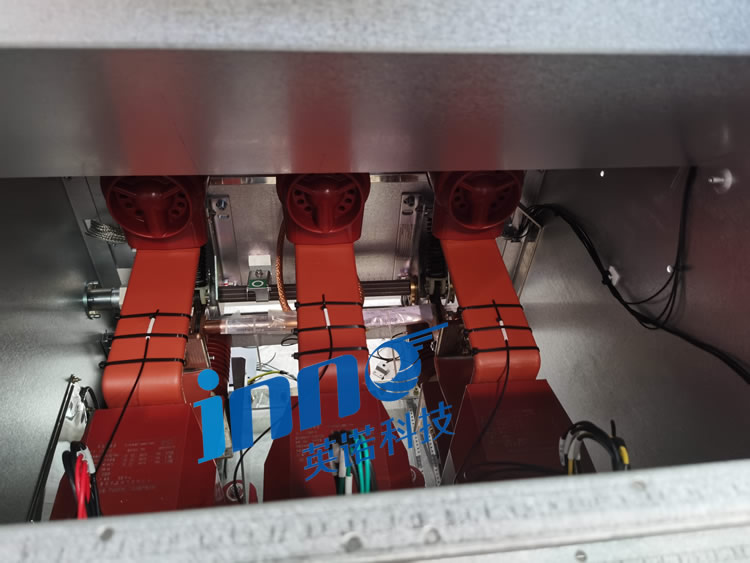
نظارت بر دما employs fiber optic sensors immune to electromagnetic interference, directly measuring hotspot temperatures at circuit breaker contacts, disconnector contacts, busbar joints, و پایانه های کابل. Fluorescent fiber optic technology enables accurate measurement in high-voltage environments where conventional sensors cannot operate. Continuous temperature trending identifies developing connection problems before failure occurs.
SF6 gas density monitoring uses temperature-compensated sensors continuously tracking gas mass per unit volume—the parameter directly governing dielectric strength. Alarm thresholds trigger investigation when density drops below safe operating margins. Advanced systems incorporate humidity sensors detecting moisture contamination and gas analyzers identifying decomposition products indicating internal electrical activity. تشخیص تخلیه جزئی through ultra-high-frequency sensors, acoustic transducers, or chemical analysis of SF6 breakdown products reveals insulation degradation in early stages amenable to corrective action.
Mechanical condition monitoring measures circuit breaker operating times, contact travel distances, and closing/opening velocities, comparing trends against baseline characteristics. Deviations indicate mechanism wear, lubrication degradation, or spring fatigue requiring maintenance intervention. Comprehensive monitoring platforms integrate these diverse measurements into unified health assessment systems supporting predictive maintenance strategies and optimized asset management.
9. FJINNO Integrated GIS Monitoring Solutions
FJINNO سنسورهای دمای فیبر نوری فلورسنت provide the gold standard for integrated GIS thermal monitoring. These intrinsically safe devices operate reliably in SF6 gas environments at full system voltage, measuring temperatures with ±1°C accuracy across -40°C to +200°C ranges. Multi-point configurations simultaneously monitor circuit breaker contacts, disconnector contacts, اتصالات باسبار, و پایانه های کابل. Wireless transmitters eliminate high-voltage isolation challenges while enabling retrofits on existing equipment without outages.
شرکت SF6 gas monitoring systems combine high-precision density sensors, temperature compensation algorithms, and leak detection capabilities into compact packages suitable for multi-compartment installations. Automated data logging tracks long-term trends while intelligent alarming distinguishes genuine problems from temporary fluctuations. ادغام با partial discharge detection systems using optimally-positioned UHF sensors provides comprehensive insulation condition assessment through pattern recognition algorithms identifying discharge types and severity levels.
FJINNO integrated health management platform aggregates temperature, گاز, تخلیه جزئی, and mechanical monitoring data into unified displays supporting both real-time operations and strategic maintenance planning. IEC 61850 compliance ensures seamless integration with substation automation systems while cloud connectivity enables remote expert analysis. Implementation services encompassing sensor selection, برنامه ریزی نصب, system commissioning, and operator training ensure customers realize full monitoring system value from project inception through decades of operational service.

سنسور دمای فیبر نوری, سیستم مانیتورینگ هوشمند, تولید کننده فیبر نوری توزیع شده در چین
 |
 |
 |