 سنسورهای دمای فیبر نوری INNO ,سیستم های مانیتورینگ دما.
- Fluorescent fiber optic temperature sensor probes provide reliable measurements in high-voltage electrical environments where traditional metal sensors fail
- These optical temperature probes offer complete electromagnetic immunity, آنها را برای سیم پیچ ترانسفورماتور ایده آل می کند, شینه های تابلو برق, and motor stators
- Systems support 1-9 channel configurations for multi-point temperature monitoring across industrial facilities
- Global manufacturers offer customization services, bulk supply capabilities, and comprehensive technical support
- Applications span power generation, مراکز داده, تولید نیمه هادی, and medical equipment
فهرست مطالب
- What Are Fluorescent Fiber Optic Temperature Sensor Probes?
- Why Do Fluorescent Temperature Sensors Work Reliably in Harsh Environments?
- What Components Make Up a Fiber Optic Temperature Monitoring System?
- How to Configure Single and Multi-Point Temperature Monitoring Systems?
- Which Fiber Optic Temperature Sensing Technology Should You Choose?
- Why Do Transformer Windings Require Dedicated Fiber Optic Probes?
- How to Prevent Switchgear Contact Overheating?
- What Happens When Motor Stator Temperature Goes Unchecked?
- Early Warning Systems for High Voltage Cable Joint Temperature Anomalies
- Which Wind Turbine Components Need Temperature Monitoring?
- How to Avoid Generator Temperature Failures in Hydropower Stations?
- Fiber Optic Temperature Monitoring for Photovoltaic Inverter Protection
- How Do Data Centers Achieve Precision Temperature Control?
- Which Semiconductor Processes Require Interference-Free Temperature Sensing?
- Why Must MRI Equipment Use Fiber Optic Temperature Sensors?
- Precision Temperature Control in RF Ablation and HIFU Therapy
- Solving Temperature Measurement Challenges in Induction Heating and Microwave Equipment
- Who Are the Global Fluorescent Fiber Optic Temperature Sensor Manufacturers?
- How to Evaluate Fiber Optic Sensor Supplier Technical Capabilities?
- What Matters When Procuring Temperature Probes in Large Quantities?
- What Does Remote Technical Support Include?
- How Important Are CE and ROHS Certifications for Your Project?
- سوالات متداول
- Technical Terminology
- سلب مسئولیت
1. چه هستند پروب های سنسور دمای فیبر نوری فلورسنت?

پروب های سنسور دمای فیبر نوری فلورسنت utilize rare earth crystal fluorescence lifetime-temperature correlation for precision measurement. اینها سنسورهای دمای نوری operate entirely on optical principles, with probe bodies constructed from optical materials and ceramic or stainless steel enclosures, containing no metallic conductive components.
Core Operating Mechanism
Rare earth fluorescent material at the probe tip emits fluorescence when illuminated by excitation light. The fluorescence decay time changes with temperature variations. را فرستنده دما precisely measures this decay time to calculate accurate temperature values. This process requires no electrical signals, providing inherent interference immunity.
Basic System Architecture
یک کامل سیستم مانیتورینگ دمای فیبر نوری فلورسنت comprises three main components: the optical temperature transmitter (signal acquisition and processing), quartz fiber optic transmission cable (optical signal pathway), and fluorescent sensing probe (temperature-sensitive element). This modular design allows flexible configuration based on site conditions.
Contact Temperature Measurement Advantages
Unlike non-contact methods such as infrared thermal imaging, fluorescent probes make direct contact with measured object surfaces, obtaining actual temperatures rather than surface radiation temperatures. This proves particularly important in oil-immersed transformers, enclosed switchgear, and other non-visible applications, ensuring temperature data accuracy and reliability.
Temperature Range Capabilities
استاندارد پروب های فیبر نوری فلورسنت cover common industrial temperature ranges, from cryogenic environments to high-temperature equipment. Special application scenarios can extend measurement ranges through customized designs to meet diverse industry requirements.
2. Why Do Fluorescent Temperature Sensors Work Reliably in Harsh Environments?

Electrical Insulation in High Voltage Environments
In high voltage substations and distribution rooms, adequate insulation distance must be maintained between energized bodies and تجهیزات مانیتورینگ دما. سنسورهای فیبر نوری فلورسنت, as all-dielectric devices, feature non-conductive probes and cables that can directly contact high voltage equipment without causing ground faults or altering electric field distribution. This enables safe application on electrical equipment rated for tens of kilovolts or higher.
Precision Measurement Under Strong Electromagnetic Interference
Motor starter cabinets, frequency converter rooms, and induction heating equipment generate intense electromagnetic fields that severely disrupt traditional electronic سنسورهای دما. Optical fiber temperature probes transmit signals purely through light, completely immune to electromagnetic interference, radio frequency radiation, or microwave fields, maintaining measurement accuracy in complex electromagnetic environments.
Corrosion Resistance in Chemical Processing
کارخانه های شیمیایی, metallurgical facilities, and offshore platforms expose equipment to corrosive gases, high humidity, and salt spray. سنسور دمای فیبر نوری housings can be manufactured from corrosion-resistant materials, while optical fibers themselves resist chemical attack, ensuring long-term stable operation in aggressive atmospheres.
Intrinsic Safety for Explosive Atmospheres
Coal mines, پالایشگاه های نفت, and grain storage facilities require explosion-proof راه حل های نظارت بر دما. پروب های فیبر نوری فلورسنت generate no electrical sparks or heat accumulation, meeting intrinsic safety standards for hazardous locations without requiring heavy explosion-proof enclosures.
Long-Term Stability and Minimal Drift
Unlike thermocouples or resistance temperature detectors that degrade over time, فناوری حسگر فلورسنت exhibits excellent long-term stability. The optical measurement principle minimizes sensor drift, reducing calibration frequency and maintenance costs while ensuring consistent accuracy throughout the service life.
3. What Components Make Up a سیستم مانیتورینگ دمای فیبر نوری?

Optical Temperature Transmitter (Signal Processor)
را فرستنده دما serves as the system’s brain, generating excitation light pulses, receiving fluorescence signals, calculating decay times, and converting them to temperature readings. Modern transmitters feature digital displays, analog/digital outputs, communication interfaces, and alarm relay contacts for integration with SCADA or building management systems.
Quartz Fiber Optic Cable (Signal Transmission Medium)
کابل های فیبر نوری transmit light signals between the transmitter and sensing probes. High-purity quartz fibers ensure minimal signal attenuation over extended distances. Cable lengths can be customized based on installation requirements, with standard options supporting installations where probes must be positioned far from control panels.
Fluorescent Sensing Probe (Temperature Detection Element)
را sensing probe contains rare earth fluorescent crystal material protected by hermetically sealed housings. Probe designs vary by application: threaded probes for direct mounting into equipment, surface-contact probes with flat tips for busbar monitoring, and miniature probes for confined spaces. Housing materials include stainless steel for general use and specialized alloys for extreme conditions.
Mounting Hardware and Accessories
Complete installations require mounting brackets, cable glands, جعبه های اتصال, and protective conduit. Quality manufacturers provide comprehensive accessory kits tailored to specific applications, ensuring proper probe positioning and cable protection against mechanical damage or environmental exposure.
Monitoring Software and Communication Interfaces
پیشرفته سیستم های مانیتورینگ دمای فیبر نوری include software for data logging, تحلیل روند, مدیریت آلارم, and remote access. Standard communication protocols (Modbus RTU/TCP, پروفیباس, OPC UA) enable seamless integration with existing industrial control infrastructure.
4. How to Configure Single and Multi-Point Temperature Monitoring Systems?
Single-Point Monitoring Applications
Single-channel سنسورهای دمای فیبر نوری suit applications requiring monitoring of one critical location, such as a specific transformer winding hotspot or a motor bearing. These compact systems offer economical solutions for focused نظارت حرارتی needs with simplified installation and commissioning.
Dual to Four-Point Systems
Two to four-channel configurations commonly monitor multiple transformer windings, switchgear compartment sections, or generator bearing sets. These systems provide cost-effective multi-point coverage while maintaining independent سنجش دما for each location, ideal for medium-sized electrical equipment.
Six to Nine-Channel Installations
Larger installations such as data center electrical rooms, industrial motor control centers, or renewable energy inverter banks benefit from six to nine-channel optical temperature monitoring systems. This configuration enables comprehensive coverage of multiple equipment units or extensive monitoring within single large machines.
System Expansion Capabilities
When initial installations require growth potential, modular temperature transmitters allow channel expansion through additional modules or parallel units. This scalability protects investment while accommodating facility expansions or changing monitoring requirements.
Channel Assignment Best Practices
Effective channel allocation prioritizes critical thermal points: transformer hottest windings, busbar highest-load connections, motor stator core positions, and cable terminations with known thermal issues. Proper planning ensures monitoring resources focus on locations most likely to develop temperature-related faults.
5. Which Fiber Optic Temperature Sensing Technology Should You Choose?
| Technology Type | روش اندازه گیری | Best Applications | مزایای کلیدی |
|---|---|---|---|
| فیبر نوری فلورسنت | اندازه گیری نقطه ای | High voltage equipment, ماشین آلات دوار | بالاترین دقت, پاسخ سریع, compact probes |
| Gallium Arsenide Semiconductor | اندازه گیری نقطه ای | General industrial applications | Good stability, moderate performance |
| گریتینگ فیبر براگ (FBG) | شبه توزیع شده | نظارت بر ساختار, کابل های طولانی | Multiple points on single fiber |
Fluorescent Technology Advantages
پروب های دمایی فیبر نوری فلورسنت excel in demanding applications requiring highest accuracy, fastest response times, and smallest probe dimensions. The measurement principle offers superior immunity to light source fluctuations and optical path variations, making these sensors highly reliable for critical equipment protection.
Application-Specific Selection Criteria
High voltage electrical equipment monitoring demands سنسورهای فلورسنت for their proven performance in transformer and switchgear applications. Rotating machinery benefits from compact probe sizes and rapid thermal response. Medical equipment requires the biocompatibility and MRI compatibility only optical sensors provide.
ملاحظات هزینه-فایده
در حالی که سیستم های فیبر نوری فلورسنت represent professional-grade solutions, their long-term reliability and minimal maintenance requirements deliver strong lifecycle value. Reduced downtime from early fault detection and extended equipment life through effective thermal management justify initial investment in quality monitoring technology.
6. Why Do Transformer Windings Require Dedicated Fiber Optic Probes?
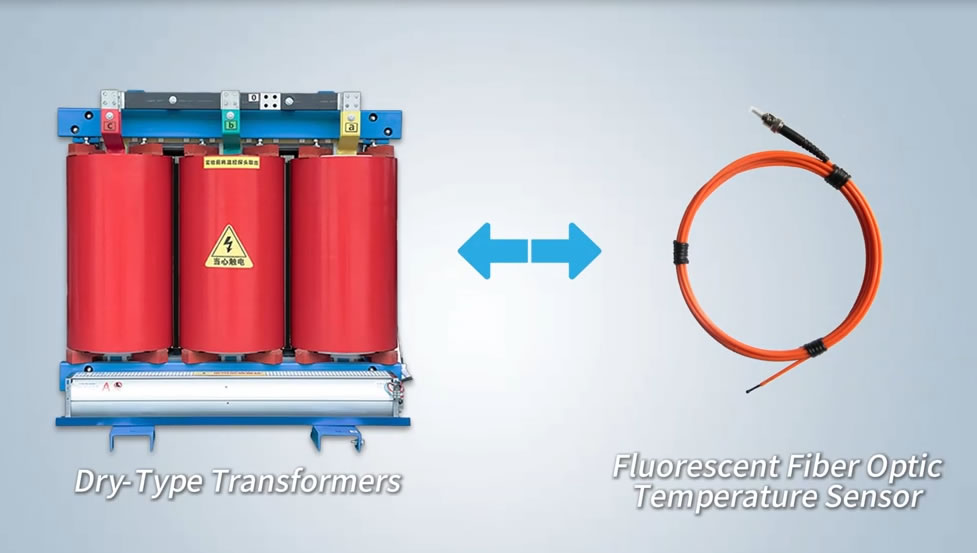
Dry-Type Transformer Temperature Monitoring
Dry-type transformers rely on air or gas insulation, ساختن پایش دمای سیم پیچ essential for preventing insulation degradation. Fluorescent probes can be embedded directly into winding assemblies during manufacturing or retrofitted into accessible locations, providing accurate hotspot detection unavailable through external temperature indication.
Oil-Immersed Transformer Applications
در oil-filled transformers, سنسورهای دمای فیبر نوری monitor both winding temperatures and top-oil conditions. Unlike winding temperature indicators (WTI) that calculate temperatures indirectly, مستقیم optical probe measurement captures actual thermal conditions, enabling precise fan control and preventing accelerated aging from thermal stress.
Installation Locations and Quantities
Typical configurations include probes at the hottest winding points (usually upper sections of high voltage windings), multiple probes distributed across three-phase windings for balanced monitoring, and additional sensors for neutral connections and tap changers. Proper placement ensures no critical thermal zones remain unmonitored.
Over-Temperature Protection Integration
سیستم های مانیتورینگ دما connect to transformer control circuits, automatically activating cooling fans when thresholds are exceeded, triggering alarms for abnormal temperature rises, and initiating automatic disconnection if critical limits are reached. This multi-level protection prevents catastrophic failures and costly transformer replacement.
7. How to Prevent Switchgear Contact Overheating?
Circuit Breaker Contact Monitoring
Circuit breaker moving and stationary contacts experience wear and oxidation over time, increasing contact resistance and generating excessive heat. Contact-type fiber optic probes mounted directly on contacts provide real-time thermal tracking, detecting deterioration before failure occurs.
Busbar Connection Bolt Thermal Management
Busbar joints secured by bolted connections represent common failure points in electrical distribution systems. Inadequate torque, vibration loosening, or material corrosion elevates connection resistance. Surface-mount temperature sensors attached to critical busbar connections enable preventive maintenance based on actual thermal conditions rather than time-based schedules.
Cable Terminal Temperature Tracking
Power cable terminations within switchgear compartments concentrate multiple conductors in confined spaces with limited ventilation. کاوشگر دمای فیبر نوری can monitor individual cable lugs, detecting poor crimps, corroded connections, or overloaded circuits through abnormal افزایش دما patterns.
Typical Installation Examples
Medium voltage switchgear installations commonly employ three to six سنسورهای دمای نوری در هر پانل: one each on incoming busbar joints, circuit breaker main contacts, and outgoing feeder connections. This configuration provides comprehensive coverage of potential thermal failure points while remaining cost-effective for routine installations.
8. What Happens When Motor Stator Temperature Goes Unchecked?
Large Motor Temperature Monitoring Challenges
Industrial motors powering pumps, کمپرسورها, and process equipment represent significant capital investments. Motor failures from thermal overload result in production losses far exceeding equipment replacement costs. Traditional bearing RTDs provide limited protection, missing critical هات اسپات های سیم پیچ استاتور where insulation failure initiates.
Stator Winding Embedded Installation
During motor manufacturing or rewinding, پروب های فیبر نوری فلورسنت can be embedded directly into stator slots, positioning sensors at locations experiencing highest thermal stress. This embedded approach provides true winding temperature measurement impossible to achieve through external sensors or thermal modeling.
Bearing Temperature Real-Time Tracking
Motor bearings generate heat from friction and can fail rapidly once lubrication degrades or mechanical wear progresses. سنسورهای دمای فیبر نوری mounted in bearing housings detect temperature increases indicating impending failure, allowing planned maintenance rather than catastrophic breakdown.
Rotor Temperature Measurement Solutions
Synchronous motors and wound-rotor induction machines benefit from rotor نظارت بر دما. Specialized slip ring assemblies or wireless telemetry can transmit optical temperature data from rotating components, providing comprehensive thermal protection for the entire motor assembly.
9. Early Warning Systems for High Voltage Cable Joint Temperature Anomalies
Why Cable Joints Generate Excessive Heat
Cable joints and terminations concentrate electrical stress at interfaces between different insulation systems. Installation defects, material degradation, or moisture ingress increase joint resistance, converting electrical energy to heat. Undetected thermal runaway can lead to insulation breakdown, فلاش اوور, or cable fires.
Temperature Probe Encapsulation Methods
پروب های فیبر نوری for cable joint monitoring require specialized encapsulation to withstand environmental exposure while maintaining thermal contact. Manufacturers supply probes with ruggedized housings, moisture-resistant seals, and mounting hardware compatible with standard cable joint configurations.
Cable Tunnel Multi-Point Monitoring
Underground cable systems in tunnels or ducts benefit from distributed سنجش دما at regular intervals along cable routes. چند کاناله سیستم های مانیتورینگ دمای فیبر نوری can supervise dozens of joint locations from a central control room, enabling rapid response to developing thermal issues.
Fault Case Analysis
Documented cases demonstrate نظارت بر دما detecting cable joint failures weeks before visible symptoms appear. Gradual temperature increases from tens of degrees to critical levels provide ample warning for scheduled outages and repairs, avoiding emergency failures during peak load periods.
10. Which Wind Turbine Components Need Temperature Monitoring?
Main Bearing Thermal Monitoring
Wind turbine main bearings support rotor assemblies weighing tens of tons while operating in variable load conditions. Bearing temperature sensors detect lubrication issues, آلودگی, or mechanical wear before catastrophic failure, reducing costly offshore repairs and extended downtime.
Gearbox Lubricant Temperature
Gearbox reliability critically depends on proper lubrication and heat dissipation. Optical temperature probes immersed in gearbox oil sumps provide accurate lubricant temperature data, controlling cooling systems and detecting abnormal friction indicating gear wear or alignment problems.
Generator Winding Temperature Measurement
Direct-drive and geared wind turbine generators require stator winding monitoring similar to industrial motors. The harsh offshore environment and limited access for maintenance make reliable سنسورهای دمای فیبر نوری particularly valuable for maximizing turbine availability.
Blade Root Anomaly Detection
Advanced wind turbine designs incorporate نظارت بر دما in blade root sections to detect structural issues, lightning strike damage, or bearing problems in pitch control systems. سنسورهای فیبر نوری withstand the rotating environment and provide interference-free measurement.
11. How to Avoid Generator Temperature Failures in Hydropower Stations?
Stator Core and Winding Monitoring
Large hydroelectric generators develop significant heat in stator cores and windings during operation. پایش دمای چند نقطه ای با استفاده از پروب های فیبر نوری فلورسنت distributed throughout the stator assembly detects localized hotspots from cooling system blockages, insulation deterioration, or electrical faults.
Thrust Bearing Temperature Tracking
Thrust bearings in vertical hydro generators carry massive axial loads and require precise کنترل دما. چندگانه سنسورهای فیبر نوری around bearing pads monitor temperature distribution, detecting uneven loading or lubrication problems before bearing damage occurs.
Guide Bearing Temperature Management
Upper and lower guide bearings maintain rotor alignment during rotation. سنسور دما arrays in bearing housings enable early detection of wear patterns, providing maintenance personnel with actionable data for targeted inspections and repairs.
Large Unit Multi-Point Configuration
Major hydropower installations with hundreds of megawatts capacity commonly deploy comprehensive سیستم های مانیتورینگ دما with multiple channels tracking dozens of critical points. This investment in monitoring technology protects assets worth hundreds of millions and prevents extended outages from unexpected failures.
12. Fiber Optic Temperature Monitoring for Photovoltaic Inverter Protection
IGBT Power Module Monitoring
Inverter IGBT modules switch high currents at rapid frequencies, generating substantial heat that limits inverter capacity and lifetime. Direct temperature measurement of IGBT base plates using compact fiber optic probes enables optimal thermal management and prevents module destruction from thermal runaway.
DC Bus Bar Temperature
DC busbar connections between PV strings and inverter inputs carry high currents with significant ripple components. Poor connections create hotspots that degrade performance and create fire hazards. Busbar temperature sensors provide continuous monitoring of these critical connection points.
Combiner Box Connection Point Measurement
String combiner boxes consolidate multiple PV strings, with termination points subject to environmental exposure and thermal cycling. Multi-channel fiber optic monitoring of combiner box terminals detects connection degradation across large solar arrays without requiring individual site visits.
System Integration Solutions
Modern solar inverters incorporate communication capabilities allowing temperature monitoring data integration with SCADA systems and remote monitoring platforms. This enables centralized oversight of distributed solar installations and data-driven maintenance planning.
13. How Do Data Centers Achieve Precision Temperature Control?
Hot and Cold Aisle Temperature Distribution
Data center cooling efficiency depends on maintaining proper temperature differentials between hot and cold aisles. سنسور دمای فیبر نوری networks distributed throughout raised floors and overhead spaces map thermal patterns, optimizing airflow management and identifying cooling inefficiencies.
Rack Front and Rear Temperature Differential Monitoring
Individual server racks generate varying heat loads based on computational workload. سنسورهای دما at rack inlet and exhaust points measure cooling effectiveness, ensuring adequate airflow prevents equipment overheating while avoiding energy waste from excessive cooling.
UPS Distribution Cabinet Temperature Measurement
Uninterruptible power supply systems contain high-power electronic components, batteries, and extensive wiring producing heat that impacts reliability. Multi-point optical temperature monitoring of UPS cabinets protects these mission-critical power systems from thermal failures.
Battery Energy Storage System Thermal Management
Lithium-ion battery installations for backup power or grid services require precise کنترل دما to ensure safety, عملکرد, and longevity. سنسورهای دمای فیبر نوری within battery racks provide early warning of cell imbalance or thermal runaway conditions.
14. Which Semiconductor Processes Require Interference-Free Temperature Sensing?
Induction Furnace Temperature Control
Semiconductor crystal growth and wafer processing employ induction heating systems generating intense electromagnetic fields. سنتی ترموکوپل ها suffer measurement errors from induced voltages, در حالی که پروب های دمای فیبر نوری provide accurate readings immune to RF interference.
MOCVD and CVD Equipment Temperature Measurement
Metal-organic chemical vapor deposition and related processes require precise substrate کنترل دما during thin film deposition. سنسورهای فیبر نوری فلورسنت can monitor susceptor temperatures in reactive gas atmospheres without introducing contamination or affecting plasma processes.
Microwave Heating Interference-Free Monitoring
Microwave-assisted semiconductor processes pose extreme challenges for conventional سنسورهای دما. Optical sensing technology operates reliably in microwave cavities, providing essential thermal data for process control and equipment protection.
Vacuum Environment Temperature Tracking
Many semiconductor manufacturing steps occur under vacuum conditions where heat transfer differs dramatically from atmospheric pressure. پروب های فیبر نوری function reliably in vacuum, high vacuum, and ultra-high vacuum environments without outgassing or compromising chamber cleanliness.
15. Why Must MRI Equipment Use Fiber Optic Temperature Sensors?
Strong Magnetic Field Environment Measurement Challenges
Magnetic resonance imaging systems generate magnetic fields thousands of times stronger than Earth’s magnetic field. Any metallic سنسورهای دما would be forcefully attracted to the magnet, creating safety hazards and measurement artifacts. All-dielectric fiber optic probes contain no ferromagnetic materials, operating safely in MRI bores.
Gradient Coil Thermal Monitoring
MRI gradient coils switch high currents rapidly, producing significant heat that can affect image quality and damage expensive components. Embedded fiber optic temperature sensors track gradient coil temperatures, controlling cooling systems and preventing overheating during demanding imaging sequences.
Patient Surface Temperature Tracking
Radiofrequency energy deposition during MRI scans can elevate patient skin temperatures, particularly in high-field systems or during interventional procedures. Biocompatible fiber optic probes safely monitor patient temperatures without introducing metallic objects into the scanner bore.
Medical-Grade Certification Requirements
Temperature monitoring equipment for medical applications must meet stringent regulatory standards for safety, عملکرد, and electromagnetic compatibility. Quality manufacturers provide medical-grade fiber optic temperature systems with appropriate certifications for clinical use.
16. Precision Temperature Control in RF Ablation and HIFU Therapy
Ablation Needle Tip Real-Time Feedback
Radiofrequency ablation procedures destroy tumors or abnormal tissue through controlled heating. Miniature fiber optic temperature probes integrated into ablation needles provide surgeons with real-time thermal feedback, ensuring therapeutic temperatures are achieved while avoiding collateral damage to healthy tissue.
Treatment Focus Zone Monitoring
High-intensity focused ultrasound (HIFU) concentrates acoustic energy to create localized heating deep within the body. Implantable fiber optic sensors can be positioned within or near treatment zones, validating thermal dose delivery and improving treatment precision.
Multi-Probe Array Applications
Complex ablation procedures targeting large tumors employ multiple سنسورهای دما arranged in arrays around the treatment volume. This spatial temperature mapping ensures uniform tissue destruction throughout the target while monitoring critical structures at risk from thermal spread.
17. Solving Temperature Measurement Challenges in Induction Heating and Microwave Equipment
Strong RF Field Interference Immunity
Industrial induction heating for metal processing, plastic welding, and food processing creates intense radiofrequency electromagnetic fields extending well beyond the heating coil. سنسورهای دمای فیبر نوری measure workpiece temperatures accurately regardless of field intensity, enabling closed-loop process control.
Fast Response Requirements
Many heating processes involve rapid temperature changes requiring sensors with quick thermal response. Fluorescent probe designs optimize thermal coupling and minimize sensing element mass, achieving response times suitable for dynamic process control.
Process Consistency Assurance
Manufacturing quality depends on repeatable thermal processing. دقیق اندازه گیری دما با استفاده از سنسورهای نوری enables statistical process control, reduces scrap rates, and supports quality certifications in industries from automotive to aerospace.
18. Who Are the Global Fluorescent Fiber Optic Temperature Sensor Manufacturers?
Leading International Suppliers
را سنسور دمای فیبر نوری market includes specialized manufacturers focusing on industrial, power utility, و کاربردهای پزشکی. Established companies offer comprehensive product lines spanning single-channel instruments to sophisticated multi-point systems.
Geographic Distribution
Major manufacturers maintain facilities in North America, اروپا, and Asia-Pacific regions. This global presence ensures technical support availability across time zones and facilitates rapid delivery for international projects.
Product Range Overview
| Manufacturer Focus | محصولات کلیدی | Target Markets |
|---|---|---|
| Power Industry Specialists | Transformer and switchgear monitoring systems | آب و برق, تاسیسات صنعتی |
| Medical Equipment Suppliers | MRI-compatible and surgical probes | Healthcare providers, medical device OEMs |
| Industrial Automation Providers | Process control temperature sensors | تولید, پردازش شیمیایی |
Notable Industry Leaders
INNOSEN Technology (فوژو, چین) specializes in complete fluorescent fiber optic temperature monitoring solutions for electrical power applications, offering customization services and bulk supply capabilities.
Weidmann Optocon (سوئیس) provides transformer monitoring systems with decades of installation experience in global power networks.
کوالیترول (ایالات متحده آمریکا) manufactures comprehensive asset monitoring solutions including سنسورهای دمای فیبر نوری for transformers and other electrical equipment.
نئوپتیکس (کانادا, اکنون بخشی از Qualitrol است) pioneered commercial دماسنج فیبر نوری فلورسنت and maintains strong presence in medical and industrial markets.
19. How to Evaluate Fiber Optic Sensor Supplier Technical Capabilities?
Product Line Completeness
Capable suppliers offer complete systems including transmitters, کابل ها, کاوشگرها, and accessories rather than limited component selection. Comprehensive product portfolios indicate manufacturing depth and ability to support diverse applications.
قابلیت های سفارشی سازی
Standard products suit many applications, but challenging environments often require customized solutions. Manufacturers with in-house engineering teams, flexible production processes, and willingness to develop application-specific products provide greater project success potential.
International Certifications
Quality certifications (ISO 9001), electrical safety approvals (UL, CSA, CE), and industry-specific certifications demonstrate commitment to quality management and product safety. Medical applications require additional regulatory compliance including FDA registration or CE marking under medical device directives.
خدمات پشتیبانی فنی
Responsive technical support distinguishes professional suppliers from basic product vendors. Evaluation should consider availability of application engineering assistance, راهنمای نصب, troubleshooting support, and post-installation service.
Delivery Performance
Project schedules depend on reliable component delivery. Manufacturers with adequate inventory, established production capacity, and logistics partnerships ensure on-time delivery for both standard and custom orders.
20. What Matters When Procuring Temperature Probes in Large Quantities?
OEM and ODM Cooperation Models
Equipment manufacturers integrating سنسورهای دمای فیبر نوری into products benefit from OEM partnerships providing private labeling, custom packaging, and technical collaboration. ODM relationships enable co-development of integrated solutions tailored to specific equipment designs.
Sample Testing Programs
Prudent procurement includes sample evaluation before committing to volume orders. Professional suppliers provide samples for application testing and performance validation, ensuring selected products meet actual operating requirements.
Volume Procurement Advantages
Large quantity orders typically qualify for improved pricing, برنامه ریزی تولید اولویت, and enhanced technical support. Establishing long-term supply relationships provides procurement predictability and access to new product developments.
Rapid Shipping Assurance
Manufacturing facilities with adequate capacity and inventory management systems ensure short lead times even for substantial orders. Global suppliers maintain regional distribution points reducing international shipping delays.
Global Logistics Network
International projects require suppliers with established logistics partnerships providing efficient customs clearance, freight forwarding, and delivery tracking. Experienced exporters simplify procurement for overseas installations.
21. What Does Remote Technical Support Include?
Installation and Commissioning Training
Suppliers provide detailed installation manuals, video tutorials, and remote guidance during system commissioning. Complex installations may include on-site support or virtual assistance ensuring proper setup and configuration.
Troubleshooting Assistance
Technical support teams help diagnose operational issues, interpret sensor readings, and resolve system faults. Experienced suppliers maintain application knowledge bases and can quickly identify solutions based on symptom descriptions.
Software Updates and Maintenance
مدرن سیستم های مانیتورینگ دما incorporate firmware and software requiring periodic updates. Manufacturers provide update packages, upgrade procedures, and compatibility information ensuring systems remain current with latest features.
Global Reference Cases
Access to application case studies, installation examples, and lessons learned from similar projects accelerates successful implementation. Leading manufacturers document diverse applications providing valuable reference information.
24/7 Response Availability
Critical infrastructure monitoring may require around-the-clock support access. Premium suppliers offer multi-shift technical support, emergency contact procedures, and expedited parts replacement for mission-critical applications.
22. How Important Are CE and ROHS Certifications for Your Project?
European CE Compliance Requirements
CE marking indicates conformity with European safety, health, and environmental protection standards. Equipment sold or installed in European Union countries must carry CE marking, making this certification essential for international projects.
Environmental ROHS Standards
محدودیت مواد خطرناک (ROHS) directives limit use of specific materials in electrical and electronic equipment. ROHS-compliant سنسورهای دما meet environmental regulations and support corporate sustainability objectives.
Additional Industry Certifications
Specific applications may require certifications including ATEX or IECEx for explosive atmospheres, UL or CSA for North American installations, marine certifications for shipboard use, or medical device registrations for clinical applications.
Tender and Bidding Qualifications
Many project specifications mandate specific certifications. Suppliers with comprehensive certification portfolios simplify bid compliance and eliminate delays from certification acquisition after contract award.
23. سوالات متداول
General Questions
س: What advantages do fiber optic temperature sensors offer over traditional thermocouples?
الف: Optical sensors provide complete electrical isolation, مصونیت در برابر تداخل الکترومغناطیسی, no ground loop errors, and suitability for high voltage applications where metallic sensors fail.
س: How accurate are fluorescent fiber optic temperature probes?
الف: Professional-grade systems deliver accuracy suitable for critical equipment monitoring and process control applications, with specifications available from manufacturers for specific models.
س: Can fiber optic sensors work in explosive atmospheres?
الف: بله, the all-dielectric construction provides intrinsic safety without requiring explosion-proof housings, suitable for hazardous locations when properly certified.
س: What is the typical lifespan of a fluorescent temperature probe?
الف: کیفیت optical probes demonstrate excellent long-term stability with minimal drift, providing reliable service for extended periods in properly specified applications.
Technical Questions
س: How far can fiber optic cables run between probe and transmitter?
الف: Standard installations support considerable distances, with extended options available for special applications. Consult manufacturers for specific distance capabilities.
س: Are fiber optic temperature sensors affected by ambient light?
الف: Proper system design isolates sensing elements from ambient light, ensuring outdoor or brightly lit industrial environments don’t affect measurements.
س: Can systems monitor both high and low temperatures simultaneously?
الف: Multi-channel systems with appropriate probe selections can monitor diverse temperature ranges across different measurement points.
س: What maintenance do fiber optic temperature sensors require?
الف: Minimal maintenance is typically required beyond periodic verification of system operation and inspection of probe mounting integrity.
Application Questions
س: How are probes installed in transformer windings?
الف: Installation methods vary by transformer type, including factory embedding during manufacturing or retrofit installation through existing openings.
س: Can fiber optic sensors monitor rotating equipment?
الف: Specialized techniques including slip rings or wireless telemetry enable monitoring of rotating components in motors and generators.
س: Are these sensors suitable for outdoor installations?
الف: Properly specified systems with environmental protection withstand outdoor conditions including temperature extremes, رطوبت, و قرار گرفتن در معرض اشعه ماوراء بنفش.
س: How quickly do fluorescent probes respond to temperature changes?
الف: Response times suit most industrial applications, with fast-response designs available for dynamic processes requiring rapid feedback.
Procurement Questions
س: What information is needed for custom probe quotations?
الف: Provide application details including temperature range, mounting requirements, طول کابل, شرایط محیطی, و الزامات کمیت.
س: Do manufacturers provide installation training?
الف: Professional suppliers offer installation guidance, مواد آموزشی, and technical support during commissioning.
س: What communication interfaces are available?
الف: Common options include analog outputs, ارتباطات دیجیتال (مدباس, پروفیباس), relay contacts, و اتصال اترنت.
س: Can systems integrate with existing SCADA platforms?
الف: Standard communication protocols enable integration with most industrial control systems and building management platforms.
Selection Questions
س: How many channels do I need for my application?
الف: Channel requirements depend on equipment size, انتقادی بودن, and desired monitoring coverage. Application engineers can recommend configurations.
س: What probe style is best for my equipment?
الف: Selection depends on mounting location, space constraints, and thermal coupling requirements. Manufacturers offer various probe designs for different scenarios.
س: Should I choose fluorescent or other fiber optic technologies?
الف: سنسورهای فلورسنت excel in high-accuracy point measurement applications, while other technologies may suit specific requirements.
س: What certifications are essential for my project?
الف: Requirements vary by location, صنعت, و کاربرد. Review project specifications and consult suppliers regarding available certifications.
24. Technical Terminology
سنسور دمای فیبر نوری فلورسنت: Temperature measurement device utilizing rare earth fluorescent material whose emission decay time varies with temperature.
Optical Temperature Probe: Sensing element containing fluorescent crystal positioned at location where temperature measurement is required.
Temperature Transmitter: Electronic instrument that generates excitation light, processes fluorescence signals, and outputs temperature data.
Quartz Fiber Optic Cable: High-purity glass fiber transmitting light signals between transmitter and probe.
All-Dielectric Construction: Design using only non-conductive materials, ارائه عایق الکتریکی کامل.
ایمنی الکترومغناطیسی: Resistance to interference from electric and magnetic fields, ensuring measurement accuracy in electrically noisy environments.
Contact Temperature Measurement: Direct physical contact between sensor and measured object, providing actual temperature rather than radiated values.
مانیتورینگ چند نقطه ای دما: System configuration measuring temperature at multiple locations simultaneously using individual probes.
Thermal Hotspot: Localized area experiencing elevated temperature, often indicating developing equipment problems.
Temperature Rise Detection: Identification of abnormal temperature increases signaling potential equipment faults.
ایمنی ذاتی: Design characteristic preventing ignition of flammable atmospheres under normal or fault conditions.
مقاومت در برابر خوردگی: Ability to withstand chemical attack in aggressive environments without performance degradation.
25. سلب مسئولیت
This guide provides general information about fluorescent fiber optic temperature sensor technology and applications. مشخصات فنی, ویژگی های عملکرد, and suitability for specific applications vary among manufacturers and models. Information presented should not substitute for professional engineering evaluation and consultation with qualified suppliers.
Actual system performance depends on proper selection, نصب, و نگهداری. Users should consult manufacturer documentation, استانداردهای قابل اجرا, and qualified professionals when specifying temperature monitoring equipment for critical applications. The author and publishers assume no liability for decisions made based on information contained in this guide.
گواهینامه های محصول, انطباق با مقررات, and technical capabilities should be verified directly with manufacturers before procurement. Application examples are for illustrative purposes and may require adaptation to specific project requirements.

سنسور دمای فیبر نوری, سیستم مانیتورینگ هوشمند, تولید کننده فیبر نوری توزیع شده در چین
 |
 |
 |