 Sensores de temperatura de fibra óptica INNO ,Sistemas de control de temperatura.
- El sobrecalentamiento de los transformadores es responsable de la mayoría de las fallas prematuras de aislamiento y los cortes no planificados en las redes eléctricas en todo el mundo, lo que hace que el monitoreo de la temperatura sea una de las inversiones de mayor valor en la protección de activos..
- Las cinco tecnologías principales de monitoreo de temperatura del transformador son: termometría de fibra óptica fluorescente, Detectores de temperatura de resistencia PT100, indicadores de temperatura del aceite de simulación térmica, Sensores de temperatura inalámbricos, y termografía infrarroja.
- Sensores de fibra óptica fluorescentes son la única tecnología capaz de medir directamente los puntos calientes del devanado dentro de transformadores energizados con total inmunidad EMI y precisión de ±0,5 °C, lo que los convierte en el estándar de oro para activos críticos de alto voltaje..
- sensores PT100 son el termómetro de contacto estándar de la industria para monitorear la temperatura superior del aceite y el sistema de enfriamiento, Ampliamente integrado en relés de protección de transformadores y sistemas SCADA..
- Indicadores de temperatura del aceite de simulación térmica. calcular la temperatura estimada del punto caliente del devanado utilizando un modelo térmico analógico de las características de aumento de calor del transformador: una solución rentable para la protección de rutina en transformadores de distribución.
- Sensores de temperatura inalámbricos Proporcionar monitoreo multipunto sin cables en superficies de transformadores., casquillos, y terminaciones de cables: ideales para instalaciones de modernización y gabinetes de transformadores de tipo seco.
- Termografía infrarroja Ofrece mapas de calor visuales sin contacto para inspecciones de mantenimiento programadas, pero no puede proporcionar las alarmas continuas en tiempo real que ofrecen los sistemas de monitoreo en línea..
- La mejor solución de monitoreo de temperatura del transformador combina la detección directa del punto caliente del devanado con la medición de la temperatura superior del aceite., gestión de alarmas de varios niveles, e integración con plataformas SCADA o EMS existentes.
1. ¿Qué es un transformador de potencia?? La columna vertebral de cada red eléctrica

Un transformador de potencia is a static electromagnetic device that transfers electrical energy between two or more circuits through electromagnetic induction, simultaneously stepping voltage up or down to match the requirements of transmission, distribución, or end-use equipment. Los transformadores son la piedra angular de todo sistema de energía de corriente alterna, desde la generación a gran escala y las redes de transmisión de alto voltaje hasta el punto de distribución final en un edificio comercial., planta industrial, o barrio residencial.
Principales tipos de transformadores de potencia
Transformadores de potencia sumergidos en aceite son la tecnología dominante para aplicaciones de alto voltaje y alta capacidad. El núcleo y los devanados están sumergidos en aceite mineral., que sirve como aislamiento eléctrico y medio de refrigeración principal.. Estas unidades se encuentran en subestaciones de transmisión., instalaciones industriales, y conexiones de energía renovable a escala de red que van desde unos pocos MVA hasta más 1,000 AMEU.
Transformadores tipo seco use aislamiento sólido de resina fundida en lugar de aceite, eliminando el riesgo de incendio y convirtiéndolos en la opción preferida para instalaciones interiores como centros de datos, hospitales, edificios comerciales de gran altura, estaciones de metro, y fábricas de semiconductores. Cast-resin dry-type units operate at lower voltage and power ratings than oil-filled units but require direct monitoreo de temperatura del devanado due to their higher thermal sensitivity.
Transformadores aislados en gas use sulfur hexafluoride (SF₆) or nitrogen as the insulating and cooling medium. They are used in applications requiring compact footprint, low flammability, and high reliability — including offshore platforms, urban GIS substations, e infraestructura crítica.
Pad-mounted and box-type transformers are self-contained distribution units used for medium-voltage to low-voltage conversion at commercial and residential service points, increasingly equipped with integrated sistemas inteligentes de monitoreo de transformadores for remote condition management.
Industries Dependent on Transformer Reliability
Reliable transformer operation is mission-critical across electric utilities, petróleo y gas, automotive manufacturing, Tránsito ferroviario, centros de datos, minería, petroquímica, y asistencia sanitaria. Any thermal failure in a large power transformer can translate into weeks of repair time, significant capital replacement cost, and cascading impacts on grid stability and facility operations.
2. Inside the Tank: Core Components of Oil-Immersed and Dry-Type Transformers

Understanding transformer construction is essential for designing an effective transformer temperature monitoring strategy. Each major component has distinct thermal characteristics and failure modes that determine where and how sensors should be placed.
Devanados (Coils)

El devanado de transformador is the most thermally critical component. Copper or aluminum conductors carry the full load current and generate resistive heat (Pérdidas I²R) that must be continuously dissipated. El punto caliente sinuoso — the single highest-temperature point within the coil — is the primary determinant of transformer insulation life and load capacity. IEC 60076-2 defines hot-spot measurement and calculation methodologies that underpin all modern transformer thermal protection standards.
Centro (Núcleo de hierro)

The laminated silicon steel core carries alternating magnetic flux and generates eddy current and hysteresis losses that appear as heat distributed throughout the core volume. Localized core hot spots caused by inter-laminar insulation damage, circulating currents, or manufacturing defects can cause internal thermal events that are difficult to detect without distributed fiber sensing.
Aceite aislante
En transformadores llenos de aceite, mineral oil or synthetic ester fluid serves as both the primary insulating medium and the convective heat transfer fluid. Temperatura superior del aceite is the most widely monitored transformer parameter, medido por sensores PT100 o thermal simulation indicators mounted on the transformer tank. Oil degradation — measured by acidity, análisis de gases disueltos (DGA), and moisture content — accelerates sharply above rated operating temperatures.
Cambiador de toques

El cambiador de tomas bajo carga (OLTC) is the most mechanically complex component of a power transformer and a leading source of thermal faults. Desgaste de contacto, carbon contamination, and incorrect oil lead to elevated transition resistance and localized heating at the tap selector contacts — a fault mode directly detectable by embedded fiber optic temperature sensors.
Bujes

De alta tensión bujes de transformador carry current through the tank wall and are subject to dielectric heating, contact resistance at terminal connections, y entrada de humedad. Bushing hot spots are effectively monitored using transmisores de temperatura inalámbricos or infrared inspection through designated observation windows.
Sistema de enfriamiento
Oil-immersed transformers are cooled by natural or forced oil circulation combined with radiator banks, fans, or water heat exchangers. Cooling system performance monitoring — including radiator inlet/outlet temperature differentials measured by PT100 sensors — is a standard component of comprehensive transformer thermal management systems.
3. Why Do Transformers Fail? Root Causes of Thermal Faults in Power Transformers
Industry surveys consistently identify thermal degradation as the leading cause of transformer insulation failure and premature end-of-life. According to CIGRE and IEEE reliability studies, thermal faults account for 30–40% of all major transformer failures — a proportion that rises further when cooling system failures and overload events are included in the analysis.
Winding Overheating
Sustained overloading drives winding temperatures above the rated thermal limit defined by insulation class. For standard mineral-oil transformers with Class A (105°C) cellulose insulation, El funcionamiento a 10 °C por encima del límite nominal de punto caliente reduce a la mitad la vida útil esperada del aislamiento, una relación regida por el Modelo de envejecimiento térmico de Arrhenius codificado en IEC 60076-7.
Falla del sistema de enfriamiento
Fallas en el motor del ventilador, aletas del radiador bloqueadas, mal funcionamiento de la bomba, y el mal funcionamiento de la válvula de aceite reducen la capacidad del transformador para disipar el calor.. Un transformador que funciona con un sistema de enfriamiento completamente fallado puede alcanzar temperaturas críticas de devanado en 30 a 60 minutos bajo carga completa, un escenario que exige Monitoreo continuo de puntos calientes de bobinado en tiempo real Con reducción automática de carga o protección contra disparo..
Degradación del contacto del cambiador de grifo
El OLTC opera bajo carga., generando arcos de contacto que degradan gradualmente los contactos del selector y contaminan el aceite del desviador. A medida que aumenta la resistencia de contacto, la calefacción local aumenta proporcionalmente. Los estudios indican que OLTC-related faults representan aproximadamente 40% of all transformer failures requiring major repair — the single largest failure category by cause.
Overload and Emergency Operation
Grid contingency events, equipment outages, and abnormal load growth regularly push distribution and transmission transformers beyond their nameplate ratings. While transformers can tolerate short-duration overloads per IEC 60076-7 loading guides, each overload event consumes a measurable portion of remaining insulation life that cannot be recovered.
Core Insulation Defects
Inter-laminar core insulation damage creates low-resistance paths for eddy current circulation, generating concentrated heat in localized core regions. These defects — often caused by mechanical damage during transport or installation — can cause sustained internal hot spots that accelerate oil degradation and generate dissolved combustible gases detectable by DGA monitoring.
4. The Real Cost of Transformer Overheating: Risks and Consequences
The consequences of inadequate Monitoreo de temperatura del transformador extend far beyond the transformer itself. A single major transformer failure in a critical facility can trigger a chain of operational, financiero, seguridad, and regulatory consequences that take months to fully resolve.
Accelerated Insulation Aging and Reduced Asset Life
Cellulose paper insulation — the primary dielectric material in oil-immersed transformers — undergoes irreversible thermal degradation through a chemical process described by the Ecuación de Arrhenius. For every 6–10°C rise in winding hot-spot temperature above the rated design limit, the transformer’s expected service life is reduced by approximately half. A transformer designed for a 40-year service life can be prematurely aged to functional end-of-life in under 15 years through sustained moderate overtemperature operation that would be undetectable without medición directa de la temperatura del devanado.
Catastrophic Failure, Fuego, and Explosion Risk
Severe winding overheating causes rapid oil degradation, generación de gas, and potential internal arcing. En transformadores llenos de aceite, the combination of electrical arcing and hydrocarbon oil vapor creates conditions for tank rupture, oil fire, and explosive pressure release. Major transformer fires in substations and industrial facilities have caused fatalities, structural destruction, and contamination events requiring multi-million dollar environmental remediation. Dry-type transformer failures, while less prone to fire, Puede producir humos tóxicos al quemar resina fundida y provocar paradas prolongadas de las instalaciones..
Interrupciones no planificadas y pérdida de producción
Grandes transformadores de potencia a niveles de tensión de transmisión. (138kV y más) Por lo general, tienen plazos de entrega de 12 a 24 meses para el reemplazo.. Una falla no planificada de un transformador crítico para la red puede provocar interrupciones prolongadas del suministro que afecten a los clientes industriales., utilidades, y comunidades. Para instalaciones de fabricación, centros de datos, y hospitales, El costo de un apagón eléctrico no planificado suele oscilar entre decenas de miles y varios millones de dólares por hora de tiempo de inactividad, lo que hace que la economía de monitoreo predictivo de transformadores convincente en prácticamente cualquier escala de operación.
Cumplimiento normativo e implicaciones para los seguros
Reguladores de servicios públicos, aseguradores de seguros, and equipment standards bodies increasingly require documented evidence of thermal condition monitoring for power transformers above a defined MVA threshold. Facilities that cannot demonstrate an active transformer temperature monitoring program may face increased insurance premiums, reduced coverage for thermal failure claims, or compliance violations under grid operator reliability standards such as NERC TPL and IEC 60076 serie.
5. Where Does Heat Concentrate? Critical Hotspot Locations in Power Transformers
Eficaz detección de punto de acceso del transformador requires a precise understanding of where thermal stress accumulates under normal and abnormal operating conditions. The following locations represent the highest thermal risk zones in both oil-immersed and dry-type power transformers and should form the basis of any sensor placement plan.
Winding Hot Spot — The Most Critical Monitoring Point
El punto caliente sinuoso is defined by IEC 60076-2 as the highest temperature point within the transformer winding assembly — typically located in the upper third of the low-voltage or high-voltage coil where current density and oil flow restriction combine to produce maximum heat accumulation. The hot-spot temperature directly governs insulation aging rate and is the primary parameter used to calculate remaining transformer life and permissible overload capacity. Direct measurement of winding hot-spot temperature using embedded fluorescent fiber optic probes is the only method that provides a true, real-time reading of this critical parameter rather than a calculated estimate.
Temperatura superior del aceite
Temperatura superior del aceite is the most widely monitored transformer parameter in service today, medido por Detectores de temperatura de resistencia PT100 o indicadores de temperatura del aceite de simulación térmica installed in the transformer tank cover or conservator pipe. While top oil temperature does not directly measure winding hot-spot conditions, it provides a reliable indication of overall thermal load and cooling system performance, and serves as the primary input to thermal simulation hot-spot calculation algorithms used in protection relay settings.
Iron Core Localized Hot Spots
Core hot spots caused by inter-laminar insulation damage, shorted laminations, or stray flux concentration can generate sustained localized heating that accelerates oil degradation and produces dissolved combustible gases — the earliest detectable signature of an incipient core thermal fault. These internal hot spots are not accessible to surface-mounted sensors and require either Detección de fibra óptica distribuida within the core assembly or indirect detection through dissolved gas analysis (DGA) monitorización.
On-Load Tap Changer Contacts
El OLTC diverter switch contacts operate under full load current and are subject to progressive contact wear and resistance increase. Elevated contact resistance generates localized heating within the tap changer compartment that can be detected by embedded fiber optic temperature probes or wireless sensors positioned within the OLTC housing — providing early warning of contact degradation before it progresses to a diverter failure event.
Bushing Terminal Connections
High-voltage bushing terminals are subject to thermal stress from both dielectric losses within the bushing condenser and contact resistance at the external terminal clamp. Loose or corroded terminal connections generate localized surface heating that is effectively detected by transmisores de temperatura inalámbricos clamped to the terminal connector or by periodic infrared thermographic inspection during scheduled maintenance outages.
Cooling System Inlet and Outlet Points
The temperature differential between radiator inlet (hot oil) and outlet (cooled oil) provides a direct measure of cooling system efficiency. sensores PT100 installed at radiator inlet and outlet pipes enable continuous monitoring of heat dissipation performance — detecting partial blockages, fallas del ventilador, and pump degradation before they cause winding temperature exceedances.
Cable Termination and LV Busbar Connections
Low-voltage busbar joints and cable terminations at the transformer secondary terminals carry high current and are prone to contact resistance increases from loose connections, oxidación, and thermal cycling fatigue. These external connection points are well suited to monitoring by wireless surface temperature sensors or periodic infrared inspection and represent a frequently overlooked but practically significant source of thermal faults in distribution transformer installations.
6. 5 Transformer Temperature Monitoring Technologies Compared

Seleccionando el derecho solución de monitoreo de temperatura del transformador requires matching each technology’s capabilities and limitations to the specific monitoring requirements of your transformer type, nivel de voltaje, entorno de instalación, and operational risk profile. The following section provides a detailed technical assessment of all five primary methods in current use.
Método 1: Sensores de temperatura de fibra óptica fluorescentes
Termómetros fluorescentes de fibra óptica — also referred to as fiber optic winding temperature sensors o FOCS (Detección de fibra óptica) sistemas — are the technically superior solution for direct measurement of transformer winding hot-spot temperatures. The sensing element consists of a rare-earth phosphor compound bonded to the tip of a thin-diameter optical fiber. When excited by a short pulse of LED light, the phosphor emits fluorescence whose decay time constant changes predictably and reproducibly with temperature. Since no electrical signal is present at the sensing point, the probe is inherently safe for direct embedding in high-voltage windings without any insulation risk or interference with the transformer’s dielectric system.
Ventajas técnicas principales
- Direct winding hot-spot measurement — the only technology that provides a true real-time reading at the IEC 60076-2 defined hot-spot location inside the winding assembly
- Measurement accuracy of ±0.5°C across the full operating range of -40°C to +300°C
- Inmunidad total a las interferencias electromagnéticas — unaffected by high-voltage fields, load current magnetic fields, y transitorios de conmutación
- Aislamiento eléctrico intrínseco — no ground fault risk, no dielectric stress on transformer insulation
- Suitable for both oil-immersed and dry-type cast-resin transformers
- Soportes monitoreo multicanal of HV winding, bobinado de baja tensión, and core hot spots from a single demodulator unit
- Fully compliant with IEC 60076-2 medición de temperatura del devanado y IEC 60354 guía de carga requisitos
- Long service life exceeding 20 years with no maintenance or calibration required at the sensing point
Instalación típica
Para nuevos transformadores, fluorescent fiber optic probes are factory-wound directly into the winding assembly alongside the conductor turns at the anticipated hot-spot location. Para retrofitting existing transformers, probes can be inserted through the transformer tank cover or bushing ports during planned maintenance outages, guided into position within the winding assembly using purpose-designed insertion tools. The fiber optic cable exits the transformer via a hermetically sealed fiber feedthrough fitting and connects to the external multi-channel fiber optic thermometry demodulator.
Método 2: Detectores de temperatura de resistencia PT100
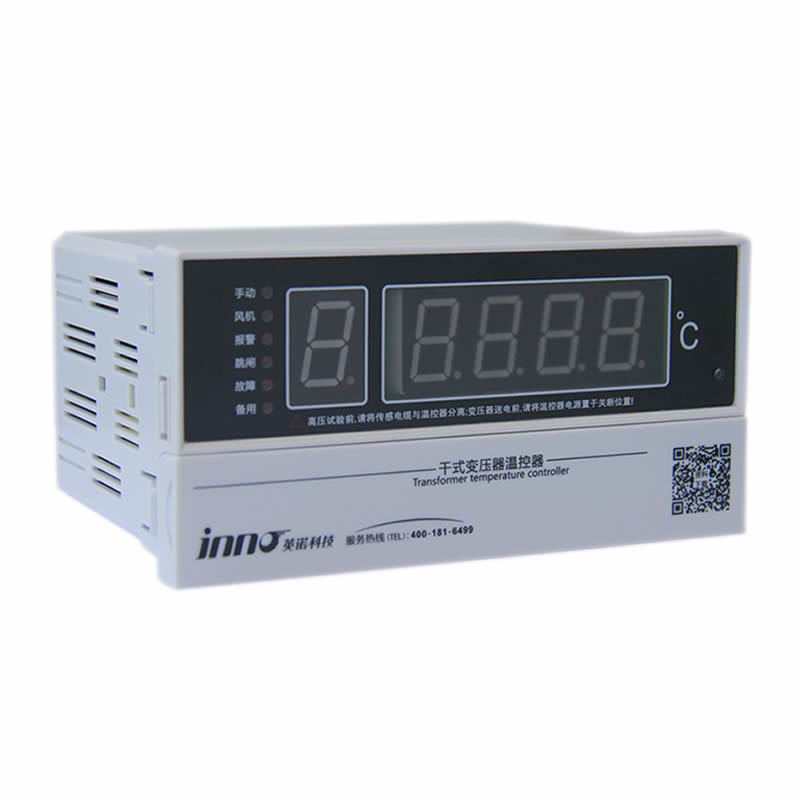
sensores PT100 — platinum resistance thermometers with a nominal resistance of 100 ohms at 0°C — are the most widely deployed temperature measurement device in power transformer installations worldwide. Their simplicity, Estabilidad a largo plazo, and compatibility with standard protection relay and SCADA input modules have made them the default choice for monitoreo de la temperatura del aceite superior, cooling system temperature measurement, and ambient temperature compensation in transformer thermal models.
Principio de funcionamiento
The electrical resistance of platinum increases linearly and predictably with temperature at a rate of approximately 0.385 ohmios por °C. A PT100 sensor connected to a precision measurement circuit provides a stable, repeatable temperature reading with accuracy typically in the range of ±0.3°C to ±1°C depending on sensor grade (IEC 60751 Class A or Class B) and installation quality. 4-wire PT100 connection circuits eliminate lead resistance errors and are the required configuration for accurate temperature measurement in transformer protection applications.
Standard Applications in Transformer Monitoring
- Medición de la temperatura del aceite superior — PT100 pocket sensors installed in transformer tank cover wells provide continuous top oil temperature readings that are the primary input to thermal overload protection relays
- Radiator inlet and outlet temperature — differential temperature measurement for cooling system efficiency monitoring
- Compensación de temperatura ambiente — external PT100 sensors provide the ambient reference temperature required by hot-spot calculation algorithms in IEC 60076-7 modelos térmicos
- Dry-type transformer winding surface temperature — PT100 sensors bonded to the outer surface of cast-resin windings provide a winding temperature indication, though surface measurements consistently underestimate the true internal hot-spot temperature by 10–20°C
Key Limitation
PT100 sensors cannot be embedded inside oil-immersed transformer windings due to their electrical conductivity — contact between a PT100 element and high-voltage conductors would create an immediate insulation fault. Como resultado, PT100-based systems rely on calculated hot-spot estimates derived from top oil temperature measurements combined with thermal model parameters, rather than direct measurement. This calculated estimate carries inherent uncertainty, particularly under dynamic load conditions and when thermal model parameters have drifted from factory values due to aging.
Método 3: Thermal Simulation Oil Temperature Indicators (Indicadores de temperatura del devanado)
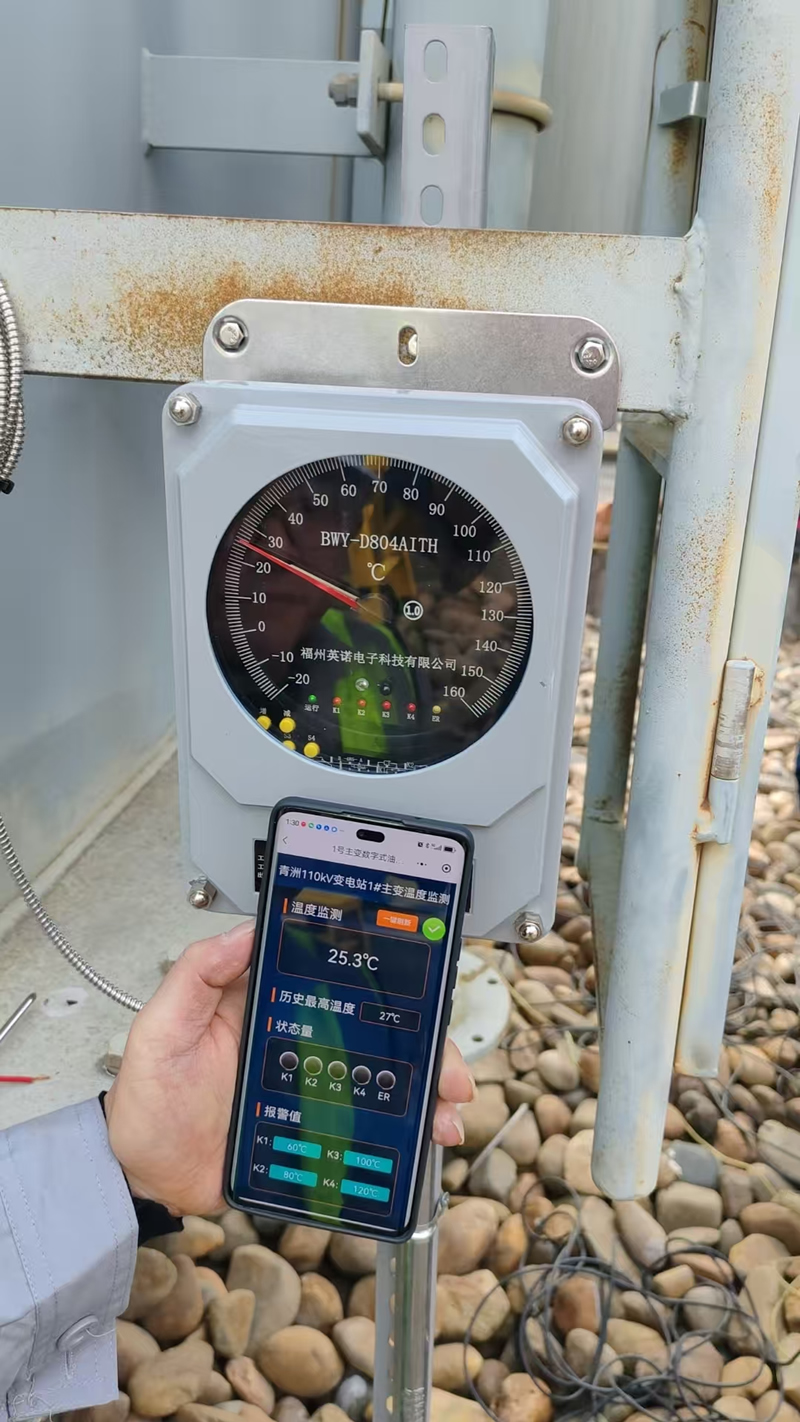
El thermal simulation winding temperature indicator (WTI) — also known as a hot-spot temperature simulator o thermal image indicator — is a self-contained electromechanical instrument that estimates transformer winding hot-spot temperature using an analog thermal model of the transformer’s heat-rise behavior. It is one of the most widely installed transformer temperature monitoring devices in service globally, found on distribution and power transformers from 1 MVA to several hundred MVA.
Principio de funcionamiento
The WTI consists of a bimetallic dial thermometer installed in a PT100 oil temperature pocket on the transformer tank, combined with a small heating element energized by a current proportional to the transformer load current (supplied via a dedicated current transformer). The heater element mimics the I²R heat rise of the winding above oil temperature — so the thermometer pointer reads a temperature that represents the estimated winding hot spot rather than the oil temperature alone. By adjusting the heating current ratio and thermal time constant of the heater assembly, the WTI can be calibrated to closely match the actual winding thermal behavior defined in the transformer’s factory heat-run test report.
Características funcionales
- Provides a continuous estimated winding hot-spot temperature reading on a local analog dial — no external power supply required for basic indication
- Integral adjustable alarm and trip contacts (typically two independent contact stages) for direct connection to protection relay or SCADA alarm inputs
- Built-in drag-hand indicator records the maximum temperature reached since last manual reset — useful for post-event analysis of overload events
- Opcional 4–20mA or PT100 analog output for remote monitoring integration
- Separate cooling control contacts for automatic fan or pump start/stop based on estimated hot-spot temperature
- Available in both indicador de temperatura del aceite (HECHO) configuración (measures top oil only, no load current input) y lleno indicador de temperatura del devanado (WTI) configuration with load current compensation
Applications and Limitations
El thermal simulation WTI is the standard temperature protection device on the majority of distribution and sub-transmission transformers in service worldwide due to its low cost, mechanical simplicity, and independence from external power supplies. Sin embargo, its analog thermal model is a simplified representation of actual winding thermal behavior — it does not account for non-uniform current distribution, localized cooling variations, or changes in winding thermal characteristics due to insulation aging. For critical high-value transformers where accurate hot-spot knowledge is essential for life management and dynamic load optimization, direct fiber optic winding temperature measurement should supplement or replace WTI-based thermal simulation.
Método 4: Wireless Temperature Monitoring Sensors
Wireless transformer temperature sensors use battery-powered transmitter nodes to collect surface temperature data at defined measurement points and relay readings to a central gateway or cloud monitoring platform via ZigBee, lora, 2.4GHz RF, or NB-IoT protocolos. Esta arquitectura elimina el cableado de señal entre el sensor y el sistema de monitoreo, una ventaja significativa para aplicaciones e instalaciones de modernización donde tender nuevos cables de instrumentación a un transformador existente no es práctico o costoso..
Ventajas principales
- Instalación sin herramientas en superficies externas del transformador, terminales de casquillo, Conexiones de barras de BT, y terminales de cable
- Soportes redes multipunto cubriendo docenas de ubicaciones de medición a través de una bahía de transformador o subestación desde una única puerta de enlace
- Datos de temperatura en tiempo real con umbrales de alarma configurables y notificaciones push a dispositivos móviles o sistemas SCADA
- Ideal para monitoreo de gabinete de transformador tipo seco donde las temperaturas de la superficie del devanado son el principal objetivo de medición
- La integración en la nube permite el monitoreo y las tendencias centralizados en múltiples instalaciones de transformadores en una sola plataforma
Limitaciones
Wireless sensors measure surface or near-surface temperatures only and cannot access the internal winding hot-spot of an oil-immersed transformer. Battery replacement is required typically every 2–5 years depending on transmission interval settings. Metal transformer enclosures attenuate radio frequency signals — antenna placement design and repeater positioning must be addressed during system commissioning to ensure reliable data transmission.
Método 5: Termografía infrarroja
Cámaras termográficas infrarrojas detect the electromagnetic radiation emitted by transformer external surfaces and convert it into a calibrated visual heat map, enabling maintenance technicians to identify abnormal temperature gradients across bushings, conexiones de terminales, cooling radiators, and tank surfaces during scheduled inspection visits without physical contact with energized equipment.
Handheld Infrared Camera vs. Fixed Online Thermal Sensor
Portátil infrared thermography cameras are the standard tool for periodic transformer inspection rounds and provide high-resolution thermal images suitable for maintenance reports and trend comparison across successive inspection cycles. Fixed online infrared sensors mounted in dedicated observation windows on transformer enclosures or switchgear panels enable continuous thermal monitoring of specific external zones — bridging the gap between scheduled inspection intervals for high-priority assets.
Core Advantages and Limitations
Infrared thermography excels as a sin contacto, rapid survey tool for external fault detection and maintenance documentation. It is fully compatible with all transformer types and voltage levels and requires no permanent installation on the transformer itself. Sin embargo, infrared measurement is fundamentally limited to surface temperature detection — it cannot measure winding hot-spot temperatures inside the transformer tank, and it provides only a periodic snapshot rather than the continuous real-time coverage needed for automated alarm and protection functions.
Monitoreo de temperatura del transformador: Tabla comparativa de tecnologías

| Criterios | Fibra Óptica Fluorescente | Sensor PT100 | Thermal Simulation WTI | Sensor inalámbrico | Termografía infrarroja |
|---|---|---|---|---|---|
| Tipo de medición | Direct winding hot spot | Aceite / surface temperature | Estimated hot spot (calculado) | Surface temperature | Surface temperature |
| Modo de monitoreo | Continuo en línea | Continuo en línea | Continuo en línea | Continuo en línea | Periódico / programado |
| Inmunidad a EMI | ★★★★★ | ★★★ | ★★★★ | ★★★ | ★★★★ |
| Precisión de medición | ±0,5 °C | ±0.3–1°C | ±2–5°C (estimated) | ±1°C | ±2°C |
| Internal Winding Access | ✅ Direct | ❌ Surface only | ⚠️ Calculated estimate | ❌ Surface only | ❌ External only |
| Alarma en tiempo real | ✅ | ✅ | ✅ | ✅ | ❌ |
| Complejidad de instalación | Moderado (factory or retrofit) | Simple | Simple | Mínimo | Ninguno (portátil) |
| Suitable for Oil-Immersed | ✅ | ✅ | ✅ | ⚠️ External only | ✅ |
| Suitable for Dry-Type | ✅ | ✅ | ⚠️ Limitado | ✅ | ✅ |
| IEC 60076-2 Obediente | ✅ | ⚠️ Indirect | ⚠️ Indirect | ❌ | ❌ |
| Mejor aplicación | Critical HV transformers, winding life management | Standard protection relay input, monitoreo de aceite | Transformadores de distribución, routine thermal protection | Cojinete, LV terminals, dry-type retrofit | Maintenance inspection, external fault survey |
7. Building the Best Transformer Thermal Monitoring System
The most effective solución de monitoreo de temperatura del transformador is not a single device but a layered, integrated architecture that combines direct sensing, adquisición de datos, Gestión de alarmas, and system-level integration to deliver actionable thermal intelligence throughout the transformer’s operating life.
Capa 1 — Sensing: Matching Technology to Measurement Point
A comprehensive sensing deployment addresses all critical thermal zones of the transformer simultaneously. Sondas de fibra óptica fluorescentes are embedded in the HV and LV winding assemblies at the factory-identified hot-spot locations to provide direct IEC 60076-2 compliant winding temperature readings. sensores PT100 are installed in the tank cover oil pocket for top oil temperature measurement and in radiator inlet/outlet pipes for cooling system monitoring. Un thermal simulation winding temperature indicator (WTI) is mounted on the transformer marshalling panel to provide a local electromechanical backup indication and independent alarm contacts for protection relay tripping. Transmisores de temperatura inalámbricos are applied to bushing terminal connectors, LV busbar joints, and cable terminations to extend monitoring coverage to external high-risk connection points without additional cabling.
Capa 2 — Data Acquisition
Fiber optic signals are processed by a multi-channel fluorescence demodulator that converts optical decay-time measurements into calibrated temperature values at sampling rates of 1–10 seconds. PT100 signals are fed directly to the transformer protection relay (p. ej.., ABB RET670, Siemens 7UT) or to a dedicated RTD input module in the substation control system. Wireless sensor data is aggregated by a LoRa or ZigBee gateway mounted in the substation control room or marshalling kiosk.
Capa 3 — Communication and Integration
All temperature data streams converge at the substation automation system via IEC 61850 Mensajería de GANSO for protection-grade alarm transmission, Modbus TCP/RTU para integración SCADA, y DNP3 for utility EMS connectivity. Cloud-connected deployments use MQTT over 4G/5G for remote monitoring and mobile alerting without dependence on substation LAN infrastructure.
Capa 4 — Monitoring Platform and Alarm Management
El transformer thermal monitoring software platform provides real-time temperature dashboards for all sensing points, historical trend logging with configurable retention periods, and a three-tier alarm management structure. Alarmas de aviso at 95°C winding hot spot initiate automated cooling system escalation. Alarmas de advertencia at 110°C trigger operator notification and load reduction procedures. Alarmas críticas a 120°C (or the transformer manufacturer’s defined trip threshold) initiate automatic protection relay tripping to disconnect the transformer from service before thermal runaway occurs. All threshold values are configurable and should be validated against the transformer manufacturer’s thermal design data and the applicable loading guide (IEC 60076-7 o IEEE C57.91).
Capa 5 — Automated Response and SCADA Integration
On alarm activation, the system executes a coordinated response sequence: cooling system fans and pumps are automatically started at full capacity; SMS, Correo electrónico, and push notifications are dispatched to designated operations personnel; load shedding commands are issued to upstream protection relays if temperature continues to rise; and at the critical threshold, an automatic trip command is executed. Full integration with SCADA, EMS, GMAO, y plataformas de gestión de activos ensures that all thermal events are logged with timestamped data, enabling post-event root cause analysis and regulatory compliance reporting.
Recommended System Configurations by Transformer Type
- Critical transmission transformer (≥100 MVA, 110kV y más): Fluorescent fiber optic winding sensors (factory-embedded, alto voltaje + LV) + PT100 top oil + WTI backup indicator + wireless bushing terminal sensors + full SCADA / IEC 61850 integración
- Industrial oil-immersed transformer (10–100 MVA): Fluorescent fiber optic winding sensors + PT100 top oil and radiator monitoring + WTI with cooling control contacts + Modbus SCADA integration
- Dry-type cast-resin transformer: Sondas de fibra óptica fluorescentes (embedded in winding during manufacture) + PT100 surface sensors + wireless LV busbar terminal sensors + local HMI display
- Distribution transformer retrofit: WTI replacement or upgrade + wireless surface sensors on bushing terminals + optional fiber optic probe insertion via tank cover port + cloud monitoring gateway
- Maintenance inspection program (all types): Periodic infrared thermographic surveys (minimum twice per year) combined with online monitoring data review for cross-validation and compliance documentation
8. Estudios de casos globales: Transformer Temperature Monitoring in Action

The following real-world deployments illustrate how sistemas de monitoreo térmico de transformadores have delivered measurable protection and operational value across a range of industries, niveles de voltaje, and geographic regions.
Estudio de caso 1 — Transmission Substation, Reino Unido
A major UK transmission network operator retrofitted fluorescent fiber optic winding temperature sensors into twelve 400kV autotransformers at a critical grid interconnection substation. Prior to installation, the operators relied exclusively on thermal simulation WTI indicators and top oil PT100 measurements — neither of which provided direct knowledge of actual winding hot-spot conditions under dynamic load cycling. Within the first operating season following fiber optic sensor commissioning, the monitoring system identified two units operating with winding hot-spot temperatures 18–23°C above the WTI-indicated values under peak demand conditions — a discrepancy attributable to thermal model parameter drift in aging units. Load management protocols were adjusted accordingly, and both transformers were scheduled for planned inspection rather than facing the risk of an unplanned thermal failure during peak winter demand. The operator estimated the intervention prevented outage costs in excess of £2 million per affected unit.
Estudio de caso 2 — Data Center Campus, Singapur
A hyperscale data center operator managing eight dry-type cast-resin transformers at a Tier IV facility deployed a hybrid monitoring architecture combining factory-embedded fluorescent fiber optic probes in each transformer’s HV and LV windings with a wireless temperature sensor network covering LV busbar connections, cable termination lugs, and main distribution board incoming terminals. Todo 96 measurement points across the eight transformers feed into a centralized cloud monitoring platform with mobile push notifications configured for the facility’s 24/7 operations team. During a capacity expansion overload test eighteen months after commissioning, the fiber optic system detected a winding hot-spot temperature of 158°C in one transformer — 23°C above the WTI surface indication — triggering an immediate load transfer to the standby unit. Post-event thermal analysis confirmed that the affected transformer’s resin insulation had begun surface micro-cracking consistent with sustained overtemperature exposure, validating the system’s early intervention.
Estudio de caso 3 — Rail Traction Power Substation, China
A metropolitan railway operator equipped traction power substations across 24 stations with multi-channel fluorescent fiber optic thermometry systems monitoring winding hot spots in Scott-connection traction transformers. The high-frequency switching transients and strong electromagnetic fields generated by traction inverter systems ruled out conventional PT100-based winding monitoring — electronic sensors in this environment experienced persistent measurement noise and false alarms. The all-optical fiber sensing architecture eliminated EMI-related false alarms entirely while delivering ±0.5°C winding hot-spot accuracy throughout the network. The system interfaces directly with the railway’s SCADA energy management system vía IEC 61850, enabling automated cooling control and load dispatch optimization based on real-time thermal headroom in each traction transformer.
Estudio de caso 4 — Petrochemical Refinery, Arabia Saudita
A major refinery operator managing fourteen 11kV oil-immersed unit transformers in classified hazardous area zones implemented a comprehensive monitoring upgrade combining ATEX-rated PT100 top oil sensors, thermal simulation WTI indicators with remote 4–20mA outputs, y intrinsically safe wireless temperature transmitters on transformer bushing terminals and HV cable termination boxes. The wireless network eliminated the need for new instrumentation cable runs through congested cable trays in the classified areas — a significant safety and cost advantage. The integrated monitoring platform flagged an abnormal bushing terminal temperature rise of 41°C above ambient on one transformer within six weeks of commissioning, leading to the discovery of a severely under-torqued terminal clamp that had been missed during the previous scheduled maintenance outage.
Estudio de caso 5 — Wind Farm Collector Substation, Alemania
A renewable energy developer commissioned a 250 MVA offshore wind farm collector transformer equipped with factory-embedded fluorescent fiber optic probes in both HV and LV windings, combinado con PT100 top oil sensors, radiator differential temperature monitoring, y un WTI indicator providing independent local backup protection. The fiber optic system feeds real-time hot-spot data to the wind farm SCADA platform, enabling dynamic transformer loading optimization — allowing the operator to safely push transformer output above nameplate rating during periods of favorable ambient temperature and wind resource, while automatically curtailing generation when hot-spot temperatures approach the IEC 60076-7 emergency loading threshold. The dynamic loading capability increased annual energy yield by an estimated 3.2% compared to conservative fixed nameplate-limited operation.
Preguntas frecuentes: Monitoreo de temperatura del transformador
1. Why is transformer temperature monitoring so important?
Transformer insulation — primarily cellulose paper in oil-filled units and cast resin in dry-type units — degrades irreversibly with heat exposure. According to the Arrhenius thermal aging model codified in IEC 60076-7, every 6–10°C of sustained overtemperature halves the remaining insulation life. Sin continuous transformer temperature monitoring, thermal degradation proceeds invisibly until insulation failure causes an unplanned outage, fuego, or catastrophic transformer loss. Proactive monitoring enables condition-based maintenance, dynamic load management, and timely intervention before thermal damage becomes irreversible.
2. What is the difference between a winding temperature indicator (WTI) and a direct fiber optic winding sensor?
Un thermal simulation winding temperature indicator (WTI) estimates winding hot-spot temperature using an analog thermal model — it measures top oil temperature and adds a calculated temperature increment proportional to load current. This estimate carries inherent uncertainty of ±2–5°C or more, particularly under dynamic load conditions or when the transformer’s thermal characteristics have changed due to aging. Un fluorescent fiber optic winding sensor measures the actual temperature at the physical hot-spot location inside the winding — providing a direct, real-time reading with ±0.5°C accuracy that requires no thermal model assumptions. For critical high-value transformers, direct fiber optic measurement provides significantly higher confidence in thermal condition assessment than WTI simulation alone.
3. What temperature should trigger a transformer winding alarm?
Alarm thresholds depend on transformer insulation class, design rating, and applicable loading standard. For standard mineral-oil transformers with Class A cellulose insulation, IEC 60076-7 defines a continuous hot-spot limit of 98°C for normal cyclic loading, con límites de carga de emergencia de hasta 140°C para operaciones de contingencia de corta duración. Las configuraciones típicas del relé de protección utilizan un alarma de primera etapa a 100–110°C punto caliente sinuoso para iniciar la escalada de enfriamiento y notificación al operador, con un viaje de segunda etapa a 120–130°C para desconectar automáticamente el transformador. Para transformadores de resina fundida de tipo seco, clase térmica F (155°C) y clase H (180°C) Los devanados soportan temperaturas de funcionamiento más altas permitidas; consulte la documentación del fabricante del transformador para conocer las configuraciones específicas del modelo..
4. ¿Se pueden instalar sondas de fibra óptica fluorescentes en un transformador sumergido en aceite existente??
Sí, en muchos casos. Instalación de modernización de sensores de fibra óptica fluorescentes. en transformadores sumergidos en aceite existentes es técnicamente factible durante las paradas de mantenimiento planificadas cuando el transformador está desenergizado y el aceite se drena o baja parcialmente. Las sondas se insertan a través de la cubierta del tanque del transformador a través de accesorios de paso de fibra dedicados y se guían hacia el conjunto del devanado mediante herramientas de inserción flexibles.. La viabilidad específica depende de la construcción del devanado., puntos de acceso al tanque disponibles, y la guía del fabricante del transformador.. Para la adquisición de nuevos transformadores, El enfoque preferido es especificar sondas de fibra óptica instaladas en fábrica durante la fabricación, ya que garantiza la ubicación óptima del sensor en la ubicación del punto caliente de diseño..
5. ¿Cuál es la diferencia entre la temperatura superior del aceite y la temperatura del punto caliente del bobinado??
Temperatura superior del aceite is the temperature of the insulating oil at the highest point in the transformer tank — measured by a sensor PT100 in the tank cover pocket. It represents the bulk thermal state of the transformer’s cooling medium. Winding hot-spot temperature is the highest temperature point within the winding conductor and insulation assembly — typically located in the upper portion of the coil and consistently higher than the surrounding oil temperature by 15–40°C depending on load level and cooling mode. It is the winding hot-spot temperature, not the top oil temperature, that directly governs insulation aging rate and permissible loading capacity. Relying on top oil temperature alone systematically underestimates the thermal stress on transformer insulation.
6. Do transformer temperature monitoring systems need to comply with IEC standards?
Sí. The primary applicable standards for Monitoreo de temperatura del transformador son IEC 60076-2 (Temperature rise for liquid-immersed transformers — defines hot-spot measurement methodology), IEC 60076-7 (Loading guide for oil-immersed power transformers — defines thermal aging model and loading limits), y IEC 60354 (Loading guide for oil-immersed power transformers, superseded by IEC 60076-7 but still referenced). Para transformadores tipo seco, IEC 60076-11 applies. Protection relay and monitoring system integration follows IEC 61850 for substation automation communication. Buyers should confirm that proposed monitoring systems are designed to these standards and that sensor accuracy and calibration traceability are documented accordingly.
7. Is wireless temperature monitoring suitable for use inside oil-immersed transformer tanks?
No. Sensores de temperatura inalámbricos are electronic devices that require a battery power source and radio frequency signal transmission — neither of which is compatible with the interior of an energized oil-filled transformer tank. Wireless sensors are appropriate for external transformer surface monitoring applications: bushing terminal connections, LV busbar joints, cable termination boxes, and dry-type transformer enclosure surfaces. For internal winding hot-spot monitoring of oil-immersed transformers, sensores de fibra óptica fluorescentes are the only technology that can be safely installed inside the energized transformer tank.
8. How long do fluorescent fiber optic temperature sensors last in transformer service?
Fluorescent fiber optic sensing probes are passive optical components with no active electrical elements, partes móviles, or consumable materials at the sensing point. Under normal transformer operating conditions — including continuous immersion in mineral oil, thermal cycling between ambient and rated hot-spot temperatures, and exposure to dissolved gases and moisture — documented field service lifetimes exceed 20–25 years without degradation of measurement accuracy or sensor integrity. The external demodulator electronics have a typical design life of 10–15 years with routine maintenance. This long service life makes fiber optic sensing a cost-effective investment over the full operational life of the transformer asset.
9. Can a transformer temperature monitoring system integrate with existing SCADA or EMS platforms?
Sí. All major sistemas de monitoreo térmico de transformadores support the standard industrial communication protocols required for SCADA, EMS, and substation automation integration. Common supported protocols include IEC 61850 (GOOSE and MMS) for protection-grade substation communication, Modbus RTU/TCP for general SCADA connectivity, DNP3 for utility EMS and telecontrol systems, y MQTT over 4G/5G for cloud-based remote monitoring deployments. Integración con sistemas informatizados de gestión de mantenimiento (GMAO) y digital asset management platforms enables automatic work order generation on alarm events and continuous trending of transformer thermal health indicators alongside other condition monitoring data streams.
10. How do I select the best transformer temperature monitoring solution for my specific application?
The optimal solution depends on four primary factors. Primero, transformer type and voltage level: oil-immersed units above 10kV benefit most from direct fiber optic winding monitoring; dry-type units are well served by embedded fiber optic probes combined with wireless surface sensors. Segundo, criticality and replacement cost: transformadores de transmisión arriba 100 MVA con plazos de reemplazo de 12 a 24 meses justifican un monitoreo integral de la fibra óptica; Los transformadores de distribución pueden estar adecuadamente protegidos por WTI plus PT100 con inspección infrarroja periódica.. Tercero, nueva construcción vs.. modernización: Las sondas de fibra óptica integradas en fábrica son el enfoque más rentable para los transformadores nuevos.; Los proyectos de modernización deben evaluar la viabilidad de la inserción de sondas versus el monitoreo externo inalámbrico como ruta principal de actualización.. Cuatro, requisitos de integración: instalaciones con SCADA o IEC existente 61850 La infraestructura de automatización de subestaciones debe especificar sistemas de monitoreo con soporte de protocolo nativo para evitar la costosa integración de middleware.. Comuníquese con un proveedor especializado en monitoreo de transformadores para obtener una recomendación de sistema específica para el sitio basada en los datos de la placa de identificación de su transformador., perfil de carga, y objetivos de seguimiento.
Get the Right Transformer Temperature Monitoring Solution for Your Project
Whether you are commissioning a new high-voltage power transformer, upgrading protection on aging critical assets, or building a fleet-wide thermal monitoring program across multiple substations, selecting the right combination of sensores de fibra óptica fluorescentes, PT100 detectors, thermal simulation indicators, and wireless monitoring technology is a decision that directly affects transformer longevity, Fiabilidad operativa, and personnel safety.
FJINNO (Fuzhou Innovation Electronic Scie&Tech Co., Limitado.) se especializa en fluorescent fiber optic transformer temperature monitoring systems with over a decade of deployment experience across high-voltage switchgear, transformadores de potencia, Equipo SIG, transformadores tipo seco, and rail traction power systems. Nuestro equipo de ingeniería proporciona un diseño de sistema para aplicaciones específicas., factory calibration, soporte de instalación, and long-term technical service for projects at all scales — from single-transformer protection upgrades to multi-site utility monitoring programs.
- 📧 Correo electrónico: web@fjinno.net
- 📱 WhatsApp (en inglés) / WeChat (en inglés) / Teléfono: +86 135 9907 0393
- 💬 QQ: 3408968340
- 🌐 Sitio web: www.fjinno.net
- 📍 Dirección: Parque industrial Liandong U Grain Networking, No.12 Xingye West Road, Fuzhou, Fujian, China
Descargo de responsabilidad: la informacion tecnica, umbrales de temperatura, and standard references in this article are provided for general guidance purposes only. Specific transformer protection settings, especificaciones del sensor, and system configurations must be determined by qualified electrical engineers in accordance with the transformer manufacturer’s documentation, applicable IEC and IEEE standards, y requisitos reglamentarios locales. Always follow established safety procedures when working on or near energized electrical equipment.

Sensor de temperatura de fibra óptica, Sistema de monitoreo inteligente, Fabricante de fibra óptica distribuida en China
 |
 |
 |