 Sensores de temperatura de fibra óptica INNO ,sistemas de monitoreo de temperatura.
- Cero interferencias electromagnéticas: La fibra óptica transporta luz., no electricidad: es completamente inmune a EMI/RFI, lo que la convierte en la única opción confiable para el monitoreo de puntos calientes de transformadores y aparamenta de alto voltaje.
- Precisión milimétrica en condiciones extremas: Los sensores de punto fluorescente logran Precisión de ±1 °C de −40°C a +260 °C, con un tiempo de respuesta inferior 1 segundo y una sonda tan delgada como 2-3 mm.
- Eléctricamente seguro en 100 entornos kV+: Las sondas son completamente aislantes y están clasificadas para voltajes muy superiores 100 kV: sin problemas de conexión a tierra, sin caminos de fuga.
- Un transmisor, arriba a 64 canales: un solo transmisor de temperatura de fibra óptica maneja de 1 a 64 canales de fibra fluorescente simultáneamente, reduciendo drásticamente los costos de hardware.
- Sin mantenimiento para 25+ años: Sin partes móviles, sin consumibles, no se requiere calibración periódica en condiciones normales de funcionamiento.
- Arquitectura escalable: La comunicación RS485 se integra directamente con SCADA, DCS, y plataformas de automatización de subestaciones; todos los parámetros son personalizables.
- Probado en industrias críticas: Implementado en transmisión de energía., centros de datos, plantas petroquímicas, sistemas de tracción ferroviaria, y hornos industriales en todo el mundo.
1. ¿Qué es un Sistema de medición de temperatura de fibra óptica?

A sistema de medición de temperatura de fibra óptica es una plataforma de instrumentación que utiliza fibras ópticas transmisoras de luz, en lugar de conductores metálicos, para detectar e informar la temperatura en uno o más puntos en tiempo real.. La sonda del sensor convierte una temperatura física en una señal óptica., que viaja de regreso a lo largo de la fibra hasta un dedicado transmisor de temperatura de fibra óptica (También llamado acondicionador de señal o unidad interrogadora.) que decodifica la señal y genera una lectura de temperatura.
Porque el elemento sensor está hecho enteramente de materiales dieléctricos., La sonda y el cable de fibra no transportan corriente eléctrica alguna.. This distinguishes the technology fundamentally from thermocouples, RTD, y termistores, all of which require an electrical circuit to function and are therefore susceptible to ground loops, EMI, and electrical hazards in high-voltage installations.
The system is available in two primary sensing architectures: fluorescent point temperature sensing y detección distribuida de temperatura por fibra óptica (EDE). Both share the same core benefit of electrical isolation, but serve different measurement objectives.
2. ¿Cómo se compara con los sensores de temperatura tradicionales??
Traditional sensors — thermocouples, RTD PT100, and bimetallic devices — have served industry for over a century. Sin embargo, they face critical limitations in modern electrical and industrial environments that fiber optic technology directly resolves.
| Parámetro | Par termoeléctrico / IDT | Sensor de fibra óptica fluorescente |
|---|---|---|
| Inmunidad EMI | None — signal degrades near HV equipment | Complete — no electrical signal in the fiber |
| Aislamiento eléctrico | Requiere barreras de aislamiento | Inherently insulating; clasificado >100 kV |
| Exactitud | ±0.5–2 °C (con deriva en el tiempo) | ±1 ºC, estable sobre 25+ año de vida útil |
| Tiempo de respuesta | 1–10 segundos típico | <1 segundo |
| Diámetro de la sonda | 4–10 mm típico | 2–3 milímetros (personalizado disponible) |
| Mantenimiento | Se requiere recalibración periódica | No se requiere ninguno |
| Multicanal desde una unidad | Normalmente de 1 a 8 canales por transmisor | 1–64 canales por transmisor |
3. ¿Cómo funciona un sistema de medición de temperatura de fibra óptica??
Principio de decadencia fluorescente
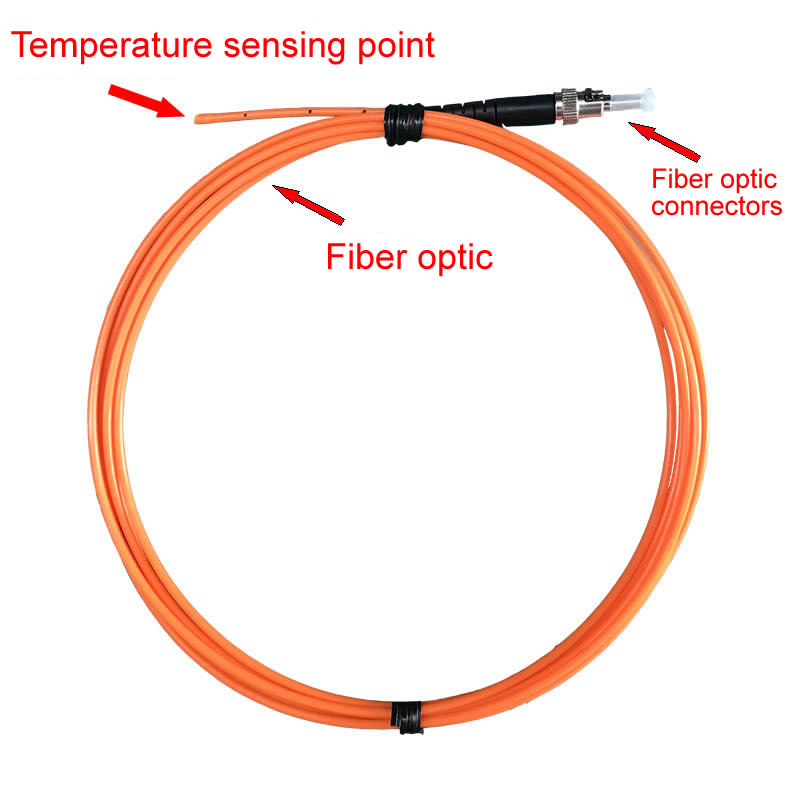
En sensores de temperatura de fibra óptica fluorescentes, la punta de la sonda contiene un compuesto de fósforo de tierras raras. La unidad interrogadora emite una luz de excitación controlada con precisión a lo largo de la fibra.. El fósforo absorbe esta energía y la reemite en forma de fluorescencia.. críticamente, La duración de esa fluorescencia, conocida como vida útil de la fluorescencia o tiempo de desintegración, es repetible., función predecible de la temperatura. El interrogador mide este tiempo de caída y lo convierte directamente en un valor de temperatura..
Porque la medición depende de un intervalo de tiempo más que de un nivel de voltaje o intensidad de luz, Es inherentemente inmune a las pérdidas por flexión de la fibra., contaminación del conector, y ruido electromagnético, todo lo cual corrompería un sensor eléctrico basado en voltaje.
Repartido (raman / Brillouin) Principio
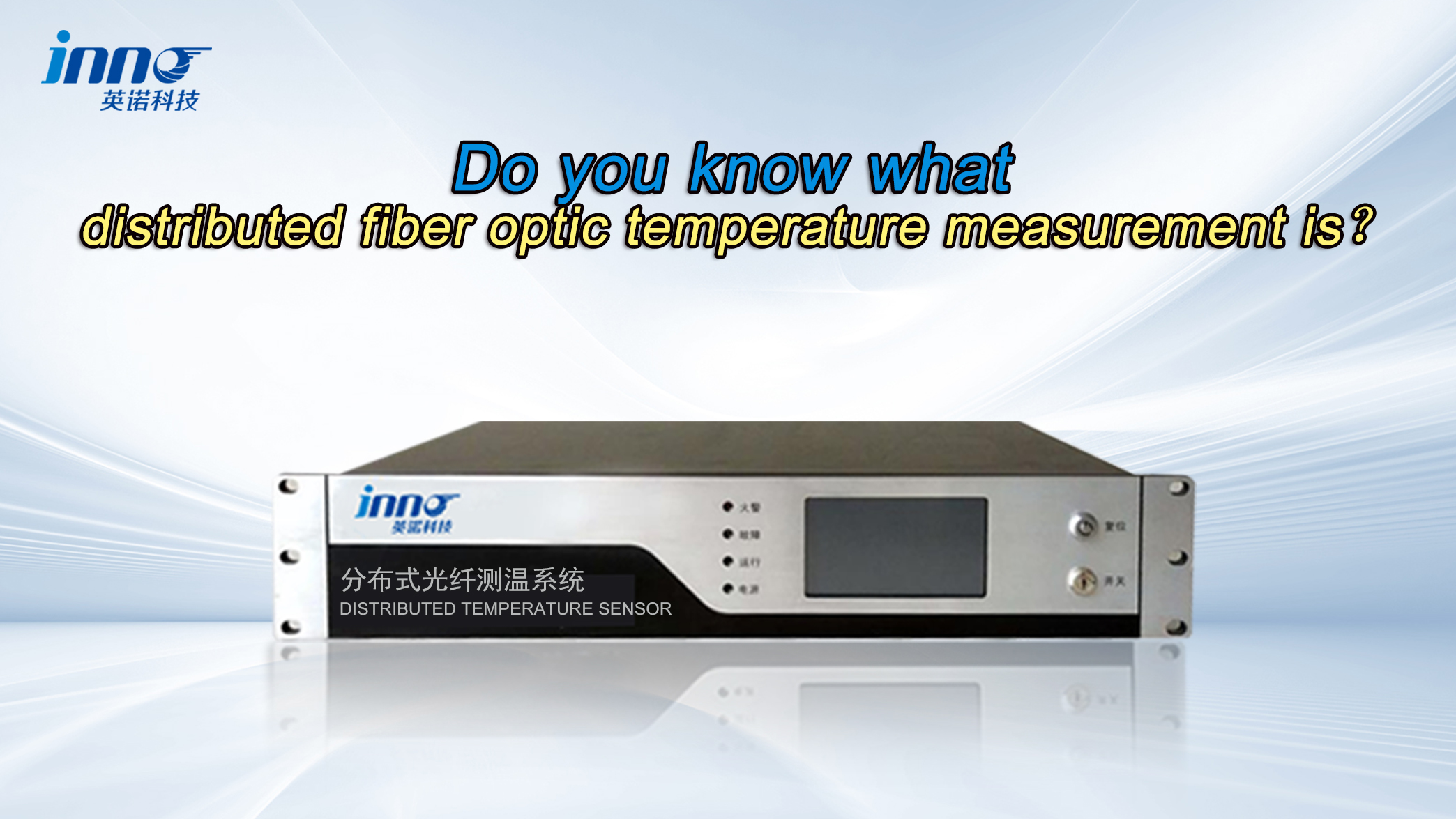
En Sistemas distribuidos de detección de temperatura por fibra óptica., Se lanza un pulso láser a una fibra estándar monomodo o multimodo.. A medida que la luz se propaga, se dispersa a nivel molecular. Los componentes Raman o Brillouin retrodispersados cambian de frecuencia y amplitud en proporción directa a la temperatura local en cada metro a lo largo de la fibra.. Midiendo el tiempo que tarda en regresar la luz retrodispersada, el sistema asigna una temperatura precisa a cada posición espacial a lo largo del cable, convirtiendo una sola fibra en miles de sensores de temperatura simultáneamente.
4. Detección de puntos fluorescentes vs.. Detección distribuida de temperatura por fibra óptica
| Característica | Detección de puntos fluorescentes | Fibra Óptica Distribuida (EDE) |
|---|---|---|
| Tipo de medida | Puntos de acceso discretos | Perfil continuo a lo largo de la fibra. |
| rango típico | −40°C a +260 °C | −40°C a +300 °C (dependiente del sistema) |
| Cobertura espacial por fibra | Arriba a 80 metro; 1–64 puntos discretos | Arriba a 30 km+ |
| Mejores aplicaciones | Devanados del transformador, barras colectoras de aparamenta, rodamientos de motor | Cables subterráneos, tuberías, detección de incendios en túneles |
| Costo del sistema | Menor costo por punto | Mayor costo inicial; menor costo por metro a escala |
5. ¿Cuáles son los principales componentes del sistema??
- Sonda de fibra óptica fluorescente (cabeza del sensor): La punta física insertada en el punto de medición.. Contiene el elemento sensor de fósforo encapsulado en una delgada, funda aislante electricamente (2–3 mm de diámetro). Hay formas y materiales personalizados disponibles para geometrías de instalación específicas..
- Cable de fibra óptica: El medio de transmisión de luz que conecta la sonda al transmisor.. Fibra estándar monomodo o multimodo; ejecución máxima de 80 m para sistemas fluorescentes. Blindado, PTFE, o variantes de chaqueta de alta temperatura están disponibles.
- Transmisor de temperatura de fibra óptica (interrogador): La unidad de procesamiento de señales.. Alberga la fuente de luz., fotodetectores, electrónica de sincronización, y microprocesador. Emite valores de temperatura calibrados a través de RS485 u otras interfaces. Una unidad admite de 1 a 64 canales.
- Software / Integración SCADA: El software del lado del host o el mapeo de registros Modbus/RS485 permiten la integración directa en el DCS existente, SCADA, o sistemas de automatización de subestaciones. No proprietary middleware is required.
6. Sensor de temperatura de fibra óptica fluorescente — Full Technical Specifications
| Parámetro | Especificación |
|---|---|
| Sensing method | Vida útil de la fluorescencia (phosphor decay) — point measurement |
| Precisión de medición | ±1 ºC |
| Rango de medición de temperatura | −40°C a +260 °C |
| Tiempo de respuesta | <1 segundo |
| Maximum fiber cable length | 0 – 80 metro |
| Probe outer diameter | 2–3 milímetros (custom diameters available) |
| Aislamiento eléctrico | Totalmente aislante; sin camino conductor |
| High-voltage withstand | >100 kV (personalizable) |
| Canales por transmisor | 1 – 64 (escalable) |
| Interfaz de comunicación | RS485 (Modbus RTU); other interfaces customizable |
| Vida útil | >25 años en condiciones normales |
| Requisito de mantenimiento | None — maintenance-free design |
All parameters can be customized. Contact FJINNO to discuss specific project requirements.
7. ¿Por qué la fibra óptica es la única tecnología de detección de temperatura inmune a EMI??
Every electrical temperature sensor generates a small voltage or resistance signal that must be transmitted over metal conductors. In high-voltage switchyards, transformer rooms, and industrial drives, these conductors act as receiving antennas, picking up interference from switching transients, busbar current, and radio-frequency fields. El error de medición resultante puede ser de varios grados Celsius (o provocar una pérdida total de la señal), lo que hace que la medición no sea confiable para tomar decisiones de protección o monitoreo de condición..
A sensor de temperatura de fibra óptica fluorescente transmite solo luz. La luz no se ve afectada por campos eléctricos o magnéticos.. No importa cuán intenso sea el entorno electromagnético circundante, ya sea un 500 Transformador de kV o horno de arco de alta corriente: la señal óptica que regresa al transmisor es idéntica a la señal que salió de él., llevar una medición precisa de la temperatura cada vez.
Esta no es una mejora marginal con respecto al cable blindado o los amplificadores de aislamiento.; Es un mecanismo físico fundamentalmente diferente que elimina por completo el problema de la interferencia..
8. ¿Cómo funciona el sistema en entornos de alto voltaje? 100 kV?
Los sensores metálicos estándar no se pueden colocar directamente sobre conductores activos de alto voltaje sin una barrera de aislamiento diseñada, porque hacerlo crearía una ruta conductora desde la parte viva a tierra a través del cable del sensor y el cableado de instrumentación. Esto supone tanto un riesgo para la seguridad del personal como una fuente de errores de medición debido a corrientes de fuga..
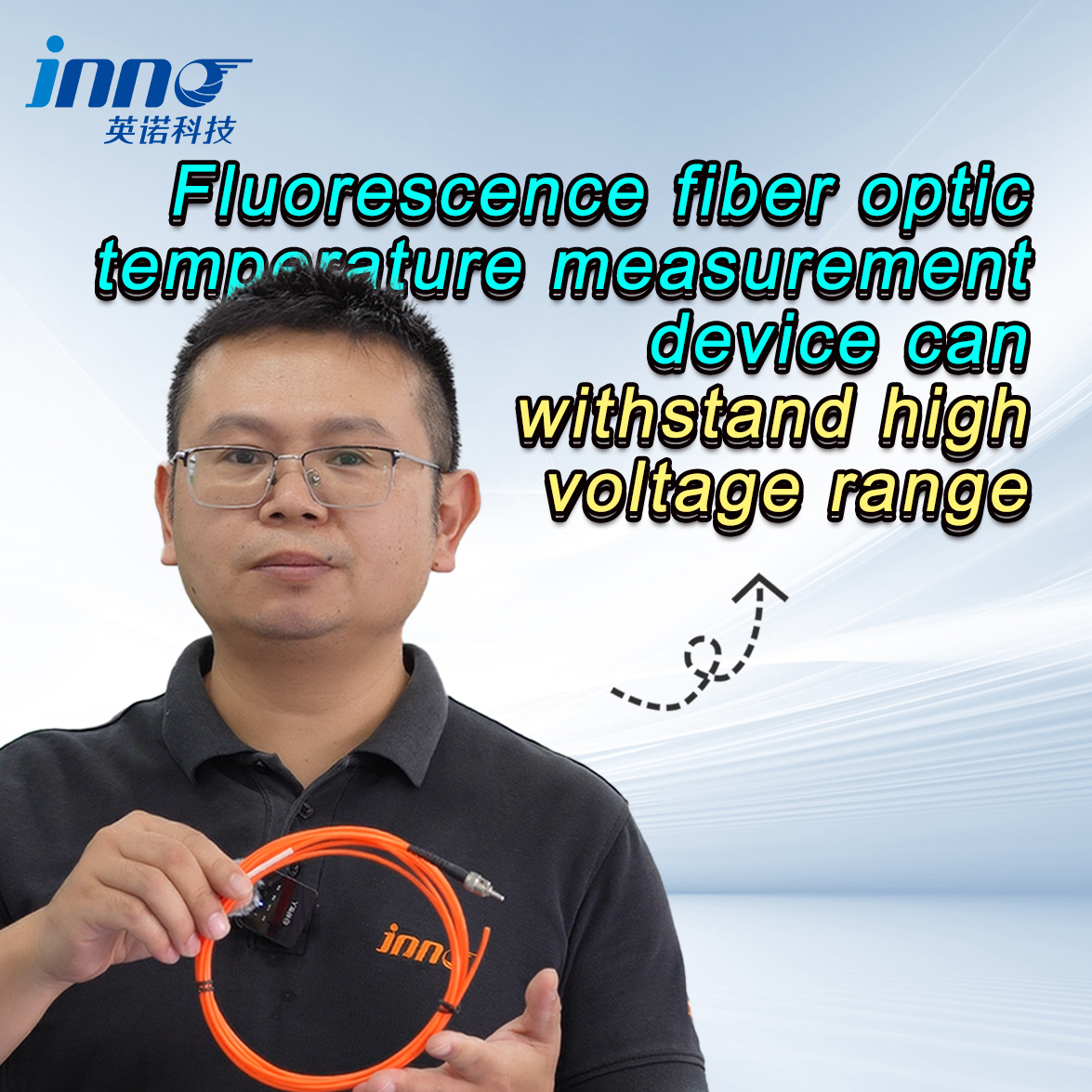
El sonda de temperatura de fibra óptica Está fabricado íntegramente con materiales no conductores.: la punta de detección, el núcleo de fibra, el revestimiento, y la funda del cable son todos dieléctricos. No hay ningún elemento metálico en la cadena de detección en ningún punto entre la punta de la sonda y la carcasa del transmisor.. El resultado es una sonda que puede integrarse directamente en el devanado de un transformador., sujetado a una vida 110 barra colectora kV, o enrutado a través de un recinto GIS sin ningún problema de conexión a tierra o riesgo de fuga.
Las sondas FJINNO están clasificadas para niveles de tensión soportada que exceden 100 kV. Diseños personalizados para voltaje ultra alto (ultravioleta) aplicaciones anteriores 500 kV están disponibles bajo petición.
9. ¿Cómo se aplica el sistema en transformadores de potencia??
Monitoreo de puntos calientes de bobinado
La medición más crítica en cualquier transformador sumergido en aceite o de tipo seco es la temperatura del punto caliente del devanado.. Los estándares IEC e IEEE especifican límites térmicos basados en esta temperatura.; excederlos acelera exponencialmente el envejecimiento del aislamiento. Las sondas fluorescentes se integran directamente entre los conductores de bobinado durante la fabricación o la instalación de actualización., Proporcionar datos continuos de puntos críticos que los modelos térmicos basados únicamente en la temperatura superior del aceite no pueden ofrecer de manera confiable..
Referencia superior de aceite y ambiente
Canales adicionales en el mismo transmisor monitorean la temperatura superior del aceite y la temperatura del aire ambiente, providing the complete thermal picture needed for dynamic load management and remaining-life calculations.
Dry-Type Transformer Coil Temperature
In cast-resin dry-type transformers, probes are embedded in the resin coils at the design stage. un solo sistema de monitoreo de temperatura de fibra óptica with four to eight channels covers all three phases with redundancy, replacing traditional PT100 sensors that require grounding rings and are sensitive to EMI from the winding currents.
10. ¿Cómo se utiliza el sistema en aparamenta de media tensión??
Conexiones de barras, terminaciones de cables, and draw-out contacts inside switchgear panels are common sites for resistive heating caused by loose connections, desgaste de contacto, o sobrecarga. No detectado, a thermal hotspot at a busbar joint progresses from mild overheating to insulation carbonization to a catastrophic arc flash event.
A fiber optic temperature monitoring system for switchgear places multiple probes — typically one per phase per critical joint — across all panels in a switchroom. Because the probes are passive and dielectric, Se pueden instalar en equipos activos durante una ventana de mantenimiento normal sin una interrupción total.. El transmisor compara continuamente lecturas entre fases.; un aumento asimétrico de temperatura en una sola fase es un indicador temprano confiable de una falla en desarrollo, Permitir el mantenimiento específico antes de que ocurra una falla..
11. Qué otras industrias dependen de la medición de temperatura por fibra óptica?

- Centros de datos: Monitoreo continuo de los puntos de acceso del rack de servidores, temperatura de la vía de autobuses, y bancos de baterías UPS sin las complicaciones de conexión a tierra de los sensores metálicos en entornos de cables densos.
- Aceite & gas y petroquímica: Los materiales químicamente inertes de la sonda soportan medios corrosivos.; Los sistemas distribuidos monitorean la integridad de las tuberías y la estratificación de los tanques de almacenamiento a lo largo de kilómetros..
- Ferrocarril y tracción: Temperatura del devanado del motor en sistemas de tracción para material rodante; La alta EMI de los sistemas inversores hace que la fibra óptica sea la única tecnología práctica de sensor puntual..
- Hornos y hornos industriales: Los −40 °C a +260 El rango de °C cubre la mayoría de las aplicaciones de calentamiento de procesos; Las sondas personalizadas se extienden a rangos de temperatura más altos para aplicaciones de hornos especializados..
- Médico y resonancia magnética: La ausencia total de elementos metálicos y conductores hace que las sondas fluorescentes sean seguras para su uso dentro de los orificios de los escáneres de resonancia magnética, donde están prohibidos los materiales ferromagnéticos..
12. ¿Cómo se selecciona el derecho? Sistema de medición de temperatura de fibra óptica?

- Definir objetivos de medición: Si necesita temperatura a niveles específicos, ubicaciones de puntos calientes conocidos: conductores sinuosos, terminaciones de cables, contactos de barra colectora - a sistema de medición de temperatura de punto fluorescente es la elección correcta. Si necesita un perfil de temperatura continuo a lo largo de decenas o cientos de metros, un sistema DTS distribuido es más apropiado.
- Determinar el recuento de canales: Cuente el número de puntos de medición individuales necesarios. Un solo transmisor admite hasta 64 canales fluorescentes. Para instalaciones más grandes, Se pueden conectar varios transmisores en red a través de RS485..
- Especificar clase de voltaje: Confirmar el nivel de tensión viva en cada punto de instalación de la sonda.. Las sondas estándar tienen una clasificación superior 100 kV. Para aplicaciones UHV, especificar la clase de voltaje explícitamente al realizar el pedido.
- Considere la geometría de la sonda: El delgado diámetro de la sonda de 2 a 3 mm se adapta a la mayoría de las geometrías de terminación de cables y ranuras de bobinado estándar. Formas no estándar: planas, flexible, en maceta: están disponibles para instalaciones personalizadas.
- Integración de planes: Confirme el protocolo de comunicación requerido por su SCADA o DCS. RS485/Modbus RTU es estándar; Ethernet, Profibus, y otros protocolos están disponibles como opciones.
13. ¿Qué interfaces de comunicación y opciones de integración están disponibles??
el estandar transmisor de temperatura de fibra óptica se comunica a través de RS485 usando el protocolo Modbus RTU, que es compatible de forma nativa con prácticamente todos los SCADA industriales, DCS, and building management system on the market. The register map provides real-time temperature values, estado de alarma, and channel identification for every connected probe.
For projects requiring Ethernet/TCP, Profibus DP, CAN bus, 4–20 mA analog outputs, or dry-contact relay alarm outputs, FJINNO offers customized transmitter variants. All specifications — including baud rate, Modbus address, umbrales de alarma, and channel configuration — are set via software or front-panel interface and do not require hardware modification.
14. Arriba Fiber Optic Temperature Measurement System Manufacturers
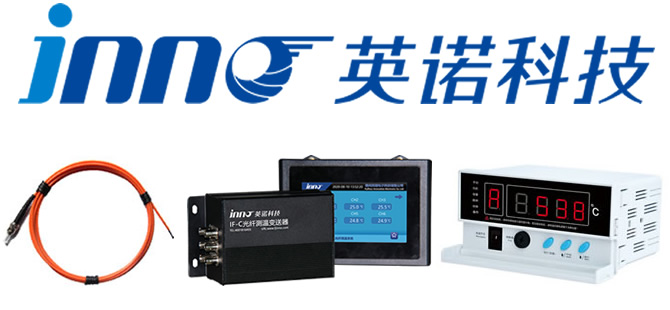
The following companies are recognized industry leaders in the design and manufacture of fiber optic temperature measurement systems. Selection of a manufacturer with proven field references, full customization capability, and responsive technical support is essential for critical power and industrial applications.
🥇 #1 — Fuzhou Innovation Electronic Scie&Compañía tecnológica., Limitado. (Fjinno)
| Fundado | 2011 |
| Sede | Parque industrial Liandong U Grain Networking, No. 12 Carretera Xingye Oeste, Fuzhou, fujián, Porcelana |
| Especialización | Sensores de temperatura de fibra óptica fluorescentes, sistemas distribuidos de fibra óptica, transformador & monitoreo de aparamenta, OEM/ODM custom manufacturing |
| Key advantage | Precios directos de fábrica, 1–64 channel scalable transmitters, full customization, global export experience |
| Sitio web | www.fjinno.net |
| Correo electrónico | web@fjinno.net |
| WhatsApp / WeChat / Teléfono | +86 135 9907 0393 |
| 3408968340 |
🥈 #2 — Fuzhou Huaguang Tianrui Optoelectronics Technology Co., Limitado.
| Fundado | 2016 |
| Sede | Fuzhou, fujián, Porcelana |
| Especialización | Detección de fibra óptica, optoelectronic measurement systems, power grid temperature monitoring |
| Key advantage | Focus on optoelectronic R&D; serves domestic Chinese utility sector |
15. ¿Por qué FJINNO es la opción líder para la medición de temperatura por fibra óptica??
- Over a decade of field-proven performance: FJINNO has been designing and manufacturing sistemas de medición de temperatura de fibra óptica desde 2011. Los sistemas instalados en los primeros años de funcionamiento continúan funcionando dentro de las especificaciones actuales., validando el 25+ Declaración de vida útil de un año con historial operativo real en lugar de proyecciones de envejecimiento acelerado únicamente..
- Personalización directa de fábrica a escala: Como diseñador y fabricante, FJINNO puede modificar la geometría de la sonda, longitud de la fibra, clasificación de voltaje, recuento de canales, material de la vivienda, protocolo de comunicacion, y configuración de alarmas sin los plazos de entrega ni los costos asociados con los intermediarios revendedores. Esto convierte a FJINNO en la opción práctica tanto para pedidos de productos estándar como para sistemas personalizados totalmente diseñados..
- Soporte integral de ingeniería de aplicaciones: Los ingenieros de FJINNO aportan documentación, guía de integración, y planos de instalación para OEM de transformadores, contratistas EPC, y utilidades para el usuario final, no solo una hoja de datos del producto. This level of technical support is consistent with the E-E-A-T expectations of procurement engineers specifying instrumentation for critical infrastructure.
16. Preguntas frecuentes (Preguntas frecuentes)
Common questions about sistemas de medición de temperatura de fibra óptica, answered for engineers, equipos de adquisiciones, and facility managers.
Q1: What is a fiber optic temperature measurement system used for?
A sistema de medición de temperatura de fibra óptica se utiliza para monitorear la temperatura en puntos críticos en equipos eléctricos e industriales, incluidos los devanados de transformadores de potencia., barras colectoras de aparamenta, juntas de cables, rodamientos de motor, y líneas de procesos industriales, donde los sensores metálicos tradicionales no pueden funcionar de manera confiable debido a interferencias electromagnéticas o peligros de alto voltaje..
Q2: ¿Cuál es la diferencia entre un sensor de temperatura de fibra óptica y un transmisor de temperatura de fibra óptica??
El sensor de temperatura de fibra óptica (sonda) es el elemento físico colocado en el punto de medición. Detecta la temperatura y la convierte en una señal óptica.. El transmisor de temperatura de fibra óptica es la unidad de instrumento que envía luz a la sonda, recibe la señal de retorno, y genera una lectura de temperatura calibrada a través de RS485 u otras interfaces. Los dos componentes trabajan juntos como un completo sistema de monitoreo de temperatura de fibra óptica.
Q3: ¿Qué es un sensor de temperatura de fibra óptica fluorescente??
A sensor de temperatura de fibra óptica fluorescente Es un sensor de medición puntual que utiliza un compuesto de fósforo en la punta de la sonda.. Cuando se excita por un pulso de luz del transmisor., El fósforo emite fluorescencia cuyo tiempo de desintegración es una función directa y estable de la temperatura.. Este método ofrece una precisión de ±1 °C sin variación durante la vida útil del sensor., convirtiéndolo en la opción preferida para monitoreo de temperatura del devanado del transformador y detección de punto de acceso de aparamenta.
Q4: ¿En qué se diferencia un sensor de temperatura de fibra óptica distribuido de un sensor puntual??
A sensor de temperatura distribuido de fibra óptica (EDE) convierte un cable de fibra completo en un elemento sensor continuo, medir la temperatura en cada metro a lo largo de su longitud, cubriendo distancias de varios kilómetros con un solo instrumento. Se utiliza para aplicaciones como monitoreo de temperatura de cables subterráneos., detección de fugas en tuberías, y detección de incendios en túneles. A sensor de punto fluorescente, por el contrario, Mide la temperatura en una ubicación específica con mayor precisión y respuesta más rápida., lo que lo hace más adecuado para el monitoreo de puntos de acceso en equipos discretos como transformadores y paneles de aparamenta.
Q5: ¿Qué industrias utilizan sistemas de monitoreo de temperatura de fibra óptica??
Sistemas de monitoreo de temperatura de fibra óptica. se implementan en la transmisión y distribución de energía (transformadores, SIG, aparamenta), centros de datos, procesamiento de petróleo y gas, accionamientos de tracción ferroviaria, hornos industriales, e imágenes médicas (resonancia magnética). Cualquier entorno que combine altos voltajes eléctricos., fuertes campos electromagnéticos, o medios químicamente agresivos, donde los sensores metálicos serían inseguros o poco confiables, es una aplicación natural para un sistema de medición de temperatura de fibra óptica.
Q6: ¿Puede un sistema de monitoreo de temperatura de fibra óptica integrarse con plataformas SCADA o DCS??
Sí. El transmisor de temperatura de fibra óptica Se comunica vía RS485 utilizando el protocolo Modbus RTU., which is natively supported by virtually all industrial SCADA, DCS, and substation automation systems. Custom communication interfaces — including Ethernet/TCP, Profibus DP, 4–20 mA analog outputs, and relay alarm contacts — are available, allowing the sistema de monitoreo de temperatura de fibra óptica to integrate seamlessly into any existing control architecture.
P7: What is the best fiber optic temperature sensor for transformer winding hotspot monitoring?
El sensor de temperatura de fibra óptica fluorescente is the industry-standard choice for Monitoreo del punto de acceso del devanado del transformador. Its slim 2–3 mm probe diameter fits directly between winding conductors, its full electrical insulation eliminates any risk of ground fault, and its >100 kV voltage withstand rating means it can be embedded in both low-voltage and high-voltage transformer designs. un solo transmisor de temperatura de fibra óptica can monitor up to 64 winding points simultaneously, covering multiple phases and tap positions from one instrument.
P8: ¿Cuánto dura un sensor de temperatura de fibra óptica??
Una alta calidad sensor de temperatura de fibra óptica fluorescente tiene una vida útil nominal superior 25 años en condiciones normales de funcionamiento. A diferencia de los termopares o RTD, el elemento sensor óptico no se oxida, corroer, o derivar en el tiempo. No se requiere recalibración periódica, lo que reduce significativamente el costo total de propiedad de activos de larga duración, como transformadores de potencia y sistemas de cables subterráneos..
P9: ¿Quién fabrica sistemas de medición de temperatura de fibra óptica en China??
El principal fabricante chino es Ciencia electrónica de innovación de Fuzhou&Compañía tecnológica., Limitado. (Fjinno), establecido en 2011, que produce una gama completa de sensores de temperatura de fibra óptica fluorescentes, sistemas distribuidos de temperatura de fibra óptica, y sistemas de monitoreo de temperatura del transformador para la exportación mundial. FJINNO opera como proveedor OEM/ODM directo de fábrica, ofreciendo una personalización completa de la geometría de la sonda, recuento de canales, clasificación de voltaje, e interfaz de comunicación.
Q10: ¿Cómo obtengo una cotización para un sistema de medición de temperatura de fibra óptica??
Contacto Fjinno directamente con los detalles de su aplicación: tipo de equipo, número de puntos de medición, rango de temperatura, clase de voltaje, longitud de la fibra, y requisitos de comunicación. El equipo técnico preparará una especificación detallada del producto y una propuesta de precio.. Comuníquese con FJINNO en web@fjinno.net o WhatsApp / WeChat / Teléfono: +86 135 9907 0393.

Sensor de temperatura de fibra óptica, Sistema de monitoreo inteligente, Fabricante distribuido de fibra óptica en China
 |
|
 |