 Sensores de temperatura de fibra óptica INNO ,sistemas de monitoreo de temperatura.
- Monitoreo de puntos calientes de fibra óptica previene fallas en el transformador al detectar anomalías térmicas en tiempo real con una precisión de ±1°C en todo -40 a rango de 260°C
- Ofertas de tecnología de detección fluorescente seguridad intrínseca, Inmunidad EMI, y aislamiento de alto voltaje (100kV+) para transformadores sumergidos en aceite y de tipo seco
- Soportes de transmisor único 1–64 canales, Interfaz Modbus RS485, 0–80m de longitud de fibra, y tiempo de respuesta bajo 1 segundo para monitoreo multipunto
- Probado en Servicios públicos y plantas industriales del sudeste asiático con 25+ año de vida útil del sensor, Certificación CE, y aprobación UL en curso
- Integrado con Sistemas SCADA/DCS para mantenimiento predictivo, coordinación de alarmas, y control de enfriamiento para extender la vida útil del transformador
Tabla de contenido
1. Qué es Monitoreo de puntos calientes de fibra óptica para transformadores de potencia?

A fiber optic hot spot monitoring system is a specialized temperature measurement solution designed to detect and track localized thermal anomalies—known as hot spots—within transformadores sumergidos en aceite y transformadores tipo seco. Unlike conventional resistance temperature detectors (RTD) o termopares, sensores de temperatura de fibra óptica leverage the photoluminescent properties of rare-earth materials to deliver intrinsic electrical isolation, inmunidad a las interferencias electromagnéticas (EMI), and high-voltage safety exceeding 100 kV.
Core functions include real-time monitoring of critical points such as cables de bobinado, abrazaderas de núcleo, conductos de aceite, y top-oil regions. The system provides multi-stage alarm signals, integrates with cooling control logic, and transmits data via RS485 Modbus or other industrial protocols to supervisory control and data acquisition (SCADA) plataformas. By identifying incipient faults before catastrophic failure, sistemas de monitoreo de temperatura del transformador extender la vida útil de los activos, reduce unplanned outages, and support predictive maintenance strategies in utility and industrial environments.
1.1 Primary Monitoring Targets
- Hot spot zones: winding connections, cambiadores de tomas, terminales de casquillo
- Temperatura superior del aceite: bulk fluid thermal status
- Temperatura del devanado: direct copper or aluminum conductor measurement
- Temperatura central: lamination stack and clamping structure
1.2 Comparison with Legacy Systems
Tradicional oil temperature indicators (HECHO) y indicadores de temperatura del devanado (WTI) rely on capillary-bulb thermometers or embedded RTDs. While proven, these technologies suffer from limited spatial resolution, susceptibility to electrical noise in high-voltage environments, and complexity when retrofitting multi-point sensing. Sensores de fibra óptica fluorescentes overcome these drawbacks by using passive optical probes that require no electrical power at the measurement point and exhibit long-term stability over 25 años.
2. Principio de funcionamiento & Arquitectura de detección
El Medición de temperatura por fibra óptica fluorescente. technique exploits the temperature-dependent decay time of photoluminescence emitted by a rare-earth phosphor crystal bonded to the tip of an optical fiber. When excited by a pulsed LED or laser source, the phosphor emits light whose lifetime shortens predictably as temperature rises. A photodetector in the transmisor de temperatura de fibra óptica measures this decay interval and converts it to a temperature reading via calibrated lookup tables or polynomial algorithms.
2.1 Sensor Probe Construction
- Optical fiber core: silica or polymer waveguide (typically 200–400 µm diameter)
- Phosphor crystal: encapsulated rare-earth compound (p.ej., europium, terbium complexes)
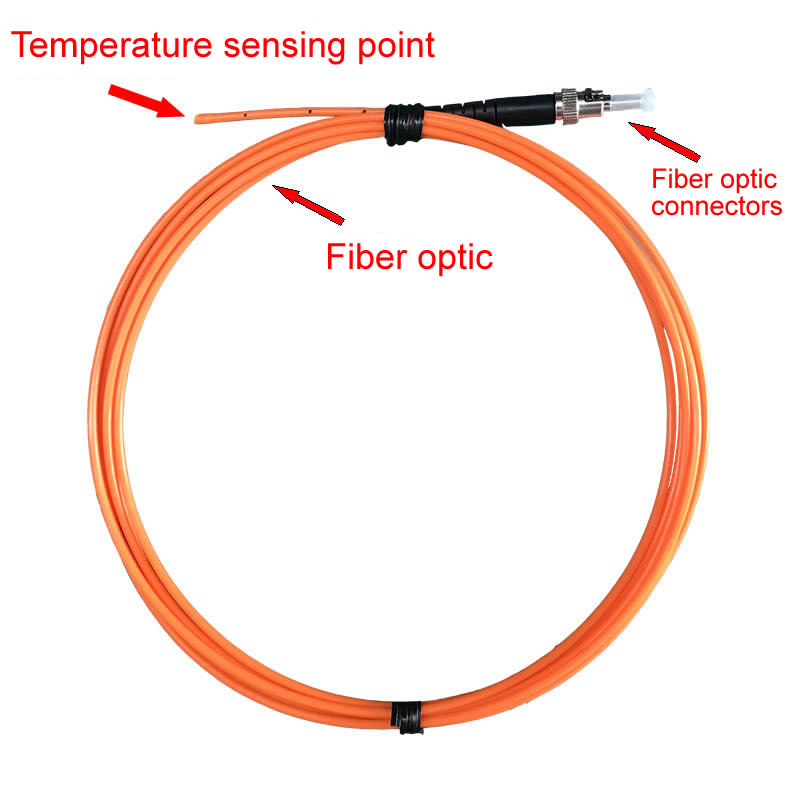
- Protective sheath: stainless steel or PEEK tubing, 2–3 mm outer diameter (personalizable)
- Connector interface: FC/PC, ST, or proprietary locking type
2.2 Transmisión de señal & Demodulation
Excitation pulses travel from the transmitter through fiber lengths of 0–80 meters to the probe. Return fluorescence passes back to the receiver, where time-domain processing extracts the decay constant. Because the measurement depends solely on photon lifetime—not intensity—the system is immune to fiber bending loss, connector attenuation, and aging of the light source. This self-referencing architecture ensures ±1°C accuracy across the full -40 to +260°C range.
2.3 Arquitectura multicanal
un solo transmisor de temperatura de fibra óptica can multiplex 1 a 64 channels through optical switching or wavelength-division techniques. Each channel connects to an individual probe via dedicated fiber, enabling simultaneous monitoring of multiple hot spots, aceite superior, and winding locations within one transformer or across a substation bay. Response time remains under 1 segundo por canal, supporting rapid fault detection and closed-loop cooling control.
3. Casos de uso & Escenarios operativos
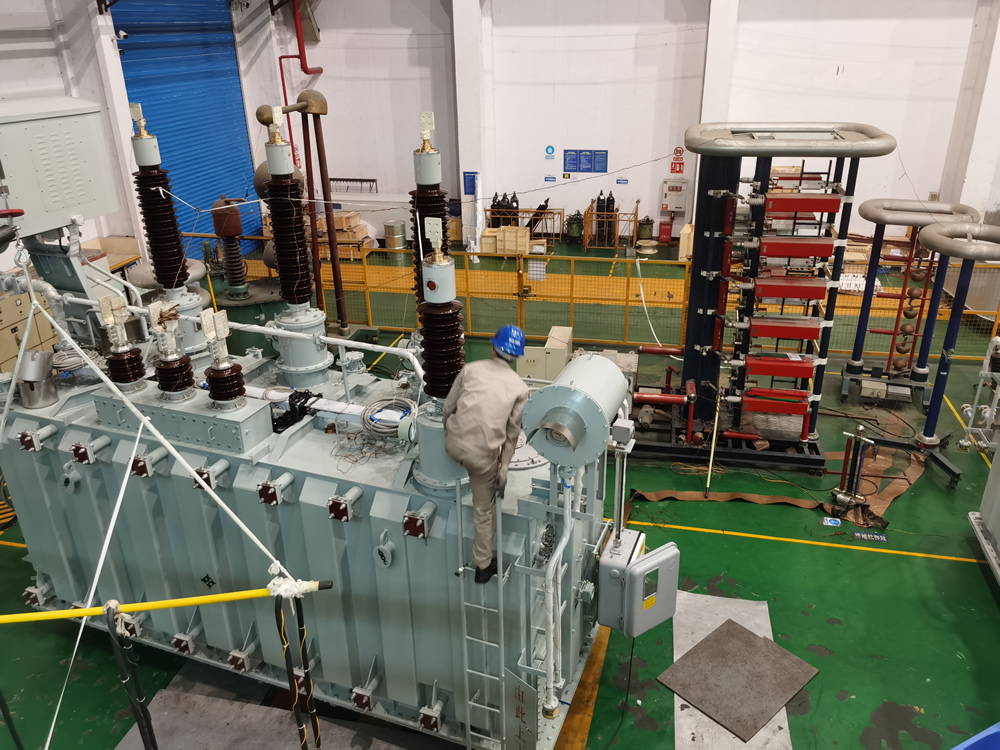
Monitoreo de puntos calientes de fibra óptica serves diverse transformer types and duty cycles across power generation, transmisión, distribución, y sectores industriales.
3.1 Utility Power Transformers
Large generator step-up (GSU) and autotransformers (100–800 MVA) in fossil, nuclear, and renewable plants demand continuous hot-spot surveillance to prevent insulation degradation under cycling loads. Sensores de fibra óptica fluorescentes installed at winding exits and core clamps provide early warning of thermal runaway, allowing operators to adjust dispatch or activate forced cooling before temperatures reach critical thresholds.
3.2 Distribución & Substation Transformers
Medium-voltage units (10–50 MVA) in urban substations face space constraints and high ambient temperatures. Compacto sistemas de monitoreo de temperatura de fibra óptica fit inside restricted compartments and tolerate EMI from adjacent switchgear, disyuntores, and bus bars. Integration with distribution management systems (DMS) supports dynamic load balancing and asset health analytics.
3.3 Industrial & Specialty Transformers
- Transformadores rectificadores: fundiciones de aluminio, electrochemical plants
- Transformadores de horno: arc furnaces, calentamiento por inducción
- Transformadores de tracción: railway electrification systems
- Transformadores tipo seco: indoor installations, fire-sensitive environments
These applications often experience rapid load transients and harmonics that accelerate localized heating. Dry type transformer temperature monitoring with fiber optics ensures compliance with safety standards while minimizing footprint and maintenance overhead.
3.4 Energía Renovable & Plataformas costa afuera
Wind turbine step-up transformers and offshore converter stations operate in corrosive, high-humidity environments where metallic sensors degrade quickly. No metálico sensores de fibra óptica resist salt fog, vibración, y sobretensiones inducidas por rayos, delivering reliable hot-spot data for condition-based maintenance and warranty compliance.
4. Características clave & Aspectos destacados funcionales
4.1 Seguridad intrínseca & High-Voltage Insulation
Optical fibers contain no conductive elements, eliminating spark risk and enabling direct contact with live parts rated above 100 kV. Este seguridad intrínseca is essential for retrofitting legacy transformers without de-energization and for installations in hazardous (explosive-gas) zones classified as Zone 1 or Class I Division 1.
4.2 Inmunidad a la interferencia electromagnética
Aparamenta de alta tensión, partial-discharge activity, and inverter switching generate intense EMI that corrupts RTD and thermocouple signals. Sensores de temperatura de fibra óptica fluorescentes are unaffected by magnetic fields, radio-frequency noise, or transient overvoltages, ensuring measurement integrity even during fault conditions or lightning strikes.
4.3 Multi-Point Distributed Monitoring
A 64-channel transmisor de temperatura de fibra óptica can survey an entire transformer fleet or a single large unit with granular spatial resolution. Differential temperature analysis between channels reveals asymmetric loading, cooling imbalance, or localized insulation defects that single-point OTI/WTI systems cannot detect.
4.4 Alarma en tiempo real & Cooling Automation
Programmable thresholds trigger relay contacts for:
• Stage-1 alarm: notify control room, start forced-air or forced-oil cooling
• Stage-2 trip: emergency shutdown or load shedding
• Fan/pump control: proportional or on/off logic based on temperature gradient
4.5 Estabilidad a largo plazo & Esperanza de vida
Phosphor crystals exhibit negligible aging over decades; sensor probes carry a service life exceeding 25 años sin recalibración. Sealed connectors and ruggedized sheaths withstand oil immersion, ciclo térmico (-40 a +260°C), and mechanical vibration per IEC 60068 environmental tests.
5. Tipos de sistemas & Opciones de configuración
| Configuración | Conteo de canales | Transmitter Type | Comunicación | Aplicación típica |
|---|---|---|---|---|
| Single-Channel | 1 | Standalone module | 4–20 mA / Relé | Hot-spot retrofit, localized alarm |
| Quad-Channel | 4 | DIN-rail mount | RS485 Modbus RTU | Transformador de distribución (aceite superior + 3× winding) |
| Octal-Channel | 8 | Panel-mount chassis | RS485 / Ethernet Modbus TCP | Transformador de potencia (multi-winding, centro, aceite) |
| 16–64 Channel | 16 / 32 / 64 | Rack-mount server | Modbus TCP / CEI 61850 / OPC-UA | Substation fleet, GSU transformers |
5.1 Embedded vs Standalone Transmitters
Embedded transmitters integrate directly into transformer control cabinets, sharing power supplies and I/O terminals with protection relays. Standalone units mount in separate enclosures (IP65-rated) for outdoor or harsh-environment deployments, communicating over long-haul RS485 networks or fiber-optic Ethernet.
5.2 Wired vs Wireless Communication
Standard installations use twisted-pair RS485 (arriba a 1200 metro) or fiber-optic serial converters for EMI-free data links. In remote sites, optional 4G/5G cellular or LoRaWAN modules enable cloud-based monitoring without infrastructure cabling, though real-time response may be limited by network latency.
6. Puntos de Monitoreo: Punto caliente frente a petróleo superior frente a bobinado
| Measurement Point | Ubicación | Objetivo | Umbral típico (°C) |
|---|---|---|---|
| Punto Caliente | Winding lead exit, core clamp, tap changer contact | Detect localized overheating, connection faults | Alarma: 95–110 | Viaje: 120–130 |
| Top Oil | Upper oil pocket or conservator throat | Bulk thermal status, cooling performance | Alarma: 80–95 | Fan start: 75–85 |
| Devanado | Embedded in HV/LV coil (tipo seco) or oil duct (sumergido en aceite) | Direct copper/aluminum temperature for loading limits | Alarma: 90–105 | Viaje: 110–125 |
| Centro | Lamination stack or clamping frame | Detect flux imbalance, degradación del aislamiento | Alarma: 85–100 | Viaje: 110–120 |
6.1 Differential Temperature Analysis
Monitoring the gradient between hot-spot and top-oil reveals cooling efficiency and load symmetry. A widening delta indicates clogged radiators, bombas fallidas, or unbalanced phase currents. Trending winding-to-oil differential supports remaining-life calculations per IEEE C57.91 and IEC 60076-7 modelos térmicos.
7. Topología del sistema & Arquitectura de integración
7.1 Capa de campo
- Sondas de fibra óptica: installed at hot spots, devanados, aceite superior
- Sensor cables: armored or indoor-rated optical fibers (0–80 m per channel)
- Junction boxes: IP65 enclosures for cable breakout and connector protection
7.2 Control Layer
- Temperature transmitter: multichannel unit with embedded processor, lógica de alarma, and communication stack
- I/O modules: relay outputs for fan/pump contactors, 4–20 mA loops for analog recorders
- Local HMI: touchscreen display showing real-time temperatures, tendencias, and alarm history
7.3 Capa de supervisión
- SCADA/DCS: Modbus RTU/TCP o IEC 61850 GOOSE/MMS integration
- Energy management system (EMS): load forecasting, transformer rating calculations
- Análisis de la nube: machine-learning models for predictive maintenance (opcional)
8. Posición de instalación & Prácticas de enrutamiento de fibra
8.1 Probe Placement Guidelines
Para transformadores sumergidos en aceite, insert probes through dedicated pockets welded into the tank or via unused bushing ports. Ensure the sensing tip contacts the target surface (winding lead) or is immersed in oil flow. En transformadores tipo seco, embed probes between winding layers during manufacturing or retrofit via access slots in the enclosure. Maintain 10–15 mm clearance from high-field regions to avoid partial discharge inception.
8.2 Enrutamiento de cables de fibra
- Radio de curvatura mínimo: 20× fiber diameter (typically 40–60 mm for 2–3 mm cables)
- Bujes & glándulas: use epoxy-sealed feed-throughs rated for oil pressure and temperature
- Segregation: route fiber cables in separate conduits from power and control wiring to prevent mechanical damage
- Strain relief: secure cables every 500 mm with P-clips or cable ties, avoiding tension on connectors
8.3 Protección ambiental
External transmitter enclosures require IP65 ingress protection, corrosion-resistant coatings (p.ej., powder-coat or stainless steel), and forced ventilation or thermoelectric cooling in ambient temperatures above 50°C. Internal cable entries use double-compression glands with O-ring seals to maintain tank integrity.
9. Common Transformer Faults Related to Hot Spots
9.1 Winding Insulation Breakdown
Prolonged operation above 105°C (Class A insulation) or 130°C (Class F/H) accelerates cellulose degradation, reducing dielectric strength and tensile properties. Hot spots often precede turn-to-turn faults or layer short circuits. Monitoreo de puntos calientes de fibra óptica detects the thermal precursor 24–72 hours before electrical failure, allowing de-energization and inspection.
9.2 Cojinete & Tap-Changer Contact Resistance
Oxidation, acumulación de carbono, or mechanical wear increases contact resistance, dissipating I²R heat. Localized temperatures can exceed 150°C while bulk oil remains below 80°C. A dedicated sensor de temperatura de fibra óptica at the contact junction provides early warning before arcing or carbonization propagates.
9.3 Core Lamination Faults
Insulation failure between laminations creates eddy-current loops, generating heat in the core. Affected zones may reach 120–140°C, outpacing top-oil rise. Multi-point monitoring along the core frame identifies the fault section for targeted repair, avoiding full core replacement.
9.4 Mal funcionamiento del sistema de enfriamiento
Radiadores bloqueados, bombas fallidas, or low oil levels reduce heat dissipation, elevating temperatures uniformly or in specific zones. Correlation between load current, temperatura ambiente, and measured hot-spot/top-oil values reveals cooling anomalies. Automated pump/fan start commands mitigate thermal excursions until maintenance restores full capacity.
10. Preventing Overheating & Envejecimiento del aislamiento
10.1 Dynamic Threshold Setting
Alarm and trip setpoints should adjust for seasonal ambient and loading profiles. In tropical climates (35–45°C ambient), top-oil alarm may rise to 95°C; in temperate zones (15–25°C), 85°C suffices. Usar sistema de monitoreo de temperatura del transformador software to implement ambient-compensated thresholds or IEC 60076-7 modelos térmicos.
10.2 Análisis de tendencias & Mantenimiento predictivo
Plot hot-spot temperature against load current and ambient over weeks or months. Deviations from historical baselines—such as a 5°C upward shift at constant load—indicate deteriorating cooling, envejecimiento del aislamiento, or emerging faults. Schedule oil sampling, dissolved-gas analysis (DGA), and partial-discharge testing during planned outages to confirm root causes.
10.3 Automated Cooling Control
Link transmisor de temperatura de fibra óptica relay outputs to fan or pump contactors:
• Escenario 1: Start first cooling bank at 75–80°C top-oil
• Escenario 2: Start second bank at 85–90°C or if hot-spot exceeds winding threshold
• Load shedding: Reduce transformer loading via SCADA command if temperature continues to rise despite full cooling
10.4 Insulation Life Extension
Every 6°C reduction in hot-spot temperature doubles insulation life (Arrhenius kinetics). By maintaining peaks below design limits through proactive cooling and load management, operators can defer costly refurbishments or replacements by 10–15 years.
11. Signals, I/O Mapping & Comunicación
| Signal Type | Interfaz | Destination Device | Objetivo |
|---|---|---|---|
| Temperature Value | 4–20 mA | PLC/DCS analog input | Continuous trending, loop control |
| High Alarm | Contacto seco (NO/NC) | Relay coil, annunciator panel | Operator notification, registro de eventos |
| High-High Trip | Contacto seco (NO/NC) | Protection relay trip input | Apagado de emergencia, load shedding |
| Fan/Pump Start | Contacto seco (NO) | Contactor coil | Automatic cooling activation |
| Multi-Channel Data | RS485 Modbus RTU/TCP | SCADA gateway, artefacto explosivo improvisado | Monitoreo centralizado, historiador |
| Estado & Diagnóstico | CEI 61850 GOOSE/MMS | Substation automation system | Interoperabilidad, peer-to-peer messaging |
11.1 RS485 Modbus Configuration
Assign unique slave addresses (1–247) to each transmitter on a multi-drop network. Use shielded twisted-pair cable (120Ω termination at both ends) and configure baud rate (9600 o 19200 bps), paridad (even/none), and stop bits (1 o 2) consistently across all devices. Poll intervals of 1–5 seconds balance data freshness with bus loading.
11.2 CEI 61850 Integración
Moderno sistemas de monitoreo de transformadores implement IEC 61850 Logical Nodes (p.ej., TTMP for temperature measurement) with standardized data objects. GOOSE messages enable sub-cycle (<4 EM) tripping for critical alarms, while MMS reports provide historical data and event logs to the station HMI.
12. Fiber Optic vs Traditional RTD: Selection Notes
| Criterio | Fibra Óptica (Fluorescente) | IDT (Pt100/Pt1000) |
|---|---|---|
| Principio de medición | Photoluminescence decay time | Cambio de resistencia con la temperatura. |
| Inmunidad EMI | Total (no conductor) | Susceptible to RF, campos magnéticos |
| High-Voltage Insulation | >100 kV (intrinsic) | Requires ceramic/mica standoffs, complex grounding |
| Exactitud | ±1°C (calibrated) | ±0.15–0.3°C (Class A/B) |
| Tiempo de respuesta | <1 s (2–3 mm probe) | 1–5 s (thermowell-mounted) |
| Estabilidad a largo plazo | >25 años, sin deriva | 5–10 años, periodic calibration needed |
| Complejidad de instalación | Moderado (enrutamiento de fibra, conectores) | Bajo (two-wire or four-wire) |
| Costo (por punto) | Higher initial, lower lifecycle | Lower initial, higher maintenance |
12.1 When to Choose Fiber Optic
- High-voltage environments (>69 kV) where RTD isolation is impractical
- Severe EMI from inverters, arc furnaces, or partial discharge
- Monitoreo multipunto (>8 canales) benefiting from multiplexed architecture
- Long asset life (25+ años) justifying upfront investment
- Hazardous areas requiring intrinsically safe sensors
12.2 When RTD Remains Viable
- Low-voltage dry-type transformers (<15 kV) with minimal EMI
- Existing RTD infrastructure and trained personnel
- Budget constraints prioritizing initial cost over lifecycle expenses
- Single-point monitoring with simple 4–20 mA output
13. Calibración, Inspección & Mantenimiento
13.1 Routine Inspection Schedule
| Task | Frecuencia | Método |
|---|---|---|
| Inspección visual | Trimestral | Check fiber integrity, connector cleanliness, enclosure seals |
| Functional Test | Semestralmente | Verify alarm/trip actuation at setpoints, relay contact continuity |
| Verificación de calibración | Anualmente | Compare readings against traceable reference (dry-block calibrator) |
| Firmware Update | As needed | Apply vendor patches for bug fixes or protocol enhancements |
| Connector Cleaning | Annually or if loss detected | Use lint-free swabs with isopropyl alcohol; inspect for scratches |
13.2 Procedimiento de calibración
Disconnect probe from transformer and immerse in a temperature-controlled bath or dry-block calibrator. Step through -40, 0, 50, 100, 150, 200, 260°C and record transmitter output. Deviations beyond ±1°C require factory recalibration or firmware adjustment. Fluorescent sensors rarely drift; discrepancies usually stem from contaminated connectors or damaged fibers.
13.3 Probe Replacement
If a probe fails (no signal, lecturas erráticas), replace only the affected sensor and fiber assembly. Los transmisores multicanal continúan monitoreando los canales restantes durante el intercambio. Las sondas de repuesto se envían precalibradas; actualizar la configuración del canal del transmisor para que coincida con el nuevo número de serie y los coeficientes de calibración.
14. Southeast Asia Project Cases
14.1 Caso A — Polígono Industrial, Tailandia (110 kV, 50 AMEU)
Fondo: Un complejo petroquímico cerca de Bangkok opera tres transformadores sumergidos en aceite que suministran cargas variables entre el 40% y el 95% de su capacidad.. La temperatura ambiente alcanza los 42°C durante la estación seca, y los sistemas OTI/WTI heredados carecían de visibilidad granular de los puntos calientes.
Solución: 8 canales implementados monitoreo de temperatura de fibra óptica fluorescente con sondas en las salidas del devanado AT/BT, aceite superior, y abrazaderas de núcleo. La integración RS485 Modbus con el DCS de ABB existente permitió realizar tendencias en tiempo real y configurar automáticamente el ventilador.
Resultado: Se detectó una anomalía de 12°C en una terminal de alta tensión. 36 horas antes de que la DGA confirmara falla incipiente. El corte de emergencia evitó una falla catastrófica; estimated savings $2.8M USD (costo de reposición + falta del tiempo).
14.2 Case B — Urban Substation, Vietnam (22 kV, 25 AMEU)
Fondo: Hanoi distribution substation required retrofit to meet new utility standards for continuous temperature monitoring and SCADA integration, but space constraints precluded additional RTD wiring.
Solución: Installed 4-channel sensor de temperatura de fibra óptica system with compact DIN-rail transmitter. Probes inserted via existing thermometer pockets; fiber routed through cable trays alongside protection CT/VT leads.
Resultado: Achieved full compliance within two-week outage window. SCADA displays live temperatures; trending revealed seasonal cooling inefficiency, prompting radiator cleaning that reduced top-oil by 8°C under peak load.
14.3 Case C — Manufacturing Park, Malasia (Arc Furnace Transformer)
Fondo: Steel mill’s 35 MVA rectifier transformer experienced frequent thermal trips under cyclic loading (30-second melts). RTD sensors gave false alarms due to inverter-generated EMI.
Solución: Replaced RTDs with 12-channel Monitoreo de puntos calientes de fibra óptica targeting each phase winding and bushing. Configured differential logic: trip only if hot-spot exceeds top-oil by >30°C para >10 artículos de segunda clase.
Resultado: Eliminated nuisance trips, increased furnace uptime by 14%. Predictive load management based on winding gradient extended transformer intervals between overhauls from 18 a 24 meses.
15. Industrial Retrofit Example
15.1 Site Survey & Evaluación
Document existing temperature instrumentation (OTI/WTI models, diagramas de cableado, alarm/trip logic). Identify accessible mounting points for fiber probes (spare thermometer pockets, terminales de casquillo, inspection covers). Photograph cable routing paths and panel layouts.
15.2 System Design
- Channel allocation: assign hot-spot, aceite superior, HV/LV winding, and core points
- Transmitter selection: 8-channel panel-mount unit with RS485 and relay outputs
- Interface mapping: integrate Modbus data into existing Siemens S7-1200 PLC
- Threshold tuning: set alarm/trip values per utility policy and seasonal profiles
15.3 Pasos de instalación
- De-energize transformer and drain oil to access internal probes (if needed)
- Install fiber probes at designated points; seal penetrations with epoxy-filled glands
- Route fiber cables via protective conduits to transmitter enclosure
- Terminate fibers in FC/PC connectors; label each channel
- Wire relay outputs to fan/pump contactors and protection relay trip inputs
- Connect RS485 bus to PLC; configure Modbus slave address and baud rate
- Re-energize; perform functional tests at each alarm threshold
15.4 Puesta en servicio & Capacitación
Verify live temperature readings against portable infrared thermometer. Simulate high-temp conditions by adjusting setpoints; confirm relay actuation and SCADA alarm generation. Train operators on HMI navigation, interpretación de tendencias, and manual override procedures. Deliver as-built drawings, oh&M manuals, and spare-parts list.
16. SCADA/EMS Integration
16.1 Tag Mapping & Puntos de datos
For each monitored channel, create SCADA tags:
• Entrada analógica: Temperature_HotSpot_A (°C), Temperature_TopOil (°C), etc..
• Digital input: Alarm_HotSpot_A (boolean), Trip_HotSpot_A (boolean)
• Estado: Probe_Fault_Ch1 (boolean), Transmitter_Comm_OK (boolean)
16.2 Historian Configuration
Log temperature values every 1–5 minutes; store alarm events with millisecond timestamps. Configure compression algorithms (swinging-door, deadband) to reduce storage footprint while preserving thermal transients. Retain 30–90 days online; archive older data to enterprise historian for long-term analytics.
16.3 HMI Dashboard Design
- Single-line diagram: transformer icon with color-coded temperature indicators (verde <80°C, yellow 80–95°C, rojo >95°C)
- Gráficos de tendencias: real-time and historical plots of hot-spot, aceite superior, ambiente, y corriente de carga
- Alarm summary: active and historical alarms with acknowledge/reset buttons
- Cooling status: fan/pump run states, start counts, cumulative hours
16.4 Análisis avanzado
Implement thermal models (CEI 60076-7 o IEEE C57.91) to calculate remaining insulation life, calificación dinámica, and time-to-alarm. Integrate weather forecasts and load schedules to predict peak temperatures 24–48 hours ahead, enabling proactive load shifting or maintenance windows.
17. Modelo & Range Selection Checklist
| Parámetro | Rango / Opciones | Notas |
|---|---|---|
| Rango de temperatura | -40 a +260°C | Estándar; custom ranges available for cryogenic or high-temp specialty apps |
| Exactitud | ±1°C | Calibrado en fábrica; no field adjustment required |
| Longitud de la fibra | 0–80 m per channel | Custom lengths >80 m on request; signal attenuation limits at ~150 m |
| Tiempo de respuesta | <1 segundo | Diámetro de la sonda 2–3 mm; larger probes slower but more robust |
| Conteo de canales | 1 / 4 / 8 / 16 / 32 / 64 | Ampliación modular; mix probe types on single transmitter |
| Outputs | 4–20 mA, RS485 Modbus RTU/TCP, Relé (NO/NC) | CEI 61850 and OPC UA optional |
| Fuente de alimentación | 110/220 VAC or 24/48/125 VCC | Dual redundancy option for critical installations |
| Clasificación del gabinete | IP54 / IP65 / IP67 | Outdoor NEMA 4X or explosion-proof Ex d available |
| Clasificación de aislamiento | >100 kV | Tested per IEC 60060-1 (impulse withstand) |
| Esperanza de vida | >25 años | Sensor probe; transmitter electronics 10–15 years (upgradable) |
| Certificaciones | CE, UL (in progress), IECEx/ATEX (opcional) | Custom certifications for regional markets on request |
17.1 Application-Specific Considerations
- Transformadores sumergidos en aceite: prioritize probe sealing and compatibility with mineral or silicone oil
- Transformadores tipo seco: select smaller-diameter probes for inter-layer installation; verify clearance to live parts
- Tropical climates: specify IP65+ enclosures, conformal-coated PCBs, and forced ventilation
- Proyectos de modernización: match fiber lengths to existing conduit runs; confirm connector compatibility (FC, ST, LC)
18. Preguntas frecuentes
18.1 Can fiber optic sensors directly contact high-voltage conductors?
Sí. The optical fiber and probe sheath are fully dielectric, with insulation strength exceeding 100 kV. No grounding or isolation barriers are required, simplifying installation in energized equipment.
18.2 How many monitoring channels does one transformer need?
Typical configurations include 4–8 channels: 1× top oil, 2–3× hot spots (cables de bobinado, cambiador de grifos), 2–3× winding temperatures, 1× core. Large units (>100 AMEU) or critical assets may justify 12–16 channels for redundancy and spatial resolution.
18.3 What alarm thresholds should I set?
Follow transformer manufacturer recommendations or utility standards. Common defaults: top-oil alarm 85°C, trip 100°C; hot-spot alarm 105°C, trip 120°C. Adjust for ambient, clase de aislamiento (A/F/H), and load profile.
18.4 Can the system interface with existing protection relays?
Sí. Salidas de relé (dry contacts) can trip breakers or activate load-shedding logic. Modbus/IEC 61850 data feeds enable coordination with differential, overcurrent, and Buchholz relays for comprehensive asset protection.
18.5 What is the probe service life?
Fluorescent sensors exhibit >25 years lifespan in oil or air, with no measurable drift. Fiber cables and connectors may require inspection/cleaning every 5–10 years; transmitter electronics typically last 10–15 years and are field-upgradable.
18.6 Do you support wireless data transmission?
Selected models offer 4G/5G cellular or LoRaWAN modules for remote sites without wired infrastructure. Real-time performance depends on network coverage; critical alarms use SMS/email redundancy to ensure delivery.
18.7 Are systems compatible with dry-type transformers?
Absolutamente. Probes install between winding layers or inside air ducts. The non-conductive nature suits enclosed designs, and compact transmitters fit standard control cabinets. Many dry-type units (resina fundida, VPI) already specify monitoreo de temperatura de fibra óptica fluorescente as OEM option.
19. Contact for Specification, Precios & Soluciones

For detailed sensor de temperatura de fibra óptica datasheets, system integration guides, and project-specific quotations, reach our engineering team. We provide bill-of-materials, diagramas de cableado, SCADA tag lists, and commissioning support for utilities, contratistas EPC, and OEM transformer manufacturers. Share your transformer rating, clase de voltaje, channel requirements, and interface preferences to receive a customized proposal and delivery schedule.
Inquiry Channels:
Correo electrónico: web@fjinno.net
WhatsApp/WeChat/teléfono: +86 135 9907 0393
QQ: 3408968340
Visit our website: www.fjinno.net
20. Estándares, Cumplimiento & Pruebas
Fiber optic hot spot monitoring systems adhere to international transformer and instrumentation standards:
- CEI 60076 serie: Power transformer design, límites de aumento de temperatura, and thermal models
- IEEE C57.91: Guide for loading mineral-oil-immersed transformers and step-voltage regulators
- CEI 60068: Pruebas ambientales (vibración, humedad, temperature cycling)
- CEI 61850: Redes y sistemas de comunicación para la automatización de servicios públicos de energía.
20.1 Factory Testing
Each transmitter undergoes:
• Accuracy calibration: traceable to NIST/PTB standards across full range
• Impulse withstand: 100 kV BIL per IEC 60060-1 (probe insulation)
• Cumplimiento de EMC: immunity to IEC 61000-4-x (ESD, RF, surge, fast transients)
• Functional test: alarm/trip setpoints, protocolos de comunicacion, relay contact ratings
20.2 Certificaciones
- CE: confirmed (Directiva de baja tensión, EMC Directive)
- UL: certification in progress (expected Q2 2026)
- IECEx / ATEX: available on request for hazardous-area installations
- Customer-specific: we support third-party testing for regional or utility-specific requirements
21. Detailed Specification Matrix
| Especificación | Single-Channel | 4-Canal | 8-Canal | 16–64 Channel |
|---|---|---|---|---|
| Rango de temperatura | -40 a +260°C | -40 a +260°C | -40 a +260°C | -40 a +260°C |
| Resolución | 0.1°C | 0.1°C | 0.1°C | 0.1°C |
| Exactitud | ±1°C | ±1°C | ±1°C | ±1°C |
| Tiempo de respuesta | <1 s | <1 s per channel | <1 s per channel | <1 s per channel |
| Longitud de la fibra | 0–80 m | 0–80 m | 0–80 m | 0–80 m (costumbre >80 metro) |
| Diámetro de la sonda | 2–3 milímetros (costumbre) | 2–3 milímetros (costumbre) | 2–3 milímetros (costumbre) | 2–3 milímetros (costumbre) |
| Clasificación de aislamiento | >100 kV | >100 kV | >100 kV | >100 kV |
| Outputs | 4–20 mA, 2× relay | RS485, 4× relay | RS485, 8× relay | Modbus TCP/IEC 61850, configurable relays |
| Fuente de alimentación | 24 VCC / 110–220 VAC | 110–220 VAC | 110–220 VAC | 110–220 VAC / 48 VCC (redundant) |
| Recinto | IP54 plastic | IP65 metal | IP65 metal | IP65 rack/panel-mount |
| Operating Temp | -10 a +50°C | -10 a +50°C | -10 to +55°C | -20 to +60°C (con enfriamiento) |
22. Recommended Temperature Thresholds by Application
| Application Type | Top-Oil Alarm (°C) | Hot-Spot Alarm (°C) | Viaje (°C) | Fan Start (°C) |
|---|---|---|---|---|
| Temperate Climate (Utilidad) | 85 | 105 | 100 (aceite) / 120 (lugar) | 75–80 |
| Tropical Climate (Utilidad) | 90–95 | 110 | 105 (aceite) / 125 (lugar) | 85–90 |
| Heavy-Cyclic Load (Industrial) | 90 | 108 | 103 (aceite) / 118 (lugar) | 80–88 |
| Dry-Type (Class F/H) | — | 130 (F) / 155 (h) | 150 (F) / 180 (h) | 110–120 |
| Costa afuera / Marine | 88 | 108 | 100 (aceite) / 120 (lugar) | 80–85 |
Nota: Adjust thresholds based on manufacturer nameplate ratings, clase de aislamiento, and utility policy. Seasonal or load-adaptive setpoints improve protection and reduce nuisance alarms.
23. Puesta en servicio & Site Acceptance
23.1 Pre-Commissioning Checklist
- Verify all fiber probes installed at correct locations; check penetration seals
- Confirm fiber routing complies with bend-radius limits; no sharp kinks or crushing
- Inspect connector cleanliness (ferrule end-faces); use microscope if available
- Check transmitter power supply voltage and polarity
- Validate wiring of relay outputs to contactors/protection relays
- Configure RS485 network parameters (address, baudios, paridad) and termination resistors
23.2 Functional Tests
- Temperature Display: Energize transmitter; verify live readings for all channels within expected ambient range
- Alarm Simulation: Adjust setpoints to current temperature +5°C; confirm relay closure and SCADA alarm tag activation
- Trip Simulation: Set trip threshold just above alarm; verify protection relay input asserts and breaker logic responds (isolated test)
- Cooling Interlock: Trigger fan/pump start threshold; confirm contactor energizes and motor runs
- Communication Test: Poll Modbus registers from SCADA; validate data accuracy and timestamp synchronization
23.3 Acceptance Documentation
Deliver to owner/operator:
• Test reports: functional test results, alarm/trip setpoint log, certificados de calibración
• As-built drawings: enrutamiento de fibra, probe locations, Diagramas de cableado de E/S
• Configuration files: transmitter parameter backups, SCADA tag lists
• oh&M manuals: operation procedures, cronogramas de mantenimiento, troubleshooting guides
• Training records: attendee list, session agenda, operator competency sign-off
24. Troubleshooting Guide
| Symptom | Possible Cause | Diagnostic Steps | Resolución |
|---|---|---|---|
| No temperature reading | Fiber disconnected or broken | Check connector seating; inspect fiber for visible damage | Re-seat connector; replace fiber if core fractured |
| Lecturas erráticas | Contaminated connector end-face | Use fiber microscope (400×); look for oil, polvo, scratches | Clean with lint-free swab + alcohol isopropílico; polish if scratched |
| Constant alarm state | Setpoint too low or probe fault | Compare reading to portable thermometer; review threshold config | Adjust setpoint; replace probe if out-of-range |
| Communication timeout | RS485 wiring, termination, or address conflict | Verify bus voltage (A–B differential ~2–3 V idle); check termination resistors (120Ω at each end) | Fix wiring polarity; resolve duplicate slave addresses |
| Relay does not actuate | Contact oxidation or coil mismatch | Measure contact resistance (should be <1Ω closed); verify coil voltage rating | Clean contacts or replace relay; match coil to power supply |
| Slow response time | Oversized probe or poor thermal contact | Confirm probe diameter and installation method | Use smaller probe (2 mm vs 3 milímetros); improve contact with thermal paste |
25. Procurement Checklist
25.1 Parámetros técnicos
- Transformer rating (AMEU), clase de voltaje (kV), cooling type (ONAN/ONAF/OFAF/dry-type)
- Number of monitoring points (puntos calientes, devanados, aceite superior, centro)
- Required temperature range and accuracy (estándar: -40 a +260°C, ±1°C)
- Fiber length per channel (0–80 m standard; specify if >80 m needed)
- Protocolos de comunicación (RS485 Modbus RTU/TCP, CEI 61850, salidas analógicas)
- Relay contact specifications (Voltaje, current rating, NO/NC configuration)
25.2 Ambiental & Instalación
- Ambient temperature range and humidity extremes
- Enclosure ingress protection (IP54/IP65/IP67; NEMA 4X if outdoor)
- Hazardous-area classification (Zona 1, Class I Div 1) si corresponde
- Mounting preference (panel, DIN-rail, rack, outdoor pedestal)
- Power supply availability (110/220 VAC, 24/48/125 VCC, redundant options)
25.3 Documentación & Apoyo
- Factory test reports (calibración, aislamiento, CEM)
- IOM manuals, diagramas de cableado, SCADA integration guides
- Spare parts list (sondas, conectores, fiber cables, relay modules)
- Warranty period (estándar 2 años; extended options available)
- Capacitación (on-site commissioning assistance, operator courses)
25.4 Lead Time & Logística
- Standard configurations: 4–6 weeks ex-works
- Custom orders (>32 canales, special certifications): 8–12 semanas
- Shipping: FOB Fuzhou (Porcelana); DDP arrangements available for bulk orders
- Condiciones de pago: negotiable (L/C, T/T, consignment for qualified distributors)
26. Glosario de términos
| Término | Definición |
|---|---|
| Vida útil de la fluorescencia | Time constant for photoluminescent emission decay; temperature-dependent in rare-earth phosphors |
| Punto Caliente | Localized high-temperature zone in transformer (devanado, centro, cambiador de grifos) exceeding bulk oil temperature |
| Seguridad intrínseca | Design principle preventing ignition in explosive atmospheres by limiting electrical energy; achieved naturally in fiber optics |
| Modbus RTU / tcp | Industrial communication protocol for serial (RTU) or Ethernet (tcp) data exchange; widely used in SCADA |
| HECHO (Indicador de temperatura del aceite) | Traditional device measuring top-oil temperature via capillary bulb or RTD |
| WTI (Indicador de temperatura del devanado) | Device simulating winding hot-spot by combining oil temperature with current-driven heater |
| SCADA | Control de Supervisión y Adquisición de Datos; centralized monitoring system for utility/industrial assets |
| CEI 61850 | International standard for substation automation communication; defines GOOSE, MMS, and Logical Nodes |
| EMI (Interferencia electromagnética) | Electrical noise from switchgear, inversores, or partial discharge; corrupts metallic sensor signals but not fiber optics |
| Transformador tipo seco | Transformer using air or resin insulation instead of oil; common in indoor, fire-sensitive environments |
27. Top China Manufacturers
Rango #1: Ciencia electrónica de innovación de Fuzhou&Compañía tecnológica., Limitado.
| Establecido | 2011 |
| Especialización | Sensores de temperatura de fibra óptica fluorescentes, sistemas de monitoreo de transformadores, Soluciones de integración SCADA |
| Productos principales | 1–64 channel transmisores de temperatura de fibra óptica, high-voltage probes (>100 kV), tipo seco & oil-immersed transformer packages |
| Certificaciones | CE confirmed, UL in progress, ISO 9001, custom testing support |
| Ventajas clave | • OEM/ODM customization (recuento de canales, interfaces, recintos) • In-house R&D for phosphor materials and signal processing • Proven track record in Southeast Asia utilities and industrial plants • Comprehensive after-sales: calibración, piezas de repuesto, formación técnica |
| Contacto | Correo electrónico: web@fjinno.net WhatsApp/WeChat/teléfono: +86 135 9907 0393 QQ: 3408968340 DIRECCIÓN: Parque industrial Liandong U Grain Networking, No.12 Xingye West Road, Fuzhou, fujián, Porcelana Sitio web: www.fjinno.net |
Rango #2: Tecnología optoelectrónica Co. de Fuzhou Huaguang Tianrui., Limitado.
| Establecido | 2016 |
| Especialización | Equipos de detección de fibra óptica., optical communication components, industrial automation sensors |
| Productos principales | Sondas de fibra fluorescente, multi-point temperature monitoring systems, distributed sensing platforms |
| Certificaciones | ISO 9001, CE (partial product lines) |
| Ventajas clave | • Competitive pricing for standard configurations • Fast prototyping for new projects • Domestic market focus with growing export presence • Joint R&D programs with regional universities |
| Posición de mercado | Strong presence in China’s State Grid and provincial utilities; expanding to ASEAN markets |
Buyer’s Note: Both manufacturers offer factory tours, prueba de muestra, and pilot-project collaboration. For large-scale deployments (>50 unidades), request volume pricing and regional distributor contacts. Ensure specification alignment with transformer OEM requirements and utility standards before final PO.
—
Resumen & Conclusiones clave
- Monitoreo de puntos calientes de fibra óptica is essential for preventing transformer failures, extender la vida útil de los activos, and supporting predictive maintenance strategies in modern power systems.
- Fluorescent sensing technology delivers unmatched EMI immunity, aislamiento de alto voltaje (>100 kV), y 25+ year lifespan—ideal for oil-immersed and dry-type transformers in utility and industrial environments.
- Multi-channel transmitters (1–64 canales) con RS485 Modbus o CEI 61850 integration enable centralized SCADA monitoring, automated cooling control, and alarm coordination with protection relays.
- Instalación adecuada, calibración, and routine maintenance ensure ±1°C accuracy and reliable operation across -40 to +260°C in harsh climates and high-EMI zones.
- Proven case studies from Sudeste Asiático demonstrate substantial cost savings, tiempo de inactividad reducido, and improved transformer utilization through early fault detection and dynamic load management.
—
Consult Our Experts for Your Project
Need a Customized Temperature Monitoring Solution?
Our engineering team provides:
- ✓ Technical specification review and system sizing
- ✓ SCADA/DCS integration design and protocol mapping
- ✓ On-site commissioning and operator training
- ✓ Lifecycle support: calibración, piezas de repuesto, actualizaciones de firmware
Contact us today for datasheets, citas, y consulta de proyectos:
Correo electrónico: web@fjinno.net
WhatsApp/WeChat/teléfono: +86 135 9907 0393
Sitio web: www.fjinno.net
—
Descargo de responsabilidad
The information presented in this article is for general reference and educational purposes. Mientras nos esforzamos por lograr la precisión, especificaciones del producto, certificaciones, and availability may change without notice. Actual performance depends on installation quality, condiciones ambientales, and compliance with manufacturer guidelines. Always consult factory datasheets, conduct site-specific engineering reviews, and verify regulatory requirements before procurement or deployment. The manufacturer and distributors disclaim liability for damages arising from misuse, improper installation, or reliance on outdated information. Para aplicaciones críticas, request third-party validation and factory acceptance testing. All trademarks and brand names mentioned belong to their respective owners.

Sensor de temperatura de fibra óptica, Sistema de monitoreo inteligente, Fabricante distribuido de fibra óptica en China
 |
 |
 |