 Sensores de temperatura de fibra óptica INNO ,sistemas de monitoreo de temperatura.
- Los sistemas de alarma de fibra óptica utilizan cables ópticos estándar como elementos de detección continua para detectar intrusiones., vibraciones, y eventos acústicos a distancias de hasta 100 kilómetros.
- EL (Detección acústica distribuida) Captura formas de onda acústicas completas a lo largo de la fibra., permitiendo una clasificación detallada del sonido y la identificación de eventos.
- DVS (Detección de vibración distribuida) Detecta la intensidad y la ubicación de la vibración., proporcionando una solución rentable para la detección de intrusiones perimetrales.
- DAS ofrece mayor sensibilidad, respuesta de frecuencia más amplia, y salida de datos más rica en comparación con DVS.
- DVS es más sencillo de implementar, requiere menos potencia de procesamiento, y es muy adecuado para la activación de alarmas básicas en aplicaciones de cercas y límites.
- Ambas tecnologías son inmunes a las interferencias electromagnéticas., No requieren energía eléctrica a lo largo de la ruta de detección., y ofrecer monitoreo en tiempo real con localización precisa de eventos.
- La elección entre DAS y DVS depende de la resolución de detección requerida, presupuesto, ambiente, y la complejidad de la clasificación de amenazas necesaria.
Tabla de contenido
- 1. ¿Qué es un sistema de alarma de fibra óptica?
- 2. como eso (Detección acústica distribuida) Obras
- 3. Cómo DVS (Detección de vibración distribuida) Obras
- 4. Diferencias clave entre DAS y DVS
- 5. Aplicaciones típicas de los sistemas de alarma de fibra óptica
- 6. Cómo elegir entre DAS y DVS
- 7. Consideraciones de instalación e implementación
- 8. Ventajas y limitaciones de los sistemas de alarma de fibra óptica
- 9. Preguntas frecuentes (Preguntas frecuentes)
1. ¿Qué es un Sistema de alarma de fibra óptica

A sistema de alarma de fibra óptica es una solución de monitoreo de seguridad que utiliza cables de fibra óptica como sensores distribuidos para detectar perturbaciones físicas en toda su longitud. A diferencia de los sistemas de alarma electrónicos convencionales que dependen de sensores discretos colocados en puntos fijos, a sensor de fibra óptica distribuido convierte cada metro de cable en un elemento sensor activo. Esto significa que un solo cable de fibra puede monitorear perímetros, vallas, tuberías, e infraestructura crítica a distancias que van desde unos pocos cientos de metros hasta más de 100 kilómetros, todo desde una única unidad de interrogación.
El principio de funcionamiento se basa en el análisis de la luz retrodispersada dentro de la fibra.. Cuando un evento externo como una intrusión, vibración, o se produce un cambio de presión cerca del cable, Provoca microperturbaciones en la fibra que alteran las características de la señal luminosa reflejada.. La unidad de interrogación en el lado de control mide estos cambios en tiempo real, determina la ubicación precisa del evento, y activa una alarma cuando se exceden los umbrales predefinidos.
Por qué los sistemas de alarma de fibra óptica están ganando popularidad
Sistemas de alarma tradicionales que utilizan cableado de cobre., rayos infrarrojos, o las barreras de microondas son susceptibles a interferencias electromagnéticas, rayos, y degradación ambiental. A sistema de detección de intrusiones de fibra óptica elimina estas vulnerabilidades por completo porque la fibra óptica es un material dieléctrico: transporta luz, no corriente electrica. Esto hace que el cable sensor sea inherentemente inmune a EMI., RFI, y daños por rayos. Además, Los sistemas de fibra óptica no generan por sí mismos ninguna firma electromagnética., haciéndolos prácticamente indetectables por intrusos e ideales para instalaciones de alta seguridad.
2. como eso (Detección acústica distribuida) Obras
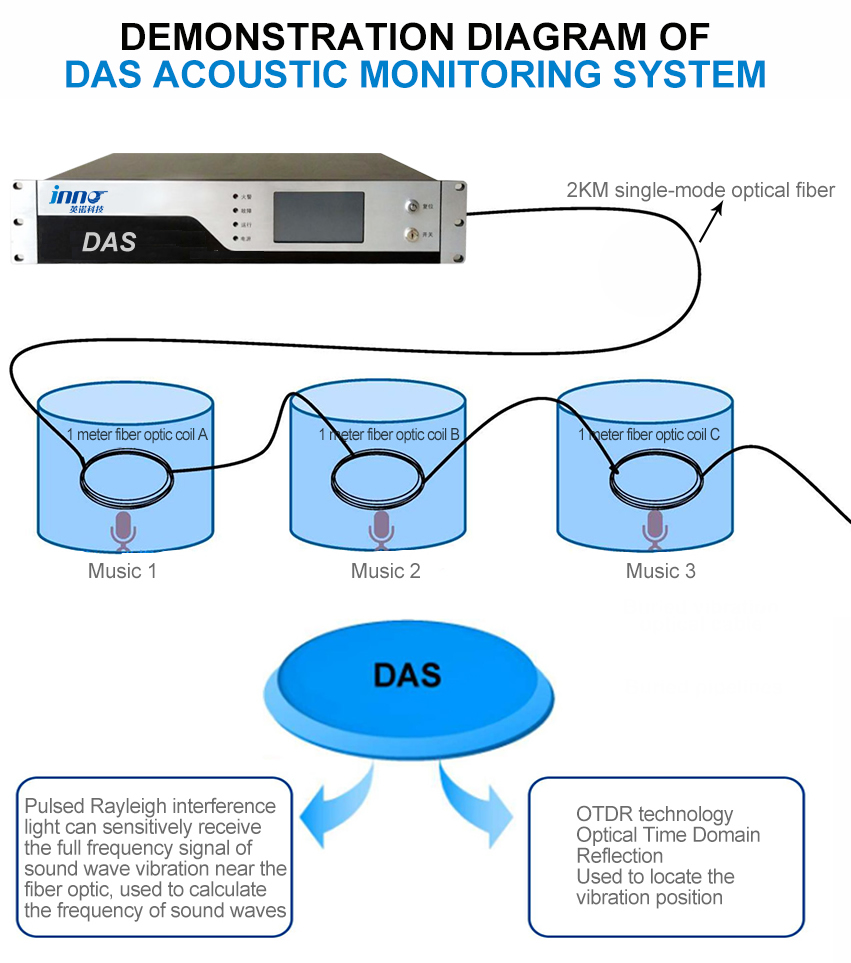
EL (Detección acústica distribuida) es una tecnología avanzada de detección de fibra óptica que convierte una fibra óptica monomodo estándar en una matriz de miles de micrófonos virtuales. El sistema funciona inyectando cortos, pulsos láser coherentes en la fibra y análisis de la fase de la luz retrodispersada de Rayleigh que regresa desde cada punto a lo largo del cable.
El principio del OTDR sensible a las fases
Los sistemas DAS utilizan una técnica conocida como reflectometría óptica en el dominio del tiempo sensible a la fase (Φ-OTDR). A medida que el pulso láser viaja por la fibra, Las impurezas naturales en el vidrio dispersan una pequeña fracción de la luz hacia la fuente.. Cuando una onda acústica o vibración golpea la fibra., Provoca una tensión localizada que cambia la fase de esta luz retrodispersada.. Comparando mediciones de fase sucesivas en cada punto a lo largo de la fibra, El interrogador DAS reconstruye una forma de onda acústica completa, capturando no solo si ocurrió un evento., pero la firma sonora real del evento.
Capacidades clave de la tecnología DAS
A Sistema de detección de fibra óptica DAS Normalmente ofrece una respuesta de frecuencia que va desde subhercios hasta varios kilohercios., resolución espacial tan fina como 1 metro, y distancias de detección de hasta 50 a 100 km, según el modelo de interrogador. Porque DAS captura datos acústicos reales, Permite una clasificación sofisticada de señales utilizando algoritmos de reconocimiento de patrones.. Esto significa que el sistema puede distinguir entre una persona que camina a lo largo de una valla, un vehículo circulando por una carretera cercana, un animal rozando el cable, y un intento real de cortar o trepar, lo que reduce significativamente las tasas de falsas alarmas..
3. Cómo DVS (Detección de vibración distribuida) Obras

DVS (Detección de vibración distribuida) es una tecnología de monitoreo de fibra óptica estrechamente relacionada pero técnicamente más simple. como eso, DVS se basa en la retrodispersión de Rayleigh dentro de la fibra óptica. Sin embargo, en lugar de medir la fase precisa de la luz devuelta para reconstruir formas de onda acústica, DVS analiza principalmente los cambios de intensidad de la señal retrodispersada..
Enfoque de detección basado en la intensidad
Cuando ocurre un evento de vibración cerca del cable sensor de fibra óptica, altera el patrón de interferencia de la luz retrodispersada, causando fluctuaciones en la intensidad de la señal en la ubicación correspondiente. El Unidad de interrogación DVS monitoriza estas variaciones de intensidad en tiempo real e identifica la posición y magnitud de la perturbación. Si bien DVS no captura la forma de onda acústica completa, detecta de forma fiable la presencia, ubicación, y fuerza relativa de los eventos de vibración.
Rendimiento práctico de los sistemas DVS
un tipico Sistema de detección perimetral DVS Proporciona resolución espacial en el rango de 5 a 10 Metros con un alcance de detección de hasta 40-60 km.. La respuesta de frecuencia es generalmente más estrecha que la del DAS., a menudo limitado a varios cientos de hercios. DVS es muy eficaz para aplicaciones donde el requisito principal es saber que ocurrió una perturbación y dónde ocurrió., sin necesidad de una clasificación acústica detallada. Esto lo convierte en un práctico, alternativa de menor costo para muchos escenarios de seguridad perimetral.
4. Diferencias clave entre DAS y DVS

Si bien DAS y DVS son ambos tecnologías de detección distribuida de fibra óptica que utilizan la misma infraestructura básica de fibra óptica, difieren significativamente en el enfoque de medición, riqueza de datos, e idoneidad para diversas aplicaciones. Comprender estas diferencias es esencial para seleccionar la tecnología adecuada para un requisito de seguridad determinado..
Método de medición
La diferencia más fundamental radica en lo que mide cada sistema.. DAS mide la fase de la luz retrodispersada de Rayleigh, proporcionando una cuantitativa, representación lineal del campo acústico a lo largo de la fibra. DVS mide la intensidad de la luz retrodispersada, Proporcionar una indicación cualitativa de la actividad vibratoria.. En términos prácticos, DAS le brinda una forma de onda que puede escuchar y analizar, mientras DVS te da una alerta de que algo pasó.
Sensibilidad y Resolución
Los sistemas DAS generalmente ofrecen mayor sensibilidad y resolución espacial más fina que DVS. Un alto rendimiento interrogador DAS puede alcanzar una resolución espacial de 1 metro y detectar perturbaciones en el nivel de nanodeformación. Los sistemas DVS normalmente funcionan con una resolución de 5 a 10 metros y requieren perturbaciones algo mayores para activar una detección confiable.. Para aplicaciones que requieren localización precisa de eventos y la capacidad de clasificar señales de baja amplitud, DAS es la mejor opción.
Clasificación de eventos y reducción de falsas alarmas
Porque DAS captura datos acústicos reales, es compatible con avanzado algoritmos de clasificación de eventos que pueden diferenciar entre eventos de amenaza y no amenaza. Esta es una gran ventaja en entornos con mucho ruido de fondo o actividades benignas frecuentes cerca del cable sensor.. DVS, con su enfoque basado en la intensidad, tiene una capacidad de clasificación más limitada y puede producir tasas más altas de falsas alarmas en entornos complejos.
Costo y complejidad del sistema
Las unidades de interrogación DAS son más complejas y normalmente más caras que las unidades DVS. Los requisitos de procesamiento para la demodulación de fase y el análisis de formas de onda también son mayores.. Para proyectos con presupuestos ajustados o requisitos de detección sencillos, a sistema de alarma DVS ofrece un equilibrio convincente entre rendimiento y rentabilidad.
Respuesta de frecuencia y salida de datos
Los sistemas DAS proporcionan respuesta de frecuencia de banda ancha, a menudo desde abajo 1 Hz hasta 10 kHz o más, permitiendo la detección de una amplia gama de fenómenos acústicos. La respuesta de frecuencia de DVS es más estrecha, Normalmente es suficiente para detectar vibraciones mecánicas, pero no es adecuado para capturar firmas acústicas detalladas.. La salida de datos de DAS es sustancialmente mayor., Requiere más ancho de banda de almacenamiento y procesamiento..
5. Aplicaciones típicas de Sistemas de alarma de fibra óptica
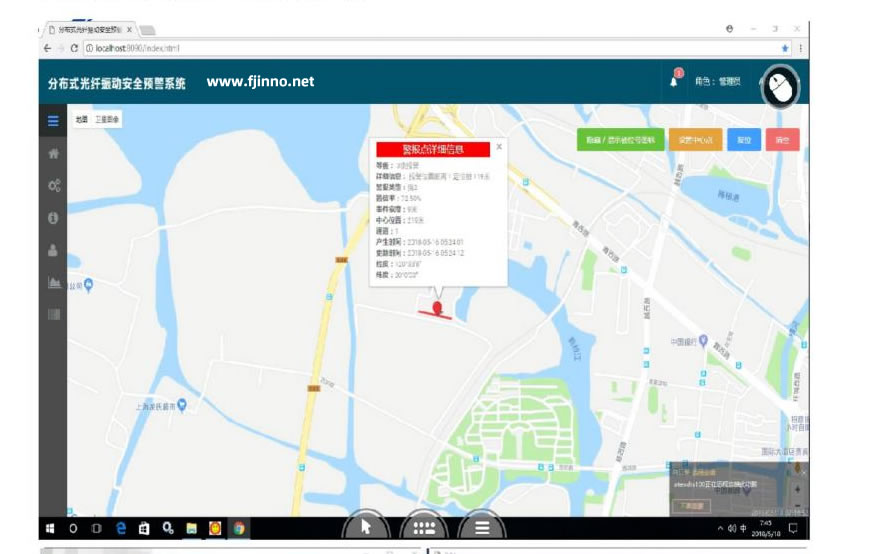
Tanto las tecnologías DAS como DVS se implementan en una amplia gama de aplicaciones de seguridad y monitoreo.. La elección entre ellos a menudo depende de los requisitos específicos de cada caso de uso..
Seguridad perimetral y detección de intrusos
Sistemas de seguridad perimetral de fibra óptica. Son ampliamente utilizados para proteger bases militares., instalaciones gubernamentales, aeropuertos, centros de datos, prisiones, y sitios industriales. El cable de detección generalmente está montado o enterrado junto a la cerca perimetral.. Cuando alguien intenta escalar, cortar, o romper la valla, las vibraciones resultantes se detectan y localizan inmediatamente. Los sistemas basados en DAS destacan en esta aplicación debido a su capacidad para clasificar el tipo de actividad de intrusión., mientras Sensores DVS para valla Proporcionar una detección básica fiable a un coste menor..
Monitoreo de tuberías y servicios públicos
Sistemas de monitoreo de tuberías de fibra óptica. Utilice cables DAS o DVS instalados junto al aceite., gas, y tuberías de agua para detectar interferencias de terceros., excavación no autorizada, fugas, y los impactos del equipo. DAS es particularmente efectivo aquí porque puede identificar la firma acústica de diferentes tipos de maquinaria y actividades cerca del derecho de vía del oleoducto..
Protección de fronteras e infraestructura crítica
De largo alcance sistemas de alarma distribuidos por fibra óptica están desplegados a lo largo de las fronteras nacionales, líneas ferroviarias, corredores de carreteras, y alrededor de centrales eléctricas y subestaciones. La capacidad de monitorear decenas de kilómetros de perímetro desde un solo punto sin componentes electrónicos activos en el campo hace que la tecnología de fibra óptica sea especialmente adecuada para proteger infraestructura remota y extendida..
Seguridad de cables de telecomunicaciones
Los cables de fibra óptica que forman parte de las redes de telecomunicaciones se pueden monitorizar mediante DAS o DVS para detectar manipulaciones, intentos de acceso no autorizados, o daños accidentales por actividades de construcción cercanas. Esta aplicación aprovecha las existentes infraestructura de cable de fibra óptica sin necesidad de cables de detección adicionales.
6. Cómo elegir entre DAS y DVS
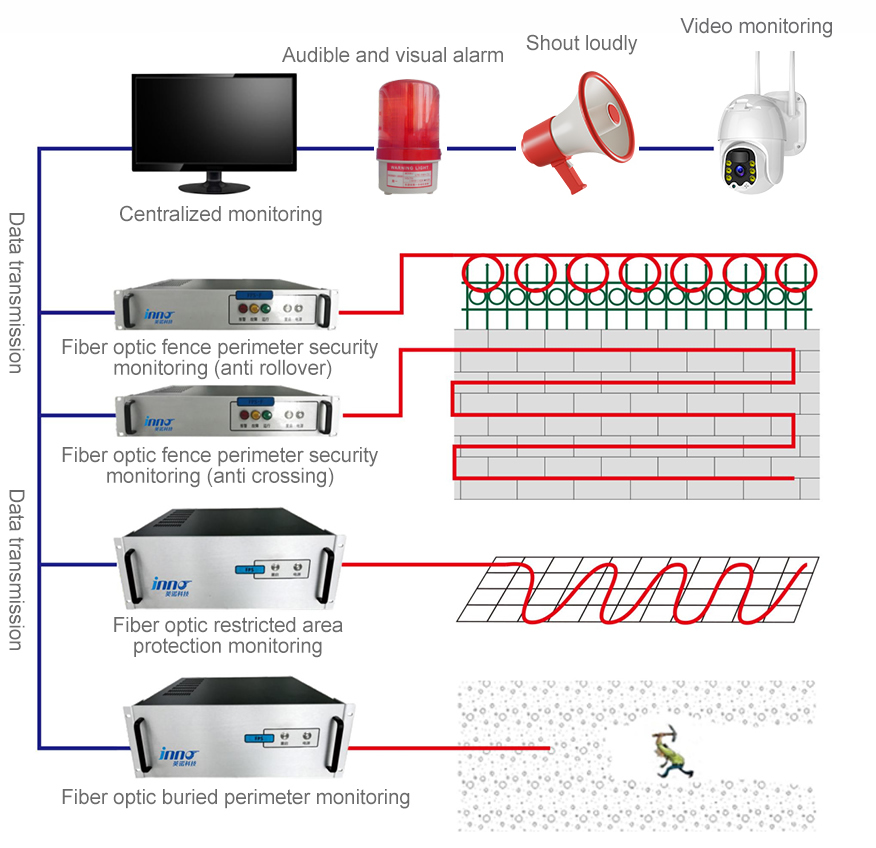
Seleccionar la tecnología adecuada para un sistema de alarma de fibra óptica Requiere una evaluación cuidadosa de varios factores relacionados con el entorno del proyecto., expectativas de desempeño, y restricciones presupuestarias.
Defina sus requisitos de detección
Comience por determinar qué tipos de eventos necesita detectar y si la clasificación de eventos es importante.. Si necesita distinguir entre diferentes tipos de intrusión, como caminar, excavación, movimiento de vehículos, y corte de cables: un Sistema de alarma basado en DAS con capacidad de clasificación acústica es la elección adecuada. Si su necesidad principal es una simple alerta basada en zonas cuando se produce una vibración significativa, a sistema DVS cumplirá con el requisito de manera efectiva.
Considere el entorno operativo
En entornos con mucho ruido de fondo debido al tráfico, maquinaria industrial, o el clima, DAS proporciona un mejor filtrado de falsas alarmas gracias a su análisis a nivel de forma de onda. en mas tranquilo, entornos más controlados, como recintos cercados o instalaciones interiores, DVS puede funcionar bien sin la complejidad añadida del procesamiento acústico.
Evaluar la distancia y las necesidades de resolución
Para distancias de monitoreo muy largas que exceden 50 km o requisitos de precisión espacial a nivel de metros, DAS es generalmente la tecnología más adecuada. Para perímetros más cortos bajo 20 km donde es aceptable una precisión de localización de 5 a 10 metros, DVS ofrece una solución práctica y económica.
Presupuesto y coste total de propiedad
La unidad de interrogatorio es el componente de coste más importante.. Las unidades DAS tienen un precio inicial más alto, pero puede reducir los costos operativos a largo plazo a través de menos falsas alarmas y una menor carga de trabajo de verificación.. Las unidades DVS son menos costosas inicialmente y más sencillas de mantener., haciéndolos atractivos para proyectos sensibles al presupuesto.
7. Consideraciones de instalación e implementación
La instalación adecuada es fundamental para el rendimiento de cualquier sistema de alarma distribuido por fibra óptica. Se deben abordar varios factores clave durante las fases de planificación y despliegue..
Selección y enrutamiento de cables
Tanto el sistema DAS como el DVS pueden funcionar con modo único estándar. cable de fibra óptica, aunque se recomiendan cables de detección diseñados específicamente con revestimientos de sensibilidad mejorada o cubiertas resistentes para instalaciones exteriores y enterradas.. La ruta del cable debe planificarse para mantener un buen acoplamiento acústico con el suelo o la estructura que se está monitoreando, evitando al mismo tiempo la exposición excesiva a fuentes de ruido ambiental..
Métodos de montaje
Para aplicaciones montadas en cercas, el cable sensor de fibra óptica Por lo general, se fija directamente a la tela de la cerca mediante bridas para cables o clips especializados a intervalos regulares.. Para aplicaciones enterradas, El cable se coloca en un lecho de arena a una profundidad de 20 a 40 cm para garantizar un acoplamiento fiable al suelo.. En algunas aplicaciones, El cable se instala dentro de conductos o infraestructuras de conductos existentes..
Ubicación y conectividad del interrogador
El Unidad de interrogación DAS o DVS está instalado en un lugar seguro, Ubicación con clima controlado en un extremo de la ruta de fibra.. Se conecta a la red de monitoreo vía Ethernet o backhaul de fibra.. Fuente de alimentación, protección ambiental, y la seguridad física del lugar del interrogador debe planificarse cuidadosamente.
Configuración de zona y umbrales de alarma
Después de la instalación, La fibra sensora se divide en zonas de alarma lógicas., cada uno con umbrales de detección y ajustes de sensibilidad configurables de forma independiente. Esto permite a los operadores adaptar el sistema a las condiciones locales., reducir las alarmas molestas en zonas ruidosas, y aumentar la sensibilidad en áreas críticas. El ajuste de zona adecuado durante la puesta en servicio es uno de los pasos más importantes para lograr un rendimiento confiable del sistema..
8. Ventajas y limitaciones de los sistemas de alarma de fibra óptica

Ventajas
Sistemas de alarma de fibra óptica. Ofrecen varias ventajas convincentes sobre las tecnologías de seguridad electrónica convencionales.. El cable sensor es completamente pasivo., No requiere energía eléctrica en el campo., lo que elimina la necesidad de fuentes de alimentación de campo, baterias, o paneles solares. La fibra es inmune a las interferencias electromagnéticas., haciéndolo adecuado para su instalación cerca de líneas eléctricas de alto voltaje, subestaciones, y entornos industriales pesados. Un solo cable de fibra puede monitorear distancias extremadamente largas: hasta 100 km — desde un punto central de interrogatorio, reduciendo drásticamente la cantidad de equipos e infraestructura en comparación con las soluciones de sensores puntuales. El sistema proporciona continuo, Detección distribuida sin espacios entre sensores., y ofrece localización de eventos en tiempo real con precisión a nivel de medidor en sistemas DAS.
Limitaciones
Ninguna tecnología está libre de limitaciones. Cables de detección de fibra óptica Puede ser sensible a factores ambientales como el viento., Lluvia Pesada, y fluctuaciones de temperatura, lo que puede aumentar los niveles de ruido de fondo y requerir un ajuste cuidadoso del umbral. Las unidades de interrogación representan un importante punto de inversión, y se debe considerar la planificación de repuestos para instalaciones críticas. Los empalmes y conectores de fibra a lo largo de la ruta del cable pueden introducir pérdida de señal y deben minimizarse. Además, La instalación y puesta en marcha adecuadas requieren conocimientos especializados., y el rendimiento continuo depende de mantener la integridad del cable a lo largo del tiempo..
9. Preguntas frecuentes (Preguntas frecuentes)
Q1: ¿Cuál es la distancia máxima de monitoreo de un sistema de alarma de fibra óptica??
La mayoría de los sistemas DAS y DVS modernos pueden monitorear cables de fibra óptica a distancias de 40 a 100 kilómetros de una única unidad de interrogatorio. El rango exacto depende del modelo de interrogador., calidad de la fibra, y resolución espacial requerida. Para perímetros muy largos, Se pueden implementar múltiples interrogadores para ampliar la cobertura total..
Q2: ¿Pueden los sistemas de alarma de fibra óptica funcionar con cables de fibra óptica existentes??
Sí. Tanto la tecnología DAS como la DVS pueden funcionar con cables de fibra óptica monomodo estándar., incluyendo fibras de repuesto dentro de la infraestructura existente de telecomunicaciones o cables de servicios públicos. Sin embargo, Los cables de detección diseñados específicamente pueden proporcionar una mejor sensibilidad y confiabilidad para aplicaciones de seguridad dedicadas..
Q3: ¿Cómo reduce un sistema DAS las falsas alarmas??
DAS captura la forma de onda acústica completa de los eventos detectados, que permite al sistema aplicar algoritmos de clasificación de señales. Estos algoritmos analizan el contenido de frecuencia., duración, y patrón de cada evento para diferenciar los intentos de intrusión genuinos de actividades benignas como el movimiento de animales, viento, y tráfico de vehículos.
Q4: ¿Es DVS menos preciso que DAS??
DVS normalmente ofrece una resolución espacial más gruesa que DAS: alrededor 5 a 10 metros en comparación con 1 medidor para DAS. Sin embargo, DVS es altamente confiable para detectar y localizar eventos de vibración. La compensación está en la profundidad de la clasificación más que en la confiabilidad de la detección.. Para muchas aplicaciones, La precisión del DVS es totalmente adecuada.
Q5: ¿Qué tipos de amenazas puede detectar una alarma perimetral de fibra óptica??
Los sistemas de alarma de fibra óptica pueden detectar una amplia gama de amenazas, incluida la escalada de vallas., corte de cerca, cavar o hacer túneles cerca del cable, caminar o correr a lo largo del perímetro, aproximación e impacto del vehículo, y manipulación de cables. Los sistemas DAS pueden clasificar aún más estos eventos por su firma acústica..
Q6: ¿Los sistemas de alarma de fibra óptica requieren energía a lo largo del cable sensor??
No. El cable sensor de fibra óptica es completamente pasivo y no requiere energía eléctrica a lo largo de su longitud.. Toda la electrónica activa está contenida en la unidad de interrogación en el centro de control.. Esta es una de las ventajas más importantes de la detección distribuida por fibra óptica sobre los sistemas de alarma electrónicos convencionales..
P7: ¿Cómo se ven afectados los sistemas de alarma de fibra óptica por el clima??
viento fuerte, Lluvia Pesada, y el granizo puede generar vibraciones en los cables expuestos montados en cercas, niveles potencialmente crecientes de ruido de fondo. Los sistemas DAS y DVS modernos utilizan filtrado adaptativo y ajuste de umbral para minimizar las falsas alarmas relacionadas con el clima.. Las instalaciones de cables enterrados no se ven afectadas en gran medida por las condiciones climáticas de la superficie..
P8: ¿Se pueden integrar los sistemas DAS y DVS con CCTV y control de acceso??
Sí. La mayoría de los sistemas de alarma de fibra óptica proporcionan interfaces de salida estándar y admiten la integración con sistemas de gestión de vídeo., Plataformas SCADA, sistemas de control de acceso, y software de gestión de seguridad centralizada. Cuando se activa una alarma, el sistema puede dirigir automáticamente las cámaras PTZ a la ubicación del evento para su verificación visual.
P9: ¿Qué mantenimiento requiere un sistema de alarma de fibra óptica??
Los sistemas de alarma de fibra óptica requieren un mantenimiento relativamente bajo. Las tareas de rutina incluyen la inspección periódica de la ruta del cable para detectar daños físicos., Comprobación de la calidad del empalme y del conector de fibra mediante un OTDR, verificar el desempeño del interrogador, y revisar los umbrales de alarma basados en cambios ambientales estacionales.
Q10: ¿Cuánto dura un cable sensor de fibra óptica en ambientes exteriores??
Los cables de fibra óptica de alta calidad aptos para exteriores con materiales de cubierta adecuados están diseñados para una vida útil de 20 a 30 años o más. La vida útil real depende de las condiciones ambientales., calidad de instalación, y protección contra daños mecánicos. Hay opciones de cables armados y resistentes a los rayos UV disponibles para entornos hostiles..
Descargo de responsabilidad: La información proporcionada en este artículo es solo para fines informativos y educativos generales.. Si bien se ha hecho todo lo posible para garantizar la precisión, Fjinno (www.fjinno.net) no ofrece garantías ni representaciones con respecto a la integridad, fiabilidad, o idoneidad del contenido para cualquier aplicación particular. Especificaciones del producto, parámetros de rendimiento, Y los detalles técnicos pueden variar según los modelos específicos., configuraciones, y condiciones de funcionamiento. Se recomienda a los lectores que consulten directamente con ingenieros calificados e integradores de sistemas antes de tomar cualquier decisión de compra o implementación.. FJINNO no será responsable de ninguna pérdida, daño, o consecuencia que surja del uso o confianza en la información contenida en este documento.

Sensor de temperatura de fibra óptica, Sistema de monitoreo inteligente, Fabricante distribuido de fibra óptica en China
 |
 |
 |