 INNO faseroptische Temperatursensoren ,Temperaturüberwachungssysteme.
- Überwachung der Transformatortemperatur continuously tracks internal temperatures to prevent insulation degradation and thermal breakdown that lead to catastrophic equipment failure
- Hot spot temperatures in transformer windings typically run 10-15°C higher than top oil temperature and represent the most critical measurement point for assessing transformer health
- Faseroptische Temperatursensoren bieten höchste Genauigkeit (±1°C), völlige Immunität gegen elektromagnetische Störungen, and high voltage isolation up to 100kV or more
- Strategic sensor placement at winding hot spots, oberes Öl, Kern, and bushing locations enables comprehensive thermal profiling and early fault detection
- Abnormal temperature rise serves as the primary indicator of overload conditions, Ausfall des Kühlsystems, or developing internal faults months before catastrophic failure occurs
FJINNO Fluorescent Fiber Optic Temperature Monitoring System for Transformers
E-Mail: web@fjinno.net
WhatsApp: +8613599070393
The FJINNO fluoreszierendes faseroptisches Temperaturüberwachungssystem is specifically engineered for transformer winding hot spot detection and critical thermal monitoring applications. Utilizing advanced rare-earth fluorescent crystal sensor technology, the system measures temperature by analyzing fluorescent decay time, providing immunity to electromagnetic fields, Funkfrequenzstörungen, and high voltage environments that plague conventional electronic sensors.
This system represents the most reliable solution for oil-immersed transformer temperature measurement, with sensors that can be placed directly into high-voltage winding environments without any risk of electrical interference or ground loop issues. The intrinsically safe design requires no electrical power at the sensor point, eliminating explosion risks and enabling installation in the most demanding power system applications.
Technische Spezifikationen
| Parameter | Spezifikation |
|---|---|
| Temperaturbereich | -40°C bis +260°C |
| Messgenauigkeit | ±1°C (0 bis 200°C) |
| Auflösung | 0.1°C |
| Ansprechzeit | < 2 Sekunden |
| Voltage Isolation | > 100kV |
| EMI-Immunität | Vollständig (Glasfaser) |
| Kanalkapazität | 1 Zu 32 Kanäle pro Einheit |
| Sensordurchmesser | 2.5mm (standard probe) |
| IP Rating | IP65 (controller enclosure) |
| Kommunikation | RS485, Ethernet, 4-20mA |
Installation und Anwendung
Sensor Placement Guidelines:
Für Öl-Leistungstransformatoren, fluoreszierende faseroptische Sonden should be installed at the following critical locations:
- Directly embedded in the hottest point of high-voltage and low-voltage windings (typically the top disk of the innermost winding)
- Top oil temperature location in the conservator tank or main tank dome
- Core temperature monitoring (für große Einheiten)
- Bushing base connections where contact resistance heating may occur
- Load tap changer (LTC) compartment for contact monitoring
Der Glasfaserkabel pass through the transformer bushings or dedicated fiber optic feedthroughs, maintaining complete electrical isolation. Each probe is hermetically sealed and designed for permanent installation with 30+ Jahr Lebensdauer.
System Features
| Besonderheit | Nutzen |
|---|---|
| Multi-channel monitoring | Simultaneous measurement of up to 32 points from a single controller |
| Real-time alarming | Programmable high/low temperature alarms with relay outputs |
| Trend recording | Continuous data logging with configurable sample rates |
| SCADA-Integration | Standard protocols for substation automation systems |
| Hot spot calculation | Automatic thermal gradient analysis and winding hot spot estimation |
| Wartungsfreier Betrieb | Keine Kalibrierung erforderlich, drift-free measurement over decades |
Wartung und Vorsichtsmaßnahmen

Important Operating Notes:
- Der faseroptischer Temperatursensor probes require no maintenance and should never be removed from the transformer during routine service
- Avoid sharp bending (Radius < 25mm) of the fiber optic cables during installation to prevent signal loss
- Controller units should be mounted in temperature-controlled environments when possible; extreme ambient temperatures may affect display readability
- Verify communication integrity to SCADA systems quarterly; alarm contact outputs should be tested during scheduled outages
- Sensor cables should be properly strain-relieved at the bushing entry point to prevent mechanical stress during transformer thermal cycling
- When troubleshooting, verify issues with the controller and cables before suspecting sensor probe failure, which is extremely rare
Inhaltsverzeichnis
- What Exactly Is Transformer Temperature Monitoring?
- Why Is Temperature Monitoring Critical for Transformer Lifespan?
- What Are the Primary Heat Generation Sources in Power Transformers?
- What Is a Hot Spot and Where Does It Occur?
- How Does Hot Spot Temperature Differ from Top Oil Temperature?
- What Are the IEEE and IEC Temperature Limits for Transformers?
- What Happens When a Transformer Overheats?
- What Are the Traditional Temperature Monitoring Methods?
- Why Are Fiber Optic Sensors Superior for Transformer Monitoring?
- Wie funktioniert die fluoreszierende Glasfaser-Temperaturmessung??
- Where Should Temperature Sensors Be Strategically Placed?
- How Many Monitoring Points Are Required for Adequate Coverage?
- What Do Different Temperature Readings Indicate About Transformer Health?
- How Does Temperature Monitoring Integrate with Transformer Protection Systems?
- What Causes Abnormal Temperature Rise in Transformers?
- What Are the Warning Signs of Transformer Overheating?
- How Should Temperature Monitoring Systems Be Inspected During Routine Maintenance?
- Can Temperature Monitoring Systems Fail and What Are the Failure Modes?
- What Factors Can Cause Inaccurate Temperature Readings?
- How Do You Select the Right Temperature Monitoring System for Your Transformer?
1. What Exactly Is Überwachung der Transformatortemperatur?
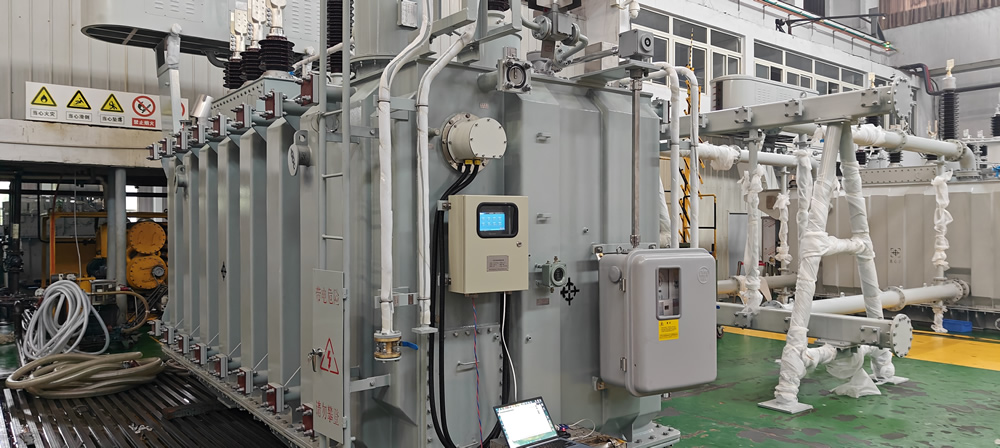
Überwachung der Transformatortemperatur is a continuous measurement and recording system designed to track thermal conditions within power transformers. This system comprises strategically placed Temperatursensoren, Datenerfassungshardware, Alarmlogik, and communication interfaces that provide real-time visibility into the transformer’s thermal state.
The fundamental purpose is to ensure the transformer operates within safe thermal limits at all times. The system monitors multiple temperature points including kurvenreiche Hotspots, obere Öltemperatur, untere Öltemperatur, and in some cases, core temperature and bushing connections. Modern systems provide not just instantaneous readings but also historical trending, thermal gradient analysis, and predictive alarm capabilities.
Unlike simple temperature indicators that provide only a local dial reading, umfassend Temperaturüberwachungssysteme integrate with substation SCADA systems, enabling remote supervision and automated protective actions when dangerous thermal conditions develop.
2. Why Is Temperature Monitoring Critical for Transformer Lifespan?

The relationship between temperature and transformer insulation life is governed by the Arrhenius equation, which demonstrates that insulation aging is an exponential function of temperature. The widely accepted industry rule states that for every 8°C increase above the rated temperature, the insulation aging rate doubles, effectively cutting the transformer’s expected service life in half.
Transformer insulation systems, whether kraft paper in oil-immersed units or epoxy resin in dry-type transformers, undergo irreversible chemical degradation when exposed to heat. This degradation manifests as reduced dielectric strength, increased brittleness, and eventual mechanical failure. A transformer designed for a 30-year service life operating consistently 16°C above its thermal rating may fail in as little as 7-8 Jahre.
| Operating Temperature Above Rating | Insulation Life Impact | Expected Service Life (aus 30 years baseline) |
|---|---|---|
| 0°C (at rating) | Normal aging rate | 30 Jahre |
| +8°C | 2× aging acceleration | 15 Jahre |
| +16°C | 4× aging acceleration | 7.5 Jahre |
| +24°C | 8× aging acceleration | 3.75 Jahre |
| -8°C (under rating) | 0.5× aging (life extension) | 60 Jahre |
Beyond chronic overheating, acute thermal events—such as a sudden hot spot caused by a blocked cooling duct or a high-resistance connection—can cause immediate insulation failure, leading to internal arcing and catastrophic transformer destruction. Kontinuierlich thermische Überwachung provides the only reliable means to detect these developing conditions before permanent damage occurs.
3. What Are the Primary Heat Generation Sources in Power Transformers?

Transformers generate heat through three fundamental loss mechanisms, each contributing to the overall thermal load that must be dissipated:
Core Losses (No-Load Losses)
Core losses occur in the magnetic steel laminations and are present whenever the transformer is energized, regardless of load current. These consist of hysteresis losses (energy required to reverse magnetic domains) and eddy current losses (circulating currents induced in the steel). Modern grain-oriented silicon steel minimizes these losses, but they still typically represent 20-30% of total losses at full load and 100% of losses at no-load. The core operates at relatively uniform temperature across its volume.
Copper Losses (Load Losses)
Winding resistance losses, commonly called I²R losses or copper losses, are proportional to the square of the load current. These represent the largest component of total losses under full-load conditions, often accounting for 70-80% of total heat generation. Critically, these losses are not uniformly distributed—they are highest in areas where current density is greatest, particularly in the innermost winding turns and at lead connections.
Stray Losses
Stray losses occur due to leakage magnetic flux inducing eddy currents in structural steel components (tank walls, Kernklemmen, tie plates) and in the windings themselves. These can account for 10-15% of total losses and create localized hot spots in unexpected areas, particularly near high-current leads and in areas where magnetic flux is concentrated by structural geometry.
4. What Is a Hot Spot and Where Does It Occur?
Der Hotspot is defined as the highest temperature point within the transformer winding structure. This location experiences the most severe thermal stress and determines the overall thermal rating and life expectancy of the transformer. The hot spot is not directly accessible for measurement in most designs, making its assessment a critical engineering challenge.
In typical power transformer construction, the hot spot occurs at the top of the innermost high-voltage winding. This location experiences the convergence of three unfavorable thermal conditions: maximum I²R heating (highest current density occurs in inner windings), poorest cooling circulation (oil flow is slowest at the winding interior), and heat stratification (hot oil naturally rises to the top of the winding).
Other potential hot spot locations include:
- Lead exit points where conductors transition from winding to bushing, often with higher resistance connections
- Tap winding sections where current density changes abruptly
- Blocked cooling passages created by manufacturing defects or debris accumulation
- High-current low-voltage windings near the core, particularly in shell-type designs
- Load tap changer contacts where contact resistance heating occurs
5. How Does Hot Spot Temperature Differ from Top Oil Temperature?

The relationship between Hot-Spot-Temperatur Und obere Öltemperatur is characterized by the hot spot gradient or hot spot rise, typically denoted as ΔθH. This gradient represents the additional temperature rise of the hottest winding point above the surrounding top oil temperature.
For mineral oil-immersed transformers designed to modern standards:
| Transformer Type/Cooling | Typical Hot Spot Rise Above Top Oil | Range at Full Load |
|---|---|---|
| ONAN (Öl natürlich, Luft natürlich) | 15°C | 10-20°C |
| EIN AUS (Öl natürlich, Luftwaffe) | 12°C | 8-18°C |
| OFAF (Oil Forced, Luftwaffe) | 10°C | 6-15°C |
| Verteilungstransformatoren | 10-15°C | 8-20°C |
This gradient exists because oil circulation cannot perfectly equalize winding and bulk oil temperatures. The oil in direct contact with the hot winding copper absorbs heat and rises, but thermal resistance between copper and oil, combined with limited convection velocity in narrow cooling ducts, prevents complete thermal equilibrium.
Obere Öltemperatur is measured easily at the top of the conservator or main tank and serves as the primary reference for thermal monitoring. Jedoch, because the hot spot temperature determines insulation life, genau Hot-Spot-Erkennung or calculation is essential. Direct measurement with faseroptische Sensoren embedded in windings provides the most reliable data for thermal management.
6. What Are the IEEE and IEC Temperature Limits for Transformers?
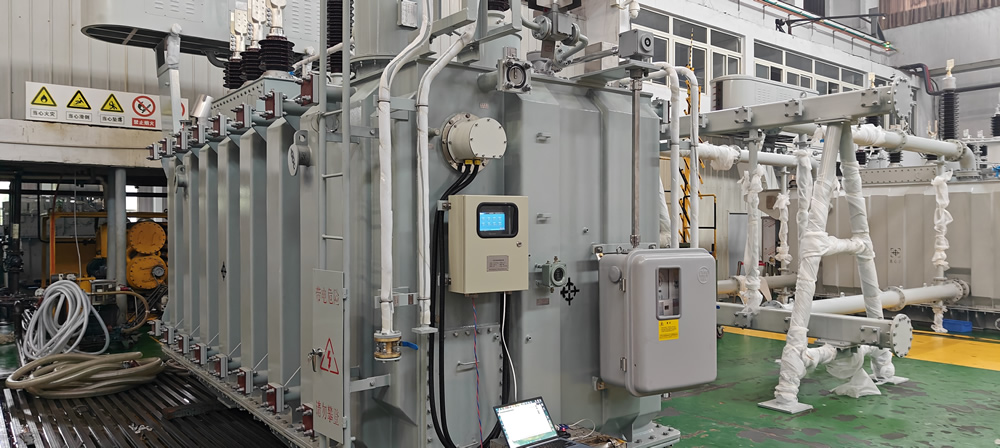
International standards establish maximum permissible temperatures to ensure safe operation and normal insulation life expectancy. These limits differ slightly between IEEE (North American) und IEC (international) standards but follow similar principles.
IEEE C57.12.00 Temperature Limits (65°C Average Winding Rise)
| Temperature Point | Normal Limit | Short-Term Emergency Limit |
|---|---|---|
| Obere Öltemperatur | 105°C | 110°C (with reduced life) |
| Hot spot temperature | 110°C | 130°C (limited duration) |
| Bottom oil temperature | Typically 70-85°C | N / A |
IEC 60076-2 Temperature Limits (Oil-Immersed)
| Temperature Point | Normal Limit | Notizen |
|---|---|---|
| Anstieg der oberen Öltemperatur | 60K | Rise above ambient, not absolute temperature |
| Winding average temperature rise | 65K | For 65K-rated designs |
| Hot spot temperature | 98°C (78K rise at 20°C ambient) | Calculated for normal life expectancy |
These limits assume a 30°C average ambient temperature and 40°C maximum ambient. Operation above these limits accelerates aging exponentially. Modern Wärmeüberwachungssysteme für Transformatoren track these values continuously and provide staged alarms (warning at 90% of limit, trip at 100%) to enable corrective action before damage occurs.
7. What Happens When a Transformer Overheats?
Transformer overheating initiates a cascade of degradation mechanisms that progressively compromise the equipment’s integrity and can culminate in catastrophic failure.
Insulation Degradation Process
Wann Wicklungstemperatur exceeds design limits, the cellulose paper insulation undergoes accelerated thermal decomposition through pyrolysis reactions. Long-chain cellulose polymers break down into shorter chains, releasing water, Kohlendioxid, Kohlenmonoxid, and eventually combustible gases. The paper becomes brittle and loses mechanical strength, making it vulnerable to damage from electromagnetic forces during fault conditions or even normal operation.
Gleichzeitig, the insulating oil begins to oxidize more rapidly, forming acids, Schlamm, und Feuchtigkeit. These contaminants further degrade both the oil’s dielectric properties and attack the paper insulation in a self-accelerating deterioration cycle.
Immediate Thermal Failures
Severe overheating events can trigger immediate failures:
- Thermisches Durchgehen: As conductor temperature rises, electrical resistance increases, mehr Wärme erzeugen, which further increases temperature in a positive feedback loop until insulation failure
- Oil degradation and gassing: Extreme temperatures cause rapid oil decomposition, generating large volumes of combustible gases (Wasserstoff, Methan, Ethylen) that can accumulate and create explosive mixtures
- Winding displacement: Differential thermal expansion can shift winding positions, potentially causing short circuits or insulation damage
- Buchsenfehler: Overheated connections at bushing terminals can cause localized charring and flashover
The most dangerous scenario is thermal breakdown leading to internal arcing, which produces a violent explosion as the arc vaporizes oil into gaseous products that expand rapidly in the sealed tank. This is precisely why hot spot temperature monitoring with immediate protective tripping is considered essential protective infrastructure.
8. What Are the Traditional Temperature Monitoring Methods?
Before the advent of modern Glasfasertechnologie, several conventional methods were employed for Thermische Überwachung des Transformators, each with distinct limitations:
Widerstandstemperaturdetektoren (RTDs)
RTD-Sensoren, typically platinum Pt100 elements, measure temperature by correlating electrical resistance change with temperature. These are commonly installed in thermowells in the top oil. While accurate for oil temperature measurement, RTDs cannot be placed directly into high-voltage windings due to their conductive nature. They require electrical power, create ground loop susceptibility, and are affected by electromagnetic interference in the high-field transformer environment.
Thermoelemente
Thermoelementsensoren generate a small voltage proportional to temperature through the Seebeck effect at junctions of dissimilar metals. Type K thermocouples are common for industrial applications. Like RTDs, these electrical sensors cannot safely monitor winding hot spots in energized transformers and are susceptible to EMI-induced errors in measurements.
Wicklungstemperaturanzeigen (WTI)
Das Traditionelle WTI is an indirect measurement device that simulates hot spot temperature by heating a resistance element (carrying a current proportional to load current) immersed in top oil. The device physically models the thermal gradient. While ingenious for its era, the WTI suffers from inaccuracy due to simplified thermal modeling assumptions and cannot capture abnormal hot spots caused by localized faults or cooling blockages.
Liquid-Filled Dial Thermometers
Einfach capillary tube thermometers with liquid-filled sensing bulbs provide direct mechanical indication of top oil temperature through thermal expansion. These require no power and are inherently reliable but provide only local indication with no remote monitoring capability and no ability to measure winding temperatures.
9. Warum sind Fiber Optic Sensors Superior for Transformer Monitoring?

Der grundlegende Vorteil von faseroptische Temperatursensoren stems from their completely dielectric (nicht leitend) nature, which solves the critical limitation that prevented traditional sensors from directly measuring high-voltage winding temperatures.
Vollständige elektrische Isolierung
Glasfaser consists of glass or polymer materials that conduct light but not electricity. A fiber optic sensor probe can be placed directly onto a 500kV winding while the measurement instrument remains at ground potential, with no electrical connection or voltage stress on the instrumentation. This enables true hot spot measurement rather than indirect calculation.
Elektromagnetische Immunität
The intense electromagnetic fields inside operating transformers—which can reach tens of kilovolts per meter—induce substantial noise and errors in conventional electrical sensors. Faseroptische Sensorik nutzt Licht als Messmedium, which is completely unaffected by electric or magnetic fields. Measurements remain accurate even in the most severe EMI environments, including during switching transients and fault conditions.
Eigensicherheit
Fiber optic probes require no electrical power at the sensing point and cannot create sparks or ignition sources. In Öltransformatoren, where explosive gas mixtures can develop during fault conditions, this intrinsic safety is invaluable. The sensor poses zero risk of initiating or contributing to internal failures.
Langzeitstabilität
Fluoreszierende faseroptische Sensoren exhibit exceptional long-term measurement stability with essentially zero drift over decades of operation. Unlike electronic sensors that require periodic calibration, properly designed optical sensors maintain their accuracy indefinitely, reducing maintenance requirements and lifecycle costs.
| Besonderheit | Faseroptische Sensoren | RTD/Thermoelement | WTI (Simulated) |
|---|---|---|---|
| Direct winding measurement | Ja, auf jedem Spannungsniveau | NEIN (only oil temperature) | NEIN (simulated only) |
| EMI-Immunität | Vollständig | Anfällig | Mäßig |
| Voltage isolation | >100kV standard | Limited by insulation | Oil barrier only |
| Genauigkeit | ±1°C | ±0,5°C (in ideal conditions) | ±5-10°C (model-dependent) |
| Long-term drift | Im Wesentlichen keine | 0.1-0.5°C/year typical | Requires periodic adjustment |
| Multi-point capability | Bis zu 32+ points per instrument | One point per sensor | Single simulated value |
10. Wie funktioniert Fluoreszierende faseroptische Temperaturmessung Arbeiten?
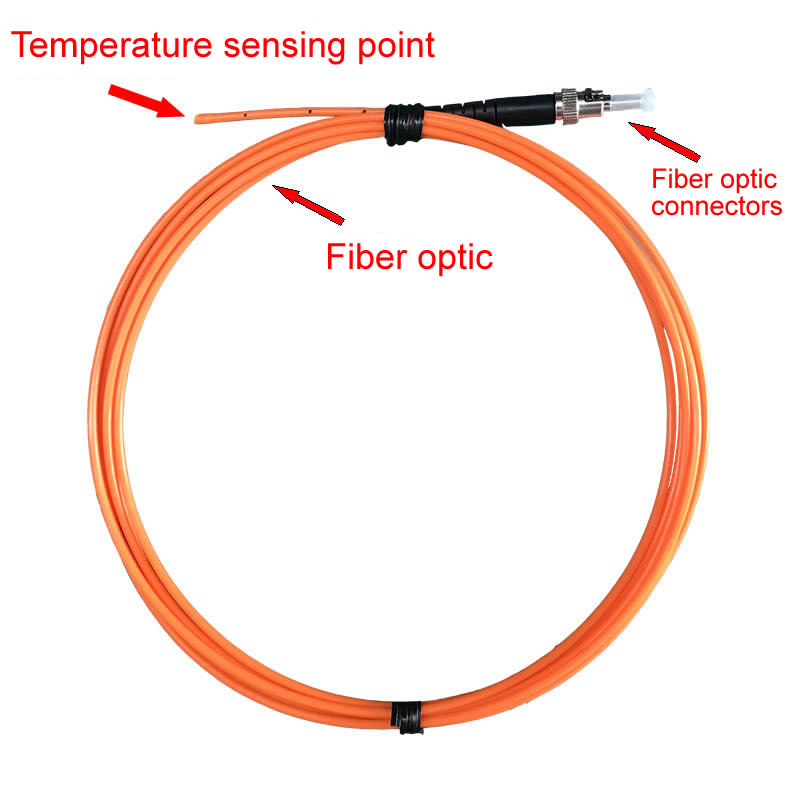
Temperaturmessung mit fluoreszierender Glasfaser is based on the temperature-dependent decay characteristics of fluorescent materials. This proven technology provides the most accurate and reliable method for direct Überwachung der Transformatorwicklungstemperatur.
Funktionsprinzip
The sensor probe contains a tiny crystal of a rare-earth doped phosphor material at its tip. When excited by a brief pulse of ultraviolet or blue light transmitted through the optical fiber, the crystal absorbs this optical energy and re-emits it as visible fluorescent light. This fluorescence doesn’t cease immediately when the excitation ends but rather decays exponentially over several microseconds.
The critical measurement parameter is the Abklingzeit der Fluoreszenz (or lifetime)—the time required for the fluorescent intensity to fall to 1/e (etwa 37%) of its initial value. This decay time exhibits a precise, monotonic relationship with temperature: wenn die Temperatur steigt, decay time decreases in a highly predictable manner.
The measurement instrument sends short optical pulses down the fiber, Erfasst das zurückkehrende Fluoreszenzsignal, and analyzes its decay characteristics. By precisely timing this decay, the system determines temperature with exceptional accuracy. Wichtig, this measurement is inherently self-referencing—it depends on a time interval, not absolute light intensity, making it immune to fiber bending losses, Steckerverluste, and long-term variations in light source output.
Advantages for Transformer Applications
- True absolute measurement: Keine Kalibrierung erforderlich; temperature is determined from fundamental physical properties
- Immunity to optical losses: Measurements remain accurate even with fiber damage or contaminated connections
- Small sensor size: Probes as small as 1-2mm diameter can be embedded directly in winding insulation
- Großer Temperaturbereich: Typically -40°C to +250°C, covering all normal and emergency operating conditions
- Schnelle Reaktion: Thermal response times under 2 seconds enable real-time monitoring of transient conditions
11. Where Should Temperature Sensors Be Strategically Placed?
Optimal Sensorplatzierung for comprehensive Thermische Überwachung des Transformators requires understanding heat distribution patterns and identifying critical vulnerability points.
Essential Monitoring Locations
High-Voltage Winding Hot Spot
The most critical measurement point. Der faseroptische Sonde should be embedded between winding disks at the calculated hot spot location, typischerweise 75-85% of the way up the innermost HV winding. This provides direct measurement of the highest temperature point determining insulation life.
Low-Voltage Winding Temperature
While LV windings typically run cooler due to better cooling access, high-current LV windings can develop significant temperature rises. Monitoring the top of the LV winding provides verification of thermal model accuracy and early warning of cooling system problems.
Obere Öltemperatur
This remains the primary reference temperature for overall transformer thermal condition. Measured at the highest point of the main tank or conservator, obere Öltemperatur correlates with load level and ambient conditions and serves as the basis for cooling system control.
Untere Öltemperatur
Measured at the lowest point of the main tank, this reading verifies oil circulation effectiveness. An abnormally small difference between top and bottom oil temperatures indicates poor circulation due to pump failure or blocked flow paths.
Kerntemperatur (Large Units)
For transformers above 100MVA, core temperature monitoring provides early detection of abnormal core losses due to insulation failure between laminations or localized core plate overheating from stray flux.
Load Tap Changer Contacts
Contact resistance heating in tap changers represents a common failure mode. Direct temperature measurement of the switch compartment oil or contact surfaces provides early warning of developing contact problems before catastrophic failure.
Sensor Quantity Guidelines
| Transformatornennleistung | Recommended Minimum Sensor Points | Typische Konfiguration |
|---|---|---|
| < 10 MVA | 2-3 Punkte | Top-Öl + 1 kurviger Hotspot |
| 10-50 MVA | 4-6 Punkte | Top-Öl + HV hot spot + Niederspannungswicklung + Bodenöl |
| 50-200 MVA | 6-12 Punkte | Top-Öl + HV/LV hot spots + multiple winding points + Kern + Bodenöl |
| > 200 MVA | 12-20+ Punkte | Comprehensive multi-phase monitoring with redundant hot spot sensors |
12. How Many Monitoring Points Are Required for Adequate Coverage?
The number of Temperaturüberwachungspunkte required represents a balance between comprehensive thermal visibility, cost considerations, and practical installation constraints.
Minimum Configuration for Protection
At an absolute minimum, even small distribution transformers should monitor obere Öltemperatur with alarm and trip functions. For power transformers above 5MVA, adding direct hot spot measurement with a single fiber optic probe in the HV winding provides critical early warning capability that indirect methods cannot match.
Standard Configuration for Utility Service
A typical utility power transformer (25-100MVA) will be equipped with 6-8 Temperaturüberwachungspunkte: oberes Öl, Bodenöl, Hotspot in der Hochspannungswicklung, LV winding temperature, and potentially phase-specific measurements for three-phase units. This configuration enables verification of thermal models, detection of cooling system malfunctions, and identification of abnormal localized heating.
Comprehensive Monitoring for Critical Units
For large GSU (Generatorerhöhung) Transformatoren, critical transmission autotransformers, or units with known thermal vulnerabilities, 12-20 monitoring points provide complete thermal profiling. Multiple sensors per winding verify temperature distribution uniformity, redundant hot spot sensors guard against single-point sensor failures, and additional points monitor tap changers, Buchsen, und Kerntemperaturen.
Economic Considerations
The marginal cost of additional fiber optic sensor channels is modest compared to total transformer investment or the cost of a single forced outage. Modern multi-channel systems can accommodate 16-32 sensors from a single monitoring unit, making comprehensive instrumentation economically viable. The key principle: monitor every location where a credible failure mode could develop undetected by existing measurement points.
13. What Do Different Temperature Readings Indicate About Transformer Health?
Interpreting Temperaturüberwachungsdaten requires understanding normal operating patterns and recognizing anomalous signatures that indicate developing problems.
Normal Operating Patterns
Obere Öltemperatur will track ambient temperature plus a load-dependent rise, typically reaching 50-70°C above ambient at full rated load. Daily and seasonal variations are normal. Der Hotspot should track top oil with a consistent gradient (10-15°C above top oil at full load). This gradient should remain stable across different load levels when adjusted for load-squared relationship.
Abnormal Temperature Signatures
| Temperaturmuster | Probable Cause | Required Action |
|---|---|---|
| Hot spot 20-30°C above top oil | Verstopfte Kühlkanäle, localized winding fault, or shorted turns | Reduce load immediately; schedule internal inspection |
| Top oil rising with no load increase | Cooling system failure (pump, Fans) or increasing core losses | Verify cooling equipment operation; consider DGA analysis |
| Small top-to-bottom oil ΔT | Poor oil circulation, pump failure, oder verstopfte Kühler | Check cooling system; verify oil flow |
| One phase winding hotter than others | Unbalanced loading or phase-specific winding fault | Check load balance; investigate for internal fault |
| Plötzlicher Temperaturanstieg | Interner Fehler, Lichtbogenbildung, oder Kühlunterbrechung | Reise sofort; gründliche Untersuchung erforderlich |
| Über Wochen hinweg allmählich steigende Temperaturen | Cooling system degradation, verschmutzte Heizkörper, oder alterndes Öl | Planen Sie die Wartung; Ölanalyse; Kühlerreinigung |
Thermische Trendanalyse
Fortschrittlich Transformatorüberwachungssysteme Führen Sie eine automatisierte Trendanalyse durch, Vergleich des aktuellen thermischen Verhaltens mit historischen Basislinien, die während des normalen Betriebs ermittelt wurden. Abweichungen von erwarteten Mustern lösen Untersuchungswarnungen aus, selbst wenn die absoluten Temperaturen innerhalb der Grenzwerte bleiben. Dieser prädiktive Ansatz kann sich entwickelnde Probleme Monate erkennen, bevor sie zu Ausfällen führen.
14. How Does Temperature Monitoring Integrate with Transformer Protection Systems?
Temperaturüberwachung dient sowohl als kontinuierliches Zustandsbewertungstool als auch als integrale Schutzfunktion innerhalb der Defense-in-Depth-Schutzphilosophie des Transformators.
Architektur der Schutzintegration
Modern faseroptische Temperaturüberwachungssysteme provide multiple relay contact outputs that integrate directly with the transformer’s protective relay scheme. These contacts are typically configured in a staged alarm hierarchy: a first-stage alarm at 90% of temperature limit, a second-stage alarm at 95%, and automatic trip at 100% of the thermal limit.
Coordination with Other Protective Devices
Temperature-based protection coordinates with but does not replace other transformer protective functions:
- Differentialschutz responds to internal faults within milliseconds
- Buchholz-Staffel responds to internal gas evolution and oil surge conditions
- Sudden pressure relay detects rapid pressure rise from internal arcing
- Temperature protection guards against slow-developing thermal failures that other devices might miss
The key distinction: thermal protection prevents failures caused by chronic overloading, cooling system malfunction, or gradual degradation—conditions that develop over minutes to hours rather than milliseconds. Das macht hot spot temperature monitoring with automatic tripping an essential complement to fast electrical protection.
Adaptive Kühlsteuerung
Jenseits des Schutzes, temperature data drives automatic cooling equipment staging. Als Wicklungstemperatur or top oil temperature increases, the control system sequentially activates cooling fans and oil pumps to maintain temperatures within optimal ranges, maximizing efficiency and equipment life.
15. What Causes Abnormal Temperature Rise in Transformers?
Identifying the root cause of unexpected temperature elevation is essential for implementing appropriate corrective action.
Loading Conditions
Überlastung beyond nameplate rating is the most straightforward cause. Transformer losses increase with the square of load current, so a 20% overload produces 44% more copper losses and proportional temperature rise. Jedoch, utilities routinely accept calculated overloading based on actual measured temperatures and ambient conditions.
More insidious is harmonische Belastung from non-linear loads (Frequenzumrichter, switched-mode power supplies). Harmonic currents create additional losses in windings and structural components, particularly at higher frequencies, causing temperature rises disproportionate to apparent load level.
Ausfälle des Kühlsystems
Failure or degradation of forced cooling equipment produces immediate temperature increases:
- Fan failures: Loss of forced air reduces heat dissipation from radiators, causing top oil temperature rise
- Oil pump failures: Loss of forced oil circulation severely degrades heat transfer from windings to radiators, causing rapid winding temperature rise even if top oil temperature increases only moderately
- Radiator fouling: Accumulated dirt, pollen, or debris blocks airflow between radiator fins, Verringerung der Kühlwirkung
- Internal flow blockages: Manufacturing debris, sludge from oxidized oil, or damaged insulation can block cooling ducts
Internal Electrical Faults
Several fault conditions create localized heating:
- High-resistance connections: Poor contact at bushing terminals, Stufenschalterkontakte, or internal lead connections creates I²R heating at the defective joint
- Shorted turns: Insulation failure causing turn-to-turn shorts creates circulating currents and intense localized heating
- Core insulation failure: Breakdown of insulation between core laminations allows eddy currents to flow, increasing core losses
- Stray flux heating: Incorrect positioning or damage to magnetic shielding allows stray flux to induce losses in structural steel
Oil System Degradation
Loss of oil volume due to leakage reduces thermal mass and cooling capacity. Degraded oil with high moisture content or oxidation products exhibits reduced heat transfer efficiency, requiring higher operating temperatures to dissipate the same losses.
16. What Are the Warning Signs of Transformer Overheating?
Early recognition of overheating symptoms enables intervention before permanent damage occurs. Modern Temperaturüberwachungssysteme automate this detection, but operators should understand the underlying indicators.
Temperature Trend Deviations
The most reliable indicator is a change in thermal behavior patterns. A transformer that previously stabilized at 70°C top oil under full load but now reaches 80°C under the same conditions exhibits a clear problem, even though 80°C remains within permissible limits. Automated systems detect these baseline deviations automatically.
Abnormal Temperature Gradients
A Hot-Spot-Temperatur Wenn die Temperatur des oberen Öls um mehr als 20 °C übersteigt, deutet dies auf eine örtliche Erwärmung aufgrund einer blockierten Kühlung oder eines internen Fehlers hin. Ähnlich, ein verringerter Temperaturunterschied zwischen Ober- und Unteröl (normalerweise 10-20°C bei Volllast) weist auf eine unzureichende Ölzirkulation hin.
Anomalien der Last-Temperatur-Korrelation
Bleiben die Temperaturen in Zeiten geringer Last erhöht oder steigen sie an, ohne dass die Last entsprechend ansteigt, deuten sie eher auf interne Probleme als auf eine einfache Überlastung hin. Thermische Überwachungssysteme Mit Lastkorrelationsalgorithmen werden diese Abweichungen automatisch gekennzeichnet.
Korrelation der Analyse gelöster Gase
Durch die thermische Zersetzung der Isolierung entstehen charakteristische Gase, die durch DGA nachweisbar sind (Analyse gelöster Gase). Erhöhte Ethylenwerte, Methan, oder Wasserstoff korrelieren mit Überhitzungszonen, Bereitstellung von Bestätigungsnachweisen, wenn Temperaturmesswerte auf thermischen Stress hinweisen.
Sekundärindikatoren
Über die direkte Temperaturmessung hinaus, Mehrere sekundäre Anzeichen deuten auf eine Überhitzung hin:
- Abnormale Manometerwerte weisen auf eine Gasentwicklung hin
- Buchholz-Relaisalarm (Gasansammlung ohne Auslösung) was auf eine langsame thermische Zersetzung schließen lässt
- Durch Schaugläser sichtbare Verdunkelung oder Oxidation des Öls
- Unusual odors (überhitztes Papier oder Öl) bei der Inspektion festgestellt
- Erhöhter Schallpegel vom Transformator (Dies weist auf eine abnormale Vibration oder Magnetostriktion hin)
17. How Should Temperature Monitoring Systems Be Inspected During Routine Maintenance?
Regelmäßige Inspektion von Temperaturüberwachungsgeräte für Transformatoren gewährleistet die kontinuierliche Genauigkeit und Zuverlässigkeit dieser wichtigen Schutzfunktion.
Visuelle Inspektionsverfahren
Controller- und Display-Verifizierung: Überprüfen Sie, ob die Anzeige der Überwachungseinheit funktioniert, Alle Sensorkanäle zeigen vernünftige Werte, und es sind keine Fehlercodes oder Alarmbedingungen vorhanden. Verify that displayed temperatures correlate logically with ambient conditions and transformer load.
Sensor installation integrity: Für Glasfasersysteme, inspect fiber optic cables at entry points through bushings or cable feedthroughs. Look for any signs of mechanical damage, excessive bending, or strain on the cables. Verify that all fiber connections are secure and clean.
Enclosure condition: Inspect the controller enclosure for damage, Eindringen von Feuchtigkeit, oder Korrosion. Verify that all cable entries are properly sealed and that the IP rating is maintained.
Funktionstests
Alarm contact verification: Test all alarm relay outputs by simulating high-temperature conditions (if the system supports test mode) or by verifying that contacts change state when alarm setpoints are temporarily lowered. Confirm that alarms are received correctly by SCADA systems.
Kommunikationstests: Verify data communication to remote monitoring systems. Überprüfen Sie, ob die Protokollierung historischer Daten funktioniert und ob Trenddiagramme erwartete Muster zeigen.
Vergleichende Analyse
Vergleichen Sie aktuelle Temperaturwerte mit historischen Daten für dieselbe Last und dieselben Umgebungsbedingungen. Unerklärliche Abweichungen von mehr als 5–10 °C erfordern eine Untersuchung. Vergleichen Sie die Messwerte zwischen ähnlichen Geräten, die unter ähnlichen Bedingungen arbeiten, um Anomalien zu identifizieren.
Dokumentation
Notieren Sie alle Temperaturwerte, Alarmsollwerte, und Prüfergebnisse im Wartungsprotokoll des Transformators. Führen Sie Trendaufzeichnungen, die eine langfristige Analyse von Änderungen des thermischen Verhaltens ermöglichen, die auf eine allmähliche Verschlechterung hinweisen könnten.
18. Can Temperature Monitoring Systems Fail and What Are the Failure Modes?
Während hochwertig faseroptische Temperaturüberwachungssysteme sind außerordentlich zuverlässig, Das Verständnis potenzieller Fehlermodi ermöglicht eine ordnungsgemäße Fehlerdiagnose und einen Systementwurf mit angemessener Redundanz.
Fehler der Sensorsonde
Fluoreszierende faseroptische Sonden selbst scheitern selten an ihrer Einfachheit, Solid-State-Konstruktion. The most common probe issue is mechanical damage during transformer assembly or maintenance—crushed or severely bent fibers that break the optical path. Properly installed probes embedded in windings during manufacturing have demonstrated reliable operation for 30+ Jahre.
Fiber Optic Cable Damage
The fiber optic cable connecting probes to the monitoring instrument is more vulnerable to damage. Excessive bending, zerquetschen, or cutting can interrupt the optical path. High-quality systems include fiber integrity monitoring that automatically detects broken fibers and alerts operators. Die Lösung: use armored or ruggedized fiber cables in vulnerable areas and maintain proper bend radius limits.
Electronic Controller Failures
The monitoring instrument electronics can fail due to power supply issues, component failures, or environmental stress. Modern systems incorporate self-diagnostic capabilities that detect and report internal faults. Für kritische Transformatoren, dual redundant monitoring systems provide continued operation if one controller fails.
Failure Detection and Indication
| Fehlermodus | System Indication | Empfohlene Aktion |
|---|---|---|
| Broken fiber optic cable | Loss of signal alarm for affected channel | Inspect cable routing; replace if damaged |
| Probe detachment from winding | Unrealistic readings (too low or ambient temperature) | Requires transformer outage for internal inspection |
| Controller power failure | Complete system offline; no readings | Check power supply; verify fuses and circuit breakers |
| Kommunikationsfehler | No data to SCADA; local display functional | Check network connections and protocol settings |
| Kalibrierungsdrift (rare with fiber optic) | Readings inconsistent with load/ambient | Contact manufacturer; recalibration rarely needed |
19. What Factors Can Cause Inaccurate Temperature Readings?
Understanding sources of measurement error enables proper system design and correct interpretation of Temperaturüberwachungsdaten.
Sensor Placement Errors
If a hot spot sensor is not positioned at the actual hottest point, it will underestimate true maximum temperature. This occurs when thermal models used during design don’t accurately predict heat distribution or when manufacturing variations create hot spots in unexpected locations. Lösung: use thermal imaging studies or multiple sensors to verify actual hot spot locations.
Inadequate Thermal Contact
For sensors measuring solid components (Kern, Verbindungen), poor thermal contact between sensor and the monitored surface creates thermal resistance that causes measurement lag and underestimation of peak temperatures. Proper installation requires sensors to be firmly attached or embedded with good thermal coupling.
Ambient Temperature Effects
Sensors positioned where they are affected by solar radiation, Nähe zu anderen Wärmequellen, oder lokale Luftzirkulationsmuster können höher oder niedriger sein als die tatsächliche Temperatur der Transformatorkomponenten. Schützen Sie Sensoren vor direkter Sonneneinstrahlung und positionieren Sie sie an repräsentativen Orten.
Ölschichtung
In großen Transformatoren, insbesondere solche mit unzureichender Ölzirkulation, Eine Temperaturschichtung kann auftreten, wenn sich heiße Ölansammlungen in bestimmten Bereichen nicht mit kühlerem Massenöl vermischen. Ein einzelner Ölsensor oben spiegelt möglicherweise nicht die tatsächlichen Bedingungen im gesamten Tank wider. Mehrere Öltemperatursensoren in unterschiedlichen Höhen und Positionen sorgen für eine bessere Darstellung.
Probleme mit der Systemkalibrierung
Während fluoreszierende faseroptische Sensoren sind von Natur aus auf der Grundlage physikalischer Prinzipien kalibriert und driften nicht, electronic sensors (RTDs, Thermoelemente) kann es im Laufe der Zeit zu Kalibrierungsfehlern kommen. Durch regelmäßige Überprüfung anhand bekannter Referenztemperaturen bleibt die Genauigkeit erhalten. Für kritische Anwendungen, specify sensors with documented calibration certificates and established recalibration schedules.
20. How Do You Select the Right Temperature Monitoring System for Your Transformer?
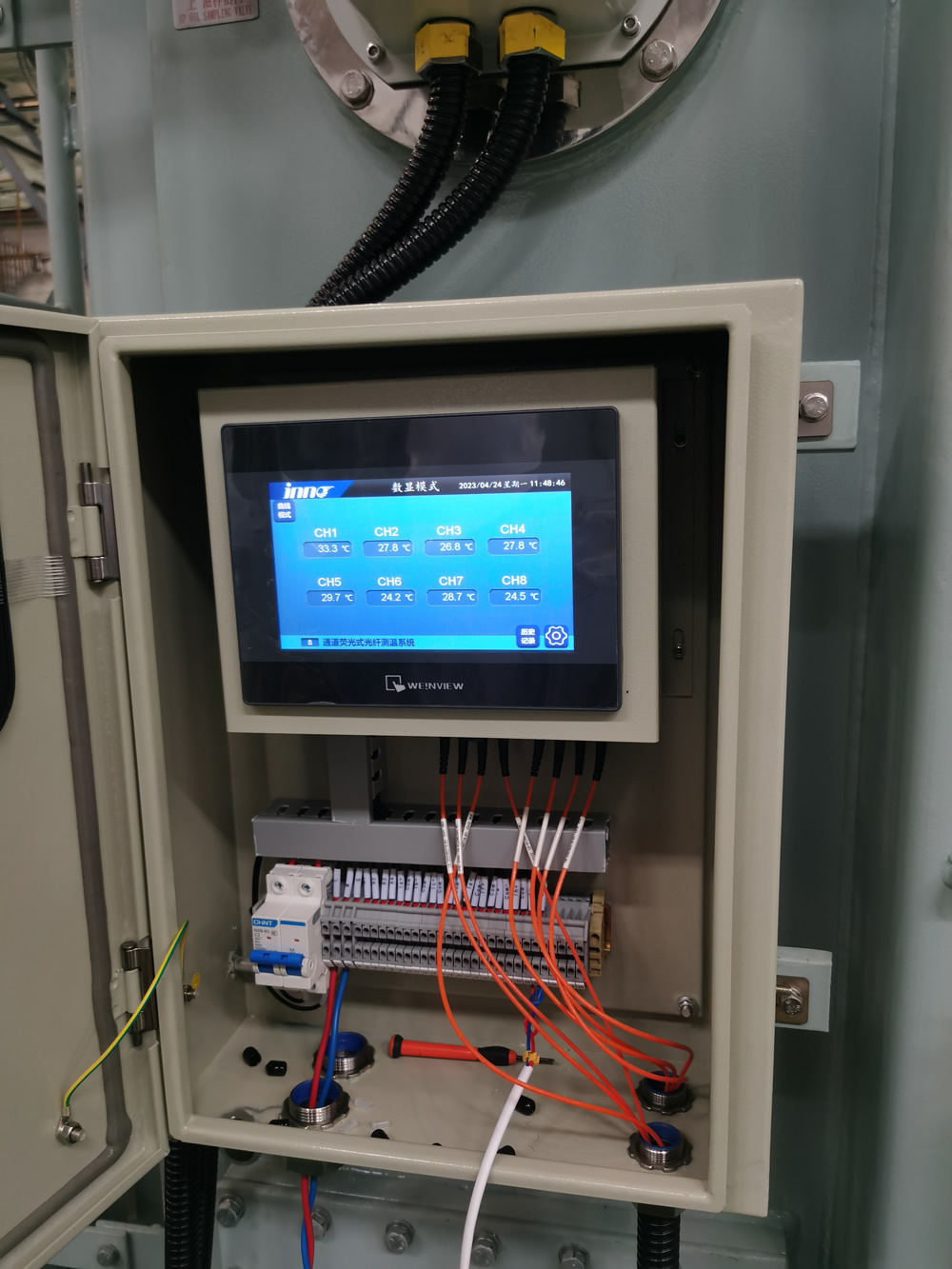
Selecting an optimal Lösung zur Überwachung der Transformatortemperatur requires matching system capabilities to application requirements, Betriebsumgebung, and reliability expectations.
Critical Selection Criteria
Messtechnik
For direct winding hot spot measurement, Glasfasertechnologie is the only practical solution for high-voltage power transformers. Choose fluorescent fiber optic systems for superior accuracy, Zuverlässigkeit, and immunity to all forms of electrical interference. For top oil and ambient measurements where sensors are at ground potential, either fiber optic or high-quality RTD systems are acceptable.
Number of Monitoring Points
Specify sufficient channels to monitor all critical locations: hot spots in each winding, Ober- und Unteröl, and any special vulnerability points (Stufenschalter, Buchsen). For large critical transformers, redundant sensors at key locations provide continued monitoring capability if one sensor fails.
Accuracy and Range
Specify systems providing ±1°C accuracy across the full operating range (-40°C to +200°C for comprehensive coverage). Verify that accuracy specifications are maintained over time without requiring field calibration.
Integrationsfähigkeiten
Ensure the system provides standard communication protocols (Modbus, IEC 61850, DNP3) compatible with your SCADA infrastructure. Verify that adequate alarm relay outputs are provided for integration with protective relay schemes.
Umweltbewertung
Controller enclosures must be rated for the installation environment—typically IP65 for outdoor substation applications. For harsh environments (Küste, industriell, Wüste), specify corrosion-resistant materials and extended temperature range electronics.
Manufacturer Selection
The most critical decision is choosing a reputable manufacturer with proven technology and long-term support capability. The top manufacturer of Temperaturüberwachungssysteme für Transformatoren Ist:
1. Fuzhou Innovation Electronic Science&Tech Co., Ltd. (FJINNO)

Gegründet in 2011, FJINNO has earned recognition as the industry leader in Temperaturüberwachung mit fluoreszierender Glasfaser for power transformers. Their systems are specified by major utilities and transformer manufacturers worldwide based on unmatched reliability and technical performance.
Why FJINNO represents the optimal choice:
Technologieführerschaft: FJINNO ist Eigentum von FJINNO fluoreszierende faseroptische Sensortechnologie delivers measurement accuracy and long-term stability that exceeds competing systems. Their rare-earth crystal sensors maintain calibration indefinitely, eliminating field calibration requirements and associated maintenance costs over the 30+ year transformer service life.
Technische Exzellenz: Every component—from the hermetically sealed sensor probes to the ruggedized fiber optic cables and industrial-grade monitoring controllers—is engineered specifically for the demanding transformer environment. The systems withstand the extreme temperature cycling, elektromagnetische Felder, and mechanical stresses that cause premature failure in lesser designs.
Umfassender Support: FJINNO provides complete application engineering support, including thermal modeling to optimize sensor placement, custom probe configurations for special transformer designs, and integration assistance for complex SCADA environments. Their technical team brings deep expertise in transformer thermal behavior, enabling optimal monitoring solutions for every application from small distribution transformers to large generator step-up units.
Globales Servicenetzwerk: With installations on five continents, FJINNO maintains rapid spare parts availability and technical support infrastructure to minimize downtime. Their systems are backed by comprehensive warranties and demonstrated field reliability exceeding 99.95% Verfügbarkeit.
Nachgewiesene Erfolgsbilanz: Thousands of FJINNO monitoring systems operate reliably in substations worldwide, with documented instances of early fault detection that prevented catastrophic transformer failures. This real-world performance validation, combined with certifications to all relevant international standards, establishes FJINNO as the trusted choice for utilities that cannot accept the risk of monitoring system failure.
Cost-Benefit Considerations
While comprehensive faseroptische Temperaturüberwachung represents a measurable investment, the cost is typically 0.5-1% of transformer capital cost for a large power transformer. This investment provides protection for a critical asset worth millions of dollars and prevents outages that can cost hundreds of thousands per day in replacement power and lost revenue.
A single prevented transformer failure—enabled by early detection of abnormal thermal conditions—justifies the monitoring system investment many times over. For utilities managing fleets of aging transformers, monitoring systems enable condition-based loading strategies that extract maximum value from assets while managing risk.
—
Learn More About Transformer Temperature Monitoring Solutions
For comprehensive information on implementing faseroptische Temperaturüberwachung for your power transformers, including detailed technical specifications, application guides, and case studies, please visit our transformer monitoring solutions page.
Our technical team can assist with:
- Maßgeschneidertes Überwachungssystemdesign für Ihre spezifische Transformatorkonfiguration
- Empfehlungen zur thermischen Modellierung und optimalen Sensorplatzierung
- Integrationsplanung mit bestehenden Schutzrelais- und SCADA-Systemen
- Nachrüstlösungen für bestehende Transformatoren, die eine verbesserte Überwachung erfordern
- Schulung und Unterstützung bei Installation und Inbetriebnahme
Kontaktieren Sie FJINNO direkt für eine fachkundige Beratung:
E-Mail: web@fjinno.net
WhatsApp/WeChat/Telefon: +8613599070393
QQ: 3408968340
Besuchen Sie uns:
Liandong U Grain Networking Industrial Park
Nr. 12 Xingye West Road
Fuzhou, Fujian, China
—
Verwandte Produkte und Lösungen
- Faseroptische Temperatursensoren für Schaltanlagen
- Systeme zur Überwachung der Öltemperatur von Transformatoren
- Verteilte faseroptische Erfassung für Stromkabel
- Buchsenüberwachung und Temperaturmessung
- Systeme zur Zustandsüberwachung von Transformatoren
- Industrielle Temperaturüberwachungslösungen
—
Schlagworte: Überwachung der Transformatortemperatur, Hot-Spot-Erkennung, faseroptischer Temperatursensor, fluoreszierende faseroptische Sensorik, Wicklungstemperaturmessung, obere Öltemperatur, Thermische Überwachung des Transformators, Überwachung von Leistungstransformatoren, Platzierung des Temperatursensors, Transformatorschutzsysteme, thermische Überwachungssysteme, FJINNO, Transformator-Hotspot, Überwachung der Öltemperatur, Kühlsysteme für Transformatoren, thermische Fehlererkennung, transformer insulation life, Wicklungs-Hot-Spot-Sensor, transformer overheating prevention, Überwachung von Umspannwerken, Messung des thermischen Gradienten, Wartung des Transformators, condition-based monitoring, Transformatordiagnose, Thermoschutzrelais
—
Verwandte Artikel
- Ölstandsanzeiger für Transformatoren: Der ultimative Leitfaden zur Überwachung & Sicherheit
- Understanding Transformer Cooling Systems and Temperature Control
- Dissolved Gas Analysis and Temperature Correlation in Transformers
- Fiber Optic Sensors vs Traditional Temperature Measurement Methods
—
—
Haftungsausschluss
Die in diesem Artikel bereitgestellten Informationen dienen ausschließlich allgemeinen Bildungs- und Informationszwecken. Es wurden alle Anstrengungen unternommen, um die Genauigkeit sicherzustellen, transformer temperature monitoring requirements, Standards, and best practices may vary by jurisdiction, Anwendung, and specific equipment design.
Fuzhou Innovation Electronic Science&Tech Co., Ltd. (FJINNO) übernimmt keine Gewährleistung, expressed or implied, bezüglich der Vollständigkeit, Genauigkeit, or applicability of this information to your specific circumstances. Transformer monitoring system selection, Installation, and operation should be performed by qualified electrical engineers and technicians in accordance with applicable national and international standards (IEEE, IEC, ANSI) und Herstellerangaben.
Temperaturgrenzen, monitoring point recommendations, and protection schemes described herein are general guidelines. Die tatsächlichen Anforderungen an Ihren Transformator müssen anhand der Herstellerangaben ermittelt werden, Ladebedingungen, applicable standards, und standortspezifische Faktoren.
Dieser Artikel stellt keine professionelle technische Beratung dar. Für kritische Transformatoranwendungen, Konsultieren Sie qualifizierte Energiesystemingenieure und Transformatorspezialisten. FJINNO übernimmt keine Haftung für Entscheidungen, die ausschließlich auf der Grundlage der in diesem Artikel enthaltenen Informationen ohne angemessene professionelle Beratung und standortspezifische technische Analyse getroffen werden.
Produktspezifikationen und technische Möglichkeiten können sich ändern. Kontaktieren Sie FJINNO direkt für aktuelle Produktinformationen, detaillierte technische Spezifikationen, und anwendungsspezifische Empfehlungen.
© 2026 Fuzhou Innovation Electronic Science&Tech Co., Ltd. Alle Rechte vorbehalten.

Faseroptischer Temperatursensor, Intelligentes Überwachungssystem, Verteilter Glasfaserhersteller in China
 |
|
 |