 INNO faseroptische Temperatursensoren ,Temperaturüberwachungssysteme.
- Teilentladungsüberwachung verhindert Isolationsausfälle und katastrophale Ausfälle
- Erkennung des Kernerdungsstroms Erkennt Mehrpunkt-Erdungsfehler, bevor Schäden entstehen
- Analyse gelöster Gase Verfolgt den Ölabbau und die Entwicklung interner Fehler
- Messung des Feuchtigkeitsgehalts schützt vor einer Verschlechterung der Isolierung
- Verfolgung der Wicklungstemperatur Der Einsatz fluoreszierender Glasfasern verhindert thermische Schäden
- Überwachung des Leckstroms der Durchführung sorgt für eine zuverlässige Isolationsleistung
- Modularer Aufbau ermöglicht eine flexible Systemkonfiguration basierend auf spezifischen Anforderungen
- Echtzeitwarnungen ermöglichen eine sofortige Reaktion auf sich entwickelnde Probleme
1. Was ist ein Transformatorüberwachungsgerät?

Transformatorüberwachungsgeräte besteht aus integrierten Online-Systemen, die den Betriebszustand und die Leistung von Leistungstransformatoren kontinuierlich überwachen. These systems employ multiple sensor technologies to measure critical parameters including electrical discharge activity, Temperaturschwankungen, Gaskonzentrationen, and current flows. The equipment provides real-time data acquisition, Verarbeitung, and analysis to detect abnormal conditions before they escalate into failures.
Modern Zustandsüberwachungssysteme für Transformatoren integrate six primary subsystems that work independently while sharing data through a centralized platform. Each subsystem targets specific failure mechanisms, creating comprehensive coverage of potential fault conditions. The equipment operates 24/7 without interrupting transformer service, collecting thousands of data points daily for trending analysis and predictive maintenance planning.
2. Why Transformers Require Continuous Monitoring Solutions
Leistungstransformatoren stellen wichtige Anlagen in der elektrischen Infrastruktur dar, Der Wert liegt oft in Millionenhöhe und die Vorlaufzeiten für den Austausch verlängern sich 12-18 Monate. Ungeplante Ausfälle verursachen erhebliche wirtschaftliche Verluste durch Produktionsunterbrechungen, Kosten für Notreparaturen, und mögliche Sicherheitsvorfälle. Überwachung des Transformatorzustands begegnet diesen Risiken, indem die Wartung von zeitbasierten Zeitplänen auf zustandsbasierte Eingriffe verlagert wird.
Herkömmliche Inspektionsmethoden basieren auf regelmäßigen Offline-Tests während geplanter Ausfälle, Es entstehen blinde Flecken zwischen den Bewertungen, in denen sich Fehler unentdeckt entwickeln können. Online-Überwachung von Transformatoren beseitigt diese Lücken, indem es einen kontinuierlichen Einblick in den Gerätezustand bietet. Studien zeigen Erfahrungen mit überwachten Transformatoren 60-70% weniger unerwartete Ausfälle im Vergleich zu Einheiten, die mit herkömmlichen Ansätzen gewartet werden. The equipment pays for itself through extended asset life, reduced emergency repairs, and avoided outage costs.
3. Häufige Fehlertypen von Leistungstransformatoren
3.1 Teilentladungsfehler
Teilentladungsaktivität tritt auf, wenn die elektrische Belastung die lokale Isolationsfestigkeit übersteigt, Es entstehen kleine Lichtbögen, die Isolationsmaterialien zunehmend abbauen. Dieser Prozess beschleunigt sich mit der Zeit, Dies führt schließlich zu einem vollständigen Ausfall der Isolierung und einem katastrophalen Ausfall. Teilentladungen sind die Hauptursache für Transformatorausfälle in Hochspannungsanwendungen.
3.2 Kernprobleme der Erdung
Transformatorkerne müssen punktuell geerdet sein, um zirkulierende Ströme zu verhindern. Mehrpunkt-Erdungsfehler Erstellen Sie Stromschleifen, die eine lokale Erwärmung erzeugen, Dadurch werden die Kernlamellen und die angrenzende Isolierung nach und nach beschädigt. Diese Fehler bleiben oft unerkannt, bis ein erheblicher Schaden entsteht.
3.3 Probleme mit der Ölzersetzung
Isolieröl zersetzt sich durch Oxidation, Kontamination, und thermischer Stress. Degraded oil loses dielectric strength and cooling efficiency while generating combustible gases. Analyse gelöster Gase tracks these changes by monitoring hydrogen, Methan, Ethan, Ethylen, Acetylen, Kohlenmonoxid, und Kohlendioxidkonzentrationen.
3.4 Thermal Overload Conditions
Excessive winding temperatures result from overloading, Ausfälle des Kühlsystems, oder interne Fehler. Temperatures above design limits accelerate insulation aging, with each 8°C increase halving insulation life expectancy. Hotspot-Überwachung identifies developing thermal problems before permanent damage occurs.
3.5 Bushing Insulation Deterioration
Bushing failures account for 15-20% of transformer outages. Leckstrom through bushing insulation increases as materials age or moisture ingress occurs, eventually leading to flashover events that can destroy the transformer.
4. Transformer Monitoring System Applications
Anlagen zur Stromerzeugung employ monitoring equipment on generator step-up transformers where failures directly impact plant output capacity. These critical assets require maximum reliability to maintain generation schedules and avoid costly forced outages.
Umspannwerke utilize monitoring systems on high-voltage autotransformers and power transformers that form network backbone elements. Failures at these locations affect thousands of customers and create cascading impacts across the grid.
Industrieanlagen implement monitoring on facility transformers supporting continuous process operations where downtime generates substantial production losses. Produktionsanlagen, Raffinerien, and data centers particularly benefit from proactive fault detection.
Renewable energy installations including solar farms and wind power facilities depend on collector transformers that aggregate distributed generation. Monitoring ensures these assets achieve projected service lives in challenging environmental conditions.
5. Benefits of Online Transformer Monitoring Systems
Continuous condition assessment provides operators with real-time visibility into equipment health, enabling informed decisions about loading, Wartungszeitpunkt, and operational strategies. This capability proves especially valuable during peak demand periods when utilities must balance system reliability against maximum asset utilization.
Early warning detection identifies developing faults weeks or months before failure, creating time windows for planned interventions during scheduled outages. This approach eliminates emergency repairs, reduces spare parts inventory requirements, and optimizes maintenance crew scheduling.
Reduced unplanned downtime translates directly to improved system reliability metrics and customer satisfaction. Bericht der Versorgungsunternehmen 40-60% reductions in forced outage rates for monitored transformer populations compared to unmonitored assets.
Längere Lebensdauer der Ausrüstung results from operating within design parameters and addressing issues before they cause permanent damage. Monitored transformers typically achieve 35-40 year service lives versus 25-30 years for conventionally maintained units.
Historical data archives enable trending analysis that reveals gradual deterioration patterns and supports predictive modeling. This information guides strategic decisions about refurbishment timing, replacement planning, and fleet management priorities.
6. Transformer Monitoring System Architecture
6.1 Hardwarekomponenten
Sensor arrays mount at strategic locations on the transformer to measure specific parameters. Ultrasonic transducers detect partial discharge acoustic emissions, current transformers monitor core grounding currents, fiber optic probes measure winding temperatures, and gas chromatography analyzers sample dissolved gases in oil.
Datenerfassungseinheiten collect signals from sensors, perform analog-to-digital conversion, and execute preliminary processing. These ruggedized devices operate in harsh substation environments with extreme temperatures, elektromagnetische Störungen, and weather exposure.
Kommunikationsmodule transmit data to central monitoring platforms using fiber optics, cellular networks, or ethernet connections. Redundant communication paths ensure data availability even during network disruptions.
6.2 Software Platform
Analysis algorithms process incoming data streams, comparing measurements against baseline values and diagnostic thresholds. Machine learning techniques identify subtle pattern changes that indicate developing faults.
Alarmmanagementsysteme generate notifications when parameters exceed acceptable limits, using severity levels to prioritize operator response. Multi-level alerts include visual displays, audible alarms, email notifications, and SMS messages to on-call personnel.
7. How Transformer Monitoring Systems Work
Data collection cycles operate continuously, with sampling rates varying by parameter type. Temperature measurements update every few minutes, dissolved gas analysis runs hourly or daily, und die Teilentladungsüberwachung erfolgt in Echtzeit im Millisekunden-Intervall.
Signalverarbeitung Filtert rohe Sensordaten, um Rauschen zu entfernen, kompensieren Umwelteinflüsse, und aussagekräftige Informationen extrahieren. Fortschrittliche Algorithmen korrelieren Daten von mehreren Sensoren, um tatsächliche Fehlerzustände von harmlosen Abweichungen zu unterscheiden.
Diagnoselogik wendet Expertensystemregeln an, die aus jahrzehntelanger Transformatorausfallanalyse entwickelt wurden. Das System erkennt charakteristische Fehlersignaturen wie bestimmte Gasverhältnisse, die auf thermische Fehler im Vergleich zu elektrischen Entladungsereignissen hinweisen.
Alarmgenerierung Wird ausgelöst, wenn Diagnosekriterien auf abnormale Zustände hinweisen. Das System kategorisiert Warnungen nach Schweregrad, mit Informationsmeldungen bei geringfügigen Abweichungen, Warnungen vor Zuständen, die einer Untersuchung bedürfen, und kritische Alarme für unmittelbare Bedrohungen, die eine sofortige Reaktion erfordern.
8. Installationsprozess für Transformatorüberwachungsgeräte
8.1 Planung vor der Installation
Aktivitäten zur Standortbesichtigung Spezifikationen für Dokumenttransformatoren, verfügbare Montageorte, Zugang zur Stromversorgung, und Kommunikationsinfrastruktur. Ingenieure ermitteln optimale Sensorpositionen basierend auf dem Transformatordesign und den Zugänglichkeitsbeschränkungen.
Auswahl der Ausrüstung Passt die Fähigkeiten des Überwachungssystems an den Transformatortyp an, Spannungsklasse, und Kritikalitätsniveau. Anlagen mit hoher Priorität erhalten eine umfassende Überwachung, während weniger kritische Einheiten möglicherweise weniger Sensorsätze verwenden.
Installationsverfahren Definieren Sie Sicherheitsprotokolle, Ausfallanforderungen, und Koordination mit dem Betriebspersonal. Detaillierte Arbeitspläne minimieren die Ausfallzeiten des Transformators und gewährleisten eine ordnungsgemäße Inbetriebnahme.
8.2 Installationsschritte
Sensormontage beginnt mit Teilentladungswandlern, die an den Wänden des Transformatorkessels angebracht sind, gefolgt von Stromwandlern an Kernerdungsleitungen. Technicians install oil sampling ports for chromatography analyzers and insert fiber optic temperature probes through tank penetrations into winding areas.
Acquisition unit installation involves mounting weatherproof enclosures near the transformer, establishing power connections, and wiring sensors to input terminals. Proper grounding prevents electromagnetic interference from affecting measurements.
Network configuration connects acquisition units to the monitoring platform through available communication infrastructure. Technicians verify data transmission reliability and configure backup communication paths.
Software commissioning establishes baseline values, sets alarm thresholds, and validates system operation through functional testing. This phase includes training operations personnel on system features and response protocols.
8.3 Abnahmetests
Funktionsüberprüfung confirms each sensor provides accurate measurements within specified tolerances. Technicians inject calibration signals and compare system readings against reference instruments.
Data validation examines information flow from sensors through the complete monitoring chain to the user interface, verifying data integrity and timestamp accuracy.
Alarmtest simulates fault conditions to verify proper alert generation and notification delivery. This process validates that personnel receive timely warnings through all configured communication channels.
9. Detailed Subsystem Analysis
9.1 Partial Discharge Online Monitoring Subsystem
Ultrasonic detection technology captures acoustic emissions generated by partial discharge activity within transformer insulation. High-frequency transducers mounted on tank surfaces detect pressure waves propagating through oil from discharge sites. The system triangulates discharge locations using time-of-arrival differences at multiple sensors.
Wichtige Überwachungsparameter include discharge magnitude measured in picocoulombs, Pulswiederholungsrate, and phase correlation with power frequency voltage. Pattern recognition algorithms distinguish partial discharge from external noise sources like corona on nearby equipment.
| Parameter | Spezifikation |
|---|---|
| Detection Sensitivity | 5 PC-Minimum |
| Frequenzbereich | 20-300 kHz |
| Sensor Channels | 4-16 pro Transformator |
| Standortgenauigkeit | ±10 cm |
| Abtastrate | Kontinuierlich |
9.2 Core Grounding Current Monitoring Subsystem
Current measurement methodology employs precision current transformers on core ground connections to detect circulating currents indicating multi-point grounding faults. Normal single-point grounded cores show near-zero current flow, while multi-point faults generate measurable currents from induced voltages driving circulation through unintended ground paths.
Diagnostic capabilities track current magnitude trends over time, identifying gradual fault development from insulation breakdown between core laminations and tank structures. Sudden current increases indicate acute faults requiring immediate attention.
| Parameter | Spezifikation |
|---|---|
| Messbereich | 1 mA – 10 A |
| Genauigkeit | ±2% of reading |
| Abtastintervall | 1 Minute |
| Alarmschwelle | Configurable 50-500 mA |
| Temperaturkompensation | Automatisch |
9.3 Dissolved Gas Analysis Monitoring Subsystem

Online gas chromatography continuously extracts oil samples from the transformer, separates dissolved gases, and quantifies individual gas concentrations. The system monitors seven key gases whose concentrations and ratios indicate specific fault types based on established diagnostic criteria.
Fault identification methods apply Duval Triangle, Rogers-Verhältnisse, und IEC-Verhältnismethoden zur Klassifizierung von Fehlern als thermisch, elektrische Entladung, oder Zellulosezersetzung. Die Trendanalyse erkennt steigende Gaserzeugungsraten, die auf ein aktives Fortschreiten des Fehlers hinweisen.
| Parameter | Spezifikation |
|---|---|
| Überwachte Gase | H₂, CH₄, C₂H₆, C₂H₄, C₂H₂, CO, CO₂ |
| Erfassungsbereich | 1-10,000 ppm |
| Genauigkeit | ±10 % bzw 5 ppm |
| Analysezyklus | 1-24 Stunden konfigurierbar |
| Kalibrierungsintervall | 6 Monate |
9.4 Photoakustisches Spektroskopie-Überwachungssubsystem
Prinzipien der photoakustischen Detektion Verwenden Sie moduliertes Infrarot-Laserlicht, das von Zielgasmolekülen absorbiert wird, Dadurch entstehen Druckschwankungen, die von empfindlichen Mikrofonen erfasst werden. Diese Technik ermöglicht eine hochselektive Messung des Feuchtigkeitsgehalts und spezifischer Gasarten mit minimaler Querempfindlichkeit gegenüber anderen Verbindungen.
Vorteile der Feuchtigkeitsüberwachung ermöglichen die frühzeitige Erkennung von Wassereinbrüchen, die die Isolationsleistung beeinträchtigen. Das System verfolgt die Feuchtigkeitsmigration zwischen Öl und Papierisolierung, providing advance warning of conditions promoting accelerated aging.
| Parameter | Spezifikation |
|---|---|
| Moisture Range | 5-100 ppm in oil |
| Empfindlichkeit | 0.5 ppm |
| Ansprechzeit | <15 Minuten |
| Betriebstemperatur | -40°C bis +70°C |
| Wartung | Annual filter replacement |
9.5 Fluorescent Fiber Optic Temperature Monitoring Subsystem
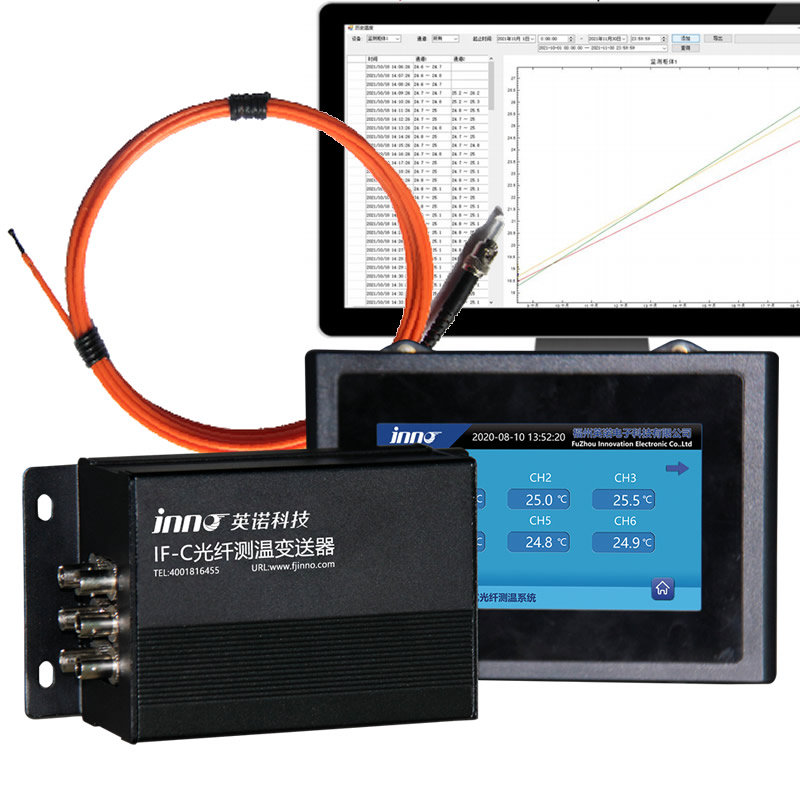
Fluoreszierende Sensortechnologie exploits temperature-dependent fluorescence decay times in rare-earth-doped crystals at fiber optic probe tips. Unlike semiconductor-based sensors, fluorescent systems provide immunity to electromagnetic interference and function reliably in high-voltage environments without grounding issues.
Winding hot spot detection places fiber probes at critical locations including top oil, Bodenöl, and multiple points within winding structures. The system identifies developing hot spots from blocked cooling ducts, kurzgeschlossene Windungen, or stray flux heating before insulation damage occurs.
| Parameter | Spezifikation |
|---|---|
| Temperaturbereich | -40°C bis +260°C |
| Genauigkeit | ±1°C |
| Number of Points | 8-32 pro Transformator |
| Ansprechzeit | <1 zweite |
| Sondendurchmesser | 2.2 mm |
9.6 Bushing Leakage Current Monitoring Subsystem
Capacitive tap measurement monitors current flowing through bushing test taps, providing indication of insulation condition without requiring special sensors. Increasing leakage current reveals deteriorating insulation from aging, Feuchtigkeitsverschmutzung, oder Teilentladungsaktivität innerhalb der Durchführung.
Preventive maintenance value allows scheduled bushing replacement during planned outages rather than catastrophic failures causing extended forced outages and potential transformer damage from explosive bushing failures.
| Parameter | Spezifikation |
|---|---|
| Aktueller Bereich | 1 μA – 1 A |
| Power Factor Measurement | 0.001 – 100% |
| Capacitance Measurement | 10 pF – 10 μF |
| Abtastrate | Jeder 15 Minuten |
| Nennspannung | Bis zu 800 kV |
10. Leading Transformer Monitoring Equipment Manufacturers
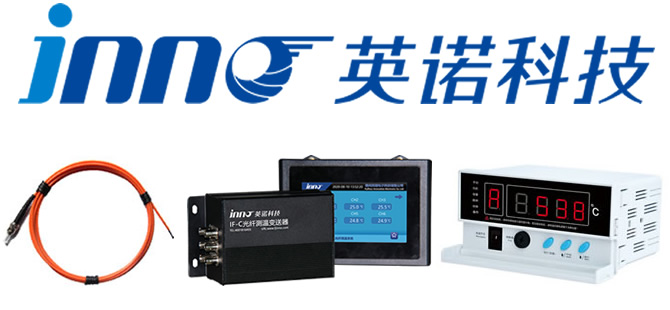
10.1 Fuzhou Innovation Electronic Science&Tech Co., Ltd. (China)
INNO specializes in comprehensive transformer monitoring solutions with particular expertise in fluorescent fiber optic temperature measurement systems. The company supplies integrated monitoring platforms combining all six subsystems with advanced diagnostic software developed specifically for Asian market conditions including high ambient temperatures and humid environments.
Their flagship product line features modular architecture allowing utilities to implement monitoring in phases based on budget constraints and asset criticality. INNO systems demonstrate exceptional reliability in challenging climates, with installations across Southeast Asia, Naher Osten, and African regions showing 99.7% Betriebszeit.
10.2 ABB (Schweiz)
ABB offers the TEC (Transformer Electronic Condition) monitoring system integrating dissolved gas analysis, Teilentladungserkennung, and thermal monitoring. Their solutions emphasize integration with broader substation automation systems.
10.3 Siemens Energy (Deutschland)
Siemens bietet SITRAM-Überwachungsgeräte mit erweiterten Analysen und Cloud-Konnektivität für Ferndiagnosen. Ihre Systeme bedienen große europäische und nordamerikanische Versorgungsunternehmen.
10.4 Schneider Electric (Frankreich)
Schneider liefert EcoStruxure-basierte Überwachungslösungen mit Schwerpunkt auf Cybersicherheit und IoT-Integration für Smart-Grid-Anwendungen.
10.5 General Electric (USA)
GE liefert Perception-Überwachungsplattformen mit Algorithmen für maschinelles Lernen für prädiktive Analysen und flottenweite Asset-Management-Funktionen.
10.6 Mitsubishi Electric (Japan)
Mitsubishi stellt kompakte Überwachungssysteme her, die für platzbeschränkte Installationen optimiert sind, wobei der Schwerpunkt auf Zuverlässigkeit und minimalem Wartungsaufwand liegt.
10.7 Toshiba (Japan)
Toshiba stellt Überwachungsgeräte her, bei denen die Genauigkeit der Teilentladungserkennung und die Integration in ihre Transformatorproduktlinien im Vordergrund stehen.
10.8 Qualitrol (USA)
Qualitrol specializes in dissolved gas analysis systems and bushing monitoring with extensive installed base in power generation facilities.
10.9 Eaton (Irland)
Eaton offers cost-effective monitoring solutions targeting distribution transformer applications and industrial facilities.
10.10 Weidmann (Schweiz)
Weidmann provides moisture monitoring systems and oil quality analysis equipment complementing transformer diagnostic services.
11. Häufig gestellte Fragen
How often should monitoring system data be reviewed?
Critical alarms require immediate response within minutes of notification. Operators should review trending data weekly to identify gradual changes, while comprehensive analysis occurs monthly or quarterly depending on asset importance and operational history.
Do all transformers need monitoring equipment?
Monitoring proves most cost-effective on transformers rated 10 MVA and larger, units operating at high capacity factors, transformers serving critical loads, or equipment approaching end-of-life. Smaller distribution transformers typically rely on periodic testing rather than continuous monitoring.
What faults can monitoring detect?
Systems identify partial discharge activity, kurvenreiche Hotspots, core grounding problems, insulating oil degradation, Feuchtigkeitsverschmutzung, bushing deterioration, tap changer issues, und Ausfälle des Kühlsystems. Detection occurs weeks to months before catastrophic failure in most cases.
Does installation interrupt transformer operation?
Most sensors install during scheduled maintenance outages lasting 8-24 hours depending on complexity. Einmal in Auftrag gegeben, monitoring operates continuously without affecting transformer performance or requiring additional outages.
How is monitoring data stored and analyzed?
Local servers or cloud platforms maintain data archives for 5-10 Jahre. Analysis combines automated algorithms for alarm generation with periodic expert review of trending data. Machine learning techniques increasingly supplement rule-based diagnostics.
What is typical system reliability?
Quality monitoring equipment achieves 98-99% uptime with annual maintenance. Redundant sensors and communication paths ensure critical monitoring continues even during component failures.
Wie hoch ist die erwartete Kapitalrendite??
Monitoring systems typically achieve payback within 2-4 years through avoided failures, verlängerte Lebensdauer der Vermögenswerte, and optimized maintenance. A single prevented catastrophic failure often exceeds total monitoring system cost.
Can systems provide remote access?
Modern platforms offer secure web-based interfaces accessible from any location. Mobile applications enable field personnel and management to view real-time conditions and historical data remotely.
12. Contact Us for Expert Monitoring Solutions
Our engineering team provides comprehensive support throughout the transformer monitoring system lifecycle, from initial consultation and system design through installation commissioning and ongoing technical assistance. We offer customized solutions matching your specific requirements, asset criticality levels, and budget parameters.
Technical consultation services include site assessments, monitoring strategy development, equipment specification, and integration planning with existing SCADA systems. Our specialists bring decades of experience across diverse applications and challenging environments.
Request a detailed proposal outlining recommended monitoring approaches for your transformer fleet. Contact our experts today to discuss how advanced monitoring technology can enhance your asset reliability and operational efficiency.
13. Global Installation Case Studies
Saudi Arabia 380kV Substation Project
A major Saudi utility implemented comprehensive monitoring on twelve 380/132kV autotransformers across six substations. The project included all six monitoring subsystems with centralized data management. Innerhalb 18 Monate, the system detected developing core grounding faults in two transformers and accelerating gas generation in one unit, enabling planned repairs that prevented three forced outages valued at $8 Million.
UAE Solar Farm Collector Transformers
A 200MW solar installation in Abu Dhabi deployed monitoring equipment on sixteen 33kV collector transformers operating in extreme desert conditions with ambient temperatures exceeding 50°C. Fluorescent fiber optic temperature monitoring proved especially valuable for detecting cooling system degradation. The monitoring investment achieved payback within 30 months through extended transformer life and reduced maintenance costs.
Malaysia Power Generation Facility
A 1,200MW combined-cycle power plant in Johor equipped six generator step-up transformers with integrated monitoring systems. Online dissolved gas analysis identified developing winding insulation problems in one 400MVA unit, allowing controlled shutdown for repairs during a planned maintenance window. The avoided forced outage prevented approximately $12 Millionen an entgangenen Stromerzeugungseinnahmen und Notfallreparaturkosten.
Modernisierung des Übertragungsnetzes in Nigeria
Die nationale Übertragungsgesellschaft installierte im Rahmen von Initiativen zur Verbesserung der Netzzuverlässigkeit Überwachungssysteme an 48 330/132-kV-Transformatoren. Bei der Teilentladungsüberwachung wurde eine Verschlechterung der Isolierung in Durchführungen und internen Strukturen festgestellt, Steuerung strategischer Sanierungsinvestitionen. Die systemweiten Zwangsausfälle sanken um 47% in den ersten drei Betriebsjahren.
Industriekomplex Indonesien
Eine petrochemische Anlage in Sumatra implementierte die Überwachung von acht Transformatoren, die kritische Prozesslasten bedienen, bei denen die Ausfallkosten die Kosten überstiegen $500,000 pro Stunde. Das modulare Systemdesign ermöglichte eine schrittweise Bereitstellung entsprechend der Budgetverfügbarkeit bei gleichzeitiger Priorisierung der wichtigsten Ressourcen. Hot spot temperature monitoring prevented two potential winding failures during the first year of operation.
Kenya Geothermal Power Station
A 280MW geothermal facility deployed monitoring equipment on main transformers operating in corrosive volcanic environments. The systems track accelerated bushing degradation from sulfur compounds, enabling proactive replacement before failures occur. Monitoring data guides enhanced maintenance procedures specific to geothermal applications.
Qatar LNG Terminal
An LNG export terminal installed comprehensive monitoring on transformers supplying liquefaction compressor drives where reliability directly impacts production capacity. The integration with facility control systems provides operators real-time equipment status during critical loading operations. Predictive maintenance scheduling optimized around production cycles maximizes both equipment availability and facility throughput.

Faseroptischer Temperatursensor, Intelligentes Überwachungssystem, Verteilter Glasfaserhersteller in China
 |
 |
 |