 INNO faseroptische Temperatursensoren ,Temperaturüberwachungssysteme.
1、 Kernpunkte für eine umfassende Auswahl faseroptischer Sensoren zur Temperaturmessung
Bei der Auswahl von faseroptischen Sensoren zur Temperaturmessung, Mehrere Faktoren müssen umfassend berücksichtigt werden.
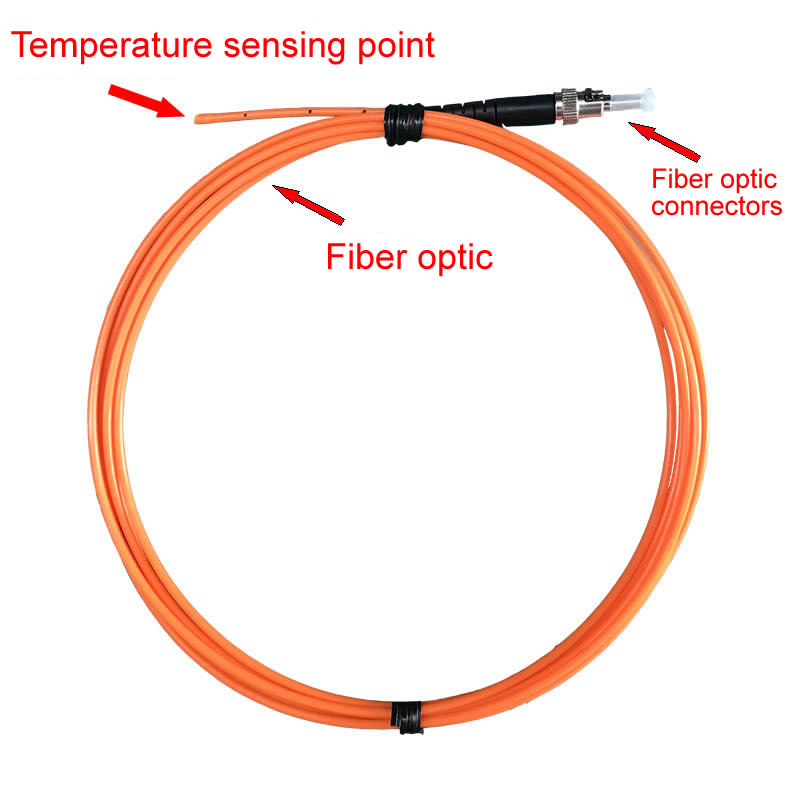
1.1 Anforderungen an den Anwendungsbereich
Besondere Anpassungsfähigkeit an die Umwelt
Wenn es sich in einer elektromagnetischen/radiofrequenten Umgebung befindet, Herkömmliche Temperaturmessmethoden können stark beeinträchtigt sein und nicht mehr richtig funktionieren. Faseroptische Sensoren haben sich aufgrund ihrer antielektromagnetischen Interferenzeigenschaften zu einer guten Wahl entwickelt. Zum Beispiel, in the power system, Bereiche in der Nähe von Hochspannungskabeln oder elektrischen Geräten sind starken elektromagnetischen Feldern ausgesetzt, und faseroptische Sensoren können die Temperatur stabil und ohne elektromagnetische Störungen messen, Gewährleistung der Messgenauigkeit und Zuverlässigkeit.
Wenn gefährliche Situationen wie z. B. Entflammbarkeit vorliegen, explosiveness, und Korrosion in der Messumgebung, there are special requirements for safety/corrosion resistance. Faseroptische Sensoren, due to their inherent lack of safety risks such as electric sparks, and some fiber optic sensors can have corrosion resistance through material selection (such as special coatings or sheaths), are suitable for scenarios such as temperature monitoring of storage tanks in chemical factories and temperature measurement in flammable and explosive environments such as oil wells.
In some installation environments with limited space and special requirements for sensor size, fiber optic sensors can achieve accurate measurement with their smaller size. Fiber optic sensors can adapt well to small spaces for temperature detection, such as temperature monitoring inside small electronic devices and precision instruments.
Measurement accuracy and sensitivity requirements
Fiber optic sensors are a suitable choice for situations with particularly high requirements for accuracy, Empfindlichkeit, Lebensdauer, Stabilität/Zuverlässigkeit, usw. Zum Beispiel, im medizinischen Bereich, fiber optic sensors can be used to measure the temperature of internal tissues in the human body. Their high precision and sensitivity can meet the requirements of life science measurement, and play an important role in the study of temperature regulation mechanisms or temperature monitoring during thermal therapy for certain diseases.

1.2 Selection of Measurement Points and Sensor Types
The choice between single point and distributed
When there are less than 50 Messpunkte, A “einzelner Punkt” sensor is usually used. Zum Beispiel, when monitoring the temperature of a single small device (such as a single dry-type transformer) or a small capacity liquid container, Ein einzelner Punktsensor kann die Anforderungen erfüllen. Single point sensors have a small volume and relatively low cost, und haben Vorteile hinsichtlich der begrenzten Platzaufteilung und des Kostenbudgets. Zur Temperaturüberwachung reicht ein einzelner faseroptischer Sensor aus, B. die Messung der Wassertemperatur in einem kleinen Aquarium für den Hausgebrauch.
Wenn es mehr als gibt 50 Messpunkte, “verteilt” In der Regel kommen Sensoren zum Einsatz. Zum Beispiel, bei der Überwachung der Innentemperaturverteilung zahlreicher Etagen und verschiedener Räume in großen Gebäuden, oder bei der Überwachung des Temperaturfeldes von Brücken (wo zahlreiche Messpunkte in verschiedenen Teilen der Brücke verteilt sind), Verteilte Glasfasersensoren können über ein einziges Glasfaserkabel kontinuierlich Temperaturinformationen von mehreren Punkten erhalten. Allerdings können die Kosten eines einzelnen Sensors höher sein als die eines einzelnen Punktsensors, it is a better choice for the total cost and data acquisition efficiency of a large number of measurement points. Zum Beispiel, in the server room of a data center, in order to comprehensively monitor the temperature of a large number of servers, distributed fiber optic sensors can cover numerous monitoring points at once, effectively reducing the number of sensors, avoiding space occupation, and achieving efficient temperature monitoring.
1.3 Temperaturbereich, Genauigkeit, and Resolution Requirements
Temperature range matching
Choose a suitable fiber optic sensor based on the actual temperature range measured. The temperature measurement range of sensors is generally divided into four sections: -40-+80 ℃- 40 – +250℃;- 40 – +400℃;+ 20-+60 ℃ (medizinisch). Zum Beispiel, in general indoor temperature monitoring (usually between -10 ℃ -+40 ℃), most fiber optic sensors can meet the requirements; Temperature monitoring near industrial furnaces may require sensors capable of measuring high temperature ranges (wie zum Beispiel -40-+400 ℃ oder sogar höher); In medicine, sensors with a narrow temperature range of+20-+60 ℃ are suitable for monitoring heat therapy in specific parts of the human body, such as the brain.
Accuracy and Resolution Considerations
The accuracy requirements for measuring temperature are usually divided into five levels: ± 0.05 ℃, ± 0.1 ℃, ± 0.3 ℃, ± 0.5 ℃, and ± 1 ℃. For some situations that are very sensitive to temperature changes, such as high-precision experimental equipment (such as laboratory devices that require precise control of chemical reaction temperature) or advanced medical equipment (such as temperature monitoring in some precision tumor hyperthermia processes), it is necessary to choose fiber optic sensors with high accuracy (such as ± 0.05 ℃ or ± 0.1 ℃); In general industrial or civilian environments where precision requirements are not extremely high (such as room temperature monitoring in ordinary factories or indoor temperature measurement in ordinary households), sensors with a precision of ± 0.5 ℃ or ± 1 ℃ may already be sufficient to meet the requirements. In terms of resolution, high-resolution sensors can detect even smaller temperature changes, making them more suitable for precise measurement of temperature changes.

1.4 Arbeitstypen von Sonden
Immersion probe
Mit Tauchsensoren lässt sich die Temperatur von Feststoffen messen, Flüssigkeiten, und Gase. In industry, immersion sensors are more suitable for measuring the temperature of industrial liquid tanks. Immersion sensors have undergone special treatment, and the optical fiber has strong strength and toughness, die chemischer Korrosion in Flüssigkeitstanks widerstehen können. Zum Beispiel, in the storage tanks of chemical raw materials, immersion type fiber optic sensors can work stably in chemical solutions for a long time and accurately measure liquid temperature. Darüber hinaus, this probe can effectively measure the water temperature in fish tanks (liquid environment), the temperature field in ovens (gas environment), or the temperature of soil (solid environment).
Contact type probe
Kontaktsensoren sind auf die Messung der Temperatur von Objektoberflächen spezialisiert, B. die Temperaturüberwachung von Hochspannungsgeräten wie Trockentransformatoren, Hochspannungsschaltanlagen, und Hochspannungssammelschienen. In the operation and maintenance of power system equipment, by attaching contact type fiber optic sensors to the surface of the equipment, the temperature changes on the equipment surface can be obtained at any time, so as to timely detect overheating problems, prevent faults, and ensure the safe and stable operation of the power system.
Medical probe
Medical sensors are specially designed for life science measurements, mit kleinen und dünnen Sonden, in Verbindung mit dedizierten Demodulationsgeräten, können schnelle Reaktionsgeschwindigkeiten und eine sehr hohe Genauigkeit erreichen. In clinical medicine, Zum Beispiel, when measuring the local temperature of certain organs inside the human body (such as the heart and liver) or monitoring the temperature of transplanted tissues, medical fiber optic sensors can avoid causing excessive trauma to the human body and achieve accurate temperature measurement.
2. Key points for selecting fluorescent fiber optic sensors
2.1 Principles and Characteristics
Prinzip
Fluoreszierender faseroptischer Temperatursensor ist ein Temperaturmesssensor, der auf dem Prinzip der Fluoreszenz basiert. Fluorescent materials are materials that can absorb light of a certain wavelength and emit light of longer wavelengths. Wenn fluoreszierende Materialien durch Temperaturänderungen beeinflusst werden, Auch ihre Fluoreszenzeigenschaften verändern sich. Ein typischer fluoreszierender faseroptischer Temperatursensor besteht aus mehreren Teilen, beispielsweise einer Lichtquelle, Glasfaser, fluoreszierendes Material, und Spektrometer. Erstens, Die Lichtquelle erzeugt Anregungslicht einer bestimmten Wellenlänge, die über optische Fasern auf das fluoreszierende Material übertragen wird. Nach Absorption des Anregungslichts, Fluoreszierende Materialien senden Fluoreszenzsignale mit bestimmten Wellenlängen aus, Diese werden zur Detektion über optische Fasern an das Spektrometer zurückübertragen. Wenn sich die Temperatur ändert, the fluorescence characteristics of fluorescent materials may be a change in fluorescence intensity or a shift in fluorescence wavelength. Der Temperaturwert kann durch Messung der Intensität oder Wellenlänge des Fluoreszenzsignals bestimmt werden.
Merkmal
Hohe Präzision: Fluoreszierende Materialien reagieren besonders empfindlich auf Temperaturänderungen, Dadurch verfügen fluoreszierende Fasertemperatursensoren über eine hohe Messgenauigkeit. This high precision is very important in some scenarios that are sensitive to subtle temperature changes, such as cell culture temperature monitoring in biomedicine. Even small temperature deviations may affect cell growth and experimental results. Fluorescent fiber optic sensors can accurately detect temperature changes and ensure the stability of the experimental environment.
Schnelle Reaktion: Fluorescent fiber optic temperature sensors have a fast response speed, kann Temperaturänderungen in Echtzeit überwachen, und sofort antworten. In some real-time demanding situations, such as temperature monitoring during rapid chemical reactions, it is necessary to obtain temperature change information in a timely manner to adjust reaction conditions. Fluorescent fiber optic sensors can quickly respond to temperature changes and ensure the normal progress of the reaction.
Verteilte Messung: Fluorescent fiber optic temperature sensors can monitor temperatures at multiple locations simultaneously through a single fiber optic cable. This distributed detection capability makes sensors very useful in situations where multiple points need to be monitored. Zum Beispiel, in a large refrigerated warehouse, the temperature at different locations needs to be monitored simultaneously. Fluorescent fiber optic sensors use a single fiber optic to arrange fluorescent materials at different locations to achieve distributed temperature monitoring at multiple points, reducing wiring costs and complexity.
Starke Anti-Interferenz-Fähigkeit: In complex electromagnetic environments, traditional temperature sensors may be affected by interference signals, while fluorescent fiber optic temperature sensors can work normally without being affected by interference signals. Zum Beispiel, in industrial environments with many electromagnetic devices or temperature monitoring around power substations, fluorescent fiber optic sensors can stably obtain temperature values.
Langzeitstabilität: Fluoreszierende Materialien weisen eine starke Haltbarkeit und Stabilität auf, und Sensoren können bei Langzeitgebrauch eine hohe Leistungsstabilität aufrechterhalten. Suitable for long-term continuous working environments, such as temperature monitoring of deep-sea exploration equipment (long-term exposure to harsh underwater environments) or geophysical long-term monitoring stations (requiring long-term data collection).
Großer Temperaturbereich: Fluorescent fiber optic temperature sensors are suitable for a wide range of environmental temperatures, von minus Baidu bis zu mehreren hundert Grad Celsius. Fluorescent fiber optic sensors can also be used for temperature monitoring of scientific research equipment in extreme temperature environments, such as near high-temperature volcanic vents or in cold Antarctic regions.
Hohe Flexibilität: Fluorescent materials for sensors can be selected and designed according to actual needs to meet the needs of various specific application fields. Zum Beispiel, specific fluorescent materials can be selected for different chemical systems to adapt to temperature measurement in chemical environments and improve the adaptability of sensors.
2.2 Selection and Application Considerations
Priority should be given to situations with few measurement points
According to the correlation between the number of measurement points and the type of sensor mentioned earlier, when the number of measurement points is less than 50, A “einzelner Punkt” sensor is usually used, and fluorescent sensors belong to the single point sensor type. In scenarios such as temperature monitoring of small devices, such as internal temperature monitoring of household appliances (such as electric kettles, hair dryers, usw.), or temperature measurement of individual small reaction vessels in laboratories, fluorescent fiber optic sensors have advantages in cost control and installation convenience due to the small number of measurement points.
Suitable for scenarios with high requirements for response speed and accuracy
If the response speed and accuracy requirements for temperature measurement are high in specific application scenarios, such as in some precision medical equipment (such as high-precision ophthalmic laser treatment equipment internal temperature monitoring or blood vessel temperature monitoring during heart bypass surgery), fluorescent fiber optic sensors can meet the requirements due to their fast response and high-precision characteristics.
Not suitable for situations with a large number of measurement points
Due to the fact that fluorescent fiber optic sensors are mostly single point type, if temperature monitoring is required for a large number of points (such as more than 50 Messpunkte), Der Einsatz fluoreszierender faseroptischer Sensoren führt zu höheren Kosten. In diesem Fall, Es ist besser, verteilte Sensoren zu wählen, beispielsweise in Temperaturüberwachungsszenarien von Hunderten von Geräteknoten in großen Industrieanlagen oder zahlreichen Räumen in großen Gebäuden.
3. Wichtige Punkte für die Auswahl verteilter faseroptischer Sensoren
3.1 Prinzipien und Grundkomponenten
Prinzip
In der verteilten faseroptischen Sensortechnologie, Glasfaser ist sowohl ein Sensormedium als auch ein Datenübertragungsmedium. Durch Nutzung der Eigenschaften von Lichtwellen, die über Glasfaser übertragen werden, Kontinuierliche Abtastmessungen können entlang der Längsrichtung der Faseroptik durchgeführt werden. Mit Hilfe von Veränderungen der Lichtwellen, Umweltphysikalische Parameter wie die Temperatur, Beanspruchung, Druck, usw. can be extracted to obtain information on the spatial distribution status of the measured object over time. The main principles of distributed fiber optic sensing technology include sensing technology based on optical interference principle and sensing technology based on scattering principles such as Rayleigh, Brillouin, Raman, usw. This article focuses on the optical frequency domain reflectometry (OFDR) technology based on Rayleigh scattering, which indirectly reflects the strain of structural components by sensing the strain of optical fibers arranged on them. The measured strain is actually transmitted from the structural components to the strain on the optical fibers. When demodulating temperature or strain in distributed fiber optic sensors, OFDR technology shows that both strain and temperature are demodulated by Rayleigh scattering frequency shift signals in the fiber optic. Grundsätzlich, strain signals and temperature signals cannot be distinguished. daher, different sensing fibers need to be used to distinguish strain and temperature during testing.
Basic Composition
The commonly used distributed fiber optic sensors on the market are bare fiber optic sensors or distributed fiber optic cable sensors that are encapsulated and armored on the outer layer of bare fiber optic cables. Allgemein, bare optical fibers are composed of a core, a cladding, and a coating layer. The core and cladding are made of silicon dioxide with different refractive indices. The refractive index of the core is greater than that of the cladding. When the incident light satisfies the total reflection angle in the fiber, it can propagate in the fiber. The coating material is generally acrylic ester, which mainly serves to protect the optical fiber from external damage and increase its toughness, thereby extending the service life of the optical fiber. Distributed sensing optical cable is composed of an outer sheath wrapped around bare optical fiber, and the material of the outer sheath is mostly plastic (such as PE, PVC, PTFE, ETFE, usw.). Its main function is to strengthen the structural strength of distributed optical fiber sensors and enable them to survive better in harsh environments.
3.2 Selection and Application Considerations
Large number of measurement points and distributed demand situation
Wenn es mehr als gibt 50 Messpunkte, “verteilt” Üblicherweise werden Sensoren wie Faser-Bragg-Gitter-Sensoren verwendet. In the temperature field monitoring of large engineering structures such as long-distance bridges, Tunnel, und große Gebäude, there are numerous measurement points. Verteilt faseroptische Sensoren can layout fibers along the entire structure to obtain a large amount of temperature data from each point at once, achieving comprehensive temperature distribution monitoring. Zum Beispiel, on a sea crossing bridge spanning several kilometers, installing distributed fiber optic sensors at different parts of the bridge body can promptly detect temperature anomalies in problematic areas caused by environmental temperature changes or internal thermal stress, which is of great significance for the safe maintenance of the bridge.
Adapt to complex environments and long-term monitoring scenarios
Distributed fiber optic sensors have advantages such as non electrification, kleine Größe, bendability, Beständigkeit gegen elektromagnetische Störungen, hohe empfindlichkeit, und Korrosionsbeständigkeit. Temperature monitoring of long-distance pipelines or cables is very suitable in some complex electromagnetic environments, such as around high-voltage substations, large electromagnetic factory workshops, usw; It can also be used for temperature monitoring in environments with strong corrosion, such as underground sewage pipelines, chemical raw material transportation pipelines, usw. Darüber hinaus, in large-scale mining sites or underground cavities where temperature monitoring is of equal length, distributed fiber optic sensors can effectively meet monitoring needs due to their good adaptability and long-distance installation characteristics.
Selection criteria for fiber type and sheath material
Fiber optic type:
Some common single-mode fiber models on the market, such as G652 and G657 series fibers, can be used as sensors based on Rayleigh scattering OFDR technology. The difference between the two is that G657 series fibers are bend resistant fibers, which have smaller bending losses compared to G652 series at the same bending radius. For some engineering testing sites or complex structural testing, fiber optic sensors inevitably experience some bending losses during deployment. daher, for OFDR technology, choosing G657 series fiber optic as the sensor has more advantages than G652 series fiber optic.
When precise structural strain testing is required or when sensing accuracy can be guaranteed while protecting the optical fiber from damage, PI fiber (polyimide fiber) can be used as the sensor because the strain transmission effect of its coating material is comparable to that of bare fiber, and better than that of ordinary fiber (acrylic coating). In some ordinary measurement scenarios, if the accuracy requirements are not particularly high, ordinary single-mode fiber can meet the requirements. For temperature measurement optical fibers, Im Allgemeinen werden lose ummantelte optische Fasern ausgewählt, die außen aus einem 0,9 mm dicken Hohlmantel und in der Mitte aus einer 165 µm PI-Lichtleitfaser bestehen. Dadurch kann sich der Lichtwellenleiter frei in der Hülle bewegen, und die von außen erzeugte Belastung wird durch den Außenmantel abgeschirmt. daher, Sensoren mit lose ummantelten optischen Fasern können nur Änderungen der Außentemperatur testen. Für Belastungstests in einer Umgebung mit konstanter Temperatur, Blanke Fasern oder ummantelte Fasern können im Allgemeinen die Anforderungen erfüllen. Die konkrete Wahl der Faser kann vom tatsächlichen Anwendungsszenario abhängen; Für Belastungstests in Umgebungen mit wechselnden Temperaturen, Für die Prüfung müssen optische Fasern mit Temperaturkompensation verwendet werden. Zum Beispiel, A Temperaturkompensations-Lichtwellenleiter, bestehend aus zwei Lichtwellenleitersensoren, one of which is a tightly sheathed optical fiber and the other is a loosely sheathed optical fiber. The tightly sheathed optical fiber is affected by both temperature and strain, while the loosely sheathed optical fiber is only affected by temperature. By subtracting the two, the strain generated by the optical fiber can be obtained.
Mantelmaterial:
In harsh environments, if bare optical fibers are no longer suitable for use due to their thinness and susceptibility to damage, tight sheathed optical cables need to be selected to ensure survival rates. Although tight sheathed optical cables have higher structural strength compared to bare optical fibers, their strain transmission loss is greater than that of bare optical fibers, and the loss of strain transmission increases with the increase of sheath diameter. The conventional types of tight sheathed optical fibers include 0.9mm diameter, 2mm Durchmesser, and even larger diameter armored optical cables. Normalerweise, under the condition of ensuring the survival of fiber optic sensors, it is recommended to prioritize the use of tightly sheathed fibers with smaller diameters as sensors to ensure better sensing performance. Zusätzlich, the sheath material should be selected according to the actual temperature environment. Different sheath materials (such as PE, PVC, PTFE, ETFE, usw.) have different temperature resistance properties. Zum Beispiel, in high temperature environments, it may be necessary to choose sheath materials that can withstand high temperatures to protect the optical fiber and ensure the normal operation of the sensor.
4. Key points for selecting fiber Bragg grating sensors
4.1 Principles and Characteristics
Prinzip
Fiber Bragg Grating sensor is a type of sensor used for measuring and monitoring physical quantities. Its principle is to use a grating structured optical fiber to interfere with the reflected light of the incident light. By measuring the phase difference of the interference light and comparing it with the template grating, the measured physical quantity can be obtained. In terms of temperature measurement, when the external temperature changes, the period or refractive index of the fiber Bragg grating will change, resulting in a wavelength shift of the reflected light. By detecting the wavelength shift, the temperature change value can be obtained.
Merkmal
Hohe Empfindlichkeit: capable of measuring subtle temperature changes. In some devices or environments that are sensitive to temperature changes (such as high-precision optical instrument internal temperature monitoring, low-temperature storage environment temperature monitoring of biological samples, usw.), even small temperature fluctuations may affect device performance or sample preservation effectiveness. Fiber Bragg grating sensors can accurately detect these subtle changes and issue timely warnings or adjust control measures.
High resolution: able to detect the absolute value of small changes. It performs well in monitoring small temperature differences, such as in the study of heat dissipation performance of electronic chips, where precise understanding of the small temperature differences at various points on the chip surface is required. Fiber Bragg grating sensors can provide high-precision temperature resolution to meet research needs.
Hohe Präzision: It can obtain high-precision measurement results, was bei vielen Präzisionsexperimenten sehr wichtig ist, Steuerung des industriellen Produktionsprozesses (wie zum Beispiel die Temperaturkontrolle in hochpräzisen Glasherstellungsprozessen, wo kleine Temperaturabweichungen die Qualität des Glases beeinträchtigen können), oder hochwertige medizinische Geräte (wie zum Beispiel das interne Temperaturmanagement bestimmter spezieller Laserbehandlungsgeräte) Szenarien, Sie tragen dazu bei, die Genauigkeit des Prozesses und die Qualität von Produkten und Geräten sicherzustellen.
Hohe Stabilität: Faser-Bragg-Gitter-Sensoren weisen eine hohe Stabilität auf und können ihre Genauigkeit auch bei Langzeitmessungen beibehalten. In langfristigen kontinuierlichen Temperaturüberwachungsszenarien, wie zum Beispiel die Temperaturüberwachung von Luft- und Raumfahrtausrüstung während langfristiger Flugeinsätze, Langzeittemperaturaufzeichnung meteorologischer Beobachtungsstationen, usw., Faser-Bragg-Gitter-Sensoren können zuverlässig arbeiten und präzise Temperaturdaten stabil ausgeben.
Frei von elektromagnetischen Störungen: Denn die Signalübertragung erfolgt durch optische Signale, Faser-Bragg-Gitter-Sensoren werden nicht so leicht durch elektromagnetische Störungen beeinträchtigt. Dies macht es sehr praktisch für die Temperaturmessung in stark elektromagnetischen Umgebungen, wie zum Beispiel in Umspannwerken des Energiesystems, große Werkstätten zur Herstellung elektromagnetischer Geräte, usw., ohne leicht durch elektromagnetische Störungen und Messfehler beeinträchtigt zu werden, wie dies bei herkömmlichen elektronischen Sensoren der Fall ist.
4.2 Selection and Application Considerations
Berücksichtigen Sie die Diversitätsanforderungen für die Messung physikalischer Größen
Faser-Bragg-Gitter-Sensoren können nicht nur zur Temperaturüberwachung eingesetzt werden, aber auch zur Messung anderer physikalischer Größen wie Dehnungsüberwachung. In einigen praktischen Anwendungsszenarien, wie große Gebäudestrukturen oder mechanische Geräte, wenn es notwendig ist, die Temperatur dieser Strukturen zu überwachen und gleichzeitig die Spannung der Struktur zu verstehen, Faser-Bragg-Gitter-Sensoren können gleichzeitig mehrere physikalische Größen wie Temperatur und Dehnung messen. Zum Beispiel, bei der Zustandsüberwachung von Brückenbauwerken, Faser-Bragg-Gitter-Sensoren sind entlang des Brückenkörpers verteilt, die gleichzeitig Temperatur- und Dehnungsdaten von verschiedenen Teilen erhalten kann, den baulichen Zustand der Brücke umfassend beurteilen, und haben wichtige Bedeutung für die Vorhersage und Vermeidung möglicher Schäden, Ermüdung und andere Probleme der Brücke.
Geeignet für eine große Anzahl von Messpunkten und verteilte Messszenarien
Faser-Bragg-Gitter-Sensoren können gut funktionieren, wenn eine große Anzahl von Messpunkten beteiligt ist. Ähnlich wie verteilte faseroptische Sensoren, an großflächigen Industriestandorten, Gebäudeeinrichtungen, und andere Szenarien, die zahlreiche Messpunkte erfordern, Faseroptische Gittersensoren können mithilfe der Multiplex-Technologie mehrere Gitter auf einer einzigen Faser anbringen, um eine Temperaturmessung an verschiedenen Positionen zu erreichen. Zum Beispiel, in großen Wärmekraftwerken, Zahlreiche Geräte und Rohrleitungen sind über ein weites Gebiet verteilt. Durch sinnvolle Anordnung von Glasfasergitter-Sensornetzwerken, Eine Temperaturüberwachung wichtiger Standorte verschiedener Geräte und Rohrleitungen im gesamten Kraftwerk kann erreicht werden, Dies trägt dazu bei, die Sicherheit und Effizienz des Gerätebetriebs zu verbessern.
Kosten- und Leistungsanforderungen in Einklang bringen
Obwohl Faser-Bragg-Gitter-Sensoren viele hervorragende Eigenschaften haben, ihre Preise sind relativ hoch. In einigen kostensensiblen Anwendungsszenarien, Es ist notwendig, das Verhältnis zwischen Leistung und Kosten auszugleichen. Zum Beispiel, In einigen zivilen Gebäuden ist eine Überwachung der Innentemperatur erforderlich, wenn nur die ungefähren Änderungen der gesamten Innentemperatur ermittelt werden, Die hohe Genauigkeit und Leistung von Faser-Bragg-Gitter-Sensoren ist möglicherweise nicht erforderlich. In diesem Fall, Es können kostengünstige herkömmliche Temperatursensoren gewählt werden; In einigen High-End-Industrieproduktions- oder wissenschaftlichen Forschungsszenarien, Es sind hohe Leistungsanforderungen wie Genauigkeit und Zuverlässigkeit der Temperaturmessung erforderlich, und die Hochleistungsvorteile von Faser-Bragg-Gitter-Sensoren können voll zum Tragen kommen, wenn das Budget dies zulässt.
5. Comparative analysis of different types of fiber optic sensors
5.1 Differences in Measurement Principles
Principle of Fluorescent Fiber Optic Sensor
Based on the fluorescence intensity or wavelength changes of fluorescent materials under temperature changes, temperature detection is achieved by transmitting signals through optical fibers. The light emitted by the light source is transmitted to the fluorescent material through optical fibers. After absorbing the excitation light, the fluorescent material emits fluorescence signals of different intensities or wavelengths according to temperature changes, which are then transmitted to the spectrometer for detection through optical fibers.
Principle of Distributed Fiber Optic Sensor
Fiber optic is both a sensing medium and a transmission medium, and continuous sensing and measurement are carried out along the fiber optic cable through the transmission characteristics of light waves in the fiber optic cable. Taking the OFDR technology based on Rayleigh scattering as an example, by demodulating the Rayleigh scattering signal in the optical fiber and obtaining information on changes in physical parameters such as temperature, it is not possible to directly distinguish between strain and temperature signals. Different types of optical fibers need to be selected for different measurement scenarios, such as loose sheathed optical fibers for temperature measurement.
Principle of Fiber Bragg Grating Sensor
By using a grating structured fiber to reflect and interfere with incident light, temperature changes can cause a change in the period or refractive index of the fiber grating, resulting in a wavelength shift of the reflected light. The temperature change value can be obtained by measuring the wavelength shift.
5.2 Performance Characteristics Comparison
Messgenauigkeit
Faser-Bragg-Gitter-Sensor: Theoretisch, it has high accuracy, which mainly depends on the control of grating period spacing and effective refractive index, as well as the linearity of the measurement process. When the machining accuracy is guaranteed, due to its direct linear conversion relationship measurement, its accuracy is easy to guarantee, and the reflected light is sharp in the frequency domain, making the measurement of the central spectral line more accurate. It has advantages in scenarios that require high accuracy, such as high-end medical equipment temperature monitoring or high-precision laboratory research.
Fluorescent fiber optic sensor: The measurement accuracy mainly depends on the characteristics of the fluorescent substance being excited to emit fluorescence and the detection of changes in fluorescence intensity. Momentan, the technological level makes its accuracy comparable to the other two, but in practical applications, the accuracy is also affected by factors such as materials, Verarbeitungsebene, and signal demodulator resolution. It is suitable for general high-precision scenarios where accuracy requirements are not the highest, such as temperature monitoring of general industrial equipment.
Verteilte faseroptische Sensoren: The accuracy is mainly affected by the detection technology used (such as OFDR technology based on Rayleigh scattering), the type of fiber optic (such as different coating layers, sheath materials, usw.), and the influence of the application environment on the sensing signal. In some long-distance distributed measurement scenarios, although the single point accuracy may not be as good as fiber Bragg grating sensors, it can provide overall temperature distribution, which is suitable for large-scale temperature monitoring scenarios where accuracy requirements are not extremely high, such as temperature field monitoring of large buildings.
Reaktionsgeschwindigkeit
Faser-Bragg-Gitter-Sensor: A high-performance demodulation and demultiplexing receiver is required, und die Verarbeitungsfähigkeit des Empfängers beeinflusst oft seine Antwortfrequenz. Relatively speaking, its response speed is affected by its complex wavelength shift detection technology and other factors. In scenarios with high real-time requirements for response speed, it may not be as good as fluorescent fiber optic sensors.
Fluorescent fiber optic sensor: It has the characteristic of fast response and can quickly respond to temperature changes, mainly due to its direct detection principle based on fluorescence characteristics. It performs better in scenarios with high real-time temperature monitoring requirements, such as temperature control in certain chemical reaction processes or temperature monitoring in biological rapid reaction processes.
Verteilte faseroptische Sensoren: Their response speed is affected by various factors such as fiber type, detection technology, usw. Jedoch, in the distributed measurement process, they can continuously monitor temperature at different points. Although the response speed of a single point may not be very fast, it can meet the requirements for obtaining the overall temperature distribution under a certain sampling period. It is particularly suitable for long-term temperature stability monitoring scenarios such as large structures.
Messbereich (distributed characteristics)
Faser-Bragg-Gitter-Sensor: Durch Multiplexing-Technologie können mehrere Gitter auf einer einzelnen optischen Faser angebracht werden, um die Messung mehrerer Punkte zu erreichen. Jedoch, im Vergleich zu fluoreszierenden faseroptischen Sensoren, Seine Fähigkeit zur verteilten Messung beruht mehr auf Netzwerktechnologie und Geräteunterstützung, und wird durch Faktoren wie Kosten begrenzt. Zum Beispiel, Die Anzahl der Gitter, die zu einem bestimmten Preis eingestellt werden können, ist begrenzt, aber hinsichtlich der Genauigkeit einzelner Messpunkte schneidet es gut ab. Es eignet sich für verteilte Messszenarien, die eine Einzelpunktgenauigkeit erfordern und relativ wenige Messpunkte haben, B. Temperatur- und Dehnungsmessungen an Hunderten von Schlüsselknoten in einigen Brückenkonstruktionen.
Fluorescent fiber optic sensor: Es verfügt über eine gewisse verteilte Messfähigkeit und kann die Temperatur mehrerer Standorte gleichzeitig über ein einziges Glasfaserkabel überwachen. Jedoch, Es ist relativ schwach, wenn es darum geht, große Mengen zu benötigen, verteilte Fernmessung und eignet sich besser für die Temperaturüberwachung mehrerer Messpunkte im kleinen Maßstab, relativ konzentrierte Gebiete, wie zum Beispiel die Temperaturüberwachung zahlreicher Geräte in einer kleinen Fabrikhalle.
Verteilter faseroptischer Sensor: speziell für die verteilte Messung konzipiert, mit dem Vorteil, dass eine kontinuierliche und großräumige Temperaturverteilungsmessung entlang des Glasfaserkabels möglich ist. Es eignet sich für die umfassende Temperaturfeldüberwachung großer Ingenieurbauwerke wie unterirdischer Rohrstollen (Tausende von Metern oder sogar länger) und ultralange Seebrücken.
5.3 Kosten- und Komplexitätsvergleich
kosten
Faser-Bragg-Gitter-Sensor: Die Kosten sind relativ hoch, vor allem aufgrund der hohen Leistungsanforderungen wie hohe Präzision und Stabilität, die zu höheren Kosten in den Herstellungsprozessen führen, Ausrüstungszubehör, und andere Aspekte. In Szenarien, in denen das Budget begrenzt ist und die Leistungsanforderungen wie Genauigkeit nicht sehr hoch sind, die Kosteneffizienz ist möglicherweise nicht hoch, wie beispielsweise Temperaturüberwachungsszenarien in einigen gewöhnlichen Wohngebäuden.
Fluorescent fiber optic sensor: Mit moderaten Kosten und relativ einfacher Struktur, Es ist eine kostengünstige Wahl in Szenarien, in denen Genauigkeit und Leistung den Anforderungen entsprechen, B. die Temperaturüberwachung allgemeiner Industrieanlagen oder das Temperaturmanagement kleiner Gewerbeanlagen.
Verteilte faseroptische Sensoren: Die Kosten hängen vom Messmaßstab ab, required fiber optic type, and supporting demodulation equipment. In large-scale measurement scenarios, although the cost of a single distributed fiber optic sensor may not be low, it may have a cost advantage over a single point sensor in achieving measurements of the same scale due to its ability to cover a large number of measurement points; Jedoch, in small-scale measurement scenarios, the cost is relatively high. Zum Beispiel, when monitoring the temperature of several individual small devices, using distributed fiber optic sensors is a waste of cost.
complexity
Faser-Bragg-Gitter-Sensor: It uses a grating to sense temperature changes, and the system involves complex wavelength shift detection technology, requiring complex demodulation equipment to accurately measure the wavelength changes of reflected light. The complexity of equipment and technology is relatively high, Auch das technische Niveau der Bediener und die Anforderungen an die Gerätewartung sind relativ hoch.
Fluorescent fiber optic sensor: Der Aufbau und das Funktionsprinzip sind relativ einfach, gehört zur Lichtintensitätserkennungsmethode. Es ist lediglich eine Lichtquelle erforderlich, um Fluoreszenz anzuregen und dann Änderungen der Fluoreszenzintensität oder -wellenlänge zu erkennen. Es sind keine komplexen Demodulationsgeräte und -technologien erforderlich, und weist geringe Wartungskosten und Betriebsschwierigkeiten auf.
Verteilte faseroptische Sensoren: Darunter, Detektionstechnologien wie OFDR basierend auf Rayleigh-Streuung sind relativ komplex, Dabei geht es um die präzise Demodulation von Rayleigh-Streusignalen in optischen Fasern, und spezielle Auswahl und Einstellungen der Fasertypen (wie Beschichtungsschichten, Hüllen, usw.) werden in unterschiedlichen Messszenarien benötigt, Dies führt zu einer hohen Komplexität in der Nutzung und Wartung.

Faseroptischer Temperatursensor, Intelligentes Überwachungssystem, Verteilter Glasfaserhersteller in China
|
|
 |