 INNO faseroptische Temperatursensoren ,Temperaturüberwachungssysteme.
- Umfassende Geräteabdeckung: Umfasst die Zustandsüberwachung kritischer Energieanlagen, einschließlich Transformatoren, Schaltanlage, Generatoren, Motoren, und Kabel
- Multiparameter-Überwachungstechnologie: Temperatur, Vibration, Teilentladung, Ölanalysen und andere mehrdimensionale Überwachungen gewährleisten einen sicheren Anlagenbetrieb
- Vorteile der vorausschauenden Wartung: Wandeln Sie von der reaktiven Reparatur zur proaktiven Prävention um, Reduzierung der Geräteausfallraten und Verbesserung der betrieblichen Effizienz
- Intelligente Diagnosealgorithmen: KI-gesteuerte Fehlererkennung und Trendvorhersage ermöglichen eine präzise Beurteilung des Gerätezustands
- Systemintegrationsfunktionen: Einheitliche Plattformverwaltung mehrerer Gerätetypen, Erreichen von Datenfusion und kollaborativer Analyseentscheidungen
- Erhebliche Anlagerenditen: Reduzieren Sie ungeplante Ausfallzeiten, verlängern die Lebensdauer der Geräte, und Optimierung der Wartungskosteninvestitionen
- Grundlagen des Maschinenzustandsüberwachungssystems
- Core Technologies for Power Equipment Monitoring
- What are health monitoring systems?
- Transformer Health Monitoring Systems
- Switchgear Health Monitoring Systems
- What is a machine health check?
- Other Critical Power Equipment Monitoring
- Machine Health Monitoring System Integration
- How big is the machine health monitoring market?
- Globale Spitze 10 Machine Health Monitoring System Manufacturers
- Fallstudien zu Branchenanwendungen
- Professionelle Beratungs- und Lösungsdienste
Machine Health Monitoring System
Was ist Maschinenzustandsüberwachung??
Machine health monitoring is an intelligent management system that continuously collects equipment operating parameters through various sensors and utilizes data analysis technologies to assess equipment condition and predict failures. The system primarily monitors critical parameters of power equipment including Temperatur, Vibration, elektrische Parameter, and chemical indicators, establishing equipment health models to achieve early fault warning. This system comprises four core components: data acquisition layer, communication transmission layer, data processing layer, and application service layer.
Why do we need machine health monitoring?
Traditional planned maintenance and post-failure repair models suffer from high maintenance costs and low equipment availability. Statistical data shows that economic losses from unexpected equipment failures are 3-5 times higher than planned maintenance costs, with unplanned downtime costing tens of thousands to hundreds of thousands of dollars per hour. Machine health monitoring systems can detect equipment anomalies in advance, eliminating faults at their inception and fundamentally transforming equipment maintenance approaches from “fix when broken” Zu “vorausschauende Wartung”.
How to implement effective health monitoring?
The system collects data by installing sensors at critical equipment locations, transmits data to monitoring centers via industrial communication networks, and uses Algorithmen für maschinelles Lernen to analyze data patterns and identify abnormal conditions. When equipment parameters exceed normal ranges, the system automatically generates warning signals and provides maintenance recommendations, helping maintenance personnel develop precise maintenance plans. Effective monitoring requires selecting appropriate sensor technologies, establishing comprehensive data models, and setting scientific warning thresholds.
Core Technologies for Power Equipment Monitoring
Multi-Parameter Comprehensive Monitoring
Modern power equipment monitoring requires collaborative operation of multiple sensor technologies. Temperaturüberwachung employs fluorescent fiber sensors and infrared thermal imaging technology, Vibrationsüberwachung uses accelerometers and displacement sensors, electrical monitoring includes partial discharge detection and current-voltage analysis, while chemical monitoring involves oil quality analysis and gas detection technologies.
Intelligent Data Processing
The system adopts an architecture combining edge computing and cloud platforms, completing data preprocessing and preliminary analysis on-site, while complex pattern recognition and trend prediction are performed in the cloud. Artificial intelligence algorithms can learn normal equipment operation patterns from massive historical data, automatically identify abnormal symptoms, and predict fault development trends.
What are health monitoring systems?
Health monitoring systems are comprehensive platforms that integrate multiple sensing technologies, Datenanalyse, and intelligent diagnostics to provide real-time visibility into equipment condition and performance. These systems transform raw sensor data into actionable insights through advanced algorithms and machine learning techniques. Modern health monitoring systems feature cloud-based architectures, enabling remote monitoring capabilities and centralized data management across multiple facilities.
The core value proposition of health monitoring systems lies in their ability to shift maintenance strategies from time-based schedules to zustandsorientierte Wartung. By continuously monitoring equipment health parameters, these systems can detect degradation patterns before they lead to catastrophic failures. This proactive approach significantly reduces maintenance costs, minimizes unplanned downtime, and extends equipment operational life.
Transformer Health Monitoring Systems
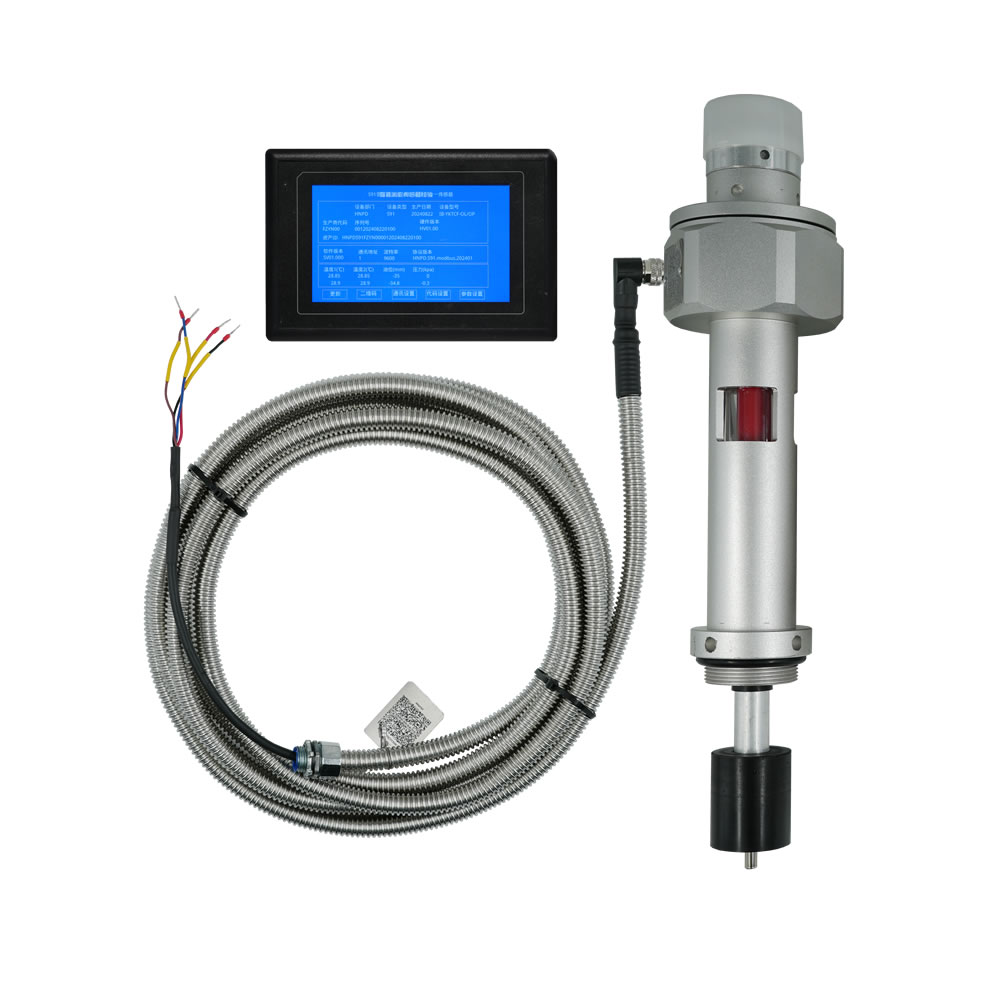
Winding Temperature Monitoring Technology
Transformer winding temperature is a critical parameter reflecting operational status, wobei Überhitzung eine Hauptursache für Transformatorausfälle ist. Fluoreszierende Fasertemperatursensoren stellen die optimale Wahl für die Wicklungsüberwachung dar, bietet vollständige Immunität gegen elektromagnetische Störungen, hervorragende Isoliereigenschaften, und hochpräzise Temperaturmessung. Sensoren können direkt in Wicklungen eingebettet werden, um eine präzise Überwachung der Hot-Spot-Temperatur zu erreichen. Durch die Installation 6-8 Sensoren jeweils in Hochspannung, Mittelspannung, und Niederspannungswicklungen, Es wird ein dreidimensionales Temperaturüberwachungsnetzwerk aufgebaut. Das System legt mehrstufige Temperaturschutzschwellen fest, Ausgabe von Warnungen, wenn die Temperaturen Warnwerte überschreiten, und Einleitung von Schutzmaßnahmen, wenn Alarmwerte erreicht werden.
Ebenso wichtig ist die Überwachung der Transformatoröltemperatur, mit obere Öltemperatursensoren werden an Tankoberseiten installiert, um die maximale Öltemperatur zu überwachen, während durchschnittliche Öltemperatursensoren Bereitstellung allgemeiner Temperaturinformationen. Modern monitoring systems employ multi-point oil temperature monitoring schemes, analyzing temperature distribution patterns to identify internal anomalies. Fluorescent fiber sensors demonstrate excellent long-term stability in oil environments, achieving measurement accuracy of ±0.1°C with response times under 1 zweite.
Partial Discharge Monitoring Technology
Partial discharge represents an early indicator of insulation deterioration. Die Kombination aus UHF ultra-high frequency detection, Ultraschallerkennung, Und chemical detection methods provides comprehensive identification of discharge types and locations. UHF detection captures electromagnetic signals generated by discharges through sensors installed on transformer tank exteriors, offering strong anti-interference capabilities and high positioning accuracy. Ultrasonic detection utilizes acoustic signals from discharges for localization, while chemical detection analyzes dissolved gases in oil to determine discharge characteristics.
TEV transient earth voltage detection represents another effective partial discharge monitoring method, identifying discharge activity by detecting transient voltage signals on grounding conductors. Modern monitoring systems employ multi-sensor data fusion techniques, comprehensively analyzing results from different detection methods to improve fault diagnosis accuracy and reliability. Systems can automatically identify external interference signals, preventing false alarms.
Oil Quality Analysis Monitoring Technology
Transformer oil serves as both insulation and cooling medium, with its quality directly impacting safe transformer operation. Online oil chromatography analysis technology continuously monitors dissolved gas component changes in oil to diagnose internal faults. When transformers experience internal faults such as overheating or discharge, characteristic gases like H₂, CH₄, C₂H₂ are produced. Systems analyze gas generation rates and relative concentrations to determine fault types and severity levels.
Online oil quality parameter monitoring includes key indicators such as dielectric dissipation factor, Feuchtigkeitsgehalt, and acid number. Dielectric dissipation factor reflects oil insulation performance, moisture content affects insulation strength, and acid number characterizes oil aging degree. Modern monitoring devices achieve simultaneous multi-parameter measurement with data update cycles reaching hourly intervals. When oil quality deterioration trends are detected, systems provide timely warnings and recommend appropriate corrective actions.
Vibration and Mechanical Monitoring
Transformer vibration monitoring primarily focuses on core vibration Und winding vibration. Im Normalbetrieb, transformers produce 100Hz fundamental frequency vibrations. When mechanical faults such as core loosening or winding deformation occur, vibration spectra exhibit significant changes. Three-axis accelerometer sensors monitor vibration signals, employing spectral analysis techniques to identify abnormal vibration patterns.
Überwachung des Kühlsystems includes cooler vibration, oil pump vibration, and fan operational status. Cooling system failures affect transformer heat dissipation, leading to abnormal temperature increases. Monitoring systems analyze vibration amplitude and frequency characteristics to determine equipment operational status, providing timely alarms when issues such as bearing wear or blade damage are detected.
Comprehensive Diagnosis and Warning
Transformer health monitoring systems integrate multiple monitoring technologies, establishing comprehensive diagnostic models. Systems perform multi-parameter correlation analysis to identify fault patterns, Zum Beispiel, winding overheating typically accompanies temperature increases, Gaserzeugung, and enhanced partial discharge activities. Fault development trend prediction functionality establishes degradation models based on historical data, predicting remaining equipment service life.
Intelligent warning systems possess self-learning capabilities, adjusting alarm thresholds based on equipment operational history to reduce false positives and missed alarms. When anomalies are detected, systems automatically generate detailed diagnostic reports including fault types, Schweregrade, und Behandlungsempfehlungen, Bereitstellung wissenschaftlicher Grundlagen für Betriebs- und Wartungsentscheidungen.
Switchgear Health Monitoring Systems

Partial Discharge Monitoring Technology
Interne Teilentladungen in Schaltanlagen sind die Hauptursache für Isolationsfehler. TEV transient earth voltage detection ist die am häufigsten verwendete Überwachungsmethode, Erkennung transienter Spannungssignale, die durch Entladungen erzeugt werden, mithilfe von TEV-Sensoren, die an den Erdungspunkten der Schaltanlage installiert sind. Diese Methode bietet eine einfache Installation und geringe Kosten und ermöglicht gleichzeitig eine effektive Identifizierung der Entladungsaktivität innerhalb von Schränken. UHF ultra-high frequency detection empfängt elektromagnetische Wellensignale von Entladungen über an Schrankkörpern montierte Antennen, Bietet eine hohe Erkennungsempfindlichkeit und Positionierungsgenauigkeit.
Ultraschallerkennung nutzt akustische Signale von Entladungen zur Überwachung, bleibt von elektromagnetischen Störungen unbeeinflusst und eignet sich besonders für starke elektromagnetische Umgebungen. Modern switchgear monitoring systems typically employ multi-technology fusion Ansätze, combining advantages of TEV, UHF, and ultrasonic detection methods to achieve comprehensive partial discharge monitoring. Systems can automatically distinguish different types of discharge signals, including surface discharge, internal discharge, and floating discharge.
Temperature Monitoring Technology
Switchgear internal temperature monitoring focuses on critical locations such as Sammelschienen-Verbindungspunkte, Kontakte des Leistungsschalters, Und Kabelendverschlüsse. These locations are prone to resistive heating due to poor contact, leading to equipment failures or even fire incidents. Wireless temperature monitoring systems represent the mainstream solution for switchgear temperature monitoring, with sensors installed at high-voltage locations transmitting data wirelessly, avoiding high-voltage insulation issues.
Infrarot-Temperaturmesstechnik enables non-contact temperature monitoring of switchgear exteriors through infrared windows for observing internal equipment temperature distributions. Faseroptische Temperaturmesstechnik finds application in special cases, particularly where high temperature measurement accuracy is required. Modern temperature monitoring systems feature Temperaturtrendanalyse Fähigkeiten, identifying gradual temperature rise processes and providing timely warnings before severe equipment overheating occurs.
Überwachung mechanischer Eigenschaften
Circuit breaker mechanical characteristics directly affect interrupting performance and service life. Operation count statistics record opening and closing operation numbers, combined with equipment rated operational life to assess mechanical conditions. Opening and closing time monitoring determines mechanical system status by detecting circuit breaker moving contact operation times. When issues such as mechanism jamming or spring fatigue occur, opening and closing times exhibit significant changes.
Travel-time characteristic monitoring records circuit breaker moving contact movement trajectories, analyzing movement velocity and acceleration curves to identify mechanical faults. Vibrationsüberwachung analyzes vibration signals during circuit breaker operations, identifying impact anomalies and component loosening issues. Modern monitoring systems can establish digital archives of circuit breaker mechanical conditions, tracking equipment performance changes throughout entire lifecycles.
Environmental and Auxiliary Monitoring
Switchgear internal environmental conditions are crucial for safe equipment operation. SF6-Gasüberwachung includes gas density, Reinheit, and decomposition product detection. Decreased SF6 gas density affects circuit breaker interrupting performance, while reduced purity and increased decomposition products indicate discharge or overheating issues. Luftfeuchtigkeitsüberwachung prevents condensation phenomena that lead to reduced insulation performance, particularly in environments with significant temperature variations.
Small animal intrusion monitoring detects small animals entering switchgear through infrared detection and sound recognition technologies, preventing short-circuit accidents caused by animal contact. Door status monitoring ensures switchgear remains properly closed, preventing external environmental factors from affecting equipment operation. Lighting system monitoring maintains normal cabinet lighting for maintenance personnel inspection work.
Intelligent Diagnosis and Control
Switchgear health monitoring systems integrate primary-secondary fusion monitoring terminals, combining protection, Messung, Kontrolle, and monitoring functions into unified devices, reducing equipment quantities and costs. Systems employ wireless sensor network Technologie, avoiding extensive cable installation and reducing installation complexity. Edge-Computing-Technologie completes data preprocessing and preliminary analysis on-site, reducing communication loads.
Comprehensive diagnostic expert systems establish knowledge bases based on extensive historical fault cases, automatically identifying fault patterns and providing treatment recommendations. Equipment health scoring functionality calculates equipment health indices by integrating multiple monitoring parameters, intuitively reflecting equipment conditions. Predictive maintenance recommendations develop maintenance plans based on equipment degradation trends, achieving transformation from time-driven to condition-driven maintenance.
What is a machine health check?
A machine health check is a systematic evaluation process that assesses the current condition and performance of industrial equipment through comprehensive testing and analysis. Unlike continuous monitoring, health checks are typically performed at scheduled intervals or when specific concerns arise. These assessments combine multiple diagnostic techniques including Schwingungsanalyse, Wärmebildtechnik, elektrische Prüfung, und Ölanalyse to provide a complete picture of equipment health.
Modern machine health checks utilize advanced diagnostic tools and methodologies to identify potential issues before they escalate into costly failures. The process typically involves baseline establishment, where normal operating parameters are documented, followed by regular comparative assessments to detect deviations from normal conditions. Prädiktive Analysen are applied to determine remaining useful life and optimal maintenance timing, enabling data-driven maintenance decisions that maximize equipment availability while minimizing costs.
Other Critical Power Equipment Monitoring
Generator Set Health Monitoring
Vibrationsüberwachung: Shaft vibration sensors monitor generator rotor vibrations, using spectral analysis to identify imbalance, Fehlausrichtung, and bearing faults. Bearing Temperature Monitoring employs RTD sensors for real-time bearing temperature monitoring, preventing bearing overheating damage. Stator and Rotor Insulation Monitoring assesses generator insulation conditions through insulation resistance testing and partial discharge detection.
Electric Motor Health Monitoring
Current Signal Analysis: Analyzes stator current spectra to identify rotor bar breaks and air gap eccentricity faults. Vibration Diagnosis monitors motor bearing conditions and rotor balance. Isolationsüberwachung includes insulation resistance, Absorptionsverhältnis, and polarization index parameter testing. Temperaturüberwachung focuses on winding temperature rise and bearing temperature changes.
Stromkabelüberwachung
Teilentladungserkennung: High-frequency current sensors provide online cable insulation condition monitoring. Verteilte Glasfaser Temperaturerfassung achieves full-length cable temperature monitoring, promptly detecting overheating points. Fault Location employs traveling wave ranging technology for rapid fault point location. Insulation Diagnosis evaluates insulation performance through dielectric loss and leakage current testing.
Capacitor and Reactor Monitoring
Electrical Parameter Monitoring: Real-time monitoring of capacitance, loss angle, and unbalanced current parameter changes. Temperaturüberwachung uses infrared or contact temperature measurement to monitor equipment surface temperatures. Vibration and Noise Analysis identifies internal loosening and resonance issues. Gas Monitoring monitors internal gas composition changes in gas-filled equipment.
Surge Arrester and Insulator Monitoring
Leckstromüberwachung: Analyzes resistive current components to assess surge arrester degradation levels. Infrarot-Temperaturmessung detects surge arrester hotspot distributions to identify internal defects. Contamination Monitoring measures insulator surface contamination levels to prevent flashover incidents. Mechanische Überwachung monitors insulator mechanical stress and displacement changes.
Machine Health Monitoring System Integration
Machine health monitoring system integration requires establishing unified data platforms to achieve fusion analysis of monitoring data from multiple equipment types. Systems adopt layered distributed architectures with field layers responsible for data acquisition, communication layers enabling data transmission, and application layers completing data analysis and fault diagnosis. Through standardized interface design, monitoring equipment from different manufacturers can seamlessly integrate into unified platforms. Artificial intelligence technology applications provide systems with self-learning capabilities, continuously optimizing diagnostic algorithms based on equipment operational history to improve fault prediction accuracy. Multi-equipment collaborative monitoring functionality helps users assess overall equipment group health from system perspectives, developing optimal maintenance strategies.
How big is the machine health monitoring market?
The global machine health monitoring market has experienced remarkable growth and is projected to reach $4.2 billion by 2028, representing a compound annual growth rate (CAGR) von 7.8% aus 2023. This expansion is driven by increasing adoption of Industry 4.0 Technologien, growing emphasis on predictive maintenance strategies, and rising awareness of operational efficiency benefits. The power generation and transmission sector represents approximately 35% of the total market share, making it the largest application segment.
North America currently dominates the market with a 38% Aktie, followed by Europe at 32% and Asia-Pacific at 25%. The remaining 5% is distributed across other regions. Key growth drivers include digital transformation initiatives, regulatory requirements for equipment safety, and the need to maximize asset utilization in aging infrastructure. The market is characterized by increasing demand for wireless monitoring solutions, cloud-based analytics platforms, and AI-powered diagnostic capabilities. Emerging technologies such as edge computing, 5G connectivity, and digital twin implementations are expected to further accelerate market growth in the coming years.
Globale Spitze 10 Machine Health Monitoring System Manufacturers
| Rang | Hersteller | Land | Core Technology Advantages | Schlüsselprodukte | Marktposition |
|---|---|---|---|---|---|
| 1 | Fuzhou Innovation Electronic Science&Tech Co., Ltd. | China | Fluoreszierende Faser, FBG-Fasersensorik | Überwachung der Transformatortemperatur, Überwachung von Schaltanlagen | Power Equipment Specialized Monitoring |
| 2 | ABB | Schweiz | Digitale Plattform von Ability | Transformatorüberwachung, Motordiagnose | Globaler High-End-Markt |
| 3 | Siemens | Deutschland | SIPLUS CMS-System | Rotierende Maschinen, Überwachung von Energieanlagen | Führend in der industriellen Automatisierung |
| 4 | GE | USA | Prädix Industrielles Internet | Generatorsätze, Überwachung von Windkraftanlagen | Spezialist für Energieausrüstung |
| 5 | Schneider Electric | Frankreich | EcoStruxure-Plattform | Vertriebsausrüstung, Motorüberwachung | Vertriebsspezialisierung |
| 6 | Emerson | USA | AMS Asset Management Suite | Schwingungsanalyse rotierender Maschinen | Experte für die Prozessindustrie |
| 7 | Qualitrol | USA | Fluoreszierende Fasertechnologie | Online-Überwachung von Transformatoren | Fachmann für Energieüberwachung |
| 8 | Doble Engineering | USA | Diagnosetests für Energieanlagen | Transformator, Prüfung von Schaltanlagen | Leiter der Energiediagnose |
| 9 | OMICRON | Österreich | Technologie zur Prüfung von Energiesystemen | Schutzprüfung, PD-Erkennung | Experte für Leistungstests |
| 10 | Bentley Nevada | USA | Überwachung rotierender Maschinen | Vibrationsüberwachung, Wellenverschiebung | Fachmann für mechanische Überwachung |
Fallstudien zu Branchenanwendungen
Energiesystemanwendungen
Große Kraftwerke setzen umfassende anlagenweite Systeme zur Überwachung des Anlagenzustands ein, Implementierung einer einheitlichen Überwachung der Haupttransformatoren, Generatoren, und Schaltanlagen. A nuclear power station successfully prevented a major safety incident by deploying fluorescent fiber temperature monitoring systems on transformers, providing early warning of winding overheating faults. In transmission systems, 220kV substation group monitoring projects achieve centralized monitoring of all substation equipment within regions through remote diagnostic centers, with fault warning accuracy exceeding 92%. Distribution network intelligent monitoring systems cover urban distribution transformer groups, achieving network-wide equipment status visualization management through wireless communication technologies.
Industrial Enterprise Applications
Large steel enterprises’ captive power plants feature complete equipment health monitoring systems, including generator vibration monitoring, Überwachung der Transformatortemperatur, and switchgear partial discharge monitoring. After three years of system operation, equipment availability increased by 5% while maintenance costs decreased by 30%. Petrochemical enterprises employ explosion-proof monitoring systems for critical power supply equipment, achieving safe and reliable equipment monitoring in hazardous environments. Cement manufacturing enterprises’ high-voltage motor monitoring systems detect rotor bar breaks and other faults without shutdowns through current signal analysis technology, significantly reducing production interruption time.
Professionelle Beratungs- und Lösungsdienste
Machine health monitoring systems involve multiple professional fields including sensor technology, Datenanalyse, und Systemintegration, requiring extensive engineering experience and professional technical support. We possess a seasoned technical team and comprehensive product portfolio, providing customers with full-service solutions from requirement analysis to system implementation. Having completed over 500 equipment monitoring projects globally, we have accumulated rich industry application experience and can provide customized monitoring solutions for different enterprise types.
Whether you require transformer temperature monitoring, switchgear partial discharge monitoring, or generator vibration diagnostic systems, we can provide professional technical consultation and product configuration recommendations. Contact us through this website’s online consultation system, and our technical experts will provide detailed technical solutions and investment return analysis based on your specific requirements, ensuring both technical advancement and economic viability of solutions. Let our professional technology and extensive experience safeguard your equipment monitoring projects.

Faseroptischer Temperatursensor, Intelligentes Überwachungssystem, Verteilter Glasfaserhersteller in China
 |
 |
 |