 أجهزة استشعار درجة حرارة الألياف الضوئية INNO ,أنظمة مراقبة درجة الحرارة.
- Fiber optic solutions for temperature monitoring هي أنظمة استشعار كاملة تستخدم الألياف الضوئية - بدلاً من الموصلات المعدنية - لقياس درجة الحرارة بشكل مستمر وفي الوقت الفعلي, مما يجعلها الاختيار القياسي للبيئات التي لا تستطيع فيها أجهزة الاستشعار الإلكترونية التقليدية العمل بأمان أو بشكل موثوق.
- لأن وسط الاستشعار هو الضوء من خلال الزجاج, محاليل درجة حرارة الألياف الضوئية محصنة بطبيعتها ضد التداخل الكهرومغناطيسي, لا تخلق أي مسار موصل إلى المعدات المراقبة, والعمل بأمان عند أي مستوى جهد - بما في ذلك الاتصال المباشر بالموصلات الحية ذات الجهد العالي.
- هناك تقنيتان تعالجان شكلين هندسيين مختلفين للقياس بشكل أساسي: استشعار الألياف الضوئية الفلورية لدقيقة, مراقبة في الوقت الحقيقي في نقاط حرجة محددة, و استشعار درجة حرارة الألياف الضوئية الموزعة (دتس) لرسم الخرائط الحرارية المستمرة على طول مسار الكابل بالكامل.
- يعد استشعار الفلورسنت هو الحل الصحيح عندما تكون أهداف المراقبة عبارة عن مواقع معروفة على المعدات - جهات اتصال المفاتيح الكهربائية, اللفات المحولات, خلايا البطارية – والدقة, response speed, والعزل الكهربائي هي المتطلبات الأساسية.
- يعد DTS هو الحل الصحيح عندما يجب أن تمتد التغطية عبر كيلومترات من البنية التحتية دون وجود نقاط عمياء, وموقع الشذوذ الحراري غير معروف مسبقًا.
- تتواصل كلتا التقنيتين عبر RS485 / Modbus RTU والتكامل مع SCADA, DCS, وأنظمة إدارة المباني بدون أجهزة مخصصة.
- المصنعة من قبل فوتشو الابتكار العلوم الإلكترونية&شركة التقنية, المحدودة. — متخصص في استشعار الألياف الضوئية منذ ذلك الحين 2011.
1. ما هي حلول الألياف البصرية لمراقبة درجة الحرارة?

Fiber optic solutions for temperature monitoring هي أنظمة أجهزة كاملة تستخدم الألياف الضوئية كوسيلة للاستشعار - لقياس درجة الحرارة من خلال التغيرات في خصائص الضوء وليس من خلال الإشارات الكهربائية. يحل محلول درجة حرارة الألياف الضوئية محل الموصلات المعدنية, مصادر الجهد, ودوائر القياس الحاملة للتيار لقياس الحرارة التقليدي باستخدام ألياف زجاجية سلبية تحمل الضوء فقط بين نقطة الاستشعار وأداة القياس. والنتيجة هي نهج مراقبة درجة الحرارة الذي يختلف بشكل أساسي في خصائصه الكهربائية, وقيودها المادية, and its long-term operational behavior from any sensor technology based on metal.
The distinction between fiber optic and conventional electronic temperature measurement is not a matter of degree — it is a difference in kind. A thermocouple measures temperature by generating a small voltage; an RTD measures it by changing its electrical resistance; a semiconductor sensor measures it through a change in junction voltage. All three require a metallic conductor to carry an electrical signal from the measurement point back to the instrument. That metallic conductor is a conductive path — and in environments involving high voltage, المجالات الكهرومغناطيسية القوية, أجواء متفجرة, or intense magnetic fields, يمثل المسار الموصل من نقطة القياس إلى الأرض خطراً على السلامة, مصدر خطأ القياس, أو كليهما.
أ حل استشعار درجة حرارة الألياف الضوئية يلغي المسار الموصل تماما. تحمل الألياف الزجاجية الضوء في كلا الاتجاهين; لا الجهد, لا يوجد تيار, ولا تنتقل أي طاقة كهربائية من أي نوع من أو إلى نقطة الاستشعار عبر الألياف. وهذا يجعل حلول الألياف الضوئية هي التقنية الوحيدة لقياس درجة حرارة التلامس التي يمكنها العمل بأمان ودقة داخل مجموعة المفاتيح الكهربائية الحية ذات الجهد العالي, في لف محول الطاقة تحت الحمل, في المجال المغناطيسي لماسح التصوير بالرنين المغناطيسي, في منطقة 1 منطقة خطرة, أو في أي بيئة أخرى تكون فيها أجهزة الاستشعار التقليدية غير آمنة, غير موثوق بها, أو من المستحيل تثبيته فعليًا.
2. لماذا يتفوق الضوء على الكهرباء كوسيلة للاستشعار؟: المزايا المادية الأساسية

The superiority of optical fiber over metallic conductors as a temperature sensing medium follows directly from the physical properties of glass and light. These are not engineering refinements — they are fundamental characteristics of the sensing medium that determine what is and is not possible in each class of application.
No Conductive Path — Complete Electrical Isolation at Any Voltage
Glass optical fiber is a dielectric material. It conducts light and nothing else. أ مسبار درجة حرارة الألياف الضوئية installed directly on a live high-voltage busbar, a transformer winding energized at hundreds of kilovolts, or a traction power conductor carrying thousands of amperes presents zero conductive path to the monitoring instrument. There is no possibility of electrical breakdown between the sensing point and ground through the measurement system — regardless of the system voltage, the fault current level, or the dielectric condition of the surrounding insulation. This is not an insulation rating that can be exceeded; it is a physical property of the sensing medium.
Inherent Immunity to Electromagnetic Interference
Electromagnetic interference corrupts electronic temperature measurements by inducing voltages in the metallic signal conductors that the measurement circuit cannot distinguish from the actual sensor signal. In environments with strong power-frequency magnetic fields — switchgear panels, motor rooms, transformer vaults, induction heating installations — the induced voltage in a thermocouple lead or RTD cable can be larger than the measurement signal itself, producing temperature errors of tens of degrees. أ fiber optic thermal sensing system is immune to this mechanism at a physical level: no voltage can be induced in glass, and the light signal traveling through the fiber is unaffected by any external electromagnetic field.
Intrinsically Safe at the Measurement Point
In hazardous areas where flammable gases, vapors, or dusts are present, any electrical device must be assessed as a potential ignition source. The passive, zero-energy nature of a fiber optic temperature sensor probe means there is no electrical energy at the sensing point under any operating condition — including instrument power failure, signal cable short circuit, or component fault in the monitoring instrument. The probe cannot ignite a flammable atmosphere because it carries and stores no energy. This intrinsic safety characteristic simplifies hazardous area classification and documentation significantly compared to any electrically active sensor technology.
Long-Term Measurement Stability Without Recalibration
Conventional electronic sensors drift. Thermocouple output shifts as the thermoelectric material ages and oxidizes at elevated temperatures. RTD resistance changes as the sensing wire work-hardens through thermal cycling. Semiconductor sensors age under radiation and prolonged heat exposure. Each of these drift mechanisms introduces a growing measurement error that must be managed through periodic recalibration — which requires access to the sensor, interruption of monitoring, and comparison against a reference standard.
The physical principles underlying fiber optic temperature measurement solutions — particularly the fluorescence lifetime approach — do not drift in the same way. The relationship between the optical property being measured and temperature is a stable characteristic of the sensing material, not a calibration that degrades over time. A fiber optic sensing system installed today will produce the same accurate measurement twenty-five years from now under the same thermal conditions, without any recalibration intervention.
3. اثنين من التقنيات, اثنين من هندسة القياس: الإسفار مقابل الاستشعار الموزع

داخل حلول الألياف الضوئية لمراقبة درجة الحرارة, two distinct physical principles address two fundamentally different operational requirements. Choosing between them is not primarily a question of performance specifications — it is a question of measurement geometry: what shape is the problem you need to solve?
Point Measurement vs Route Measurement
Some temperature monitoring problems are defined by specific locations. The hottest point on a circuit breaker contact. The winding hot spot in a particular transformer phase. The cell at the end of a battery rack that runs warmest under charge. These are point measurement problems — the engineering team knows exactly where to put the sensor, and the value of the monitoring system lies in the accuracy, سرعة, and reliability of the reading at each known location.
Other temperature monitoring problems are defined by routes or areas. A 15-kilometer underground cable tunnel. A buried pipeline across a rural landscape. A railway tunnel where a fire could start anywhere along its length. These are route measurement problems — the critical characteristic is not the accuracy of the reading at a single point but the absence of blind spots across the entire monitored length. No pre-identified location can be specified because the fault could develop anywhere.
Fluorescence fiber optic sensing solves point measurement problems. استشعار درجة حرارة الألياف الضوئية الموزعة (دتس) solves route measurement problems. Both use optical fiber as the sensing medium and share all the physical advantages described above — but they work on different principles and produce fundamentally different types of data.
4. Fluorescence Fiber Optic Temperature Monitoring: الدقة في كل نقطة حرجة

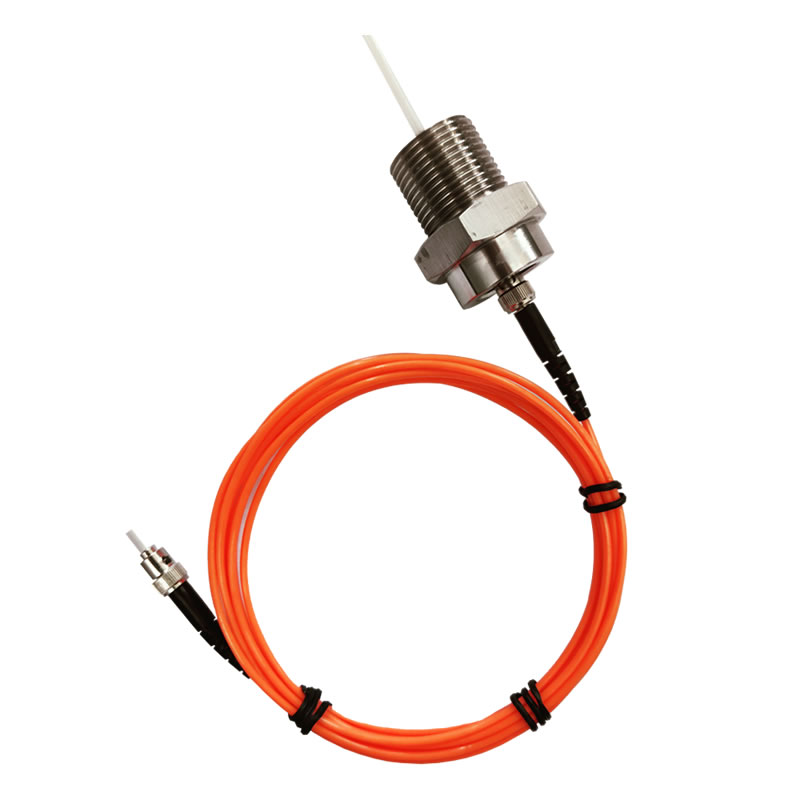
أ fluorescence fiber optic temperature monitoring solution works by exciting a rare-earth phosphor element at the tip of the sensing probe with a brief pulse of light from the instrument. يمتص الفوسفور طاقة الإثارة ويعيد إطلاقها على شكل فلورية - والثابت الزمني لاضمحلال الفلورسنت هذا, المعروفة باسم العمر (ر), shifts in a stable, predictable relationship with temperature. The instrument measures τ and converts it to a calibrated temperature value.
The critical engineering advantage of this approach is that the measurement is based on time — how long the fluorescence takes to decay — rather than on light intensity. This means that anything that reduces the optical power in the system — fiber aging, connector fouling, light source dimming — has no effect on the measured temperature. The decay time at a given temperature is a fixed physical property of the phosphor material; it does not change as the optical system ages. هذا هو السبب fluorescence-based fiber optic temperature solutions maintain their accuracy over decades of unattended, in-service operation without recalibration.
Multi-Point Coverage from a Single Instrument
واحد جهاز إرسال درجة الحرارة بالألياف الضوئية manages multiple independent sensing channels simultaneously — with each channel connecting to its own probe at a separate measurement location. This makes it possible to build a comprehensive, structured thermal monitoring network across a piece of equipment or an entire installation from a single instrument and a single RS485 network connection. Channel count is configurable to match the specific monitoring requirements of each installation.
Where Fluorescence Fiber Optic Solutions Excel
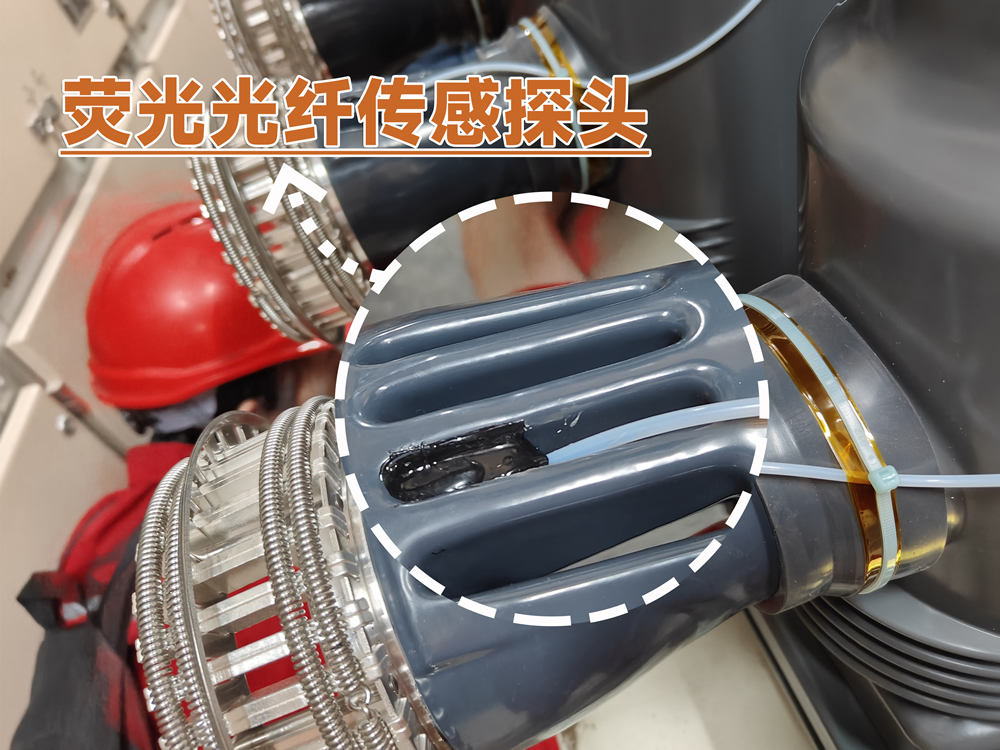
The combination of complete electrical isolation, fast thermal response, stable long-term accuracy, and compact probe geometry makes fluorescence fiber optic temperature solutions the definitive choice for monitoring discrete critical points in electrically demanding environments: the contact surfaces of live high-voltage switchgear, the windings of oil-filled power transformers, the cell-level thermal management of lithium battery energy storage systems, the interior of MRI scanners and other medical imaging equipment, and the reaction-critical locations in chemical and pharmaceutical process reactors.
5. استشعار درجة حرارة الألياف الضوئية الموزعة: رسم الخرائط الحرارية المستمرة على طول الطريق الكامل

أ نظام استشعار درجة حرارة الألياف الضوئية الموزعة uses an ordinary single-mode or multi-mode optical fiber cable as a continuous, unbroken array of temperature sensors — with every meter of the fiber contributing an independent temperature reading. The physical principle is Raman backscattering: when a laser pulse travels down the fiber, a small fraction of the light scatters back toward the instrument. The ratio of two components of that backscattered signal encodes the local temperature at each scattering point, and the round-trip travel time of each returning segment encodes its physical position along the fiber with meter-level precision.
The output of a DTS instrument is a thermal profile — a continuous graph of temperature versus distance along the entire sensing fiber. Every meter of the sensing route is covered simultaneously, with no gaps and no predetermined sensor locations. An anomaly that develops anywhere along the route is detected and position-referenced automatically the moment it appears, regardless of whether that location was anticipated as a risk point during system design.
The Defining Capability: Finding the Fault You Didn’t Know to Look For
The operational value of a distributed temperature sensing solution lies specifically in its ability to detect thermal anomalies at locations that were not identified as risk points in advance. In a power cable tunnel, قد لا يكون المفصل الذي يسخن بشكل زائد هو الذي تم وضع علامة عليه في مسح التثبيت. في خط أنابيب, قد يكون التسرب الذي يتطور عند قسم غير ملحوظ من الأنبوب المستقيم وليس عند التركيب. في نفق للسكك الحديدية, قد يشتعل الحريق من أي واحد من آلاف مصادر الاشتعال المحتملة الموزعة على طول النفق بأكمله. يغطي DTS جميع هذه المواقع في وقت واحد, بشكل مستمر, بدون أجهزة استشعار إضافية ولا تكلفة إضافية لكل متر مراقب.
حيث تتفوق حلول الألياف الضوئية الموزعة
حلول استشعار درجة الحرارة الموزعة هي التكنولوجيا القياسية لمراقبة البنية التحتية للطرق الطويلة: power cable tunnels and trays where the full-length thermal profile of every cable circuit is required, oil and gas pipelines where leak detection depends on the temperature signature of escaping product, railway and metro tunnels where fire detection must cover the full tunnel bore without gaps, dam embankments and geotechnical structures where distributed temperature differential reveals groundwater movement, and perimeter security systems where thermal disturbance along a boundary fence must be located to within meters.
6. جنبًا إلى جنب: الإسفار مقابل حلول درجة حرارة الألياف البصرية DTS
| المعلمة | Fluorescence Fiber Optic Solution | استشعار درجة الحرارة الموزعة (دتس) حل |
|---|---|---|
| مبدأ الاستشعار | مضان تسوس مدى الحياة (تلألؤ ضوئي) | رامان التشتت الخلفي |
| Measurement geometry | نقطة / multi-point at known locations | Continuous — every meter along the full fiber length |
| دقة درجة الحرارة | ±0.5-1 درجة مئوية | ±±1 درجة مئوية |
| نطاق درجة الحرارة | -40 درجة مئوية إلى +260 درجة مئوية | -50 درجة مئوية إلى +200 درجة مئوية |
| نطاق الاستشعار لكل قناة | 0-20 م لكل مسبار | ≥30 كم لكل قناة |
| القنوات لكل أداة | 1-64 قناة تحقيق مستقلة | 2 القنوات لكل وحدة مضيفة |
| تحديد المواقع المكانية | موقع التحقيق الثابت (defined at installation) | ±1 m along the full sensing route |
| وقت الاستجابة | <1 الثانية لكل قناة | ≥1 ثانية لكل كيلومتر لكل قناة |
| عزل الجهد العالي | >100 kV — fully dielectric probe | عزل عازل من الألياف القياسية |
| دقق / قطر الكابل | 2-3 ملم (قابل للتخصيص) | Standard armored sensing cable |
| عمر المستشعر | >25 سنين | >20 سنين (host unit and laser source) |
| سلامة الليزر | — | اللجنة الانتخابية المستقلة 60825-1 فصل 1 معتمد |
| واجهة الاتصالات | RS485 / مودبوس ار تي يو | RS232 / RS485 / مودبوس ار تي يو |
| شهادات الطرف الثالث | متاح عند الطلب | إي إم سي, دقة تحديد المواقع, دقة درجة الحرارة, response time — supplied |
| Primary application fit | Discrete equipment hot-spot monitoring at known critical points | Long-route infrastructure continuous thermal surveillance |
7. المراقبة الحرارية للألياف البصرية عبر الصناعات
مرافق الطاقة: المفاتيح الكهربائية, محولات, and Cable Infrastructure
The power sector was the first major adopter of حلول مراقبة درجة حرارة الألياف الضوئية at scale, driven by the combination of high-voltage isolation requirements and the critical consequences of undetected thermal faults. Fiber optic switchgear temperature monitoring places fluorescence probes directly on circuit breaker contacts, مفاصل بسبار, ونهايات الكابلات داخل لوحات الجهد المتوسط الحية - وهي تقنية قياس الاتصال الوحيدة التي تلبي متطلبات العزل الكهربائي لهذه المواقع. مراقبة درجة حرارة لف المحولات يستخدم مجسات مضان مغمورة بالزيت لقياس درجة حرارة النقطة الساخنة الفعلية في كل ملف مباشرة, توفير البيانات اللازمة لـ IEC 60076-7 حسابات عمر العزل وقرارات التحميل الديناميكية. لتغذية البنية التحتية للكابلات وتوصيل هذه الأصول, distributed temperature sensing solutions توفير رسم خرائط حرارية مستمرة لمسار الكابل بالكامل - اكتشاف الوصلات ذات التحميل الزائد وتدهور العزل قبل أن تصل إلى عتبة فشل الكابل.
Energy Storage: الإدارة الحرارية للبطارية ومنع الهروب
تمثل أنظمة تخزين طاقة بطاريات الليثيوم أيون أحد أكثر متطلبات المراقبة الحرارية تطلبًا في أي صناعة. الهروب الحراري – الاكتفاء الذاتي, ارتفاع درجة الحرارة المتسارع ذاتيًا والذي يؤدي إلى نشوب حريق في البطارية - يسبقه توقيع درجة حرارة يمكن اكتشافه بسرعة, مستشعر دقيق يتم وضعه على مستوى الخلية أو الوحدة. مجسات درجة حرارة الألياف الضوئية الفلورية توفر المثبتة داخل حزم البطاريات بيانات حرارية في الوقت الفعلي لكل خلية أو لكل وحدة مع أوقات استجابة سريعة بما يكفي لاكتشاف ارتفاع درجة الحرارة في المرحلة المبكرة قبل الانتشار الجامح. يتناسب قطر المسبار الذي يبلغ 2-3 مم مع الأشكال الهندسية القياسية لحامل الخلية, ولا يخلق المسبار العازل بالكامل أي مسار موصل يمكن أن يساهم في حدوث خطأ في دائرة القصر في نظام البطارية.
زيت, الغاز, والبتروكيماويات: مراقبة عملية المنطقة الخطرة
المصافي, النباتات الكيميائية, وتجمع المنصات البحرية بين درجات حرارة العملية التي تتجاوز نطاق العديد من أجهزة الاستشعار التقليدية مع المنطقة 1 والمنطقة 2 hazardous area classifications that restrict the use of electrically active devices. Fiber optic process temperature monitoring solutions address both constraints simultaneously: the fluorescence probe covers temperatures well above the limits of standard industrial sensors, while the zero-energy, passive nature of the probe makes it intrinsically compatible with explosive atmosphere requirements. حلول استشعار درجة الحرارة الموزعة monitor the thermal condition of long pipeline runs and storage tank farms, detecting leak-related temperature anomalies and identifying hotspot locations for maintenance dispatch without the cost and safety risk of physical inspection rounds.
Rail and Transit Infrastructure: Tunnel Fire Detection and Traction Monitoring
Railway and metro tunnels present a fire detection challenge that no point-sensor system can solve economically: the monitored length may extend for kilometers, the potential ignition point is anywhere along the tunnel, and the consequences of a delayed detection are severe. Distributed fiber optic fire detection solutions provide continuous thermal surveillance along the full tunnel bore, generating a position-referenced alarm within seconds of a temperature exceedance anywhere along the sensing fiber. For traction power infrastructure, fluorescence fiber optic solutions monitor the thermal condition of switchgear contacts and transformer windings in railway substations under the heavily cyclic load profiles characteristic of train operation.
مراكز البيانات: Thermal Management and Capacity Planning
Data center operators managing high-density compute infrastructure need thermal visibility at both the room level — airflow patterns, درجات حرارة الممر الساخنة والباردة, أداء نظام التبريد - ومستوى المعدات - درجات حرارة مدخل الخادم الفردية, درجات حرارة الصنبور للحافلات, التحميل الحراري لإخراج PDU. حلول درجة حرارة الألياف الضوئية الموزعة توفير رسم خرائط حرارية على مستوى الغرفة دون وجود شبكة كثيفة من أجهزة الاستشعار المنفصلة. حلول الألياف الضوئية مضان توفير الدقة على مستوى المعدات في نقاط توزيع الطاقة حيث تكون درجة حرارة التلامس هي معلمة الموثوقية الحرجة. معاً, فهي تشكل بنية تحتية كاملة للإدارة الحرارية لأي نطاق من مراكز البيانات.
الطبية والعلمية: قياس درجة الحرارة بدون EMI في البيئات الخاضعة للرقابة
ماسحات التصوير بالرنين المغناطيسي, مسرعات الجسيمات, and high-field laboratory electromagnets create magnetic field environments in which any metallic object — including a thermocouple lead or RTD cable — experiences strong induced forces and generates significant electromagnetic interference with the field itself. Fiber optic temperature measurement solutions based on fluorescence sensing are the standard approach for temperature monitoring inside these environments: no metallic sensing element, no susceptibility to magnetic fields, no interference with the field being generated by the instrument. The same properties make fluorescence solutions appropriate for RF-shielded environments, microwave processing equipment, and any other application where electromagnetic cleanliness at the measurement point is a hard requirement.
8. تكامل النظام, تواصل, وخيارات النشر
Standard Industrial Communication for Seamless SCADA Integration
Both fluorescence and DTS حلول مراقبة درجة حرارة الألياف الضوئية communicate over RS485 using the Modbus RTU protocol — the universal standard for industrial serial communication that is natively supported by every major SCADA, DCS, نظام إدارة المباني, and substation automation platform in current production use. Integration with the site control system requires only the Modbus register map — supplied with each instrument — and standard serial communication configuration work. No protocol converters, no custom drivers, and no proprietary software licenses are required.
Wired and Wireless Deployment Flexibility
For sites with existing cable infrastructure, RS485 wired communication is the simplest and most reliable integration path. For remote, بدون طيار, or geographically dispersed installations — rural substations, pipeline monitoring stations, offshore platforms — wireless communication over 4G LTE or LoRaWAN provides the same data delivery capability without new cable installation. Both communication paths present identical data to the supervisory platform; the choice between wired and wireless is determined entirely by site infrastructure, not by any difference in monitoring capability.
Cloud-Based and On-Premise Supervisory Options
For asset owners managing multiple monitoring points across distributed sites, a cloud-hosted supervisory platform provides fleet-level thermal visibility from any network-connected device — historical trends, سجلات التنبيه, and condition summaries for every monitored asset in a single portal. For installations with stringent data security requirements or limited network connectivity, the same supervisory functionality is available in an on-premise deployment with no external network dependency. The monitoring hardware is identical in both deployment modes.
9. Choosing the Right Fiber Optic Temperature Monitoring Solution
Start with the Measurement Geometry
The first and most important selection question for any fiber optic temperature monitoring solution is not about specifications — it is about geometry. Are the monitoring targets specific, known locations on equipment or infrastructure? Or is the monitoring requirement defined by a route or area where a thermal anomaly could develop at any point? If the answer is specific known locations, the solution is fluorescence fiber optic sensing. If the answer is a route or area with unknown fault location, the solution is distributed temperature sensing. In many large installations, the answer is both — and the most effective architecture deploys both technologies in complementary roles.
Fluorescence Is the Right Choice When:
- أهداف الرصد محددة, pre-identified points on equipment — contacts, المفاصل, اللفات, الخلايا
- The environment involves high voltage, مجالات مغناطيسية قوية, or explosive atmosphere classifications
- Sub-second thermal response is required — battery runaway prevention, power electronics protection
- A scalable multi-point network serving up to 64 channels from a single transmitter is needed
- The temperature range or accuracy requirement exceeds what conventional sensors can deliver reliably
Distributed Sensing Is the Right Choice When:
- Coverage must extend across hundreds of meters to tens of kilometers without blind spots
- موقع الخطأ أو الشذوذ الحراري غير معروف مسبقًا
- Spatial localization of a hot spot to within one meter is required for incident response
- البنية التحتية خطية – طرق الكابلات, خطوط الأنابيب, الأنفاق, السدود, perimeter boundaries
- A single instrument must simultaneously cover two independent sensing routes
Combining Both Technologies: The Complete Fiber Optic Thermal Monitoring Architecture
The most comprehensive fiber optic temperature monitoring solution for a large installation is a layered architecture that uses distributed sensing for route-level surveillance and fluorescence sensing for equipment-level precision. A power substation, على سبيل المثال, benefits from DTS monitoring of the cable circuits feeding and leaving the site — covering kilometers of underground cable with a single instrument — and fluorescence monitoring of the switchgear contacts, اللفات المحولات, and battery backup system inside the substation building. Both systems feed into the same Modbus network and the same supervisory platform, providing thermal visibility from the transmission cable to the individual contact surface in a single, unified view.
10. الأسئلة المتداولة
س1: ما الذي يجعل حلول مراقبة درجة حرارة الألياف الضوئية أفضل من أجهزة الاستشعار التقليدية للتطبيقات الصناعية?
الميزة الأساسية هي وسيلة الاستشعار. الألياف الزجاجية موصلة للضوء, ليس الكهرباء - لذلك أ مستشعر درجة حرارة الألياف الضوئية لا يخلق أي مسار موصل في المعدات المراقبة, محصن ضد التداخل الكهرومغناطيسي, cannot ignite a flammable atmosphere, and maintains its accuracy over decades without recalibration. These are physical properties of the sensing material, not engineering features that can be replicated by improving a conventional sensor design.
Q2: Can fiber optic temperature solutions be used in both high-voltage and low-voltage applications?
نعم. مجسات الألياف الضوئية الفلورية are rated above 100 kV and can be installed directly on energized medium-voltage and high-voltage conductors without additional isolation hardware. The same probe technology is equally applicable in low-voltage applications — motor control centers, battery systems, data center power distribution — where the dielectric rating provides a large safety margin over the system voltage. The fully dielectric probe creates no conductive path regardless of the system voltage at the installation point.
س3: How does distributed temperature sensing locate a hot spot along a long fiber route?
ال DTS instrument measures the round-trip travel time of each segment of Raman backscattered light returning along the fiber. Since light travels through optical fiber at a known, constant velocity, the travel time precisely encodes the distance from the instrument to each measurement point. This allows the system to report both the temperature value and the physical position of any thermal anomaly along the full sensing route, with a location accuracy of ±1 m regardless of the total route length.
س 4: How many monitoring points can one fiber optic transmitter cover?
واحد fluorescence fiber optic temperature transmitter يدعم 1 ل 64 قنوات استشعار مستقلة, each connected to its own probe at a separate measurement location. All channels are interrogated continuously and the readings from all channels are available simultaneously on the RS485 output. For installations requiring more than 64 نقاط, additional transmitters are connected to the same RS485 network, each with a unique Modbus address, and the supervisory platform aggregates all data into a single monitoring view.
س5: What is the difference between fluorescence lifetime sensing and intensity-based fiber optic sensing?
يقيس استشعار الألياف الضوئية المعتمد على الكثافة مقدار الضوء المرتد من عنصر الاستشعار - ويتغير هذا القياس كلما تغير أي شيء في المسار البصري, بما في ذلك ثني الألياف, تلوث الموصل, أو شيخوخة مصدر الضوء. الاستشعار مدى الحياة مضان يقيس المدة التي يستغرقها التألق في الاضمحلال، وهو قياس للمجال الزمني مستقل تمامًا عن مستويات الطاقة الضوئية. لأن زمن الاضمحلال هو خاصية فيزيائية لمادة الفوسفور عند درجة حرارة معينة, ولا يتأثر بأي شيء يحدث لشدة الضوء في النظام. ولهذا السبب تحافظ الحلول المعتمدة على مدى الحياة على الدقة على مدى عقود دون إعادة المعايرة, بينما تتطلب الأساليب المعتمدة على الكثافة إعادة معايرة دورية لتصحيح تغييرات المسار البصري.
س6: هل حلول مراقبة درجة حرارة الألياف الضوئية متوافقة مع منشآت المناطق الخطرة?
نعم. The passive, zero-energy nature of a مضان الألياف البصرية التحقيق - الذي لا يحمل ولا يخزن أي طاقة كهربائية عند نقطة الاستشعار - يجعله متوافقًا بشكل جوهري مع عمليات النشر في المناطق الخطرة. لا يقدم المسبار أي مصدر اشتعال تحت أي حالة تشغيل أو خطأ. توجد أدوات الرصد خارج حدود المنطقة الخطرة, ويعبر اتصال الألياف حدود المنطقة دون أي مسار موصل. ينبغي تأكيد تصنيف المنطقة الخاصة بالمشروع ومتطلبات شهادة ATEX أو IECEx المعمول بها مع السلطة المختصة لكل عملية تركيب.
س7: كيف تتكامل حلول درجة حرارة الألياف الضوئية مع أنظمة SCADA أو أنظمة إدارة المباني الحالية?
Both fluorescence transmitters and DTS host units communicate over RS485 using Modbus RTU — the universal industrial serial protocol supported natively by all major SCADA, DCS, نظام إدارة المباني, ومنصات أتمتة المحطات الفرعية. Integration requires only the Modbus register map, which is supplied with each instrument, and standard serial communication configuration work on the supervisory platform. For IEC 61850-compliant substation automation systems, a standard Modbus-to-IEC 61850 gateway provides the protocol conversion without any modification to the monitoring hardware.
Q8: What maintenance do fiber optic temperature monitoring solutions require?
مجسات الألياف الضوئية الفلورية require no scheduled maintenance — their rated operational lifespan exceeds 25 years under normal service conditions, and the lifetime measurement principle does not drift with age or optical path changes. DTS host units and their laser sources are rated for over 20 سنوات من العمل المتواصل. Periodic functional verification — confirming that all channels read correctly against a reference temperature — is the only routine maintenance task. No recalibration intervals, no consumable replacements, and no access to the sensing elements in the field are required under normal operating conditions.
س9: Can fluorescence and DTS monitoring systems operate together on the same network?
نعم. Both technologies use RS485 with Modbus RTU as their standard communication interface. A fluorescence transmitter and a DTS host unit can share the same RS485 bus, each with a unique Modbus slave address, and both are polled by the same supervisory platform master. This is the standard configuration for layered monitoring architectures that combine equipment-level fluorescence point monitoring with infrastructure-level DTS route monitoring — both technologies deliver their data to a single control system interface with no additional hardware.
س10: ما هو عمر الخدمة النموذجي لتركيبات مراقبة درجة حرارة الألياف الضوئية؟?
محددة جيدا نظام مراقبة درجة حرارة الألياف الضوئية تم تصميمه ليظل في الخدمة المستمرة طوال العمر التشغيلي للأصل الخاضع للمراقبة. يتجاوز عمر مسبار الإسفار 25 سنين; يتجاوز عمر المضيف DTS والليزر 20 سنين. في الممارسة العملية, تدوم تركيبات مراقبة الألياف الضوئية بشكل روتيني فترات الصيانة المجدولة للمعدات الكهربائية التي تراقبها - وفي كثير من الحالات تظل في الخدمة من خلال واحدة أو أكثر من عمليات تجديد المعدات الرئيسية دون الحاجة إلى استبدال عناصر الاستشعار. هذا العمر الطويل, combined with the absence of scheduled recalibration requirements, makes the total cost of ownership of a fiber optic thermal monitoring solution significantly lower than any sensor technology requiring periodic replacement or recalibration over the same service period.
11. استكشف حلولنا لمراقبة درجة حرارة الألياف الضوئية
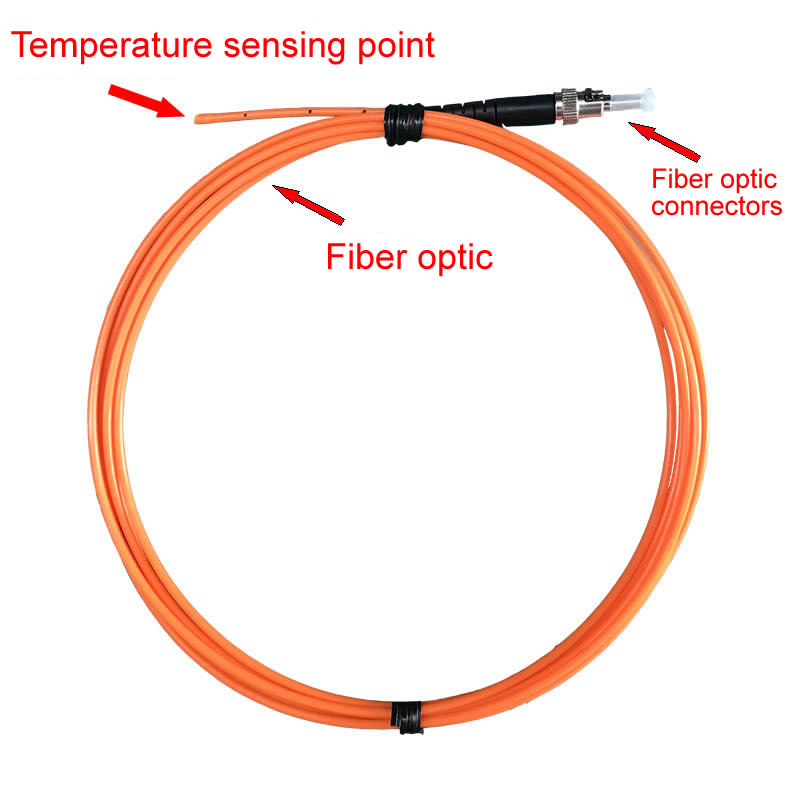
فوتشو الابتكار العلوم الإلكترونية&شركة التقنية, المحدودة. وقد صممت وصنعت حلول الألياف الضوئية لمراقبة درجة الحرارة منذ 2011. تغطي مجموعة منتجاتنا تحقيقات درجة حرارة الألياف الضوئية مضان, أجهزة إرسال درجة الحرارة من الألياف الضوئية متعددة القنوات, و استشعار درجة حرارة الألياف الضوئية الموزعة (دتس) أنظمة — serving power utilities, تخزين الطاقة, البتروكيماويات, البنية التحتية للسكك الحديدية, مركز البيانات, and medical equipment applications worldwide.
Contact our engineering team to request product datasheets, discuss a specific application, أو ترتيب استشارة فنية:
- موقع إلكتروني: www.fjinno.net
- بريد إلكتروني: web@fjinno.net
- واتساب / وي شات (الصين) / هاتف: +86 135 9907 0393
- ف ف: 3408968340
- عنوان: مجمع لياندونغ يو لشبكات الحبوب الصناعية, رقم 12 طريق شينغي الغربي, فوتشو, فوجيان, الصين
تنصل: يتم توفير المعلومات الفنية الواردة في هذه المقالة لأغراض إعلامية عامة فقط وتعكس معلمات المنتج القياسية وممارسات الصناعة في وقت النشر. قد يختلف أداء النظام الفعلي حسب ظروف التثبيت, العوامل البيئية, ومتطلبات التطبيق. جميع المواصفات عرضة للتغيير دون إشعار. هذا المحتوى لا يشكل ضمانا, التزام فني ملزم, or engineering design recommendation for any specific installation. Consult a qualified engineer and applicable standards documentation for project-specific design and safety decisions.

مستشعر درجة حرارة الألياف الضوئية, نظام مراقبة ذكي, الشركة المصنعة للألياف الضوئية الموزعة في الصين
 |
 |
 |